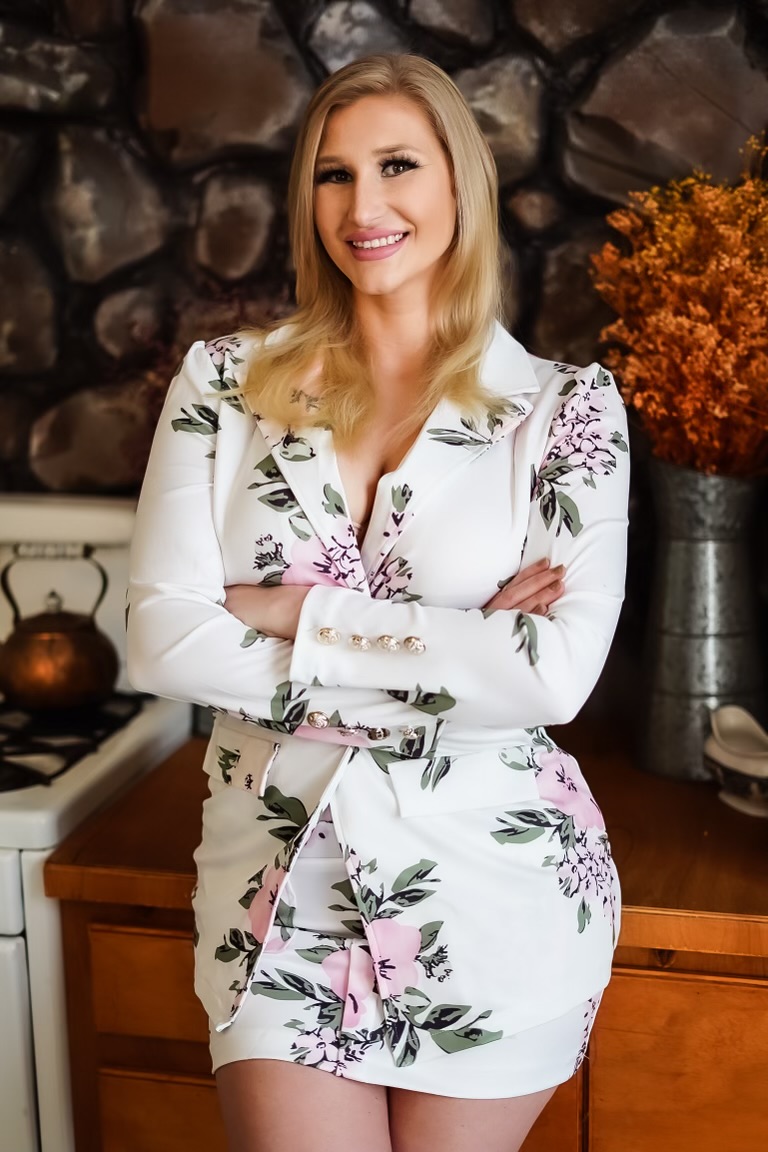

Alright – so today we’ve got the honor of introducing you to Dylan Floyd. We think you’ll enjoy our conversation, we’ve shared it below.
Dylan, thanks for joining us, excited to have you contributing your stories and insights. Can you open up about a risk you’ve taken – what it was like taking that risk, why you took the risk and how it turned out?
Sometimes life doesn’t just knock you down—it sucker punches you, leaves you gasping for air, and dares you to get back up. That’s exactly how I felt when I was fired from an agency I absolutely loved. It was one of those moments where you realize that even when you do everything “right,” life can still throw a curveball. I had two choices: I could sit in the corner, wallow in self-pity, and play the “poor me” card, or I could take a leap of faith into the unknown. Spoiler alert: I chose the leap.
I had a job offer lined up close to home—safe, predictable, and comfortable. But something inside me whispered (or maybe screamed), “You need more than comfort right now. You need change.” That’s when Alaska came calling. Not just Alaska—rural Alaska, one of the coldest, most remote places on Earth. People ask me all the time, “How on earth did you end up out there?” The truth is, I knew it would be one of the hardest things I’d ever do. But it was also exactly what I needed to rebuild my life from the ground up.
When I landed in Alaska for the first time, it felt like stepping into another world—or maybe onto another planet. Picture this: It’s negative seven degrees outside, and they roll up an external staircase to deplane. I thought we were making an emergency landing! Then they herded us into what looked like a warehouse to wait for luggage. No fancy terminals here. It wasn’t uncommon for new hires to take one look at this setup and hop right back on the next flight out. But not me—I was too stubborn (and maybe too frozen) to quit.
Day two on the job? Qualifying with my firearm at an outdoor range in negative 10 degrees. My fingers were so numb that my Native Alaskan firearms instructor and I had to jump into a car between sets just to thaw out enough to pull the trigger. And that was just the beginning of life in rural Alaska—a place where running water is a luxury few can afford and where the only way in or out of most villages is by plane or boat (and only during those precious two summer months).
It wasn’t easy—far from it—but it was transformative. Alaska stripped me down to my core and forced me to confront who I really was when no one else was looking. It taught me resilience and grit in ways no other experience ever could. It also gave me some incredible stories—like solving cases with almost no resources and navigating some of the most extreme conditions imaginable.
But more than anything, Alaska gave me me back. It reminded me that even at my lowest point, I was still capable of incredible things. It showed me who truly deserved a seat at my table—those who accepted me at my worst and celebrated me at my best. And it proved that sometimes the scariest risks lead to the most rewarding rewards.
A friend once told me he admired how fearless I was about starting over—again and again and again. At first, I didn’t see it that way; I just thought I was doing what needed to be done. But he was right—I’ve always lived life on my terms, chasing growth instead of comfort and choosing faith over fear.
So here’s my advice about risk-taking: When life dares you to leap, don’t hesitate—jump with everything you’ve got. Be all in, even when it’s hard, even when you’re scared, even when it feels like you’re completely alone in the wilderness (sometimes literally). Because God is with you, strength is within you, and on the other side of fear lies a version of yourself you never knew existed.
Taking that job in Alaska was one of the best decisions of my life—not because it was easy but because it wasn’t. It reminded me that sometimes we have to lose everything we thought we wanted to find exactly what we need.
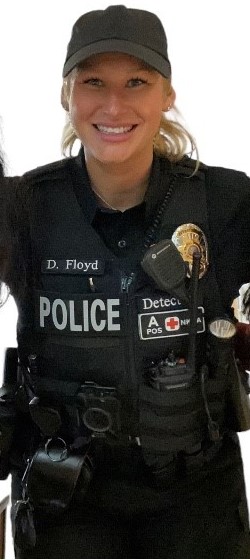
Awesome – so before we get into the rest of our questions, can you briefly introduce yourself to our readers.
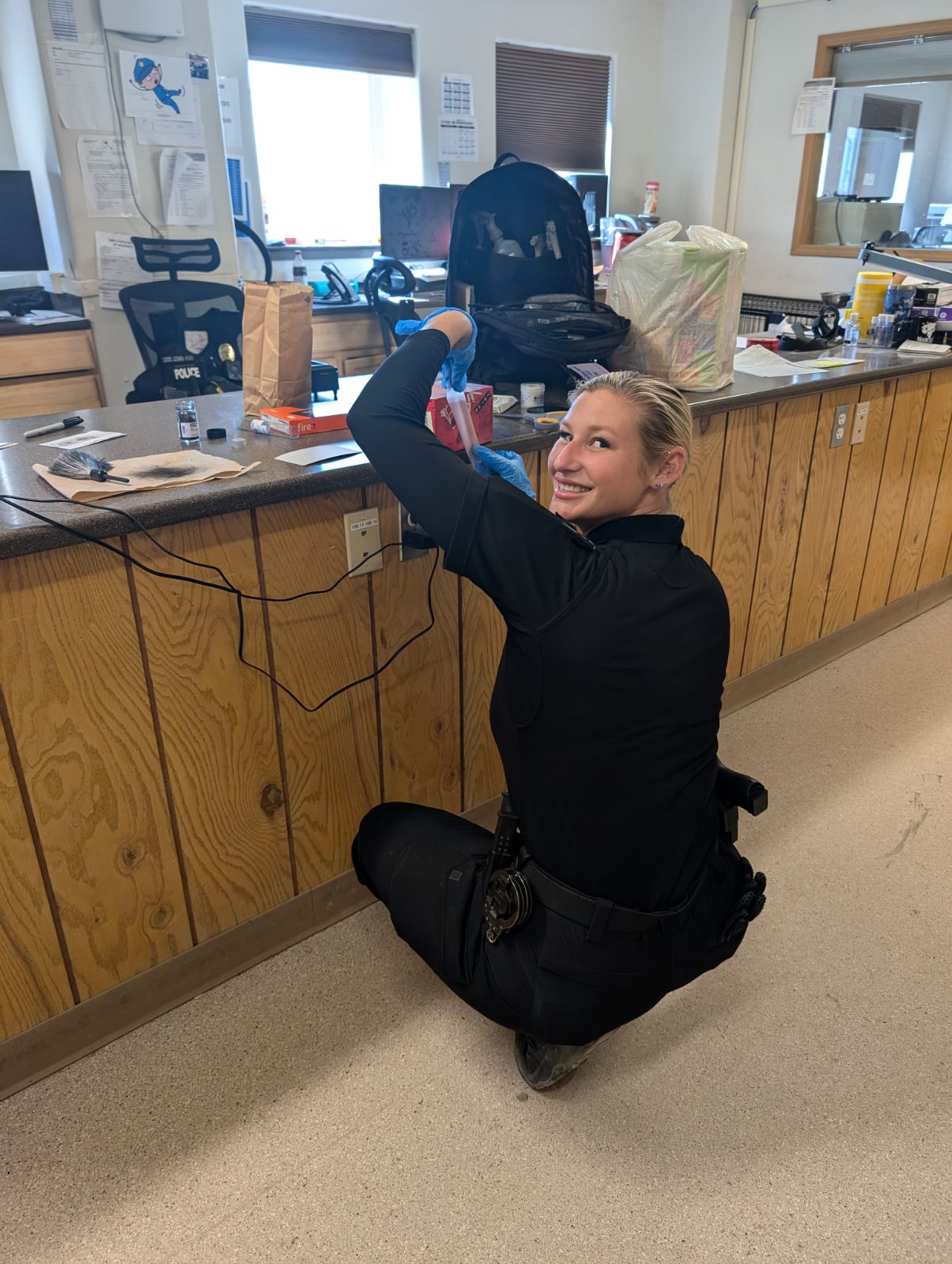
To truly understand who I am and what drives my work, you need to know that my life has been shaped by two powerful forces: resilience and service. I’ve spent nearly a decade in law enforcement, specializing in sexual assault, crimes against children, financial fraud, and homicide investigations. These experiences have given me a firsthand look at the toll this profession takes on the mental health of those who wear the badge. It’s not just the job itself—it’s the secondary trauma, the sleepless nights, and the constant pressure to be strong for everyone else. That’s what inspired me to expand my career into forensic psychology and mental health counseling.
I’m currently pursuing my PhD in Forensic Psychology while simultaneously working on my second Master’s degree in Clinical Mental Health Counseling. These academic pursuits are more than credentials—they’re tools I’m using to create real solutions for the people who dedicate their lives to protecting others. My ultimate goal is to become a licensed psychologist specializing in treating law enforcement officers, first responders, and their families.
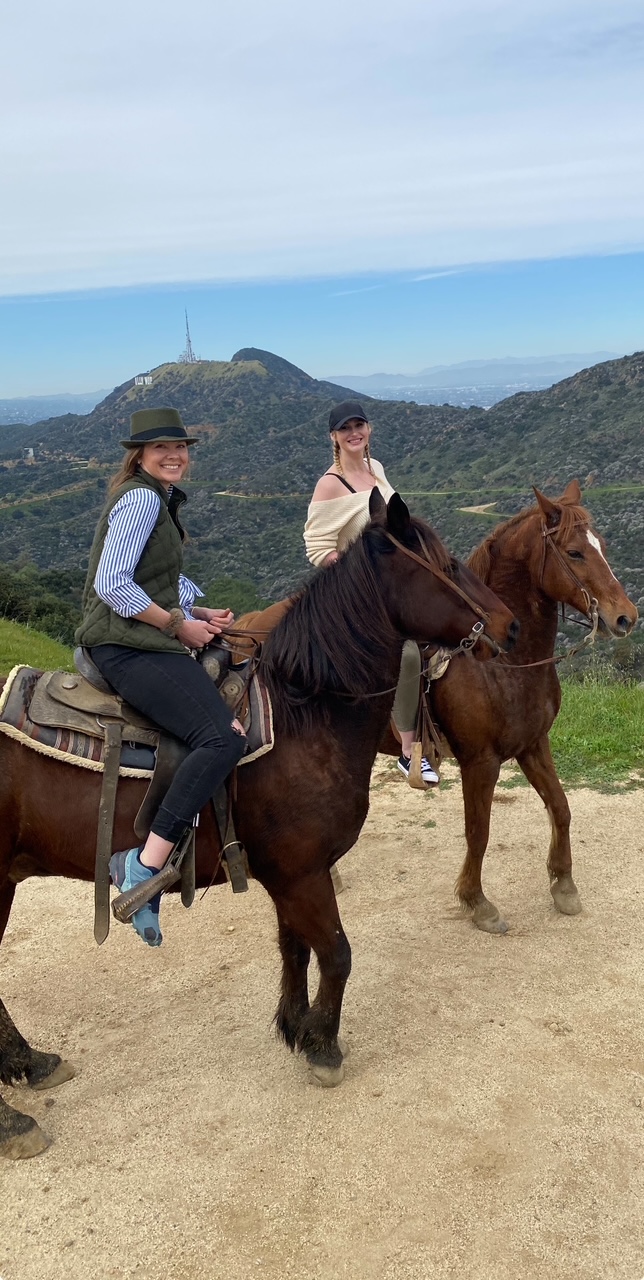
But my work doesn’t stop at academia. I’m incredibly proud of Forepsyt Inc., a nonprofit organization I founded that provides somatic equine therapy to first responders, veterans, medical professionals, and their families—all at no cost. This therapy harnesses the healing power of horses to address PTSD, depression, anxiety, and other mental health challenges. There’s something magical about the connection between humans and horses; they have an uncanny ability to sense unspoken pain and offer comfort without judgment. Forepsyt Inc. started in Southern California, but I’m now working on restarting it on the East Coast with hopes of finding partners, sponsors, and individuals with big hearts who believe in supporting our nation’s heroes. If you’re reading this and feel inspired by our mission, we’d love for you to join us—whether through donations, volunteering, or simply spreading the word.
In addition to Forepsyt Inc., my fiancé and I run KDI Consulting LLC together. KDI specializes in tailored security solutions like threat analysis, executive protection, and strategic planning. With over 45 years of combined expertise between our team members, we’ve successfully completed missions across federal and private sectors. What sets us apart is our ability to balance cutting-edge methodologies with personalized care for each client’s unique needs. Running this business together has been an incredible journey; we’re both still actively serving in law enforcement while building KDI into a trusted name in security consulting.
What sets me apart is my ability to wear many hats—detective, entrepreneur, scholar, advocate—and still remain deeply connected to my purpose: helping others heal and thrive. Whether it’s through Forepsyt Inc., KDI Consulting LLC, or my future private practice as a psychologist, every endeavor I undertake is rooted in compassion and a commitment to creating positive change.
What am I most proud of? It’s hard to choose just one thing because every step of this journey has been meaningful. But if I had to pick, it would be the resilience I’ve cultivated—not just within myself but also within others. Whether it’s helping a fellow officer navigate burnout or watching a veteran find peace through equine therapy, these moments remind me why I do what I do.
If there’s one thing I want potential clients or supporters to know about me and my work, it’s this: everything I do is driven by heart and purpose. Whether you’re looking for security solutions through KDI Consulting or seeking healing through Forepsyt Inc., you’ll find someone who genuinely cares about your well-being. And if you’re someone who shares this passion for service—someone who believes in lifting up those who sacrifice so much—I invite you to join me on this journey.
Together, we can make an impact that lasts far beyond today.
How’d you build such a strong reputation within your market?
I think what has helped me build my reputation in my market is my unapologetic commitment to being the most genuine and whole version of myself—flaws, quirks, moods, awkwardness, odd humor, and all. I’ve never tried to fit into anyone else’s mold or pretend to be something I’m not. I’m rough around the edges—sometimes really rough—and I often say the wrong thing or make mistakes. But here’s the thing: I own it. Every single time. When I mess up, when I offend someone, when I fall short of my own expectations—I hold myself accountable, I make it right, and then I move forward.
I think that’s what resonates with people. It’s not perfection that draws others in; it’s authenticity. Those who stay connected with me—whether professionally or personally—don’t do so because I’m flawless or polished. They stick around because they see that I’m real, that I care deeply, and that I’m always striving to grow. My imperfections aren’t something I hide; they’re part of what makes me relatable and approachable. And honestly? There’s beauty in the chaos of it all.
My fiancé and I joke all the time about how we’re complete opposites in this regard. He’s well-spoken, composed, and methodical—he’s the order to my chaos. Meanwhile, I’m the whirlwind who thrives in unpredictability and finds creative solutions in the middle of a storm. We move through life in completely different ways, but somehow, we always end up at the same destination. It’s a balance that works for us and for our businesses. He grounds me when things feel overwhelming, and I remind him to embrace the beauty of imperfection.
For me, thriving in chaos isn’t just a personality trait—it’s a skill set that has shaped how I approach every challenge. Whether it’s running Forepsyt Inc., helping first responders heal through equine therapy, managing KDI Consulting with my fiancé, or juggling law enforcement work with two advanced degrees (and let’s be honest—life itself), I’ve learned to adapt to whatever comes my way. When things get tough or overwhelming, I step back, take a breath, and recalibrate. But more often than not, I lean into the chaos because that’s where I do my best work.
I think people are drawn to that sense of resilience—the ability to laugh instead of cry, to smile instead of getting upset (or at least try), and to keep moving forward no matter how messy things get. It’s not about having it all together; it’s about making it work with what you’ve got in front of you.
At the end of the day, what sets me apart is that I don’t shy away from imperfection—I embrace it. Life is messy; business is messy; people are messy. And that’s okay! There’s so much beauty and growth to be found in those imperfections if you’re willing to lean into them instead of fighting against them.
So if there’s one piece of advice I’d offer to other small business owners or creatives trying to build their reputation, it would be this: Be unapologetically yourself. Own your flaws as much as your strengths. Show up as a whole person—not just the polished version you think people want to see—and let others see your heart in everything you do. People don’t connect with perfection; they connect with authenticity.
And for me? That authenticity has been my greatest strength.
What’s a lesson you had to unlearn and what’s the backstory?
One of the biggest lessons I’ve had to unlearn is that strength doesn’t mean perfection, and vulnerability isn’t weakness. For most of my life, I believed that to succeed—especially as a woman in law enforcement—I had to be flawless, invulnerable, and always in control. I thought that admitting mistakes or showing emotion would make me seem weak or incapable, especially in a male-dominated field where I constantly felt the pressure to prove myself. But over time, life (and Alaska, of all places) taught me that this mindset was not only wrong—it was holding me back.
The backstory begins with my early years in law enforcement. I entered the field determined to be the “badass chick” who could do anything a man could do—and do it better. I worked hard, pushed myself relentlessly, and refused to show any cracks in my armor. I thought this was what strength looked like: never letting anyone see you struggle, never admitting when you were overwhelmed, and always maintaining an air of perfection. But the truth is, that kind of pressure is unsustainable. It leads to burnout, isolation, and a constant feeling of inadequacy because no one—no matter how capable—can be perfect all the time.
This mindset followed me into my personal life as well. I felt like I had to be the glue holding everything together for everyone else while quietly dealing with my own struggles behind closed doors. When things fell apart—whether it was losing a job I loved or facing challenges in my relationships—I blamed myself for not being “strong enough” to keep everything under control.
Moving to rural Alaska was a turning point for me. Alaska doesn’t care about your ego or your need for perfection—it strips you down to your core and forces you to confront who you really are. Out there, surrounded by harsh winters, limited resources, and extreme isolation, I realized that strength isn’t about pretending everything is fine. It’s about being honest—with yourself and with others—about what you’re going through. It’s about admitting when you need help and allowing yourself to lean on others instead of trying to carry the weight of the world alone.
I also learned that vulnerability is one of the most powerful tools we have for connection and growth. When I started opening up about my own struggles—whether it was the mental toll of law enforcement or the challenges of starting over in a new place—I found that people didn’t see me as weak; they saw me as human. And that humanity allowed them to connect with me on a deeper level than they ever could have if I’d kept up the facade of perfection.
This lesson has shaped everything I do now—from my work with Forepsyt Inc., where we help first responders heal through equine therapy, to KDI Consulting LLC, where my fiancé and I balance each other’s strengths and weaknesses while building a business together. It’s also influenced how I approach my studies in forensic psychology and clinical mental health counseling. As someone who plans to specialize in treating law enforcement officers and first responders, I know firsthand how damaging it can be when we equate vulnerability with weakness. My goal is to create spaces where people feel safe being their authentic selves—flaws, struggles, emotions, and all.
Unlearning this lesson hasn’t been easy—it’s still something I have to remind myself of every day. But it’s been one of the most transformative shifts in my life. Strength isn’t about perfection; it’s about resilience, honesty, and the courage to show up as your true self—even when it feels scary.
So if there’s one takeaway from this journey that I’d share with others, it’s this: You don’t have to have it all together all the time. You don’t have to be perfect to be strong. And sometimes, letting people see your cracks is what makes you truly shine.
Contact Info:
- Website: https://www.forepsyt.com/
- Instagram: BlondeinBlue72
- Linkedin: https://www.linkedin.com/in/dylancade-floyd-732105b9/
- Other: https://www.kdiconsultingservices.com/