



We recently connected with Dustin Willis and have shared our conversation below.
Dustin, looking forward to hearing all of your stories today. What was your school or training experience like? Share an anecdote or two that you feel illustrate important aspects or the overall nature of your schooling/training experience.
It was a journey. The main thing that sticks out to me is resiliency. What I try to share with my students & mentees in attempts to break down the false perceptions of perfection that seem to perpetuate all aspects of our society is the fact that I failed out of my undergrad, was on academic probation during my DPT (clinical doctorate of physical therapy), failed the state law exam that delayed me getting licensed, & had to go on a year long leave of absence during the PhD I am currently finishing up. All too often students look up at their professors, or those in positions they aspire to reach clinically & view them as infallible. I technically have all this “advanced training” (a residency & 3 fellowships after getting my DPT, now working on PhD), but have had so many failures & am still learning every single day. I like to say to all of them that I am simply a little further a long in my journey & hope to help them reach even higher than me; continually reminding them that theirs doesn’t need to look like mine, because no one else is them, & that is truly their super power that they need to appreciate along the way.


Dustin, love having you share your insights with us. Before we ask you more questions, maybe you can take a moment to introduce yourself to our readers who might have missed our earlier conversations?
So I am a Physical Therapist by trade, but most of our society is confused on what a PT truly does, which is understandable given the relative youth of our profession as well as the many different forms it can take out there. Simply put, our job is to help people get back to whatever it is that they love doing after dealing with some form of pain and/or injury. This can take on many forms with many schools of thought out there, particularly when it comes to the human pain experience, but for me specifically, I would say that I use mostly human connection, communication, education, exercise, and transparent critical thinking/reasoning to help empower people back to their chosen activities. There is a saying that I love that states “a teacher is one who makes themselves progressively unnecessary,” and that is how I view my goal, both with my clients as well as the students/mentees I work with.
I got into this profession after discovering the intersection of what my mom was studying to do (she was in school to become a Registered Nurse) with my love for sports/basketball. Growing up, I would watch every single Lakers game with my grandparents and one day they had a halftime special on the training staff. That day sent me down this career path.
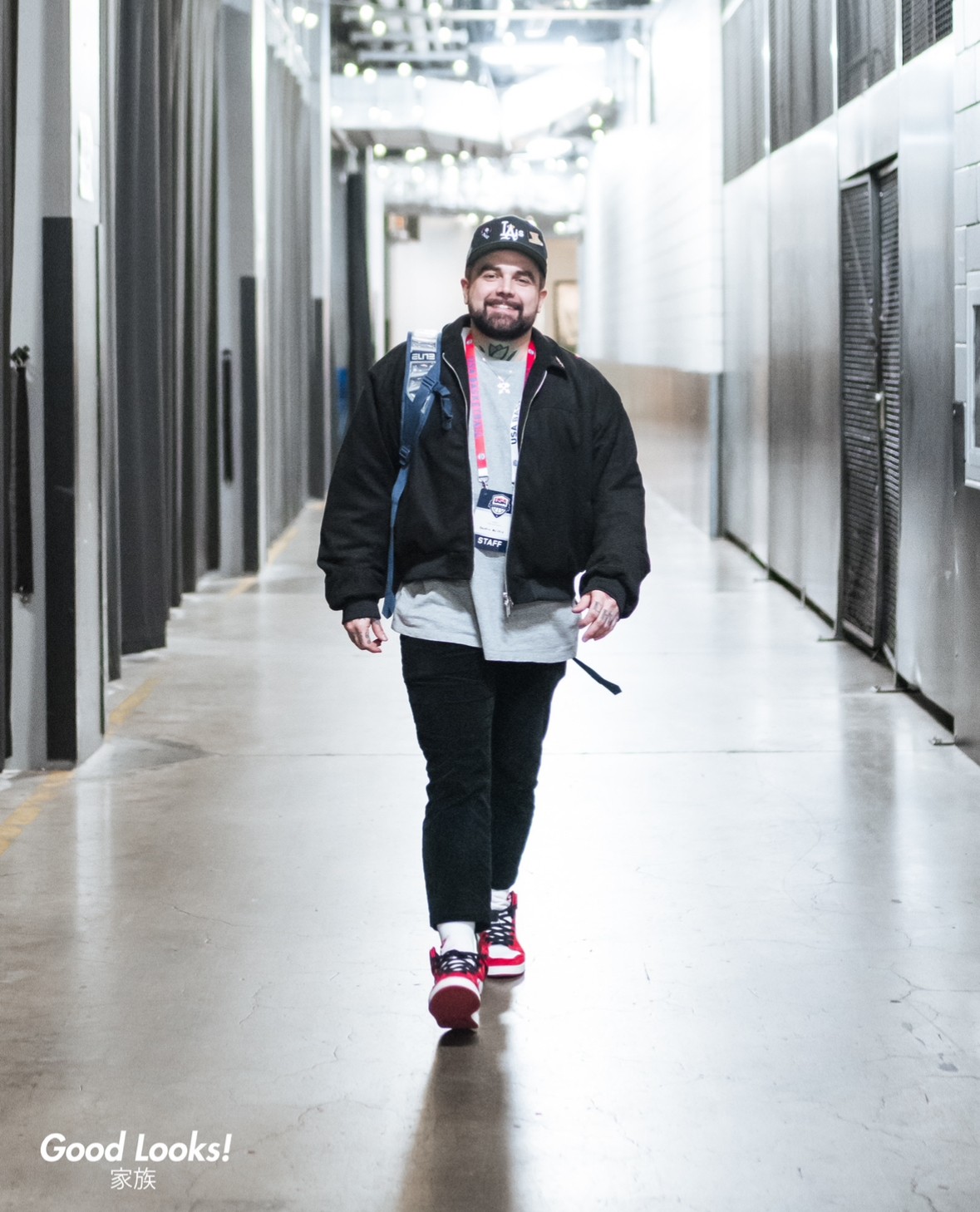
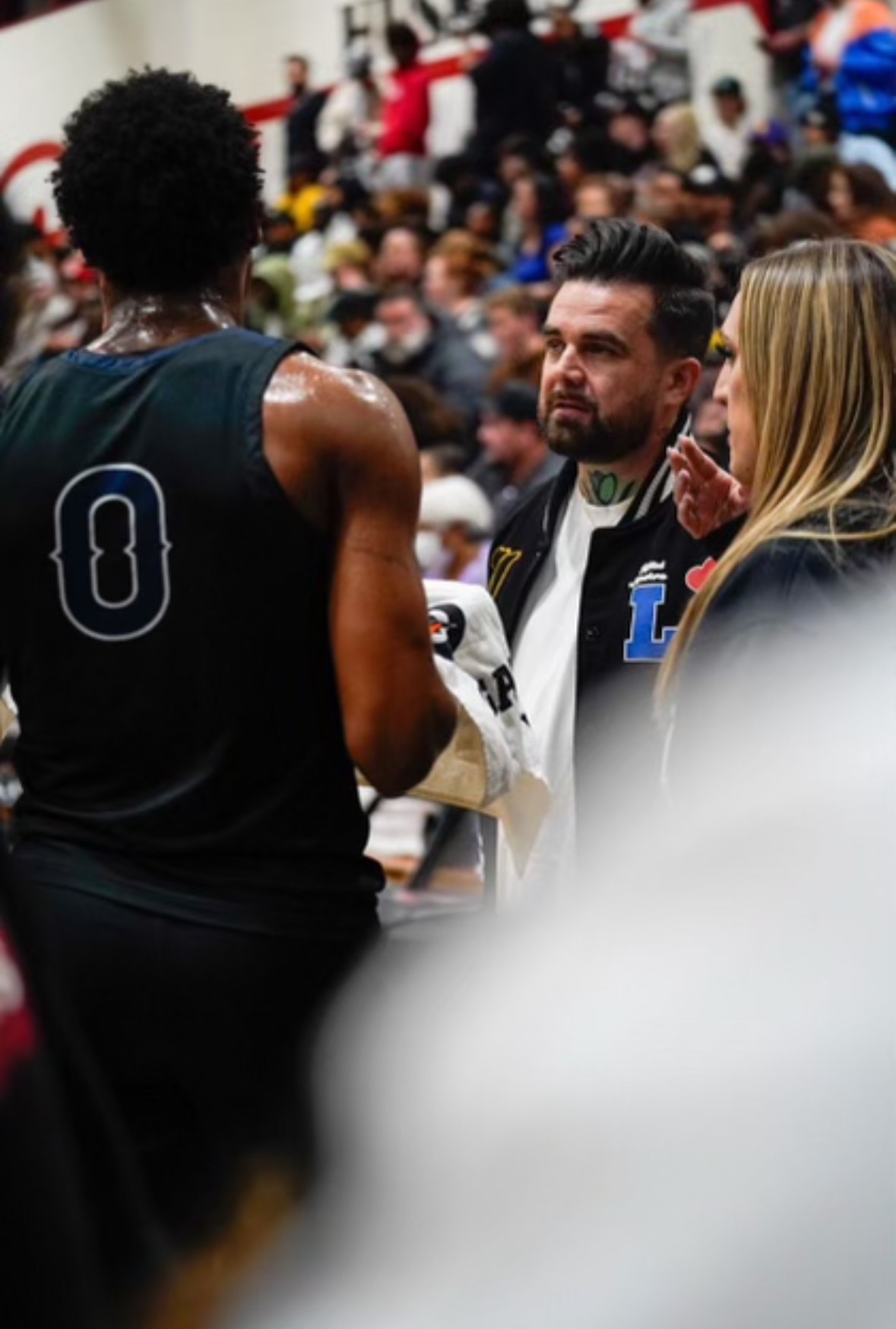
Currently, in a full circle moment of sorts, my role is as a Physical Therapy consultant for the Los Angeles Lakers. I am also a sports performance therapist for a company I have small part ownership in called Quantum Performance, as well as a consultant for a friend’s company called Move Lab Los Angeles. Prior to last month, I was also a Professor in the Doctor of Physical Therapy program at West Coast University, where I spent the past 5+ years teaching future Physical Therapists the foundational skills of being an orthopedic PT. During all of this I have also been working on finishing up my PhD (also in Physical Therapy) where my dissertation is looking to better understand the power of compassion/connection in healthcare. Specifically, I’m curious as to the psycho-neuro-immuno-endocrine underpinnings of the positive impact we see these so called “soft skills” having, that are often dismissed as simply a placebo effect (positive results that can’t seem to be attributed to a specific intervention).
All of that being said, my most important role is likely as the father to my 6 year old special needs/medically complex son, Dorian. Dorian was born with a genetic condition called a “unbalanced chromosomal translocation,” which is a fancy way of saying that he has too many of one chromosome, not enough of another, and the two of switched places. All of this has led to issues with literally every bodily system and some huge battles for such a little dude. He spent the first 8 months of his life in the NICU (neonatal intensive care unit) as well as countless time afterwards in and out of Children’s Hospital Los Angeles. He breathes through a hole in his neck called a “trach” that is connected to a ventilator that breaths for him, eats through a “g tube” in his stomach, doesn’t walk or talk, but has been the best thing that has ever happened to me, and the inspiration for so much of who and what I am and represent.
I had started a brand called Arrows & Tulips where we made clothing, hats, and even released a couple of collections of the poetry I’ve written and used to help get me through all of this. All with the goal to spread awareness/kindness for kids like him (our favorite phrase is “What’s “Normal” Anyway?”,but it is currently on pause due to the rest of my life’s demands


Can you share a story from your journey that illustrates your resilience?
I’ve already touched on the surface of both my own resiliency as well as little bit of some of my son’s, but it’s such an important trait for humans to cultivate, and we should discuss it more. There are so many stories to choose from, but the experience of being a dad to a child like mine in itself is one full of examples. Dorian has had more brushes with death that any child should ever have. We have seen fellow families never make it outside of the hospital walls, and others little warriors lose their fights far too soon. There has been enough darkness to make anyone want to give up, and trust me I have wanted to more times than I can count. The helpless feeling of watching your child fight through pain and struggles that you can do nothing about has been soul crushing. The amount of effort it takes to do simple things like go out in public are only compounded by a society not built with a family like mine in mind combined with deafening stares of curiosity seemingly too scared to simply say hi and/or ask questions.
It’s all a big reason why I am now covered in tattoos. I didn’t know what to do with the helplessness, so I decided to stand in solidarity with my son by undergoing the symbolic pain of the needle that would transform my wounds into beauty the same way his have done to my life. At the end of the day, I never want to sound like I’m searching for sympathy or anything of that nature. Everyone has a story (or stories) that will break your heart, this rare genetic condition is simply part of mine. But wow, has there also been so much beauty in it too. Anyone that has ever met Dorian will tell you that he is one of the happiest, most full of life little guys they have ever met. All these tattoos often give me an excuse to ramble on and on about him too. Not to mention the fact that, although the world is getting more and more acceptable of body art on the daily, there is still a certain degree of surprise to see someone like me nearing completion of a second doctoral degree and in the role of graduate college professor.


Training and knowledge matter of course, but beyond that what do you think matters most in terms of succeeding in your field?
My students will jokingly tell you my other favorite saying, as I preach it constantly from the biased lens of my PhD dissertation, and it is that “no one cares how much you know until they know how much you care.” It seems so simple, but can often get lost in the business that healthcare has become. There is so much pressure on healthcare providers in all areas to be productive, be it for financial reasons or because there are so many people out there that need help, it can be easy to lose sight of the “why” many of us got into the field in the first pace. There is also this false narrative that caring “too” much can lead to getting burnout, and while there is some nuance to that discussion, what we see in the research tends to be the opposite. It’s when providers feel disconnected and are just going through the motions of seeing “another knee patient” instead of connecting with “Bill, who really wants to be able to dance at his daughter’s wedding without his knee stopping him” that leads to the feelings of burnout. That was a long-winded way of saying that caring/connection is a magical piece of the puzzle that often gets left out or is not viewed as being as important as I feel it should be. What I view as being the key that helps unlock this fundamental skill is one’s ability to let themselves be truly vulnerable and authentically themselves. Far too often we forget that it is another human being staring back at us during our interactions with our patients. We lose sight of the similarities in our struggles, viewing them and their issues from a protected gaze of concern that is often at a distance. If we just take a second to reconnect with the humanity we both share, it makes it so much easier for us to connect with and help them. In turn, this naturally helps knock off the mask we often wear in attempts of being who and how we think we need to be instead of owning our own authentic truth and the magic it holds to be able to help so many people.
Contact Info:
- Website: arrowsandtulips.co
- Instagram: @dwillofthe9
- Linkedin: www.linkedin.com/in/dustin-willis-pt-dpt-phd-c-ocs-faaompt-2a76a1166
Image Credits
Cam Look, Jojo Gonzalez, Dhan Calo, Cassy Athena