

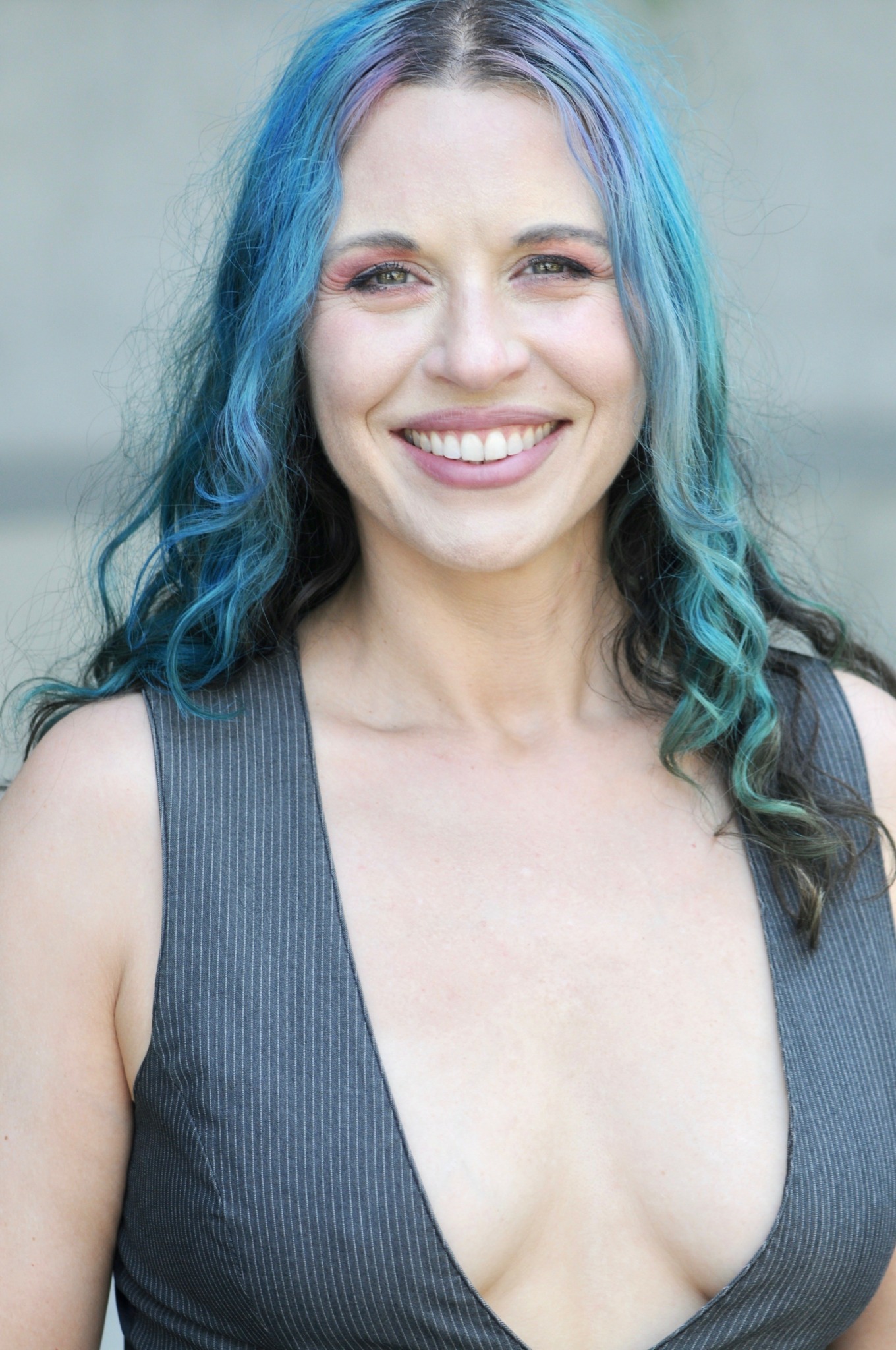

We were lucky to catch up with Dulcinea Circelli recently and have shared our conversation below.
Dulcinea, appreciate you joining us today. Before we get into specifics, let’s talk about success more generally. What do you think it takes to be successful?
I think to be successful you need to start what you finish and prioritize completion over perfection. I’ve published a novel and later realized there is a glaring error in a poker game scene that is obvious to every poker player who has read it since publication. I have dozens of anecdotes I’ve heard from friends and colleagues about how long their projects are taking to complete.
These delays turn from months to years and sometimes decades because mostly people obsess about doing something the “right” way and getting everything perfect in their art, writing, film, or financing for a film before finishing something and showing it to the public.
I’ve released eight short films with massive, glaring errors in them that embarrass the shit out of me. Not everyone notices. I have finished executive producing a feature film that was shot with no permits, often with no proper gaffers or specialized sound equipment, and completely guerrilla in every aspect. It will not be a perfect film, or my best film ever, but my first feature film I executive produced from 45 minutes to an entire feature will have red carpet showings at festivals and will have a red carpet premier next year.
Finally. And it is an imperfect, flawed film in the best way an art house production can be. My wig in the one scene that I got to act in looks like cheap garbage ripped off a thrift store mannequin and don’t have a strong jawline or flattering lighting in that scene. The lighting was a few ring lights in a car glowing from underneath us to mimic the light of our phones. Low angle lighting was not the most flattering choice. That lighting for that scene is naturalistic but imperfect. It looks like life, not a movie, so it’s an arguable point but I digress.
Everyone I know who is creative but not releasing their art, writing, or films, is a perfectionist. I am about finishing and learning from mistakes and moving on to what’s next.
The road to success is giving yourself the freedom to fail.
Let the critics who don’t produce anything criticize the flaws in your creative work after you’re dead.


Great, appreciate you sharing that with us. Before we ask you to share more of your insights, can you take a moment to introduce yourself and how you got to where you are today to our readers.
The road to founding Lala Mancha Films, my production company, was a long one that started with a love for words and stories. I spent most of my early and mid-twenties focusing on becoming a good fiction writer with the goal of ultimately publishing novels that were good material for movies.
Les Misérables, Misery, The Shining, Shopgirl, It, I Am Legend, Thank You for Smoking, The Godfather.
So many incredible films that I admire started out with books as the script basis. I loved words, how they could sound in your head, how they could make scenes in your imagination, moods, rhythm like music, and how they could be the blueprint for both fantastical works of science fiction and historical dramas grounded in realism.
After I published my first novel, Midnight Jobs in Wonderland, I realized that film and online streaming needed to be my focus to reach a broader audience as a storyteller. I shifted to writing scripts and was finding some success as a commercial actor, so I focused on scripting and producing my own content back in 2016.
My first short film, Whore of Babylon, had so many things wrong with it, but we had a lot of fun making a short in the vein of Quentin Tarantino. The second film I made explored the life of a homeless barista. We had some issues, and the premier had a messed up ending due to production delays and distractions. We recut it and finished it later and released online. I was cast in a sci-fi meets the art world/kinky performance art tv pilot that never saw the light of day, it was so flawed. I fucked up a very important scene that we could not do a re-take on. I fucked up so many auditions by killing it in the performance part but something I said before or after the audition killed my shot at the job. Basically, what I’m telling you is, if you are not an average, mid dude who has the hubris to act like he knows what he’s doing and is entitled to success, just do what your heart wants to do anyway, in whatever flawed way you can.
I’m an anxious person who doesn’t always inspire ease and confidence in people, despite two bachelor’s degrees and a master’s degree. I’m not the typical dude who has gone to film school who is average but thinks he’s going to be something exceptional, and everyone believes him because of the hubris despite no director’s reel.
I’ve just figured out that you can do nothing and wonder what if for the rest of your life, you can do something and dick around with it until years go by and the something never gets seen or it’s irrelevant by the time it’s “perfect,” or you can just do what you want to do and duct tape and bubble gum something together (metaphorically) and you’ve done something. Then you move on, learn from the most embarrassing mistakes, and do something else. And here I am being interviewed about how you just need to do what you are inspired to do and don’t be so precious about it that you never get to show that inspiration to others, however flawed it may be.
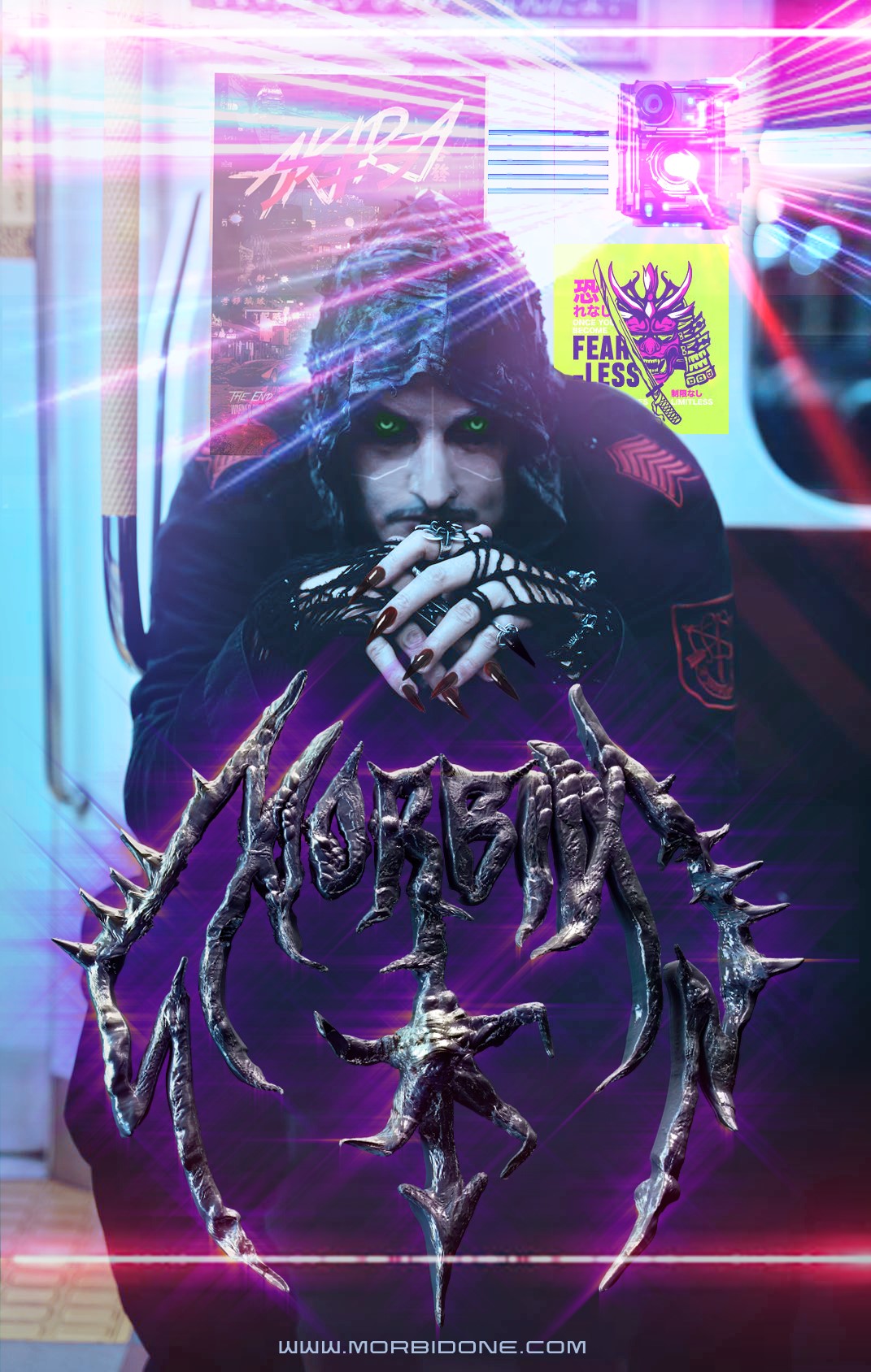
I am, as of the time of this publication, an executive producer on the precipice of walking the red-carpet premiere of Morbid, an arthouse black metal slasher film I’m really proud of, and I took this film to the finish line along with producers Pablo Vergara and Taakaki Ando (https://linktr.ee/DulcineaCircelli). We will be walking the red carpet to go see a finished film we made next year that I’m deeply passionate about, and I can’t wait to see the merchandising at Hot Topic.

Can you talk to us about how you funded your business?
So, the funding question is the number one question people ask when they want to make films. People don’t want to hear this, but it’s as simple as finding people fresh out of film school who are talented and want to showcase what they can do with you. It’s as simple as borrowing your friend’s new iPhone for shooting if you don’t have a good iPhone to shoot a short with.
You start where you are at and go from there. If you start with a solid script and concept that doesn’t require a lot of money for sets or costumes, VFX, or special makeup, you can do a lot with decent actors looking for reel footage and an iPhone.
The quality of a film lies in the strength of the performance, script, and technician behind your equipment, as well as your postproduction editor. If you save up your money for a decent cinematographer who has good rates for indie films and a decent editor, your indie film can go a long way towards establishing your reputation.
Crowd sourcing your first indie films is also okay. Don’t feel shame for asking people to fund a project you believe in. This is something I still struggle with, although I know all union low budget, mid budget and high budget films involve asking a lot of corporations and people to give you money for a project.
You are asking your funding source to partner with you to provide a work of art the world needs to see. Because you want to see it and make it real.
You are asking your funding source to help you give a gift to the world. You are asking your funding source to provide your friends, relatives, and colleagues jobs. When you raise funds, you are providing an opportunity for people and companies to join you to give a gift to the world.
Once I started viewing my film projects as gifts to the world others are helping me materialize rather than an indulgence or a handout, the energy of my ask shifted from begging to sharing an opportunity with others for artistic glory! Despite all the flaws I’ve been discussing, I am proud of all my films, too. They look good and explore interesting concepts and ideas.


What’s a lesson you had to unlearn and what’s the backstory?
As a creative, one lesson I had to unlearn was practicality.
Coming from a working class background, I, like most working-class people from the United States, came into adult life with a very pragmatic outlook. I was very good at biology and used to have an exceptional memory, so my family and I thought I was going to work in the medical profession or in the life sciences.
Once I was in grad school to become a cell biologist with an emphasis in neurobiology, I realized that I hated the tedium of bench lab work and was absolutely miserable in every department of the hospital that I volunteered at. I had wanted to use my degree to work for NASA and become a scientist in space, but I suffered from some pretty severe mental health issues at the time, so I was not going to space, and I didn’t fit into the scientific or medical community anywhere.
After working as a tutor for a few years while I finished my novel, I tried to use my degree to be a biology professor at community colleges, and failed at that, too, not because I wasn’t qualified, but because we had a shooting threat at one of the schools I worked at, and that activated the severe PTSD I have battled my entire life.
After trying to be practical didn’t work out in every way possible, I’ve spent the years since making impractical choices. I prioritize my creative life above any other job I’ve had since. I prioritize multiple streams of income so that no one job ever has me to the point that I am too locked in to walk away if I need to pursue a creative project.
I’m no longer practical or reasonable when it comes to my life. This world is dying. We are on the precipice of another world war. We don’t know what will happen after the AI singularity occurs.
I don’t save for a 401K and I treat my films like babies. If anything in my life comes in the way of my babies, I cut it out of my life.
If you want to do anything creative, you have to unlearn practicality.
Contact Info:
- Website: https://linktr.ee/DulcineaCircelli
- Instagram: dulcinea.circelli.official


Image Credits
Image 1: Dulcinea Circelli
Image 2: Behind the scenes (Dulcinea Circelli)
Image 3: Dulcinea Circelli directing actor Jake Gardner
Image 4: Dulcinea Circelli
Image 5: Pablo Vergara
Image 6: Red Wings Poster
Image 7: Robert Lund and Pablo Vergara
Image 8: Rhiannon Aarons
Image 9: Ron Jeremy