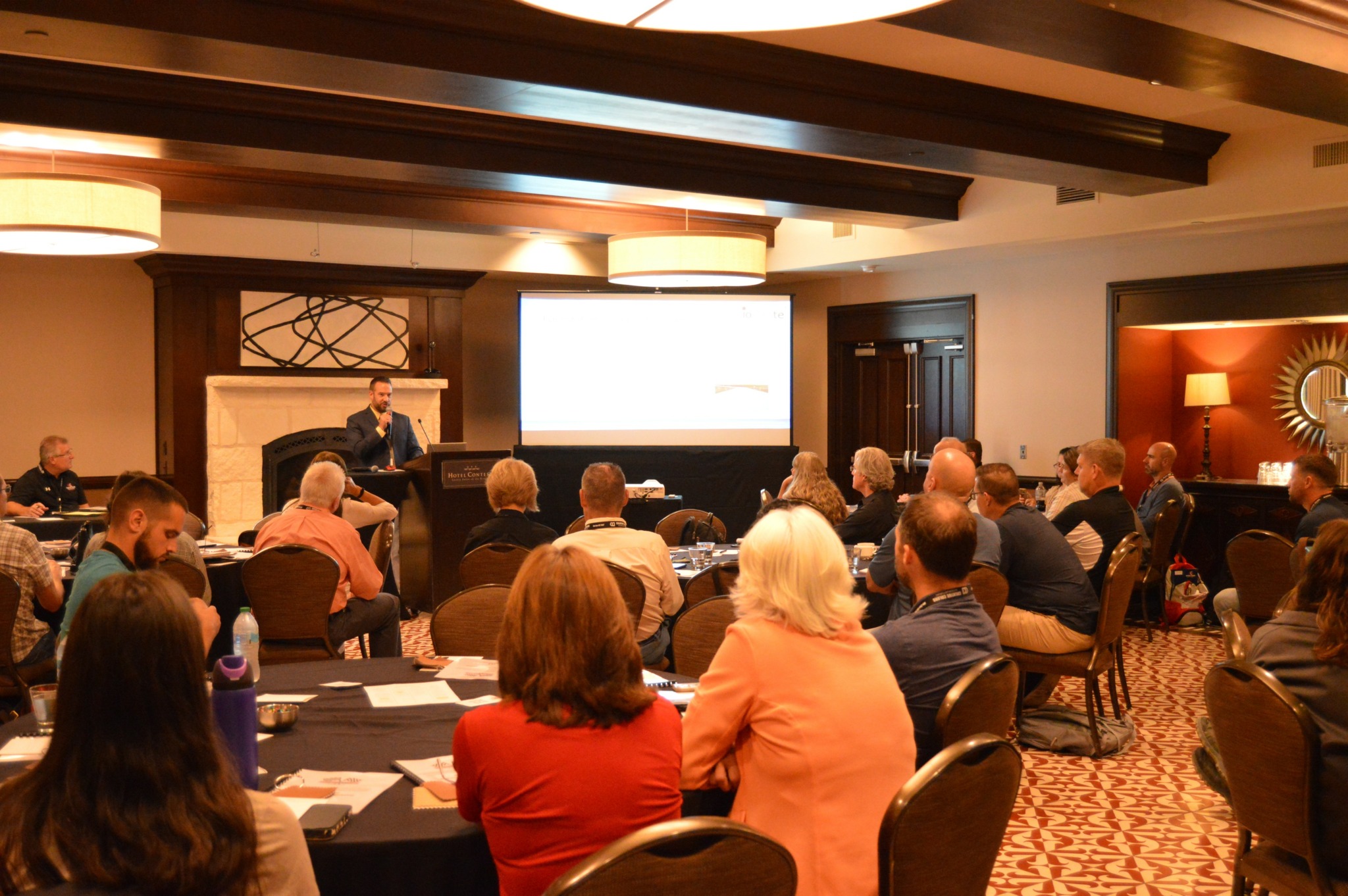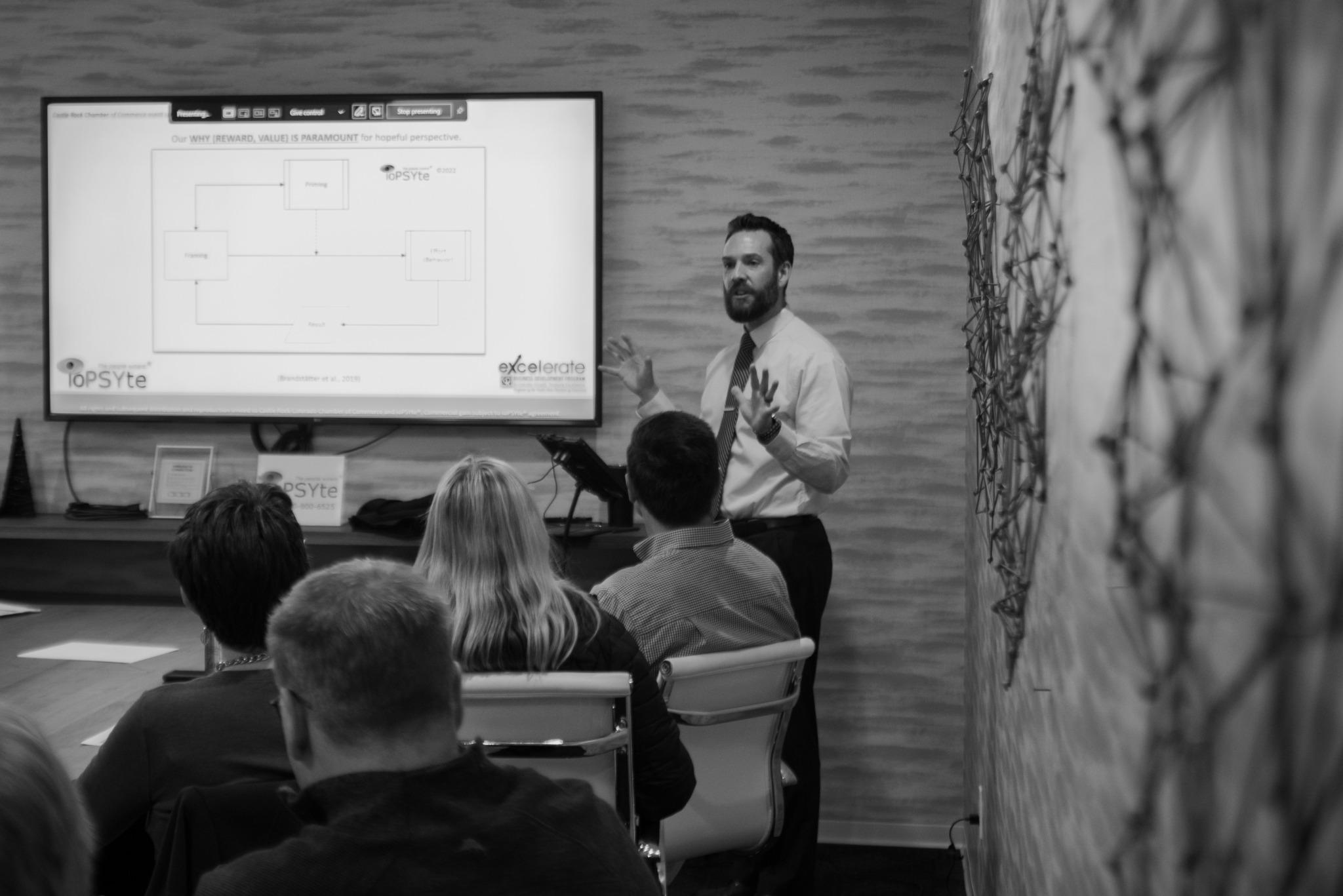

Alright – so today we’ve got the honor of introducing you to Dr. Quinn Denny. We think you’ll enjoy our conversation, we’ve shared it below.
Hi Dr. Quinn, thanks for joining us today. Coming up with the idea is so exciting, but then comes the hard part – executing. Too often the media ignores the execution part and goes from idea to success, skipping over the nitty, gritty details of executing in the early days. We think that’s a disservice both to the entrepreneurs who built something amazing as well as the public who isn’t getting a realistic picture of what it takes to succeed. So, we’d really appreciate if you could open up about your execution story – how did you go from idea to execution?
When I sold my Managed Services business, my intent was to become a counselor. I wanted meaningful work, work that seemed even more suited to my personality (a recurring and common theme I encounter from all kinds of people). Going back to school I finished my B.S. in general psychology. During that process I became increasingly aware that I have that entrepreneurial energy, and that it would take me considerable additional years to start my own counseling practice after achieving a master’s degree. This was not attractive as I had just recently turned forty, my career clock was ticking! There were also practicalities for supporting my family and the annual salary would make it hard to meet our needs long-term. The big determinant that counseling was not for me came when I had trouble sleeping during my abnormal psychology courses. It was evident that I would struggle to leave clients’ challenges at the office. You can imagine my discomfort and disillusionment. What was I going to do?
Around this time a professor asked me if I had considered IO, short for Industrial Organizational Psychology. Looking into it I found a good mix between serving people as well as being able to geek out on science, statistics, and continual knowledge acquisition. It was an immediate match! I went on to earn my MA and PhD in IO. It was during my master’s program that I determined to take everything I was learning and convert it into a consulting, training, and research business. There are great ideas out there when it comes to new and novel ways of doing business. Yet many of those great ideas are like New Years’ resolutions, they end up sitting on the idea shelf waiting for actualization. This is what research terms the Strategic-Execution Gap because it takes moxie to go from strategy to execution, hence why the researchers call it a gap. Being able to bridge that gap is key to the realization of goals.
For me, the key to bridging this gap was a process of asking myself questions and then answering those questions organically over time while also taking every opportunity in school to create the framework and materials for my new business as part of my school assignments. These were some of the questions. What would I like to do with my knowledge and skill, what am I passionate about? Why would what I offer be special, really help people? Would people buy it, how would I sell it (share its value)? What infrastructure do I need? Where will I get my first clients? How do I make it sustainable and scalable? What am I afraid of? Who is my competition, why does what I do exceed them? What are my startup costs? Do I want to trademark? Answering these questions was hard work.
Here is some practical advice that will hopefully help you with your specific journey. Accept that it will be hard. Most thriving businesses are not the result of happenstance, they result from dedication, perseverance, acknowledging fears, resilience, and exercising courage…repeatedly. Remind yourself frequently, if owning a business was easy, everyone would do it and succeed. There is a price to be paid. Take your time, think your business through, close your eyes, picture what it looks like on a day-to-day basis. What do you do each day, for whom, how does it feel? Try to break your ideas, what could go wrong, how will you deal with it, even prevent it? Consider using a SWOT analysis approach. The most important thing I can say is to value the immediate by showing up and executing. What I mean is that the aggregate (overall) impact of small action items accomplished consistently in the direction intended adds up! List and keep visible the steps (micro goals) needed to achieve the goal of starting and growing your business. These are the needed steps you MUST behave. Be faithful, do those steps (behaviors), even when they barely make progress. Be adaptable, when something fails, learn, adjust, and get back on it. Do the next immediate thing.
Looking back, it is extremely satisfying to think that at one point, my business was just an idea. Are you in the Strategic-Execution Gap? Perhaps you are just starting to risk the idea of your possible business? You can do it; it starts with a thought and that one first immediate corresponding action.

Dr. Quinn, love having you share your insights with us. Before we ask you more questions, maybe you can take a moment to introduce yourself to our readers who might have missed our earlier conversations?
I became an IO Psychologist because of job burnout. For 20+ years I was in a career that allowed me to help people, which I love doing, but the work itself was emergency driven and not intrinsically motivating. When my dissonance grew to the point of way beyond discomfort, I signed up for school (after chickening out three times). This small step led to more school, introduction to IO psychology, and eventually the impetus to create ioPSYte®. Now, ioPSYte® brings high value and results to organizations using evidence-based research to help with all kinds of client needs including talent acquisition, leadership development, performance management, statistical analysis, individual coaching, training design-implementation, measurement-validation, personality assessment, strategic planning, and change management. I have the deepest desire to help those individuals and workplaces who are brokenhearted to achieve work happiness and their best performance!
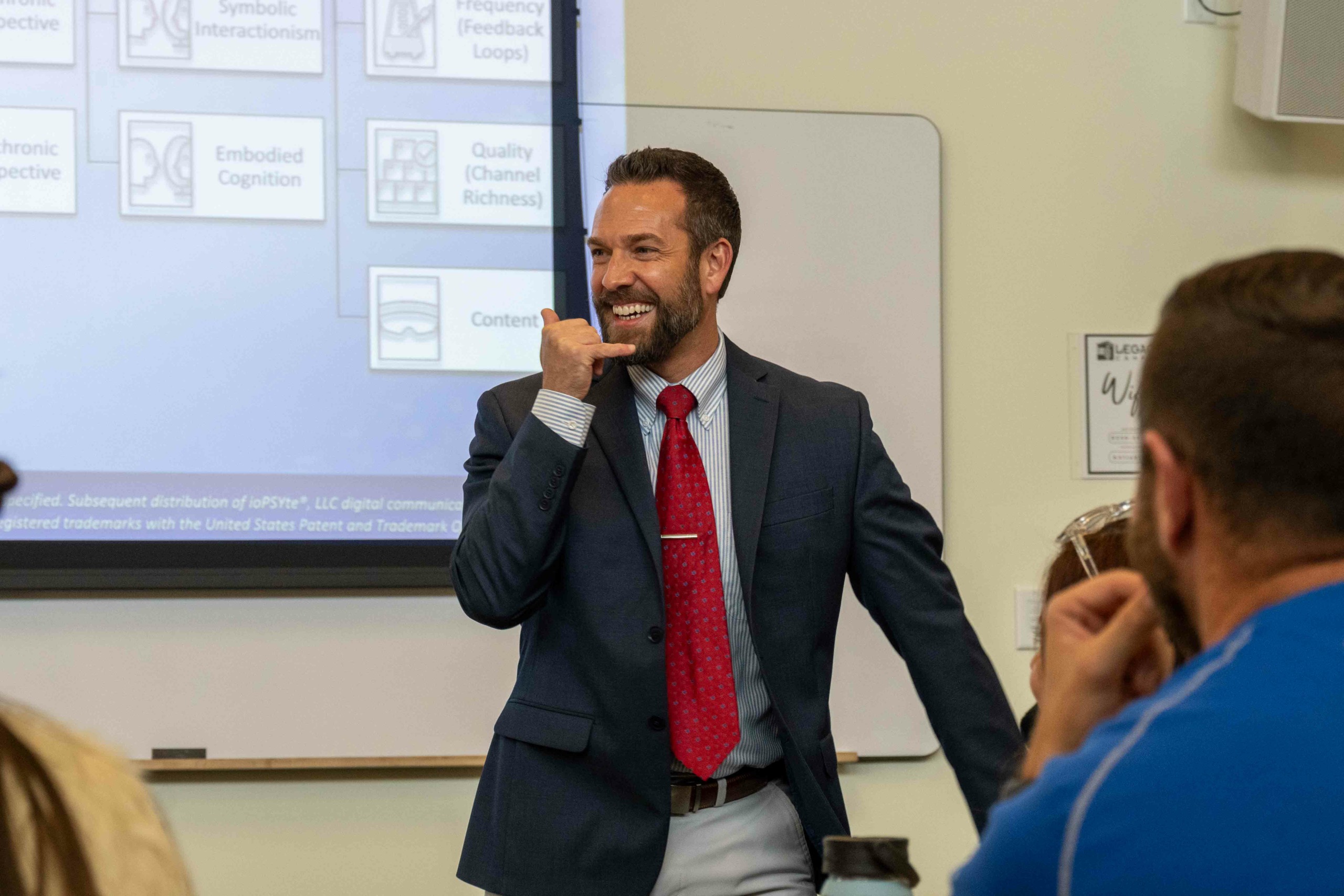
Can you talk to us about your experience with selling businesses?
I sold my business of 8 years, which was a Managed Service Business. That process was a pleasant one and also a great educational experience. So many people state that to sell your business, it has to be able to run without you. Is that really the case in every instance? I do not believe so. There are businesses where someone wants to buy and assume the workload themselves. This might be truer in small business. Franchises can be this way. Nonetheless, there are key things that I know from my experience that I believe are helpful.
Grow your brand rather than your name. It is true that people buy us when they use our services/products initially. However, at some point, our names as owners become a catch point when growing and selling our businesses. My first business was this way, as I began to introduce additional staff servicing customers there was often hesitation. After a customer complains, the immediate and easy thing to do is to acquiesce and revert to doing most of the work yourself. However, this only perpetuates the problem of inhibited growth and high owner stress. Use complaints as an opportunity for training and to allow the customer to see your dedication to them and your team. When speaking of what the company can do, use the company name versus “I” or “me”. Use “we at Company Name”. Cross train employees and ensure that customers are frequently exposed to as much of your team as possible. Talk about the success of the “Company Name” or “team”. Doing these things builds a strong culture and customers who by the brand and company versus the owner.
Know the market value of your business. It is worth having your business evaluated by a professional business broker. Business brokers know how to properly calculate EBITDA and any other value equations that are specific to a business industry. They are also great advocates to help remove the emotion of selling a business by helping to prepare you and walk you through the process. Additionally, they can discretely list your business on the market in a way that does not impact your current revenues and industry standing. A broker can ensure that whatever agreements made are realistic, fair, and legal in conjunction with a business attorney.
Understand specifically why you want to sell. It might be good to have more reasons than money in mind. Think it through. Realize that you have invested a great deal of effort and time in your business. This means your identity is going to be wrapped up in it. Selling may involve helping transition accounts or committing to some duration of crossover. This can be a strange bridge to your next venture. At this point we are no longer in control, decisions will be made that we may not agree with as prior owners but need to help implement. Be ready to make the leap mentally. There is a shifting of identity involved, especially if you are engaged with an existing team. Focus on where you are going versus what you are leaving.
Finally, avoid committing to anything that is not in your control and contingent on the successful sale and sales amount of the business. Avoid being liable for anything unrealistic and unreasonable.
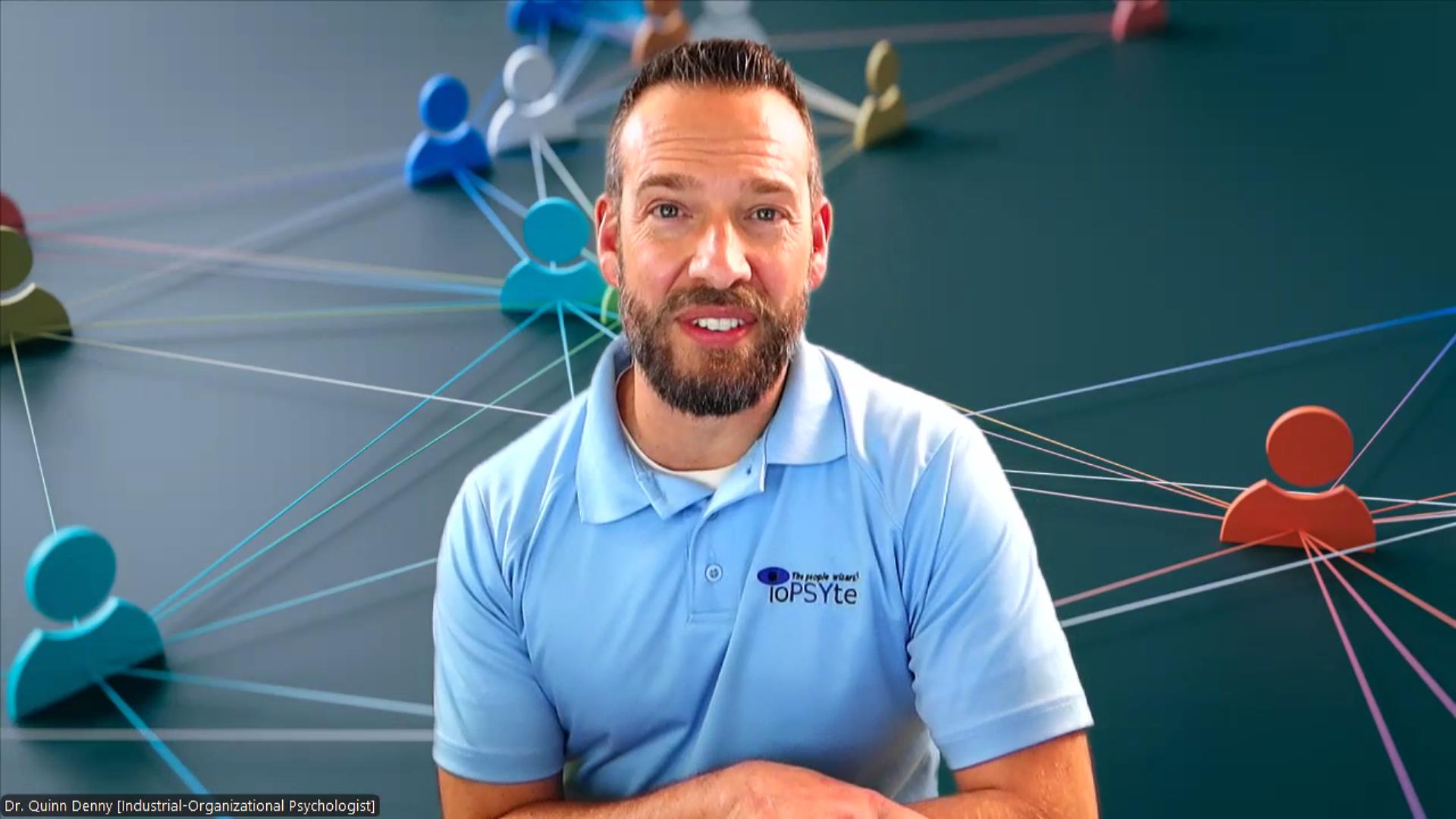
Let’s talk about resilience next – do you have a story you can share with us?
Part of my research area was studying positive psychological capital, known as PsyCap. The best way to remember PsyCap is to remember the acronym HERO. It stands for hope, efficacy, resilience, and optimism. Hope is a general positive expectation regarding the future, the outcome of things. Efficacy is confidence in one’s ability to produce a result or have an impact. Optimism is a general overall positive outlook on everything. Resilience is my favorite. Resilience is the ability to bounce back from a setback or hardship, not just to the level at which the hardship was experienced, but to a level of higher competence, so that what rattled us before does not have nearly the offsetting impact it initially did.
When I was pursuing my PhD, we had many family hardships. These hardships seem to come with such succession that they were incredibly difficult. Cancers, deaths, Covid complications, back injury and wheelchairs, financial challenges, and an array of other unexpected challenging events mark that time. At one point during my academic journey, amidst one of my many challenging advanced courses, an advanced research course, I had a moment where I wanted to quit. It was one of those moments where fatigue sets in, and the immediate overwhelming nature of everything lends itself to a sense of hopelessness. I was sitting at my desk, working on my assignment for this advanced course, and I began to think I cannot do this.
Ironically, I happened to be studying the very research that would give me perspective and resilience. It is perspective, which brings value, that makes such an impact on hope and resilience. Amidst all that hardship, I had lost my big picture view, forgotten how important my career change was, how job burnout had brought me to where I was; why I started in the first place. Essentially, I became so focused on the immediate intensity of circumstances that all the value in the big picture was out of mind. This is like getting super close to a painting, enough so that all one can see is the imperfect brush stroke rather than the beautiful painting in total.
At this dangerous moment, I got up from my desk and I began saying aloud the reasons I started my academic journey toward a career change. I reminded myself of where I came from and why I was not going back there. I told myself to look at how far I had come and asked what the me who was just starting out would say to the me who wanted to quit after coming so far. Turning around, I wrote on the glass picture frame behind my desk, “I will take my A in” followed by the course number. From that point on, every time even a hint of demotivation passed through my mind, I stood up from my desk, turned around and read that sentence aloud. I got my perspective back. It resulted in a PhD Psychology student of the year award. How many winning moments do we miss due to a fading, malnourished perspective?
Contact Info:
- Website: https://iopsyte.com/
- Instagram: https://www.instagram.com/iopsyte/
- Facebook: https://www.facebook.com/profile.php?id=100079517661907
- Linkedin: https://www.linkedin.com/in/dr-quinn-denny-8baaa1165/
- Youtube: https://www.youtube.com/channel/UCTO6wTINAjJEziq2FtiXXYA