

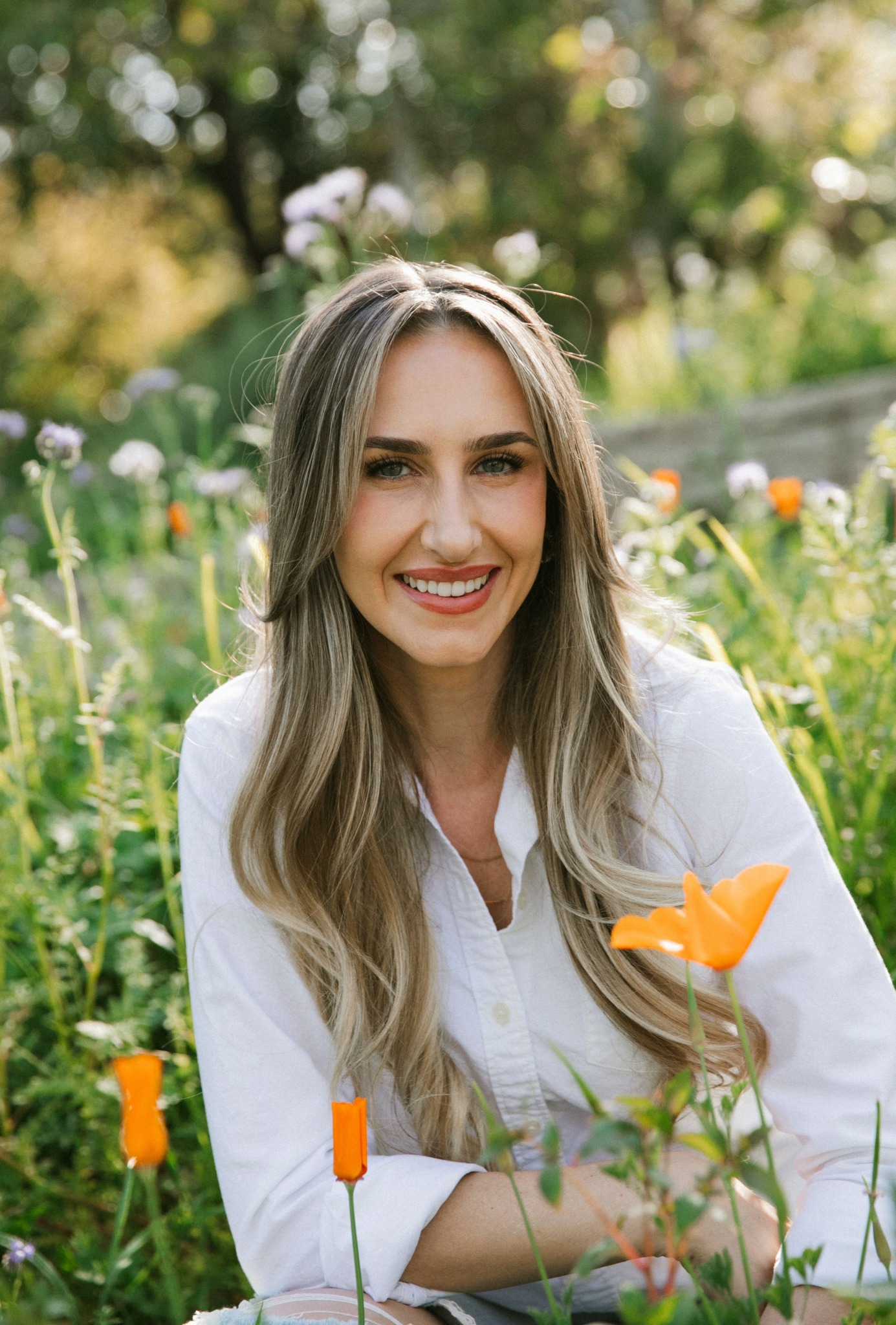

We recently connected with Dr Megan Mansfield and have shared our conversation below.
Dr Megan, thanks for taking the time to share your stories with us today We’d love to hear about how you went about setting up your own practice and if you have any advice for professionals who might be considering starting their own?
I decided to launch my practice after being in the field for over a decade and never really finding a place to land that fully aligned with my values. I envisioned a practice held within an environment that feels soulful, grounded, and simple, but also provides clinical care that goes beyond traditional talk therapy and instead, provides a therapeutic process deeply grounded in the neuroscience of healing. As a trauma specialist who works primarily with women and LGBTQ+ folks, it was also very important to build a practice where social justice values aren’t just buzzwords but the foundations of care. From this vision, Ash & Blooms Holistic Psychotherapy was born!
I dove into this endeavor with a lot of confidence in my clinical skills, but minimal experience in business, so that was the major learning curve for me. When I began taking some action to make my vision come to life, I knew I wanted to build at least the foundational knowledge and skills related to the ins and outs of marketing, finance, labor laws, and all the other aspects that come with running a business. So, I read as many articles and books as I could find, took classes, and consulted with colleagues. I love learning, so as scary as it felt at times, it was stimulating and exciting. I found myself really enjoying the branding aspects and feeling more uncertain about the financial obligations, especially when it came to all the taxes. I let my body guide my decision-making process in terms of which areas I wanted to take on by myself versus which I would delegate. I am so glad I did, because now I have the support I need to really enjoy the work.
That leads me to the advice I would give. At the end of the day, I think it’s important to find the balance between doing things on your own versus delegating. There are so many incredible resources out there these days that there’s really no reason to bombard yourself with every aspect of running a business. Instead, get clear on your values, notice which aspects you enjoy, and allow yourself to receive support. As a former people pleaser, one of my favorite mottos is, “You can do anything, but not everything.”

Dr Megan, love having you share your insights with us. Before we ask you more questions, maybe you can take a moment to introduce yourself to our readers who might have missed our earlier conversations?
I’m Dr. Megan, a Clinical Psychologist and Founder of Ash & Blooms Holistic Psychotherapy. Oddly enough, I never really considered another career path. Since I was a child, I have always been very curious (annoyingly so, some might say!) and deeply compassionate. My love of learning and helping others led me to the world of psychology when I was only a junior in high school. AP Psychology quickly became my favorite class. Choosing a major in psychology with a minor in social justice was a no-brainer. Around the time I was graduating from college, I reached out to a few therapists in the Los Angeles area for informational interviews. I had a good sense of what I wanted to do, but I needed to learn how to do it. It was suggested that I do some volunteer work related to the field to get a sense of whether or not I’d really enjoy the practice of psychology, because learning about something and applying it are two totally different things. I signed up to volunteer as a Rape Crisis Interventionist at Peace Over Violence, and that’s when everything clicked for me. I found a place where others were just as passionate about women’s rights, where my intrinsic characteristics actually felt like gifts, and, to be frank, a role that actually helped me heal from my own trauma by being of service to those who had gone through something similar.
My volunteer work inspired me to get my master’s and doctoral degrees in clinical psychology so that I could better support survivors. Over a decade later, that’s exactly what I do. My team and I all specialize in healing trauma and building empowerment. We each have our own niches within trauma, which is actually quite a broad spectrum, but collectively our specialties span across childhood trauma and CPTSD, sexual trauma, trauma related to surviving toxic relationships, chronic illness and medical trauma, as well as insidious identity-related trauma such as chronic discrimination and bullying.
What I’m most proud of is that we’ve built a practice that holds both rigor and soul. We provide deeply effective, evidence-based clinical work, but also the genuine humanity of therapists who understand that many ‘personal problems’ are really just reasonable responses to an unreasonable world. Healing from trauma is hard enough; we make everything else, from scheduling to billing to accessibility, feel as easy as possible. We’ve truly cultivated a rare essence that I know our clients appreciate.

Learning and unlearning are both critical parts of growth – can you share a story of a time when you had to unlearn a lesson?
When I first started therapy, I told myself I was just going to work on perfectionism and some people-pleasing. I figured it would be fairly quick work, maybe 12 sessions. I laugh about that now because what I didn’t yet understand was that perfectionism and people-pleasing aren’t quirks to work out. They’re often protective survival mechanisms, and underneath mine was childhood trauma I hadn’t fully faced. Little did I know, I was actually embarking on a years-long journey of trauma therapy.
The lesson I had to unlearn was that I had to hustle for my worth, that love and safety were things to be earned through performance rather than simply received. That belief was so deeply woven into how I moved through the world that I didn’t even recognize it as a belief. It just felt like my reality as an ambitious young woman.
IFS therapy changed everything for me. It helped me get curious about the parts of myself that were working so hard to keep me safe, and helped me to really be with and heal some old wounds. I learned to listen to my body, because she holds a wisdom that my overachieving mind had spent years overriding. I learned that the right relationships don’t ask you to mold yourself into something more palatable. And I learned that not only is life allowed to be messy, but that the mess is actually where we feel most alive.
That journey is a big part of why I do this work. I know I’m not alone in receiving some harmful messaging as a kid, and I know how deeply those messages can go on to impact us. Anxiety, resentment, burnout, distrust, that feeling like you’re just one mistake from everything falling apart — I’ve lived it, and I’ve done the work to heal from it. This is a lesson that can’t be taught in a book or a course, and it’s one of my biggest assets as a psychologist today. It’s truly an honor to walk alongside others as they move through their own healing journeys.

How do you keep your team’s morale high?
My approach to managing a team comes from the same place as my approach to therapy: empowerment is the goal.
That starts with psychological safety, and I don’t use that term loosely. My team is doing some of the most emotionally demanding and ethically rigorous work there is. If they can’t be honest with me, if they’re performing for me (the way our clients sometimes perform for others), then I’ve already failed them. So I’ve worked hard to build a culture where they can show up authentically, make mistakes without fear, and trust that I genuinely have their back.
In practice, that means a few things. We start every team meeting with what we call our Ash & Blooms check-in: one personal thing that’s been a loss or a challenge, and two personal things that are new, exciting, or rewarding. We also get together just to connect, do some arts and crafts, and have fun. It’s simple stuff, but it keeps us connected as human beings first, not just as clinicians or colleagues. In the office, I focus far more on building competency and confidence than on correcting mistakes. If someone isn’t feeling empowered in an area of their work, my job is to help them get there, not to make them feel small about the gap.
I also talk openly about financial empowerment, which I think a lot of bosses avoid. At the end of the day, we work because we need to make a living, and I want my team to feel genuinely valued in that way too. When people feel trusted, supported, and fairly compensated, the hard conversations don’t feel quite as hard. Instead, there’s a mutual respect and care for one another that makes everything easier. I trust that when those things are in place, we can handle whatever comes up.
Contact Info:
- Website: https://ashandblooms.com/
- Instagram: @ashandbloomstherapy
- Linkedin: https://www.linkedin.com/company/ash-blooms-holistic-psychotherapy
- Youtube: https://www.youtube.com/@ashandbloomstherapy


Image Credits
Shannon West Headshots