

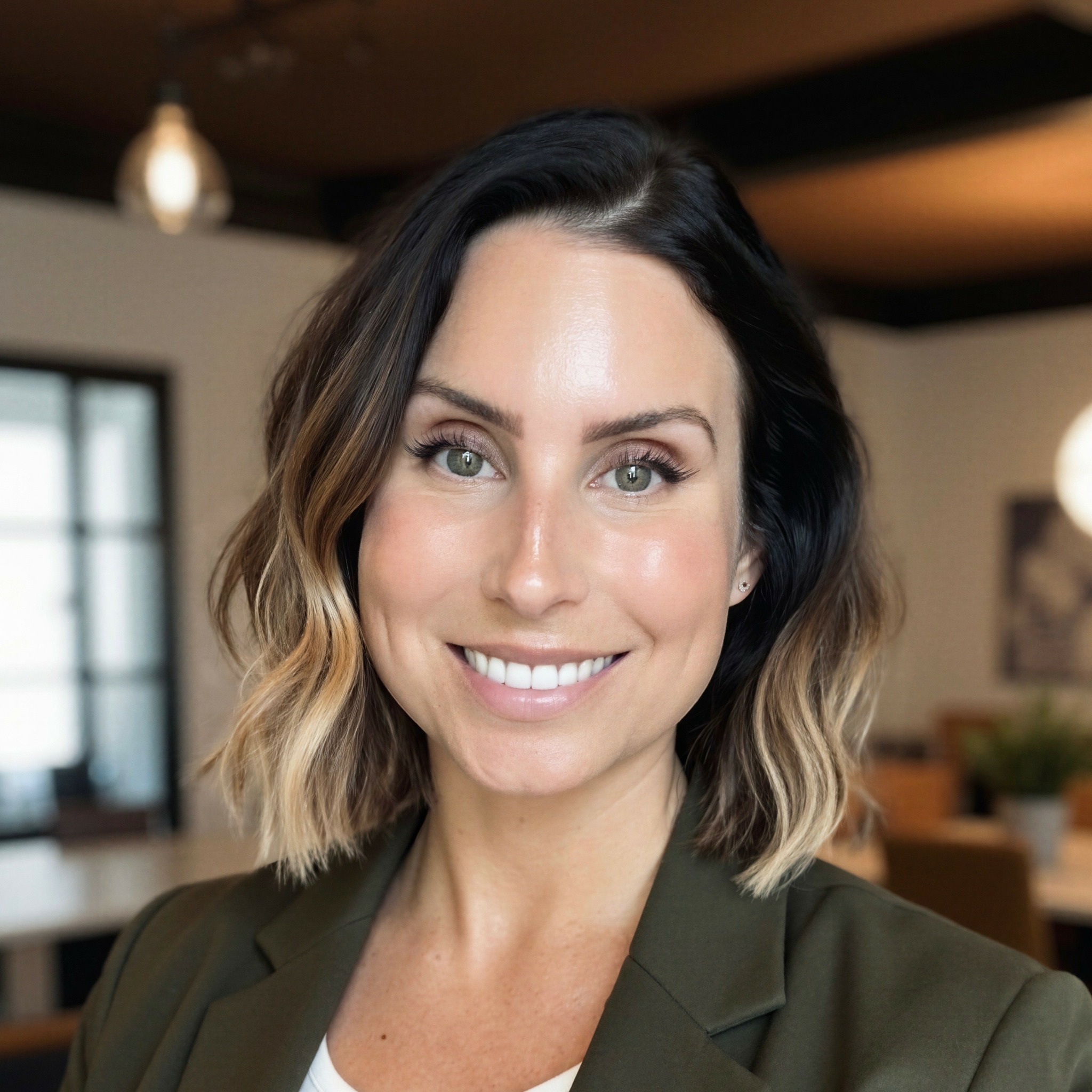

We’re excited to introduce you to the always interesting and insightful Dr. Megan Blaising. We hope you’ll enjoy our conversation with Dr. Megan below.
Dr. Blaising, thanks for taking the time to share your stories with us today Was there a defining moment in your professional career? A moment that changed the trajectory of your career?
There was a pivotal moment in my career that fundamentally reshaped both my trajectory and my sense of professional identity. It began with a decision that, at the time, felt equal parts uncertain and necessary. I accepted a role in the healthcare industry, stepping into an entirely new arena after building my foundation in social services and mental health. On paper, it appeared to be a departure. In reality, it became an expansion.
That transition led me into the Medicaid space at Elevance Health, which gave me my start in healthcare and opened the door to executive leadership. It was there that I began translating my prior experience into impact at a systems level. For years, my work had been rooted in direct care, engaging closely with individuals and communities. While that work was deeply meaningful, I recognized a growing desire to influence change more broadly. This opportunity allowed me to move from addressing individual outcomes to shaping structures that affect entire populations. Today, I continue that work as an executive at Optum, building on the foundation that Elevance helped establish.
What made this moment defining was not simply the career shift itself, but the internal negotiation it required. I had to confront the assumption that my qualifications were confined to a specific field. That belief is more common than we acknowledge, particularly among women, who often hesitate to pursue opportunities unless they meet every listed requirement. I came to understand that capability is not always linear, and that adjacent experience can be just as powerful as direct alignment.
The most enduring lesson from that experience is simple, though not always easy to enact. Take the risk. Growth rarely occurs within the boundaries of certainty. By stepping beyond what felt familiar, I opened the door to possibilities that had previously seemed out of reach. That decision became both the greatest risk and the greatest reward of my career. It served as a launching point for where I am now and continues to shape where I am going. So, identify the need you want to meet. And make the move.

Dr. Blaising, love having you share your insights with us. Before we ask you more questions, maybe you can take a moment to introduce yourself to our readers who might have missed our earlier conversations?
I am a healthcare executive at Optum, with a professional foundation rooted in mental health and community-based care. I began my career working in local school districts, where I supported students and families navigating complex challenges, with a particular focus on trauma-informed care and school reform efforts in underserved environments. That early work shaped not only my clinical lens, but also my long-term commitment to advancing equitable systems of care.
My transition into the broader healthcare industry allowed me to expand that impact beyond individual and school-based settings into population health and large-scale system transformation. In addition to my executive role, I am an author and an emerging voice returning to journalism. I am actively writing articles with a focus on myriad social interests. Through both writing and leadership, I aim to elevate conversations that matter and bring visibility to issues that are often overlooked or misunderstood.
I am most proud of my ability to evolve without losing the core of why I started. Every role I have taken on has been anchored in a desire to create meaningful, measurable change. Whether through healthcare leadership, writing, or thought leadership, my goal remains consistent. I want to inform, influence, and improve the systems that people rely on every day.
For those who engage with my work, I want them to know that it is grounded in purpose. I am deeply committed to advancing equity, telling important stories, and challenging the status quo when necessary. My brand is not just about professional achievement. It is about intentional impact.

What’s a lesson you had to unlearn and what’s the backstory?
One of the most important lessons I have had to unlearn is the belief that qualification is something externally granted rather than internally owned. Early in my career, I approached opportunities with the assumption that I needed to prove I belonged in the room, that my readiness would be determined by someone else’s assessment. That mindset shaped how I showed up, particularly in high-stakes moments like interviews.
The shift began with a lesson my father shared years ago, one that did not fully resonate until I had more experience behind me. He reminded me that an interview is not a one-sided evaluation. It is a mutual exchange. We are assessing organizations just as much as they are assessing us. That reframing challenged the idea that the company holds all the power and instead positioned the process as a two-way decision about alignment, values, and fit.
From that perspective, I also learned to take the outcome off the table. When the sole focus is securing the role, pressure builds in a way that can limit authenticity. By approaching interviews as an opportunity to explore, the dynamic changes. Curiosity replaces performance. Presence replaces pressure.
That shift has been transformative. It shapes how you perceive your seat in the interview and board room alike. When you are grounded in the belief that you are already qualified and that you are evaluating the opportunity as much as it is evaluating you, you engage differently. You are more authentic, more discerning, and more aligned in your decision making. In my experience, the most sustainable and impactful professional relationships are built from that place. When both sides are clear about needs, expectations, and values, longevity and success are not left to chance.

If you could go back, would you choose the same profession, specialty, etc.?
Yes, I would choose the same career again without hesitation. The progression was not only intentional, it was necessary, and it has provided me with a lens that continues to shape how I lead, think, and contribute within healthcare today.
My journey began in direct care, working closely with individuals and families in real-world settings where the consequences of systems are most visible and immediate. That experience was foundational. It grounded me in the human realities behind policy, structure, and access. Over time, I transitioned into system-level work, where I now operate within broader healthcare environments.
That evolution matters deeply to me because meaningful systems change cannot happen in isolation from lived experience. You cannot effectively design, lead, or transform systems without first understanding who those systems are meant to serve and how they function in practice. Direct care gave me that essential grounding. Looking back, every stage of my career built on the one before it. The progression was not linear in a traditional sense, but it was purposeful.
Contact Info:
- Instagram: megan.blaising
- Linkedin: https://www.linkedin.com/in/meganeblaising/

Image Credits
Event Photos: Nick Blaising Photography