

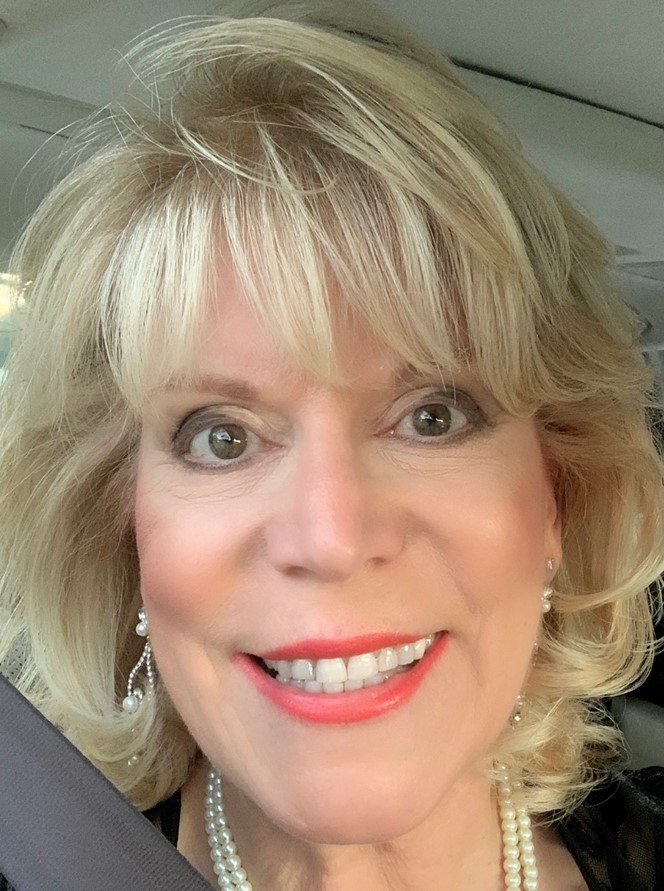

We were lucky to catch up with Dr. Linda Gettinger-Dinner recently and have shared our conversation below.
Linda, appreciate you joining us today. Was there a defining moment in your professional career? A moment that changed the trajectory of your career?
In the Spring of 1997, I learned that a dear friend of mine lost his life to suicide. We were no longer in contact with one another at the time, so I was apprised of the tragic incident from a stranger who I had just met in a social setting. I remember feeling numb and deeply saddened… the feeling that maybe I could have done more, if I only knew the pain that he was suffering. It was shortly after learning about his struggle and ultimately his demise, I pivoted my career focus and forged ahead to extend my educational studies in the field of psychiatry. In the Summer of 1999, I graduated with a Master’s Degree in Nursing, and was licensed by the Florida Board of Nursing as a Psychiatric Mental Health Nurse Practitioner. It was this defining moment in my life that led me to realize that the emotional pain in one’s life has movement and force that traps a person’s will to live. I knew I wanted to devote my time and professional services to helping people who are in dire need of support and guidance during their toughest battles. The severity of emotional instability experienced by others triggered a desire within me to do more. Much of my professional career prior was spent at the bedside and in education…hence, I was now committed to render psychiatric services that would promote healing through psychotherapy and psychotropic medication as needed. I became expert at assessment, diagnosis and treatment for those individuals with psychiatric mental health disorders.
Awesome – so before we get into the rest of our questions, can you briefly introduce yourself to our readers.
Serving in healthcare for over 30 years, helped me to truly understand not only the physical needs of those in my care, but the individual emotional needs, as well. I was gifted with the capacity to empathize with the patient and family in ways that were most effective and humane. Relating to the emotional pain that a person experiences is life-changing. Being there in the moment, reassures the person that they are not alone, and that care and support is being provided unconditionally. After all, our physical wellness is directly correlated with the integrity of our thoughts and feelings. Reaching the patient at a deeper, emotional level, facilitates the healing process. Thus, 23 years ago, I was certain that I wanted to commit to extensive, formal training in psychiatric mental health, and begin a career as a Psychiatric Mental Health Nurse Practitioner. Being mentally flexible, seeing things from other people’s perspectives, and helping them build on their own culture, ideals, and resources is key in empowering rather than controlling the outcome of events.
Fortunately, there have not been any significant obstacles that entered my path in providing efficient and high quality psychiatric mental health services. I work with patients who are in drug/alcohol recovery. In addition, I see patients with anxiety, depression, bipolar disorder, schizophrenia, and many other mental health issues. I find the work endlessly enjoyable and rewarding, not just because of the ideals of helping, but I really like the work itself, I look forward to every new patient as well as to every celebratory send-off of someone who has completed work with me. I enjoy a challenge, I enjoy learning about the aspects of brain functioning and habit change and relationship complexities that we all share, and I enjoy seeing the countless ways that each person’s mind, body, history, emotions, thoughts, and web of relationships and roles is unique. I am a firm believer in continuing education to enhance my expertise and wisdom over time, and reinvent my style of therapy for every new patient, for each new challenge we decide to work on, and sometimes for each session. Prescribing psychotropic medication when needed is an area of my practice that is carefully and skillfully executed.
I offer psychiatric evaluation and psychotherapeutic services for a variety of conditions. Some conditions treated are as follows: anxiety, panic disorder, depression, bipolar, grief, medication management, post-traumatic stress disorder (PTSD), eating disorders, drug/alcohol recovery, and schizophrenia.
Putting training and knowledge aside, what else do you think really matters in terms of succeeding in your field?
Other than training and knowledge, having empathy for other human beings is imperative and helpful in succeeding in my field. I take pride in the manner in which I treat patients as human beings who have individual needs. I spend a great amount of time getting to know the individual and expressing empathy while providing expert care. Caring without judgment is critical in rendering non-biased treatment. Each patient that I see comes forth with their own, unique story. There is no one-size fits all approach to treating patients with mental health issues. Having empathy and compassion expressed in an authentic manner helps the patient to trust and feel comfortable with the provider. Self-awareness is the underpinning of empathy. Knowing oneself is key, the foundation for truly understanding others. Being in touch with your own inner feelings helps you to identify such feelings in others. Acceptance of oneself typically leads to acceptance of others.

Do you think you’d choose a different profession or specialty if you were starting now?
I am fully committed to addressing the psychiatric needs of those patients for whom I care for. Without a doubt, I would choose this specialty again. I always felt competent in caring for patients who struggled with anxiety, depression, grief, and other psychiatric diagnoses. My ability to listen attentively and analyze pertinent conversations has been a true gift in serving others. Representing my core values, I adhere to “The 7 Habits of Highly Effective People “– Habit 5 : – SEEK FIRST to UNDERSTAND, THEN to be UNDERSTOOD – Stephen Covey. Covey identified that in order to build deep relationships and lead with clarity, you need to first truly understand what people are both saying and feeling when in conversation. This is normally referred to as empathic listening. Once you understand their story, then and only then you reply, based on what they have said. This avoids any preconceptions you may have, reduces the chance of conflict and allows you to listen intently, whilst developing respect and trust.
Contact Info:
- Other:
Psychiatric Specialty Center
Dr. Linda Gettinger-Dinner , DHSc, PMHNP, MSN, MS, BSN, BA
Psychiatric Mental Health Nurse Practitioner
Appointments via Telemedicine
(561)-331-8800