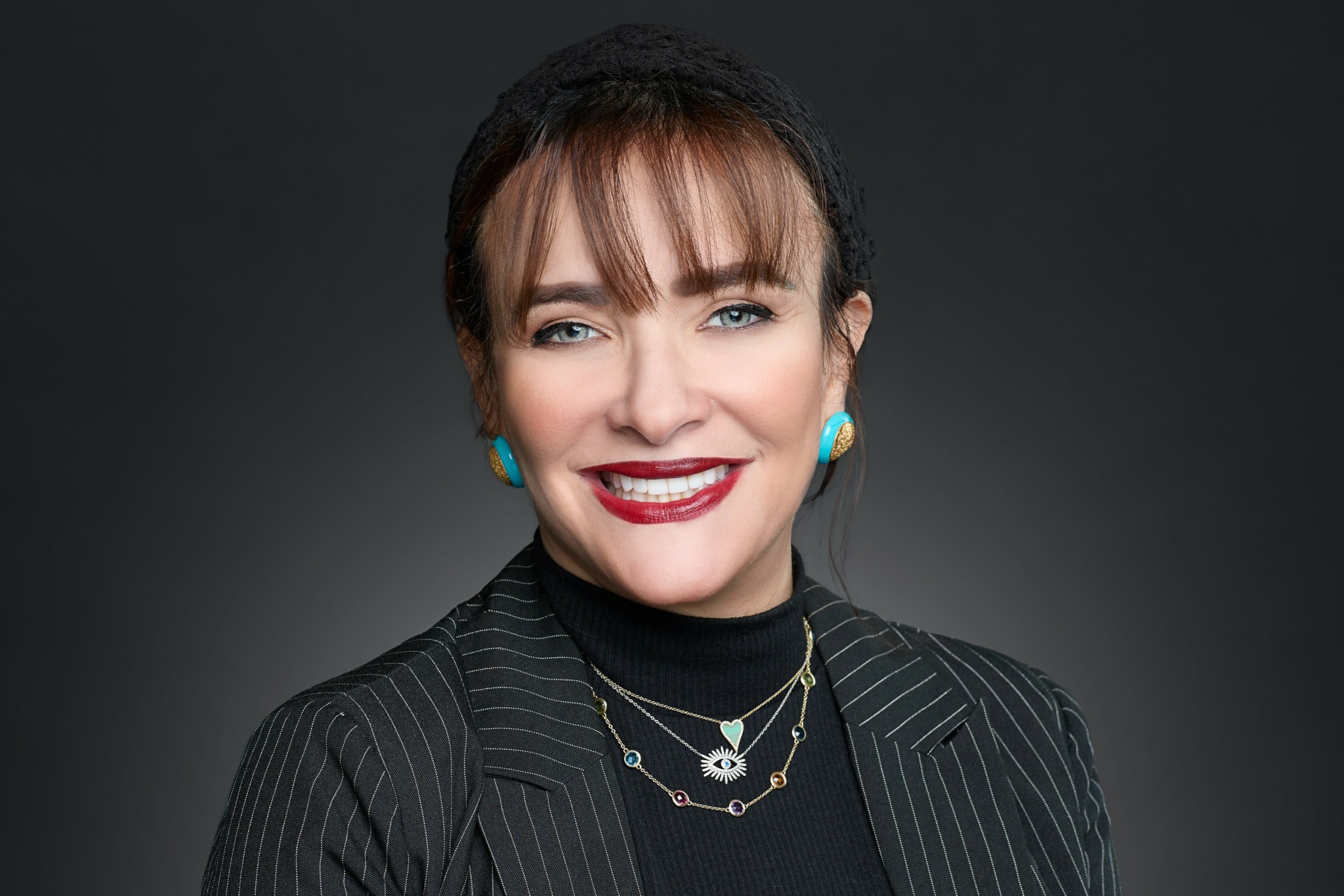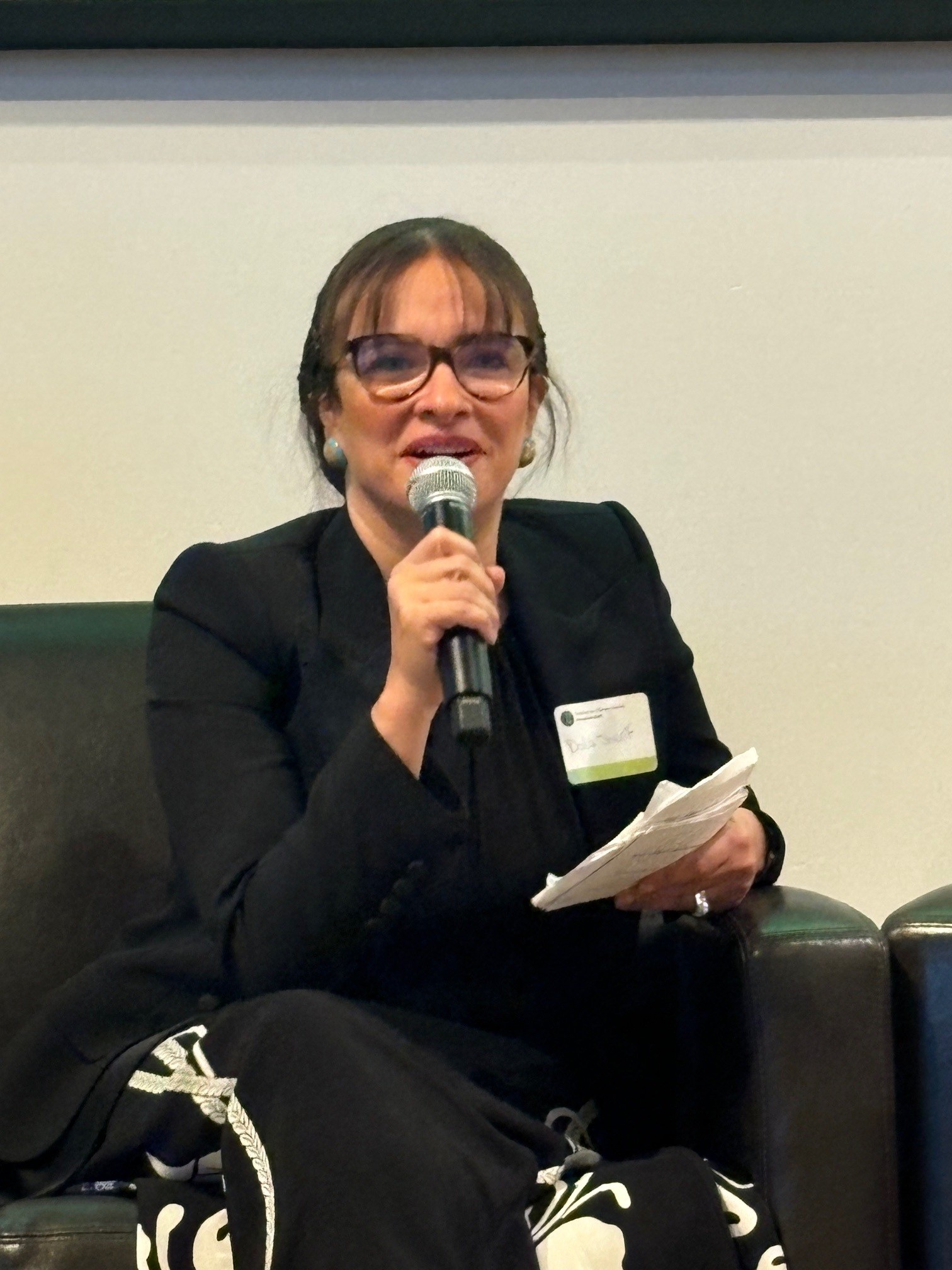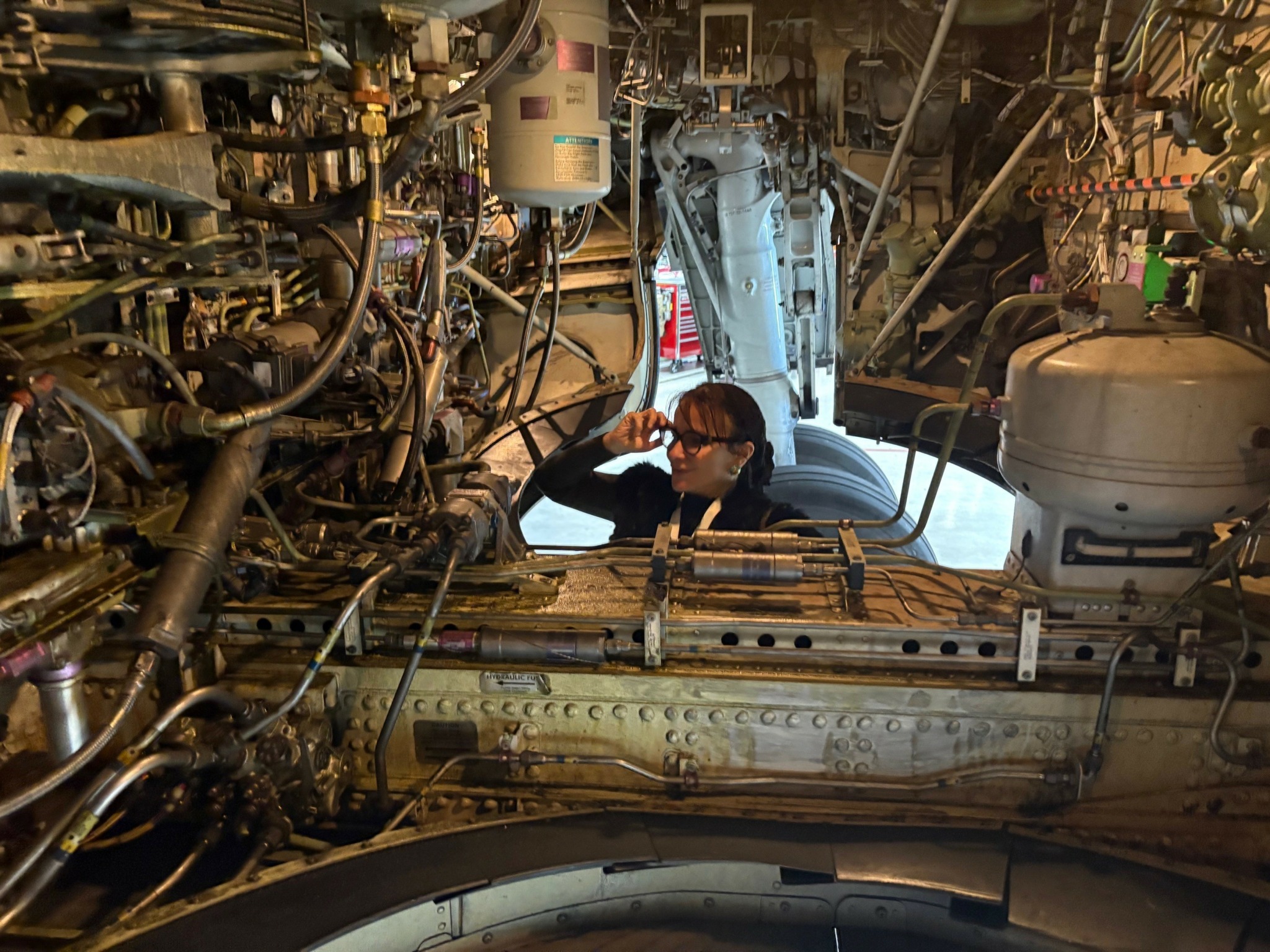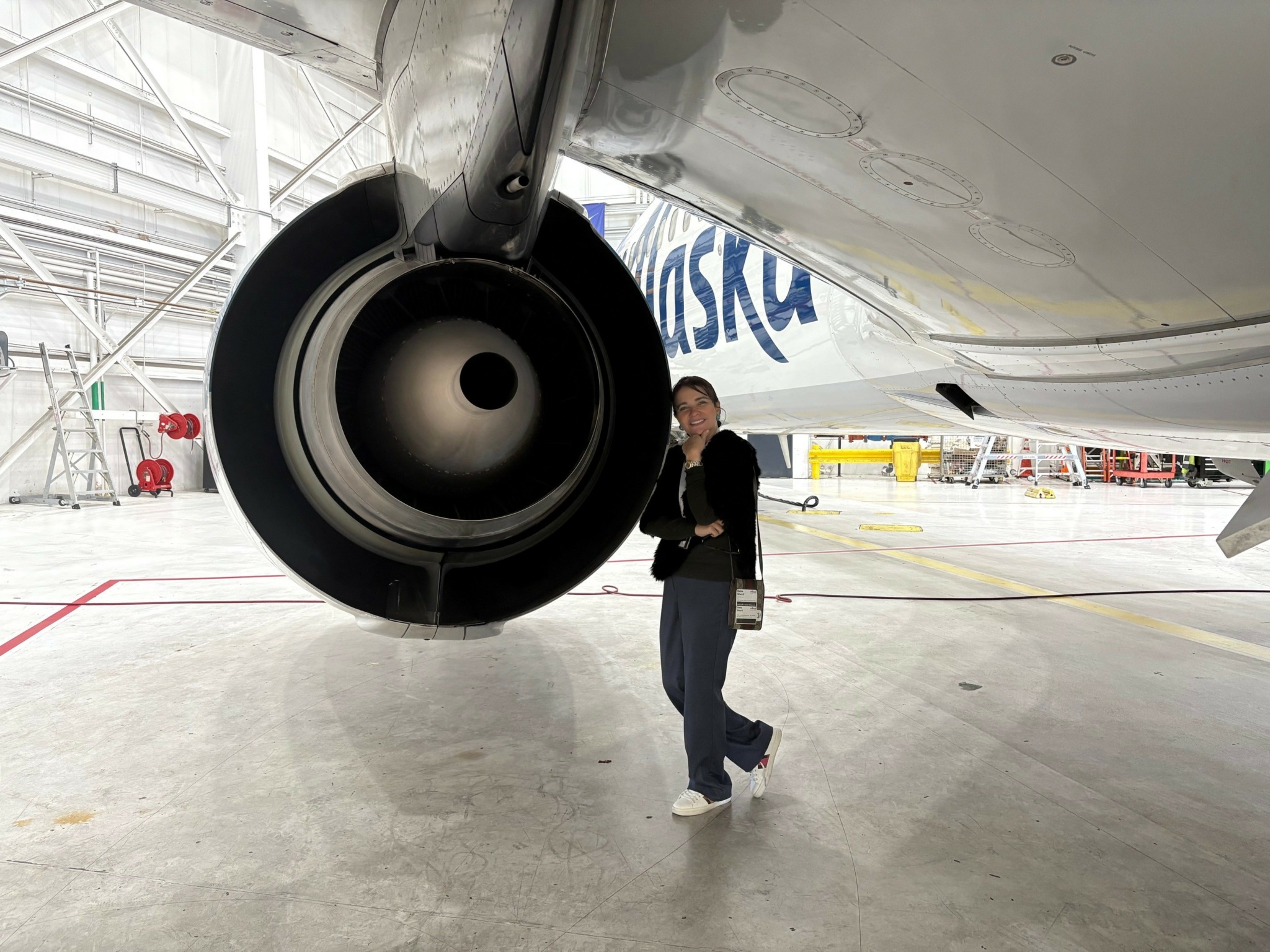

We recently connected with Dr. Dalia Sherif and have shared our conversation below.
Dr. Dalia, appreciate you joining us today. What were some of the most unexpected problems you’ve faced in your career and how did you resolve those issues?
During my tenure with the U.S. Foreign Commercial Service, one of the most unexpected challenges I encountered arose while working with a major global entertainment company on a high-profile film project in Egypt. The company sought to capture an aerial sequence of the Pyramids of Giza—an ambitious and visually stunning concept intended to showcase Egypt’s history and beauty from a rare vantage point.
At first, the plan seemed straightforward: bring in a specialized aerial cinematography crew and film the scene. However, we quickly discovered that flying over the Pyramids isn’t simply a matter of scheduling and permits. The airspace above one of the world’s most treasured landmarks carries enormous cultural and safety responsibilities. The level of risk mitigation involved went far beyond what could be calculated on paper; it simply could not be reduced to mathematics.
Recognizing the profound historical, cultural, and civilizational significance of the Pyramids of Giza, enduring symbols of Egypt’s identity and humanity’s priceless heritage, I understood that this request extended far beyond international project execution. It called for thoughtful stewardship and an appreciation of monuments that have stood for millennia as testaments to human ingenuity and continuity. I therefore advised the company to partner with a trusted local production team deeply rooted in Egypt’s cultural context and fully versed in its aviation and film regulations. This approach strengthened the project’s credibility while ensuring that every aspect of the production honored Egypt’s priorities, protected an irreplaceable global icon, and complied fully with national guidelines.
From both a technical and execution standpoint, developing the risk-mitigation plan was exceptionally complex. Any deviation in equipment performance or environmental conditions could have resulted in unacceptable outcomes. This required rigorous assessment of tolerances, systems, and emergency contingencies, as well as clear decision thresholds for aborting the plan. The planning process demanded absolute precision, layered safeguards, and real-time coordination among specialists, cultural authorities, antiquities and security officials to ensure that creative objectives never superseded preservation, safety, or national responsibility. Through careful coordination and open dialogue with Egyptian authorities and counterparts, we were able to identify a safe and compliant approach to capturing the desired footage. The process required adapting filming methods and working closely with authorities to ensure alignment with national standards and security protocols. Ultimately, the effort became a testament to Egypt’s collaborative spirit and technical capability in supporting international creative projects.
In the end, what began as a complex filming project evolved into a creative endeavor and a valuable lesson in environmental awareness, comprehensive risk management, creative problem-solving, cross-cultural collaboration, and the enduring importance of strong local partnerships. This experience yielded several lasting lessons. First and foremost, I gained a deep appreciation for environmental and cultural awareness, understanding that working near a site as historically and culturally significant as the Pyramids requires sensitivity, respect, humility, and care, along with a reverence for history that transcends any project. The experience reaffirmed the importance of risk and safety management, reminding me that not all risks can be reduced to formulas or forecasts; some must be navigated through careful judgment, preparation, adaptability, and a deep understanding of context. I also learned the power of creative problem-solving, where flexibility and innovation become essential when conventional approaches no longer suffice. The project underscored the irreplaceable value of local partnerships, which ensured both regulatory integrity and authentic alignment. Above all, it revealed how cross-cultural collaboration, rooted in trust, respect, and shared purpose, can transform even the most complex projects into enduring opportunities for connection, understanding, and success.
Awesome – so before we get into the rest of our questions, can you briefly introduce yourself to our readers.
I often describe my work as existing at the intersection of education, entrepreneurship, and economic mobility, but those are only the visible edges of a much deeper calling. At its center, my journey has always been about people, about listening in the quiet spaces where stories are carried, learning from lives shaped by resilience, and moving alongside others as they navigate systems that are often complex, impersonal, and difficult to decipher. My work is an act of translation and guidance: helping people find meaning where structures feel distant, dignity where obstacles remain, and possibility where the path ahead has been obscured. In that space, leadership becomes a form of care; an offering of presence, patience, and belief in what can still unfold.
My professional journey began internationally, in marketing, communications, trade and commercial diplomacy, supporting U.S. exports, global trade, and public–private partnerships. As a Commercial Specialist and Business Development professional, I worked alongside governments, embassies, industry leaders, and international organizations to promote fair trade and support businesses operating across borders. That work taught me how deeply policy, markets, culture, and human behavior are intertwined, but it also showed me how easily people can be lost inside systems that they are not familiar with.
Immigrating to the United States changed not only where I lived, but how I understood opportunity. I arrived with experience, education, and determination, yet quickly learned that those things alone are not always enough. There were invisible rules, how credentials translate, how networks form, how systems speak, that were never written down or taught anywhere. I once heard someone say, “Borders don’t just change your location; they change how clearly you see systems.” That has stayed with me. I came to understand that talent is everywhere, but access often depends on whether someone has guidance, encouragement, and someone willing to say, “You belong here.”
That realization quietly redirected my life toward higher education. I was drawn to it not as an institution, but as a possibility, a space where lives can change when learning is paired with dignity, relevance, opportunity, and care. Over the past two decades, I have had the privilege of serving as faculty, academic leader, workforce executive, and program builder across community colleges and universities. I have helped launch new degrees, build entrepreneurship incubators, redesign prior learning assessment models, and create pathways that connect education to meaningful work. None of this work has been about programs for their own sake; it has always been about the people moving through them.
Today, my focus remains on bridging education and opportunity, especially for those navigating transitions, immigrants, first-generation students, adult learners, and individuals reimagining their futures. I work to design learning experiences that honor what people already carry with them while equipping them for what lies ahead. This includes integrating entrepreneurship, experiential learning, and thoughtful uses of artificial intelligence into curriculum, not as trends, but as tools that help learners stay relevant, confident, and adaptable in a changing world.
What shapes my approach most is lived experience. I have seen systems from many sides, government, trade, academia, workforce development, and I have also lived inside those systems as someone learning how to belong. That perspective keeps me grounded and anchored in purpose. It reminds me that leadership is ultimately an act of service; one that begins with humility, deep listening, and respect for lived experience. It challenges me to look beyond what is simply effective and to ask instead, “Who does this serve, whose voices are reflected, and why does it matter?”
I often return to this belief:
Education is not the moment someone becomes capable; it is the moment they realize they already were.
What I am most proud of are the quiet transformations, the moments that unfold softly but last a lifetime. A student discovering their voice. An adult learner realizing that their past is not a barrier, but a foundation. An aspiring entrepreneur glimpsing a future that finally feels possible. I often think of a student from my class whom I helped navigate admission to a university on a full-ride scholarship. Years later, they reached out to share that they had developed an early prototype of a healthcare-related innovation and that the first iteration was “for me.” I may never hold it in my hands, but its meaning endures. It is a reminder that when we build systems that recognize the whole person; their story, resilience, and unrealized potential, we do more than open doors. We leave behind echoes of belief that continue shaping lives long after our work is done.
For those encountering my work for the first time, I hope this is what you see: a commitment not to silos, but to shared purpose; not to outcomes for display, but to impact with meaning. I am drawn to work grounded in trust, shaped by collaboration, and guided by innovation that serves people. I believe education is not a destination, but a bridge, and my role, as I understand it, is simply to walk alongside others as they cross it, offering clarity when the path feels uncertain, courage when it feels daunting, and hope when it matters most.
What’s been the most effective strategy for growing your clientele?
When people ask how I grew enrollment, I begin by saying that growth was not the measure that guided my work—relevance was. When programs reflected the lived realities, aspirations, and futures of students, employers, and communities, enrollment followed naturally, drawn not by numbers, but by meaning.
I supported the launch of an MBA program at a moment when it entered Houston’s incredibly competitive landscape, surrounded by large, long-established institutions. Instead of racing to compete, we chose to listen to students, to employers, and to the quiet signals of a workforce shaped by Houston’s evolving economy.
We began by deeply involving industry in curriculum design. Through active Advisory Committees, employers helped shape learning outcomes, ensuring that what students were learning in class aligned with what organizations actually needed. This was not symbolic engagement; industry partners reviewed curricula, identified emerging skill gaps, and helped us continuously refine content so it stayed relevant and applied.
We also brought industry directly into the classroom. One of the most impactful strategies was team teaching, pairing a professor with a corporate fellow, a senior industry practitioner, so students could experience theory and practice side by side. Concepts were no longer abstract; they were immediately grounded in real organizational challenges. This approach helped students understand not just what to do, but how decisions unfold in real workplaces.
Pedagogically, we moved toward a flipped classroom model, shifting away from passive lectures and toward active, problem-based learning. Students engaged with content before class and used class time to analyze cases, solve live business problems, work in teams, and receive feedback from both faculty and industry leaders. This created a learning environment that mirrored professional settings and strengthened students’ confidence and leadership skills.
As the program became more relevant, practical, and connected to industry, something important happened: students began to advocate for the program themselves. Word of mouth grew. Employer partnerships expanded. Alumni engagement deepened. Over time, the MBA grew to one of the largest MBA programs in Texas, a transformation rooted in trust, relevance, and community connection.
This work was recognized beyond the institution when I received the Houston Business Journal’s “Woman Who Means Business” Award, an honor that reflected not just enrollment growth, but the broader impact of building programs that genuinely serve students, employers, and the regional economy.
Today, I advance this same philosophy through the intentional integration of artificial intelligence, not as an isolated digital capability, but as an embedded analytical layer within professional practice. AI is infused directly into technical skill development, including areas such as fault diagnosis, predictive analysis, and systems optimization, where it enhances reasoning rather than replaces it. Within the curriculum, AI serves as a framework for decision-making, strategic judgment, productivity, and ethical leadership. Students learn to work alongside intelligent systems, critically, responsibly, and creatively, understanding how to interpret outputs, validate assumptions, and identify bias. They are trained not simply to use AI, but to steward it with ethical judgment and responsibility. Once again, the objective is not novelty, but relevance, preparing graduates to remain competitive, adaptable, and trusted in a rapidly evolving workforce.
Looking back, enrollment growth was never the result of a single strategy. It was the outcome of respecting students as professionals, treating industry as true partners, and designing learning experiences that meet people where they are while preparing them for where they are going. When education reflects real life, people show up. And when people feel seen, they stay.
Let’s talk about resilience next – do you have a story you can share with us?
There are moments in leadership when resilience does not announce itself as courage or confidence. It arrives quietly in the choice to keep showing up while the ground shifts beneath you, to hold responsibility without the comfort of clarity, and to remain steady when the familiar scaffolding of certainty has fallen away.
During the height of COVID, I was responsible for launching four new bachelor’s degree programs. The timing could not have been more fragile. Campuses were closed. Classrooms were silent. Families were afraid. Students were isolated and trying to make sense of a world that no longer followed any recognizable rules.
Yet COVID was also a moment when many people began to rethink their futures. Jobs disappeared or changed overnight. Career paths that once felt stable no longer did. For many students, especially working adults and first-generation learners, this disruption created not only fear but also a quiet question. Is there another way forward? We understood that education at that moment could be a bridge, an opportunity to learn new skills, upskill, or change lanes entirely. We positioned ourselves intentionally in that space.
These bachelor’s degrees were created with a clear and urgent purpose to address affordability, opportunity, and access. They were designed to offer students, many of them first generation and working adults, a more attainable pathway to a bachelor’s degree without the traditional financial and structural barriers. Still, in the midst of a global crisis, even explaining why these programs mattered felt daunting. There was little room to speak openly about opportunity and access when fear and survival dominated nearly every conversation.
There was no open campus to point to. No welcome desk. No orientation day where parents could sit in an auditorium and hear someone say, “Your child will be successful.” Many stakeholders struggled to understand what a college bachelor’s degree delivered online represented, particularly when bachelor’s education had long been associated in their minds with four-year universities, physical campuses, and very specific processes. Students did not know where to ask questions or even what questions to ask. In person information sessions, one of the most basic tools for enrollment and recruitment, felt nearly impossible.
I remember sitting with the weight of that responsibility, knowing that if we misstepped, it would be a broken promise. These programs carried access, possibility, and the trust that once placed in institutions, is among the most delicate responsibilities leaders inherit. So, we shifted the way we engaged entirely. We stopped speaking in institutional language, we met families where they were, on screens, in living rooms, often through informal sessions we called ‘Coffee and Conversation’. We explained not only what the programs were but why they existed. We talked about affordability honestly. We spoke about access with care and intention. And when the opportunity felt difficult to explain directly, we demonstrated it through storytelling, presence, care, and consistency. We created small moments of connection within a system designed to feel personal, attentive, and deeply human.
Faculty and industry partners stepped in alongside us. Everyone contributed. Everyone helped. People saw this. A student would stay after a virtual session and say, “I think I can do this now.” A parent would write to say, “Thank you for explaining this again. I was scared, but now I understand.” By building authentic relationships with employers and industry partners, we integrated not just the skills of today, but the work of tomorrow. Those insights shaped programs, created pathways to experience, and ensured that learning remains alive and relevant. In doing so, we honored students’ trust by preparing them not only to graduate, but to step confidently into work that sustains them, contributes to their communities, and affirms the dignity of their aspirations. Enrollment moved quickly and deliberately. Trust formed because we consistently showed that we cared. All four programs launched strong. Students enrolled. Classes began. Faculty committed. Families, graduates and employers began to carry the story forward as its strongest advocates.
This experience taught me that progress is rarely forged through sheer will alone, but through presence and care. It is the quiet decision to remain engaged, to diffuse uncertainty without allowing it to diminish resolve, and to trust that possibility often emerges before the challenge fully unfolds. In those moments, leadership becomes less about predictability and more about faith in the work, in people, and in the promise that a path will reveal itself in time through commitment, resilience, and hard work.
Launching those programs during COVID reshaped my understanding of leadership at its core. I came to see leadership not as the act of setting direction from a distance, but as the stewardship of trust, of hope carried quietly, and of futures entrusted to us at their most fragile moments. I learned that education does not endure simply because systems are well designed or processes are resilient. It endures because people choose, again and again, not to abandon one another, to show up, to listen, to care, and to hold the line for possibility when circumstances change or the ground beneath begins to shift.
That is the resilience I carry with me now. Quiet, patient, and rooted not in certainty but by devotion to service. It reflects a truth I return to often: “The best way to find yourself is to lose yourself in the service of others.”
Contact Info: