



We caught up with the brilliant and insightful Dr. Christine Nguyen a few weeks ago and have shared our conversation below.
Dr. Christine, thanks for taking the time to share your stories with us today What’s something you believe that most people in your industry (or in general) disagree with?
I specialize in infant tongue ties as it affects the mother-baby relationship of breastfeeding. However, many pediatricians view tongue ties as, “controversial,” a “trend,” or “over-diagnosed.” This is an unfortunate point of view because when they diminish the impact a restricted lingual frenulum has, many health and developmental issues can arise as a result of dismissing it. More and more research is being done in regards to breastfeeding and how a restricted tongue tie can lead many mothers to prematurely end breastfeeding as a result of poor latch, pain, low milk supply, or tedious pumping, to name a few. Surgically releasing the tie [if necessary], in combination with lactation support and therapy, can make a world of a difference for both mother and baby.
Additionally, the mouth and tongue have many functions, not just for breastfeeding. Our mouth affects how we breathe and sleep. If a person is snoring or mouth breathing, the worse it can lead to is obstructive sleep apnea. Many people accept snoring as normal and it is absolutely not. It can affect your heart, attention, regulation, and functioning. The misconception is that if you sleep at night, you’re rested. If you are snoring, mouth breathing, or have apnea, your body is working extremely hard to keep you alive and asleep. The research is out there but yet there are healthcare providers telling parents that their baby will, “grow out of it” or that it’s simply a trend. It’s a constant uphill battle that infant-care clinicians such as myself, face each and every day. We are trying to build better collaborations, but we can’t do that if the main physician we need is not on our side and does not have the baby’s best interest in mind.
Now that we know better about sleep and breathing and how the oral anatomy, such as a restricted tongue tie, can affect many elements of our life, we need to do better. Early intervention during infancy is key in potentially preventing or reducing the negative impact it can have on a baby’s development down the line.
I chose a challenging business to run, however, it’s for the good and benefit of each person’s health, wellness, and longevity.

Great, appreciate you sharing that with us. Before we ask you to share more of your insights, can you take a moment to introduce yourself and how you got to where you are today to our readers.
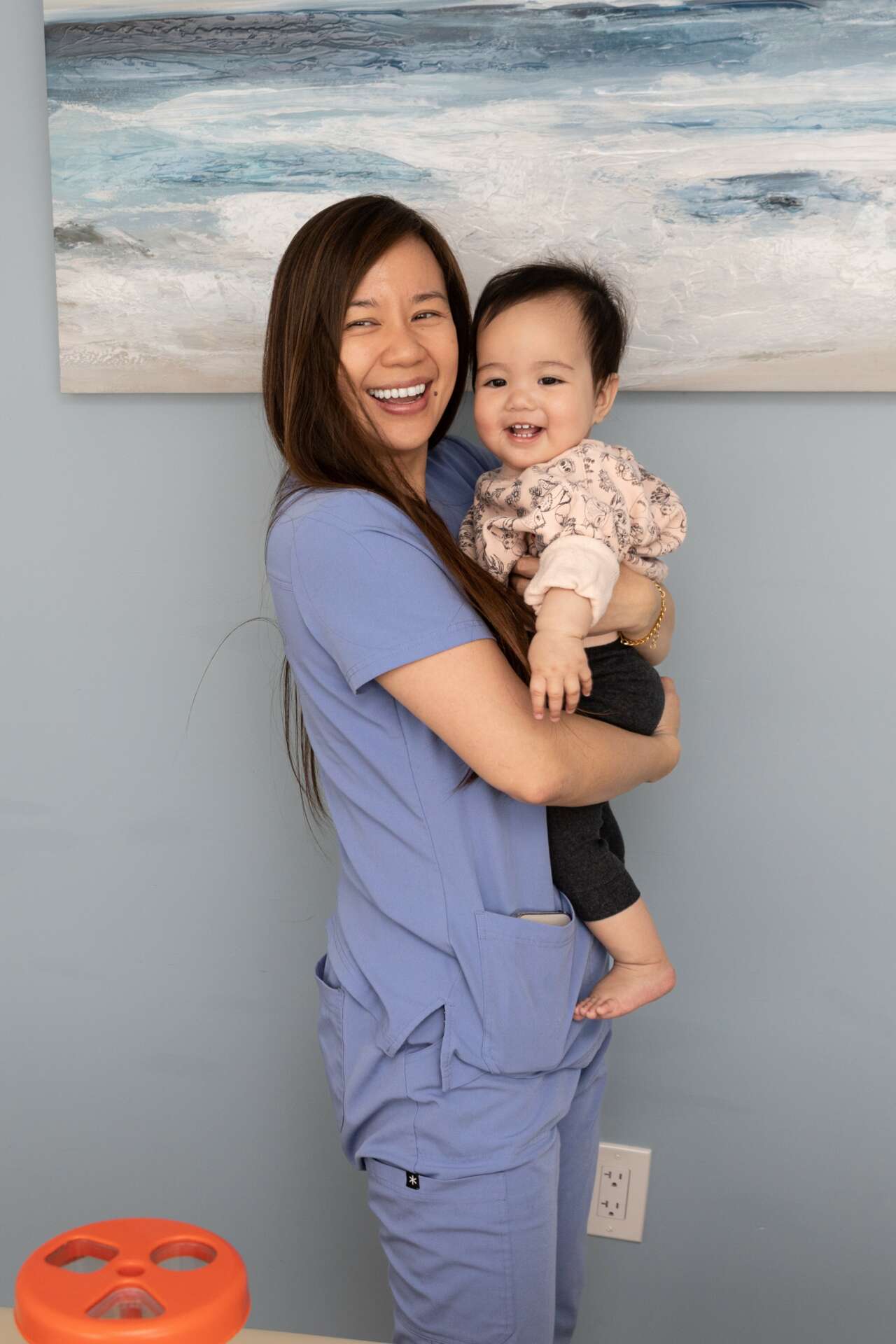
I’ve been an occupational therapist for almost 15 years now and have bounced around between working with babies, children, adults, nursing homes, hospitals, schools, you name it. My first job out of graduate school in 2008 was at a pediatric early intervention clinic. Most of the patients I saw were between 1.5 to 3 years old for feeding support. I knew very little about what I was doing at the time, however, as the years went on, I learned more about the oral anatomy and how eating and feeding are not the only functions of the mouth. By 2015, I was years into working at another pediatric clinic and became the primary OT seeing babies for feeding and tummy time. That’s when the babies with tongue tie issues were coming in. I remember thinking, “what is this tongue tie thing??” I began reading about tongue ties [ankyloglossia is the medical term] and doing my best to connect with other providers that were well-versed in this field. I felt like I was a new grad again; immersed in a field that I had little knowledge about. I recall telling my boss [the director at the clinic] that we should really get on this tongue tie train and see these babies as early as we can, BEFORE they have surgery to release this tie. It wasn’t quite her area of treatment so this idea never came to fruition. I knew in my heart and my entrepreneurial brain that I had to make a move and fast.
I decided to resign from this clinic and opened my own practice in 2016. Supporting mothers and their babies right after birth was my goal. If there was a restricted tongue inhibiting a baby from optimally breastfeeding, we needed to get in front of that as soon as possible. Many mothers struggle with breastfeeding, triple feeding, pumping, pain, and seeing their babies uncomfortable day in and day out. Pediatricians often told these mothers to just transition to formula and bottle. Although there is nothing wrong with bottle feeding your baby, there is so much that could be done before resorting to this option so quickly.
I guess you could say my passion and frustration got me into the tongue-tied industry. I was frustrated that pediatricians were not supporting these mothers and babies. I was frustrated that babies were struggling to latch and feed. I was frustrated that mothers were in pain, triple feeding, pumping, and still struggling. I was frustrated that little to no support was being provided to families in need. I was frustrated that with all the information we have, the education we accumulate, and research we do, we were not implementing it effectively. I shifted my practice to specialize in infant tongue tie and branded myself as the center where parents can get proper information and guidance on what to do and who to go to, whether it is with me or my trusted colleagues.
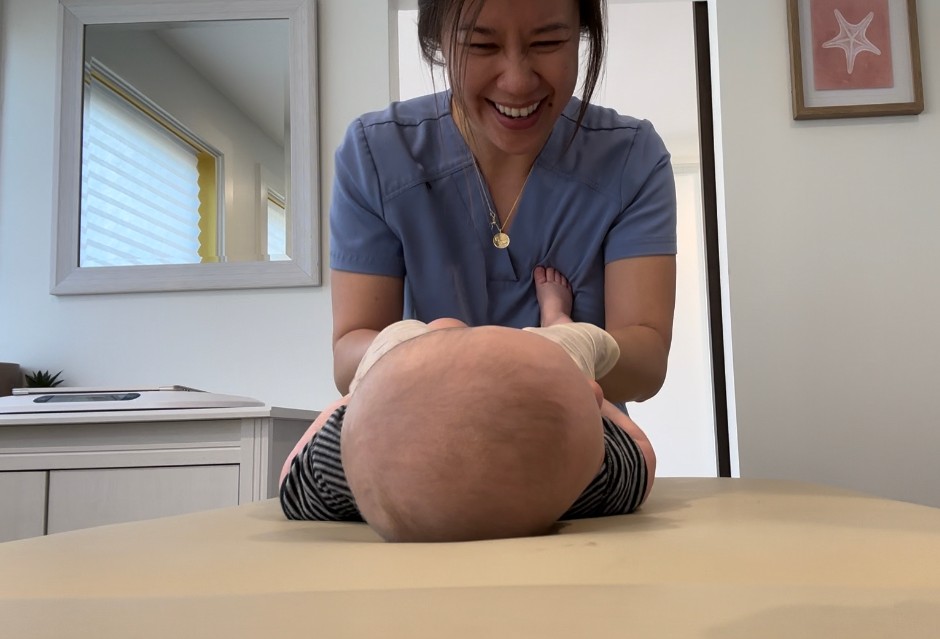
As an occupational therapist working with infants, I evaluate how their oral development is impacting the QUALITY of their feeding and weight gain. Furthermore, I’m looking at what their mouth is doing during non-feeding times as well. In my opinion, this is the aspect that so frequently gets overlooked because when a baby is struggling with feeding, everyone is only looking at their mouth during feeding. The human body does not function in isolated parts. Our body and brain are so interconnected that if you treat the issue alone, you miss the bigger picture and will get suboptimal results. When I’m with a family, we are problem solving everything, together. I build their team, I simplify their treatment plan, and I consistently guide them from beginning to end.
What sets me apart from others and what I’m most proud of is that I utilize a trans-disciplinary approach. I never try to solve a baby’s issues alone. I love working with a team. Babies are complex human beings and they need a team to support them. I always stay within my scope of practice and I refer babies out to the proper experts, as needed. I have encountered many cases where providers try to do everything on their own and weeks or even months pass before a baby is referred out. Usually by that time the dysfunction is so significant that habits have ingrained, parents are beyond exhausted, and babies are so dysregulated that the treatment becomes even more strenuous on the baby and family. If a family is diligently doing what I recommend for two solid weeks and they are still struggling, I refer them out and I expand their team. Babies are changing and developing daily. There is no wait and see period. My approach is effective, efficient, and collaborative.
If your baby is struggling to feed, sleep, breathe, or participate in any aspect of tummy time, get support. Wait and see is not a solution.

Any stories or insights that might help us understand how you’ve built such a strong reputation?
Consistency and honesty. Since I opened my practice, my heart and my intentions have always stayed pure. Yes, it’s a business and I need to make money, however, ensuring that when a family calls me in need, I will help them. If I can’t for any reason, I will find a way to help them or I find them providers that can support them. I never turn away clients. I make time to talk to them and answer all their questions. I give them time to digest the information. I provide them with options. It’s not about a sales pitch to me. It’s someone’s baby that needs help. Love and family are central to my practice. When a family comes in to my office, I welcome them with open arms.
I work closely with many other healthcare providers as well. I do my best to update them on babies they’ve referred to me or vise versa. I consistently take that extra step to call, text, or email providers to share the progress or challenges regarding our shared clients. I respect my colleagues and provide them with the comfort of open communication with me at all times.

How about pivoting – can you share the story of a time you’ve had to pivot?
I operated as a one-woman-show running my practice without employees or staff for 5 years. I loved my space. I created this beautiful open-concept so that families coming in felt at home and at ease. I had team members that I referred my babies out to, but no one was directly with me in my office. It wasn’t until the 4.5 to 5 year mark that I knew I needed to make my next big move. I consulted with business advisors, mentors, and trusted colleagues to determine what that step would be.
Babies that were diagnosed with a restricted tongue tie often needed surgery to release the tie. The person responsible for this is either an ENT or a dentist trained in this procedure [called a frenectomy]. The steps would entail a medical diagnosis, a surgical procedure, and then making sure this baby had post-surgical care. The post care might include a lactation consultant, an occupational therapist such as myself, a physical therapist, a feeding specialist, or a bodyworker such as a chiropractor or cranial-sacral therapist. This would entail a family driving to multiple locations, seeing multiple people, and repeating themselves to each new provider. I asked myself, “how could I simplify this for these families?”
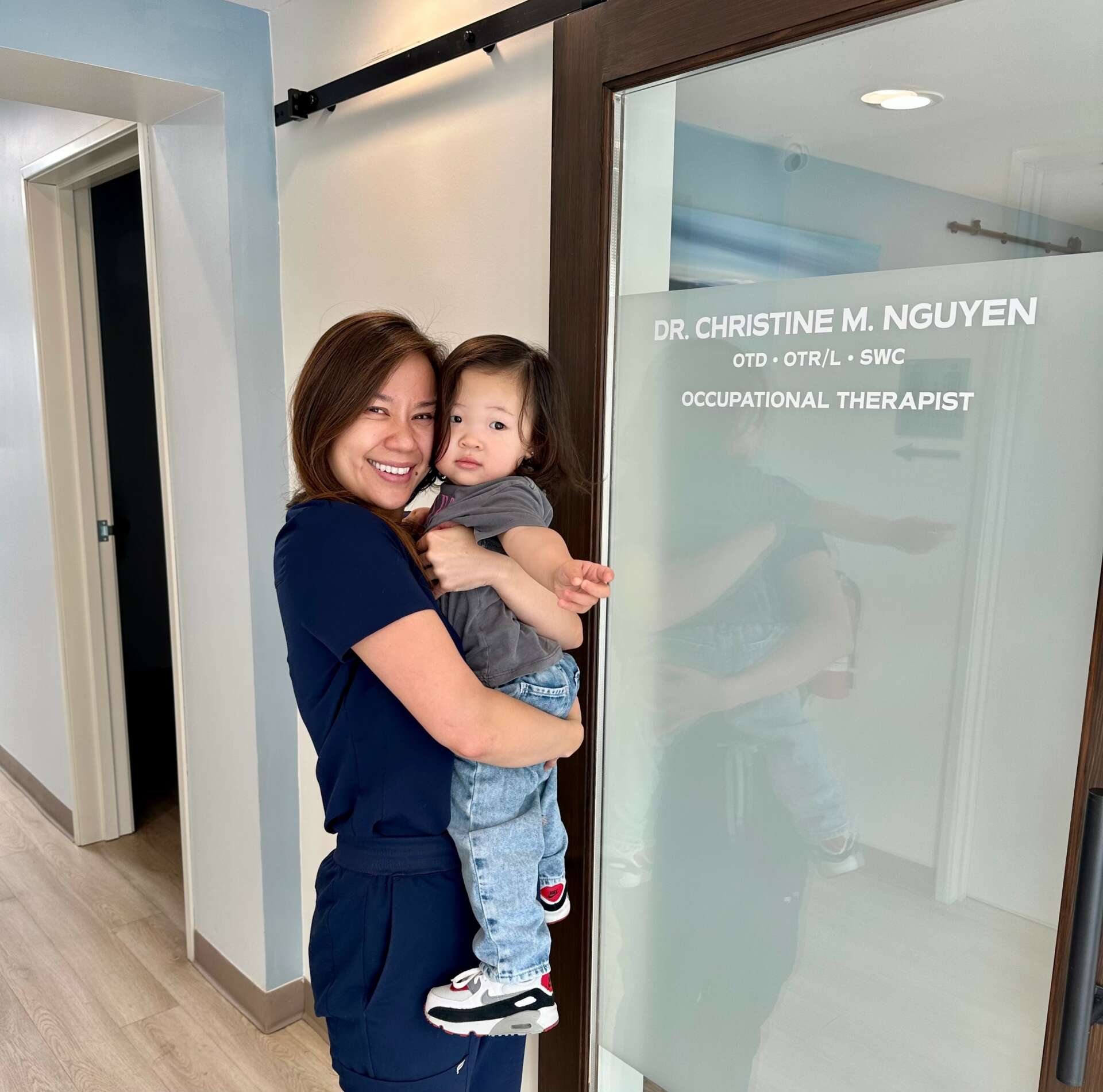
That’s when I knew what my business pivot had to be. I had to merge with a dentist or ENT directly in their office to be in the same space in order to provide therapy before and after the frenectomy. By this time, I had been collaborating with many dentists and ENTs. I had several satellite locations and I tried to do joint evaluations with all of them. However, there was one pediatric dentist that I connected the most with. Dr. Jessica Choi, the owner of San Marino Pediatric Dentistry. We had already been collaborating with several mutual clients. I had gotten to know her and her approach for tongue-tied babies. It was only natural to merge with her. I opened up the conversation with her in May of 2022 and by that summer I was partially in her office trialing out this idea of direct collaborative care.
It worked and families were giving us positive feedback. So, I ended my lease at my former office and moved right into her practice by December 2022. It was hard for me at first because I was so accustomed to being in my own 1700 square feet space, not sharing any of my 3 bathrooms, or office, or supplies. I got used to not hearing other people around me. To now in a smaller exam room, a shared bathroom, and lots of noise. And you know what, I LOVE it! I didn’t realize how lonely I was and how isolated I was at my office until I joined her practice. I love her staff. They brighten my day. The best part of this all is that Dr. Choi and I can provide comprehensive care to our clients without them having to drive back and forth. We help them build their team, we develop a tailored plan of care, and we follow-up with them as closely as possible.
I always felt like I had to be independent and do everything on my own. It made me mentally and physically tired. But when you run a business, you need a team. It’s about supporting each other to build each other up. It’s about community and truly embracing the team approach. I have no regrets transitioning my business. It was a rebrand worth the time, energy, money, and stress.


Contact Info:
- Website: https://oralties.com
- Instagram: https://www.instagram.com/centerforinfantties/
- Youtube: https://www.youtube.com/@centerforinfantties
- Yelp: https://www.yelp.com/biz/center-for-infant-tethered-oral-ties-san-marino?osq=Center+for+Infant+Ties
- TikTok: https://www.tiktok.com/@centerforinfantties
Image Credits
Ann Kim Javi DeLeon