

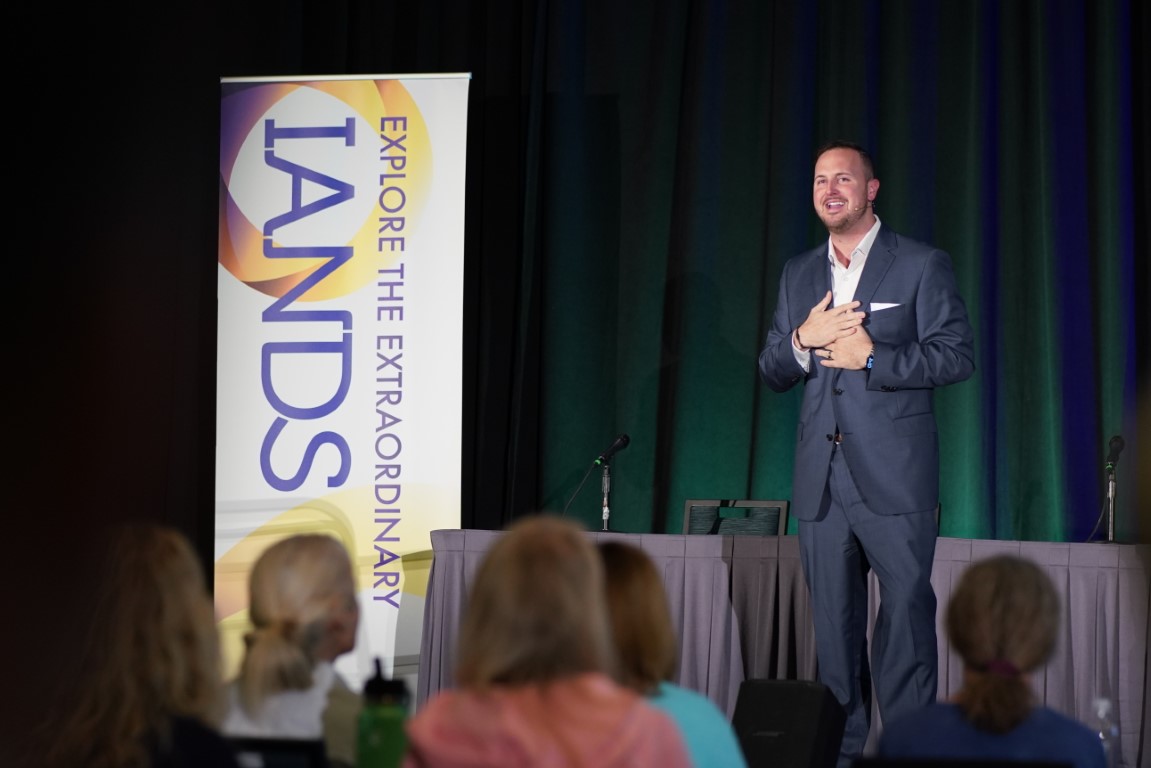

We caught up with the brilliant and insightful Dr. Chase Skylar DeMayo a few weeks ago and have shared our conversation below.
Dr. Chase Skylar, appreciate you joining us today. Was there a defining moment in your professional career? A moment that changed the trajectory of your career?
There was a single moment that changed everything for me, and it did not happen on a stage or in a boardroom, it happened in silence.
At 21 years old, I went into cardiac arrest and was clinically dead. In that space, I experienced something that reshaped how I understand life, purpose, and human connection. It was not abstract or symbolic, it was deeply real, filled with a sense of clarity, peace, and unconditional love that I had never known before. Then I came back.
That moment did not immediately turn into a career, in fact, it did the opposite. For years, I kept it private. I was trying to rebuild physically, mentally, and emotionally, while also navigating what it meant to carry an experience that did not fit neatly into everyday conversation. I went from being an active duty Air Force public affairs journalist to being medically retired, searching for identity again.
The real turning point came about twelve years later, when I made the decision to share my story publicly for the first time. That was the professional shift. What had been something personal became something purposeful. I realized that near-death experiences are not fringe stories, they are powerful human experiences that deserve a credible, grounded, and thoughtful voice. That became my mission.
Since then, I have had the opportunity to speak around the world, contribute to films and books, and engage in conversations that bridge science and spirituality in a way that feels accessible and real. I have stepped into the role of being a leading voice in the near-death experience space, not to sensationalize it, but to normalize it and explore what it can teach us about how we live.
Along the way, I continued my academic path, earning my doctorate in holistic counseling, and I have stayed deeply connected to service through my work and through my role on the board of the Camaraderie Foundation, supporting veterans and their families as they navigate invisible wounds. That piece of my life grounds everything I do.
If there is one lesson in all of this, it is that your most defining moment may not look like an opportunity at first. It may look like a disruption, a loss, or something you do not fully understand yet. But if you are willing to sit with it, learn from it, and eventually share it, it can become the very thing that gives your life direction.
For me, that moment did not just change my career, it gave it meaning.

Dr. Chase Skylar, love having you share your insights with us. Before we ask you more questions, maybe you can take a moment to introduce yourself to our readers who might have missed our earlier conversations?
I am Dr. Chase Skylar DeMayo, a U.S. Air Force veteran, keynote speaker, and doctoral-level holistic counselor whose work lives at the intersection of science, spirituality, and human resilience. My path into this space was not conventional, it was shaped by a near-death experience at 21 years old after a sudden cardiac arrest. That moment became the foundation of everything I do today, but it took years before I fully stepped into it.
After serving as a public affairs journalist in the Air Force, I was medically retired and faced the challenge of rebuilding my identity and purpose. I pursued higher education in alternative medicine, psychology, and metaphysical sciences, ultimately earning my doctorate in holistic counseling. At the same time, I began to understand that my experience was not just something that happened to me, it was something I was meant to share. That realization led me into speaking, media, and thought leadership, where I have since reached audiences across the country and internationally.
My work centers on being a credible and grounded voice in the near-death experience space. There is a growing curiosity around NDEs, but also a gap between lived experience and trusted, accessible communication. I focus on closing that gap. Through keynote speaking, media appearances, and collaborative projects, I translate deeply profound experiences into language that resonates with everyday people, organizations, and institutions. I have been featured in projects like the film “What Every Soul Knows” and the book “We Touched Heaven,” and I have had the opportunity to speak in settings ranging from community events to academic environments, including institutions like Johns Hopkins University.
In addition to my speaking and media work, I operate in the world of strategic communication as an audio strategist with Audacy, where I help brands connect with audiences through targeted audio, podcasting, and streaming. That role keeps me grounded in real-world application, understanding how to meet people where they are in their daily lives and deliver meaningful, impactful messaging. It complements my broader mission because at the core, both are about connection.
Service has always been a central pillar of my life. I serve on the board of the Camaraderie Foundation, where we focus on healing the invisible wounds of war for veterans and their families. That work is deeply personal to me, and it informs how I approach everything, with empathy, authenticity, and a commitment to impact.
What I provide is not just a story, it is a framework for perspective. Whether I am speaking to a room of executives, students, veterans, or a general audience, I help people reframe how they view adversity, purpose, and the value of the present moment. I bridge conversations between science and spirituality without making either feel out of reach. I make complex, often overwhelming topics feel human and actionable.
What sets me apart is that my work is lived, studied, and applied. I bring the experience itself, the academic foundation behind it, and the ability to communicate it in a way that feels natural and relatable. I do not position near-death experiences as something distant or abstract, I position them as a lens that can help us live better, more intentional lives right now.
What I am most proud of is not any single stage or accolade, it is the impact. It is the conversations after a talk where someone feels seen, the messages from people who found hope in a difficult moment, and the ability to take something that was once deeply personal and use it to serve others.
What I want people to know is simple. My work is about helping you reconnect with what matters most. It is about reminding you that your life, as it exists right now, holds more meaning and possibility than you may realize. Everything I do is centered around that idea, and every platform I step onto is an opportunity to share it.

Let’s talk about resilience next – do you have a story you can share with us?
One of the clearest examples of resilience in my life was not the moment I nearly died, it was everything that came after.
When I went into cardiac arrest at 21, I was in peak physical condition, serving in the United States Air Force as a public affairs journalist. In an instant, that version of my life was gone. I was medically retired, physically weakened, and trying to process an experience that completely challenged my understanding of reality. What people do not always see is that surviving something like that is not the finish line, it is the beginning of a very long, often quiet battle.
The real test came in the years that followed. I dealt with recovery, isolation, and the weight of holding onto a near-death experience that I did not yet feel ready to share. There were moments where I questioned my purpose, where I felt disconnected from the life I thought I would have, and where rebuilding felt overwhelming. On the outside, life was moving forward for everyone else, but internally, I was trying to make sense of something that had fundamentally changed me.
There was a period where I made a conscious decision to stop running from it. Instead of pushing the experience aside, I leaned into it. I went back to school, not just to build a career, but to understand the mind, the body, and the deeper layers of human experience. I pursued studies in alternative medicine, psychology, and metaphysical sciences, eventually earning my doctorate in holistic counseling. That process was not easy, it required discipline, humility, and a willingness to sit with questions that did not have simple answers.
The moment that truly illustrates resilience for me was the first time I shared my story publicly. After more than a decade of keeping it private, I stepped onto a stage and spoke about my near-death experience. There was no certainty about how it would be received. It was vulnerable, it was uncomfortable, and it felt like stepping into the unknown all over again.
But something powerful happened. People connected, not just to the story, but to the honesty behind it. That moment showed me that what I had gone through was not something to hide, it was something that could help others. It transformed years of internal struggle into a sense of purpose.
Since then, that resilience has continued to show up in different ways, through speaking, through media, through my work with veterans on the board of the Camaraderie Foundation, and through helping people navigate their own challenges. It is not about never facing difficulty, it is about choosing to move forward with meaning, even when the path is unclear.
If there is one takeaway from my journey, it is that resilience is not always loud or visible. Sometimes it is the quiet decision to keep going, to keep learning, and eventually, to turn your experience into something that serves others.

If you could go back, would you choose the same profession, specialty, etc.?
Yes, I would choose this path again, but I would understand it much sooner.
What I do today was never part of a traditional plan. It grew out of an experience that disrupted everything I thought my life would look like. If you had asked me before my cardiac arrest, I would have seen my future through the lens of service in the Air Force, storytelling, and communication. In many ways, that foundation never left, it simply evolved.
There was a long period where I resisted the direction my life was trying to take. I did not immediately step into being a voice in the near-death experience space, I questioned it, I kept it private, and I tried to move forward in more familiar, comfortable ways. Looking back, that resistance was part of the process, but it also delayed the impact I could have been making earlier.
So if I could go back, I would still choose this profession and this calling, without hesitation. I would just step into it with more confidence and less fear.
What I have the opportunity to do now is deeply meaningful. I get to help people make sense of their experiences, to bridge conversations between science and spirituality, and to remind individuals and organizations that there is more depth to life than what we often see on the surface. Whether it is through keynote speaking, media work, or my role with Camaraderie Foundation supporting veterans and their families, the work is rooted in service.
I also carry this perspective into my work with Audacy, where connection is at the center of everything. Reaching people in real moments of their day, in ways that feel personal and authentic, mirrors the larger mission I have in my life’s work.
The truth is, this path chose me as much as I chose it. And now that I fully understand that, there is no version of my life where I would want to do anything else.
If anything, I would simply begin sooner, speak sooner, and trust sooner.
Contact Info:
- Website: https://www.chasedemayo.com
- Instagram: https://www.instagram.com/drchaseskylar/
- Linkedin: https://www.linkedin.com/in/chaseskylardemayo/

