

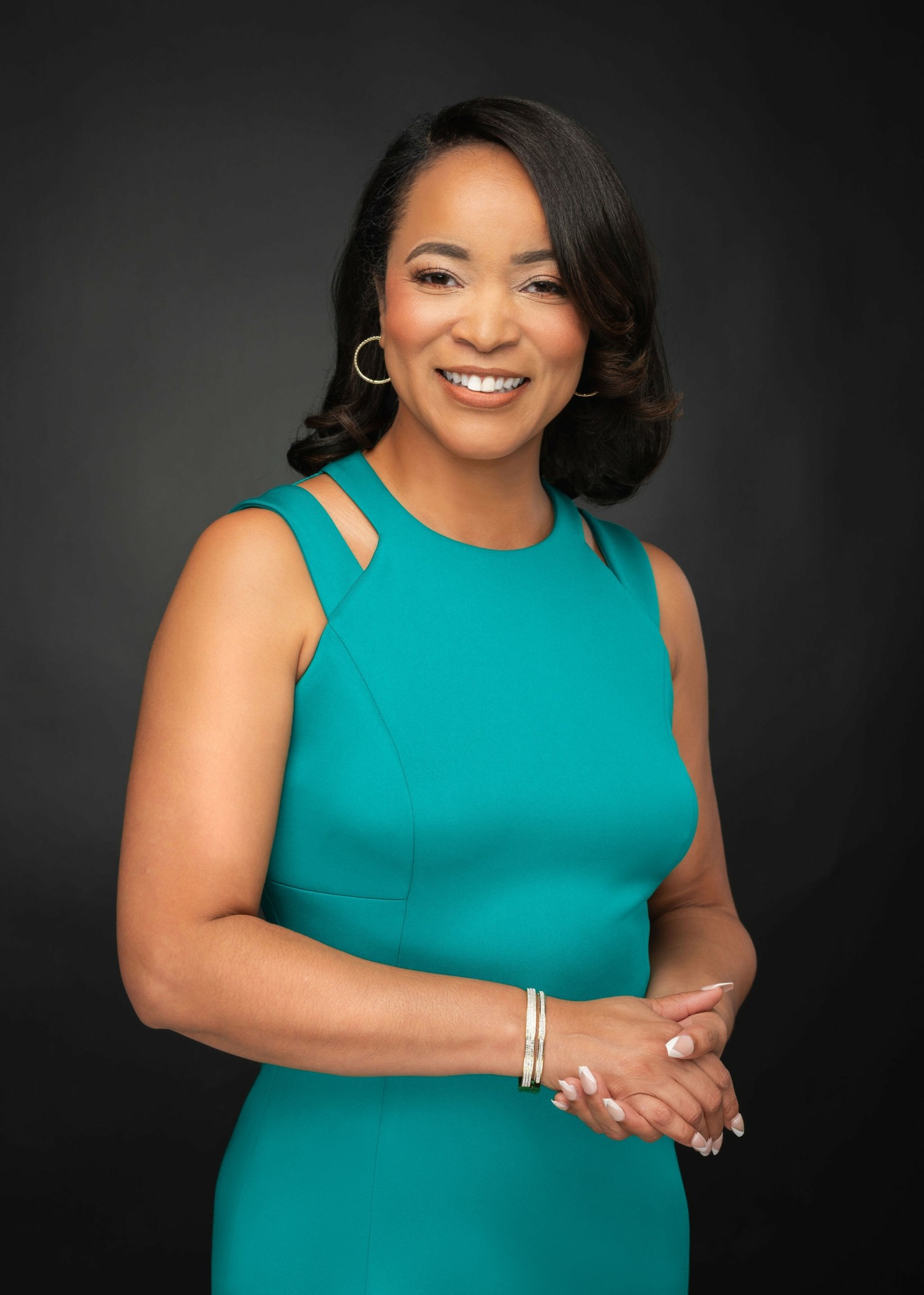

We recently connected with Dr. Angel Jones and have shared our conversation below.
Dr. Angel, appreciate you joining us today. What’s the backstory behind how you came up with the idea for your business?
As with most people, our personal and professional experiences lead us to our business models. I didn’t originally set out to create a relationship mentoring program. I set out to help people individually as well as support the healing of their marriages.
There wasn’t one single moment that birthed the idea for Relationship Mastery for Mentors — it was a series of moments that eventually became impossible to ignore.
For years, I sat across from couples whose marriages had already reached the breaking point. Many of them were leaders, CEOs, executives, and entrepreneurs who had mastered nearly every aspect of their professional lives but were secretly losing control of the most important aspect of their lives (their relationships).
Time and time again, I watched the same heartbreaking pattern unfold over and over again. On paper, these couples had it all. They had financial success, beautiful homes, respected careers. But behind closed doors, they were exhausted, disconnected, and lonely. The drive that made them successful professionally was the same drive that slowly drained their marriages. I could see the cost of achievement written across their faces and hear it in sessions (i.e. the late nights, the missed moments with their family, the emotional distance that crept in so quietly that they barely noticed until it felt too late or the other spouse was threatening divorce). I began working in the field of family law as an alternative dispute resolution specialist, thinking I could help parents co-parent and also assisting the courts with what timeshare should look like for the parents and their children after divorce.
I remember one particular afternoon sitting in my office after a court hearing. I realized my joy comes before the divorce, not after the divorce, and I was helping people too late.
By the time most of my clients reached me, they weren’t seeking healing; they were seeking legal resolution. They weren’t hoping to rebuild; they were hoping to survive the collapse. I had spent years working in high-conflict family law cases, reunification therapy, and court-ordered mediation. It was important work, but it wasn’t fulfilling anymore. I was surrounded by damage control, not transformation.
The deeper truth was that the system itself had become reactive. I wanted to be proactive. I wanted to meet couples at the crossroads, not after they had already chosen separate paths.
That realization hit me with both clarity and conviction; I wanted to create something different.
Something that would reach the very people who were most at risk, not because they didn’t love each other, but because they were too busy building everything else. People who would never set foot in a therapist’s office until it was court-mandated. People who were leading teams, running companies, and carrying the weight of everyone else’s success while quietly losing the intimacy and connection they once cherished.
I knew these people because I had counseled them, collaborated with them, and even shared their language of drive, discipline, and logic. What they needed wasn’t another traditional therapy model that made them feel broken. They needed mentorship and a strategy for relational success that aligned with the same mindset that had fueled their professional success.
That was the birth of my decision to develop programs to assist high-achieving individuals with the healing of their relationships.
I wanted to take everything I had learned, including psychology, communication science, emotional intelligence, and the wisdom earned from the courtroom trenches, and turn it into a guided, results-oriented process that speaks directly to high-functioning professionals.
It made sense, both emotionally and logically. The emotional logic was simple. I could finally help people before they lost everything that truly mattered. The professional logic was just as compelling because there was a glaring gap in the marketplace.
Countless programs teach business mastery, executive leadership, and wealth management, but almost none teach relationship mastery through the lens of a leader’s life. I realized that the very individuals guiding teams and driving industries were struggling silently at home. They had mentors for business, performance, and fitness, but none for love.
That’s the problem I am good at solving and the one I decided to focus on.
What excited me most wasn’t just the concept, but the freedom it gave me to do what I was meant to do: to heal, to guide, to mentor, and to watch transformation happen in real time. I could bring everything: my training, my empathy, my experience with the court system as a child of divorced parents, and my strategic mind into one integrated mission.
I am leaving the courtroom work behind and returning to my core: helping people who still have hope, couples who want to fight for their marriage before it becomes another case file.
My mentoring programs and my return to what I love (helping to heal high-functioning couples in their relationships) became my answer to all those years of witnessing what happens when people wait too long to reach out. It’s built for the achievers who want to protect their most valuable asset (their relationship) with the same commitment they give to their business.
Today, when I sit across from individuals, couples, or when I am teaching in group settings, the energy feels different. They’re not here because a judge ordered them to be. They’re here because they choose to be. They want to reconnect, communicate, and restore intimacy and trust.
Best of all, I get to be part of that process, not as a therapist behind a clipboard, but as a mentor walking beside them.
Now, when I see my clients look at their spouse or tell me their relationship is now full of understanding instead of accusation, I’m excited and happy for them, knowing that I made the right decision.
Now, instead of standing in the ashes of a relationship, I stand before the fire spreads too wide; I stand where healing starts, hope returns, and love gets another chance.

Dr. Angel, love having you share your insights with us. Before we ask you more questions, maybe you can take a moment to introduce yourself to our readers who might have missed our earlier conversations?
After retiring from the United States Air Force, I worked for the federal government, where I was hand-selected for a competitive position to participate in a three-year program that trained and prepared me to become a leader who would run squadrons on Air Force installations. I was in this program while simultaneously running my private practice of now over ten (10) years. I also held state positions counseling as well as multiple counseling, consulting, and training positions for the federal government. I decided to leave the federal government and continue to work in my private practice with broken families. Over the years, I’ve learned that success can be both a blessing and a blind spot. The very drive that propels leaders, executives, and visionaries toward extraordinary achievement can also quietly erode their most meaningful relationships. As a therapist turned mentor, I’ve witnessed this pattern more times than I can count. I have seen high performers who excel in their professional lives but feel increasingly disconnected in their personal ones. That realization was the seed that grew into my current mentoring and training programs.
My work now is centered on helping accomplished individuals not only become effective leaders out in the world, but simultaneously be emotionally present partners in their homes. What sets my mentoring program apart is its dual foundation: it’s rooted in both the science of human behavior and the art of emotional intelligence. I blend therapeutic insight with strategic mentorship, so clients walk away not only with greater clarity about themselves but with practical tools they can use immediately to improve communication, intimacy, and alignment in their relationships.
I approach this work with both compassion and precision. I’ve spent years in rooms where relationships were already fractured beyond repair — from family law settings to high-conflict mediation — and I’ve seen the cost of waiting too long to invest in connection. That perspective fuels my commitment to helping people intervene early, before the distance becomes damage. My work isn’t about fixing what’s broken; it’s about building upon a professional’s strengths.
I am proud of the transformations I’ve witnessed with leaders, but what I am most proud of is being the mother of a very beautiful and smart young lady who strives to be the best at all she does. I have learned more about love, patience, grace, devotion, and commitment through my relationship with her than from any other experiences in life.
Can you share a story from your journey that illustrates your resilience?
A few years ago, my life underwent a shift that I could never have planned for. My mother became terminally ill with stage 4 lung cancer that metastasized to her bones. I left my practice and went out of state to take care of her. For the first time in my career, I had to step almost completely away from the work that had defined me for so long.
What I thought would be a brief pause turned into months of caretaking and years of grieving while trying to hold myself together. My business, which once ran like clockwork, began to crumble in my absence. At the same time, my executive assistant’s husband became ill and my main administrative assistant had her newborn and had to cut her hours. Clients moved on, systems fell apart, and for a while, I felt like everything I had built was deteriorating. I was making more money than ever before at one point, but emotionally, I was depleted. Success felt hollow.
When my mother passed, I was broken, and I questioned whether I even had the energy or desire to rebuild. But grief has a way of revealing the truth. As painful as it was to watch parts of my practice dissolve, I realized that what was falling away wasn’t failure, it was release. I had outgrown the version of my business I’d been holding onto. It no longer reflected who I was becoming.
In that quiet space of loss, I began to rebuild, slowly and intentionally. I kept a handful of clients whose work still inspired me and began shaping a new vision: one that integrated everything I had learned as a therapist, mentor, and leader. I focused on helping high achievers not just perform, but connect and lead effectively without losing themselves or their relationships in the process.
Looking back, I see that season not as the time my business began to shift positively, but as the moment it came into alignment. I didn’t lose what mattered most — I refined it. I rebuilt from a place of purpose instead of pressure.
That’s what resilience looks like to me now. It’s not about bouncing back to what was, but rising into what’s next, even when it begins with loss.

Learning and unlearning are both critical parts of growth – can you share a story of a time when you had to unlearn a lesson?
For many years, I believed that success was the ultimate measure of my worth. I was proud of what I had built — a counseling practice that served families and professionals, while balancing mediations and other roles in family law and high-conflict alternative dispute resolution. My mindset was that if I wanted it done right, I had to do it myself. That belief worked for a while until I realized, for many reasons, that it was not true.
At some point, I realized I was the bottleneck. My days were overflowing with back-to-back sessions, reports, billing, scheduling, and consulting calls. I was helping everyone else create balance, yet mine was nonexistent. The practice couldn’t expand because I was too busy running it to actually grow it.
Hiring my first team member felt like a huge risk. I worried no one would care about the clients the way I did. Truthfully, my first few hires taught me some hard lessons. I brought in capable people, but they didn’t have my vision — the deeper “why” behind the work. I had assumed skill was most important; I learned that alignment mattered more.
That’s when I truly unlearned one of my biggest blind spots, which was that leadership isn’t about doing everything yourself; it’s about building a team that believes in what you believe. Once I started hiring people who shared my values and understood that our mission wasn’t just about therapy sessions and giving clients what they thought they wanted, but about transforming relationships and lives, everything changed. My business grew, my time freed up, and the impact deepened.
Now, I share this lesson with the leaders and high performers I mentor. Like me, so many leaders carry the same burden I once did. They believe they have to hold it all together alone. But real success isn’t found in self-reliance but is built in shared vision, trust, and alignment.
I had to unlearn the belief that control equals excellence. What I learned instead is that shared purpose equals growth.
Contact Info:
- Website: https://www.drangeljones.com
- Linkedin: https://www.linkedin.com/in/thedrangeljones/