


We’re excited to introduce you to the always interesting and insightful Dora HyunJung Kim. We hope you’ll enjoy our conversation with Dora HyunJung below.
Hi Dora HyunJung, thanks for joining us today. Learning the craft is often a unique journey from every creative – we’d love to hear about your journey and if knowing what you know now, you would have done anything differently to speed up the learning process.
From a young age, I loved drawing and making things with my hands. The process of creating something with different materials—and seeing the results take shape—made me realize that I wanted to become someone who could make beautiful and useful things.
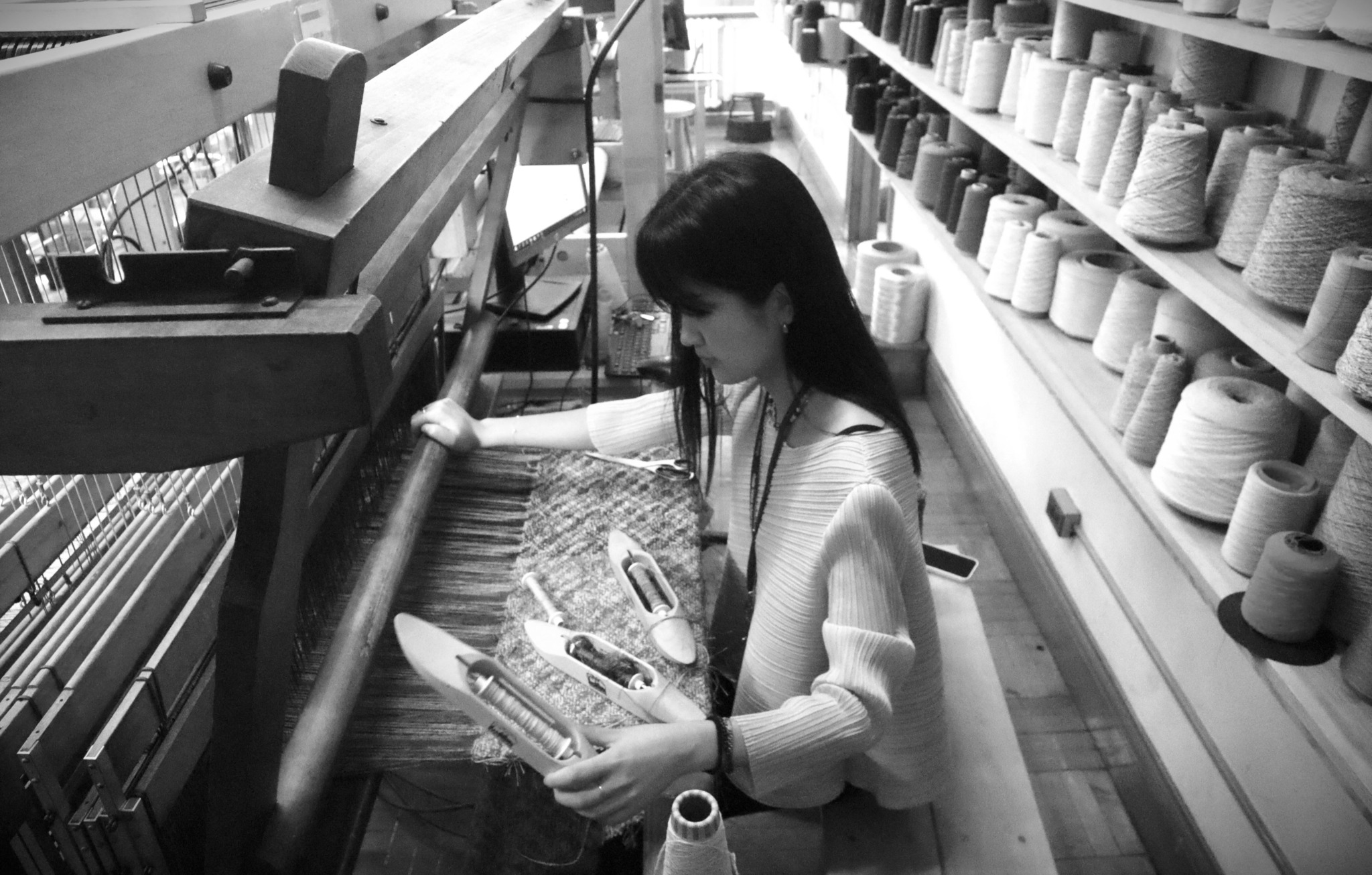
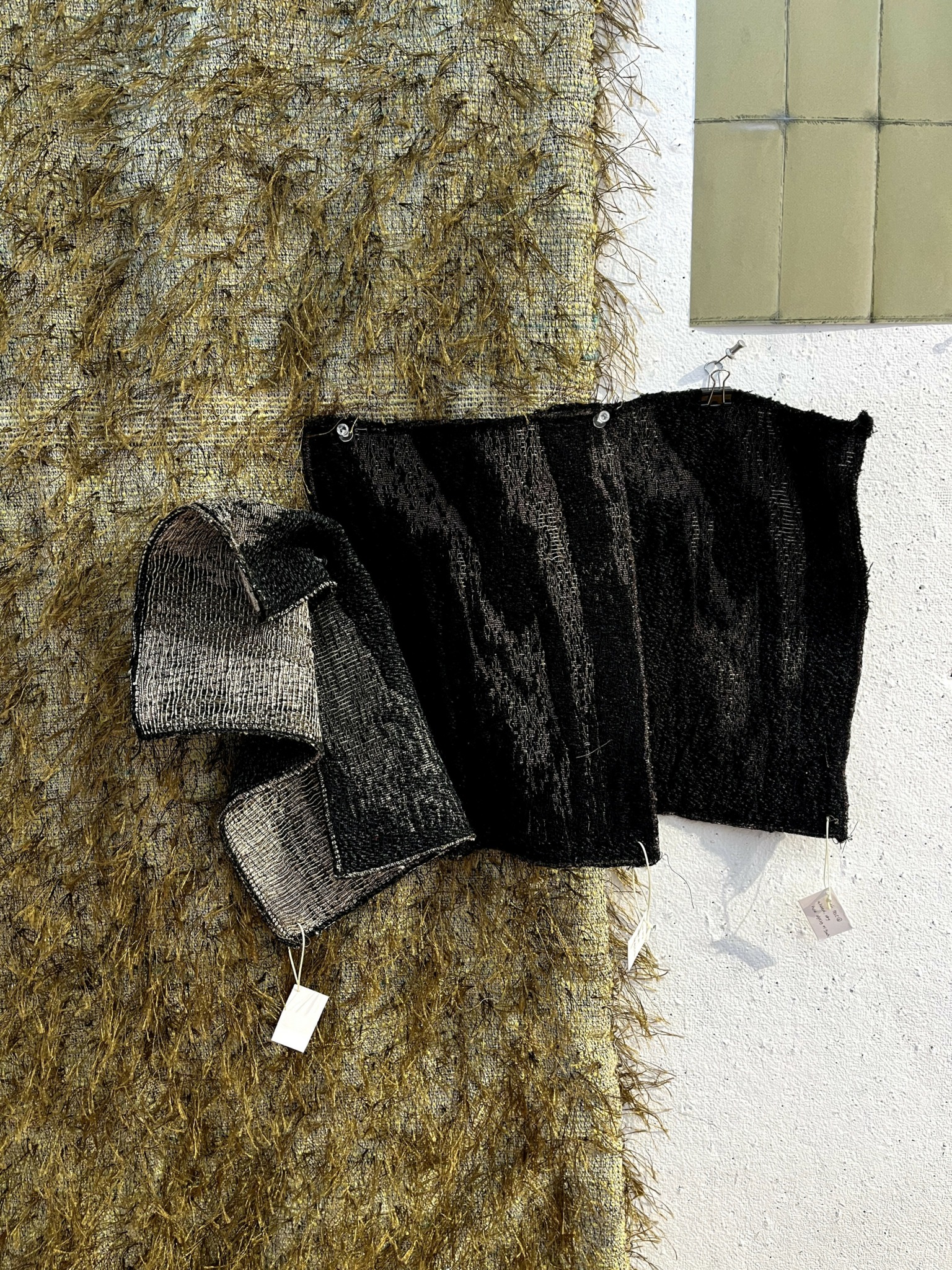
This led me to study Product Design in Korea, where I had the opportunity to explore furniture, textiles, and ceramics. Among these, I was deeply drawn to textiles—the softness and warmth of the material, and especially the endless possibilities of woven design. I was fascinated by how the material, color, texture, and structure of yarn come together, where warp and weft intersect to form a surface, and fabric slowly takes shape. To me, weaving became a meaningful act of “weaving time.”
After completing my undergraduate degree, I continued my studies in textiles at the same university for my master’s program, focusing intensively on hand weaving with the floor loom. Through this process, I learned to keep variables open, since the crossing of warp and weft always leads to new outcomes. I developed a habit of observing patterns, colors, and textures in objects and nature, and began collecting photographs. This practice allowed me to mix and combine yarn colors in subtle ways, much like mixing paint, and to create delicate and nuanced hues in my work.
Later, I wanted to gain a deeper understanding of industrial textiles, so I entered the Textiles program at RISD, where I worked with both the dobby and jacquard looms. This gave me the opportunity to engage with traditional handweaving and digital weaving technologies, expanding the possibilities of materials, patterns, and structures.
Taking the time to build this foundation has been essential, and it has given depth to my work. I believe the most fundamental skills for a textile designer—especially a woven fabric designer—are observation, sensitivity to color and texture, and the ability to translate these qualities into woven structures. One of the greatest challenges I faced was navigating the vast technical possibilities and experiments while trying to find direction. Yet, it was through this very process that I was able to shape my own perspective and develop a personal woven language.
My journey in textile design has never been just about acquiring techniques. It has been about learning to see the world closely, to notice its colors and textures, and to translate them into woven form. The foundation and experiences I have built over time continue to shape the depth of my work, and they serve as the driving force behind creating my own language and vision in weaving.
Dora HyunJung, love having you share your insights with us. Before we ask you more questions, maybe you can take a moment to introduce yourself to our readers who might have missed our earlier conversations?
I’m Dora Hyunjung Kim, a textile designer working between Korea and the United States, with a focus on weaving. Since I was young, I’ve loved drawing and making things with my hands, and that curiosity naturally led me to explore different materials and forms. This path guided me to Yeungnam University in Korea, where I studied Product Design and earned both my bachelor’s and first master’s degree in Textile Design. It was there that I became deeply fascinated by the warmth and endless possibilities of woven textiles. Wanting to expand further, I moved to the U.S. to pursue a second master’s degree in Textiles at RISD, where I immersed myself in both traditional handweaving and industrial techniques like dobby and jacquard weaving.
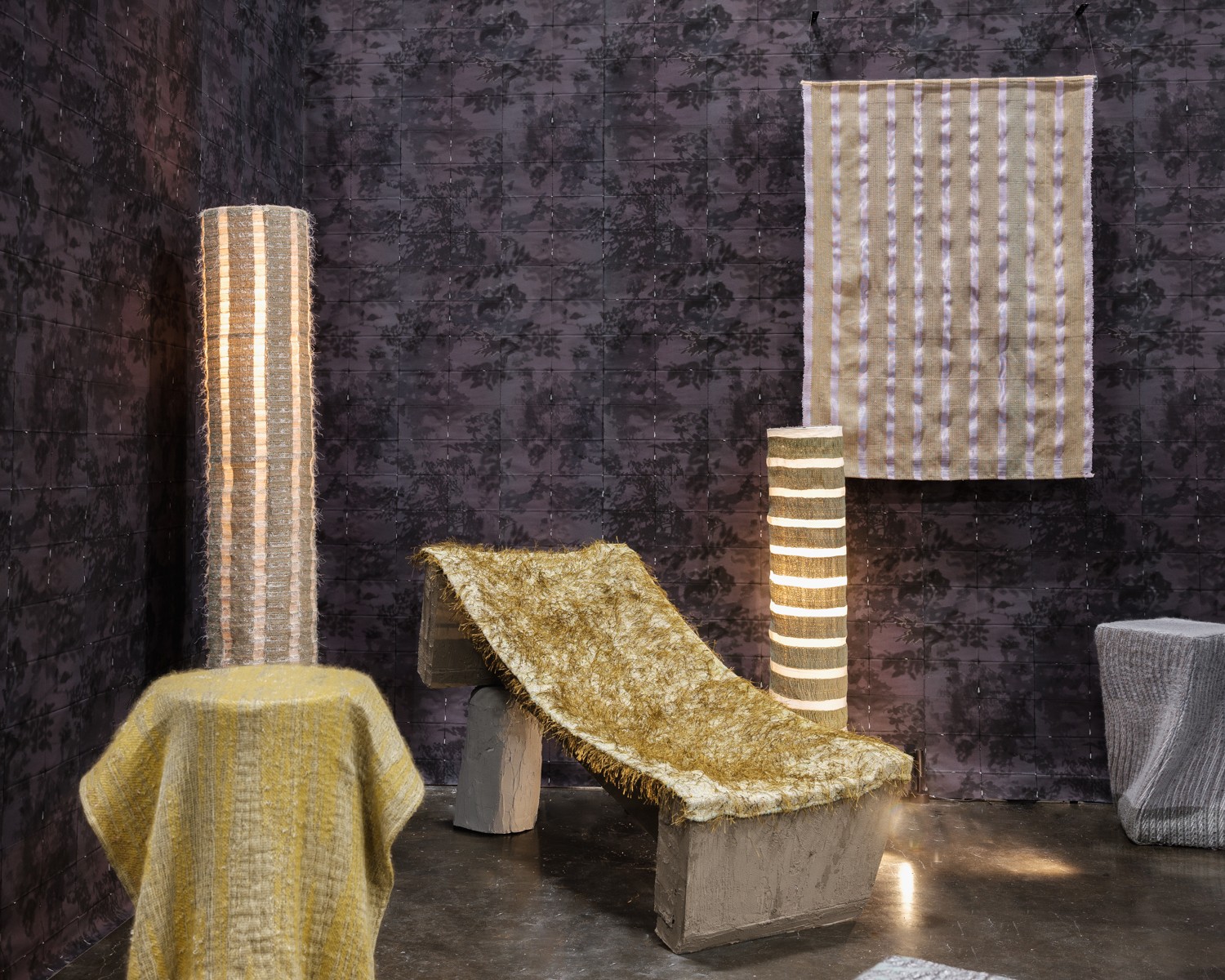
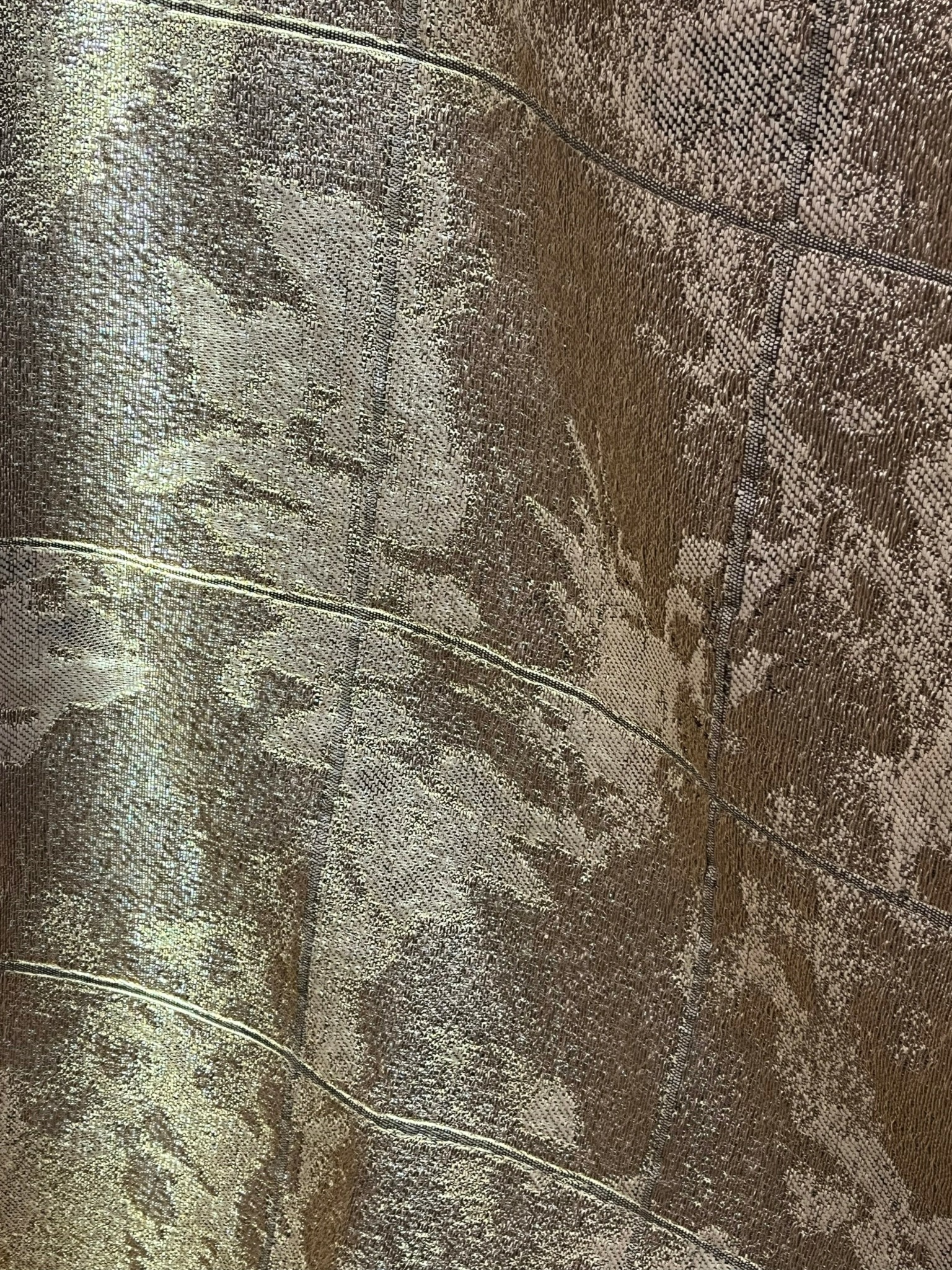
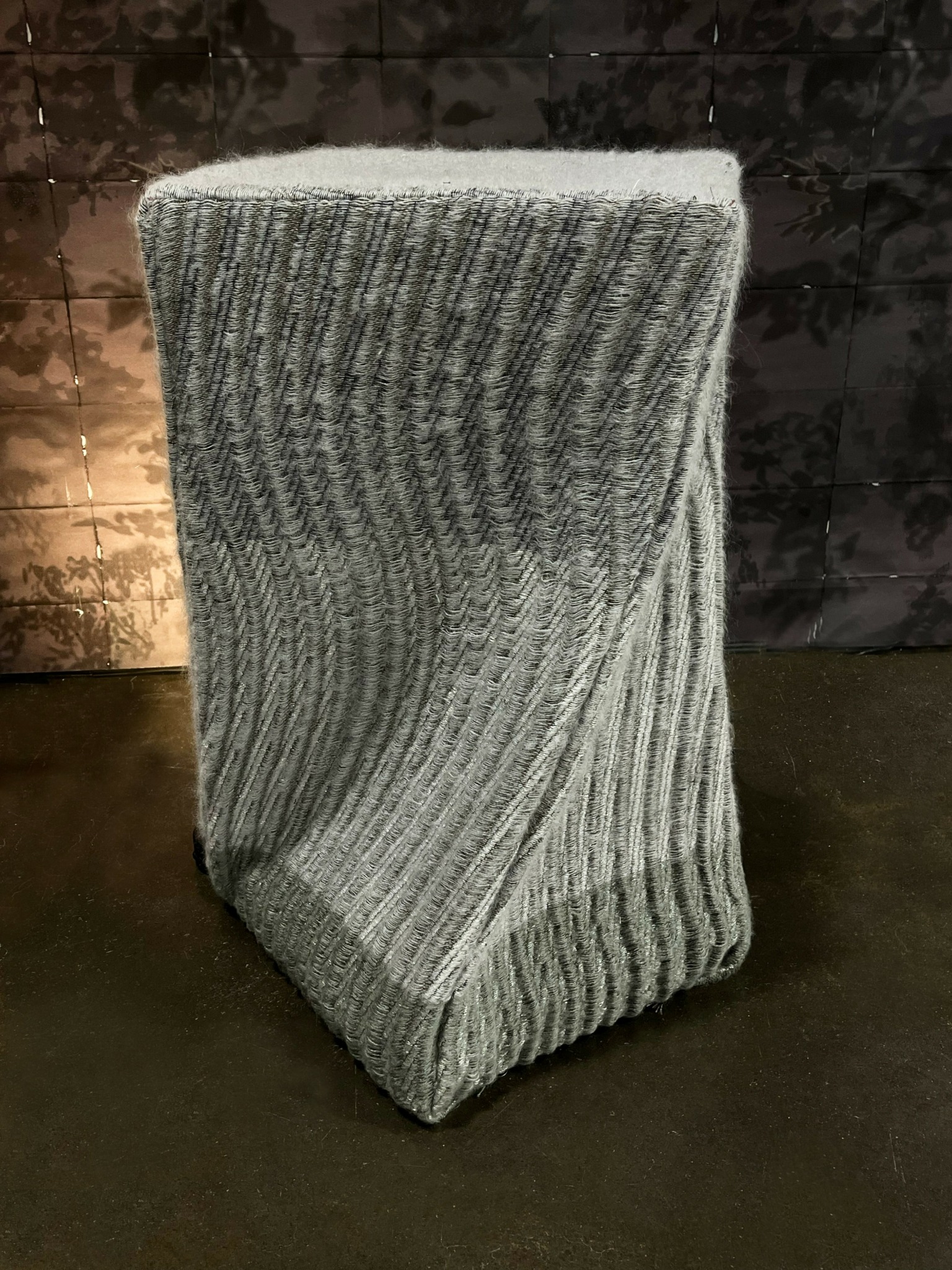
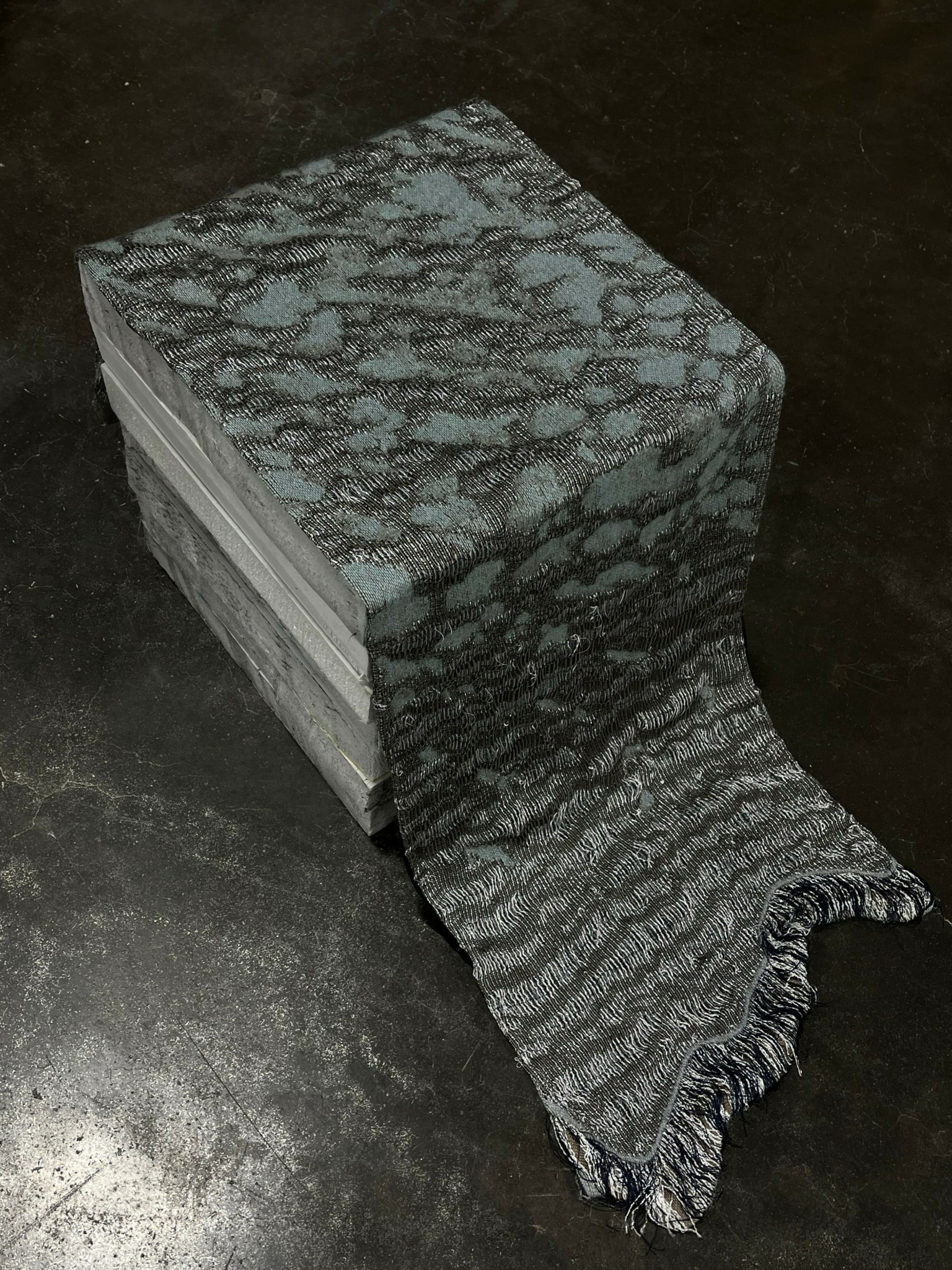
My work often begins with small moments I notice in nature—light and shadow, ripples, textures, and even architectural forms. I translate these impressions into woven surfaces, creating textiles that bring a sense of comfort and reflection into space. For me, textiles are not just materials, but a medium that connects the inner self with the external world. This belief allows my practice to range widely, from artistic woven objects to site-specific installations, and to designs that quietly integrate into daily life. My RISD thesis, Immersive Stillness in Poetic Space: Textiles for an Uncertain World, captures this philosophy and direction in depth.
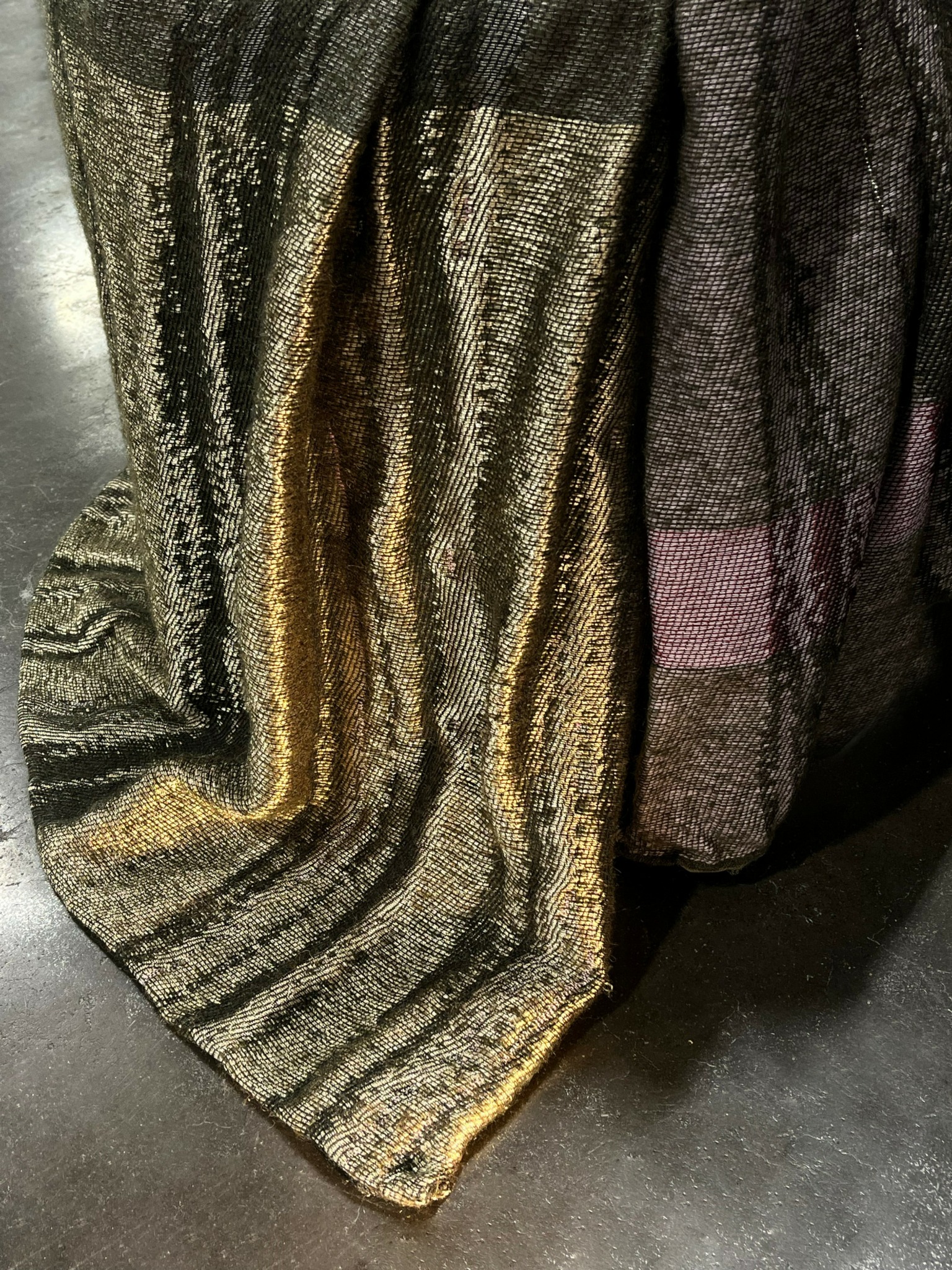
What I value most as a textile designer today is creating experiences of sensory healing and contemplation. In uncertain times, I hope my woven works can offer poetic stillness—spaces where people pause, breathe, and feel a quiet connection. What sets my work apart is this focus: weaving not only visual beauty but also light, texture, and the serendipity of nature into textiles that connect emotions and spaces. My practice spans from handwoven pieces to industrial fabrics, embracing the dialogue between craft and technology.
In the end, my goal is simple: through my textiles, I hope to create moments where people can stop, reconnect with themselves, and feel a sense of harmony with nature and space. To me, that is the essence of textile design.
For you, what’s the most rewarding aspect of being a creative?
For me, the most rewarding aspect of being an artist is that my work always begins from within. I’m sure this is true for many designers and artists, but weaving in particular requires spending countless hours in front of the loom, facing every step slowly and with patience. Setting up endless warps that seem impossible to finish, weaving them together thread by thread with the weft—this process itself feels deeply meditative, almost like weaving time itself into being. In many ways, it feels like the most transparent and honest kind of work I can do.
There are times when anyone can feel powerless, when even lifting a pen feels unbearably heavy. In those moments, I’ve found that sitting at the loom and weaving one strand at a time not only helps me organize my thoughts, but also gives me new strength when I see the threads slowly becoming fabric. It is as if the loom quietly reflects my state of mind, showing me both my fragility and my resilience. I often ask myself: how many people in the world are fortunate enough to do what they love most, while also having the freedom to express their emotions through it? For me, that is the greatest gift of being a textile artist.
Is there mission driving your creative journey?
My creative journey is guided by the belief that weaving is not only about making textiles, but about weaving connections—between past and present, tradition and innovation, the inner self and the outer world. For me, weaving is also a way of recording time, embedding memories and emotions into fabric thread by thread. Each woven surface becomes a quiet record of lived experience.
My mission is to create works that open poetic and contemplative spaces—where people can pause, sense these layers of time and meaning, and reconnect with both themselves and the world around them. In this way, my practice seeks to hold the delicate balance between fragility and resilience, silence and expression, tension and relief.
A friend once told me that my work feels like “tension and relief.” That phrase has stayed with me, and through that conversation I realized it was another way of describing the kind of contemplation I’ve always been seeking. Perhaps it is simply another language for balance—for comfort, for stillness, and for the quiet spaces of reflection that I hope my textiles can create.
Contact Info:
- Website: https://dora-hyunjung-kim.com/
- Instagram: https://www.instagram.com/river.flows.in.u/
- Linkedin: https://linkedin.com/in/dora-kim
- Other: * Instagram: river.flows.in.u | dorakim.atelier
* Immersive Stillness in Poetic Space: Textiles for an Uncertain World
Rhode Island School of Design | Thesis Grad Show by Dora Hyunjung Kim | RISD Textiles · Spring 2025 · May 31https://digitalcommons.risd.edu/masterstheses/1446/
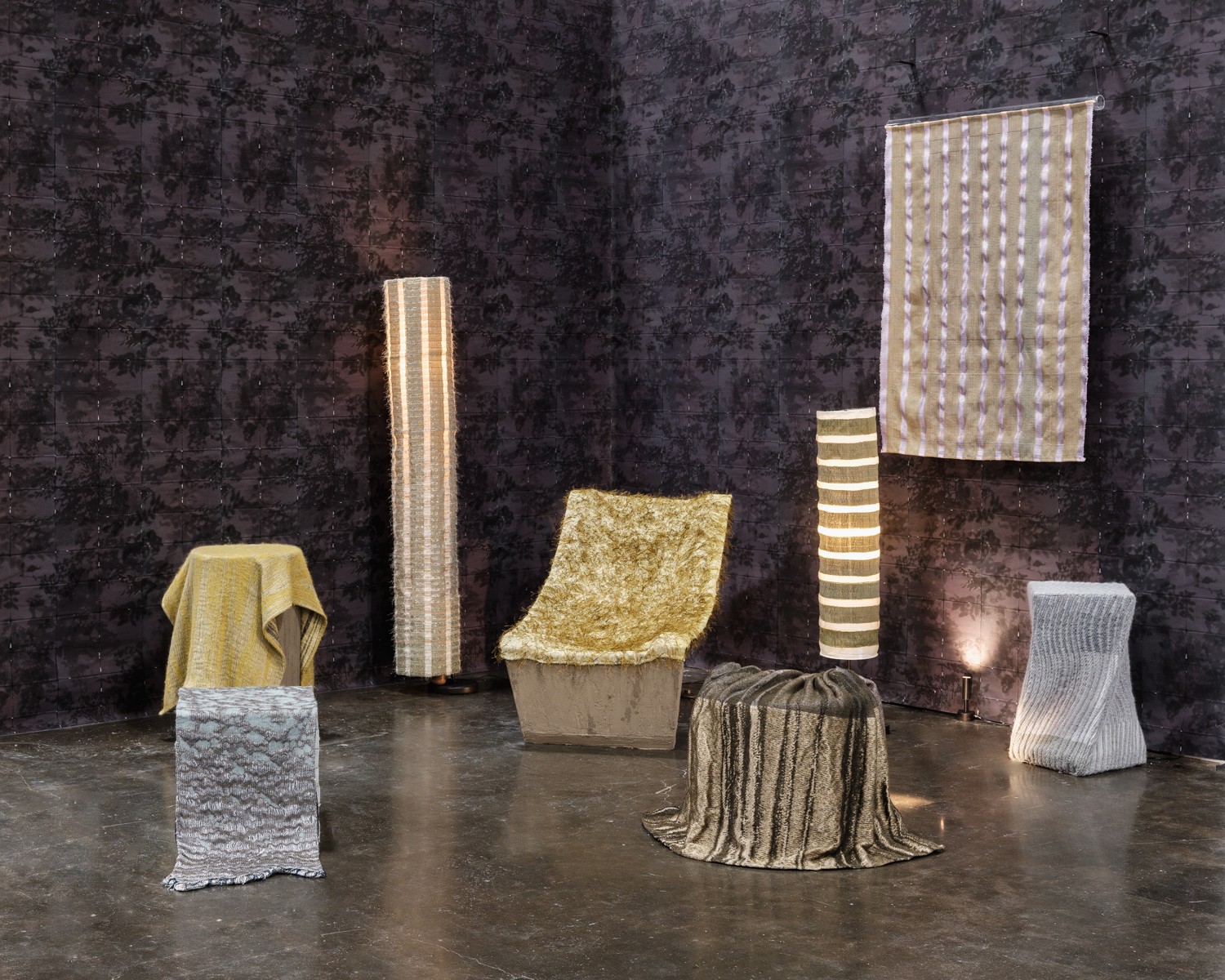
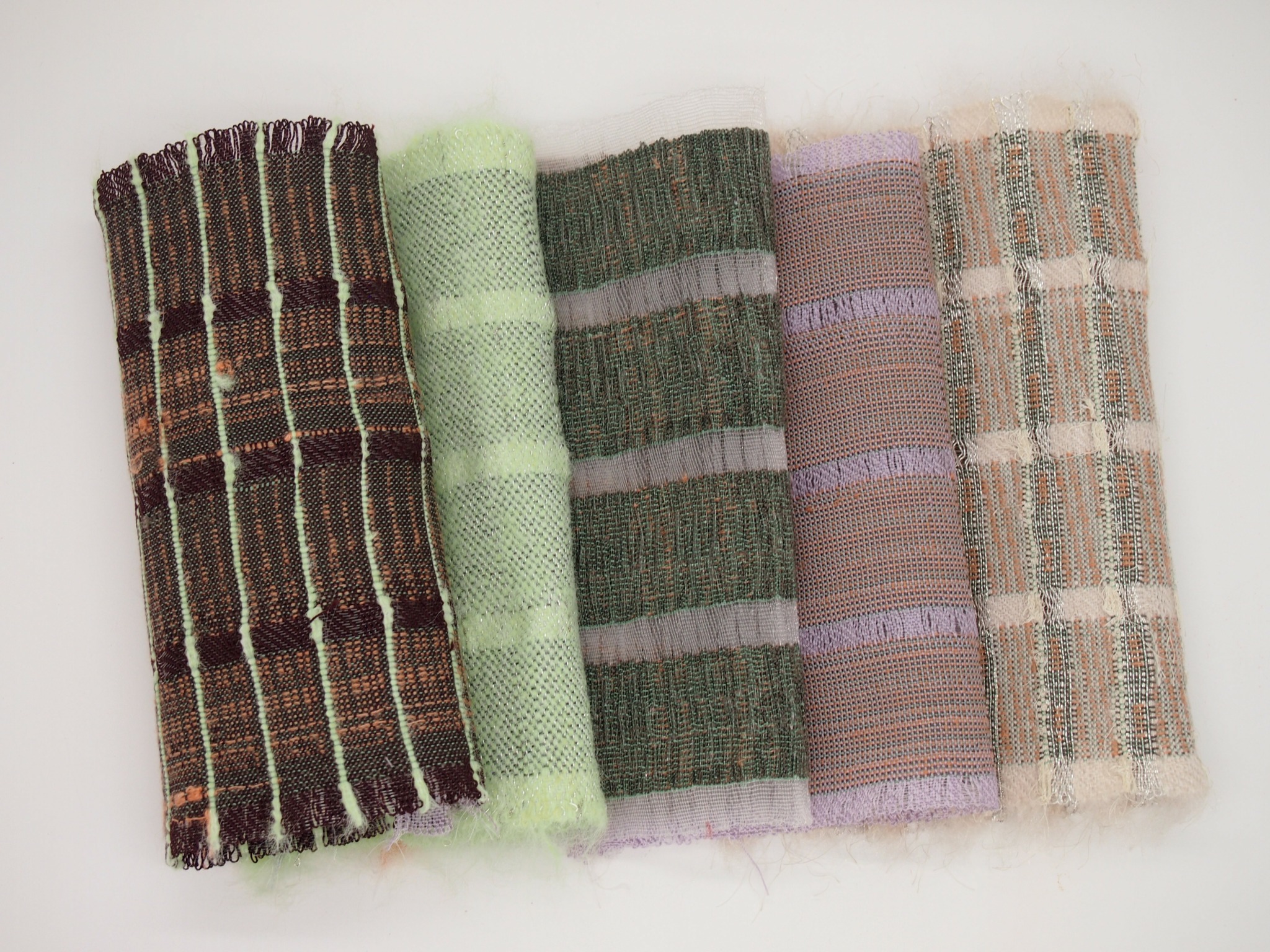
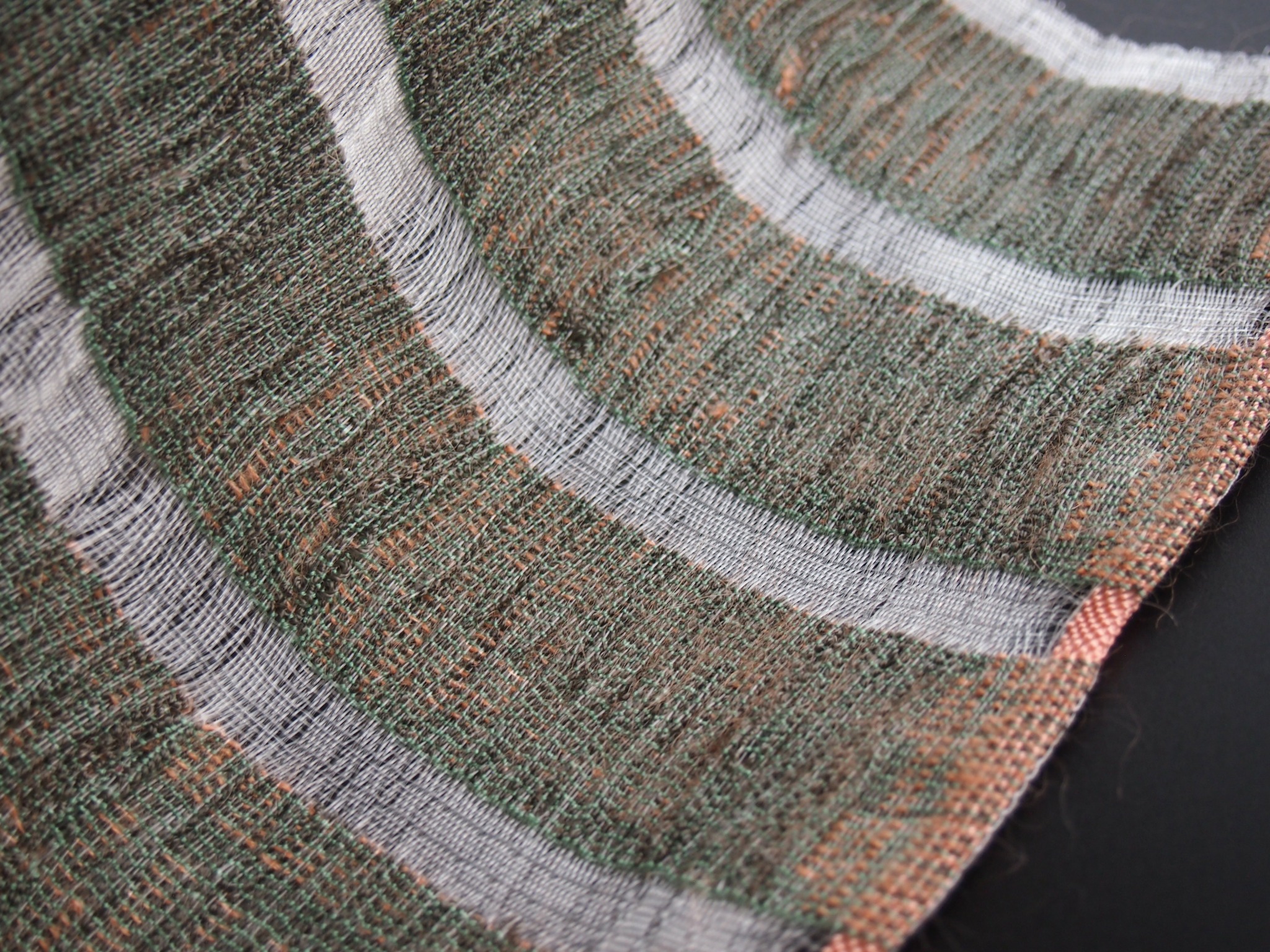
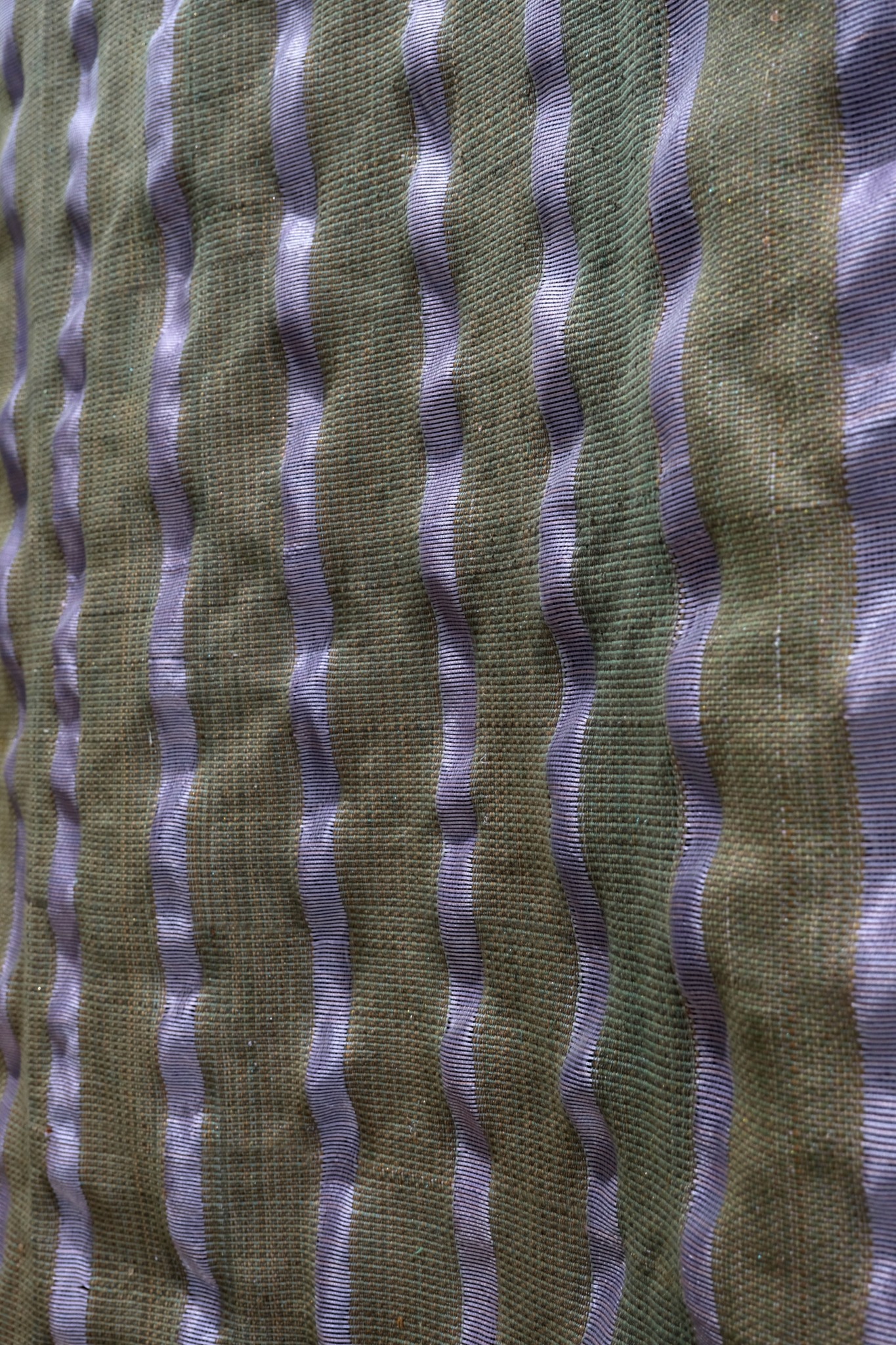
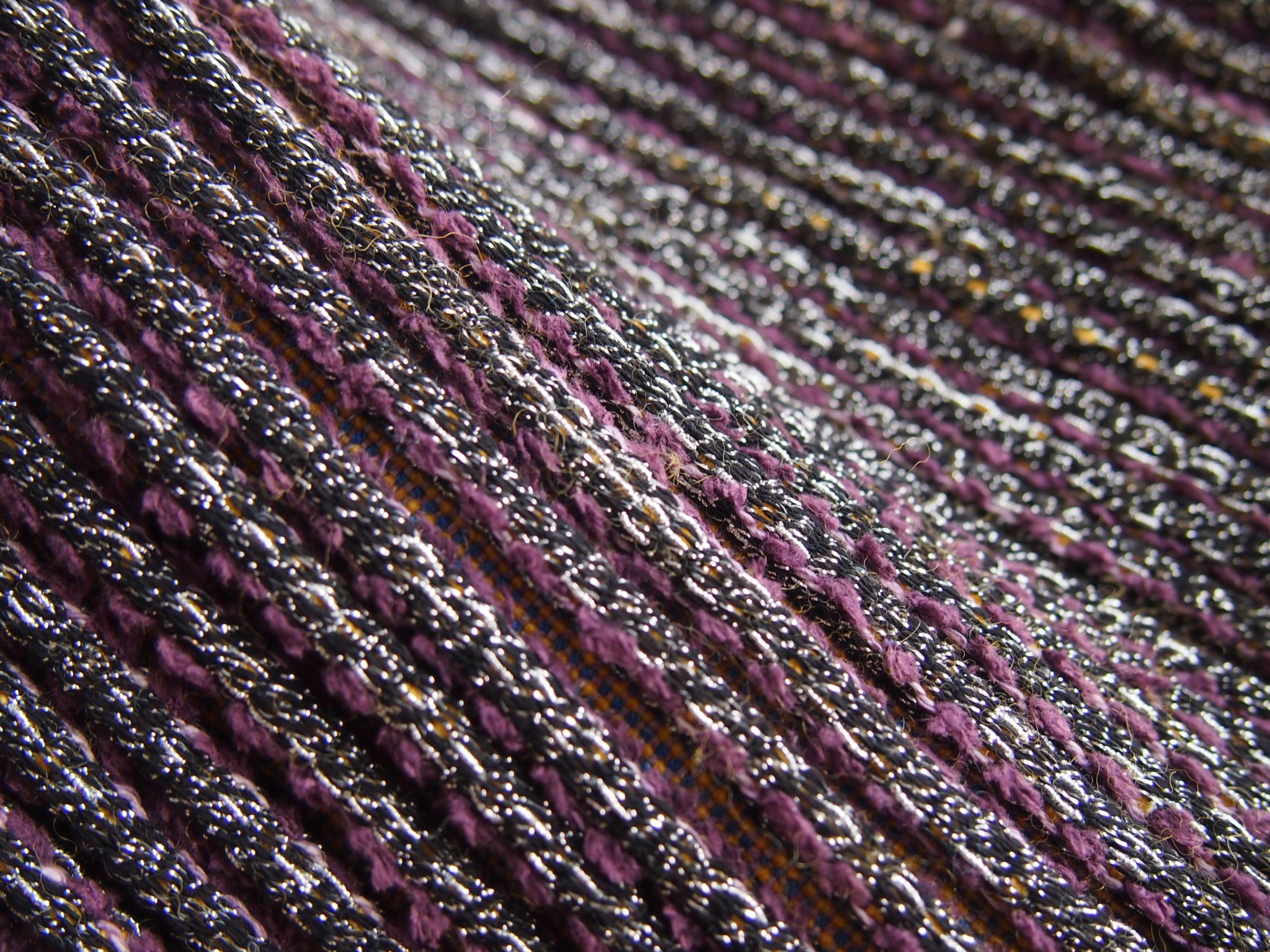
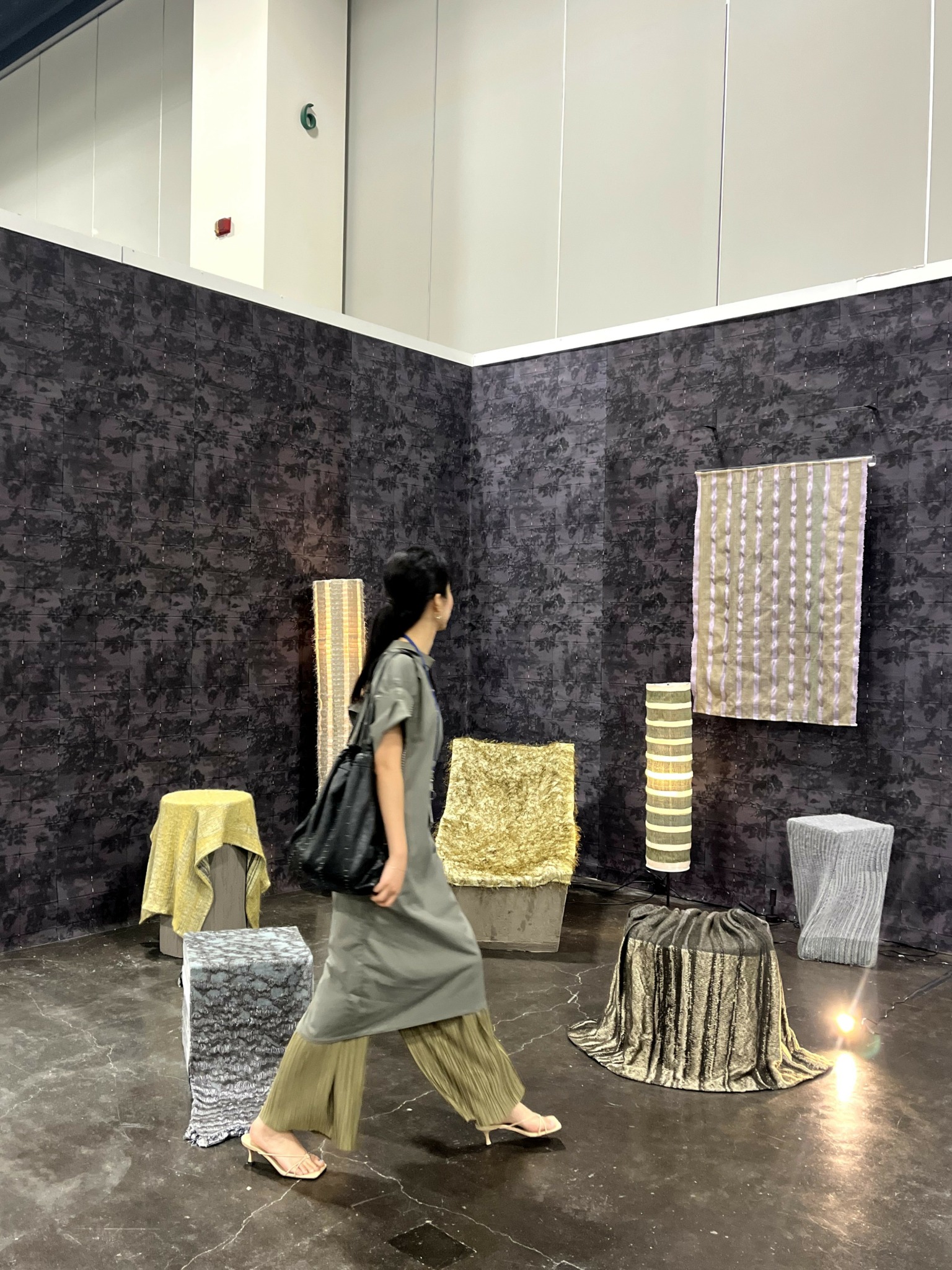
Image Credits
Kyle Dong, Kaya Lee, Hui Lee, Dora Kim