


We were lucky to catch up with Dianna Booher recently and have shared our conversation below. I’ll let Dianna introduce herself.
Hi Dianna, thanks for joining us today. Before we get into specifics, let’s talk about success more generally. What do you think it takes to be successful?
To be successful as an author, it takes persistence, discipline, and self-confidence. I say persistence because the writing process is very subjective. Just as each of us has our own preferences of what kind of books or movies we like, editors and literary agents have those same preferences. So to get representation from an agent to sell your books to a major traditional publisher, writers sometimes have to query several agents–maybe even a dozen or more–to find the appropriate agent who believes in the book they’re representing and the author’s career.
Second, to be successful as an author, you have to have self-discipline. Without a “boss” assigning you projects and giving you objectives and deadlines, you yourself must select your own projects and set your own goals and deadlines. Frankly, you can work as much or little as you want to each day. All the editors want is a finished book manuscript by the contract deadline. If you don’t have the discipline to sit down to the computer and consistently produce, you fail. Among all my book-writing clients, discipline is their biggest problem. Those less-determined seem to let far too many things crowd out their writing time.
Finally, to be successful as an author, you must have self-confidence. Authorship can be a lonely business. Writing a book takes a few weeks or months before you have enough done to show friends or family for their opinions. You have no boss or coworkers to brainstorm ideas with or give feedback. Plus, authorship involves rejection in many forms: Agents who say they’re not interested in your work. Editors who often ask for rewrites on parts of your manuscript. And then even reviewers sometimes post unfavorable reviews of your work on social media. All that to say, without self-confidence in their skills, authors cannot keep “plugging away” alone without promise of selling their book when finished.
In essence, the author’s experience is like any professional who works for 6 months, and then has to wait for approval before he or she knows if there will be a paycheck at the end. Grueling work with low expectation is the name of that game. So self-confidence as an author is critical to long-term career success.


As always, we appreciate you sharing your insights and we’ve got a few more questions for you, but before we get to all of that can you take a minute to introduce yourself and give our readers some of your back background and context?
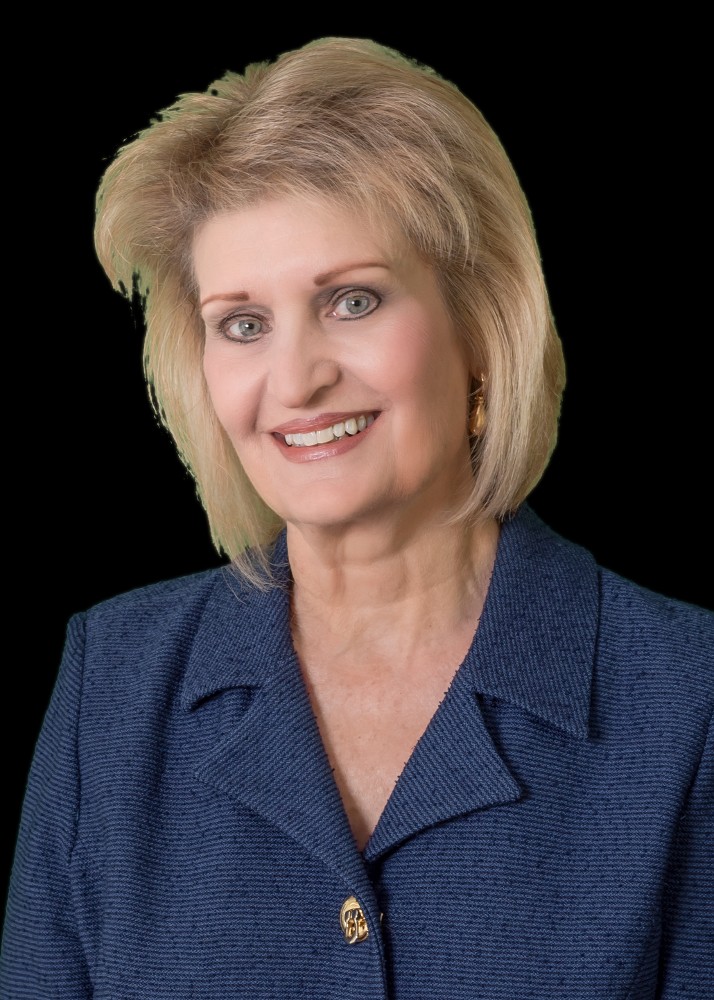
Dianna Booher, MA, CSP, CPAE
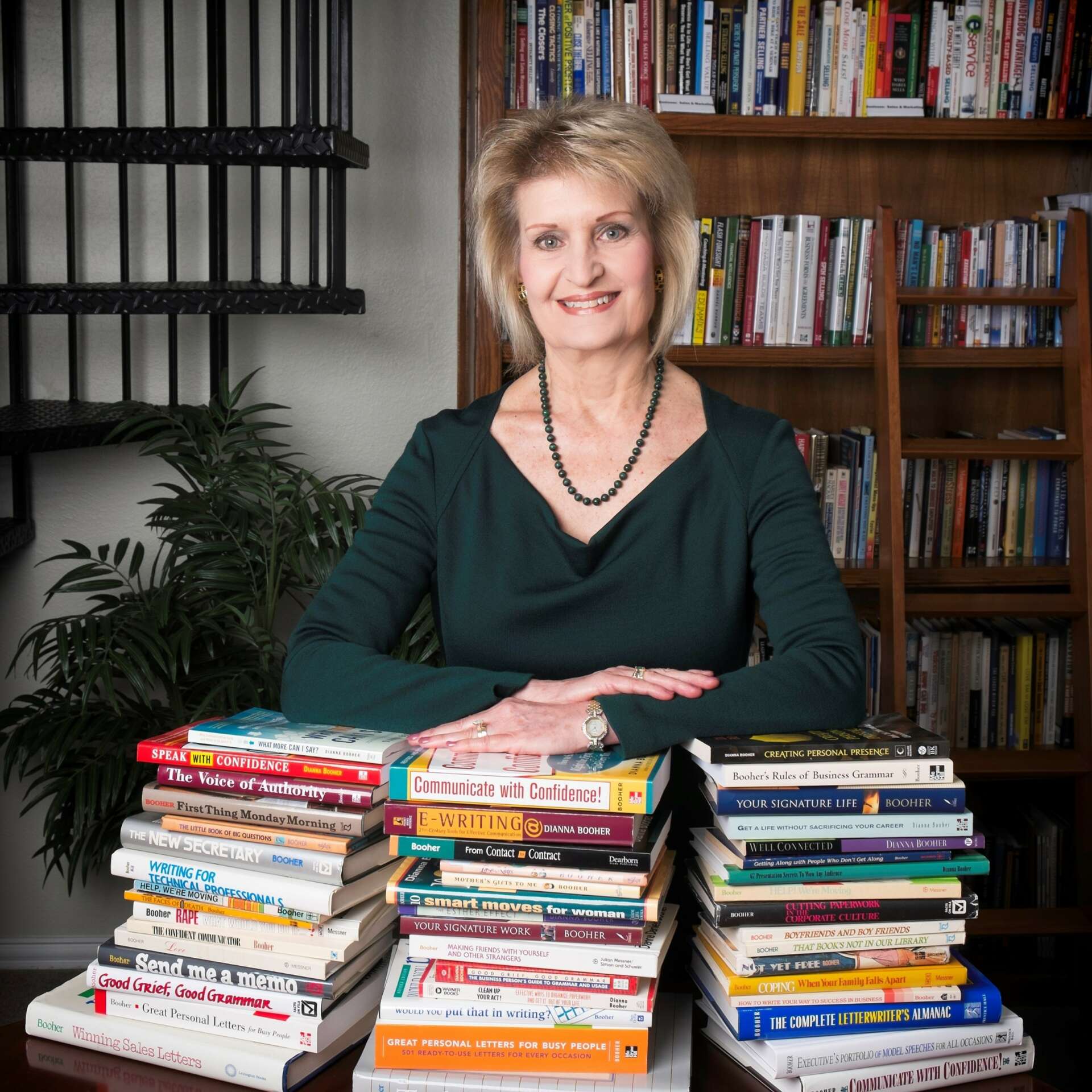
A prolific author of 49 books, published in 62 foreign language editions, with nearly 4 million copies sold, Dianna Booher has published with Penguin Random House, Harper Collins, Simon & Schuster, McGraw-Hill, and Thomas Nelson.
Several of her books have been major book club selections. Her most popular titles include:
––Communicate Like a Leader
––Faster, Fewer, Better Emails
––What MORE Can I Say: Why Communication Fails and What to Do About It
––Creating Personal Presence: Look, Talk, Think, and Act Like a Leader
––Communicate With Confidence: How to Say It Right the First Time and Every Time
––Speak With Confidence: Powerful Presentations That Inform, Inspire, and Persuade
––The Voice of Authority: 10 Communication Strategies Every Leader Should Know
––Booher’s Rules of Business Grammar: 101 of the Most Common Errors and How to Correct Them
Major media featuring her work include Good Morning America, USA Today, The Wall Street Journal, Forbes, Bloomberg, Investor’s Business Daily, NPR, The News York Times, and the Washington Post. She’s also a regular blogger for Forbes, The CEO Magazine, and TLNT.
Dianna works with organizations to help them communicate clearly and with individuals to increase their impact through a strong executive presence–and sometimes with a published book of their own.
Successful Meetings magazine has named her to its list of “21 Top Speakers for the 21st Century. She has also been named on the “Top 30 Global Gurus of Communication” in the world. Plus, as an author,, Dianna has won numerous writing and publishing awards, including being named to the Executive Summaries list of “The Best 25 Business Books of the Decade.” Additionally, American Library Association has selected one of her titles as “The Best Young Adult Book of the Year.”
Clients include IBM, ExxonMobil, Lockheed Martin, Raytheon, Pepsico, Frito-Lay, JP Morgan Chase, Brinker International, MD Anderson Cancer Center, Lucile Packard Children’s Hospital, NASA, and the US Navy.
Currently, her writing and publishing book camps keep her busy. Check out https://www. BooherBookCamp.com for her 3-day virtual program for helping authors land a major book contract.
[email protected] 817-312-3207
@DiannaBooher Facebook.com/DiannaBooher LinkedIn/In/DiannaBooher
Learning and unlearning are both critical parts of growth – can you share a story of a time when you had to unlearn a lesson?
A hard lesson (with a happy ending) came early on in my career–when I was hoping to engage a literary agent to represent my work to publishers. Here’s what happened….
The small ad almost leaped off the page in Sunday’s Houston Chronicle. It said, “Literary agent moving to Houston—out of New York—to be where the writers are. Call,…” and it gave a phone number. I called promptly at 8:00 a.m. the next morning.
The receptionist answered. “An appointment?” Well, Mr. Hudson is extremely busy—I’m afraid it’ll be at least three weeks before he can even see you.”
“No problem,” I assured her. Three weeks, three months–what was three weeks to wait to be in the presence of an honest-to-goodness literary agent.
Three weeks later, I pushed open the door to his suite in a Houston high-rise at exactly the appointed hour. Tall, good-looking, impeccably dressed Mr. Paul Hudson himself greeted me. Gesturing toward the empty receptionist’s desk, he said, “I’m sorry, you caught everyone at lunch. Please come on back to my office—if you don’t mind waiting until I finish a phone call.”
I followed him back, trying to glimpse the names of all the books and authors lining the walls. Once back in his office, he picked up the waiting line. “Thank you for waiting, Jack. Listen, let me just put it to you directly. My author’s not going to take less than a million-dollar advance. And if you can’t come up with that by tomorrow, I’ll just take the manuscript to another house. Yeah… Okay, fine. Tomorrow at noon.”
Just as he turned back to me, the other line rang. “Sorry,” he apologized again.
“No problem,” I said. Actually, I was trying to soak up the atmosphere. While he took the next call, I noted the picture of him and Truman Capote arm in arm and read the caption about In Cold Blood. Then there was another photo on his credenza with Michener, as they seemed to be having a tug-of-war over a sizable advance check.
I tuned in once again to the phone conversation. “Listen, Barb, we’ve got to auction this book—with a floor of $300,000. It’s going to be big . . . Call you tomorrow.”
Finally, he turned back to me. “So, tell me a little about yourself.”
I start back in third grade, …. include an overview of my current novel, and end with my intention not to be a one-book author.
“You’re just the kind of author I like to take on. And your novel sounds fascinating. I’m planning to go to New York on Friday to hand-deliver a manuscript for another author. I’ll plan to read yours before I go. Maybe I can come back with two advance checks.”
“One other thing I want to ask… Uh, you don’t charge a reading fee or an up-front payment of any sort, do you?—because I’ve read that the good agents just take you on if your stuff is good enough to sell.”
“No, no, no. You’re absolutely right. No money up-front—we just don’t have time to take on authors who can’t write.” That was the last tidbit I needed to hear. I floated out of his office that day.
Three weeks passed, and I phoned his office to follow up. The receptionist said, “He said to tell you that he didn’t have an answer yet, but he’s still working on it.”
“No problem,” I said. ‘Working on it’ sounded good to me.
Six weeks passed. I called again.
This time the receptionist was straightforward: “Mr. Hudson said to tell you that you could come pick up your manuscript. It doesn’t quite have the . . . potential. . . he’s looking for.”
I never mentioned the agent again to my novel writing class, friends, or family. But “No potential.” The phrase gnawed at me. Wasted time, effort, money. I might as well get back to real life. I put the novel away and applied for a teaching fellowship in graduate school.
About two months later one Sunday afternoon I sat thumbing through the Houston Chronicle, when I saw a large photograph that looked very familiar. I zeroed in on the caption. “Mark Johnson, alias Jack Zimple, alias Paul Hudson. Posing as Literary Agent Bilks Would-Be Authors of Millions.”” The story that followed detailed the scam as he had moved from state to state, collecting retainer fees from would-be authors “to hand-deliver their manuscripts to big-time New York editors.”
The scene resurfaced in my mind. The mysteriously empty desks. The one-sided phone conversations. The obviously bogus photos. My comment about NOT paying up-front fees.
The value of this experience? Many lessons: 1) All that you see and hear about publishing may not be what it seems. 2) Don’t ever let somebody else tell you the value of your work. 3) Get ready for an emotional roller-coaster ride if you intend to publish a book. 4) Watch out for agents—there are many posers in the industry. Agents need no certifications!



Can you tell us about a time you’ve had to pivot?
Most recently I had to pivot from live, in-person engagements for speaking and in-person meetings for book coaching. Although I had originally scheduled my coaching appointments in person at my large home office. We’d sit around my conference table, discuss and shape book ideas, and even do some editing in hard copy.
Plus, a few times a year, I would schedule my 3-day Booher Book Camps for small intimate groups of authors in my home. My author-clients frequently commented on the wonderfully intimate and personal setting of my home. As they completed writing assignments, they could take a short break and sit out on the patio around the pool or take a long walk around the lake.
But when COVID made in-person gatherings impossible, my entire coaching model had to change. I moved the 3-day event to a virtual session. That meant some of the book camp exercises had to be adapted to this new delivery, as well as the personal feedback sessions to the writers. Timing had to be adjusted as well as pricing.
The pivot, however, has been so successful that the virtual events have become permanent. Clients loved saving on airfare and hotel bills with this new virtual arrangement.
The same kind of pivot to virtual has happened in my speaking events. Rather than having to fly across the country to deliver speeches in person, I can stay in the comfort of my own home to deliver a keynote or training session virtually. That has meant saving travel time and, therefore, becoming more productive..
Contact Info:
- Website: BooherResearch.com
- Instagram: DiannaBooher
- Facebook: Facebook.com/DiannaBooher
- Linkedin: LinkedIn.com/In/DiannaBooher
- Twitter: @DiannaBooher
- Youtube: YouTube.com/DiannaBooher
- Other: BooherBookCamp.com