


We recently connected with Desiree Cooper and have shared our conversation below.
Desiree, thanks for joining us, excited to have you contributing your stories and insights. Can you tell us the backstory behind how you came up with the idea?
On a dim afternoon in February 2006, I stepped inside an old two-bedroom bungalow on Detroit’s east side. At the time, I was a columnist for the Detroit Free Press and had come to hear firsthand the forgotten story of a local civil rights pioneer.
As I sat with my host, eighty-eight-year-old Lizz Haskell, she recounted with extraordinary clarity how she’d arrived in Detroit in the 1930s as Sarah Elizabeth Cole, a Tennessee teenager seeking freedom from Jim Crow and educational opportunity. Soon after her arrival, she married her beau, Frank Ray, and adopted the name Sarah Elizabeth Ray.
It took her nearly a decade, but finally in 1945, Ray graduated from secretarial school. To celebrate, she and her classmates planned a cruise on the Boblo Boat, a huge steamship that ferried passengers from Detroit to an amusement park in Canada. When officials threw her off the boat because she was African American, she filed a complaint with the NAACP. In 1948, the U.S. Supreme Court affirmed her right to ride, paving the way to Brown v. Board of Education’s ban on “separate but equal” schools six years later.
After Ray’s desegregation fight, riding the steamer to the Boblo Island Amusement Park became an iconic summer adventure for countless Detroiters. But that was cold comfort for the woman who never set foot on the boat again. As I listened to Haskell née Sarah Elizabeth Ray tell her story, her humiliation blazed afresh. Sixty years later, she was still furious.
In early 2006, I published my column about Lizz Haskell’s life, and the generational impact she had on the experience of summer in Detroit. She passed away only six months later. I don’t know any details about her death, only that in Detroit, it went unnoticed.
Years later, I met an amazing filmmaker, Aaron Schillinger who was interested in the racial history of the Boblo Boat. Together, we founded the Sarah E. Ray Project in 2020 to raise awareness of the forgotten Civil Rights hero. We made countless presentations to libraries, schools, and community organizations and garnered some national attention, including from the New York Times and the National Trust for Historic Preservation. Aaron’s film, Boblo Boats: A Detroit Ferry Tale, is now streaming on PBS. We’ve also captured the oral histories of Detroiters whose lives were directly affected by Lizz Haskell’s community activism years after the Boblo Boat incident.
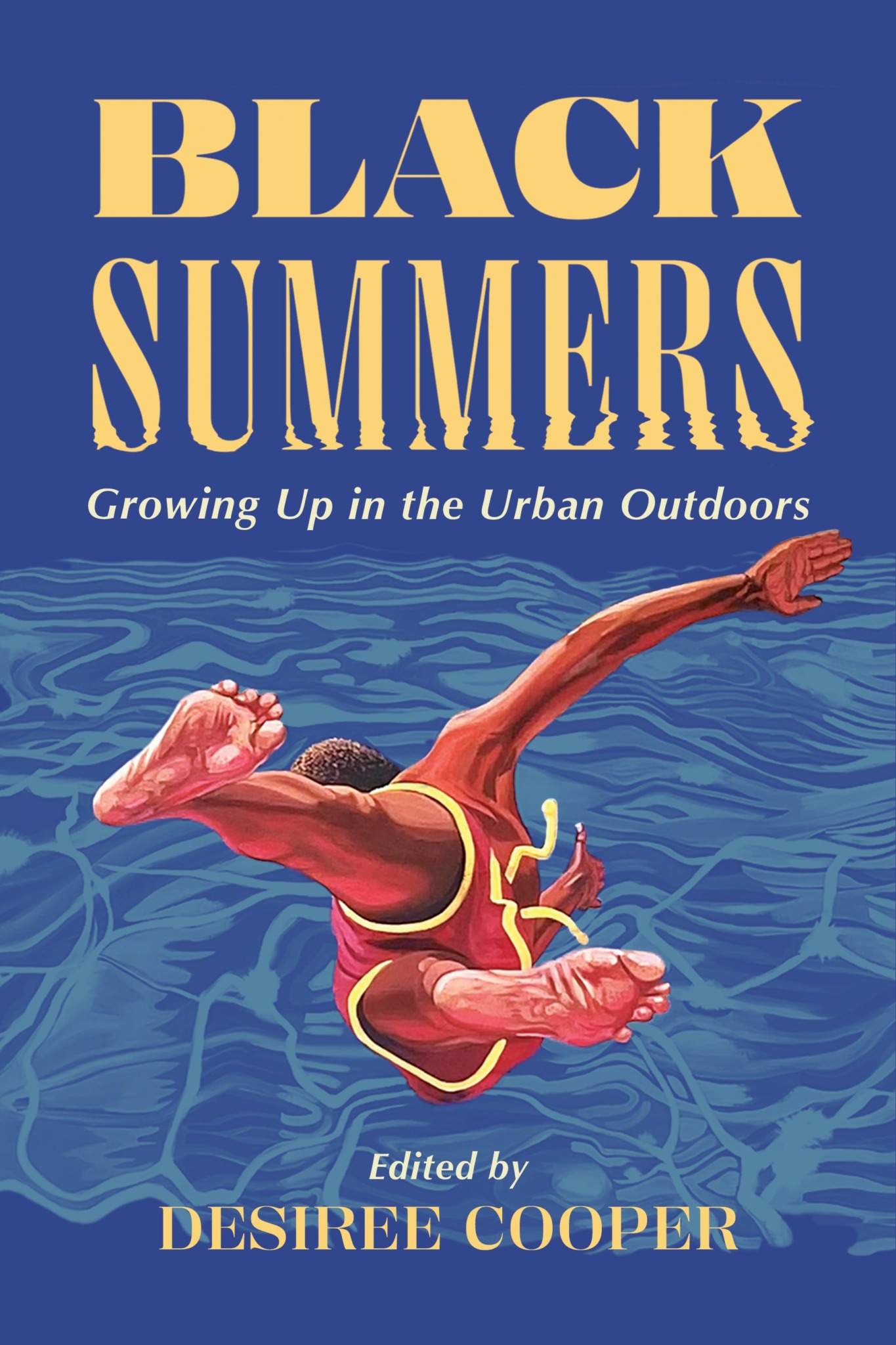
For me, Black Summers: Growing Up in the Urban Outdoors is a way of bringing Ray’s fight for equal access to outdoor spaces into the present, since racism and segregation continue to define how Detroiters experience public spaces in the summer. Sarah Elizabeth Ray—Lizz Haskell— believed deeply that leisure, nature, and play are civil rights, too. With these stories, the writers in this collection call her name, pour a written libation, and embrace her undying resolve: Everyone deserves the freedom to have fun.

Desiree, before we move on to more of these sorts of questions, can you take some time to bring our readers up to speed on you and what you do?
Despite my lifelong desire to be a writer (I remember wanting to write books as a preschooler!), my first book wasn’t published until I was 56 years old. An Air Force dependent, I was born in Japan and lived there many of my formative years. My middle-class, striving parents who rose from poverty in the Jim Crow South, valued an education, and always saw writing as a hobby (but not a REAL job). That mindset led me to law school in Virginia. There, I married a classmate and followed him to his native Detroit.
In Detroit, we started our careers in law, bought a house, raised two children. But I never stopped writing. Eventually, I wandered into community activism and journalism, while taking creative writing classes, participating in writing groups and going to writing conferences. Becoming a Pulitzer Prize-nominated journalist built my chops at compression and this, coupled with so little time to dedicate to my creativity, built my muscle as a “flash” writer. Flash is fiction or nonfiction stories told in about three pages or less. My first book, Know the Mother, is a collection of flash fiction.
Detroit was a stunning city of contradictions, racial politics, and Black empowerment that shaped my activism. Motherhood and caregiving shaped my feminism. These themes regularly converge in my essays, fiction and memoir.
In 2016, I left Detroit and moved in with my aging parents in Virginia (both had Alzheimer’s). I cared for them through COVID. By the time they’d both passed away, I had taken custody of my three grandchildren. Even in late life (I’m now 65), kin care continues to profoundly impact my creative life. I’m especially proud that, so far, I have not let that enormous responsibility smother my longing to write.
Below is my bio.
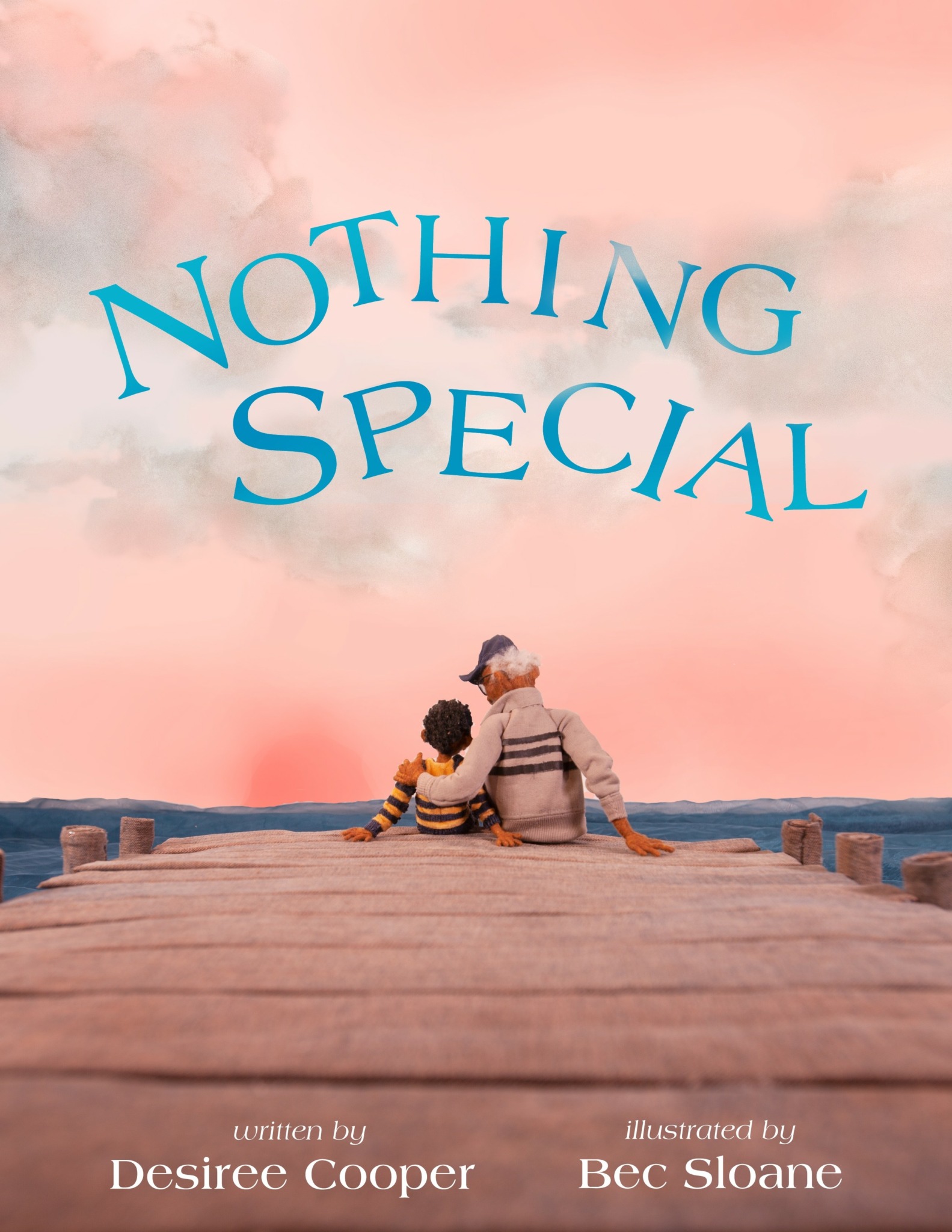
Desiree Cooper is a 2015 Kresge Artist Fellow, former attorney and Pulitzer Prize-nominated journalist. Her debut collection of flash fiction, Know the Mother, is a 2017 Michigan Notable Book that has won numerous awards, including 2017 Next Generation Indie Book Award. Cooper’s fiction, poetry, and essays have appeared in The New York Times, Oprah Daily, MSNBC Daily, Flash Fiction America 2023, The Best Small Fictions 2018, Callaloo, Michigan Quarterly Review, The Rumpus, River Teeth, and Best African American Fiction 2010, among other publications. Her essay, “We Have Lost Too Many Wigs,” was listed as a notable essay in The Best American Essays 2019. In 2018, she wrote, produced and co-directed “The Choice,” a short film about reproductive rights and recipient of a 2019 Outstanding Achievement Award from the Berlin Flash Film Festival, and Award of Merit from the Best Short Film Festival in Los Angeles. Cooper’s children’s picture book, Nothing Special, is a 2023 Paterson Prizewinner and was on the New York Public Library’s list: “10 Best Children’s Books of 2022.” Her groundbreaking anthology, Black Summers: Growing up in the Urban Outdoors, is forthcoming in 2026. Cooper was a founding board member of Cave Canem, a national residency for black poets, and has received residencies at Kimbilio and Ragdale. Having forged a 30-year career in Detroit, she now lives in the Virginia Beach area where she cares for her three grandchildren.
We’d love to hear a story of resilience from your journey.
I feel lucky that from a young age, I knew I wanted to be writer. But that didn’t make the journey easier. Nothing in my world ever pointed to me becoming a creative, much less a writer. I knew no artists as role models, and my family never embraced writing as an avocation. (I remember caregiving for my 80-something father. I must have mentioned a book that I was working on. He looked at me with amazement and said, “When did you become a writer?” By then I was in my 50s, had been a journalist for more than a decade and had published two books.) As an evolving creative, I had to be completely “self-propelled” to acquire the necessary skills and to hold on to the dream. I wrote for myself. I wrote because I loved it. I wrote without any hope of ever publishing. In many ways, that was a blessing because it gave me total freedom to experiment and “play.” I wrote holiday cards and newsletters. I wrote poetry and short stories. I wrote memoir and newspaper articles. (By the way, I never considered my professional career in journalism as “writing.” For me, that was work, not art.) When I walked away from law practice at age 30, I knew that I was walking toward a more creative life. Still, it took me years of wandering and childrearing before I finally embraced my dream of getting published. In December 2015, I was involved in a serious car accident that left me with a traumatic brain injury (the effects of which I still have today). As I was spinning on the freeway, my first thought was, “They can’t take it away from me now.” I was prepared to die in peace: My first book was already in the can and was scheduled to be published in March 2016. Fortunately, I lived to see the day and enjoy the thrill of a book tour. Two more books later, I continue to write as if I’m on borrowed time.

If you have multiple revenue streams in your business, would you mind opening up about what those streams are and how they fit together?
I think people (even those who want to be writers) are really in the dark about what publishing is. As with many high-visibility, creative jobs, only the very top few can make a living from their art. I know someone who won the coveted National Book Award for poetry and went back to sitting at his desk as a corporate grunt on Monday. Publishing is a giant rip-off for authors. It’s thankless and financially unrewarding, especially given the YEARS it takes to write a book. Folks think that they publish their life stories (without any writing training), pay someone to put it out there, and watch the money flow in. NOT!
Instead, most writers have other full-time jobs. Many work in academia full time. That, too, is a modest living at best, but it does allow time for yet another income stream: speaking. I have yet to make any money from one of my books. Anything I make is plowed back into the book for publicity/marketing (I’m with a small press, but even large presses expect the author to treat the book as their small business. I always say, if you’ve got a book, you’ve got a JOB.) I parlay the book into speaking engagements which can be extremely cost-effective. I also coach writers on the side and serve as a series editor for my press.
There is a reason why creatives of old had patrons. Creating quality art is generally not an income stream.
Authors are often shocked to learn that they have to hock their own books, create sales opportunities, be visible on social media, and compete for award, presentation opportunities, and media attention. It’s a cruel irony for the droves of introverts who care about writing only.
Contact Info:
- Website: https://descooper.com
- Instagram: @descooper, @blacksummersbook
- Facebook: @descooper, @descooperauthor
- Linkedin: Desiree Cooper
- Other: https://saraherayproject.com
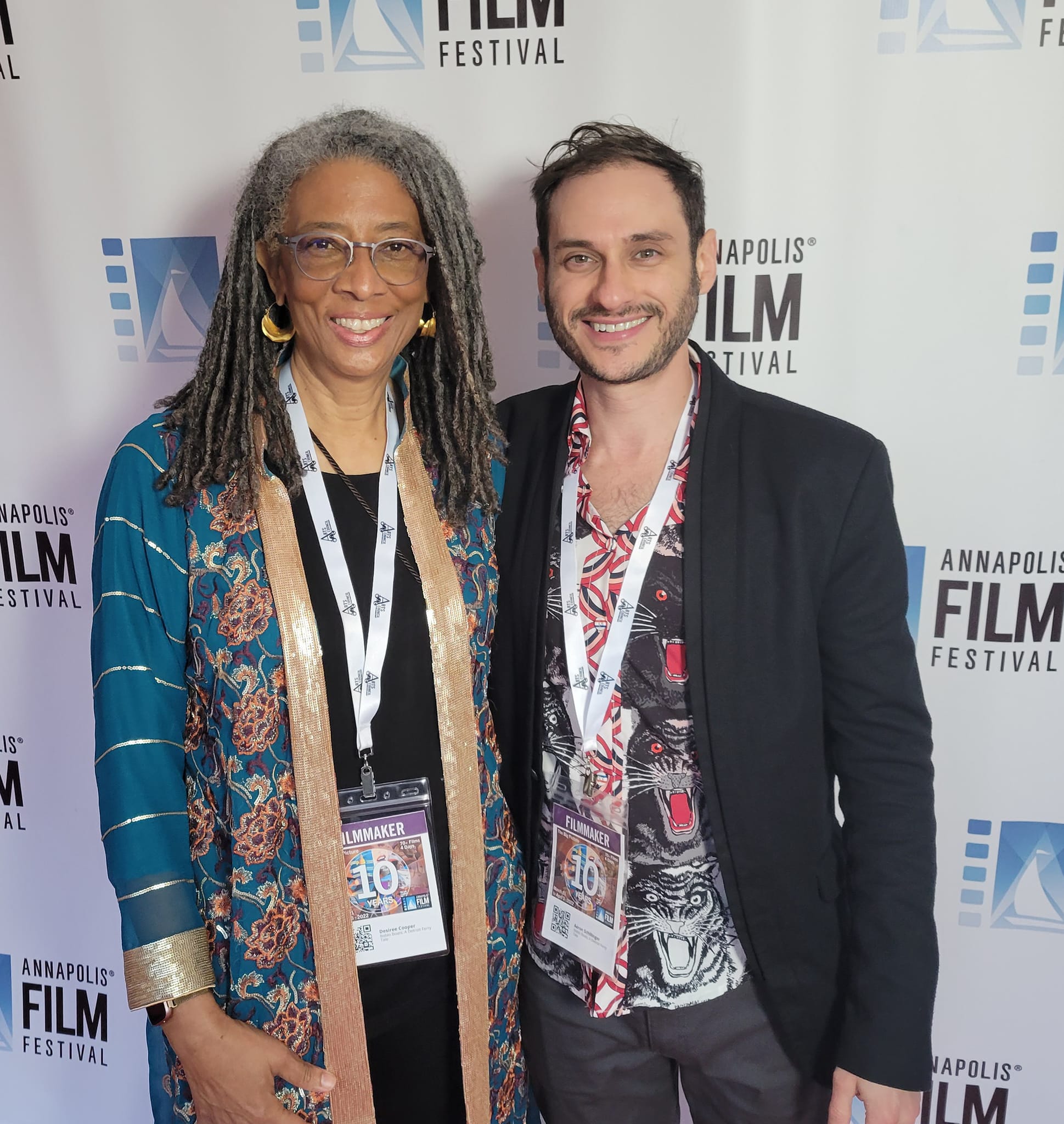
Image Credits
N/A I took my own headshot