

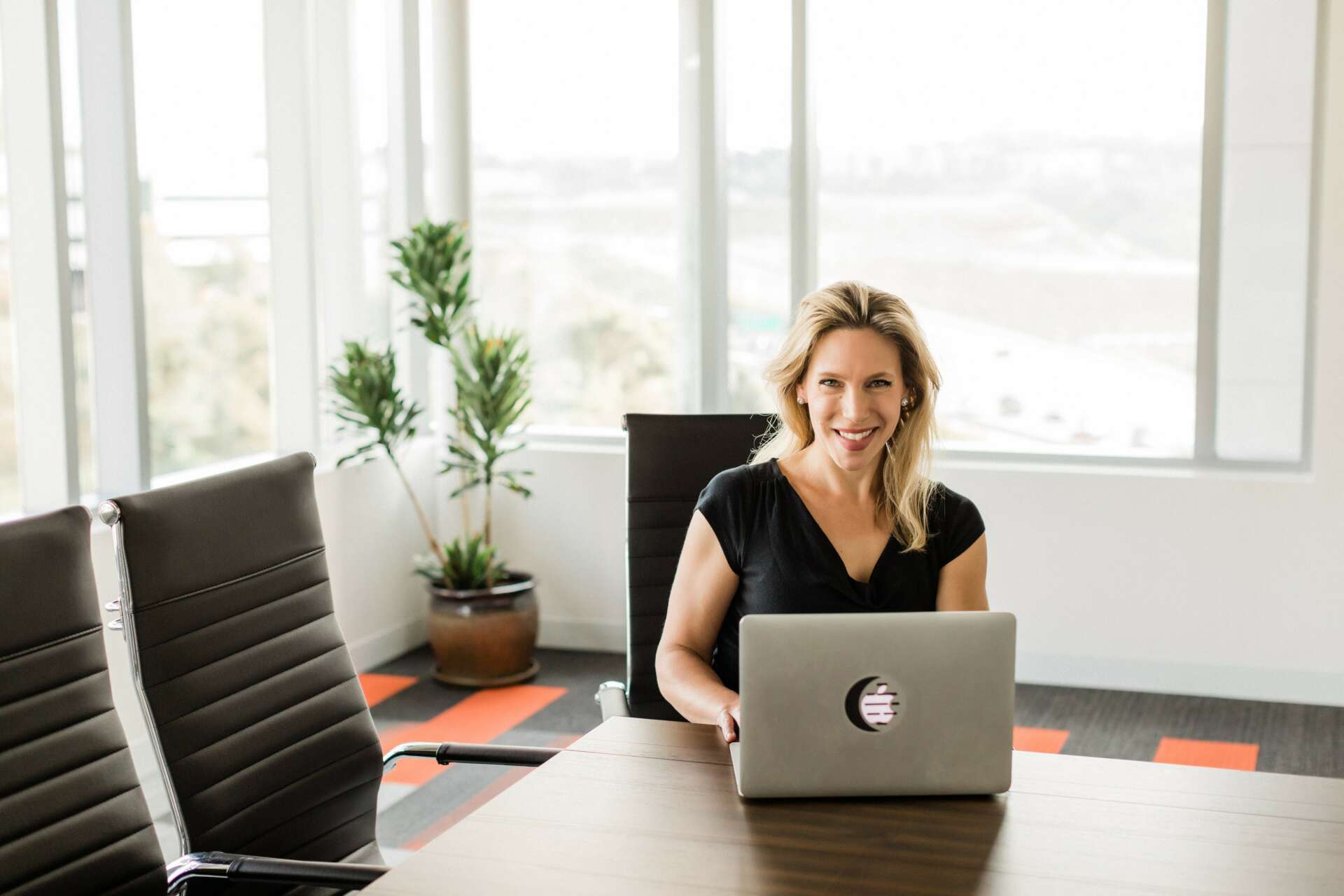

We’re excited to introduce you to the always interesting and insightful Dawn Barry. We hope you’ll enjoy our conversation with Dawn below.
Hi Dawn, thanks for joining us today. We’d love to have you retell us the story behind how you came up with the idea for your business, I think our audience would really enjoy hearing the backstory.
It’s always good to remember that ideas are everywhere, and execution is everything when you’re building a business. Execution takes a solid team shaping an idea together. I appreciate the Luna team for our alignment on a mission while being fully adaptable in term of how we achieve it.
The idea of diverse and inclusive research, and community-driven discovery, was the centerpiece of my October 2016 TEDxSanDiego talk. Throughout my career, I heard the frustration of people living with diseases who said researchers weren’t asking the right questions. I also heard the frustration of researchers who felt they didn’t have “good data,” which was information that accurately captured the experiences, goals, environments, and variables of people living with a disease. The need for a technology bridge where people could be elevated from just patients and research subjects to partners in discovery to work more directly in research was clear.
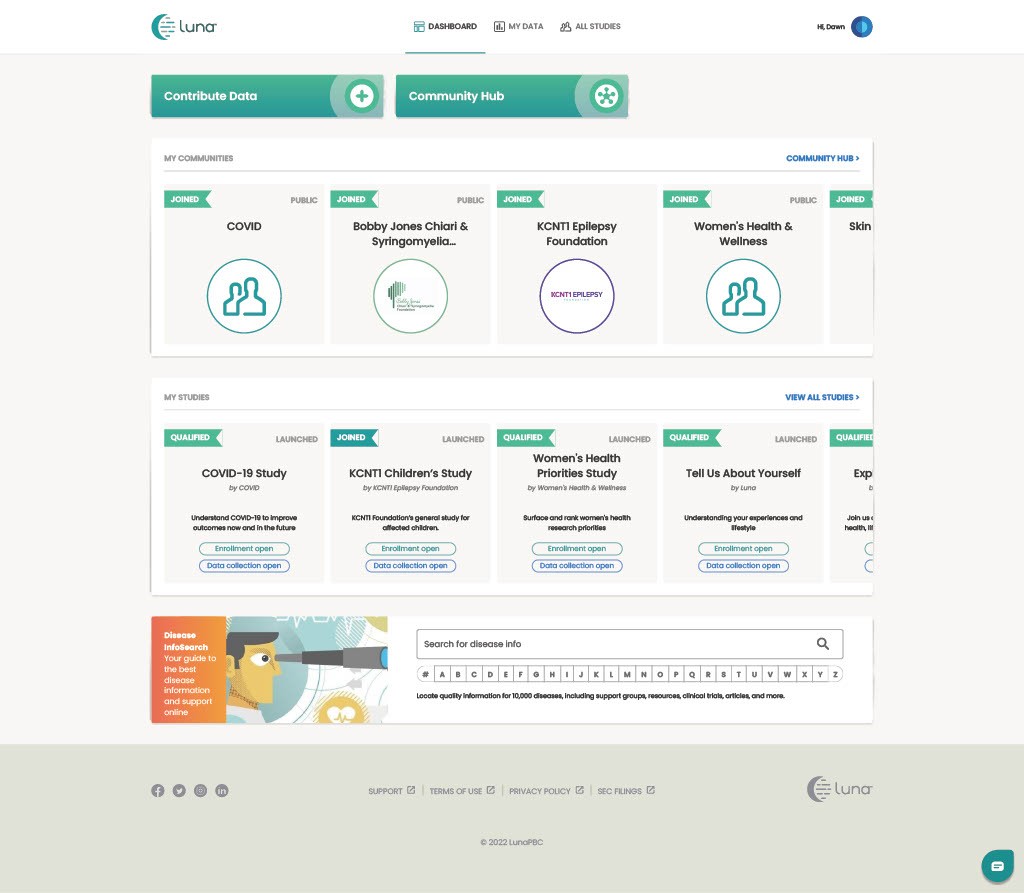
Many innovations are cutting out “middle men,” and preserving and leveraging technology and people’s ownership of assets towards a goal. For example, Airbnb helps connect us to find lodging but owns no property. Uber helps us get from point A to point B but owns practically no cars. The market needed a technology for people and product companies to scientifically conduct research and validate health outcomes that didn’t require people to give up their data rights and privacy. With the population turning ever more toward each other for support–not social media, not experts, not influencers–the team at Luna was further convinced that, if people had the tools to do the research themselves, they’d use it.
Eventually, I think we’ll see any group with a shared concern gather their data, answer their own research questions, and be more involved in building their health solutions. Today, Luna has multiple case studies that showcase the power of uniting communities with industry to accelerate health discoveries.

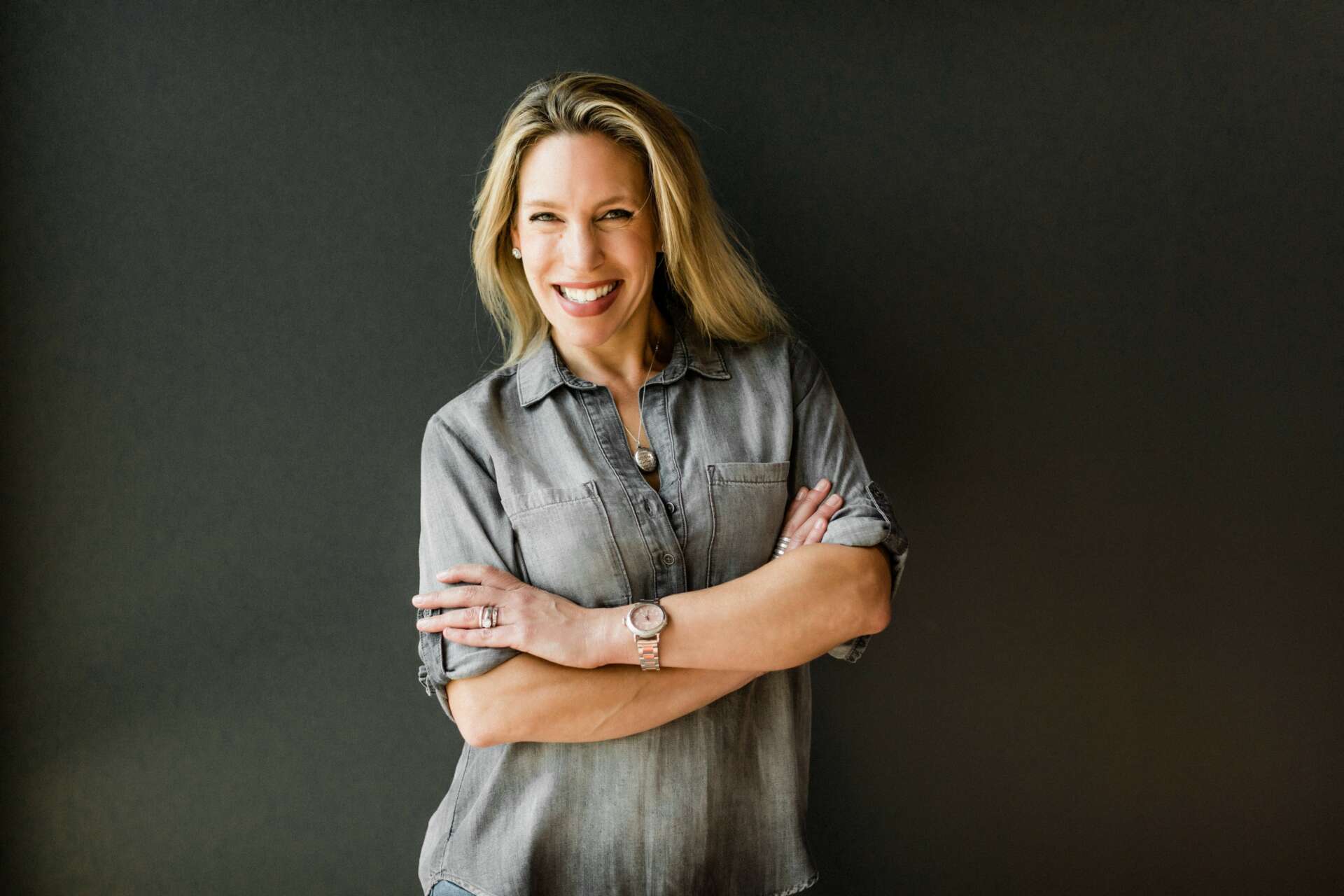
Great, appreciate you sharing that with us. Before we ask you to share more of your insights, can you take a moment to introduce yourself and how you got to where you are today to our readers?
I have loved science for as long as I can remember. As a kid, I was deeply drawn to nature. This grew into a love of biology and ultimately led me to a career in human health and genomics. Science, at its core, is the search for knowledge–an iterative learning process. I’m passionate about making science feel more approachable, especially to girls who might be interested in a career in science. If a kid loves helping people be healthy, looking up at the stars, exploring how the ocean and earth work in harmony, ideating new ways to get from point A to point B, and asking questions to reveal the truth, they could have a remarkable career in science.
I honed my interest in human health and genomics after college and especially during my 12 years at Illumina. Believing that everyone should have the opportunity for a clean bill of health led me to advocate that the blueprint of life–our DNA–could hold the clues to achieving that.
I’m excited about making research and discovery much more accessible. I envision a future where any community—collectives of women, patient networks, geographic groups, individuals with a special interest—can digitally organize around a question and leverage technology like what we’ve built at Luna. Being able to aggregate the same kind of data Ph.D. researchers can, studying the data by just inputting a question as you do with a search engine, and quickly getting answers you can trust. As everyday consumers in an increasingly digital world, we create so many data points, and we are just starting to understand what’s happening to that data—with and without our knowledge. If consumers were so inspired and enabled, it is not an exaggeration to say we, as communities, could revolutionize research.
Do you have any insights you can share related to maintaining high team morale?
Starting a business will be a crazy adventure that requires a significant investment of time—and it will test everything about you. Approach building a business with the mindset that “this will be challenging,” and be okay with that. I’ve lived by the saying, “If it were easy and worth doing, someone would have done it already.” I love challenges, and I see opportunity in chaos. The past couple of years have unpredictably unfolded to points where it felt like nothing was a constant; everything was a variable. But, as a team, we all grew, learned, and are now even more tested, making it easier to maintain good energy levels and positivity through future challenges.
In work and life, I think it’s key to surround yourself with the right people. Especially in the early days of a business. Surround yourself with people you have past experiences that you can trust and who also recognize that the startup road won’t be easy—and that’s exactly why it’s worth taking. The crazy dynamics of a constantly changing environment over the past two years have helped me hone my resilience and galvanize the bond of our team.
Learning and unlearning are both critical parts of growth – can you share a story of a time when you had to unlearn a lesson?
In the early stages of my career, when the “Girl Power” movement of the late 1990s promised the early progress of women would trickle down to girls, I was coached to adopt a colder, more serious demeanor that, at the time, was deemed to be akin to a successful male professional. I worked with consultants and studied curriculum on adapting to operate in male-dominated careers. I was warned that the power I gained in the workplace would come at the expense of building a family. This manifested in behaviors, in retrospect, that I regret, including not getting to know more about the personal lives of team members and not sharing more about myself. It didn’t take long for me to discover how detrimental that was—not only to my growth, but to the growth of my team, peers, and even the business.
I’ve learned to be a giver. “Give and Take,” a book by Adam Grant, describes it perfectly. In my early days in business, being a kind and giving manager—attributes often ascribed to women—was considered weak and not authoritative enough to lead. As Adam Grant helped me see more clearly: while some givers get exploited and burn out, many achieve extraordinary results and become good friends, community connectors, and mentors.
Ultimately, if we show up differently than who we truly are, we miss out on the opportunity to offer our best qualities in our work. If you leave that behind, you’re asking your teammates to leave that behind, too.
Contact Info:
- Website: https://www.lunadna.com
- Facebook: https://www.facebook.com/dawn.symonaitisbarry
- Linkedin: linkedin.com/in/dawn-barry-6676651
- Twitter: @DawnBarryDNA
Image Credits
Emi Fujii Photography