


Alright – so today we’ve got the honor of introducing you to David Wurth. We think you’ll enjoy our conversation, we’ve shared it below.
David, appreciate you joining us today. Looking back, what’s an important lesson you learned at a prior job?
I don’t know if it was THE most important lesson/experience I had but because it happened to me very early in my restaurant career it made a lasting impression. I was in my “college summer break work and make some cash days” enjoying being at an island paradise (Martha’s Vineyard) while also trying to save money. The job I had, at the fancy French place, was initially just the job to make the cash but soon became much more than that. Being part of the team that was providing delicious food in a beautiful space served by a carefully trained staff offered something deeply satisfying that I felt very proud to be a part of. I started to think about the importance of showing up with intention and purpose. And how that would lead to a connection to the every day tasks both menial and complex. I saw the dotted line to job satisfaction and pride in a job well done. The owner was a very charismatic woman, born in Hungary. Her husband was the chef, cooking what was in the early 1980’s a modern French menu. There was hard work with lighter moments all summer long. Slowly I was given more to do, beyond my initial job description of “Busser”. On a late in the summer season evening I was sitting with the owner chatting about service related topics, the restaurant business in general. She then said “David I could see you working extra hard and that you wanted some responsibility. I would have been a fool not to give it to you.” While I wouldn’t understand exactly what she meant it made me feel appreciated. But years later when I was a sous chef in a restaurant and tasked with taking charge of a portion of the restaurant operations I did understand. Delegating is essential for so many reasons. One, an owner or manager or boss cannot possibly do it all. Two, delegating important tasks allows a worker to feel responsible and connected..extra points when there are creative decisions involved. The owner operator gains so much when they are able to recognize the worker who wants to do more and reward them with an expanded job description. Provide an outlet for them to contribute and grow. Win win.

David, love having you share your insights with us. Before we ask you more questions, maybe you can take a moment to introduce yourself to our readers who might have missed our earlier conversations?
I’ve been working in restaurants for the entirety of my adult life. It was at first the way to a payheck while in college studying film. Somewhere in there my passion shifted from filmmaking to cooking. The camaraderie of the team, the gratification offered after the work day was done. The creative oppurtunites were seemingly endless. I found employment in small restaurants which set me up very nicely to see that I one day could operate a restaurant of my own. What I found appealing about the smaller restaurant was the ability to see everything in detail. Nothing happening day to day was unknown to the owner or to any interested employee for that matter. I was able to thrive in that hands on environment from my first days in the business. The intimacy of the small restaurant exposed me to the skill set I’d need to open my own place. It took me much longer to get there but get there I did. Slow and steady prooved to be a winning path.
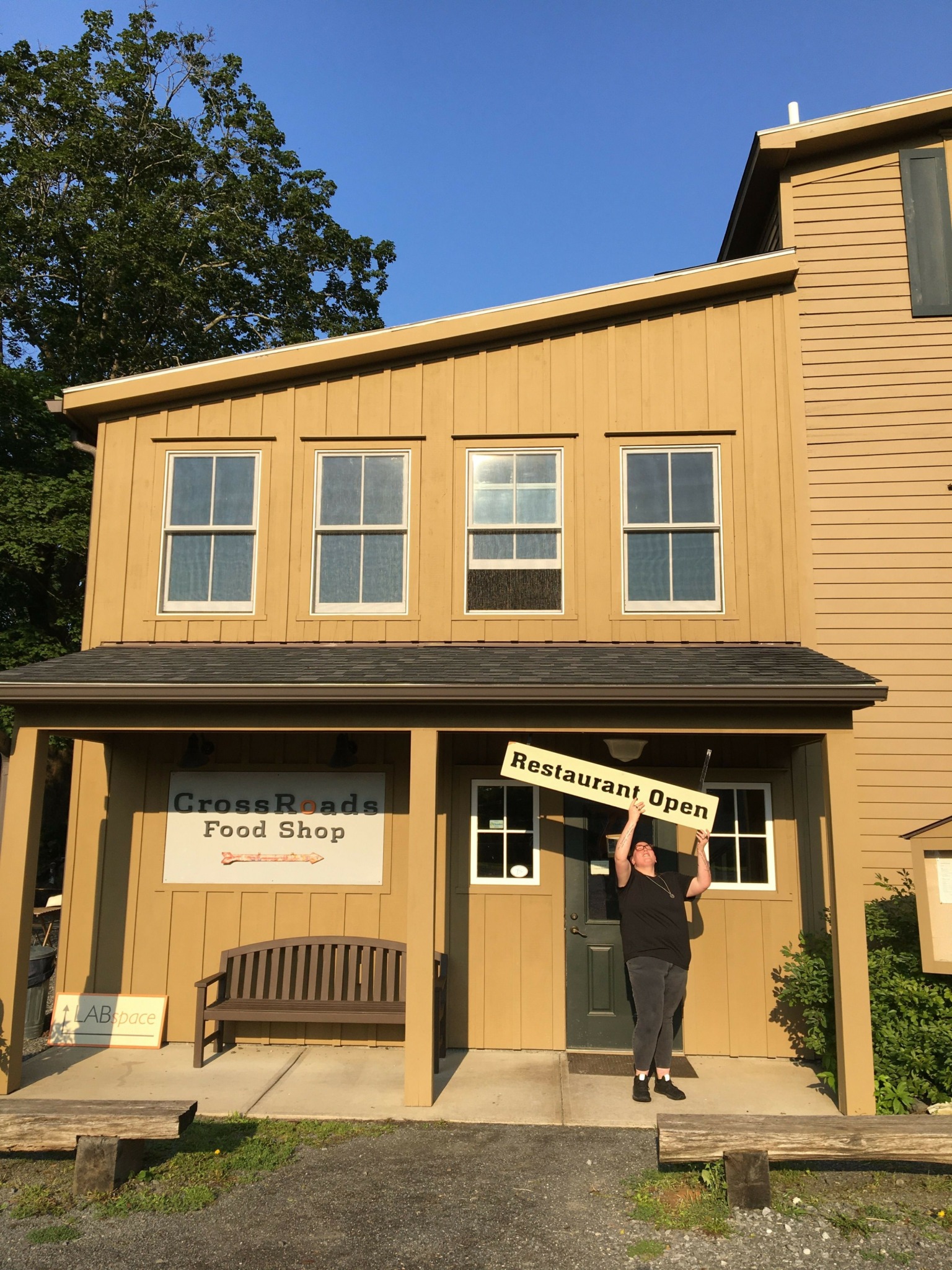
Ultimately I think my success as a chef owner has to do with my commitment to consistency in both the product I offered and the service from the team assembled. I put in the hours which allowed for the consistency, my team saw that and most were happy to contibute above and beyond my expectations. I led by example and we at the restaurant were co-workers for the most part. I wore the boss hat but gently. Also, corners were never cut. In the small town where my restaurant was “regular” customers, those who came in 3 or four days a week, were the norm. Knowing them by name and their usual order wasn’t required but it showed our appreciation and the customer felt seen. If someone contemplating a career in food service who sees what I did as a chef owner and wants some advice I start with the time commitment required. Wanting to make that commitment is essential. That might be true of any career but it is especially true in food service: prepare to be shackled to the stove. I felt /feel very lucky to have found early on in cooking an activity I truly love to do. And that acitivity easily led to income producing work. Not always great income but I could always find a job. My first chef job and the ones that followed before I opened CrossRoads featured menus that I could create with authenticity. There are so many menus out there representing seemingly endless creative ways to cook. The best restaurants are anchored by chefs whose menus express their personal tastes and styles, what they love to eat. As a cook moves through their career, they’ll settle on a style that means most to them. Mine was under the banner Farm To Table. Eventually I moved from New York City to the Hudson Valley settling north of the city to an area rich with small farms. Seasonal cooking sourcing from the farms proved to be just right. Customers often knew the farmers whose produce was featured leading to that feeling of community. When the farmers themselves would stop in for a meal that was the best compliment and the circle completed.
Do you have any insights you can share related to maintaining high team morale?
What helped me early in my restaurant career was a love of the work. I was lucky to find myself drawn to cooking and to see that this could lead to a nice paycheck. I was rewarded with creative opportunities, both colloborative and working alone. I appreciated that the contributions were aknowledged and acknowledged by the owner. Admittedly sometimes I went a little too far allowing my ambition too much space. There was a line, patience and following the lead of the boss was essential. Years later when I finally opened my own restaurant and could move freely I knew it would serve me well to encourage younger employees to act on their ambition, remembering that lessons from the first job. Encourage creativity, encourage involvement. My role as owner would be to make sure everyone understood the mission of the business, the standards and the path to getting there. One mistake I saw being made in my prior days was the owner insisitng the worker, even the ones in management positions, being told to mimic the style of the owner. This never works. Resist the urge to control. Be articulate when decribing the tasks required, observe from a safe distance and inject commentary when asked or needed. And then move on with trust established. I saw that an employee will flourish when allowed to achieve the end results in a manner that rings true to them. The difference between smothering managment and genuine support. Connection and loyalty and long term employment follows, I was free to focus on other things.
Can you talk to us about how you funded your business?
Funding. Ugh. The big hurdle for so many would be entrepreneurs. Unless there is so called bottomless family money there is a need to ask someone for funding. It’s awkward to do. “Why would someone want to lend me money?” You have to make an attractive pitch and put some projections to paper. Show that there is a path to profitability. Be willing to hear no. Importantly it’s not a reason to bury a dream. Late in life when I had my last great chance to open my own restaurant I accepted that the funding part probably wouldn’t be enjoyable but I had to go for it. I took a class at a community college that was a 10 week seminar on start ups. Part of the class included a on on one with an expert of my choice. A PR person or an accountant or others in the small business orbit. I chose a business plan expert. There were deadlines set with work submitted and then critical commentary. Keep it short on descriptive flourishes, make it a quick easy read with room for follow up questions if so desired. Money would come from my very generous parents and a new local friend I met through a chef job upstate. But I would need a lot more, the plan would be heading to the SBA and a local economic development funder. These people don’t know me, maybe don’t want to know me and wont want to read my life story. While waiting for an answer I did some bartering with a web site designer and a table maker. Food credit for services rendered. Take advantage if you can. I also sent the plan to a hedge fund manager I knew through a college friend. Plenty of available money there, he’d invested in other projects but he declined politely. He didn’t feel the enironment was right for an investment this risky. He said no and I wasn’t crushed by it. Happily the rest of the loan requests were approved. I’m not sure exactly why the insitutional lenders said yes but I’m sure it had something to do with my story: a career in restaurants with some funding guaranteed and a plan that sounded both reasonable and promising. The next part was being smart with the funding. There are a lot of stories out there that speak to small businesses that didn’t have enough money in the bank once the doors opened. This was not going to be my story. Decisions were made in the build out to not spend foolishly. I bought used kitchen equipment knowing I could upgrade later on (and I did). I didn’t go for the very fancy dining room chairs or the deluxe lighting. The experts in hospitality have all emphasized the importance of having money in the bank when the business finally opens. I expected a burst of business, everyone wants to try the new place, followed by slower months. It’s those slower months with the bills coming in that I was planning for. Restaurants require the purchase of perishable goods and the workers to create product from them. When you’re new who knows what the volume will be day to day and thus what to order? So you order too much. Until a new business can establish a steady reliable flow there will likely be loss. This is when that careful pre-opening spending would come in handy, leaving money in the bank. This is what led to my success I believe. Allowing the early days and months to establish a reputation, find the steady ground. Eventually I replaced the used kitchen equipment. So: ask for funding raise the money believe in your talents don’t be shy, spend carefully and know the first months will be looking at the bank account every day.