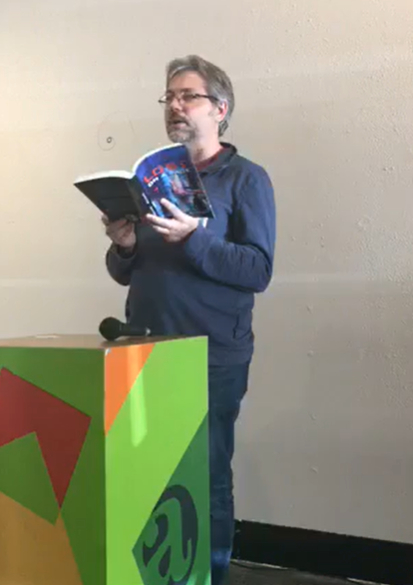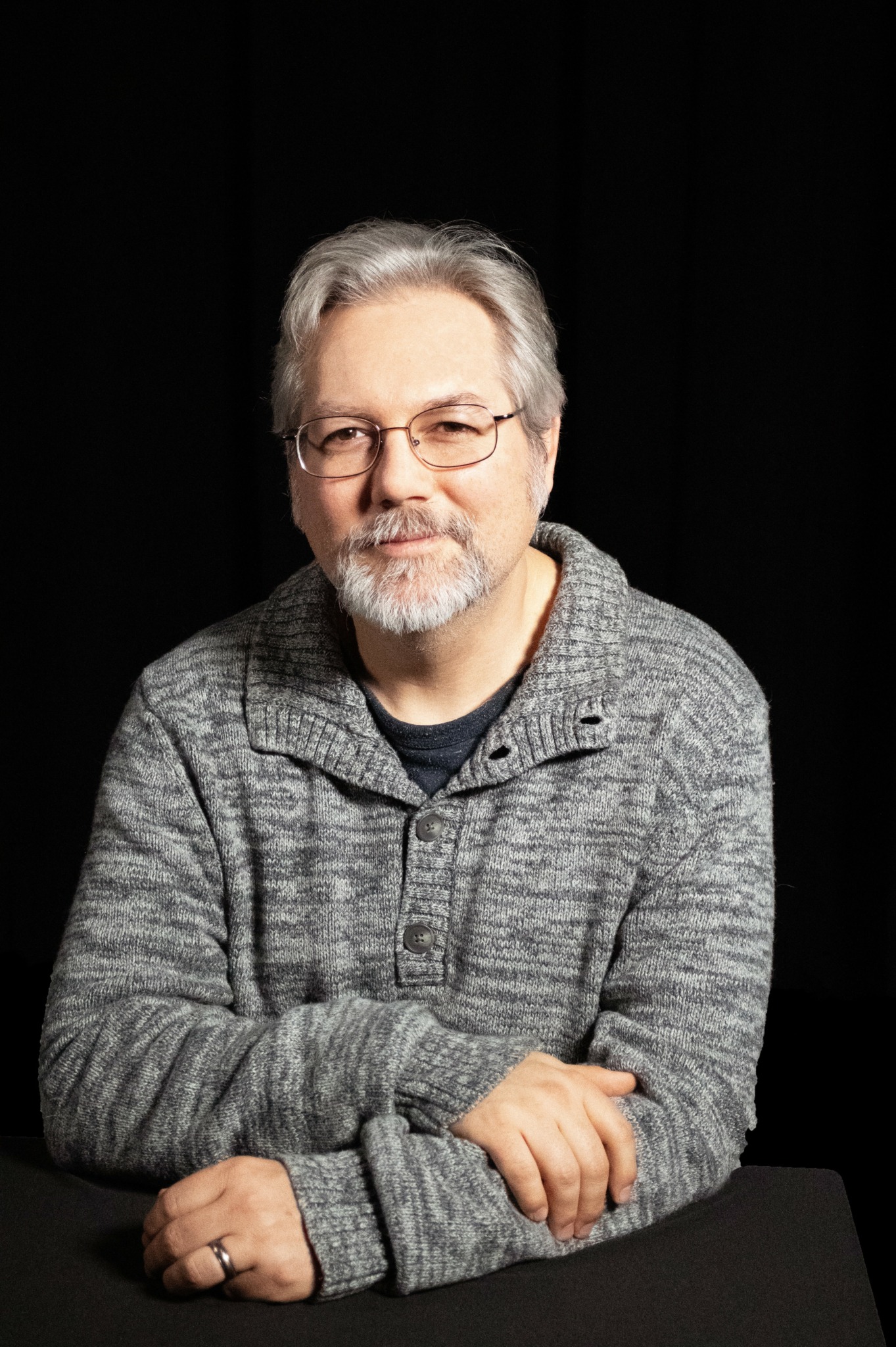

We were lucky to catch up with David Sharp recently and have shared our conversation below.
David, looking forward to hearing all of your stories today. How did you learn to do what you do? Knowing what you know now, what could you have done to speed up your learning process? What skills do you think were most essential? What obstacles stood in the way of learning more?
Mastering any craft—and specifically writing—is a kind of fluency. There are many technical aspects to learn, but committing Strunk & White’s Elements of Style to memory is not going to make anyone a great novelist. The technical side is important and should not be ignored, but fluency comes from immersion. The first, best advice for any aspiring writer is to first be a great reader. Story has a language of its own. I believe that’s true of other creative pursuits, too.
Then, I think you have to commit to being really bad at something for a while. We like to talk about how creative people are talented. Talent plays a part. But I don’t think it deserves the spotlight we give it. Rugged determination is far more important. I wrote nine full versions of Lost on a Page before it ever landed a publisher. Each of those had major revisions in between, but when I rewrite a manuscript, I open up a blank document and transcribe every word from the previous copy, revising as I go. Maybe it’s not the most efficient method, but it undermines any tendencies to be lazy. These days, I complete most manuscripts in four drafts, giving myself to make the first one awful. Perfectionism is a roadblock, especially in the outset. You have to be willing to make yourself cringe. Make something first. Make it good later.
David, love having you share your insights with us. Before we ask you more questions, maybe you can take a moment to introduce yourself to our readers who might have missed our earlier conversations?
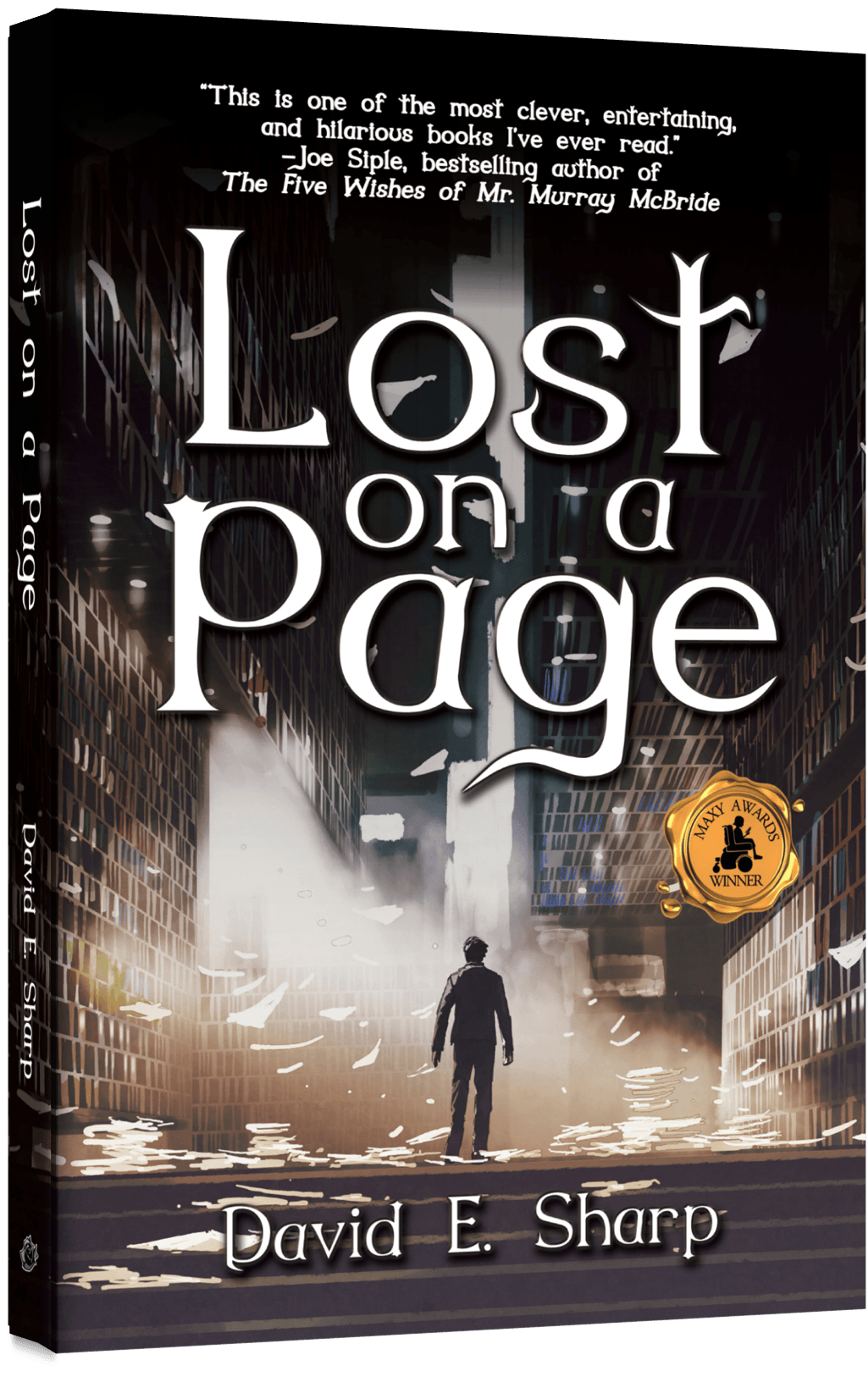
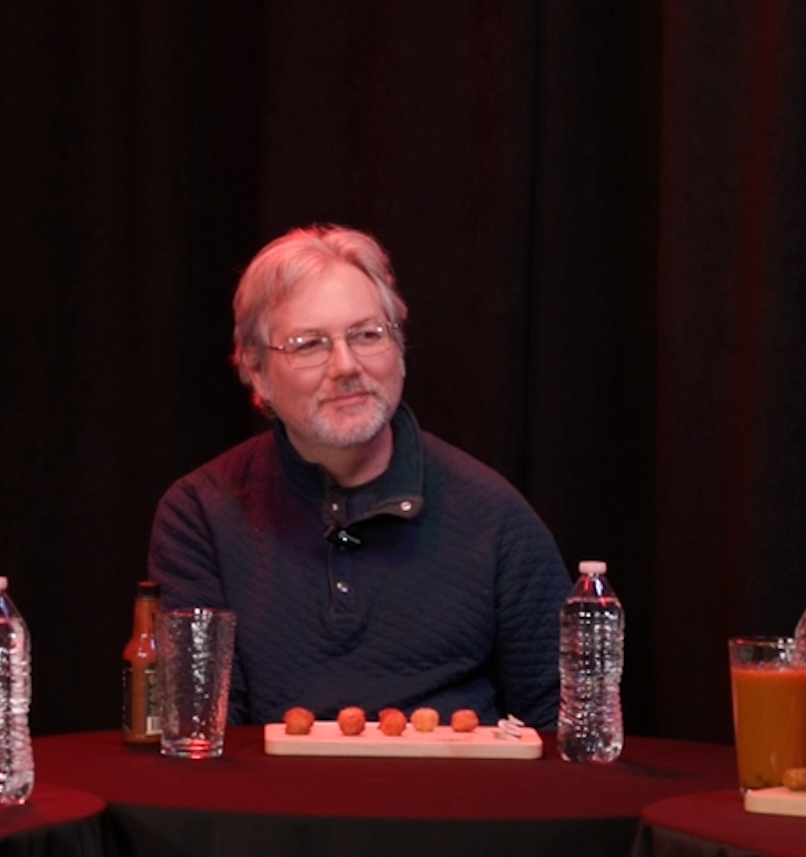
I usually describe myself as a writer and noisy librarian, two walks that keep very much in step with one another. I’ve written several works including stage plays, guest blogs, articles for newsletters or magazines, short stories, a sprinkling of poetry, but—most notably—my novel Lost on a Page that has been an Amazon bestseller in two categories, won a Maxy award, and spawned two sequels. It is the tale of a detective who discovers he is a fictional character in a series of mystery novels and sets of for the World Where The Books Are Written to murder his author. Had this been a biographical work, I might not be answering questions here today.
While I am here today talking about my writing pursuits, it is difficult to disentangle them from my passion for librarianship. I hold a strong belief that a person must develop a love for art of any kind before setting out to create it. As a librarian, I believe in a book for every reader, and every reader to a book. And I am fortunate to work for the LINC Library Innovation Center in Greeley, CO where our support of creative pursuits goes well beyond books and reading. We provide public access to a woodshop, fiber arts equipment like looms and sewing machines, maker technology including sublimation printers and laser cutters, and a a recording studio I was tasked with launching last year.
The process is very cyclical for me. I love exposing people to art—help them find voices that inspire them—and use that to help them find their own voices.
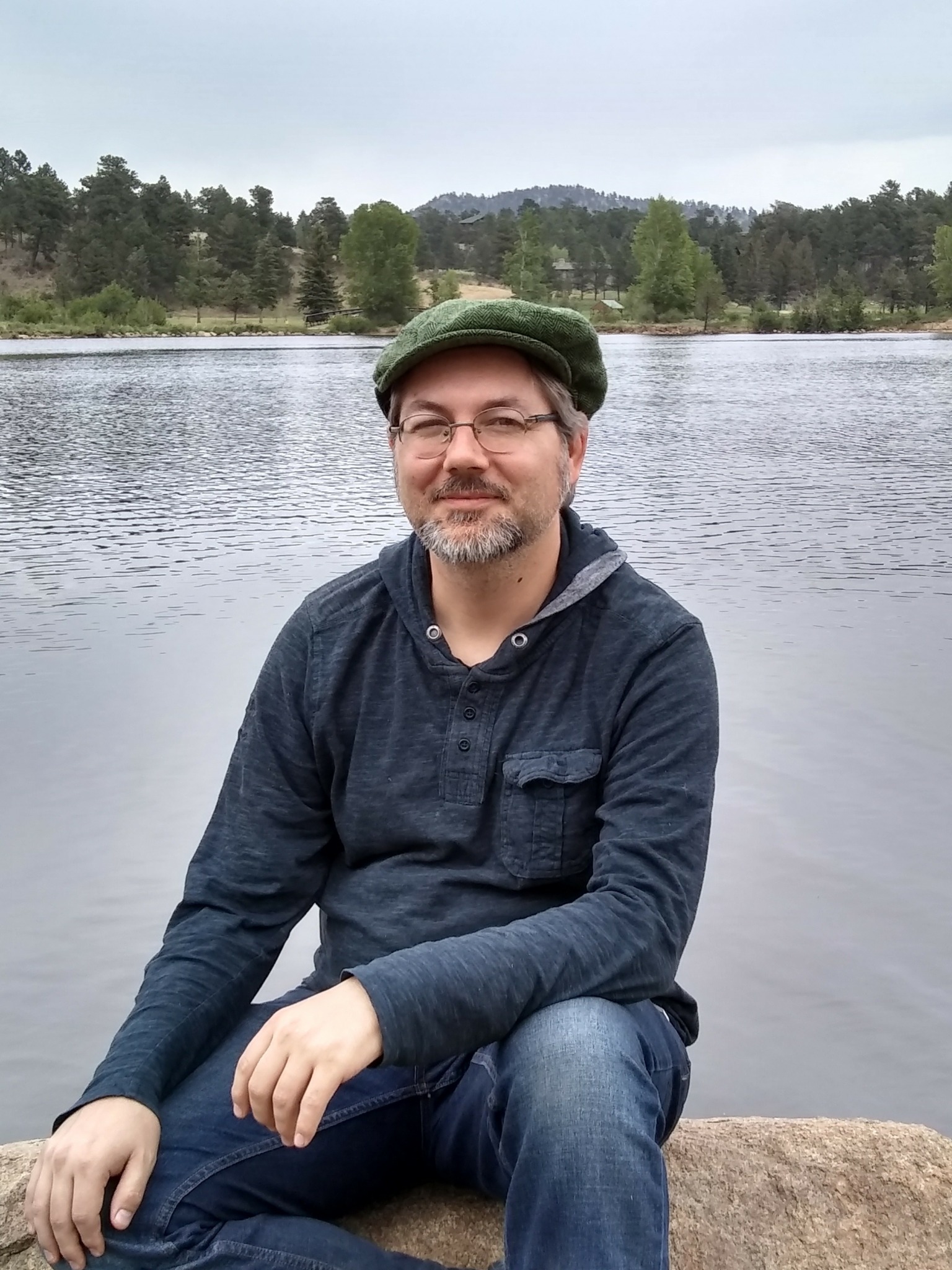
What’s the most rewarding aspect of being a creative in your experience?
I believe the most rewarding aspect of being a creative is the act of creation. That’s the easy answer. It’s in the word. But I think the full process of any creative work includes the reception. In the way that communication requires a sender and receiver, I could argue an artistic endeavor is not complete until it is experienced by others. Being a novelist does not provide the immediate feedback that stage theatre provided, but I consider the words I’ve arranged on a page are only the start of a process that will end with a reader. I won’t be in the room when it happens, and I’ll never know exactly how my characters looked in another person’s imagination. Their version of the story will be slightly different from every other version in the world, including mine. So, sometimes the most rewarding aspect is when readers share with me their experience—even if they hated it. It gives me a window into the final, inaccessible piece. That’s when a work feels finished.
What’s a lesson you had to unlearn and what’s the backstory?
I feel there is a constant revision process to what I think I know. One thing I’ve had to realize is that I will never arrive at the end of a creative work. The perfectionist tendencies in me whisper about some hypothetical version of my writings that will be flawless once I have purged all the mistakes from it. I may think every rewrite brings me closer to some idealized version of the work. I’ve since realized perfection is not only an illusion, it’s also a bad habit. I find it difficult to look back on previous writings. Inevitably, I will feel I’ve learned so much since I wrote that story and if I only had the opportunity to give it one more pass, I could make it so much better. And OF COURSE I’m better now than I was then. I’ve had more experience. I’ve learned hard lessons. My perspective is very different now.
I’ve had to accept there is a certain beauty in letting old projects be finished. That’s how every creative work ends. Not because it has reached some pinnacle of form, but because the artist knows it’s just time to be done. I am reminded of this every time I see a boom mic in the frame of a movie or notice a misprint in a book or hear a professional speaker stumble over a word. The goal of a creative project is to provide an experience. Revision is a constant part of that process, and it’s necessary, but you reach a point of diminishing returns. I’ve completed entire revisions and realized at the end I was no longer improving the reader experience, I was just endlessly tweaking details as a point of personal pride like a meddling parent arranging every hair on a child’s head before a photo is taken and who cannot understand these meticulous efforts will do nothing to enhance or diminish the memories they mean to capture.
Contact Info:
- Website: https://davidesharp.com/
- Facebook: https://www.facebook.com/davidsharp.writer/