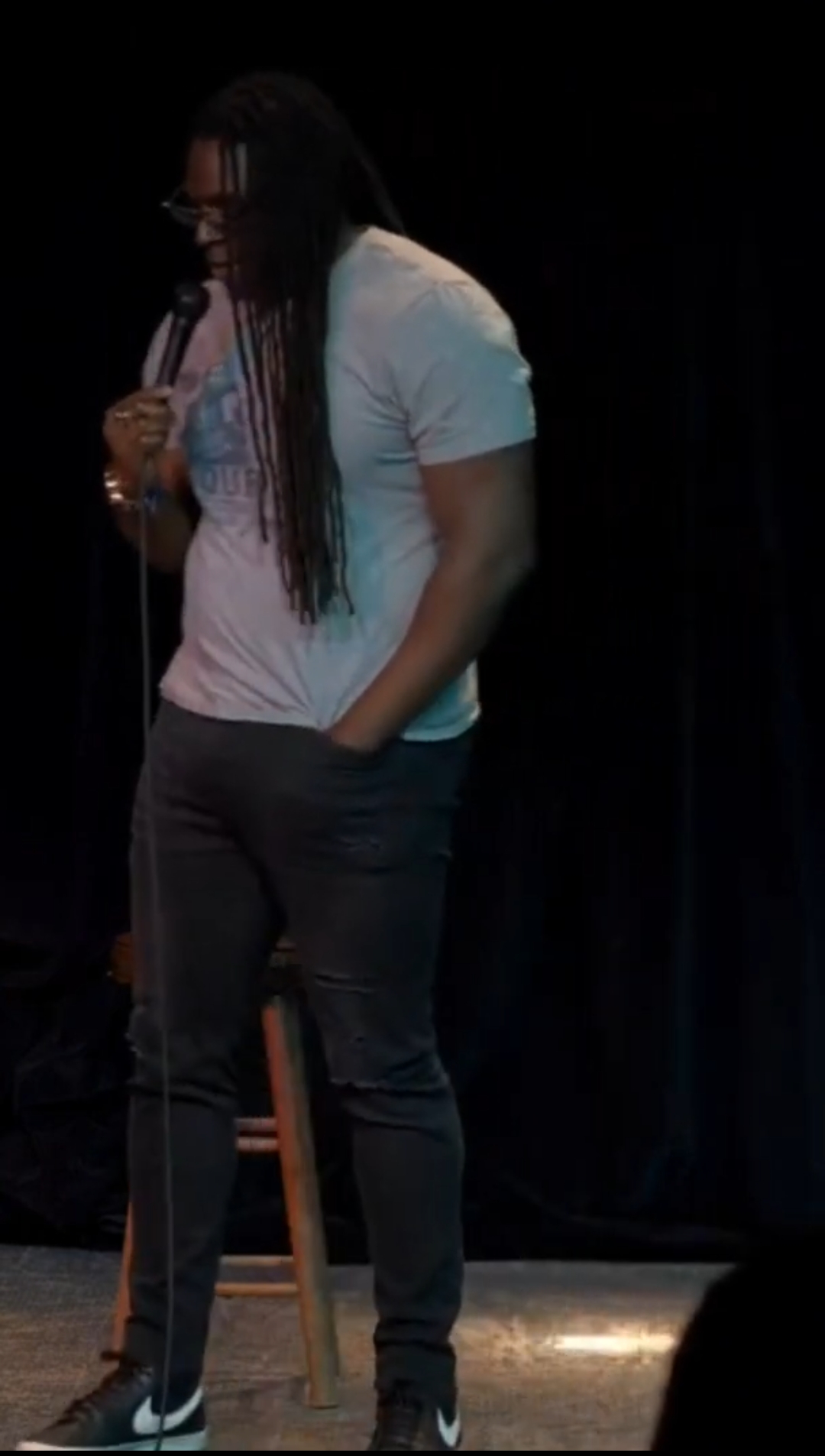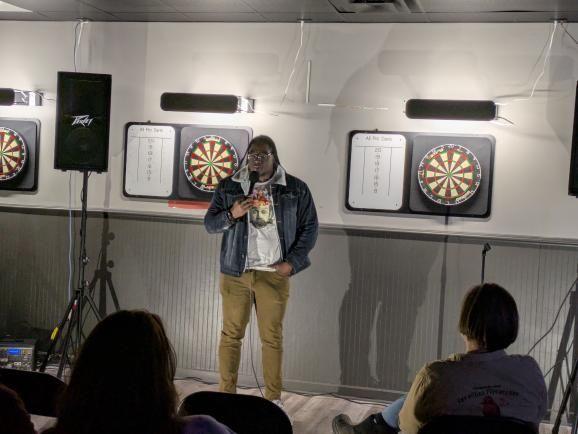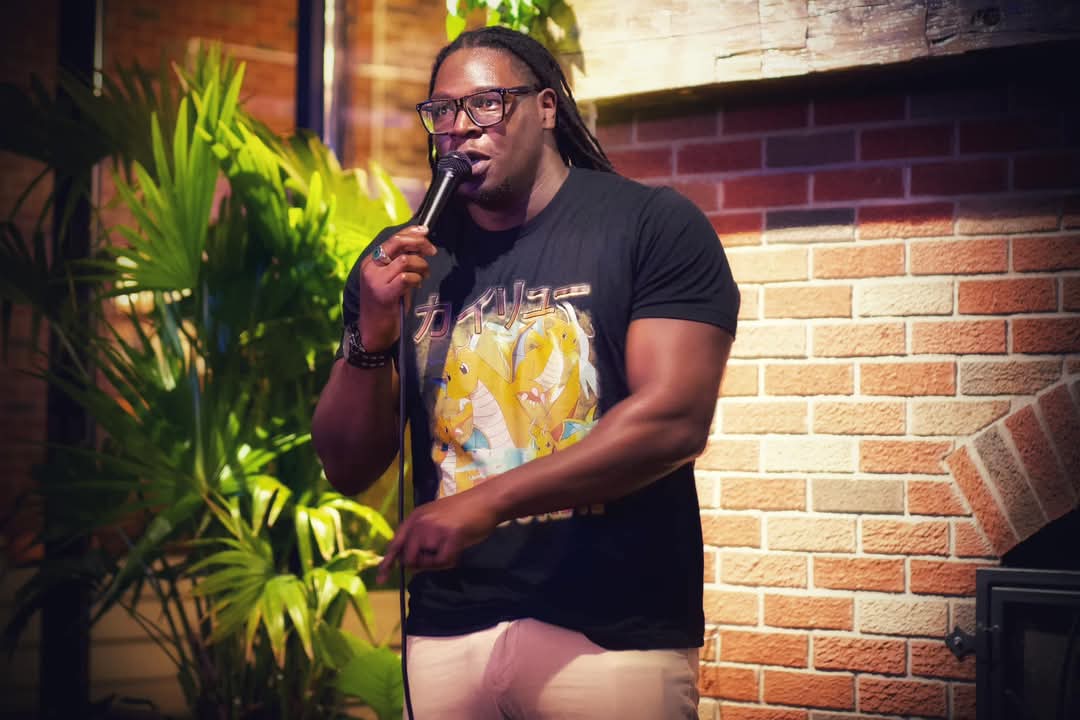

We’re excited to introduce you to the always interesting and insightful Dave Shelton. We hope you’ll enjoy our conversation with Dave below.
Dave, thanks for taking the time to share your stories with us today How did you learn to do what you do? Knowing what you know now, what could you have done to speed up your learning process? What skills do you think were most essential? What obstacles stood in the way of learning more?
So to me, there are two things a person needs to do in order to get good at something: practice and fail. That’s what it took for me. It took, what we call in stand up, “reps”. That basically means I had to just do it. I had to go to as many open mics as I could for practice, and I had to “bomb” aka fail, so I could learn how to “kill” (the more I think about it, the more comedians sound like terrorists). Stand up, much like anything is a lot of experimentation. You don’t know what does or doesn’t work until you try it, just like you don’t know what is or isn’t funny until people laugh at it (more than once). And that’s the hardest part: the failure. I always say that in order to stay consistent at something and improve, you have to fall in love with the process. That’s easy to do when it comes to writing. Doing 3, 4, or even 5 open mics a week is a little more difficult but you get used to it. Failure is a whole different beast. Bombing on stage is one of the worst parts about doing comedy but it’s also arguably the most important. To me, failure can be both the best motivator and teacher. The trick is to reflect and learn from failure. And I would argue that no matter where you are or how good you get, experiencing failure is important. As good as I am at stand up, I feel like I can always improve and those nights where the jokes just don’t land are humbling and remind me that I still have work to do. What a difference 10 years makes. That was probably my biggest downfall when I first started doing stand up: fear. In my late teens and early 20s when I first got this stupid idea of doing stand up comedy, I know now that my social anxiety had me in a chokehold. In many ways it still does, but back then it was so much worse. I advocate much more for myself these days. I am more likely to embrace challenges. I am more open to going to new places and meeting new people. That was not the case 10 years ago. If I did stand up, it was in familiar environments: college open mics, shows my step dad produced, things like that. My social (and performance) anxiety set me back more than the pandemic did. My only regret is that I wish Dave in 2015 had the mentality of Dave in 2025. I still have my problems. I still have my social anxiety, I still hate people and it may take me longer to reach my goals because of all that. BUT I am on a better track now than I was on 10 years ago or even 5 years ago. I just need to keep improving myself as much as I improve my craft. I just need practice.
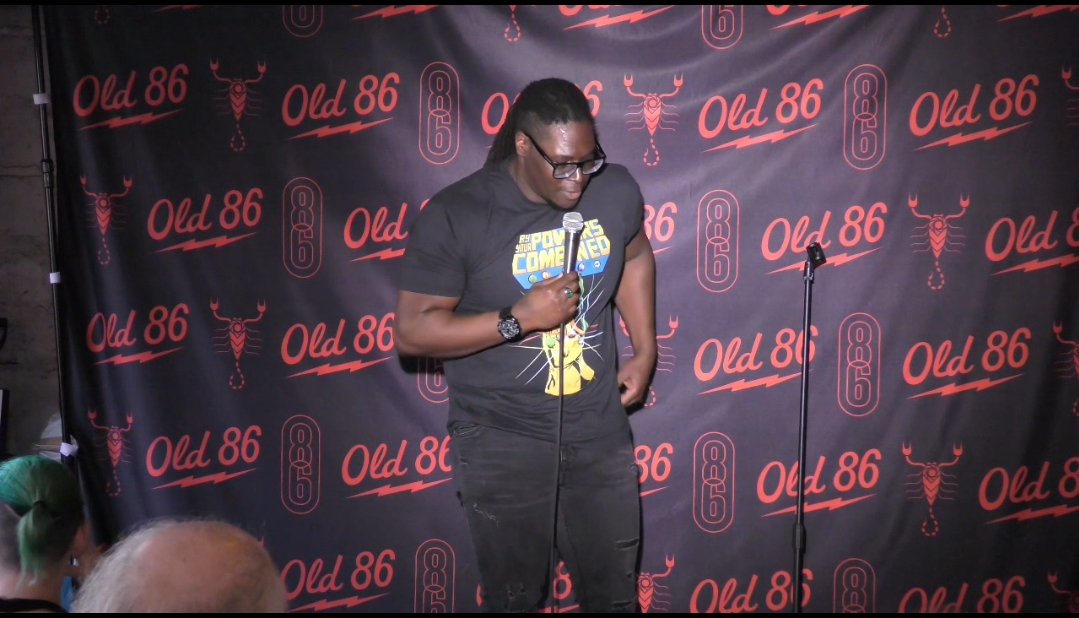
As always, we appreciate you sharing your insights and we’ve got a few more questions for you, but before we get to all of that can you take a minute to introduce yourself and give our readers some of your back background and context?
Well, I’m Dave Shelton and first and foremost, I am a comedian. That is what I take the most pride in. Whether I start writing for film or late night TV or whether my graphic novel takes off (coming soon, be on the lookout), comedy will always be my first love. I think a lot of people get into comedy by being the class clown or being the biggest personality in whatever room they’re in. I got into the way any antisocial kid would – I watched it. Specifically, I watched people like Bill Hicks, Eddie Murphy, Bill Burr, Dave Chappelle, Jon Stewart, Bill Maher (boy, did this one age like milk in the sun), Richard Pryor, and my favorite – George Carlin. I would watch their videos daily for hours at a time. I watched George the most and I was enamored by how he manipulated language and held up a mirror to society with every piece. He balanced being genuinely funny with ridiculing society for its worst behaviors and impulses through biting social commentary that is still relevant 30 years later. For someone who doesn’t particularly like people, being able to make fun of them to their faces while they pay and praise you for it sounds like a good deal. And that’s what I do. As I’ve gotten older, I’ve learned that entertainment should always come first, and that is what I aim do above all else. Sharing my opinions and “fighting the power” is all well and good but if you don’t laugh then I have failed at my job. Many comedians seem to forget that nowadays. They / we have a tendency to think that we’re philosophers with some divine purpose. And yes, that is a part of it (should you choose to do it that way), but honestly, we’re closer to court jesters than we are to philosophers. Personally, I try to balance both. I have sets where I’m doing one liners and dad jokes, where I’m talking about racism and classism and bigotry, where I’m manipulating language, and where I’m talking about literal murder (hi, FBI!). When I do a set, I want the audience to run the gamut of emotions and to challenge them. I want them to laugh at things they wouldn’t normally laugh at. I want them to be disgusted by things they don’t normally think about. I want them to feel uncomfortable when I joke about taboo topics. I want them to feel empathy. I want them to feel shame. I want them to be angry. I want them to think. Essentially, in some way, shape, or form, I want people fundamentally changed from the jokes I tell.
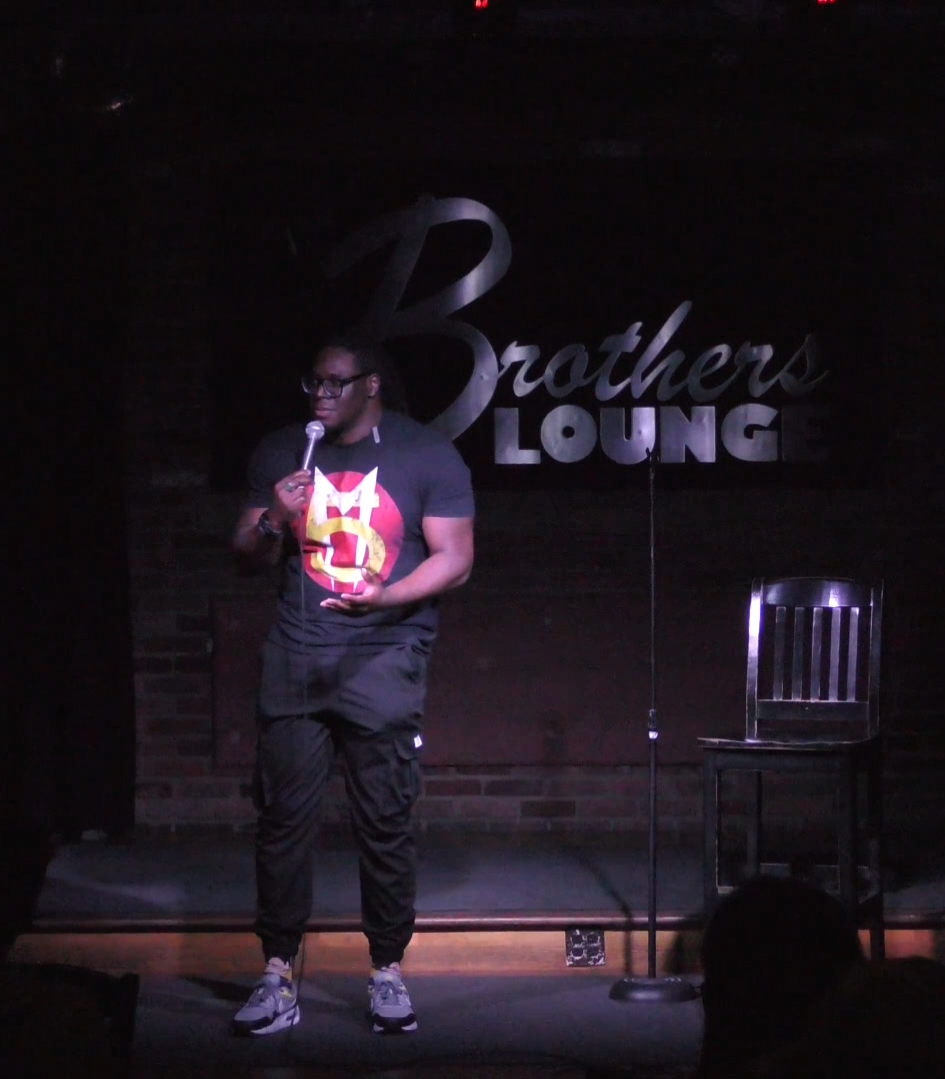
We’d love to hear a story of resilience from your journey.
Me having any relative success in stand up comedy at all is a testament to my resilience. I was a shy kid growing up, to the point of having social anxiety. Being around people and crowds made me uncomfortable, and at times, physically sick. It still does. When I first started doing stand up, I didn’t do many shows because of my own fear. Fear of people. Fear of going to places I’ve never been. Fear of failure. That mentality stunted my growth as an artist. As I stated before, improvement requires reps and additionally, advancement requires relationships and networking. I am admittedly still working on that aspect but in terms of reps, there are weeks where I do 4 or 5 shows. In the last few years I have had multiple paying gigs (more than I have had the previous 6 or 7) and I have performed in different states and a different country. It has been a slower process than it arguably should have been but in spite of my mental and emotional barriers, I am making progress. It may not be at the pace I would like but as long as they’re in the right direction, baby steps still count.
How can we best help foster a strong, supportive environment for artists and creatives?
Invest. Invest time, invest monetarily, invest intellectually, invest emotionally. The arts are usually the first thing to get cut in schools because they take money rather than make money, and I find that abhorrent. It is a soulless, capitalistic way to determine value. To me, the value of art isn’t in the revenue it generates but in the feelings and emotions it generates. Money has its place in anything and everything (costumes, supplies, instruments, etc. don’t appear out of nowhere through the ether), but it shouldn’t be the standard to which something is held. Art should be judged by how it makes you feel and I challenge people to engage with it as such, and I find that doubly important nowadays. We live in an era where people don’t engage so much as they consume. People watch movies and TV while scrolling social media. People listen to music not for the lyrics and music, but for background noise. Comedy has always been misunderstood and criticized and complained about but social media has given a platform to people with too much time on their hands to project their own insecurities and trauma onto any joke that hits a nerve. Media literacy has seemingly gone the way of the dodo and generative AI has bastardized the process of creation and is subsequently attempting to do the same with the engagement / consumption aspect of the dichotomy in order to justify its own existence (holy SAT words, Batman!). And my plea to people is to not let it. The way we can cultivate a thriving ecosystem for artists is to give them the tools and space to create and then challenge ourselves to thoughtfully engage with those creations.
Also, be inclusive.
Contact Info:
- Instagram: Dave Shelton / theblkhumorist
- Facebook: Dave Shelton
- Twitter: @TheBlkHumorist
- Youtube: Dave Shelton