



Alright – so today we’ve got the honor of introducing you to Daryl Thompson. We think you’ll enjoy our conversation, we’ve shared it below.
Daryl, looking forward to hearing all of your stories today. Let’s kick things off with your mission – what is it and what’s the story behind why it’s your mission?
My team operates in the world of biological innovation, essentially we are known as “Red Cells” or “BioHackers” in which we strive to recruit and establish private collaborations which draw on the legacy of established intelligence projects to identify and create solutions for the future. The primary goal is to challenge assumption, misperception and groupthink to encourage the exploration of alternative approaches to biomedical innovation for the benefit of mankind. My research team has a reputation for taking on and accomplishing especially challenging or seemingly “impossible” projects.
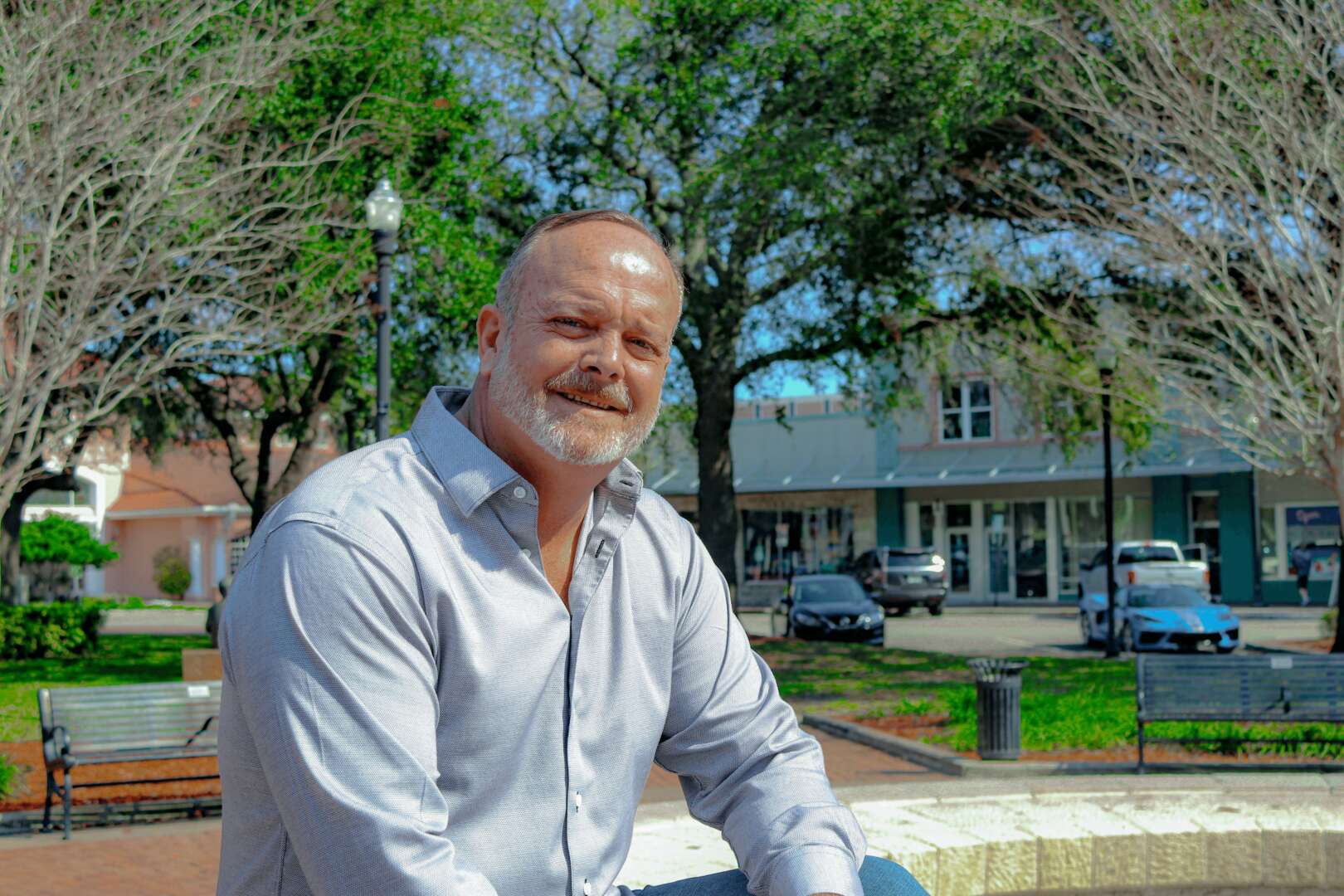
Daryl, love having you share your insights with us. Before we ask you more questions, maybe you can take a moment to introduce yourself to our readers who might have missed our earlier conversations?
I am, fortunate in that I get to explore and develop new technologies that can help or improve lives. My research team is a special kind of creative group in which we are known to undertake difficult to achieve projects that are usually ignored by other research organizations. Our team is directed by Dr. Roscoe Moore Jr who is the previous Assistant Surgeon General of the United States and a leading member of the Global Viral Network. Dr. Moore will work within his network to identify potential or emerging health issues and then pass along the recommended objectives to our team. We will then explore potential solutions to the problem and then recruit and assemble the the necessary teams to accomplish the goal. A good example of this was “Project Equivir” in which our job was to identify and create a rapidly deployable antiviral in case of a global virus outbreak. At the time of development the general scientific consensus was that we would expect to see an influenza outbreak, especially the Spanish Flu, however a year after development we saw the outbreak of the SARS-COV2 virus. Equivir has demonstrated in clinical trials to be an effective tool for fighting both Influenza and COVID and hopefully an instrumental tool for fighting future viral outbreaks as well.
As of today, we are very excited to be working on the “Interceptor Project” in which we are to explore, identify and develop new candidates for an emerging class of drugs called Botanical Drugs. This new approach is specifically designed to develop new therapeutic tools directed at preventing disease as well as treating them. This is an exciting new frontier in medicine that we are now eagerly pursuing. To find these solutions, we will return to the jungles and the ocean floor to begin working back in time to learn from the evolutionary processes that have existed there for millions of years. This is where we expect to discover the synergistic pathways between plant and man and hopefully find new ways to treat or prevent disease.
Learning and unlearning are both critical parts of growth – can you share a story of a time when you had to unlearn a lesson?
One of the biggest lessons I had to both learn and unlearn is how to recognize and control biases. I have come to understand that biases are simply driven by fear. They are there to find a way to comfort you and make you feel better or to rationalize a fear that resides in your thoughts. A good example of this is how a child may be fearful that a scary monster lurks under the bed and the seemingly rationale solution is to keep the light on a night. Now that we are adults, we do not think of these things anymore nor are we afraid of things lurking under our bed. The same thing can be said about any scenario as we go thru life such as the first day of school, learning to ride a bike or drive a car, your first date. Today we see that these things were not scary at all and in retrospect they weren’t that tumultuous in the end. The trick to managing fear is to know that it produces biases and understanding these biases is the key to strength. There are about 24 known biases and I would encourage anyone to look them up and know them well enough to recognize them when they surface.
Are there any books, videos, essays or other resources that have significantly impacted your management and entrepreneurial thinking and philosophy?
I think two influential prose come to mind here that help me effectively keep balance between emotional and rational thought. The first most influential would be the “Art of War” written by Sun Tzu somewhere between 475 and 221 BC. The book is a series of stories that teach the art of how to overcome any obstacle now matter how daunting. The teachings are not expressly designed for the purposes of war but rather illustrates and explains how and what tools are necessary to conquer and opposing scenario with confidence. A good quote that I think sums the book up in one sentence. “Know your strengths and weaknesses, know your opponent/problem as well as you know yourself, if you do this then you need not fear a hundred battles.” Alternatively, it can’t always be about surmounting battles. It is also important to balance that mindset and embrace what is most beautiful about life. I find that the poem, I Wandered Lonely As A Cloud” by William Wordsworth has always served to be inspirational in this regard. I would certainly recommend committing both of these works to memory
Contact Info:
- Website: https://en.wikipedia.org/wiki/Daryl_L._Thompson
Image Credits
Credits are Mine: Daryl Thompson