

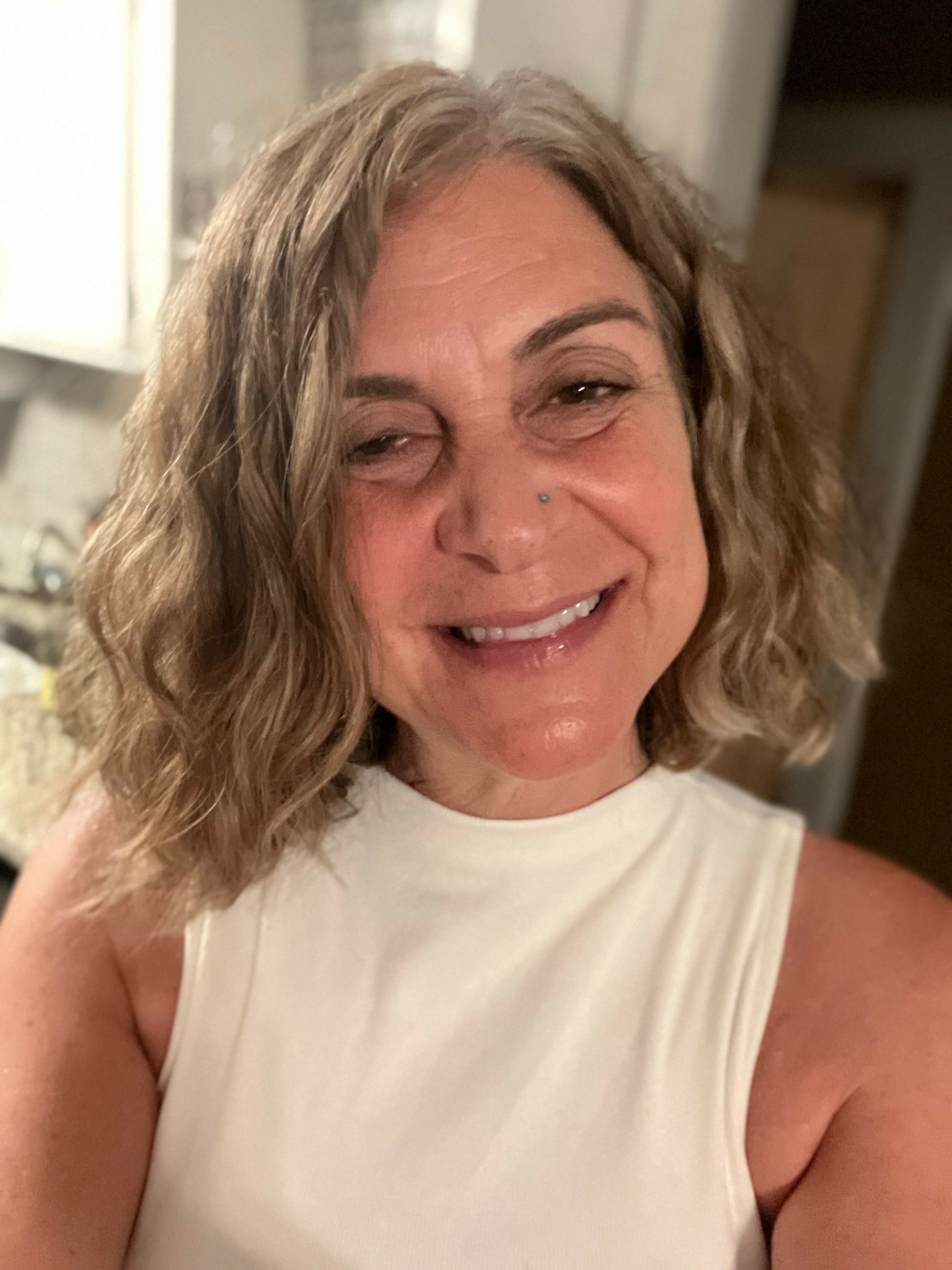

Alright – so today we’ve got the honor of introducing you to Darlene Sardinsky. We think you’ll enjoy our conversation, we’ve shared it below.
Darlene, thanks for taking the time to share your stories with us today Learning the craft is often a unique journey from every creative – we’d love to hear about your journey and if knowing what you know now, you would have done anything differently to speed up the learning process.
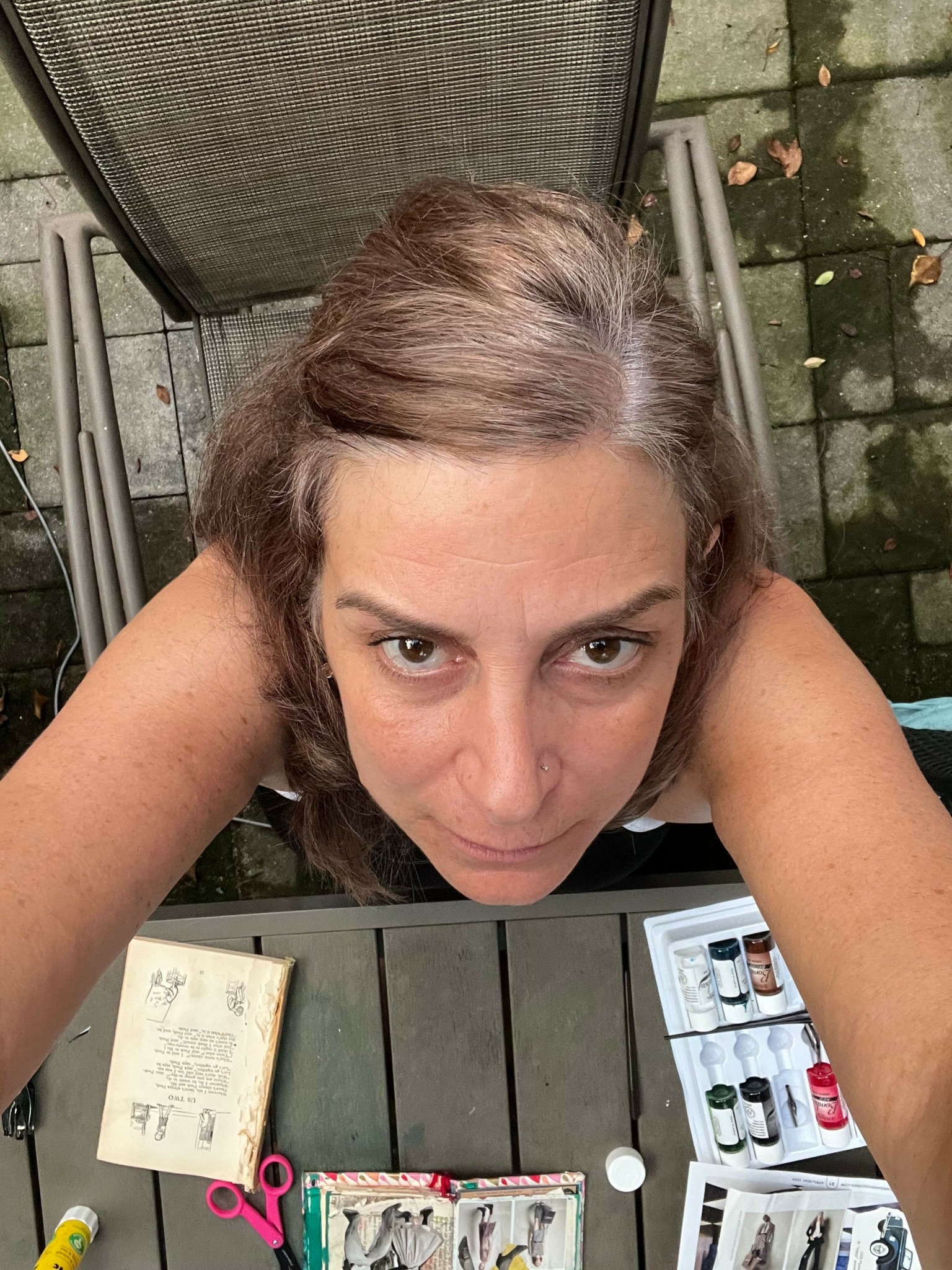
Learning how to create analog collage happened by happenstance. I love to attend retreats at Kripalu, a little slice of heaven nestled in The Berkshires. I typically attended workshops that coincided with my breaks from school, where I was a special education teacher. On one of the breaks, they hosted a workshop called “Vibrant Visionary Collage” under the classification of art, so I figured, why not? That wonderful weekend was hosted by my now friend, Karen, who taught us about the freeing and creative nature of cutting and gluing from vintage magazines and books, from papers we created using paints, crayons and markers, and from papers someone else created in India. I was mesmerized by the process and discovered my style immediately. The creative time was interspersed with meditation, conversation and connection. It was one of the best experiences in my life.
I have since thought a lot about the process and how I had always been collaging, since I was a little girl, whether it be in my scrapbooks, journals, or my college dorm room walls. I have always found this practice to be freeing and intuitive, ironic and humorous, whimsical and dark. I like that the process has been a slow burn for me that has led to my current daily collage practice and a garage turned art studio. It’s been a beautiful journey for me, filled with friendship and inspiration from those I’ve met along the way. I teach workshops now online through the Berkshire Art Center, and locally in New Jersey in a library, art center and creative art store.
The most essential skill when creating collage is the freedom to allow myself to create without thought or judgement. It feels like a representation of my inner thoughts and feelings, my mind and soul on canvas. Surprisingly, this comes naturally to me and I love teaching intuitive techniques to others. Watching it unfold for them and helping those who say “I’m not artistic” create without thought or judgement is a beautiful experience for everyone.
As always, we appreciate you sharing your insights and we’ve got a few more questions for you, but before we get to all of that can you take a minute to introduce yourself and give our readers some of your back background and context?
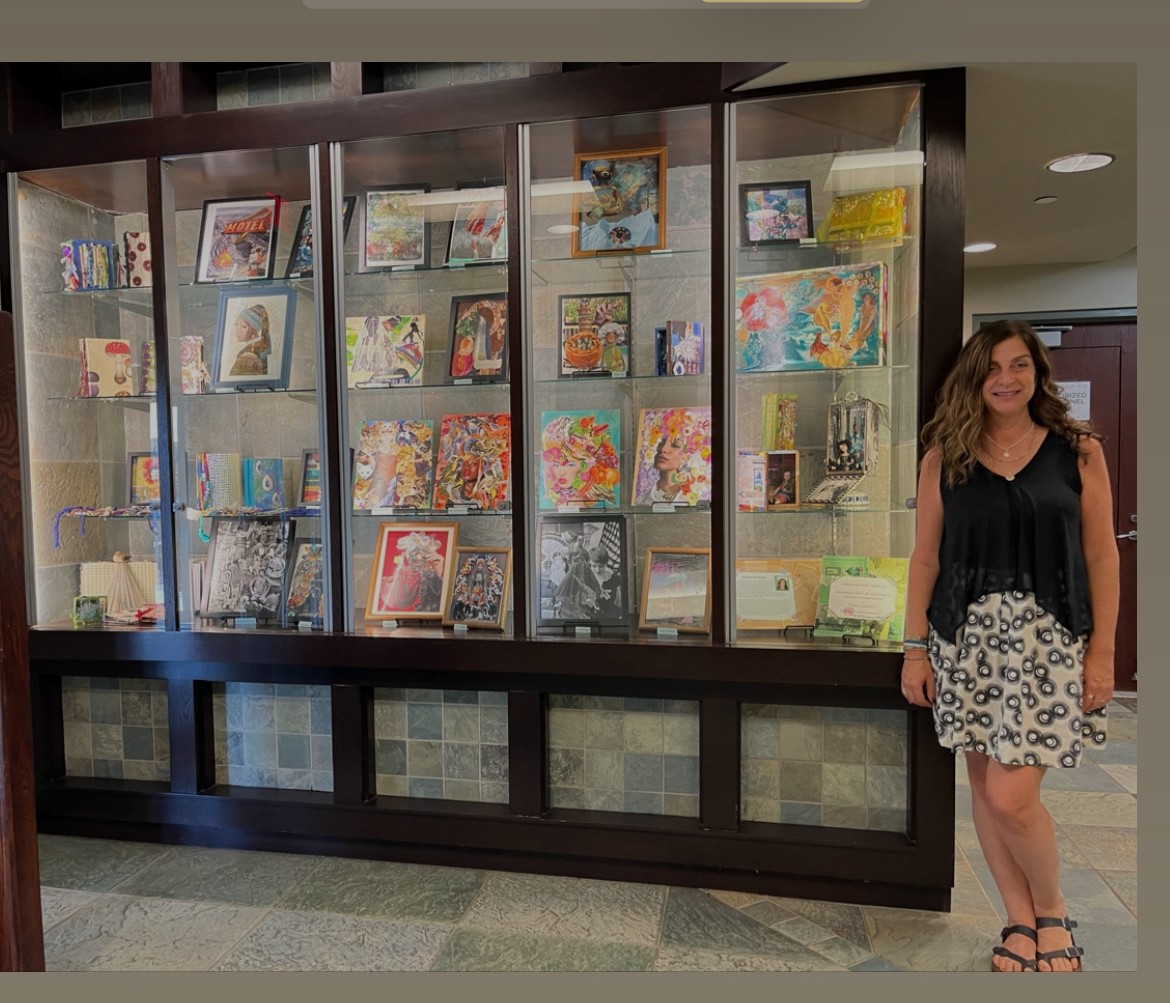
I have always believed that art is a way to present my soul to the world without the structure or the reason connected to words. Although my first love is photography, I find collage to be similar in the way that its composition takes form, creating an artistic embodiment unique to the moment, filled with mood and self-expression. I intuitively connect recycled books and magazines; gathering pictures, text, colors and shapes, allowing the art to take form without reason or reconsideration. Oftentimes, the pieces seem to create themselves, as surreal manifestations. The materials I use in my art are nearly 100% repurposed and reused. My style is intuitive, art without “rules.” It’s freeing and raw and hopefully allows the viewer to think and see things in diverse ways.
I have also begun creating art journals, typically featuring my collages and hand printed papers. My journals reinvigorate old books, typically books that are 50+ years old, they are primarily bought from library book sales or used book stores. Many were 10 cents and adorned with strong, bold covers and worn fragile pages waiting for a new chance at life. I have also dabbled in assemblage, by giving cigar boxes new life and purpose; think dioramas made from shoe boxes back in elementary school. My multi-media art has been designed from recycled magazines, books and items found in thrift stores. I typically feature the power of women in cheeky, unexpected ways. I love vintage materials, the quality and history they carry. My hope is to inspire people to look at and appreciate what they have and to see trash as treasure.
I have created a book cover for an author that recognized and praised my work on Instagram several years ago. She was writing a novel in which a teenage boy created a collage for his love interest sparked by a poem. It was invigorating and interesting to turn the words of the poem into visual images with the same movement, integrity and emotion. I found it difficult in some ways, however, to represent what the author had in mind while preserving my personal “mark” on the piece.
What’s the most rewarding aspect of being a creative in your experience?
Prior to teaching collage, I had been a special education teacher who understood the sensory needs of all children, but particularly those with special needs, and their typically unbalanced sensory systems. When I taught young children with autism, collage was an art form I presented to them for several specific reasons. Collage was an effective way to work on fine motor skills by cutting, ripping, and gluing. It taught students to present themselves on the paper in any way they wished. They created representational art by cutting the magazines into shapes to form animals, houses and faces, as well as landscapes and flowers. If representational art was too difficult or not their cup of tea, students created abstract art. I was able to teach academics this way as well, especially for the younger students. It was so rewarding to see the pride and sense of accomplishment they experienced, along with the added bonus of students feeling comfortable in their skin. They may not always feel secure in the world, but they felt secure on their canvas.
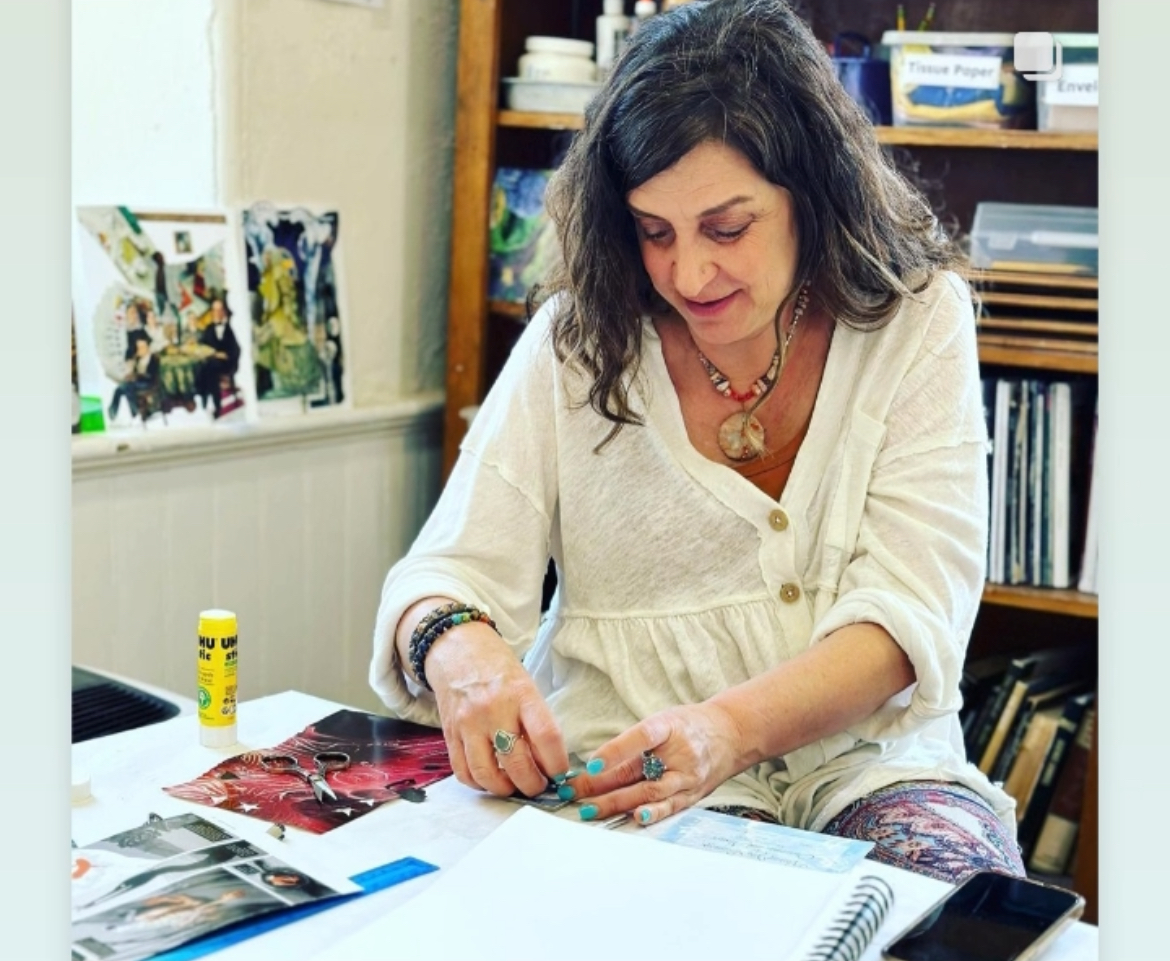
Recently, I have begun teaching in person collage workshops for adults. Although a vastly different population, the experience has been similarly rewarding by helping adults who have artistic skills or no background at all in art create. With collage, experience matters very little, it is more a representation of vulnerability and the freedom to express without judgement. Watching students let expectations and their inner critic dissolve is something hard to describe in words. It is endlessly freeing for them as they trust themselves on the palette with just a little guidance and a pep talk. The feeling that it cultivates within me is so beautiful. Online workshops are so much fun too and I am part of such a supportive and loving group of people, but being able to walk around the room and feel the energy of people creating together is priceless.
I lead adult workshops through the art of collage online at The Berkshire Art Center in Western Massachusetts and at My Collage Lab in Fort Worth, Texas. In person, I do the same at a local library and cool art store.
We’d love to hear a story of resilience from your journey.
A personal story that has led to my ability to create in an intuitive and liberating way through my journey of self discovery involves my first several years of life. I emerged from a difficult and unique childhood, like so many of us have. I turned inside myself to soften the judgment towards me, my thoughts, my actions, my words. To only enhance my fear of ridicule was the fact that I stuttered.
During this time, art became a way to express what was happening around me and within me, without the risk of trying to orally form words or sentences. Speaking oftentimes led to embarrassment. On the other hand, drawing, painting and photography was silent, but provided the same outlet for self expression and it just felt right. Since then, I have learned a lot of speech strategies and most do not even know that I still struggle with expressing myself verbally. The gift of art still continues to fill in the cracks of my life with freedom, feelings, expression, and vulnerability. So, a resilient little girl has taught me to trust myself, to persevere and to become a resilient woman.
Contact Info:
- Instagram: @mindtocanvas @the97collageproject
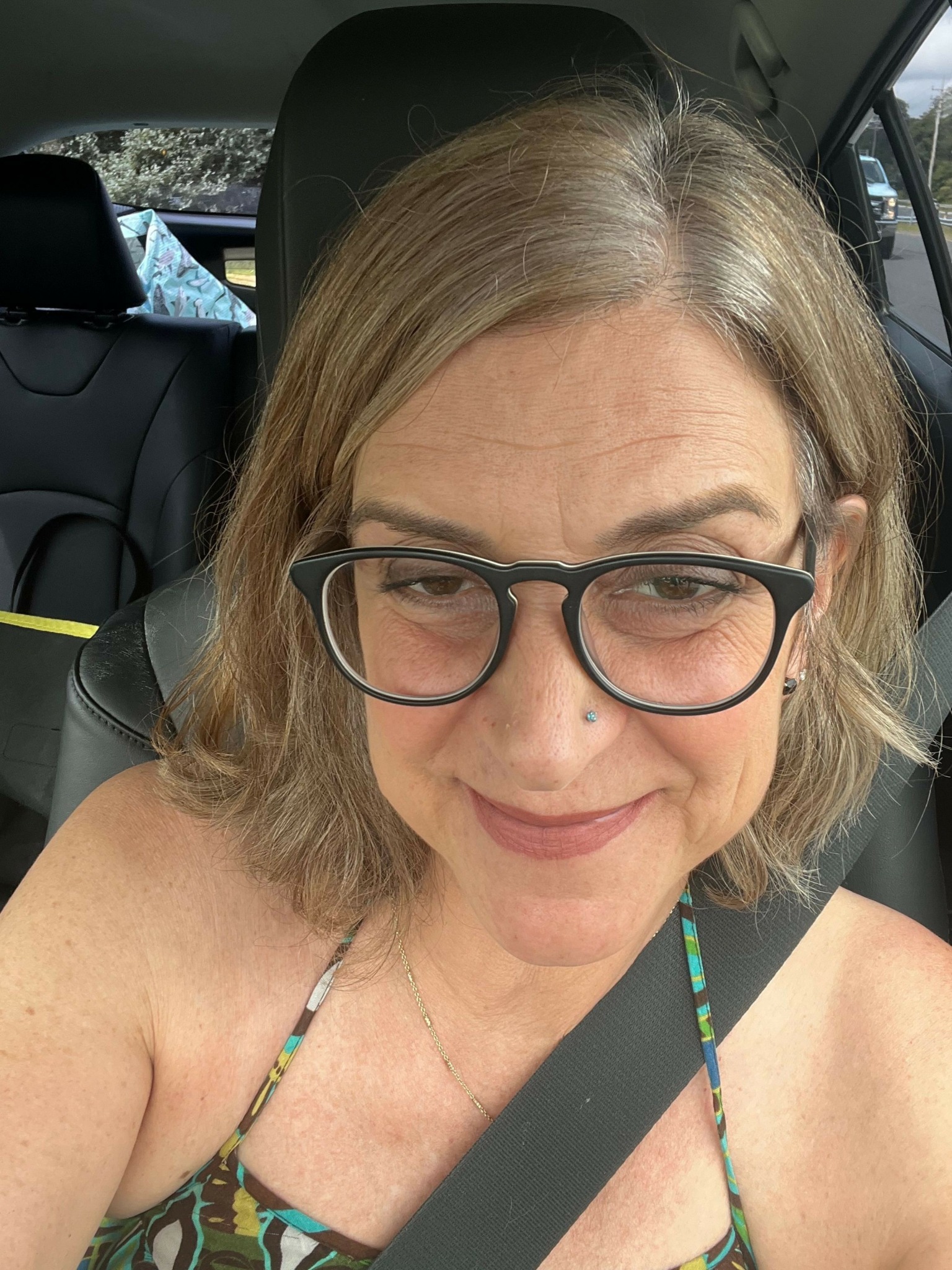
Image Credits
none