

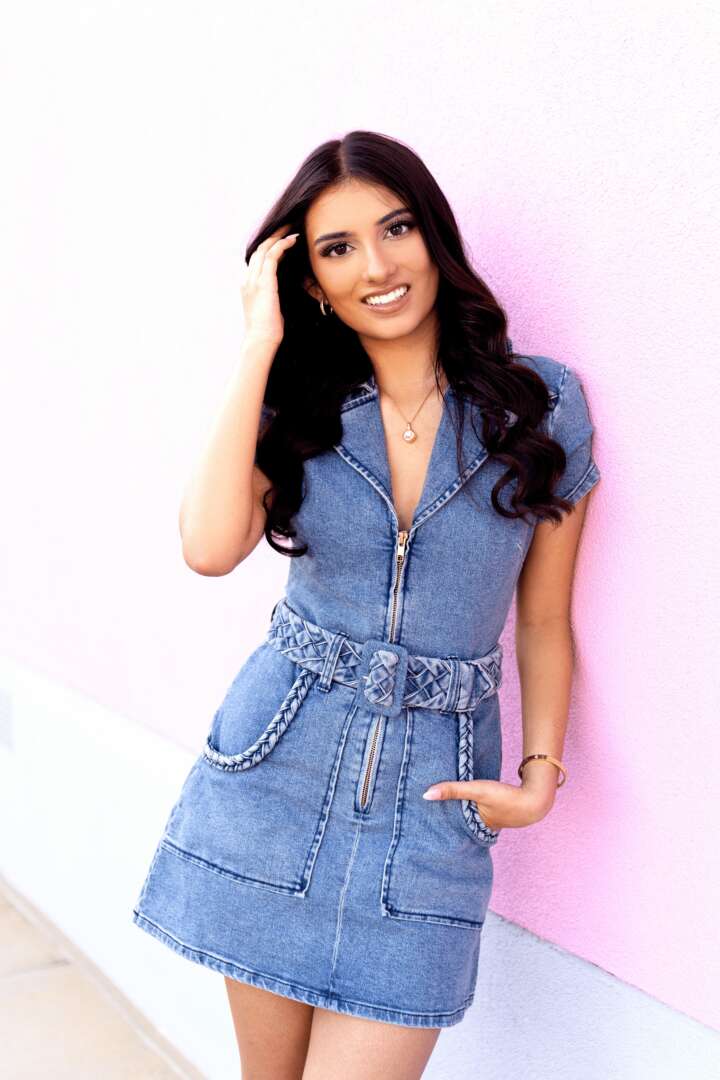

We were lucky to catch up with Danya Risam-Chandi recently and have shared our conversation below.
Danya, appreciate you joining us today. One of the most important things small businesses can do, in our view, is to serve underserved communities that are ignored by giant corporations who often are just creating mass-market, one-size-fits-all solutions. Talk to us about how you serve an underserved community.
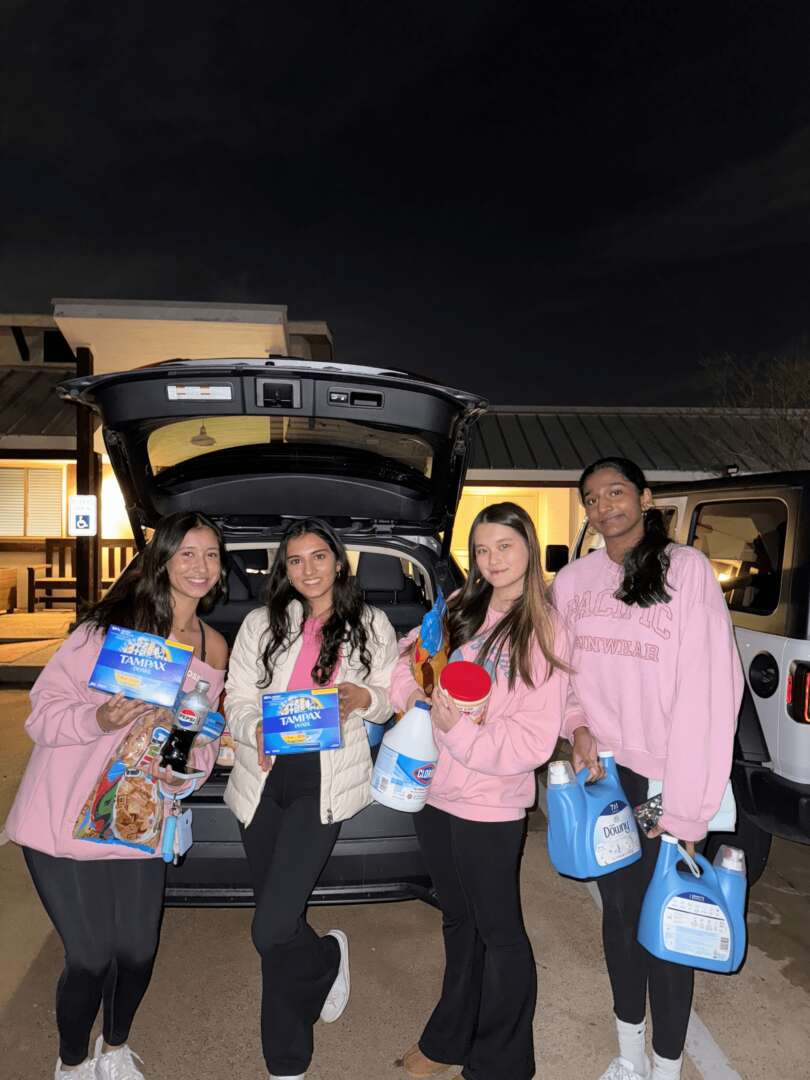
At The Girls’ Wellness Initiative we work to educate girls and provide them with the resources to live meaningful, healthy lives. We fundraise money to provide women’s hygiene products to underserved girls in Mumbai as well as for local homeless shelters in the DFW area. Additionally, we host ‘Health and Hygiene’ Seminars and Webinars to educate girls on topics such as female biology, sexual education, mental health, and warning signs of dating violence. One of our primary partners, the Kyle’s Place shelter in Denton, houses teenagers. Our seminars with the girls there often help the girls within my organization build empathy and develop a greater understanding of the issue at hand. Many girls we work with have never been taught about women’s health and are in the dark about how to care for their own bodies. Since 2009, there has been no mandatory health curriculum for public high schools in Texas, leaving countless women without the proper resources to understand their health. Fifty-eight percent of schools in Texas only teach abstinence and twenty-five percent don’t offer a health class at all. By bringing in both qualified doctors and relatable teenagers, our program gives these teens the opportunity to learn about their bodies that they deserve.

Danya, love having you share your insights with us. Before we ask you more questions, maybe you can take a moment to introduce yourself to our readers who might have missed our earlier conversations?
As I previously stated, The Girls’ Wellness Initiative is a student-lead organization which works to educate girls in the US and across the globe on their bodies. We also try and fundraise to give them the tools to put that knowledge into action. For example, we distribute feminine hygiene products to women and girls in underserved areas of Mumbai who otherwise would have to resort to unsafe alternatives. I started the project during COVID-19 solely to fundraise money for women in underserved communities in Mumbai. The Indian government had started an initiative before COVID to provide free menstrual hygiene products to girls in public school, but due to school closures that project was indefinitely suspended. So, I began raising money from my friends and family and sent it to a family friend in India who worked with a local manufacturer to buy the pads at lower prices and distribute them to women and girls. In the spring of 2023, I decided to expand the project to include ‘Health and Hygiene’ Seminars for underserved women in Texas who never received a comprehensive health education. The seminars include comprehensive sex-ed, mental health resources, and Q&A with local doctors and OBGYNs. I reached out to my friends and acquaintances through Instagram and received an overwhelming amount of interest. Now, we have 8 chapters at different high schools in the DFW metroplex and members in Dallas and Austin. We also provide webinars for our chapter members and leadership teams, so that we all are constantly expanding our knowledge of women’s health and menstrual equity.
Can you share a story from your journey that illustrates your resilience?
When I first began this organization, I was incredibly afraid of judgement. I knew to succeed I needed to put myself out there and be vulnerable. Of course, when you are vulnerable you leave yourself exposed to criticism, judgement, and jests. So, I avoided the big picture for a long time. I worked on the project individually and later with a few close friends, hoping that would be enough to make us successful. Eventually, I gained the maturity and confidence to realize how much potential the project had, if only we could communicate our mission to a broader audience. So, I posted on instagram and received an overwhelming amount of support, Of course, I also encountered some harsh messages from people who weren’t comfortable discussing menstrual health or period poverty. I didn’t know what to say back then. Now, I understand that their anger wasn’t directed at me, rather it was a reflection of their own discomfort surrounding their own body and reproductive system. Until children and teens have a standardized, judgement-free health curriculum, mindsets like that will be commonplace. Learning to respect and appreciate your body comes from a lifetime of practice, something some people may never get the joy of experiencing and that’s hardly their fault.
We often hear about learning lessons – but just as important is unlearning lessons. Have you ever had to unlearn a lesson?
While I enjoy hosting and planning “Health and Hygiene” seminars, doing so successfully has required some specific training. Namely- deconstructing the taboo around menstrual and sexual health. In order to do this, me and my teammates practice saying phrases we use in the presentation over and over again, trying to normalize them to our own psyches. We find that doing this creates a more stress and judgement free environment during the seminars. When the girls feel that we are comfortable with these topics, they feel more free to open up about their own personal struggles. We often have run-throughs before our seminars to get more comfortable with the topics, have new teammates loosen up, and overall ease the tension that society ingrains in us surrounding sexual education. Not only do these meeting help create a more fun seminar, they also help us face our own personal biases!
Contact Info:
- Website: [email protected]
- Instagram: @thegirlswellnessinitiative
- Linkedin: https://www.linkedin.com/in/danya-chandi-45878b257/
Image Credits
Personal Photo- My Little Umberella, Lindsay Poynor