



We’re excited to introduce you to the always interesting and insightful Daniel Steger. We hope you’ll enjoy our conversation with Daniel below.
Hi Daniel, thanks for joining us today. We’d love to hear about a project that you’ve worked on that’s meant a lot to you.
The most meaningful projects to me are not necessarily the ones that bring the highest commissions or that you’d automatically find in a magazine spread. They’re the ones that result in people’s dreams coming true, literally. When someone decides to have a new home designed or add space to an existing home, it’s generally something they’ve been thinking about for a long time. There’s a lot on the line, not just financially but also emotionally. And I very much take to heart that when someone hires me, they’re hiring their genie, so to speak, the one that’s going to finally get them their wishes granted.
Two projects come to mind where the feedback lets me know I succeeded on that front. Neither was a large project — they each came in under $2 million. But the clients in both cases were so happy with the results — with the lives my designs let them live — that they were worth everything.
One was essentially a rebuild from the ground up of a home in a Boston suburb. I did the design more than six years ago, but the client will still text me occasionally, out of the blue — “Daniel, we love our house” — with a picture of the sun setting in front of their residence and the glow of the light coming through the front door. It’s a gift that keeps on giving.
The other project was an addition to an existing home in rural Wisconsin. I designed a contemporary Airbnb that borrowed from the farmhouse vernacular, except with much larger windows and other modern twists on traditional features. I connected the new structure to the property’s 100-year-old residence via a hallway, with the front facades of the two structures playing off each other. This allowed the clients, an older couple, to augment their retirement income so they could remain in their beloved home, which otherwise would have been too expensive for them. It also allowed them to host larger gatherings, protected the home’s property value, and gave them a sense of pride.
They were happy, too, because it let them provide better for their heirs. Someday, when their children went to sell, the addition could be advertised not only as an Airbnb but also an in-law suite, a longer-term rental, or simply extra room for a large family or perhaps a family that often entertains out-of-town guests. It ticked off so many boxes on so many levels, giving the clients great peace of mind. That to me was worth more than the commission.
Awesome – so before we get into the rest of our questions, can you briefly introduce yourself to our readers.
My grandfather built his own home, a log cabin in Minnesota, but I didn’t grow up knowing any architects. My family, however, including my parents, were always making, fixing, doing. They were creators and artists in their own right. When I was a kid, my mother went to art school. As a wife and mother of three active boys who was perennially too busy, and maybe to help awaken our own sense of art, she would have us help her get her homework done sometimes: “This area here on this drawing, I need you to put this many dots and this much density, and then I’ll give you the next steps.” I would also watch her do silk screening, weaving, color studies — all kinds of stuff. She made stained glass, too. And we were always in my father’s shop as well — he was in the HVAC business — where he, my brothers, and I would fashion things out of sheet metal and other materials. One time my dad made a decorative surround for our fireplace hearth out of brass that he overlaid with a sunburst design.
Both my parents enjoyed going to art shows. They enjoyed looking at beautiful objects. And my dad in particular liked to understand how things were constructed, the materiality of something. That approach to life, to viewing life, I think, became ingrained in me.
Then, when I went away to college, at St. John’s University in Minnesota, I somehow filtered all that creativity and interest in how things were designed and made through an appreciation of the architecture there. That’s where the famous abbey is — the one that inspired the church in the movie The Brutalist. Much of the other architecture at the school is very intentional, too. And it made an impression on me.
But it kind of fell dormant. After college, I went overseas for a few years on a Fulbright scholarship, teaching English in Austria. When I came back I told my parents I would give them three years in the family HVAC business to see if it was something I could see myself doing as a career. I wanted to be dutiful. I wanted to do the right thing. My grandfather had started that business.
But at the time, I was coming out, and I was trying to be more honest about who I was in general, and I knew that who I was couldn’t be somebody in a small midwestern town who was going to sell and install HVAC systems for the rest of his life. I saw my father’s own creativity take a back seat to his business, and although it might have been selfish, I didn’t want that to be my path. I also decided I wasn’t going to go into the foreign service, which was an idea I had had as a government studies major. It just wasn’t the creative life I was after.
It was then that I decided to give into my creative urges and go back to school for architecture. Fast forward to Boston and a master’s in architecture at MIT in the early 2000s.
Today I do custom residential architecture only, and what I particularly love about my work, besides the creative aspect, or I guess as an integral part of the creative aspect, is the connection I get to make with people. It’s a very visceral one, a real collaboration, because I’m a one-man shop. I’m not handing a client off to anyone once they sign the contract. That’s how I want it. I’ve had multiple opportunities to expand and bring other architects into my practice, but then I’d be overseeing, not doing. I still want to be the one filling in the dots at a particular density. It’s a pleasure I’m not willing to cede.
It generally plays out very differently in practice than what clients typically expect. Many people, when they come to me, describe how they think things should go or present me with drawings they have done. In some cases they even have drawn rooms to scale, figuring out square footage, where the stove will go, things like that. They think it’s what I need to get going. But I work my craft differently from that.
When people first meet with me, I ask them how they want to feel in their new space. Some people want to feel warm and cozy; others want to feel like they’re in a limitless expanse, at least to the degree possible. Some care about sunlight, others about future needs for accessibility without sacrificing what can make a home beautiful. That’s the starting point from which I begin my designs. That, to me, is the art of it — giving people not square footage, although of course that’s definitely part of it — but giving them the surroundings they want to be in, laugh in, cook in, whatever it is. I’m proud of my ability to connect with people in that way and reflect back to them through design the space that will make them happiest, calmest, the most at peace, the most exhilarated, depending on their proclivities.
We’d love to hear about how you keep in touch with clients.
I tend to let clients reach out to me if they still want to have a relationship after the work is complete. It gives them time to settle into their space and then see if they still want to keep chatting. It’s important to have a strong bond during the process, for sure. Working on someone’s home with them is a very intense, intimate experience, so it’s important to have a good relationship, an honest one with good flow. Sometimes you have to have really hard conversations with clients — their money and the space they’re going to be living in are big issues. But at the same time, I recognize that I’m their vendor. Even if they are happy with my work, it would be perfectly reasonable of them not to want to stay in touch once I’ve provided my services.
Think about it. Think about having your residence designed and paying money and living through your renovation, either in the home where it’s occurring or in some second-best place that you’ve secured while the designing and building are going on. That’s a lot to go through, and clients may look forward to having me out of their space once it’s complete so they can go back to their lives. I get that.
With that in mind, I really feel it’s their call to make. I’ve had clients with whom I’ve become true friends — going to dinner parties at each other’s homes and things like that. I’ve also had clients I’ve stayed friendly with, if not become friends with. And I’ve had clients who keep it strictly professional. In all those scenarios, I’ve gotten word-of-mouth referrals as well as requests to work on a client’s second home, or next home. So not wanting to talk after the job is complete doesn’t mean they think I didn’t do good work. But I really believe it’s for the clients to drive the bus on whether to stay in touch on a regular basis and on the nature of staying in touch. Leaving that decision in the client’s hands, I think, promotes “brand loyalty.”
Can you share one of your favorite marketing or sales stories?
What comes to mind is the story of how my copywriter talked me into putting myself out there in a way I initially felt very uncomfortable about, in a way that felt like a huge personal risk. He and I have a standing meeting every week where we talk about my marketing and PR verticals — my monthly e-zine, my social media posts on LinkedIn and Instagram, my printed newsletter that I send out three times a year, tweaks to my website, and so on. One week we were chatting — I had known him for a least a couple of years by that point — and I casually mentioned — it was like an afterthought or an aside — that my home was one of the primary settings for the film<i> American Fiction</i>, the one with Jeffrey Wright and Tracee Ellis Ross. He immediately seized on it and said I had to write about this for the Boston Globe. There’s a very popular “Ideas” column in the Globe, and he thought I could have a lot of fun with it as I told him the backstory of how it happened — the scouting flyer that arrived in our mailbox the day we closed on the house, the fact that I had to talk my husband into letting his house be taken over for a film, meeting the director, Cord Jefferson, and all the crazy stuff about which bathroom was Tracee Ellis Ross going to use and which bathroom was Jeffrey Wright going to use, where we and our dog Gus were going to stay during filming, what furniture and curtains they switched out to make the place look exactly the way they wanted…so many other details.
I resisted. I resisted like MAD, in fact. I just felt like, What does this have to do with being an architect. He would respond with things like, “You’re a starchitect! You chose a home that’s in a Hollywood MOVIE! Just have fun with it.”
This went on for a few months, and then the film was up for a number of Academy Awards, so he really ramped up the pressure. Finally, I relented. I figured I’d write the piece and it wouldn’t get into the Boston Globe anyway, and that would be that. So I worked on it, and I’d show it to my copywriter, and he’d give me editing suggestions, encouraging me to highlight the humor in the situation — how my neighbors felt about it, things like that. And then I sent it in to the Globe thinking, “Here goes absolutely nothing,” and they wrote back within 24 hours saying they were going to use it.
The upshot: I got to put my name in front of hundreds of thousands of readers — they let me put a tagline at the end naming my firm — and I heard from some people I knew and lots of people I didn’t. I figured that was MY 15 MINUTES — we all had a good laugh — and then two new clients who had read the article actually approached me about working on projects for them. So it turned out to be not just soft PR but actual marketing.
And I learned a valuable lesson in that, which is that part of being an architect is being you — the whole you and what you bring to the table as a person, not just as an artist, a designer. And now I even do some posts and other outreach that doesn’t talk specifically about architecture but about things I want to share — about travel, music, gardening, whatever. And they seem to land, so what seemed like a huge personal risk to me has actually turned out to be a business asset.
Contact Info:
- Website: www.dgsarchitecture.com
- Instagram: dgs_architecture
- Facebook: Daniel G Steger
- Linkedin: www.linkedin.com/in/danielgsteger

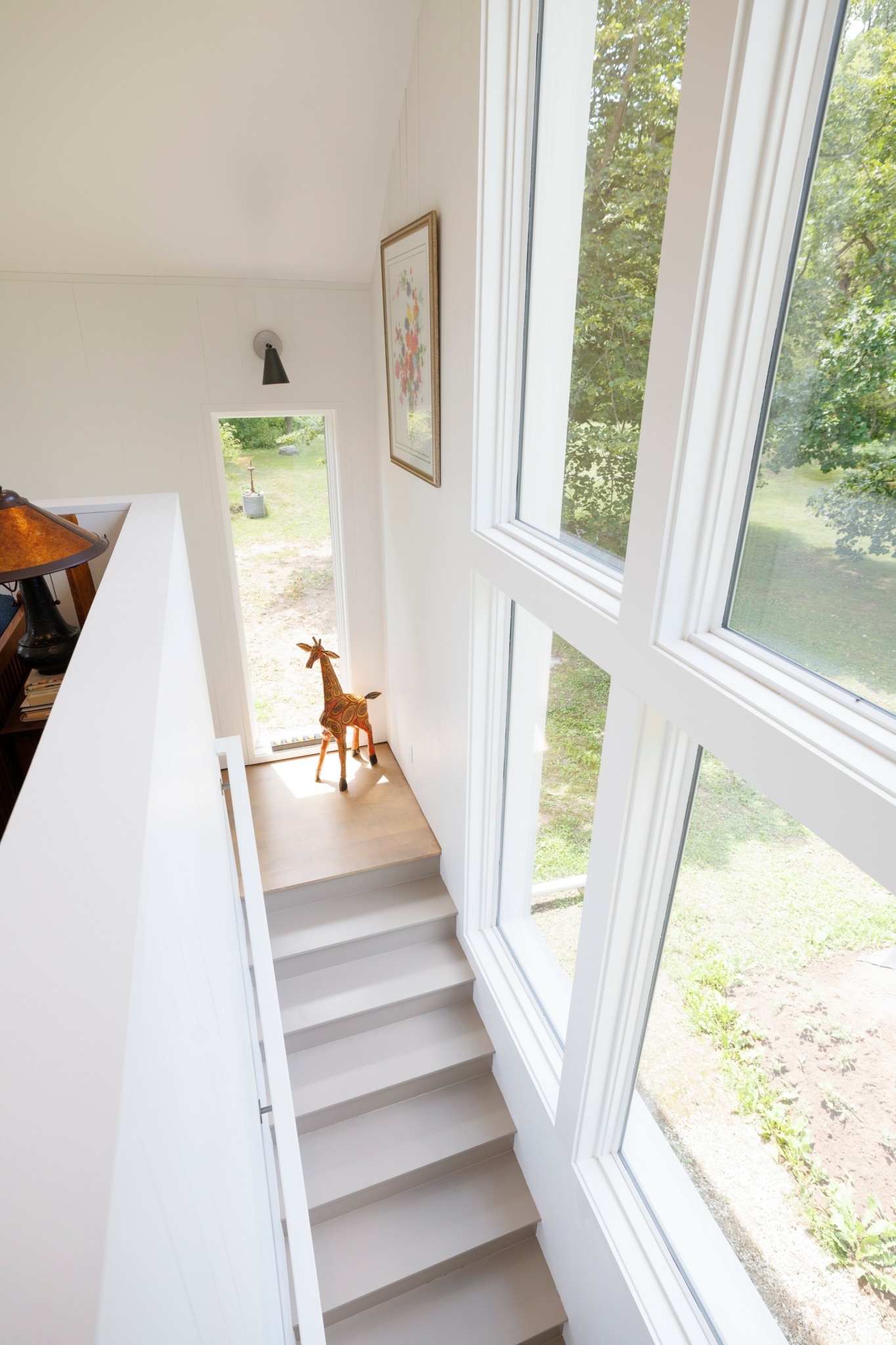
Image Credits
Renee Cameron, Terrance Adderly, Nat Rea, Jeff Kernen