


Alright – so today we’ve got the honor of introducing you to Daniel Skolz. We think you’ll enjoy our conversation, we’ve shared it below.
Daniel, looking forward to hearing all of your stories today. Did you always know you wanted to pursue a creative or artistic career? When did you first know?
I’ve had interest in art since I was little, with family stories about how I loved to draw from toddler-age and onward. But living in a rural area outside of a small town, I didn’t know how to be an artist professionally, and I don’t remember that ever crossing my mind. What I do know is that I was going to go to college, and I needed to choose a major. I looked around and felt that the best jobs in a small town seemed to be the dentist, optometrist, and other health professions, and so I chose to study biology.
As I got a couple semesters into college, I found that I liked my classes more than I liked the idea of being a dentist or optometrist, and continued studying biology for my interest in it. I started doing graduate-level work as an undergraduate, such that by the time I graduated with a bachelor’s degree, graduate school seemed to be the best opportunity available. I continued progressing down a career path based on my interest, yes, but also of practicality. I saw what people were doing who were one stage more advanced than me, and I did that too. I kept doing it until after a total of 17 years, I had earned a doctorate (Ph.D.) and was a tenured professor at a university.
All throughout that time, I painted once or twice a year. I kept it going, doing little projects here-and-there, but they seemed a bit pointless. I would paint something for myself if I had an idea for decorating a blank wall, or would paint various things and give them as gifts. But many accumulated in my closet, and the gifts were closer to me off-loading something unwanted than a thoughtful expression of my connection with someone. My favorite projects were commissions, where I incorporated someone’s ideas into a piece, and it was fulfilling to know that the artwork had an appreciative home to go to when I finished. But commissions were few and far between.
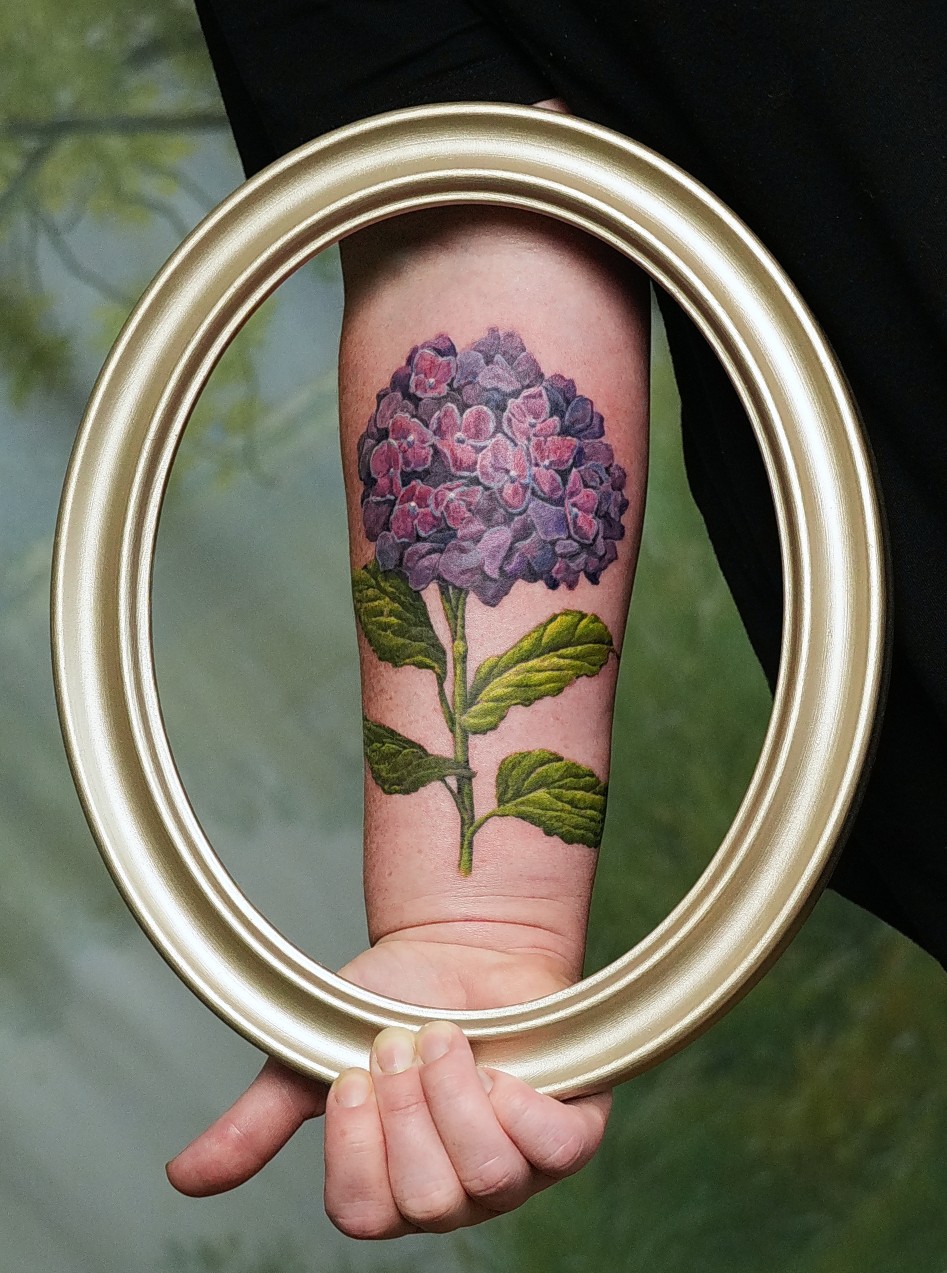
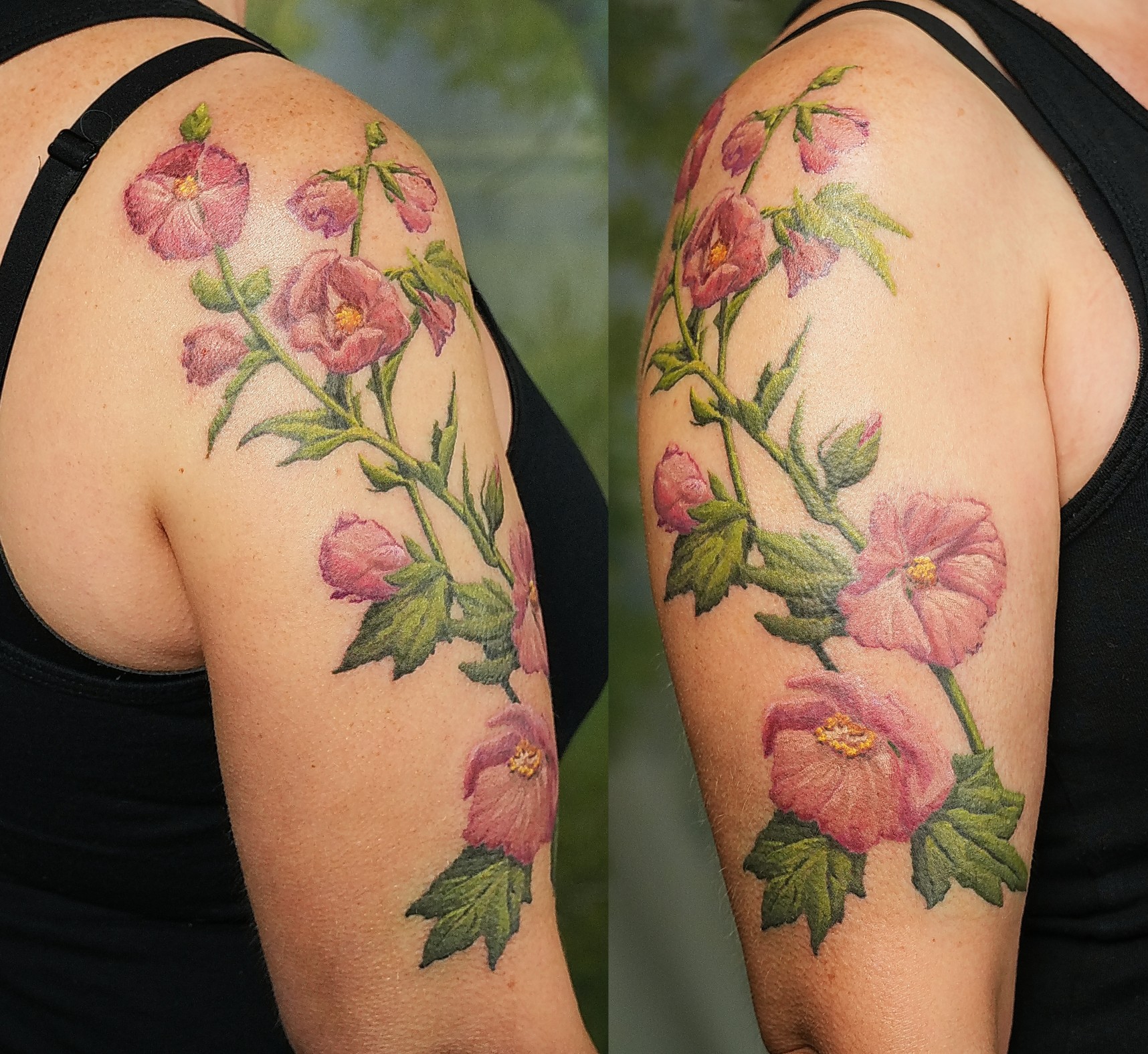
Sometime early as a professor, I was talking to a tattoo artist about wanting to re-engage with art in a substantial way, since I had a nagging feeling that I’d been neglecting it for so long. He asked me if I ever considered learning to tattoo. I hadn’t, but he told me a bit about it, and I thought a lot about it, and it seemed to provide a lot of what had been missing in my artistic practice. Largely, it provides on-going opportunities to make unique and personal artwork for people, based on their ideas and the symbolism they intend, to fit them individually. I created drawings of tattoo ideas I had, specializing in nature (especially botanical) art from the beginning, and slowly got more and more clients.
I continued as a professor while tattooing for a few years, becoming more and more “full-time” as an artist. I started by tattooing just once a week, on the weekends. Then as client interest allowed, I started tattooing twice a week. Then three times weekly during the summers. By the time I was tattooing for four sessions per week, I knew I could finally become the professional artist that I had always wanted to be, but that I had for so long ignored for what felt more practical.
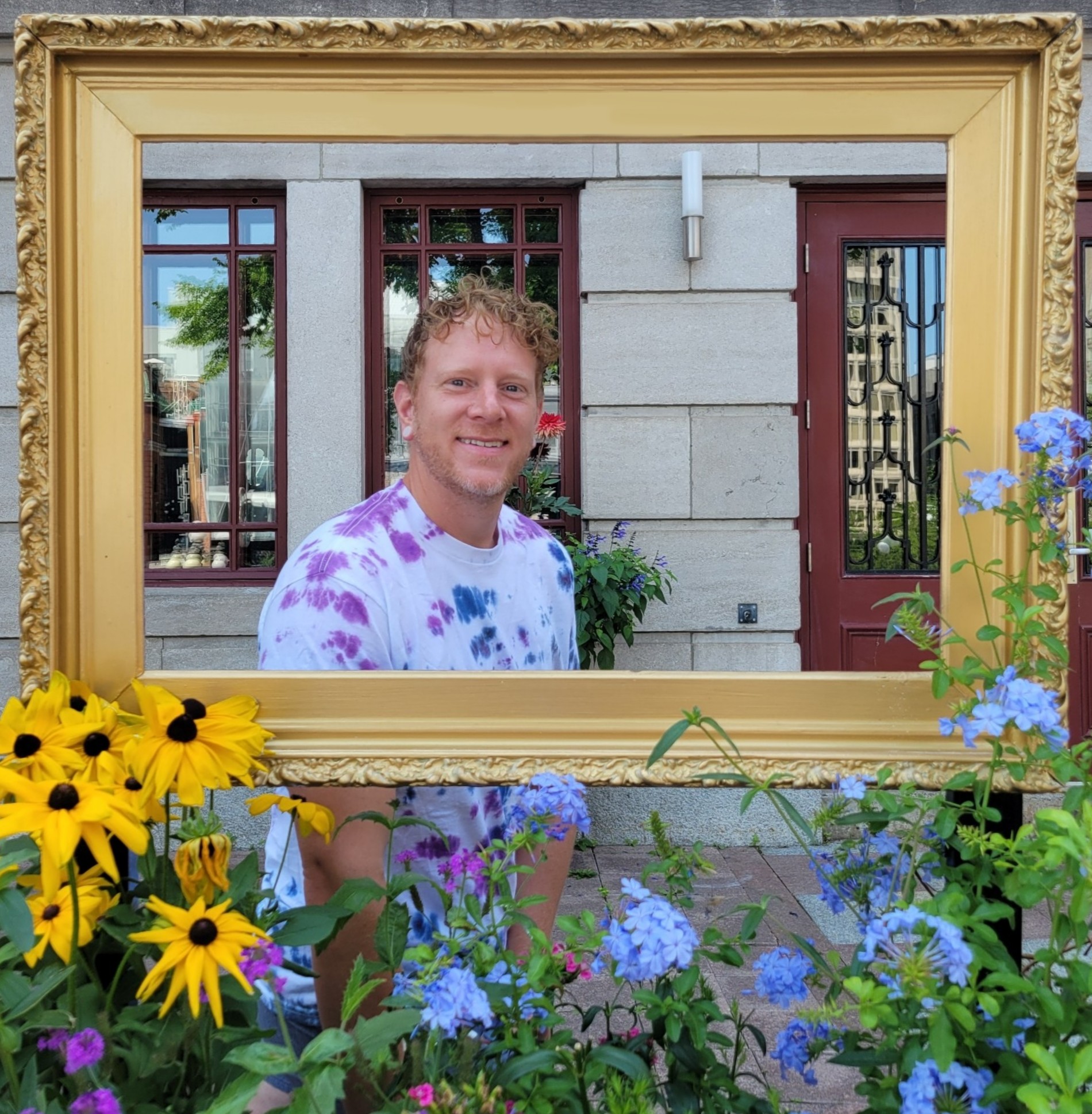
So I had always wanted to be an artist, but didn’t know how. I chose instead to study what I love (nature, including plants, birds, and insects) from a scientific perspective, earning a Ph.D. in plant ecology. I was a kid from a rural area, after all, and that connection to nature was innate. My artistic work is from that same perspective regardless of the medium: I celebrate and document the diversity of life and the interactions of plants with animals and their environments. I work in a private studio just outside of Indianapolis, IN, USA.
Great, appreciate you sharing that with us. Before we ask you to share more of your insights, can you take a moment to introduce yourself and how you got to where you are today to our readers.
All my work is nature-focused, owing to my childhood growing up in the fields and forests outside of a small town. I didn’t know it at the time, but perhaps my choice to study biology in college was as much from a subconscious interest in studying the environment around me as it was from (short-lived) aspirations to be an optometrist. But I kept looking around, identifying the best opportunity available at the time, and pursuing it until reaching another decision point. I continued studying the environment from a science perspective for 17 years, earning a doctorate (Ph.D.) in plant ecology and tenure as a university professor.
I might stand out because of this history—I bring a scientific and academic background to my creative work, and all that entails. In part, it entails a love for the subject matter, a knowledge and appreciation for the diversity of organisms (mostly plants, birds, and insects), an attention to detail that helps to faithfully reproduce an organism’s likeness, and a commitment to realism with nature as my guide. But I’ve also undertaken the artistic training needed to understand how value and color temperature change in the transitions from light to shadow, to mix colors accurately as found in the natural world, to fit the subject’s (e.g. a plant’s) form to a person’s in the case of a tattoo, and myriad other artistic concepts. In total, the success of an artwork is largely the culmination of countless decisions by the artist, and I have trained to be informed both from scientific and artistic perspectives.
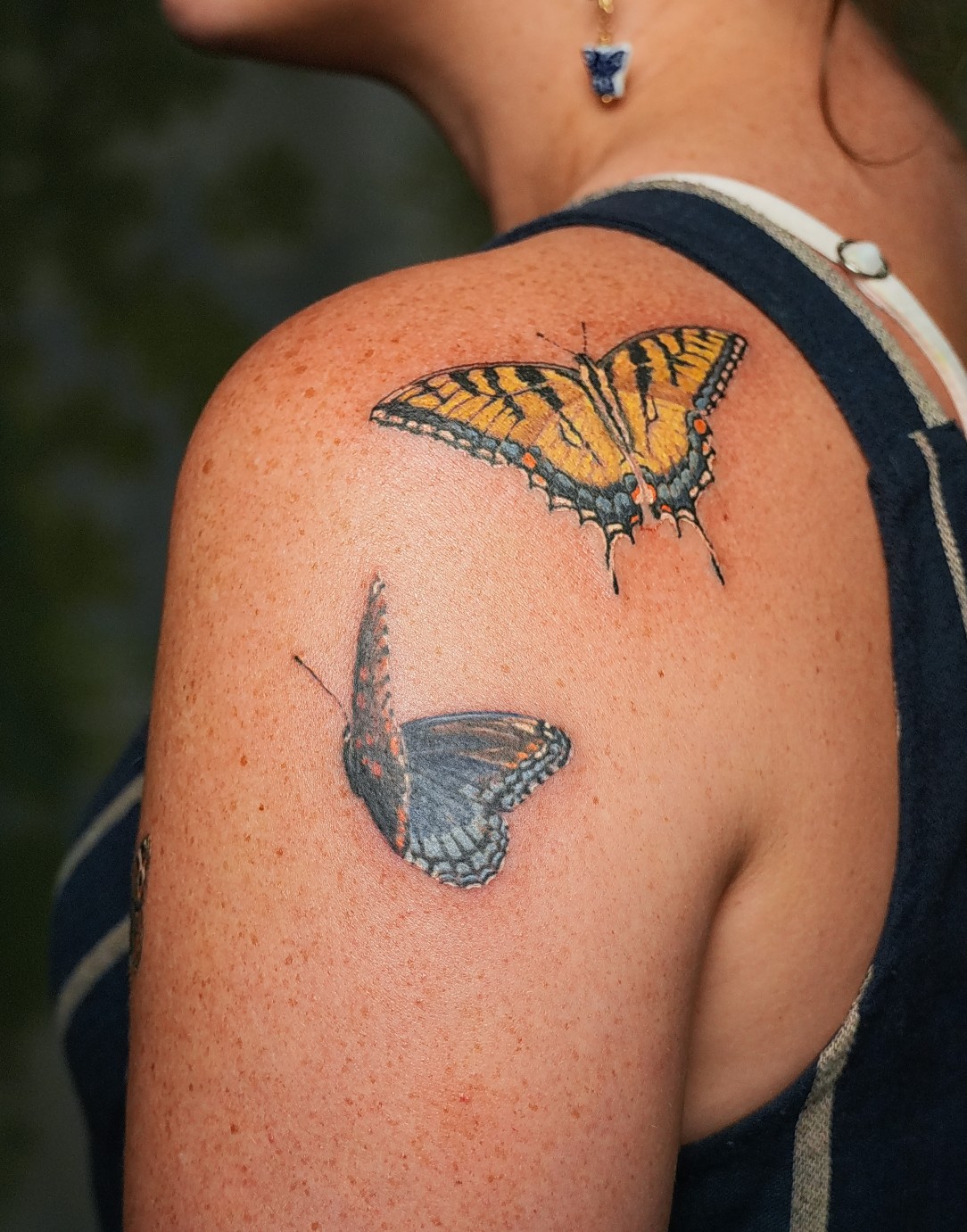
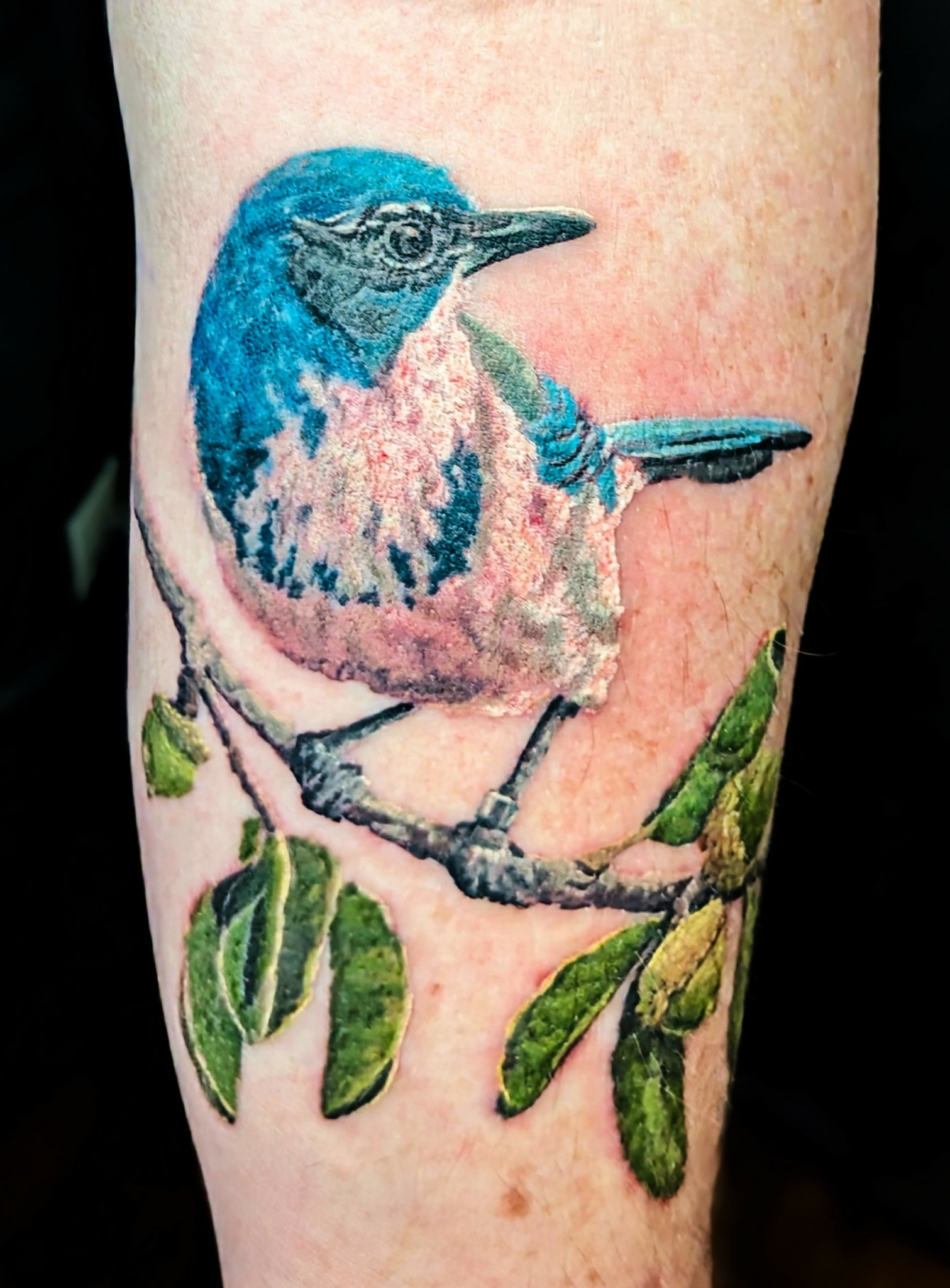
My tattoo work is primarily in the style of botanical illustrations, which have a long history of scientifically documenting the structures and life stages of plants before photography. These illustrations are simultaneously beautiful and informative, depicting the subject’s natural architecture accurately and often including insets of small structures, cross-sections, handwritten notes, and sometimes animals (e.g. insects) that associate with the plant, all to aid identification of that species as an educational tool. Plants, and nature generally, have a way of conveying symbolism, whether as the official bird of a person’s home state, a butterfly that reminds them of a loved one, a plant that features in their garden, or a flower whose symbolism was assigned in Victorian times. People connect with nature, and plants make up a large portion of that. I create beautiful and accurate depictions of the plants and animals that connect people to the people, places, and experiences that they cherish.
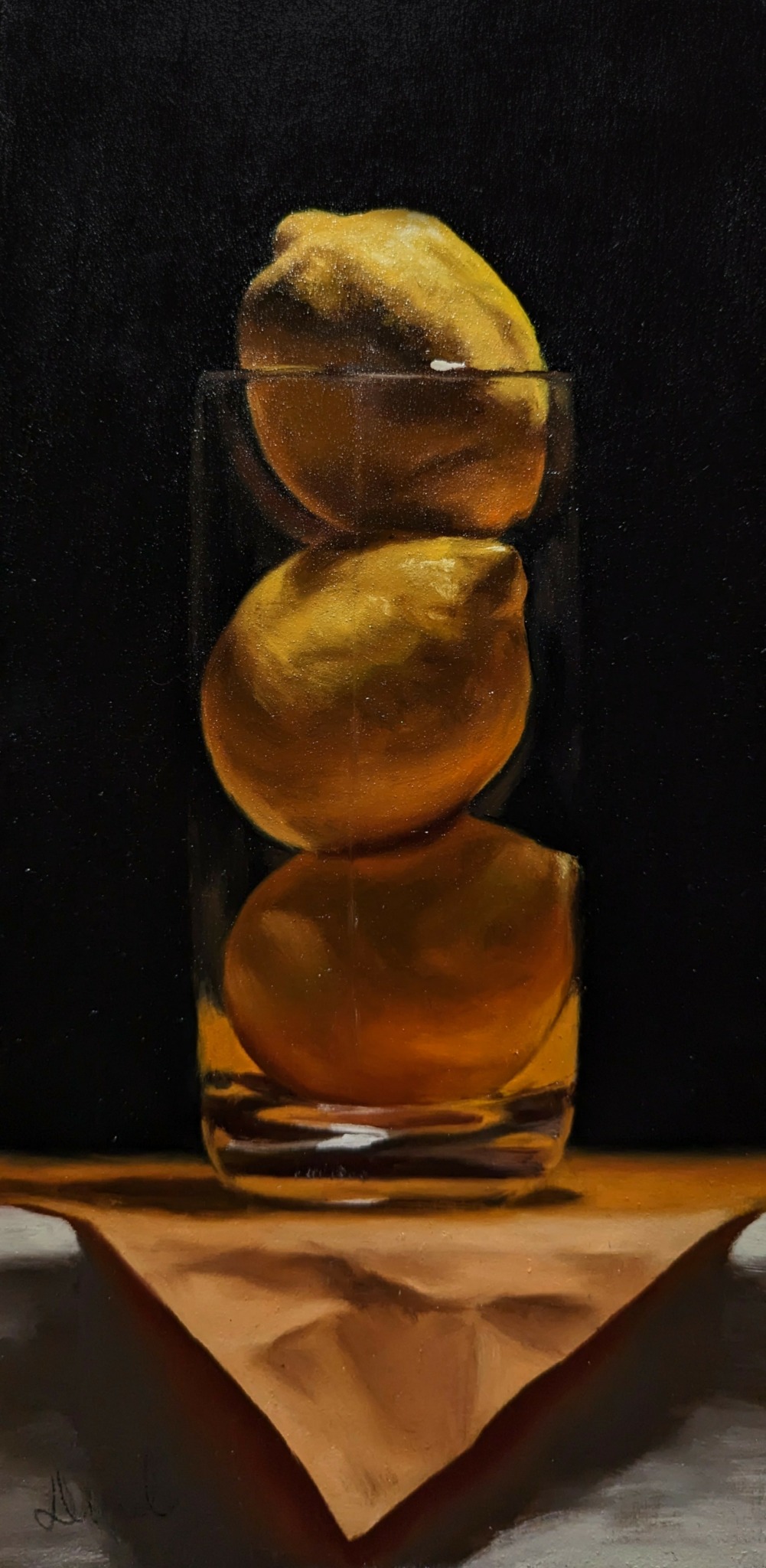
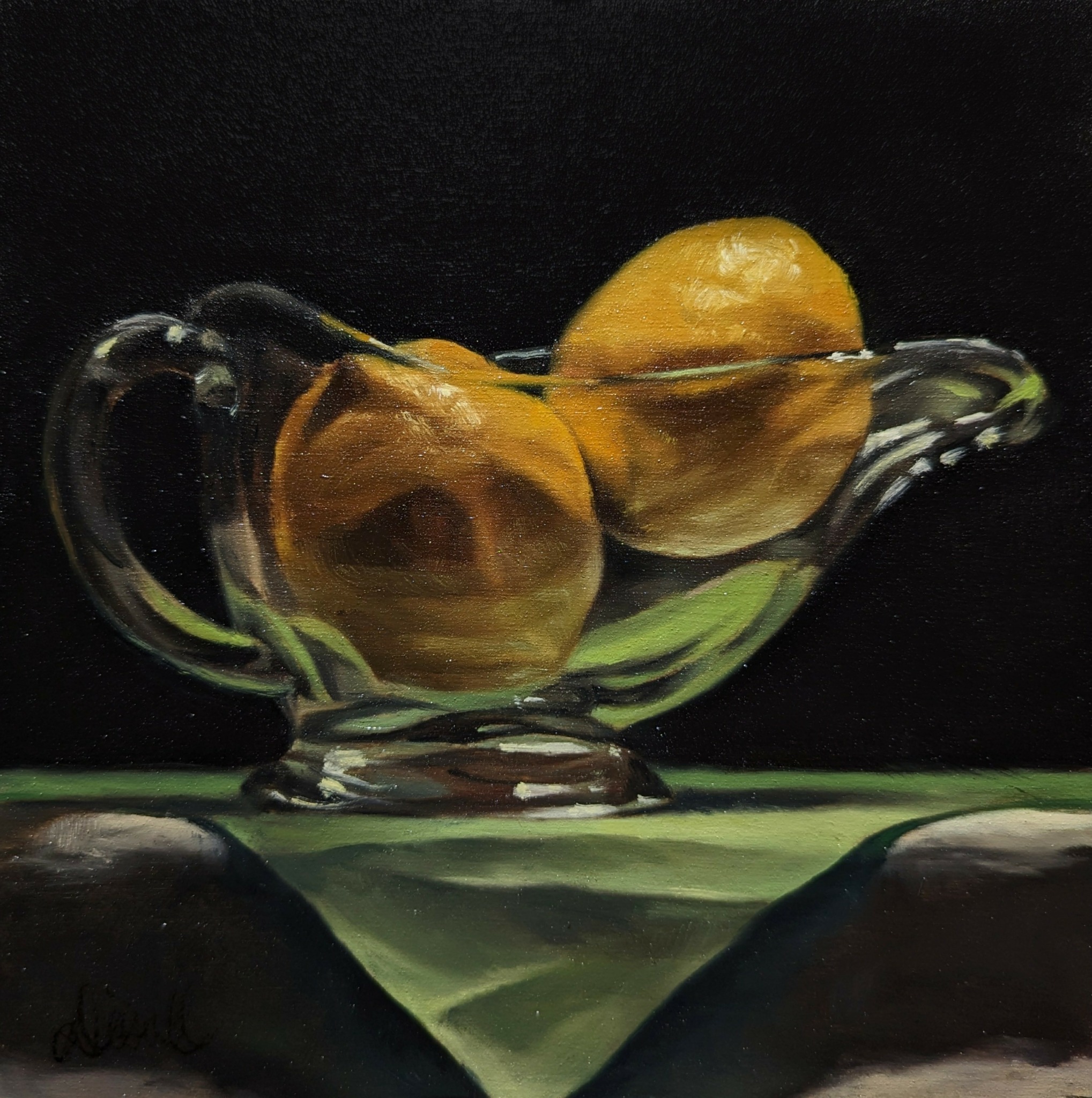
As an oil painter, I primarily depict still life and landscape scenes. The landscapes are clearly nature-focused, but as with my still lifes, I have a narrative in mind. A recent series of still life oil paintings explores how a common object, a lemon, changes in appearance based on what it is placed in and what is around it (i.e., its environment). So even a lemon in a drinking glass, distorted by the vessel’s curves and reflected upon by a colored napkin underneath it, is a statement about how we (and plants, and organisms generally) interact and “fit in” with their environments, even though their true nature doesn’t change.
Overall, I got into tattooing, painting, and dabble in other media because I love to create things. I don’t know to what degree I personally will branch out into creating stained glass, ceramics, papercrafts, wood furniture, and other artworks that I appreciate into the future. But I do know that artworks that are skillfully made by hand, by a person who loves the subject matter and medium in which they work and who can bring new ideas for how to approach a traditional craft, carry a quiet and peaceful connection to people and nature that I want to bring into more people’s daily lives.
We often hear about learning lessons – but just as important is unlearning lessons. Have you ever had to unlearn a lesson?
One lesson I had to learn (and therefore to “unlearn” its opposite) is that great things happen if I let them. My point here is that so much of what I’ve done so far has been a product of me actively seeking and making decisions to do those things. A person can accomplish a lot with that strategy, and get the accolades, prestige, and compensation that they think will sustain them, but in my experience having a trust that I don’t know what is going to happen but I believe it will be good is tantamount to day-to-day happiness. Trying to “make things happen”, essentially with the belief that much of what happens around you is within your control, can get a person far but it could be far down the wrong path for them. The stress, contemplation, indecision, and agony of owning all the negative results can often put a person’s happiness over the horizon, trading stress today for what they hope will be fulfillment in a future that may not turn out the way they expect. Accountability, the belief that you can do big things, and active strategizing are important to achieving your goals. But accepting the calm and peace that comes with understanding that whatever the outcome, you still know and appreciate yourself can help you keep taking steps toward improving your future. Many of the opportunities I’ve gotten weren’t sought after but rather were given to me by people who felt an authenticity and openness about me that I try to stay connected to. But after that, I have ideas of what I’d like to accomplish into the future but I’m not tied to any of them. I’ll just keep putting myself and work out there with trust that someone will see and appreciate it.
How can we best help foster a strong, supportive environment for artists and creatives?
Many of the famous pieces in museums today were commissioned by organizations (like churches) or wealthy patrons, whereas the vast amount of art now and through time were made by “ordinary” people with a particular interest or view on some aspect of “ordinary” life. We collectively celebrate the few that made it into museums, often because they are historically important, technically skilled, or depict culturally relevant subjects. I don’t know the definition of art (I haven’t and won’t look it up), but to me it would include something about evoking emotion as a subjective experience. I allow that some good art is ugly, scary, boring, or poorly made, to me anyway. But all of that is subjective, and could be very different for someone else. Either way, I felt something by looking at it, and if that feeling is important to me (if that artwork strikes me a certain way that feels powerful), I might linger on it, come back to it, and maybe even buy it. A few years ago, I started buying original artworks for two reasons: they made me feel something that I didn’t want to forget, and I wanted the artist to keep making work. In my view, society can support artists, creatives, and a thriving creative ecosystem by giving art their time and attention, by letting themselves experience it in an honest and open way, and by reflecting on what that work evoked in them. If you want to remind yourself of that feeling into the future and are able, buy the work. At some level, your investment is as much one to your emotional wellbeing as it is to the artist’s ability to continue creating. Art isn’t (doesn’t have to be) stuffy, presumptuous, historic, or self-indulgent. Art lends a person-to-person connection that is accessible to us all right now.
Contact Info:
- Website: https://botanarts.com
- Instagram: @botanarts
- Facebook: https://Facebook.com/botanarts
- Other: All inquiries for tattoos are made via a booking form on my website. The website also has a store with paintings and other items currently for sale.
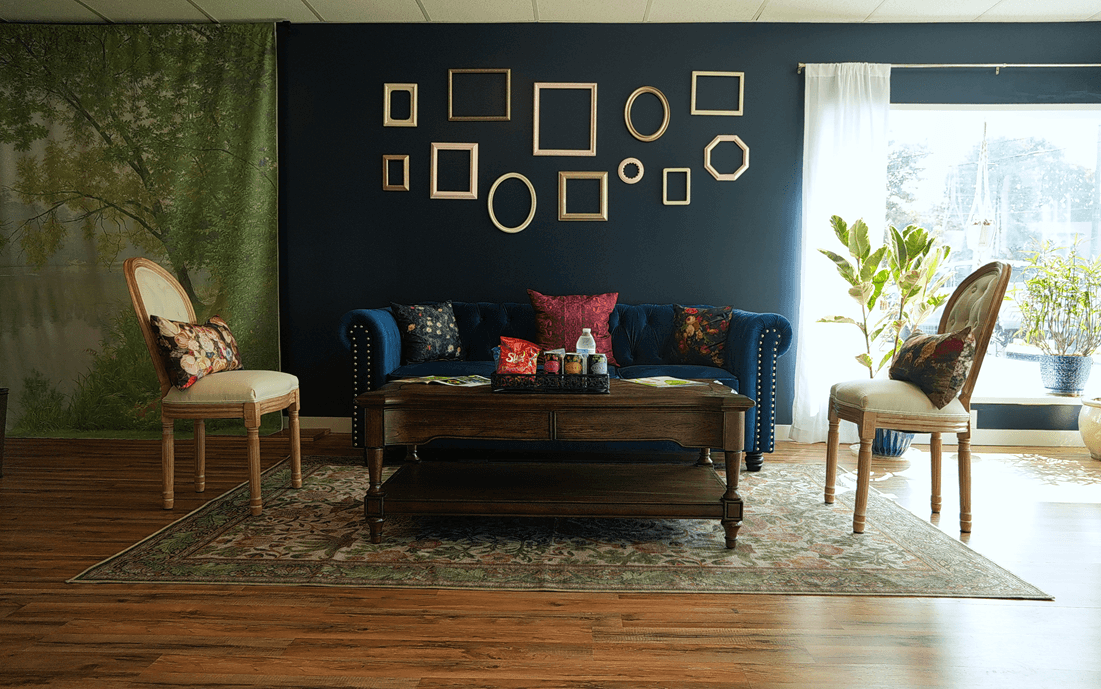
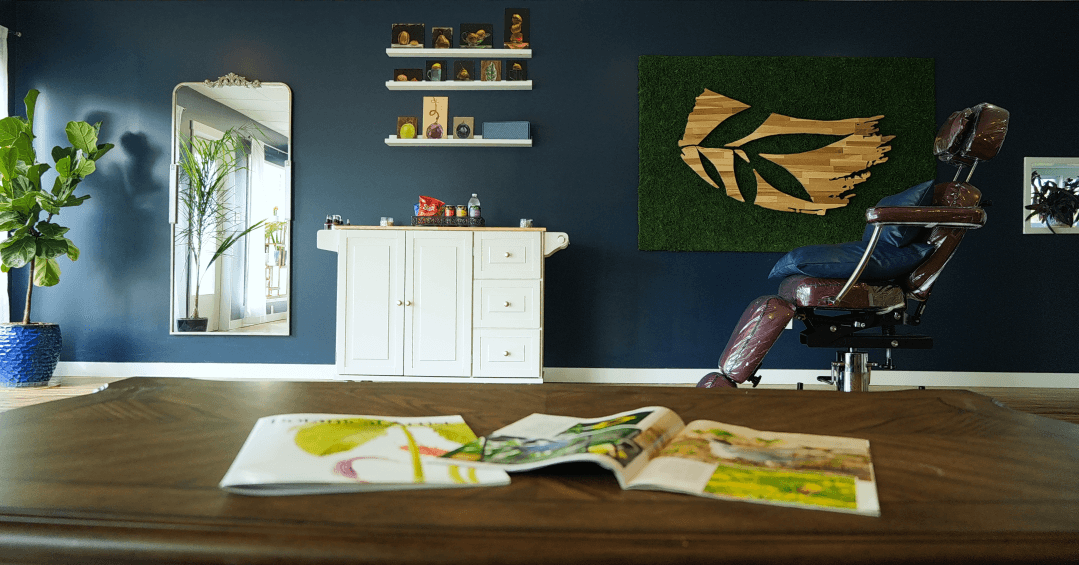
Image Credits
All photos by Daniel Skolz.