We recently connected with Dan Buckley and have shared our conversation below.
Dan, thanks for taking the time to share your stories with us today Can you open up about a risk you’ve taken – what it was like taking that risk, why you took the risk and how it turned out?
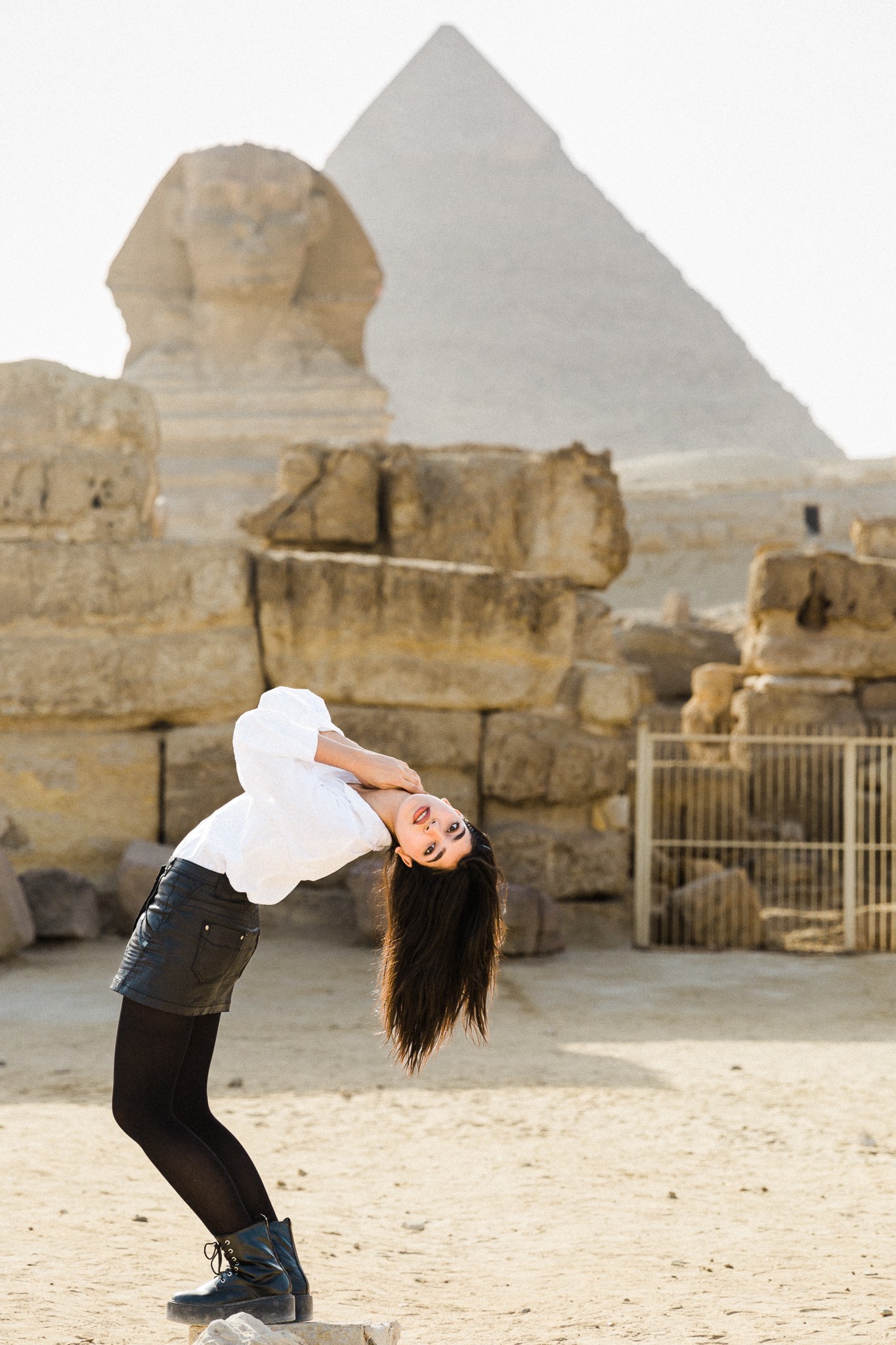
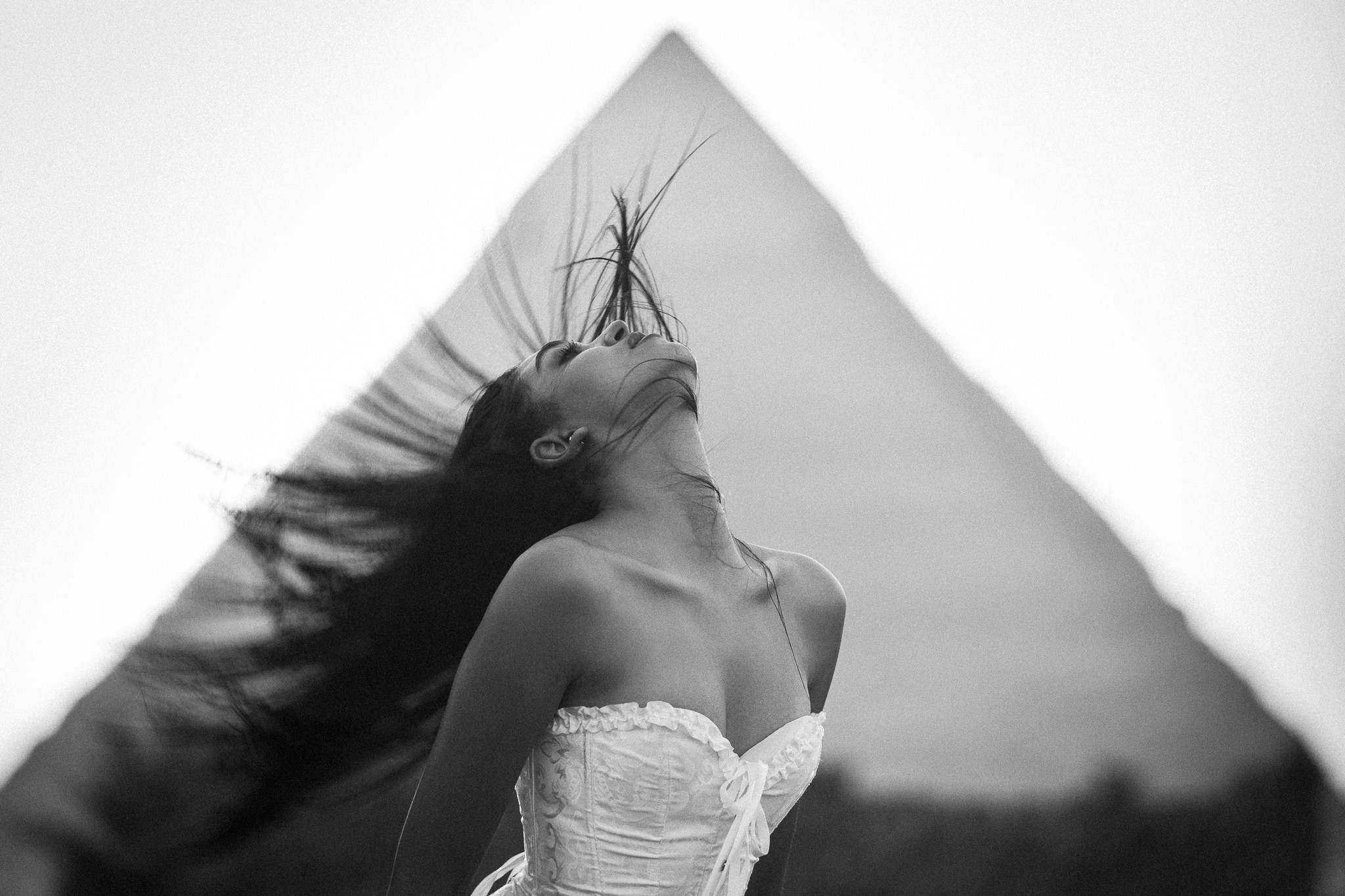
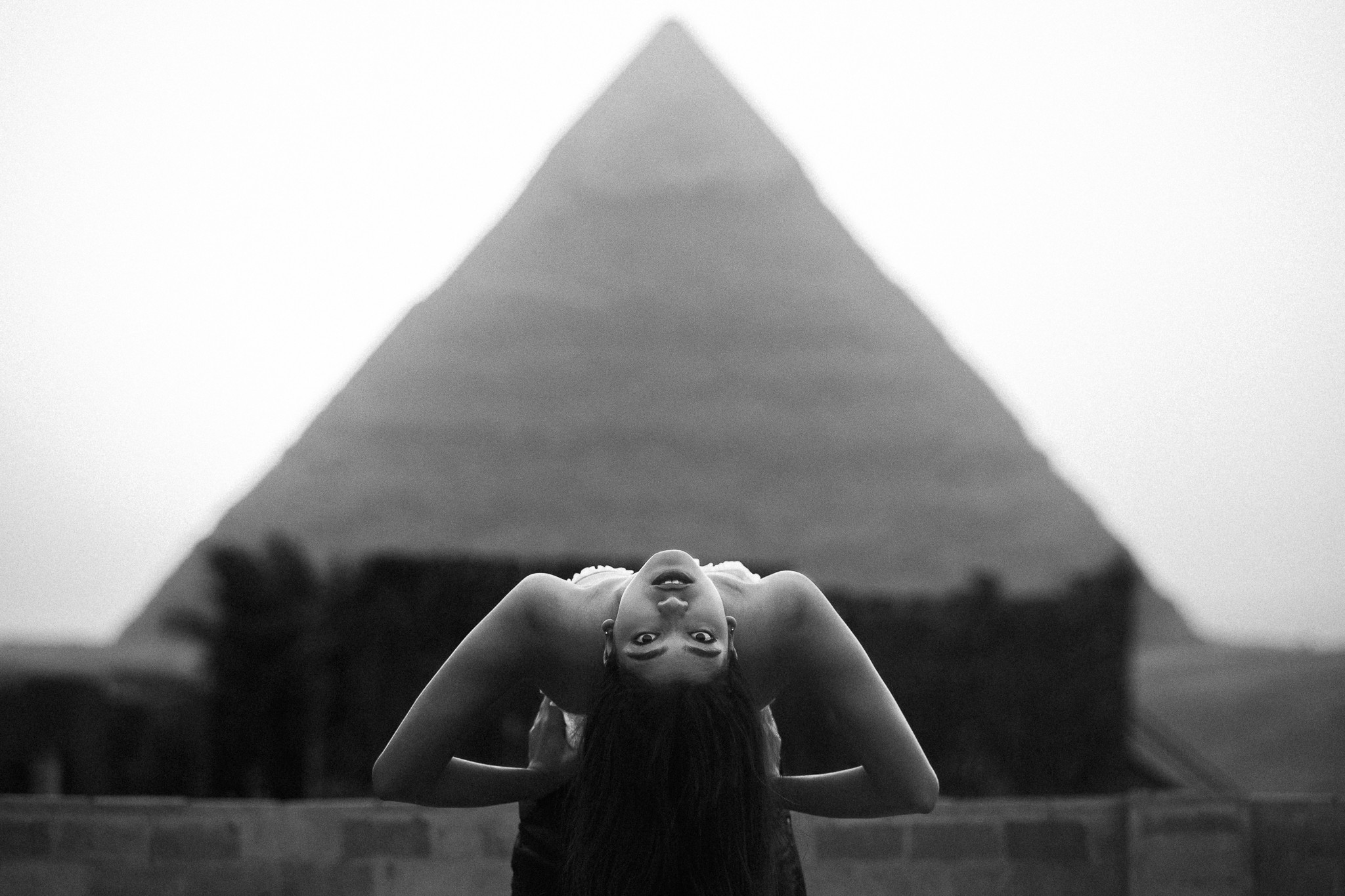
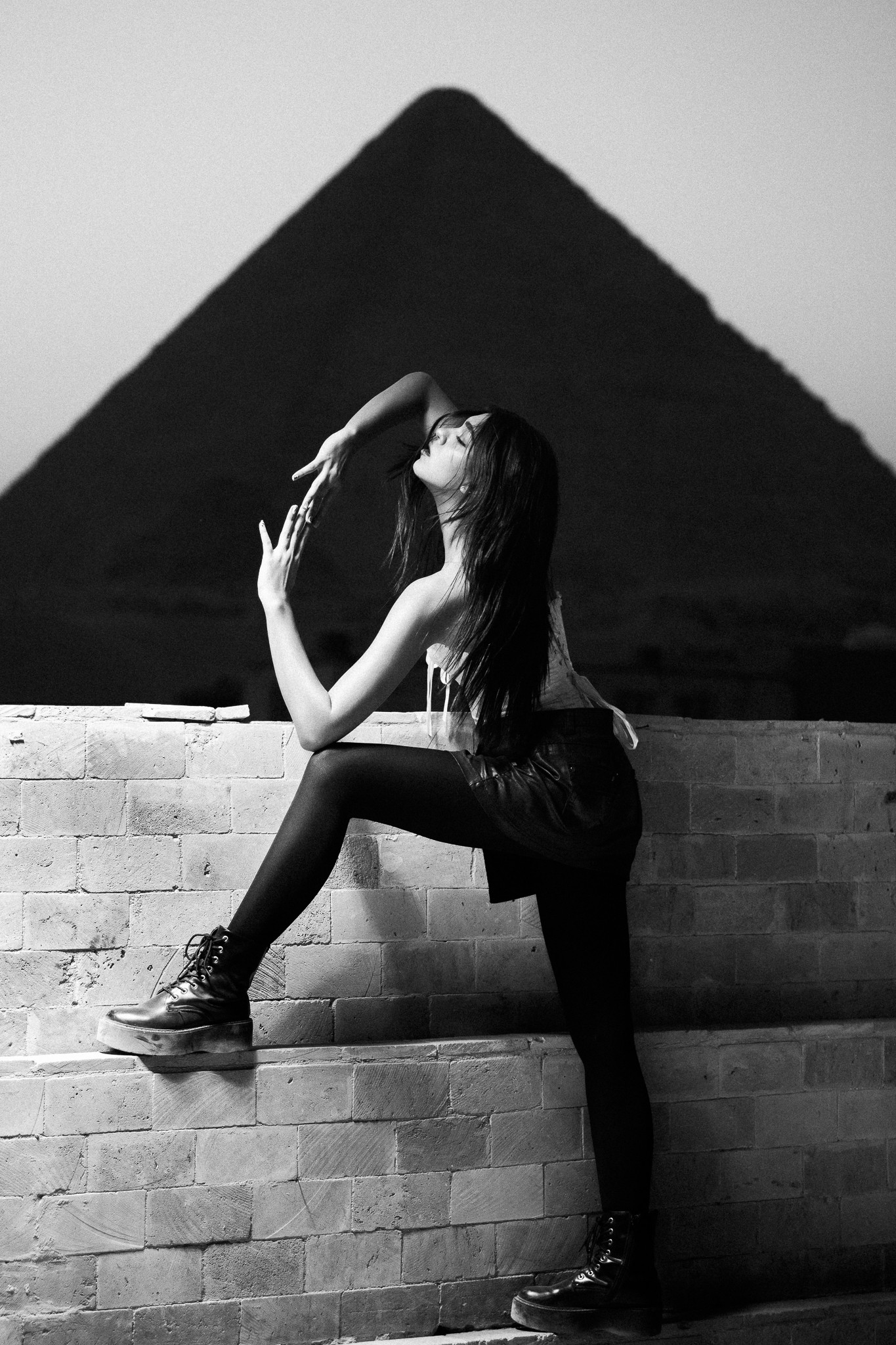
My creativity had begun to feel stagnant, and I was searching for a way to reignite my passion. Then I had a vivid dream: I was in Egypt, walking by the pyramids. It felt like a calling, and I knew I had to go. Within days I began planning the trip, organizing photoshoots from halfway across the world and setting the stage for a creative reset.
It was late afternoon on my third day in Egypt when Juliana, a model from Moscow living in Cairo, and I arrived at the Giza pyramid complex for what would be my final and most ambitious shoot. With only a narrow window before sunset and closing time, I had a few ideas in mind, but the fading light meant we needed to move quickly. After shooting on the stones of the Great Pyramid, we encountered Mohamed, a camel owner who offered to guide us to a vantage point overlooking the pyramids, the kind of spot photographers dream about. The journey would take about half an hour by camel. Juliana, who had never ridden a camel until moments earlier, agreed without hesitation. Three days in, I was convinced I had mastered camel riding, though the camels might have disagreed, and we calculated we could reach the location just before sunset.
We rode past the Sphinx and out toward the perimeter of the complex. The contrast was striking: litter and debris scattered across the landscape, even the remains of livestock, set against one of the world’s most iconic monuments. Mohamed advised us to conceal the cameras to avoid drawing unwanted attention. His words proved timely, as we soon encountered a police checkpoint. The officer was reluctant to let us pass, seemingly intent on keeping tourists within designated areas. Photography outside the official zones is tightly controlled in Egypt. After a tense exchange, I suggested to Mohamed that a small payment might resolve the situation. He discreetly offered the bribe, which was accepted, and we continued into the open desert.
The ride was anything but smooth. Camels are not known for their suspension, but they do have cupholders. Eventually we reached a small encampment where locals gathered on horses and makeshift seating fashioned from rolled carpets. Just beyond, the view opened to a breathtaking panorama: the pyramids silhouetted against the haze of the setting sun. It was the perfect location.
Challenges quickly emerged. Mohamed warned me that if he instructed us to stop shooting, we had to comply immediately; police would confiscate cameras if they spotted us. At the same time, an intense wind swept up from the valley, blasting sand into my face and nearly toppling Juliana from her camel. Shooting under those conditions was nearly impossible, but chaos has a way of making good photos.
As night fell, the desert slowed around us, the campsite alive with tea, cats, and conversation. Eventually, we began the long ride back, exhausted but exhilarated. Yet beneath the adrenaline I felt the first stirrings of a stomach ailment, subtle at first, but soon to drag me to death’s doorstep in the days that followed. The pyramids had given me their images, but they demanded a price I hadn’t expected.
As always, we appreciate you sharing your insights and we’ve got a few more questions for you, but before we get to all of that can you take a minute to introduce yourself and give our readers some of your background and context?
I have always been drawn to visual storytelling. My journey began with film, but it was when I picked up a still camera that I discovered a new way to capture the world. Early on, I was mentored by my friend John Woodruff, a writer and director who was modeling in New York at the time. I shot test sessions with him, and when he shared my work with his agency, they were so impressed they featured my photos on their blog. Being recognized by one of the top agencies in New York was a pivotal moment. It validated my eye for fashion and gave me the confidence to pursue photography seriously.
While I considered moving to New York, life in Ohio led me into wedding photography. I started as a second shooter and eventually built my own business, shooting up to 24 weddings a year. I shot weddings across the United States, from Alaska to California and Nevada, and even internationally in Mexico. Those years taught me how to work under pressure, anticipate fleeting moments, and deliver consistently for clients in high stakes environments. But weddings also have a natural expiration date. After so many seasons, I found myself burned out. I would not even pick up a camera in my downtime.
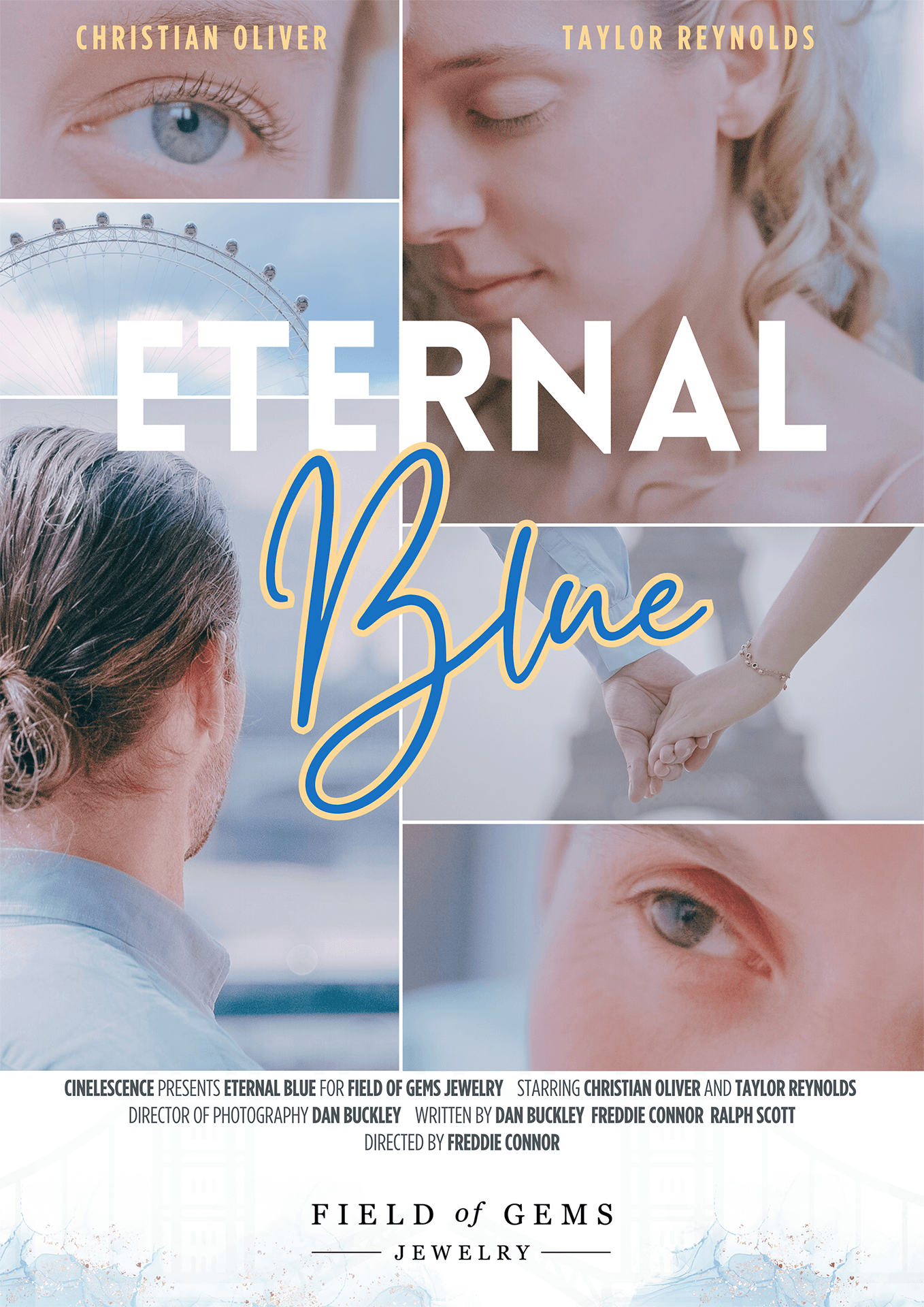
That pause became a catalyst. I began developing myself as a cinematographer, exploring motion and narrative in new ways. In 2022, I rediscovered my passion for still photography in Egypt. Organizing fashion shoots at the Great Pyramids reminded me why I fell in love with the craft in the first place. The experience inspired me to produce “Columbus to Cairo,” a brand film that reintroduced me as an artist and marked the beginning of a new chapter in my career. In 2023, I partnered with director and producer Freddie Connor to launch Cinelescence, a commercial production company dedicated to creating cinematic brand films and visual storytelling at the highest level. Our first project, “Eternal Blue,” was a brand film created for a jewelry startup, starring the late Christian Oliver and international model Taylor Reynolds. Shot across London, Paris, and Cairo, the production reflected the ambitious, emotionally resonant storytelling that defines our work.
Beyond photography, I have built a diverse career in film and television. As a lifelong martial artist, I entered the industry as a stunt performer and eventually became a stunt coordinator, working with talents like Larisa Oleynik and UFC Hall of Famer Don Frye. My production credits span shows such as “Restaurant: Impossible,” “Death Row Stories,” and “Big Rig Bounty Hunters.” I also served as talent assistant to Kelly Clarkson on the Emmy winning “Who Do You Think You Are?” and as a casting assistant for the Oscar winning “Captain Phillips.”
As a photographer, my lens has traveled the globe, from fashion capitals like New York, Paris, and London to the landscapes of New Zealand, Sweden, and Alaska. I have captured iconic sites including the Eiffel Tower, the Paris Catacombs, the Tower of London, and Stonehenge. My work has appeared in “Us Weekly,” “Ford Performance,” “(614) Magazine,” and “The Columbus Dispatch,” and I’ve contributed still photography to several film sets.
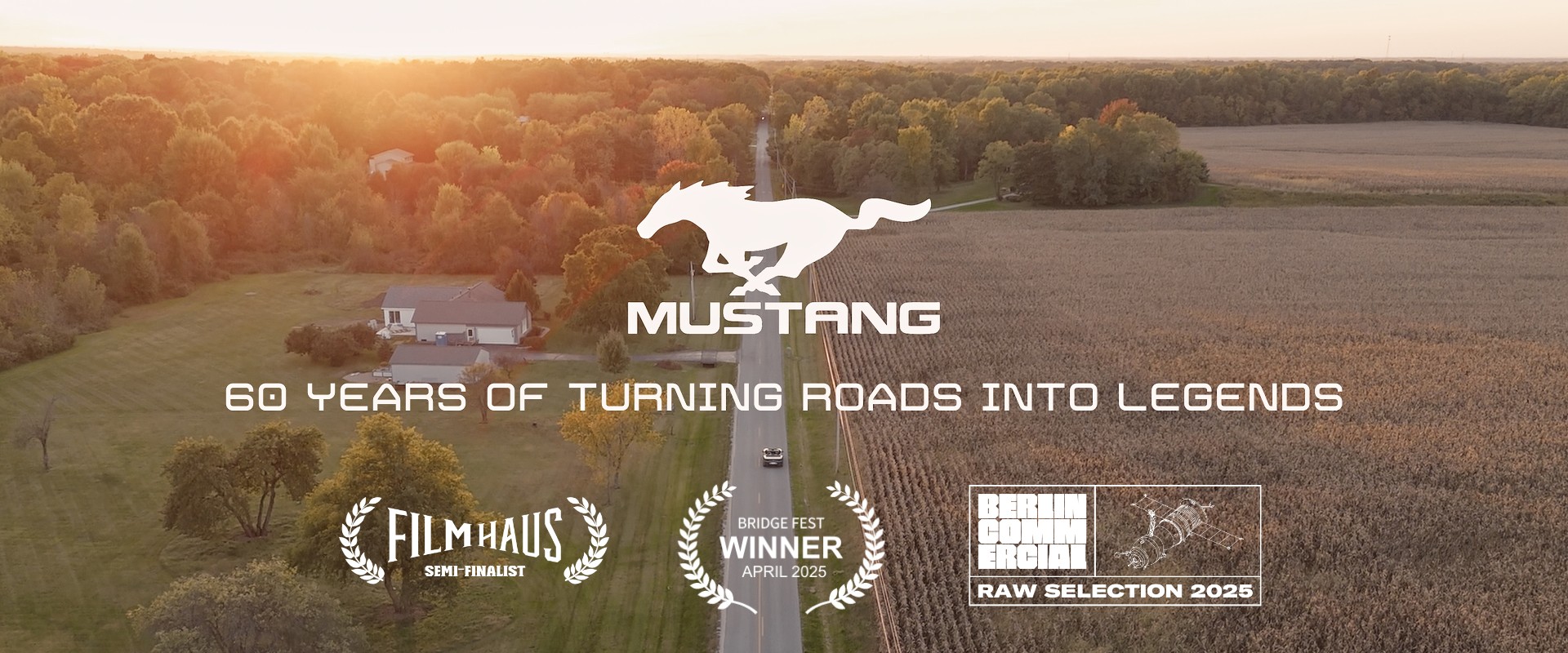
As a cinematographer, I’ve shot pieces for clients including the Columbus Symphony and UFC legend Matt Brown. My reel features “Mustang: 60 Years of Turning Roads into Legends,” a spec commercial selected at the Berlin Commercial festival, one of the largest commercial festivals in the world. I’ve served as director of photography for award‑winning short films in Ohio and New York.
My brand is about authenticity, artistry, and impact. Whether it is a fashion shoot, a commercial, or a cinematic project, my goal is to elevate the vision and make it unforgettable. I want every frame to feel like a piece of art.
Let’s talk about resilience next – do you have a story you can share with us?
My shoot at Stonehenge was one of those shoots where the journey became as memorable as the images themselves. We had just wrapped a long day of filming “Eternal Blue” in London, and I was meant to catch a train to Grateley, a small village near Salisbury. That’s when the first challenge hit: I realized I had left the dress for the shoot in the car. Freddie, our director, tried to race across London to deliver it, but I missed my train.
I managed to catch the next one, but in my sleep deprived haze I boarded the wrong connection. Instead of arriving in Grateley around 9 PM as planned, I did not get there until 12:30 AM. By then, taxis had stopped running, Ubers were not an option, and my phone was at 5%. Desperate, I called the hotel, waking up the manager, who reluctantly agreed to try calling a taxi. Miraculously, one appeared just before 1 AM, driven by a cabbie who proudly told me he used to be a boxer.
On the ride, he casually mentioned that taxis did not start running again until 7 AM. Our shoot was scheduled for 5:30. With only a few hours left before the shoot, I negotiated with him to return at 4:45, wait while we shot, and then take us to the train station. To make sure he would actually show up, I offered enough money to make it worth his while.
I finally reached the hotel around 1:30 AM, threw my dead phone on the charger, and collapsed. My alarm went off at 4 AM, barely two and a half hours later. When I walked into the lobby at 4:30, I met Zsanett, a Hungarian model I was working with for the first time. I briefed her on the situation, explaining that we might have to walk to Stonehenge, and that shooting inside the circle was a bit of a gray area. She was completely unfazed, ready to roll with whatever came next. It was exactly the lift I needed right then.
At 4:45, headlights appeared. The cabbie kept his word. We arrived at Stonehenge right on time, the dress fit perfectly, and we shot inside the circle without interruption. By the end, we even caught our train back to London with one minute to spare.
That night truly tested my ability to adapt under pressure and find a way forward when everything is stacked against you. And as soon as I arrived back in London, I had a full day of shooting “Eternal Blue” —on just two and a half hours of sleep.
What do you find most rewarding about being a creative?
For me, the most rewarding aspect of being an artist is the way creation itself feels almost divine. I see a fascinating connection between art and spirituality, since religion often treats creation as sacred. Making something from nothing allows us to connect with a deeper, more spiritual side of life. Even in stressful conditions, the act of creating has a calming quality. It becomes a grounding force that not only brings clarity but also pushes me to go further physically, mentally, and emotionally than I otherwise could. Art transforms challenge into purpose, and that sense of transcendence is what makes the creative process so profoundly rewarding.
Contact Info:
- Website: https://www.danbuckleyphotography.com
- Instagram: http://instagram.com/danbuckleyphotography
- Facebook: http://www.facebook.com/DanBuckleyPhotography
- Youtube: http://youtube.com/@danbuckleyphotography
- Other: https://www.cinelescence.com