

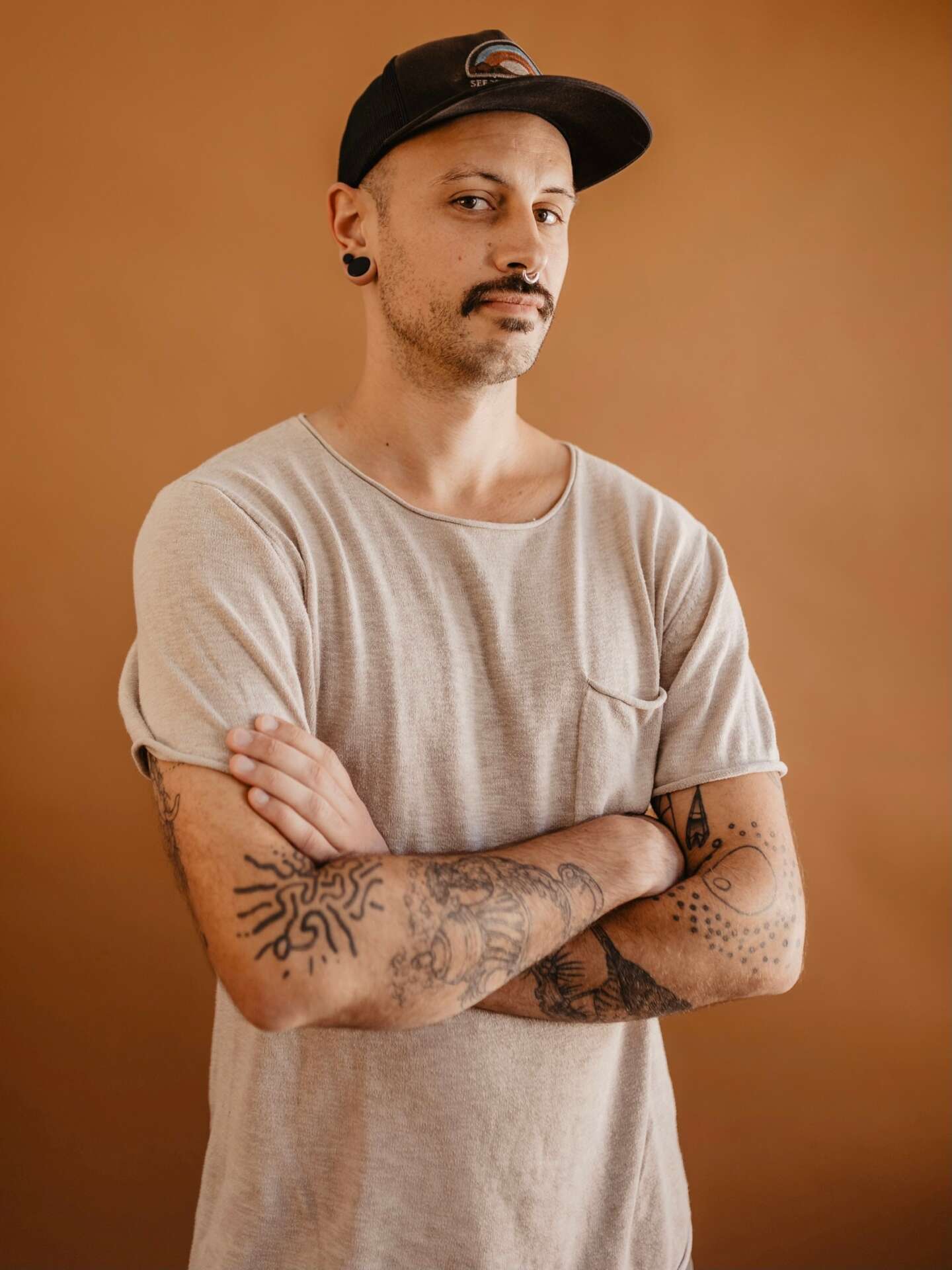

We caught up with the brilliant and insightful Damon Stevens a few weeks ago and have shared our conversation below.
Damon, looking forward to hearing all of your stories today. Let’s kick things off with your mission – what is it and what’s the story behind why it’s your mission?
As a mission driven artist and business owner, one of my biggest goals is to create unique one of a kind products out of recycled and repurposed materials. My brand, Manual Ware, makes wearable products, tools/accessories, and artwork from old broken skateboards. It was founded on the notion that discarded materials don’t have to be considered trash. In fact, most reclaimed materials have just as much value if not more so than brand new materials, you just need to know how to harvest them into usable substance.
History is what I am trying to preserve with repurposing old skateboard decks. So much time, pain, and effort has gone in to every board ridden that even if you don’t skateboard yourself, you will find those who appreciate the beauty of the artwork as the nature of the sport and material takes time and patience to unlock its mastery.
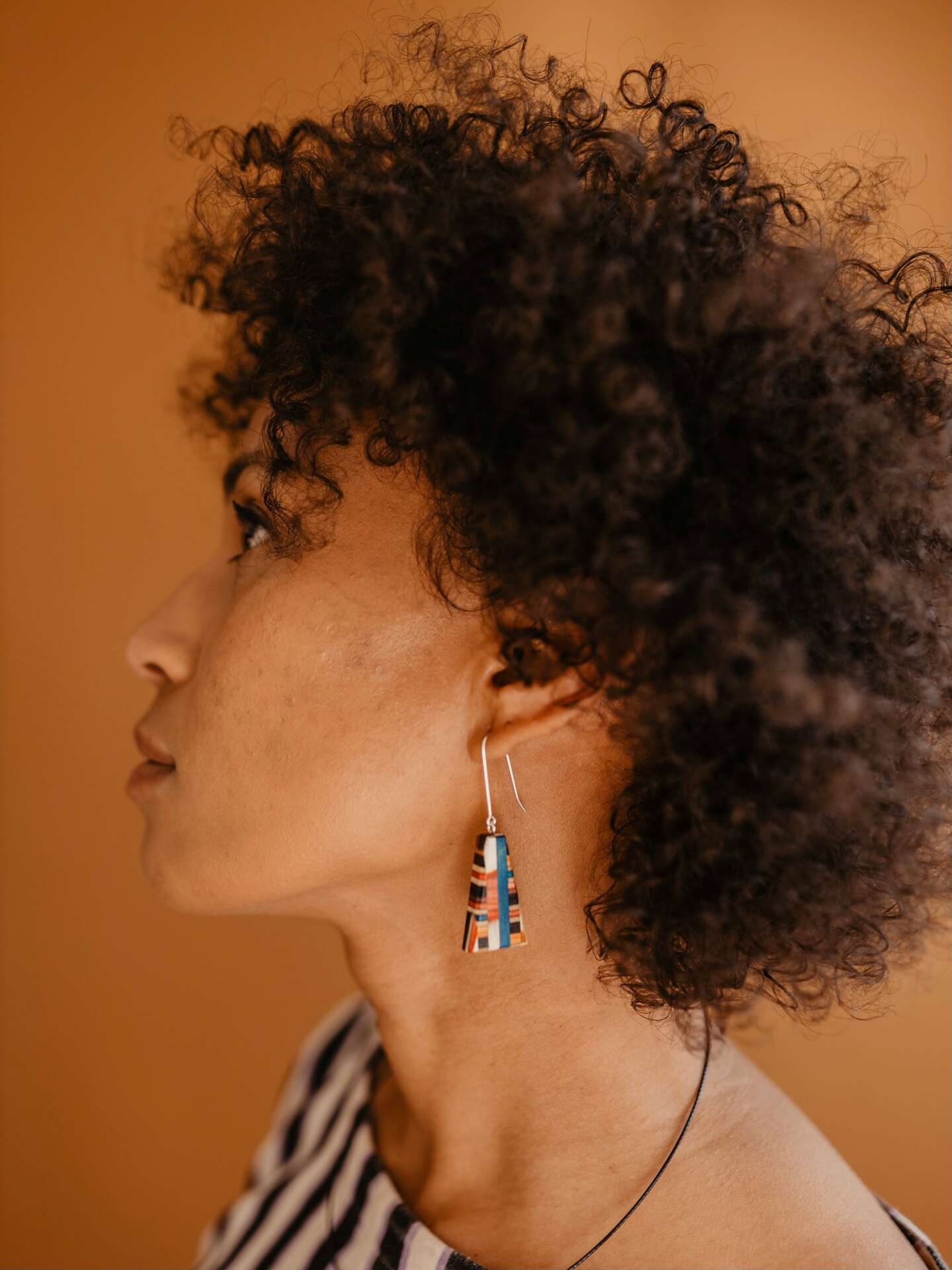
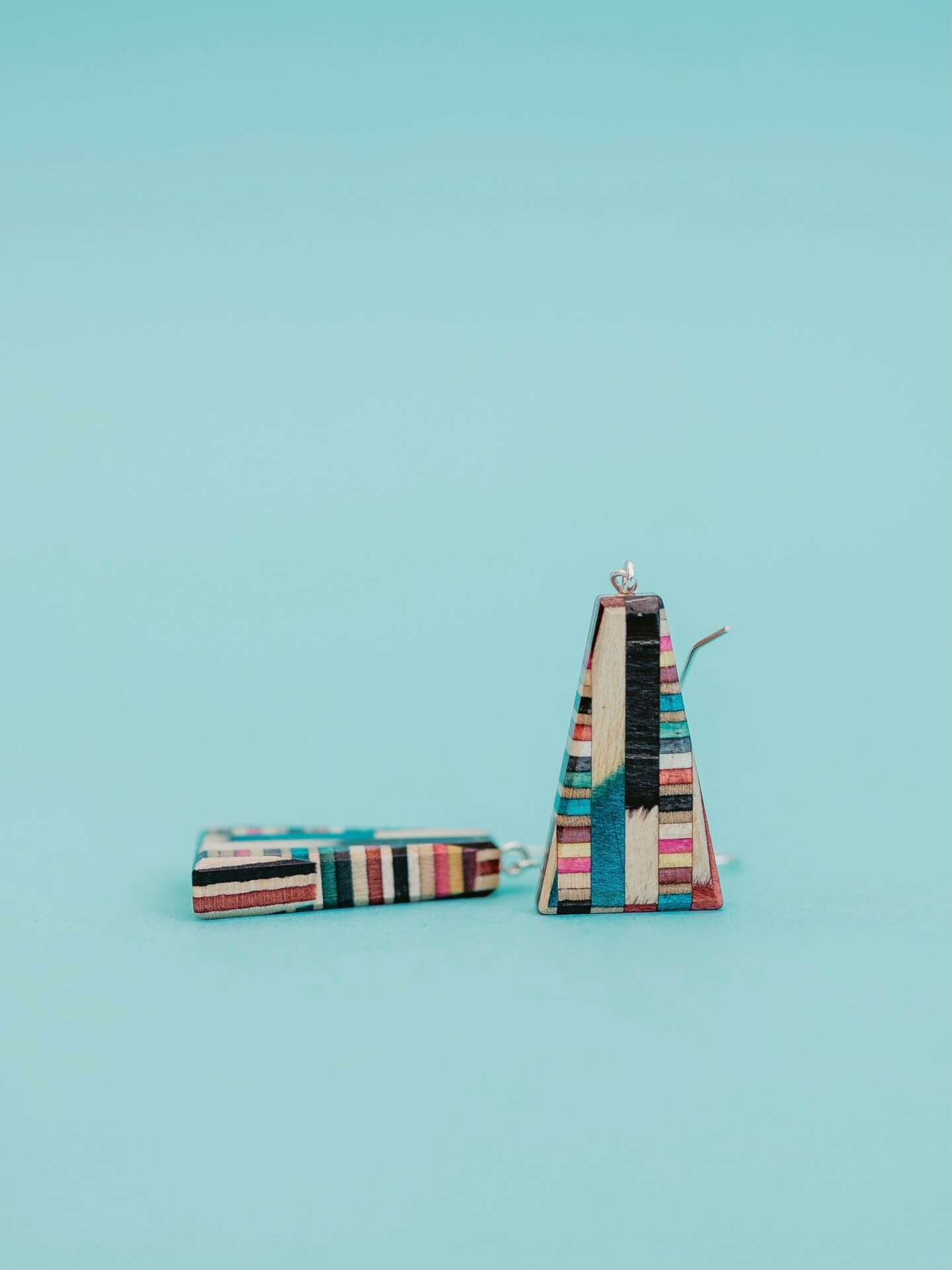
While I am not the first artist to utilize this material (and I certainly won’t be the last) I am striving to push the boundary of how the recycled maple veneers that make up a skateboard deck can be used by creating highly ornate geometric patterns. This is not something I am seeing in the industry currently and wish there were more people willing to see what the limits of this beautiful plywood could do.
Damon, love having you share your insights with us. Before we ask you more questions, maybe you can take a moment to introduce yourself to our readers who might have missed our earlier conversations?
My name is Damon Stevens, I am a maker, builder, artists, and woodworker. Making things has always been in my blood. My father is a carpenter and fine woodworker but has always been handy so naturally I grew up with a strong interest in the tangible world. The majority of my artwork and creative thinking comes from the fine art world with a hint of product design and manufacturing methodology, yet woodworking is just my medium of choice.
Getting into the industry took a long roundabout route but consisted of Fine Art and Architecture schooling. Critical design and abstract thinking as well as a healthy knowledge of how to make things with a variety of production methods. Some mentors helped guide me along the way but truly the majority of my skill set to this day is from pure dedication and discipline to the craft. So much of what I know in art and woodworking is self taught through practice, watching more how-to videos than should be legal, and speaking with other artists in the industry.
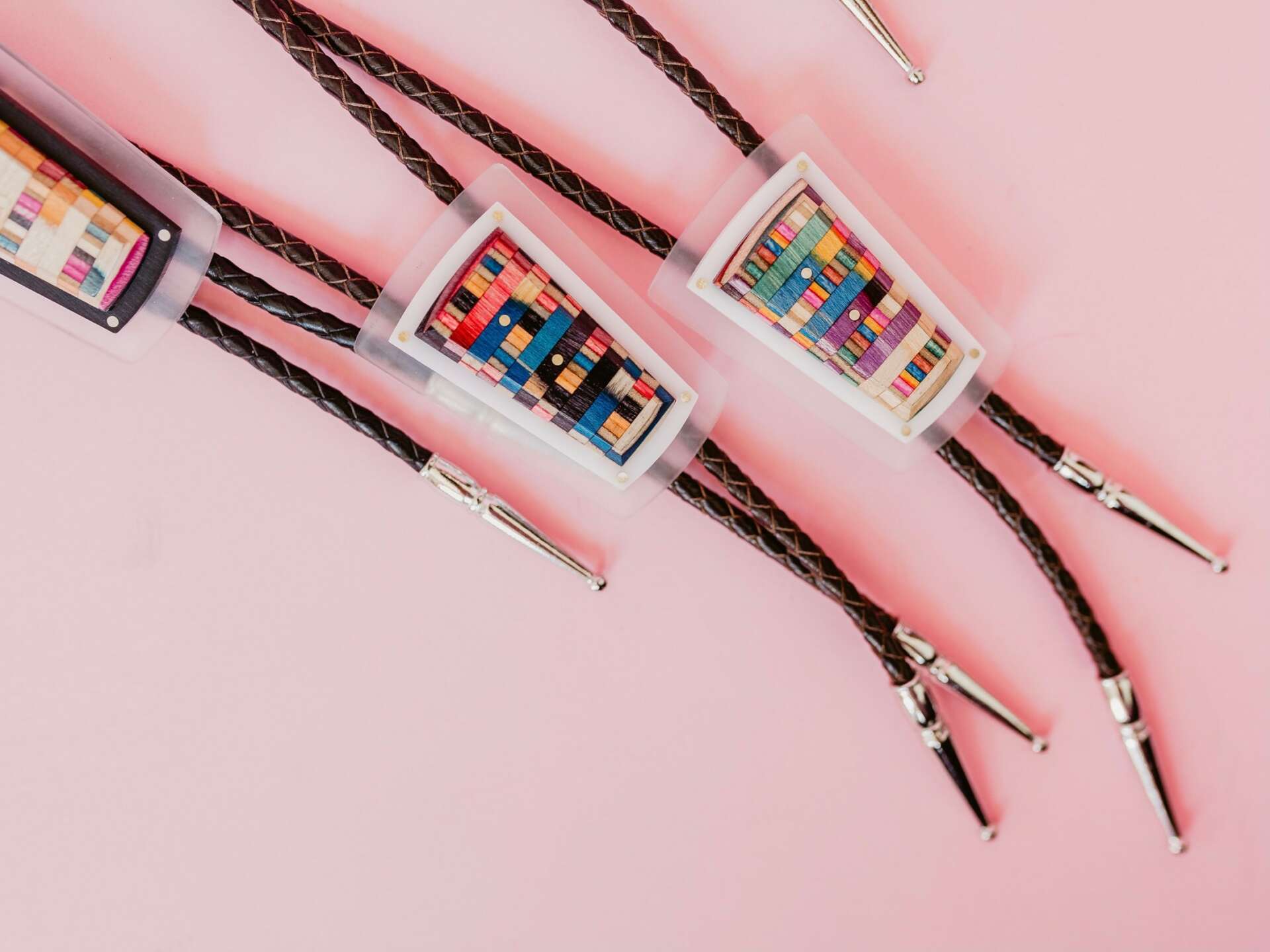
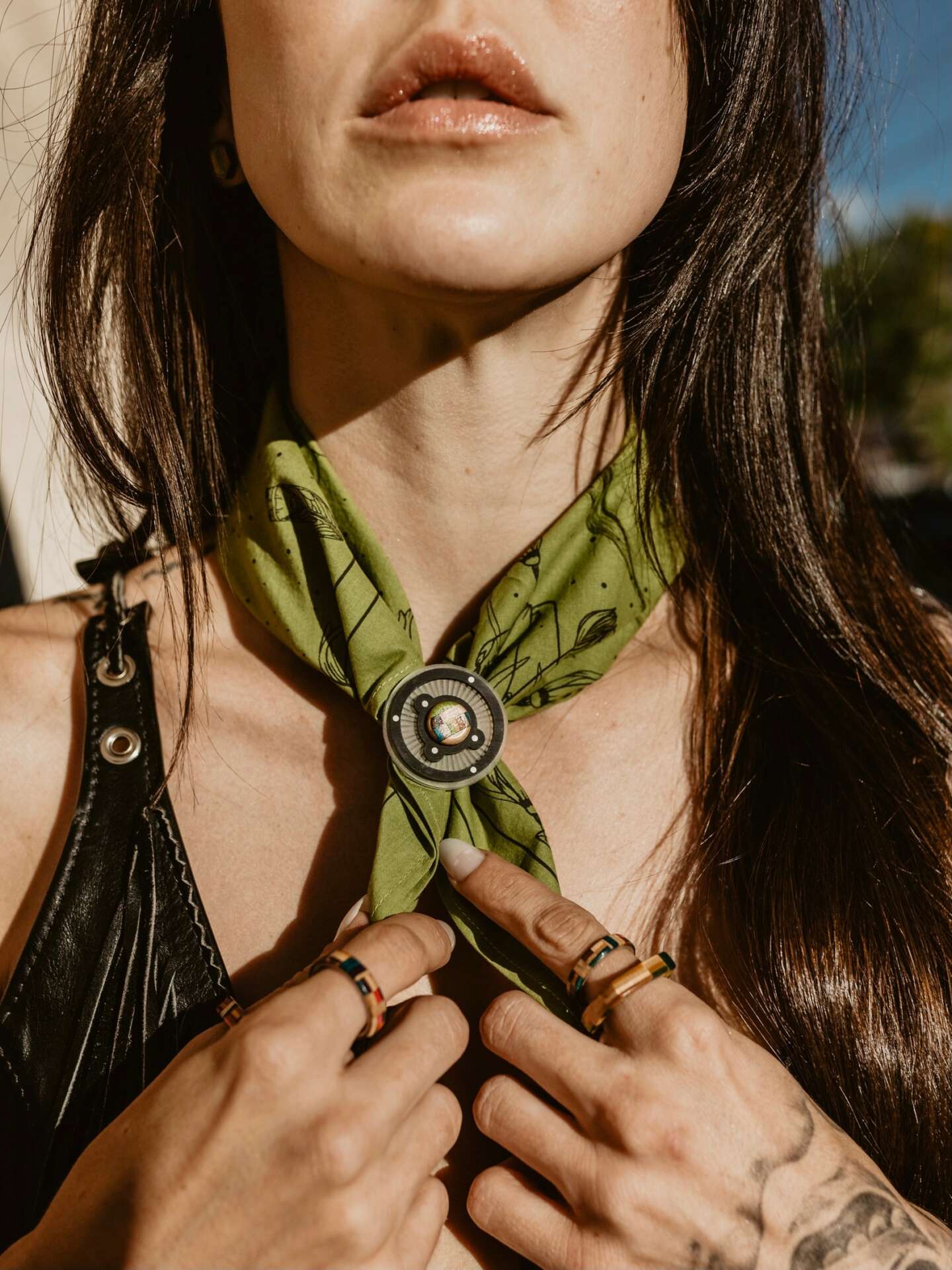
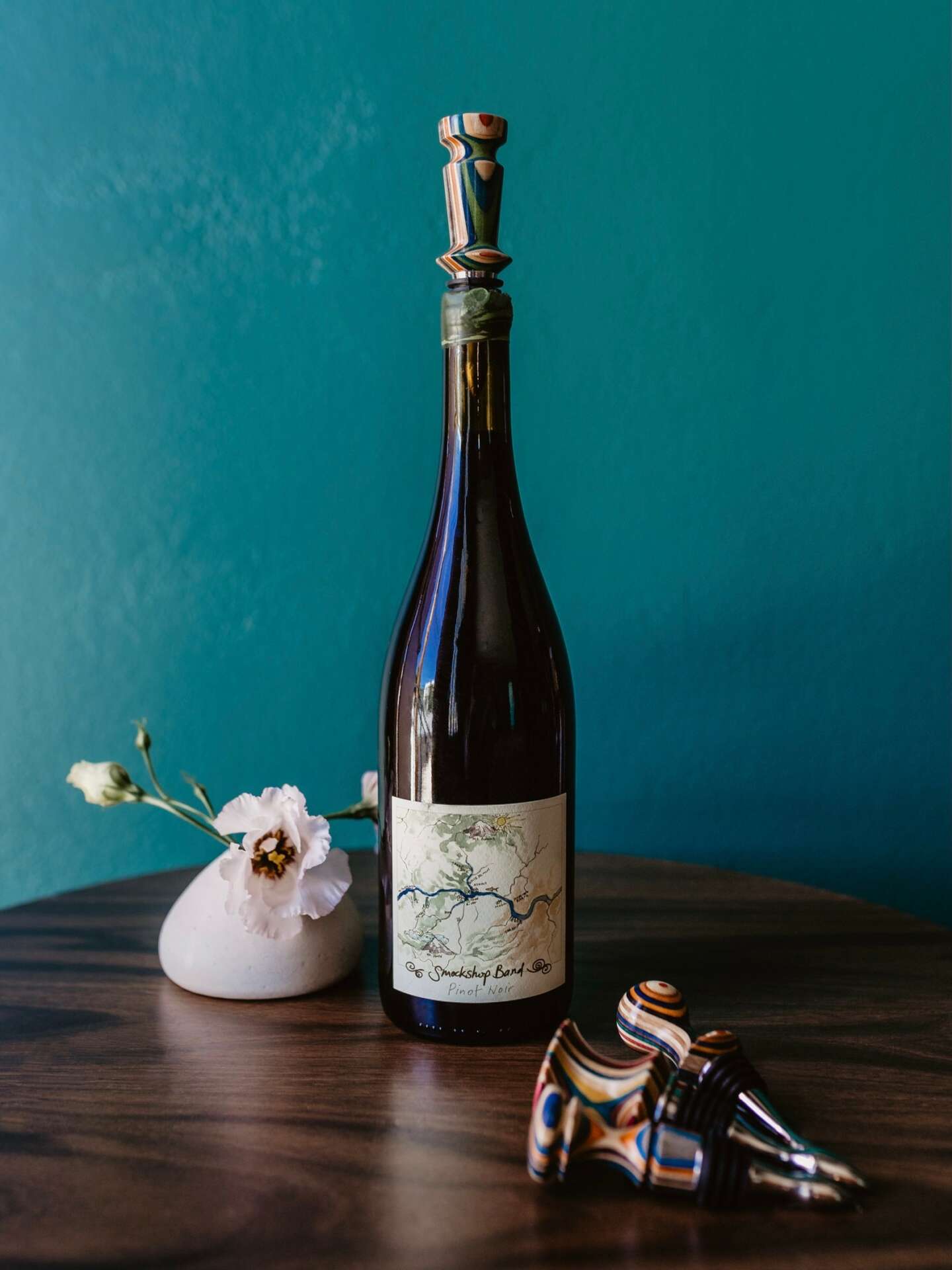
Woodworking is such an amazing art form. Working with natural materials is a blessing and can take a lifetime to master. While I grew up surrounded by woodworking due to my father, for whatever reason it did not click as “my medium” as a young artist. It was not until found the itch to use reclaimed woods, plastics, and metals in a place of abundant material scraps that I decided to run with it moving forward. Reclaimed materials often take some love and lot of labor to make into usable pieces for artwork but it is what I focus the entirety of my work on these days. You don’t want those hardwood scraps? Use it with skateboards to make a beautiful cutting board. Plastic scraps you say? Combine it with a skateboard gemstone to make a unique bolo tie suitable for any formal occasion. So much of my time is utilized repurposing scraps that it almost feels wrong throwing any given material away these days, as I feel I could use it in some way other than contributing to the landfill. After all, giving new meaning and purpose to these discard materials is really the end goal.
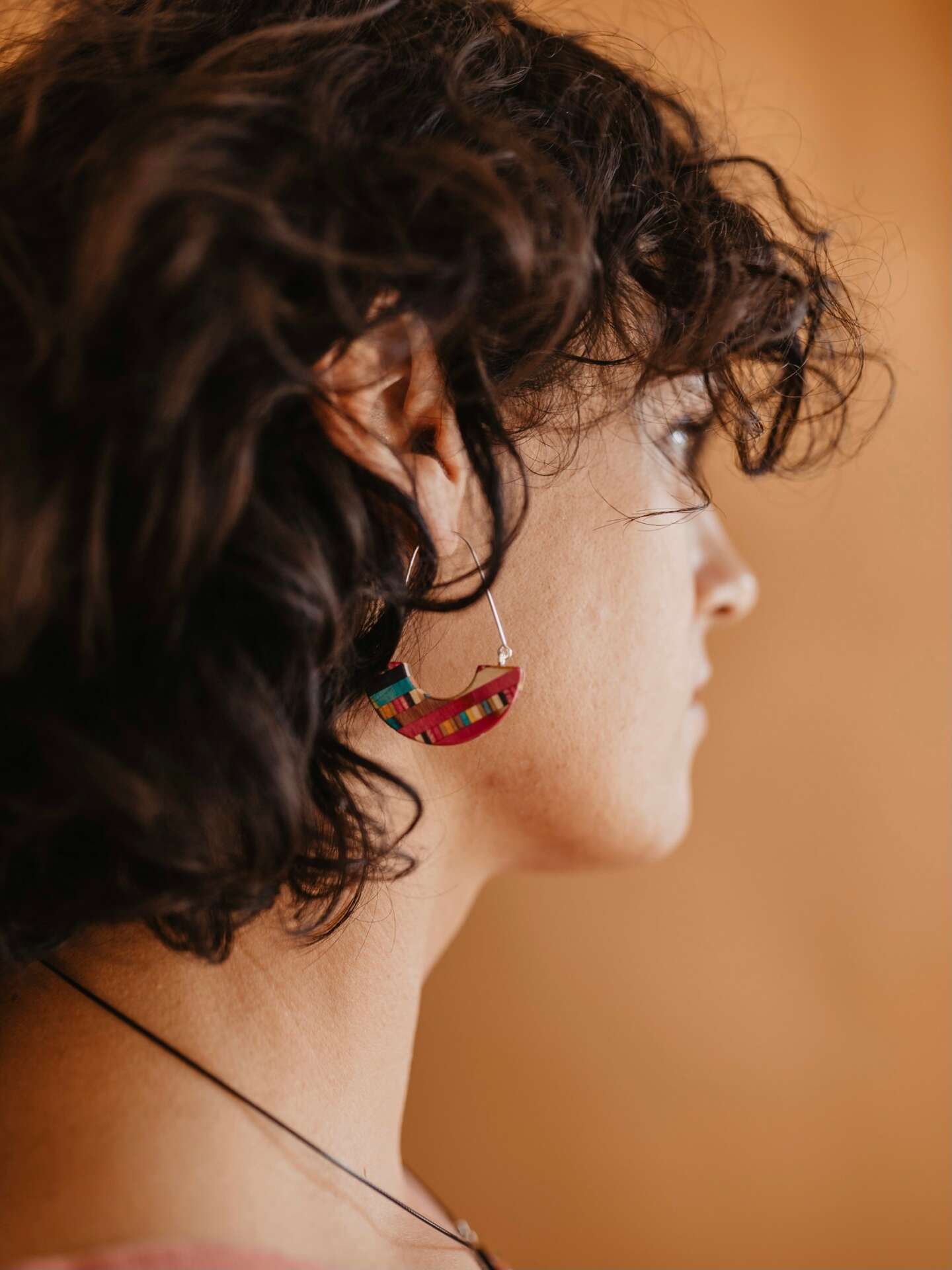
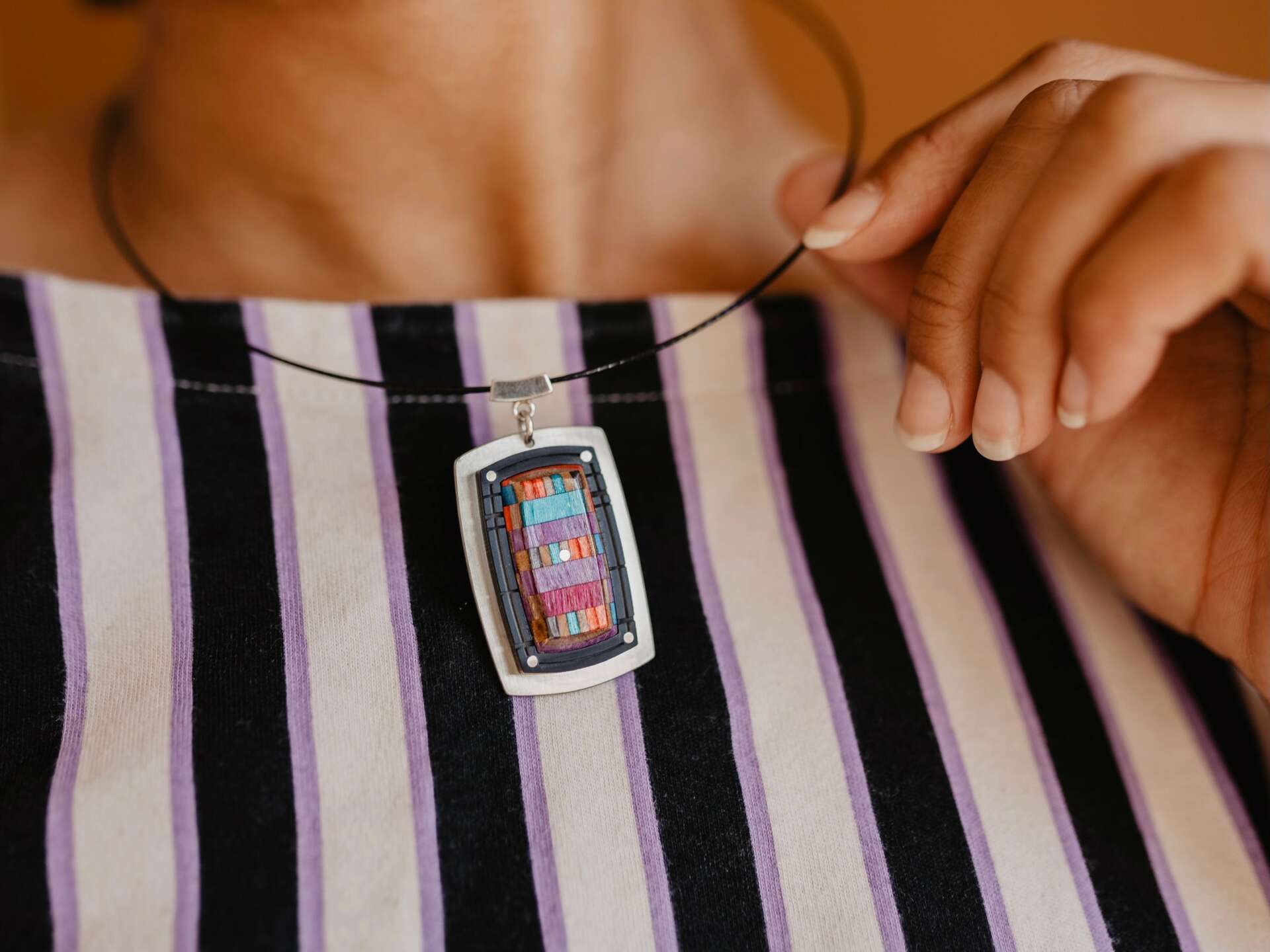
I never intended to start a business but as making and selling my artwork became a regular occurrence, growing a brand surrounding what I do made the most sense. Having something that people can recognize and associate your work with goes a long way in maintaining long term growth. My business, Manual Ware, focuses on the reuse and recycling of old unwanted skateboards by making jewelry, tools/accessories, and beautiful art out of a material otherwise considered trash to the majority of the world. My work ranges from beautiful rings, earrings and custom wearable art to functional products like home goods with furniture being the next goal. I hope to create a lifestyle brand in which you can cultivate a uniquely attractive aesthetic in which to surround yourself with products that have been given new purpose and meaning. The goal is to reframe the general public’s perspective on how we treat materials and our overall footprint on this earth, which can be done by producing high quality and sustainably sourced products.
Part of what sets me apart, at least within the recycled skateboard communityI think, is finding new ways to use the material. Testing new patterns and ways to layer the boards in order to create new geometric combinations is part of the appeal behind this material. In other words, my designs that would otherwise look complicated to the untrained eye are actually pretty easy to replicate which give a sense of organized chaos if you will.
I am proud to be included in the community of makers who use recycled skateboards as a medium and be recognized by those who love the craft. Contributing to the sustainable movement of making artwork from recycled materials is incredibly fulfilling. Even if I don’t continue doing exactly what I am now with the material, I think I will always be making things from whatever I can find lying around. The substance my change but the sensibility and intention will stay the same.
Learning and unlearning are both critical parts of growth – can you share a story of a time when you had to unlearn a lesson?
My hardest lesson to relearn has to do with the fact that mistakes are inevitable and perfection is an unrealistic expectation.
Growing up, the majority of my artwork has been meticulously thought out and planned only to have the outcome not turn out how I envisioned it with a wrong marker stroke or misaligning a pattern for a glue-up. It has taken me years to find peace with the fact that you should embrace the process and understand that mistakes and failure are the best teachers.
While this can be extremely disheartening, understanding how or why something doesn’t work due to your project not going right is how you find your voice as an artist. Being able to take the problems as they come and use them as creative opportunities will only strengthen your work. Not to mention, most mistakes are fixable or editable at the very least; as a woodworker this is half of the battle. Having the knowledge and skillset to dial in your tools in order to hide or fix mistakes that would otherwise never be seen is how I have grown as a maker and choose to develop my brand as an artist.
Can you tell us about a time you’ve had to pivot?
Two times come to mind right off the bat, both of which deal with embracing life as it shifted and relying on the fact that my skills would carry me forward in my work/career.
The first instance happened about half way through my college career. I started out in Architecture, coming from a maker family with a father in carpentry and the trades, designing and building spaces made sense to me. About two years into my Architecture schooling I chose to double major with Graphic Design as it was also an interest of mine growing up loving the bold designs and branding that was found in the skateboarding industry. While this was highly ill-advised by all of my mentors in both departments I chose to do it anyways because I wanted to try, and if I were to fail it would be on my own terms.
My third year of Architecture was particularly difficult when combined with the work load of my Graphic Design and other Fine Art classes. Falling short creatively in the Architecture studios, I was kindly directed to quit and reapply to the same studio the next time it was available. Due to how their studio classes work, this was not an option until the the following year, so instead I took the following semester to focus on the Graphic Design classes with every intention of coming back to Architecture. While this was hard to swallow at first, as I progressed I found Metal Smithing and fell in love with jewelry making as an artform. I chose to move forward with Graphic Design and Metal Smithing and graduate with a BFA landing my first creative job right after college in Denver Colorado at a design studio.
The second career shift came about very shortly after I started my first professional job at MATTER LLC in Denver.
Three months in to getting hired is the major review process in which they decide if they want to keep you on the team or renegotiate your role as an employee. Leading up to my three month mark my bosses were not in love with the entirety of my design skills when it came to Graphic Design. Yet, they recognized another skillset I had which was my ability to meticulously make things with my hands. Fortunately, this design studio is multifaceted and also includes a letterpress workshop, a laser cutter, and a small maker space. It is here that I shifted my focus, helping them build tangible designs of communication and ways for their clientele to incorporate unique handmade products which sets them apart creatively in the greater Denver area.
Over my time at this extremely wild and eclectic design consultancy, they became like family, granting me benefits that other long term employees had earned. They started to let me stay late and work on my own projects. This is when my work with the recycled skateboards resurfaced. It was there, in the back end of the maker space surrounded by wood and metal type, beautiful printed posters, and the smell of industrial laser cutting that I spend several hours honing my craft and falling in love with the process of using reclaimed materials from a fine art perspective.
Jump ahead nearly five years later and I have new job as a CNC Operator at a Furniture/Design Build company as well as a highly demanding side hustle making custom artwork from recycled skateboards where woodworking and making things with my hands is still the focus, The more things change, the more things stay the same.

Contact Info:
- Website: www.manualware.co
- Instagram: https://www.instagram.com/manualware/
Image Credits
Rio Chantel Photography