



We caught up with the brilliant and insightful Cyin Kaywise a few weeks ago and have shared our conversation below.
Cyin, thanks for joining us, excited to have you contributing your stories and insights. We’d love to hear about a project that you’ve worked on that’s meant a lot to you.
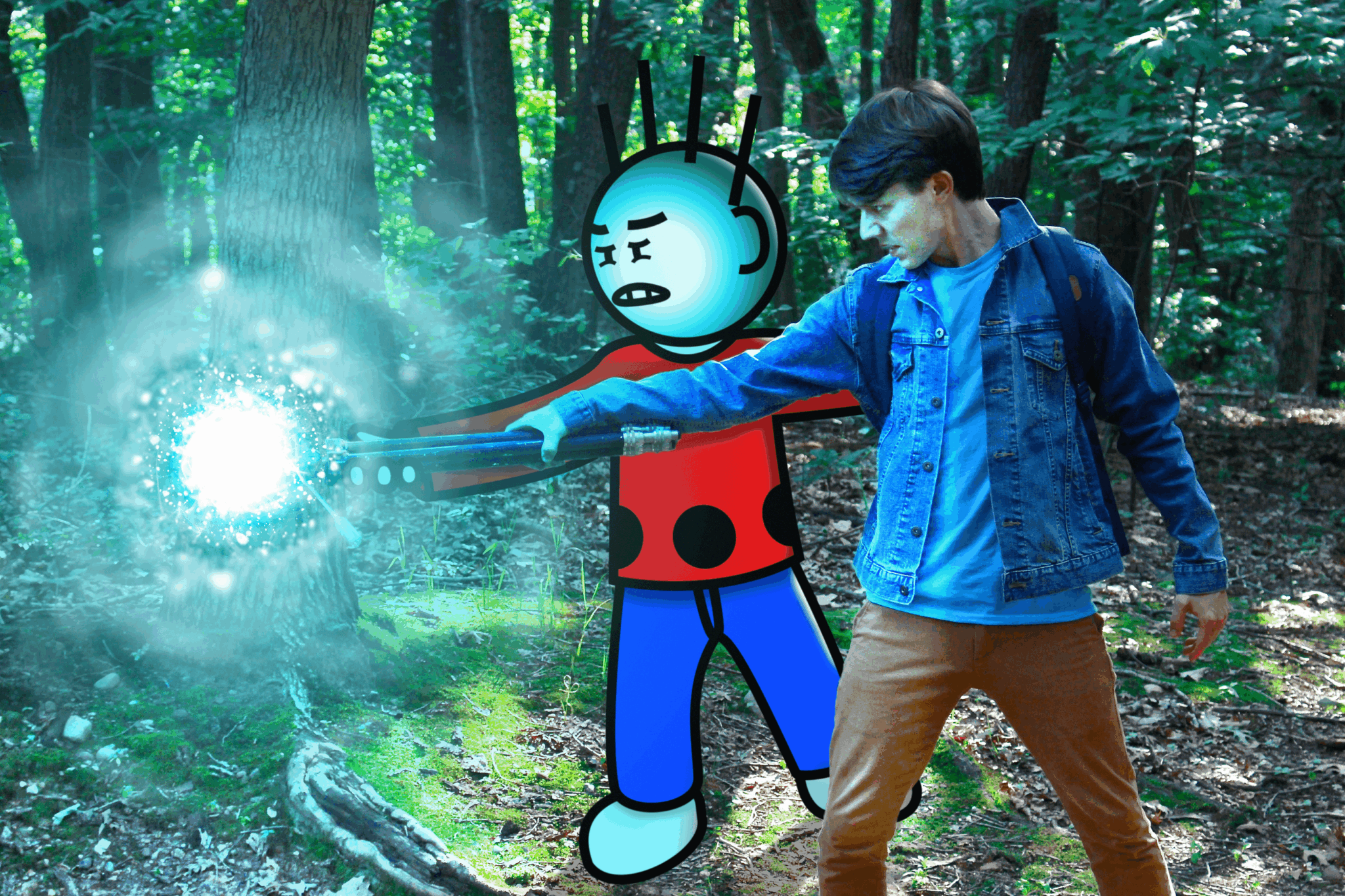
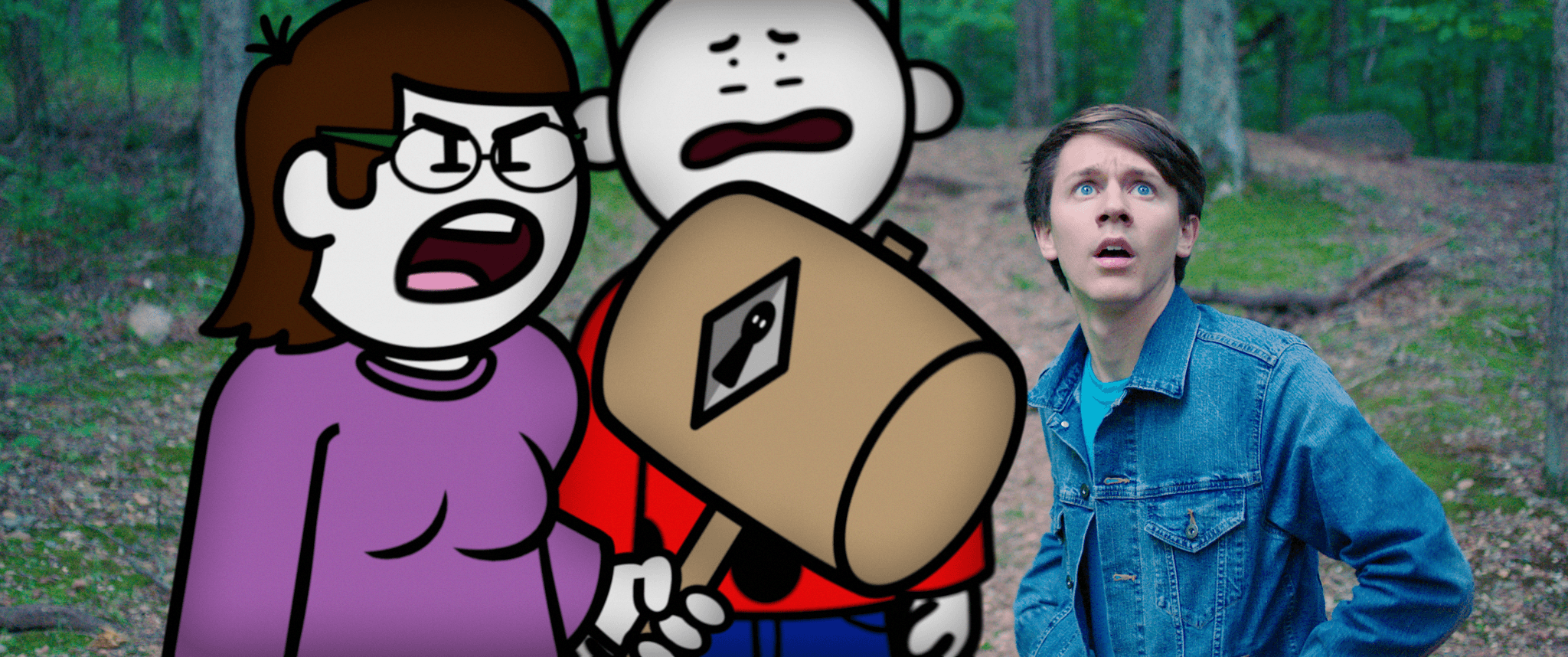
My live-action animation pilot episode, “INBETWEEN”, is easily the most meaningful project I’ve ever worked on and completed. I consider it the culmination of all of my filmmaking and animating ability (circa 2020) in a concise, 15-minute package. My budget was certainly low, and I had to make up for a lot of shortcomings as a result of the limited resources available, so the trade-off I made was time. The whole production spanned from 2018 – 2020, with post-production taking the most time (animation was especially laborious!). However, the dedication of my crew, the talent on display from my actors, and the sheer feat of what we were accomplishing together despite our setbacks was more than enough motivation for me to get it done.
The whole concept of live-action actors interacting with cartoon characters is nothing new – some of the first animated works in history like the “Alice Comedies” by Walt Disney did just that. It was only after I saw the storytelling capabilities be taken further in films like “Who Framed Roger Rabbit” that I was inspired to devise a humans-with-cartoons world of my own. That was one of my favorite films growing up, and it became a fantastic reference point for where I had to set my bar in order to push it further. As I went through high school and college, I would create smaller projects to build up my skills in film production, editing, writing, animation and more.
I created two very short proof-of-concept trailers for INBETWEEN as part of my college course studies – one in 2016 and one in 2017 – to get a sense of the production workflow and exactly what was possible for me to accomplish without a budget. These were single scenes with one location, two actors, no fancy lighting or set design, and only basic sound work – the bare minimum for a film project. This simplified production enough where I figured out a way to shoot multiple on-location scenes in a day with some careful and clever planning (and just a hint of luck). With several filming locations already in mind, I set out to write my first draft of the pilot episode script in 2018 – what would end up becoming my thesis project for college.
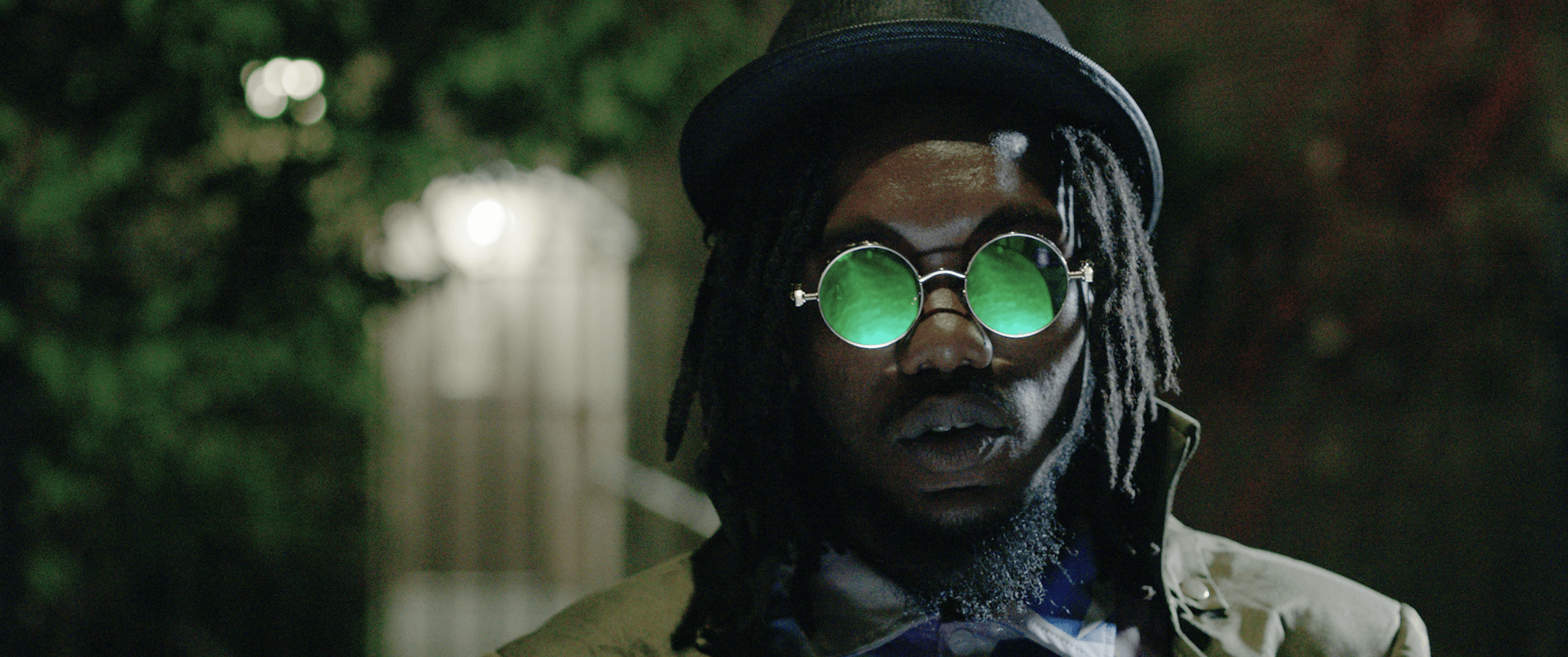
Once my script was finalized, casting was relatively straightforward. I put out an open casting call on Backstage where over 1000 submissions were received. Derek Martin ended up with the role of Wesley, the main human character who had a childhood of imaginative whimsy that was whittled away over time by life’s many unfortunate realities. Chris Palmieri played Bubby, Wesley’s cheerful cartoon creation from his past who shows up on Earth out of nowhere to his utter shock and awe. Before either of them can get their bearings on the situation, Tracy (played by Lauren Orlando) barges in to dispel the situation, hinting at a much larger conflict that neither of them realize. I also casted Sage Love to basically play a character version of himself (if you ever meet him in real life, he essentially has the same kind of ethereal vibe that he played up in his role as Sage). With this stellar cast of characters locked in, we were ready to begin production proper.
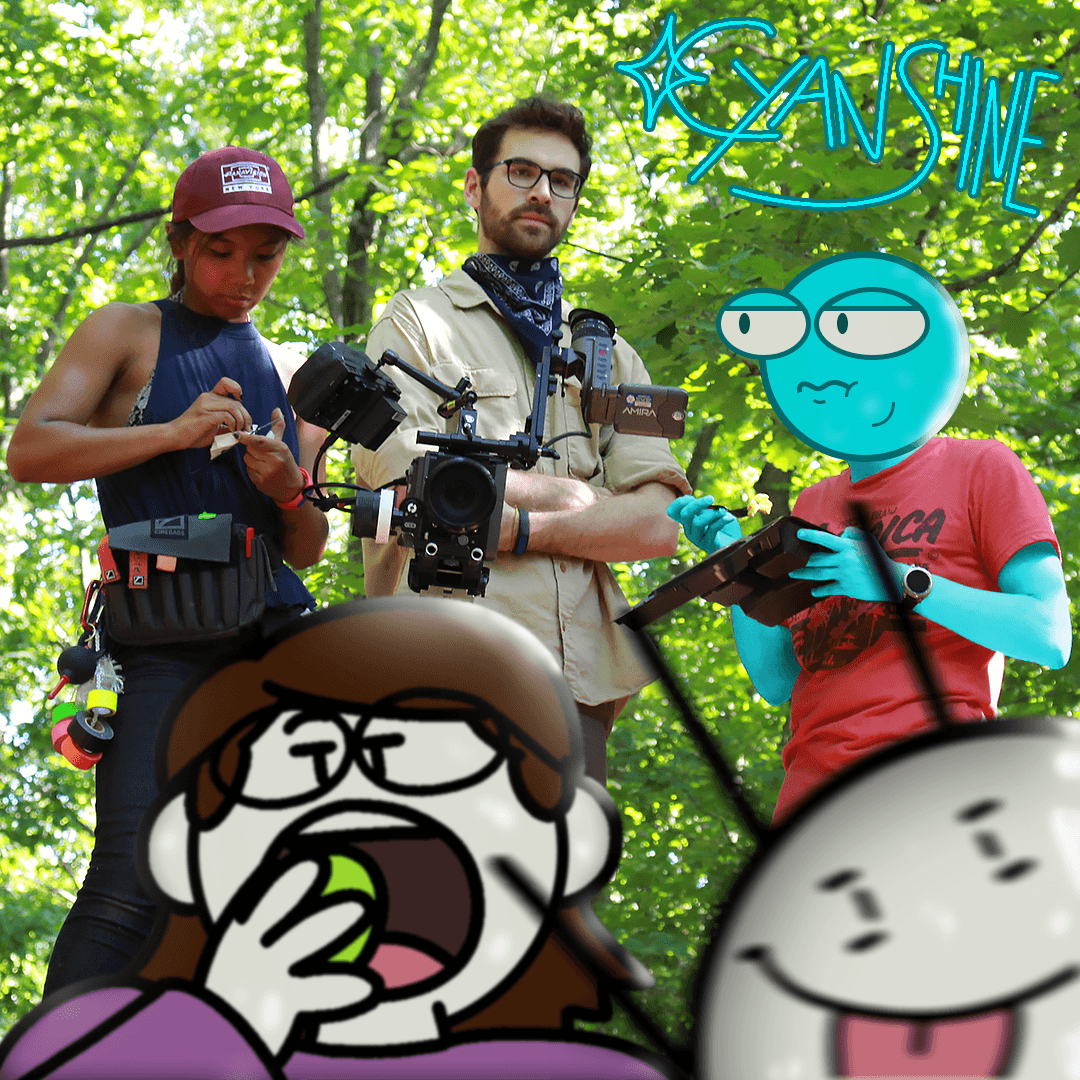
Imagine my delight when we ended up needing only seven days total to film all of the scenes for the entire pilot episode with no reshoots, no incidents, and no bad weather – it was a complete production dream. Some minor rescheduling was needed for crew member availability, but that was about it. I invested a lot of the budget towards cinematography, as my college offered an Arri Amira camera with Cooke lenses for use by thesis students towards their projects – but only through buying special insurance, booking it well in advance, and other restrictions. That said, this was my only chance to use a Hollywood-level camera for the entire production, and so I did just that. Huge credit to Connor Landhauser (@film_boy on TikTok) for being my Director of Photography during all of the intensive scenes we shot in the forest – I can still remember how he ran through the leaf-covered trails, focused on capturing a frantic handheld shot of Derek while lugging the huge Arri camera on his shoulder. These are the moments that really make me commend my entire crew for giving it their all.
Now here’s where I immediately highlight an unfortunate reality of low-budget projects. It is said that you make a film three times – first when you write the script, second when you shoot the scenes, and third when you edit the film together. It’s in this third phase where I had to make the difficult decision to completely remove two fully-shot scenes from the end of the pilot due to time constraints. These scenes would have been really difficult to complete, as they were heavy on animation. To clarify, I was the only editor, the lead character animator, the lead VFX artist, as well as several other roles I didn’t bother crediting myself for – because it was understood that the onus was on me to complete Inbetween.
Despite all of my efforts to save time, I couldn’t complete the pilot before the thesis project deadline came up in 2019. I remember pulling an all-nighter in my college’s editing room, desperately trying to polish INBETWEEN to a watchable state with my VFX compositor’s help – to no avail. The deadline had arrived and I was forced to transfer whatever video file I had to the submission drive, which meant that the animation was unfinished, color grading was off, sound was not 100% polished, among other issues. Even though my teacher recognized the effort and gave me a high grade for my project, I still felt an overwhelming sense of exhaustion and depression for weeks that ended up souring my graduation. It was definitely the lowest point in the whole production, but it only motivated me to keep working on the pilot after college, on my own time.
No longer having access to my college’s high-end editing computers meant that the production was on hold until I could upgrade my own computer. It took a little time to save up money from my job, but I eventually bought the parts I needed to build myself a brand new PC that could handle the footage, animations, and VFX for the pilot. With this new setup, I just needed to add one last component to the edit – the music. For this, I ended up finding Harry Critchley online, a talented composer from the U.K. whose resume includes making music for video games like Cloudpunk. His score gave the pilot the final bit of spice that elevated the overall atmosphere and contributed so much to the cinematic flair I was looking for. The final cut of the pilot was completed in 2020, and after many submissions to film festivals that led nowhere (INBETWEEN was a semifinalist in the 2021 Austin Film Festival, but was ultimately dropped), I decided to release it publicly on my YouTube channel in 2023.
I currently have no plans for INBETWEEN at the moment, as I’ve decided to focus my energies on my career, which is heading in the right direction. While the 2020 pilot of INBETWEEN was an accomplishment I’m happy with, and it certainly helped me get the job I’m happily working in now, the creative side of me yearns for something more. It was a product of many restrictions and compromises that I couldn’t overcome by myself, and if I were to continue this project, I know now that I need a much larger crew – at least 100 people – to execute it properly. While it was fun to wear so many hats, I certainly have my weak areas that I’d rather hire talented artists to take on – especially in the animation department. Right now, I do not have the funds for a whole series that I could fairly pay artists for their work, which is something I firmly support. Until that happens, INBETWEEN shall sit in my pocket. However, I’m also playing around with similar ideas for my YouTube channel, Cyanshine. So we’ll see what the future holds.
To all creatives, I say this: If you find yourself stuck on one path towards fulfilling a goal without the possibility for a secondary path or backup plan to take over – you’ll find yourself remaining stuck, progress will slow to a crawl, and you will be pulling your hair out wondering how you can still execute your one set plan. Allow yourself the flexibility to adapt to whatever life throws at you, and don’t be hard on yourself if things don’t go your way. I think my experience with INBETWEEN taught me a crucial lesson about having those contingencies in place while setting my expectations at realistic and achievable levels. Don’t restrict your creativity, however. If you’ve got a good idea you can’t properly execute right now – write it down, record a voice memo, draw a picture, do anything to capture it for later. Because there always is a “later”, there’s no time limit for working on passion projects, and maybe an idea needs to cook for a little while before it can really turn into something amazing.
Great, appreciate you sharing that with us. Before we ask you to share more of your insights, can you take a moment to introduce yourself and how you got to where you are today to our readers.
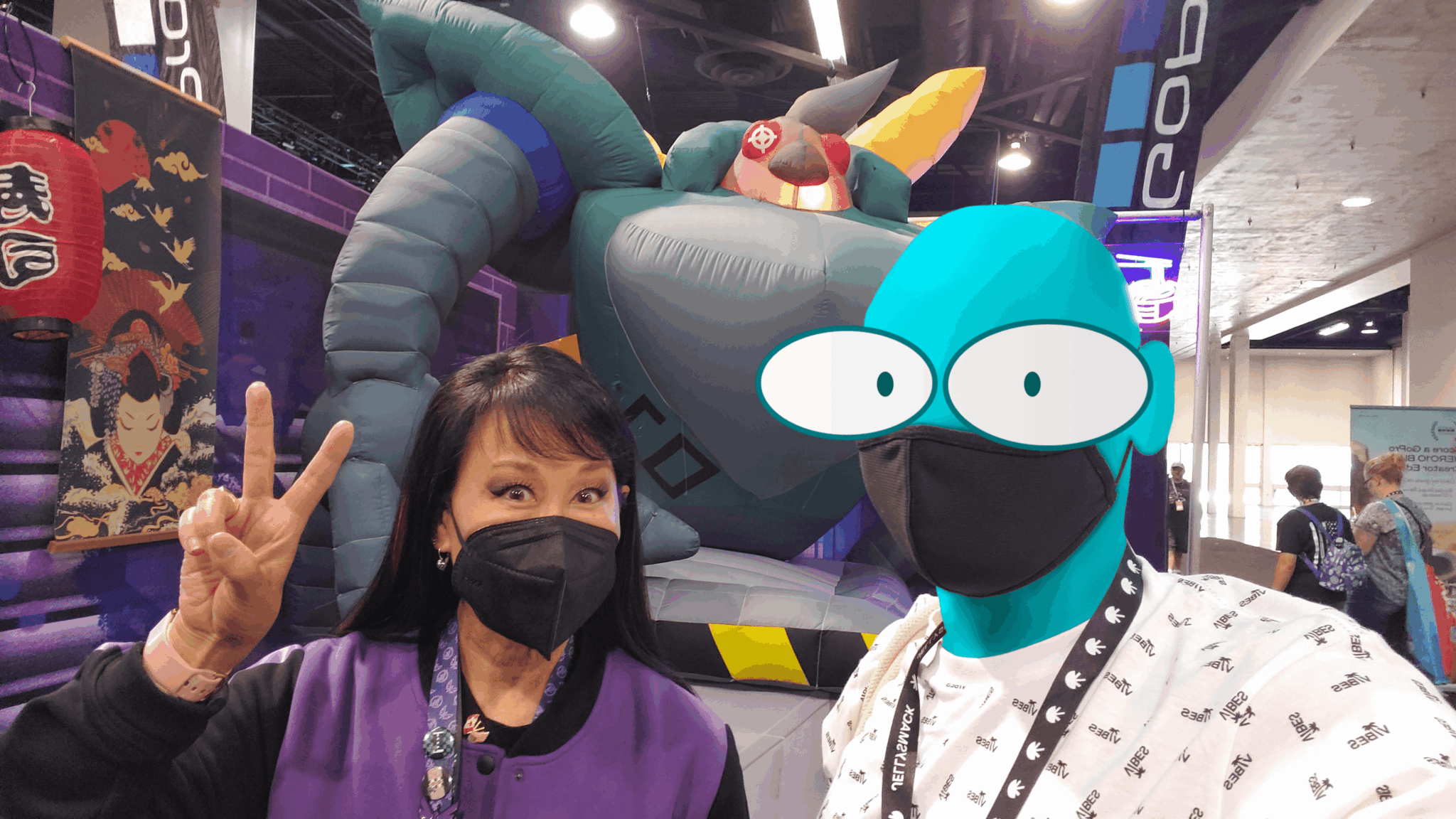
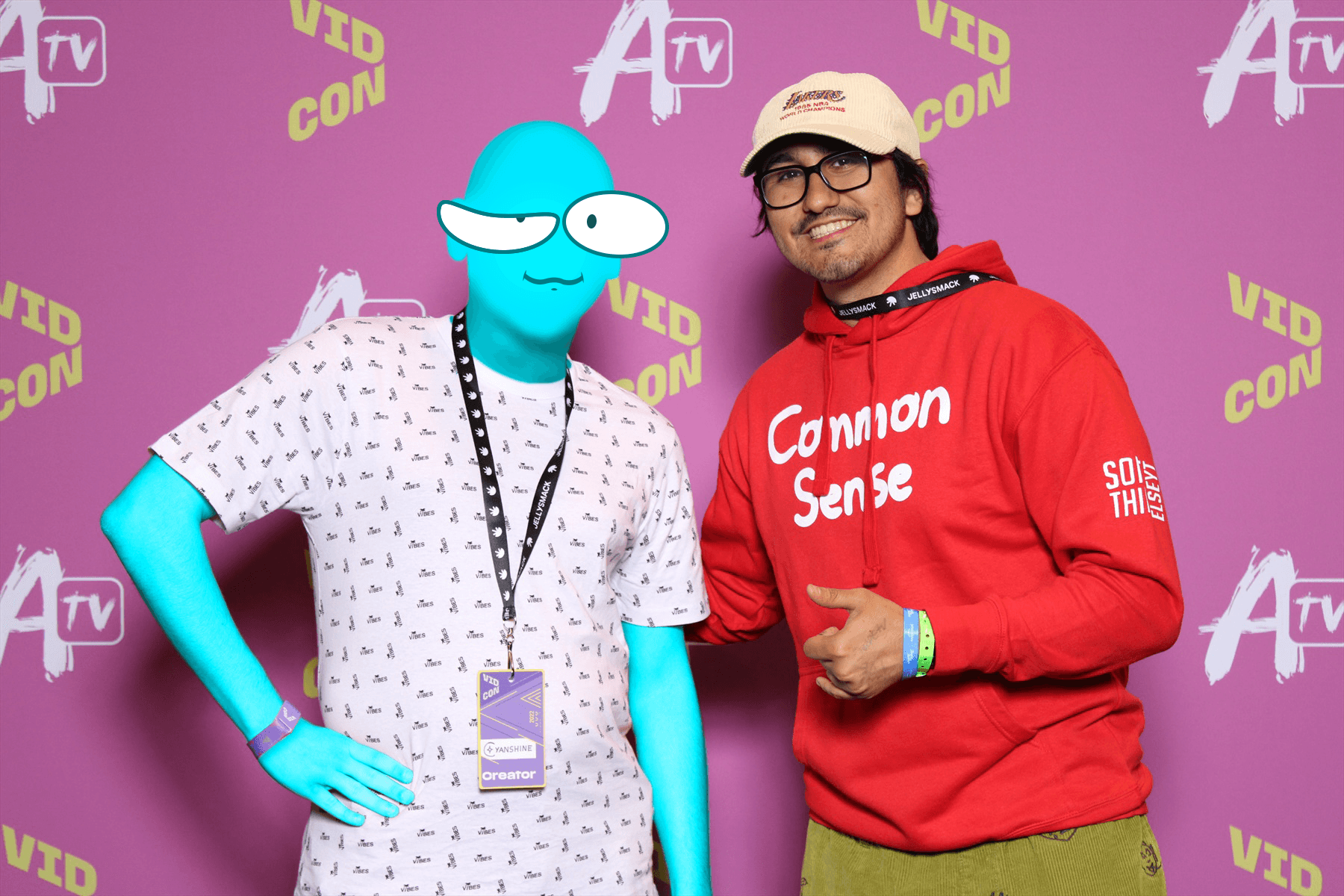
My name is Cyin Kaywise, but you can refer to me as Cyanshine online! I’m a video content creator, artist, and film director who’s been making stuff since I was nine years old. I love making people feel something on a deeper level, whatever that may be, and I hope that my work can capture that essence. Otherwise, I’m a goofy little blue guy making memes and just trying to have some fun! I dearly appreciate my friends, my family, and my supporters for helping me get to where I am in life at the moment. My goal is to shine as bright as I can in whatever time I have left, so let’s do it!
Is there something you think non-creatives will struggle to understand about your journey as a creative?
Creativity is not a clear cut process all of the time. Sometimes a fantastic idea can come at the most inconvenient time, and whatever is a great concept one day might be seen as totally awful another day. This is why any long-term plans have to be fluid for creatives, much to the displeasure of non-creatives who may be used to rigid structures and schedules. Doubly true if that non-creative has some kind of stake invested in the creative to “deliver” on some promise or goal. Non-creatives often only see the end result of a creative’s hard work and not the details of their process, so there is a tendency for them to not empathize with the creative if they run into any setbacks. The more experience one builds, the clearer the actual time and effort for “delivering” becomes for one’s creative journey, whatever their interest or focus may be.
Is there a particular goal or mission driving your creative journey?
Exploration has always been the driving force of my creative journey from day one. I’ve always enjoyed exploring new mediums, new concepts, new technologies, and finding new ways to express myself. Earlier in my journey, it was more of a pursuit of perfection. As I grew up and realized the shortcomings of such a worldview, I relaxed a little and started embracing more flaws here and there. Over time, I realized that only a very small percentage of people caught the flaws I thought were a bigger deal. There is still that part of me that wishes to prove that I’ve mastered something and created a true “masterpiece”, but that’s just further motivation for my exploration now. I think that the journey itself is the real reward.
Contact Info:
- Instagram: https://www.instagram.com/cyanshine_
- Twitter: https://x.com/cyanshine_
- Youtube: https://www.youtube.com/@cyanshine
- Other: Bluesky: https://bsky.app/profile/cyanshine.bsky.social
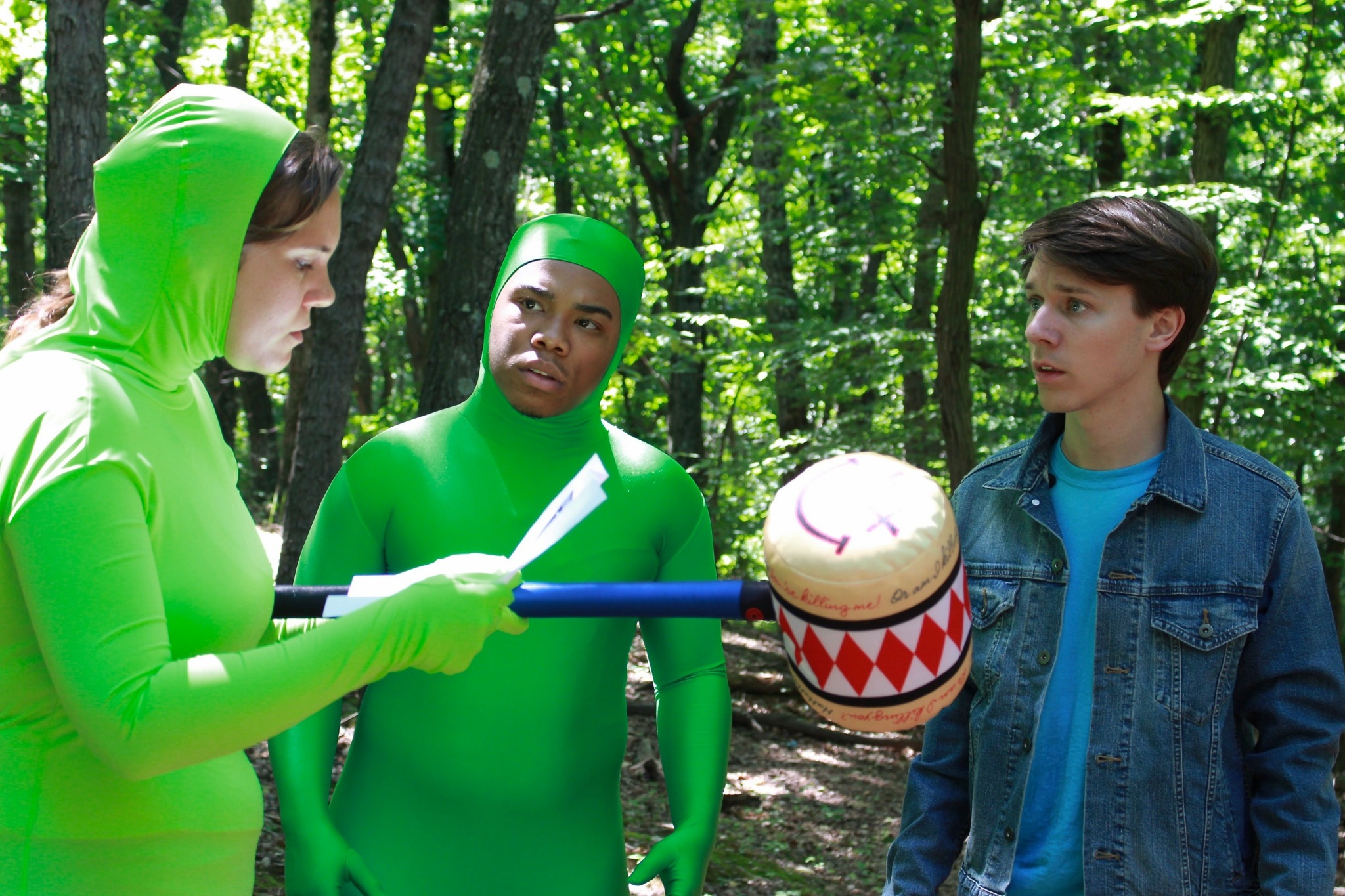
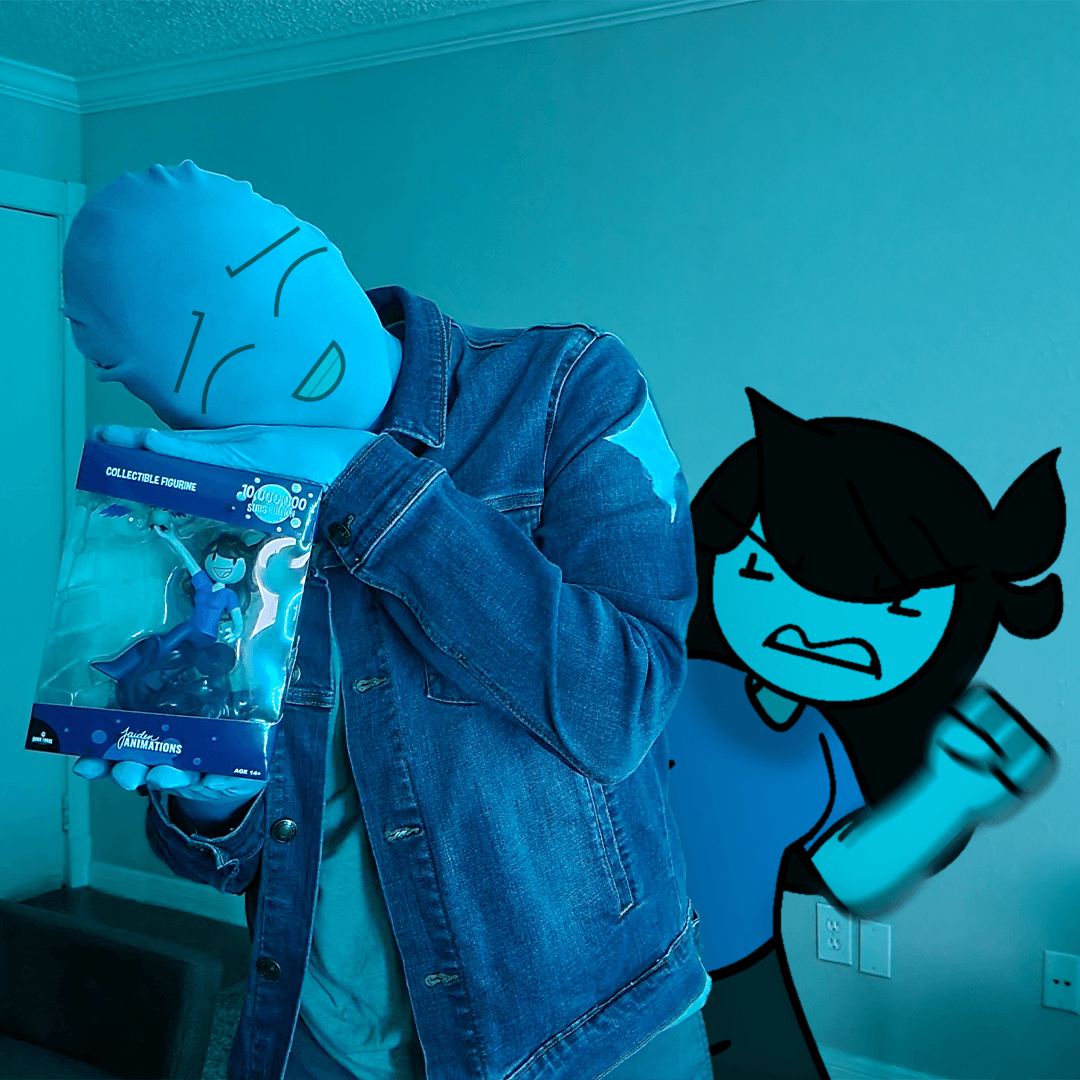
Image Credits
Cyanshine