

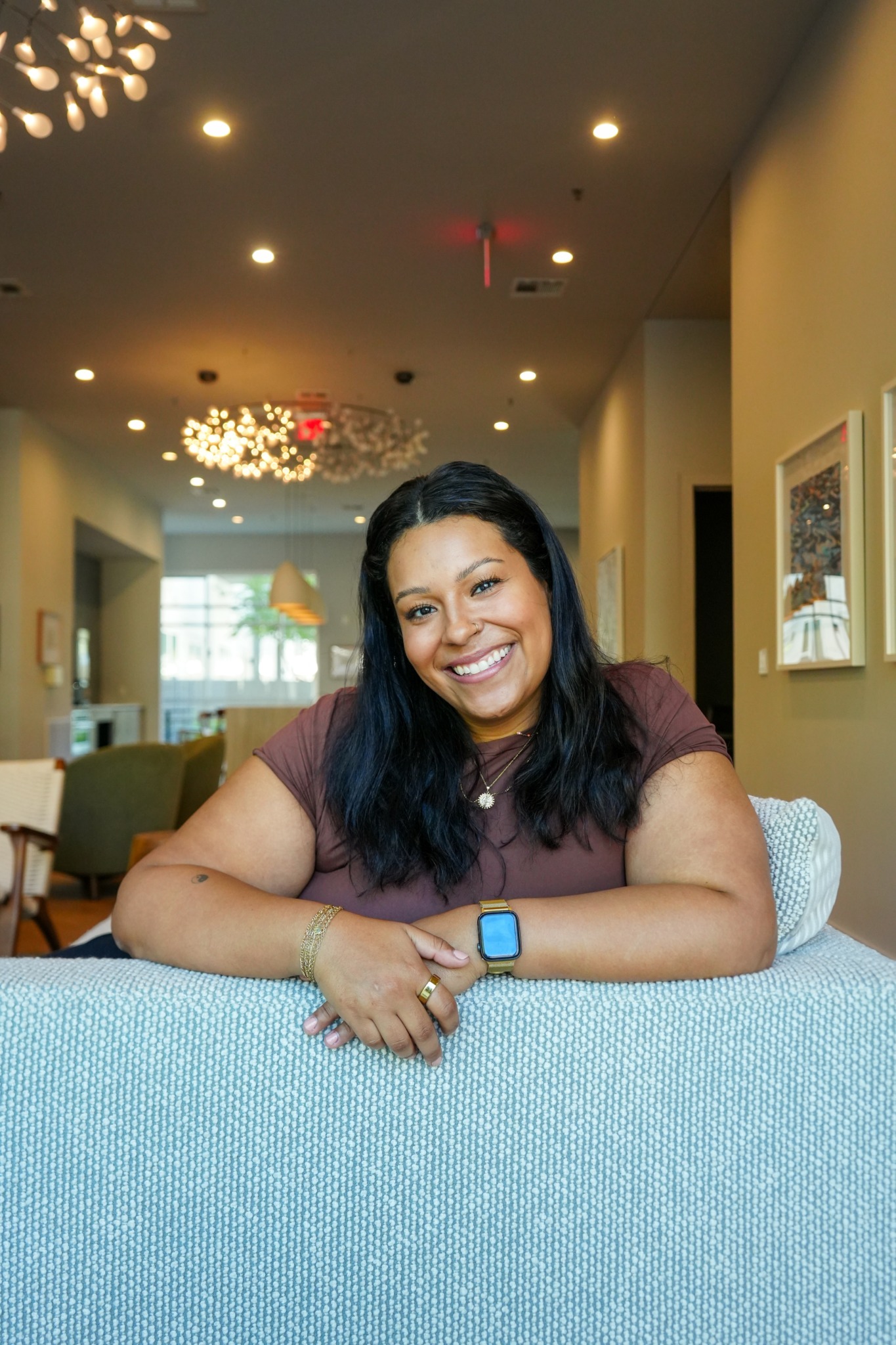

We recently connected with Cristina Vasquez and have shared our conversation below.
Cristina, appreciate you joining us today. We’d love to hear about the things you feel your parents did right and how those things have impacted your career and life.
My parents did a lot of things right, but the foundation was this: they worked incredibly hard, and they loved me and my brother with everything they had. They showed up for us, not just physically, but emotionally. That consistency became an anchor in my life, the kind of steady, reliable presence I now try to offer my clients. I’m also a first-generation Latina, which adds another layer to their impact. My parents immigrated to the U.S. for college, built a life here, and became citizens shortly after. Growing up, I lived in two cultures at once: the one inside my home – warm, expressive, deeply rooted in Latino values and the one outside my home, shaped by American norms and expectations. Moving between those worlds made me adaptable, observant, and deeply attuned to the different ways people experience identity, belonging, and family systems. One of the most impactful things they did was widen our worldview from a young age. We traveled internationally as kids, not for luxury or spectacle, but because they wanted us to see how other people lived, to stay open-minded, and to understand that our way wasn’t the only way. We learned to appreciate different cultures, different stories, and different realities – something that deeply influences the way I sit with clients today. I learned early on that there are countless ways to be human. At home, they grounded us with clear values:
Be responsible. Be humble. Do the right thing. Be kind. Be respectful. Be grateful.
These weren’t rules; they were lived every day in the way my parents worked, cared for others, and contributed to our community. We volunteered often, we gave back, and we were taught that our actions mattered. Their love, their sacrifices, and their values are woven into everything I do – as a daughter, a first-gen Latina, and a therapist. They shaped my worldview, my work ethic, and the way I show up for the people who trust me with their stories.

Cristina, before we move on to more of these sorts of questions, can you take some time to bring our readers up to speed on you and what you do?
My name is Cristina Vasquez (she/her), and I’m a Licensed Professional Counselor Associate (LPC-A) supervised by Julie Burke, LPC-S, based in Austin, Texas, and the founder of The Real Collective. I work with adults navigating anxiety, life transitions, relationship patterns, grief, identity exploration, trauma, self-worth, and the messy in-between seasons where life feels confusing, heavy, or unfamiliar. I became a therapist because I’ve always been drawn to what lives beneath the surface-the emotions we hide, the stories we carry, the patterns we repeat without realizing it. I’ve always been the person people confide in, the one asking the deeper “why” questions, the one curious about the human experience. Becoming a therapist was less of a career decision and more of a natural unfolding into work that felt aligned with who I am at my core. I’m also a first-generation Latina, raised between two cultures-one inside my home and one outside of it. That duality shaped my understanding of identity, belonging, and the ways people learn to navigate different versions of themselves. It made me deeply attuned to nuance, context, and the complexity of people’s stories, which shows up every day in the therapy room. My approach is relational, collaborative, insight-oriented, and rooted in psychodynamic and narrative frameworks. What that really means is: I don’t sit silently and nod. I’m engaged. I’m curious. I’m honest. I’m human in the room with you. I’m not a blank-slate therapist-my clients know my facial expressions give everything away – but I’m intentional, and deeply committed to creating a space where people feel safe enough to be their real selves. At The Real Collective, I provide individual therapy for adults across Texas. The space I create is warm, collaborative, and non-pathologizing, a place to understand your patterns, build self-awareness, and reconnect with a grounded sense of self. My work focuses on helping clients develop insight, clarity, and language for their experiences, along with emotional tools they can carry into their relationships, choices, and everyday life. What sets me apart is my blend of clinical depth and relational realness; I take the work seriously, but the space itself doesn’t feel cold or overly clinical. It feels like an honest conversation with someone who genuinely sees you, will hold you accountable when needed, and cares about your healing. I’m known for my transparency, humor, curiosity, and my ability to make people feel both safe and challenged in meaningful ways. What I’m most proud of is building a practice that feels like an extension of my values: authenticity, honesty, compassion, and connection. I created The Real Collective as an alternative to the traditional medical-model vibe, choosing instead to cultivate a space rooted in truth, nuance, and real human experience. And if there’s one thing I want potential clients and readers to know, it’s this: you don’t have to have it all figured out to start. You get to show up as you are-overwhelmed, hopeful, hesitant, curious, messy-and I’ll be right there with you.

We often hear about learning lessons – but just as important is unlearning lessons. Have you ever had to unlearn a lesson?
A really important lesson I had to unlearn was the belief that I needed to have everything perfectly figured out before taking a leap. I’m very Type A and a planner by nature like I’m talking color-coded calendars, five-year plans, and backup plans for the backup plans. And for a long time, especially as a first-generation Latina who grew up valuing responsibility, structure, and “doing things the right way,” I believed that success required certainty and direction. If I didn’t know exactly where I was going, I told myself I wasn’t ready. But the truth is, the biggest and most meaningful turning points in my life happened long before I had clarity. Moving to Austin, taking what I thought would be a one-year gap before law school, pivoting away from the legal field, starting grad school during a pandemic, becoming a therapist, and eventually opening my own practice – none of those choices were part of the carefully structured plan I created for myself. They emerged from listening to an internal pull, not from sticking to a perfectly mapped-out path. Unlearning my attachment to certainty allowed me to trust myself in a deeper and more honest way. It taught me that clarity often comes after the leap, not before it and that some of the most aligned decisions of our lives start as quiet nudges rather than fully formed plans. Letting go of the need to control every outcome created space for my life to unfold in ways I never could have planned. This lesson shapes the way I work with clients, too. Many people come into therapy feeling like they should have their lives figured out by now, or that they can’t make changes until they’re 100% confident. I remind them (just as I had to remind myself) that growth rarely comes from perfect certainty. It comes from the small, brave moments of trusting yourself enough to take the next step, even if the whole path isn’t clear yet.
Can you tell us about a time you’ve had to pivot?
One of the biggest pivots in my life happened long before I became a therapist. I originally earned my undergraduate degrees in psychology and criminal justice with every intention of becoming a criminal defense attorney. The plan was to take a one-year gap before law school, so I moved to Austin and began working as an office manager at a criminal defense law firm. That “one year” quickly turned into three, partly because of the COVID-19 pandemic, but also because the experience itself quietly reshaped me. Working in criminal defense gave me a front-row seat to people at some of the lowest moments in their lives. While our job was to defend them in court, so much of the work involved emotionally supporting them as they navigated fear, shame, uncertainty, and the weight of their circumstances. I started to realize that what lit me up wasn’t the legal strategy, it was the human connection. I was far more drawn to their stories, their emotions, their patterns, and the complexity of what brought them to that point. In many ways, I was already doing the emotional work long before I had the title. Those three years clarified something I had been afraid to admit: law school wasn’t my path. I didn’t want to argue cases; I wanted to sit with people, understand them, and help them make meaning out of their experiences. I wanted to make a difference in a different kind of way, one that felt more aligned with who I am. So, in 2023, I took the leap and started my graduate program in Clinical Mental Health Counseling at St. Edward’s University. Looking back, I’m grateful for that unexpected detour. It allowed me to discover the intersection between my past work and my current work: supporting people through some of their hardest seasons, holding space for their vulnerability, and helping them find clarity when life feels overwhelming.
Contact Info:
- Website: https://www.therealcollectivetherapy.com
- Instagram: @therealcollectivetherapy
Image Credits
Julia Brown Creative & Photography