

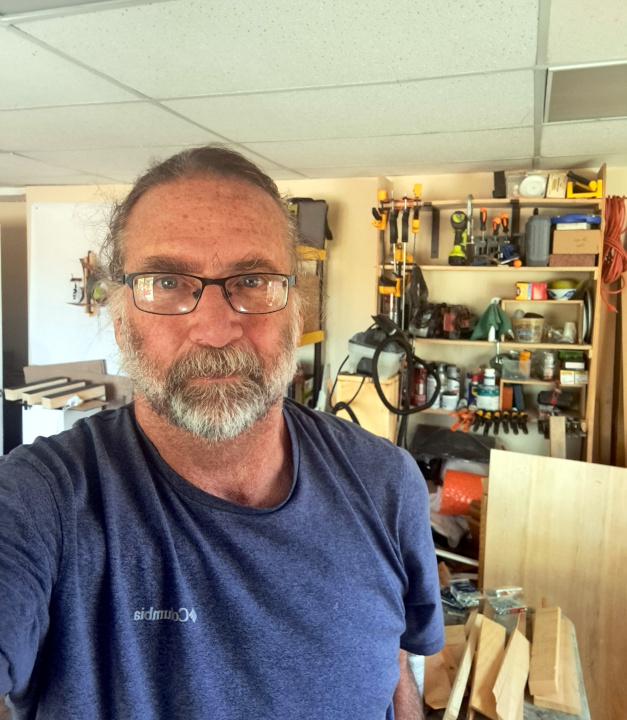

We caught up with the brilliant and insightful Craig Robb a few weeks ago and have shared our conversation below.
Craig, thanks for joining us, excited to have you contributing your stories and insights. Can you talk to us about how you learned to do what you do?
The sculptures I create use a wide variety of materials which translates into a need to have an understanding of a many different fabricating practices. But in making art, craft is more than understanding and knowing how to use the tools. It is also involves problem solving. When a situation occurs, how do we adapt or decide which tool would be best. This education started early for me.
When I was young, I spent a lot of time visiting my family on their farm/ranch. Theoretically, these were vacations but on a farm, there are always chores to be done and we were a good source of cheap labor. This is where I was introduced to tool usage and problem solving.
My first formal introduction into how to use the implements that I would later depend on to make my art was in my Junior High shop class. Here is where I learned how to use the equipment and learned about materials. I mostly remember the metal side learning gas and stick welding and forging techniques used to make my own tools. I still have a screw driver made from scrap pieces. We also learned how to work with wood and all of the saws used in processing it. The teacher also introduced Plexiglas and tin where as teenagers, we made our Ninja throwing stars. (not a class project). We even had to tear apart and re-assemble a small motor.
When I started taking art classes, I was in my 30’s. It had been a long time since those skills had come in to use. To my surprise, the basics of those skill sets came back easily. Fortunately, the instructors I had at UCD were all about teaching the fundamentals. How to use the tools properly and how to improve on those skills. They also wanted to introduce us to as many different materials and processes as was possible. Giving us the chance to find one that we were most comfortable with. This mentality has stuck with me through today. A curiosity of materials that always has me looking to what can be added to enhance or add to my sculptures
After graduating, luck was again on my side being hired by the University of Denver as the Sculpture Lab Technician. The job involved the maintenance and upkeep of the facilities and the equipment and to assist the professor in the classroom. The later roll eventually evolved into one of working closely with the teacher, assisting with and teaching the technical side. Being responsible for their safety, I became more involved with training the proper methods of working with all of the tools. This was so beneficial to me as I was able to continually improve upon my techniques.

Craig, love having you share your insights with us. Before we ask you more questions, maybe you can take a moment to introduce yourself to our readers who might have missed our earlier conversations?
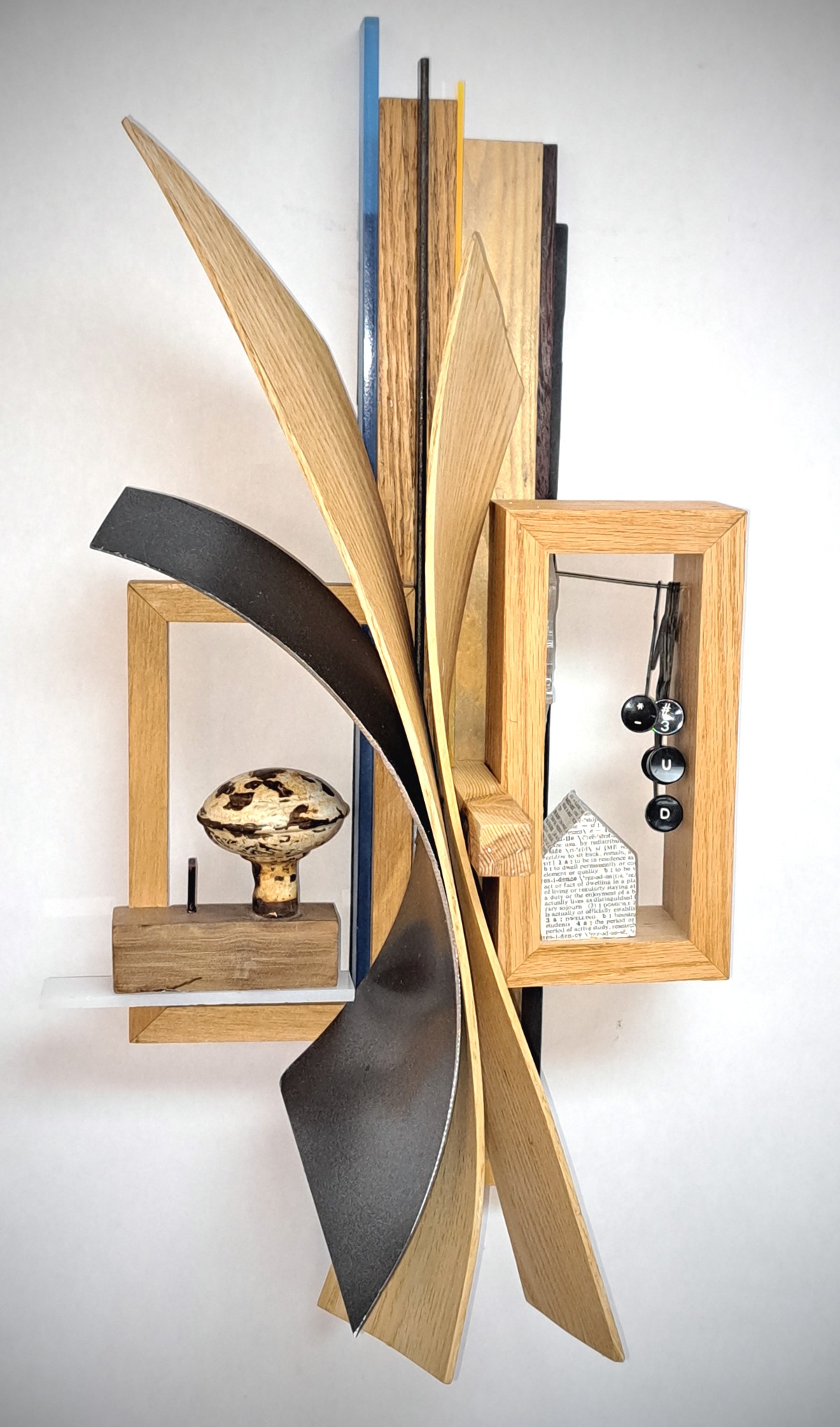
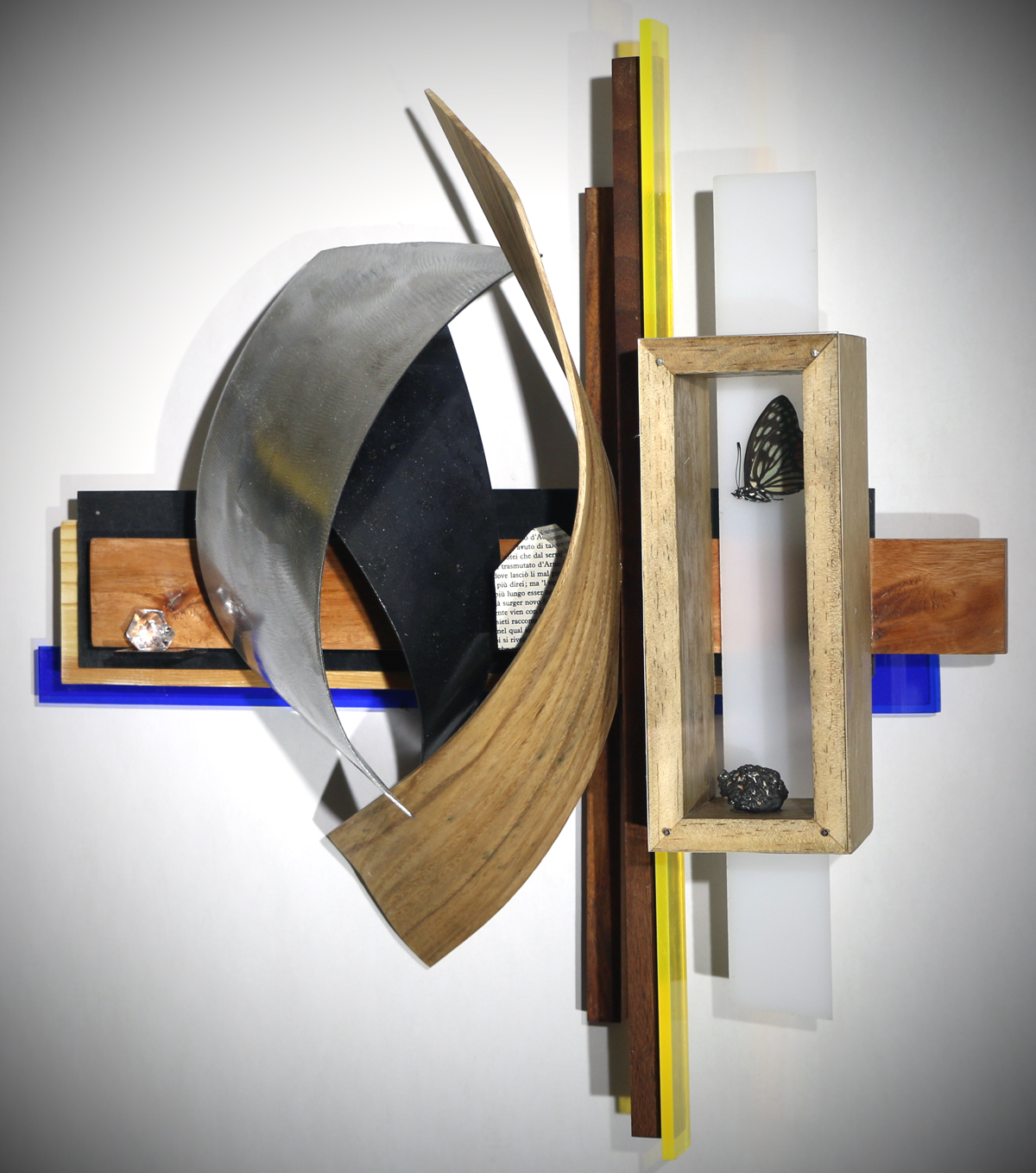
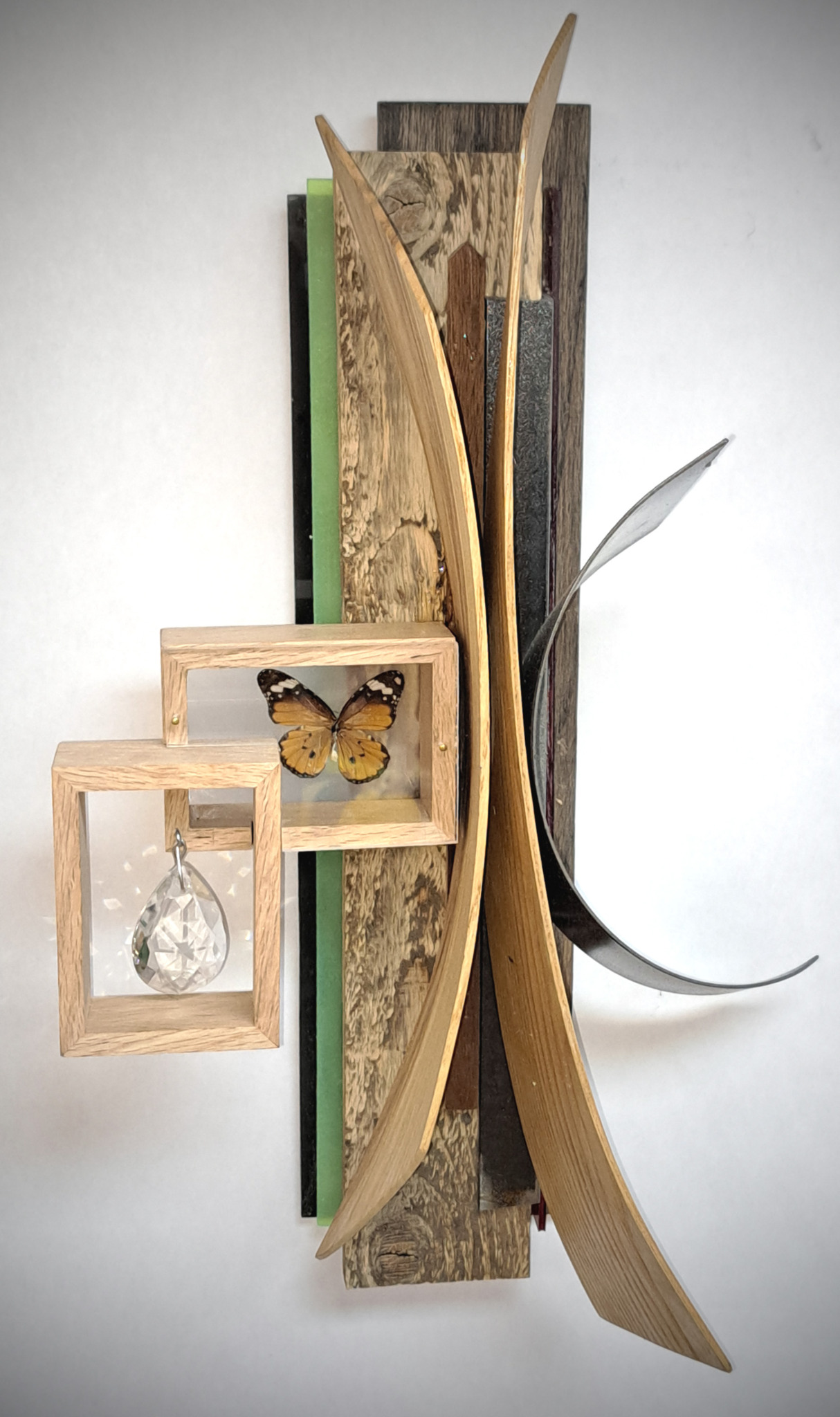
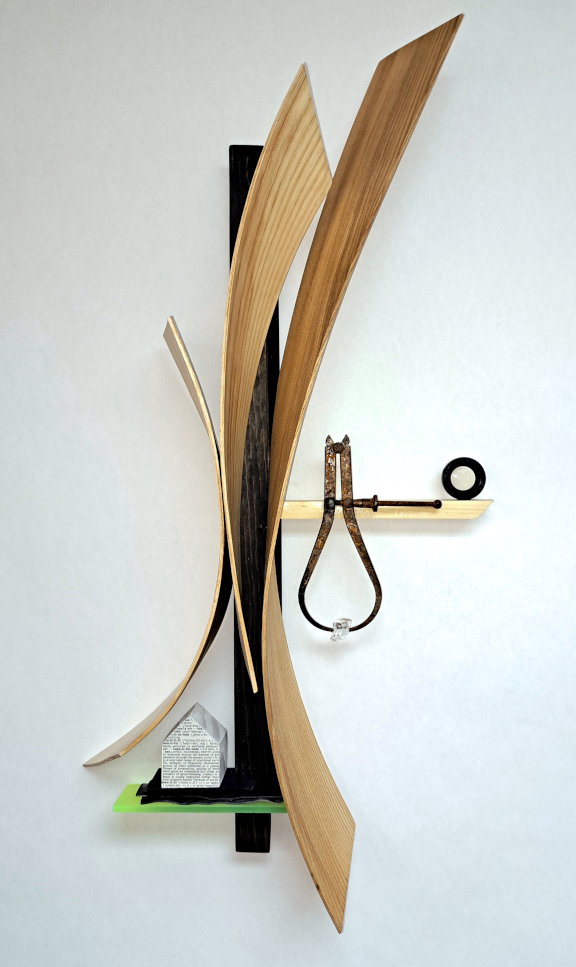
I create wall hung sculptures that incorporate a wide variety of material to express my vision. Initially, they were created with wood, steel and found objects. Being a formalist by nature in how I work with my base materials I always kept things simple and uncomplicated. As my processes developed over the years, I felt the need to enhance the work so I began adding other materials. Like adding a splash of color by integrating acrylics into the sculptures. Learning how to cast in glass and iron to add another dimension to the objects included in the sculptures. Most recently, I built myself a steamer so that curved lengths of wood could be added. I often tell people that I get bored easily so I’m always experimenting and playing with new materials and media. A few years ago, I started playing with video but not in a normal way. Shooting it through optic fibers or up a column of rice paper. I also started playing with led lights just to see what I could do.
I got my start as an artist in my 30’s after returning to University trying to find a new direction in my life. Without any intention of choosing this path, I ran into a group of educators who saw within me a talent for art and they encouraged me to enter the field. After much resistance, I succumbed. It was not an easy choice to make understanding how difficult it is to earn a living as an artist but after working at it for a while, I knew that I had made the right decision. Once I got into it, I knew that there was nothing else out there that would be as fulfilling or rewarding. There was this drive within me to create that couldn’t be ignored. It also helped to have a brother in the arts, watching his struggles to become successful, and seeing his passion for being an artist. I went into it with the understanding that I would probably never get wealthy doing this. Knowing the financial rewards would be limited, I began creating art that I found rewarding and which allowed me to explore and experiment. And, by chance, people seem to like what the sculptures.
One of the more interesting parts of my career has been working with art consultants on projects for corporate offices. For me, the fun yet challenging part on these projects has been the problem solving aspect. How to create something that fits within in their vision and is also something that I am proud to put my name on. Early on, I learned the art of compromise or the ability to find a balance. I feel it is important to let the client have input into the project so that they have a sense of ownership. It can be difficult though if things get to a point where they are dictating their wants. The process then becomes one of manufacturing instead of creating. Luckily, most projects I have worked on, they have trusted my creative vision. My art has been hung in 15 establishments around Colorado ranging from Law offices to Libraries. I also have work in every room in a resort in Breckinridge.
Maybe the most distinguishing characteristics of my work that people comment on or recognize is the quality of my craft. When I first started in art was at the end of a movement that focused on moving away from craft. Where, the idea or concept behind the work of art became more important than the actual technical skill or aesthetic. Most of the people with whom I was taking classes with didn’t respond well to that way of thinking and we kind of rebelled against it. We all came from backgrounds where craft was important. And the teachers we had were very focused on teaching the technical side and yet they also understood and taught the importance and value of content and concept in art. Maybe the best ideal I came away with was that you can have something important to say but if the work is not aesthetically pleasing to look at, who will stop to see your message.

How can we best help foster a strong, supportive environment for artists and creatives?
Support of the arts is important in so many ways
Arts benefit society through their economic impact with tourism, job creation and sales. Having access to them also leads to higher civic engagement, more social cohesion and vibrant communities. They also aid in the forming and expressing cultural identity. It captures the essence of a community’s beliefs, traditions and experiences, preserving them for future generations. Including the arts in our lives helps to make us better people. Art enables us to look deeper into ourselves and learn who we are and what we care about. It connects us to our thoughts, feelings, perceptions and experiences.
We need to foster these by supporting the arts. This may be as simple as buying a work of art or seeing a dance performance or a local play or buying a book of poems. But we also need to start early in our schools. Including the arts in education helps students in how they approach learning and how they process the info. Improving their social skills by letting them express their ideas, build on their observational skills and gaining confidence in themselves. Basically, they help lead to cultivating a well-rounded person. In higher-ed we need access to scholarships, grants and residencies as a means to gain more knowledge about our processes. In society in general, it has been shown that creative activities stimulate imagination, critical thinking and problem-solving skills. Opportunities need to be provided giving us outlets to experience the arts. Museums, festivals, galleries, etc. Probably the easiest way to support artists is to attend their events and enjoy their creations. Strike up a conversation with the artist and ask about their art. And if able, buy a work to enhance your home.
What’s the most rewarding aspect of being a creative in your experience?
I find that the construction part of making my sculpture to be the most rewarding. At one point in my life, I was assisting an artist with their 3d printing projects. Friends would ask what I create for myself on the computer. I would laugh explaining that I am a more tactile artist finding joy in the smell of steel burning, the sawdust in the air or the feel of smoothly sanded wood. I was actually uncomfortable spending that much time on the computer. My creative process is kind of a give and take activity which relies so much on my subconscious. I will place my materials on the work bench and walk away. This allows my mind to resolve the piece. I do this until something tells me that all is right. The materials balance and the objects are telling me a story. At the end of the day, what I finally created is where I find my reward
Contact Info:
- Website: https://craigrobb.com/
- Instagram: craiger3d
- Facebook: https://www.facebook.com/craig.robb.35/
- Linkedin: https://www.linkedin.com/in/craigrobb/
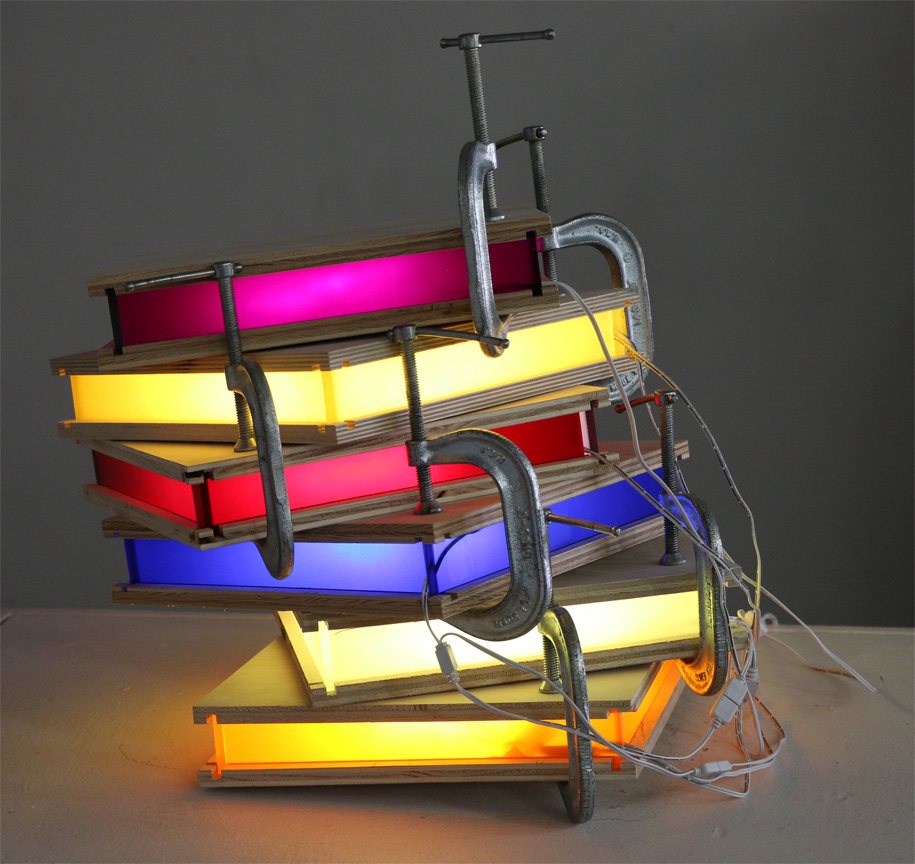
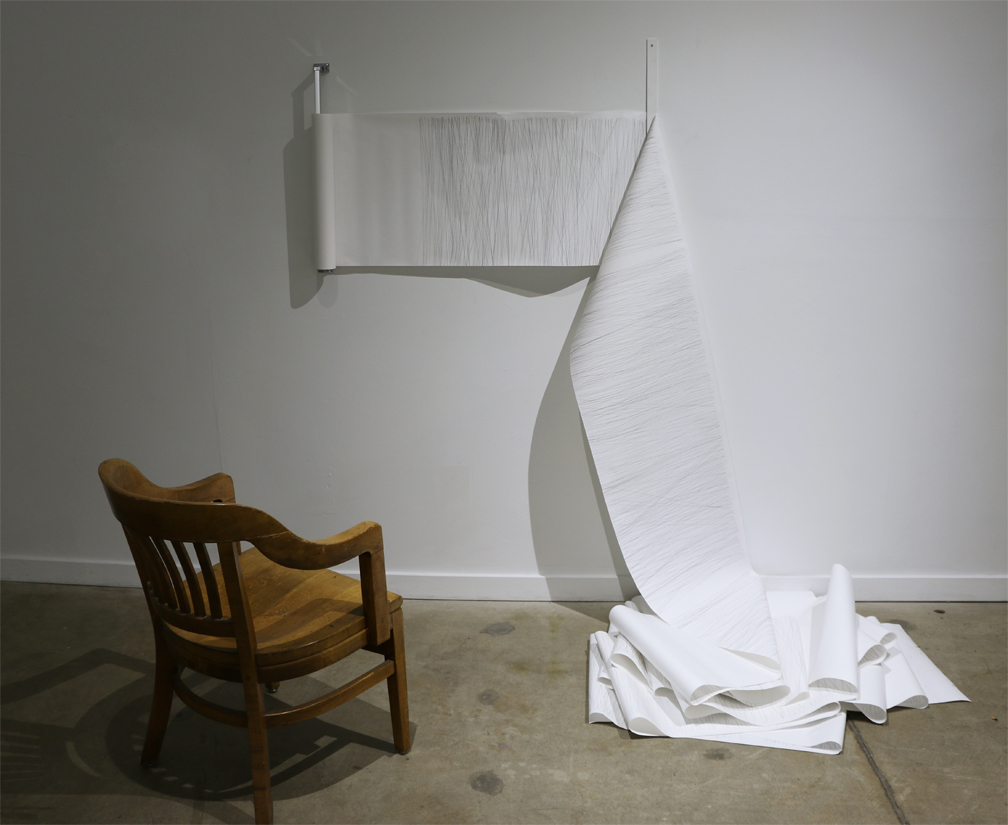
Image Credits
Craig Robb