



We’re excited to introduce you to the always interesting and insightful Colin Oh. We hope you’ll enjoy our conversation with Colin below.
Colin, looking forward to hearing all of your stories today. How did you learn to do what you do? Knowing what you know now, what could you have done to speed up your learning process? What skills do you think were most essential? What obstacles stood in the way of learning more?
I didn’t realize it at the time but I suppose I started learning the foundations of cinematography from as young as I can remember. Growing up with a pair of artists for parents, art was an integral part of my upbringing. My father, a photographer, was my earliest influence. I spent countless hours around his studio, often sneaking his film cameras to experiment on my own. I learned the basics of exposing an image by watching him work and through my own trial and error. Every shot I took—every failure—taught me something new, from the way light behaves to how it interacts with textures and materials. It was in those moments of trial and error that I began to understand the language of visual art.
As I grew older, I decided to formally pursue my passion by studying film at Drexel University. While I had the beginnings of a working knowledge of cinematography through self-study and photography, film school offered a new layer of depth and technical understanding. It wasn’t just about understanding how to light a shot or frame it; it was about learning how to translate a script into a visual medium. Film school taught me that cinematography is as much about collaboration as it is about the technical craft. I found that some of my most valuable lessons came not from textbooks but from working with fellow students—each bringing their own ideas and creative perspectives to the table. Those collaborations gave me a deeper understanding of the power of storytelling through images and the real role of the cinematographer.
The real turning point in my development to become a cinematographer came when I attended the American Film Institute. By that time, I thought I had a decent amount of technical knowledge, but AFI challenged me in ways I hadn’t anticipated. I had to unlearn many of the things I knew and approach cinematography from a completely fresh perspective. The curriculum was rigorous and it opened my eyes to how nuanced cinematography is— the world of cinematography is always evolving, driven by new technologies and innovations in filmmaking. At AFI, I learned that being a great cinematographer means always learning and being prepared to adapt to new things.
Looking back, one thing I think has accelerated my learning process is finding and working with other cinematographers. While my academic journey and personal experiences provided invaluable insights, the hands-on guidance of seasoned professionals has helped me learn tips and tricks to refine my skills more quickly. There is so much to learn from in the classroom, but nothing compares to learning directly from someone who has worked on real sets, who can provide honest feedback and share real-world wisdom.
The importance of having a strong artistic vision and learning how to translate that through light and composition cannot be overstated. A cinematographer must understand how to control their lighting—how to shape it to help tell their story. With composition, you learn how to balance the frame or use different focal lengths to create different looks, but the way you frame a shot has the power to convey meaning, emotion, and subtext. Beyond any technical skills, the most crucial thing to have is taste and learn how to develop it. Cinematography isn’t just about creating beautiful images—it’s about finding your unique voice within the story you’re helping to tell. This artistic sensibility allows you to bring something distinct to each project, to infuse your work with your own perspective on the world.
The path to learning the craft of cinematography isn’t going to be without obstacles. One of the biggest challenges I’ve seen with younger cinematographers is the overwhelming amount of misinformation that exists online. With the rise of social media and online tutorials, it’s become easier than ever for anyone to claim expertise in cinematography, even if they lack substantial real-world experience. There’s a lot of content out there that is well-meaning but misleading, and it can be difficult for aspiring cinematographers to navigate this sea of information. I’ve found that the most reliable way to learn is through direct mentorship and by surrounding myself with professionals who are actively working in the field. It’s easy to get distracted by flashy videos and trends, but true mastery comes from practice, experience, and meaningful feedback.
In the end, the craft of cinematography is incredibly important, but I believe the art of cinematography is what truly sets great cinematographers apart. The technical skills—the knowledge of cameras, lenses, lighting techniques—are the foundation, but they mean little without a unique artistic vision. It’s your taste in films, your love of visual storytelling, and your ability to bring something personal to the table that will allow you to stand out in this field. The more you cultivate your taste, the more you’ll find yourself drawn to specific kinds of collaborators and projects. I’ve learned that honing your taste, cultivating a genuine love for the art form, and finding those with a similar vision is one of the most important steps in creating work that resonates.
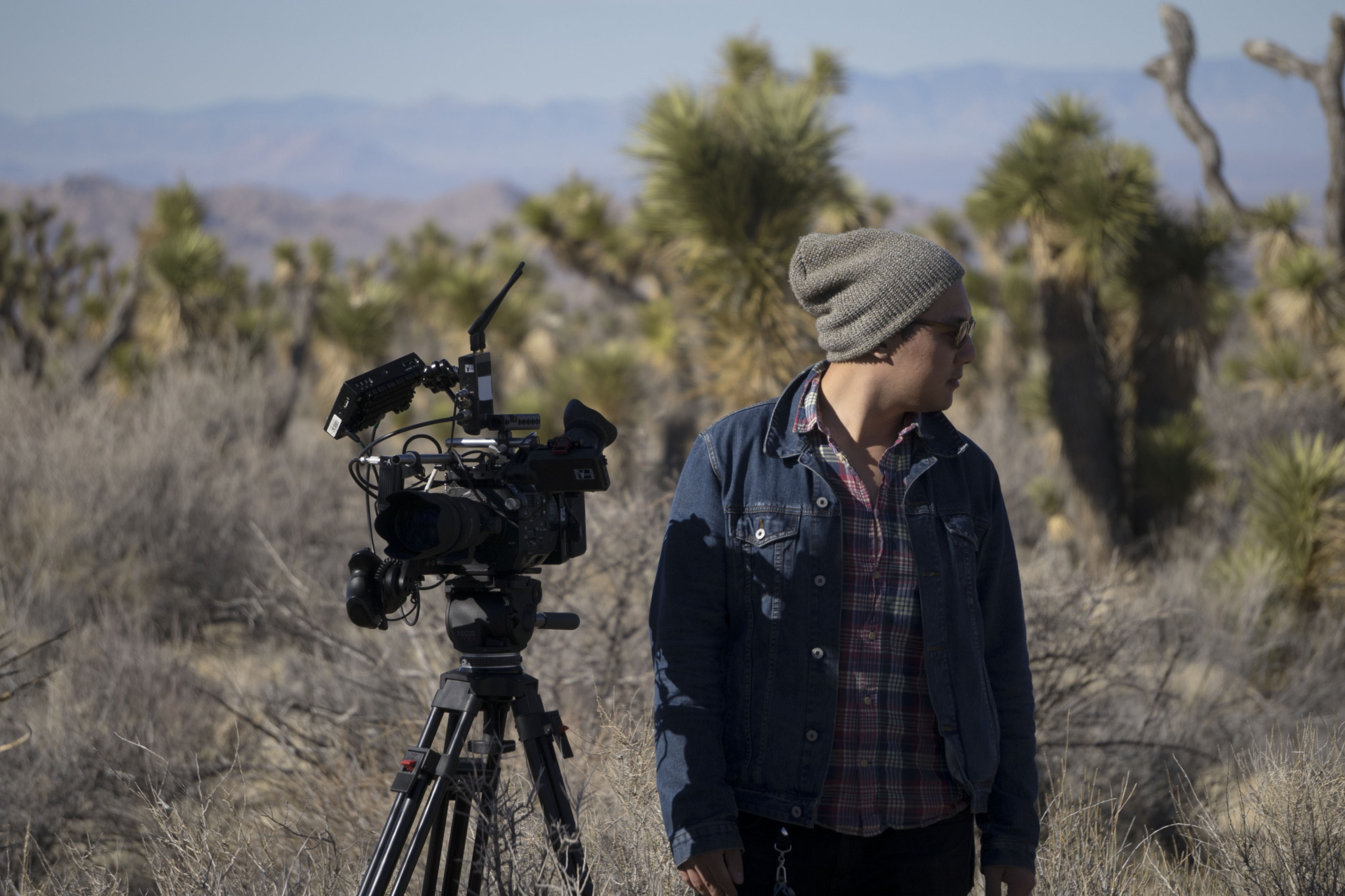
As always, we appreciate you sharing your insights and we’ve got a few more questions for you, but before we get to all of that can you take a minute to introduce yourself and give our readers some of your back background and context?
Hi, my name is Colin Oh and I am a cinematographer based in Los Angeles, but originally from New York and Princeton, New Jersey. As I previously said, I was surrounded by art from a very young age; my mother is also a trained painter, so ultimately, visual storytelling became my passion. Learning from my parents about visual art, I was fascinated by how images could evoke precise emotions and communicate complex ideas. This early exposure to art and being raised in front of the TV, shaped my desire to pursue a career in cinematography and filmmaking.
After studying film at Drexel University in Philadelphia, I moved to Los Angeles to learn more about cinematography on the job and find out what graduate program I would like to attend. After working under graduates from many film schools, I decided the American Film Institute Conservatory was the best place for me to become the best cinematographer I could be. It was at AFI that I truly understood the intersection of technical expertise and artistic vision in cinematography. There, I honed my ability to translate scripts into visuals and discovered the importance of collaboration—understanding that great cinematography doesn’t just serve the director’s vision but elevates it.
Over the years, I’ve had the privilege of working on a variety of projects that span different genres and formats, from narrative features and documentaries to commercials and music videos. My work has been recognized at major film festivals such as Sundance, Tribeca, AFI Fest, and Palm Springs International Film Festival, which has allowed me to connect with other filmmakers and creative professionals who share my commitment to bold, meaningful storytelling.
As a cinematographer, my goal is to do more than just capture beautiful images. My is focus on understanding the heart of a story and how best to bring that to the screen visually. Through lighting, composition, or camera movement, I strive to create an emotional connection with the audience. I pride myself on being a collaborator who works hard to become deeply attuned to the director’s vision while also bringing my own artistic perspective to the project.
What sets me apart in this field is my ability to balance the technical precision required with a strong sense of artistry and sense of storytelling. By being a deeply empathetic person, I can tap into the characters of a film and try to translate that character’s emotions into a visceral visual experience. Cinematography is not just about how a shot looks; it’s about how it feels. The best cinematography is often the one that serves the narrative, helping to shape the emotional journey of the audience. I’ve built my career on the belief that every shot should serve the story and that storytelling is about connection between the filmmakers, the story, and the audience.
I’m especially proud of the relationships I’ve built with collaborators over the years. For me, filmmaking is a deeply collaborative medium, and the best results come when the director and I understand each other’s tastes and can learn from each other. Whether it’s a small indie film or a larger-scale commercial, I approach each project with the same level of dedication and creative energy.
What I want potential clients, collaborators, and audiences to know is that I am passionate about every project I take on. I’m always looking for stories that challenge me to do things I have not done before: technically, visually, artistically. Cinematography is an ever-evolving craft, and I am constantly learning, adapting, and pushing myself to innovate. If you’re looking for a cinematographer who can bring your project to life with both technical skill and artistic vision, I’d love to collaborate and help you bring something truly special to life.

Is there a particular goal or mission driving your creative journey?
I’m dedicated to bringing stories and characters from marginalized communities because I firmly believe there is both cultural and artistic merit to stories that are frequently overlooked or misrepresented in mainstream media. This could encompass someone’s cultural background, sexual identity, gender, or neurodivergence. “I would like to give voice to those who often find themselves silenced or ignored and shine a spotlight on stories that are rarely if ever told. When diverse stories are told authentically, it can, slowly but surely, have an effect on the broader cultural conversation and contribute to shifting societal perspectives, as well as, help more diverse people to be seen on screen.
For me, it’s not just about shooting diverse films for its own sake; it’s about crafting stories that resonate on a human level, stories that reflect the complexity and richness of lived experiences from all walks of life. I want the films I shoot to give audiences a window into lives that may be vastly different from their own, but ultimately remind them of our shared humanity.
In addition, my goal is to collaborate with other filmmakers who share a similar vision and have a unique point of view. I’m drawn to filmmakers who are innovative, unafraid to take risks, and who has an approach to storytelling that I have not seen before. Through collaboration, hopefully we can push the boundaries of what cinema can be, experiment with new techniques, and create films that are not only artistically fulfilling but also helps to hire people of diverse backgrounds in front and behind the camera.

What do you find most rewarding about being a creative?
The most rewarding part of being a filmmaker is the chance to collaborate with exceptionally talented and passionate people every day. Film is a deeply collaborative art form, and each person involved brings a unique blend of life experiences and expertise that shapes the final piece. What I truly cherish about the process is finding and working with a filmmaking family—people who you work with to push the boundaries of creativity, to take risks, and to grow as artists. When you’re surrounded by individuals who not only respect your taste but also challenge you to do your best work, it transforms the whole process of filmmaking into something that’s more profound than a mere job. When the film is finally ready for an audience to experience, it’s incredibly rewarding to see how they respond. Whether it causes laughter, tears, or moments of reflection, witnessing how the story resonates with people makes all the hard work feel truly worth it.
Contact Info:
- Website: https://colinoh.com
- Instagram: https://instagram.com/colinohdp
- Facebook: https://Facebook.com/colinoh
- Other: https://vimeo.com/colinoh

Image Credits
Sara Ross-Samko
Po Wei Su
Marylin Muro