

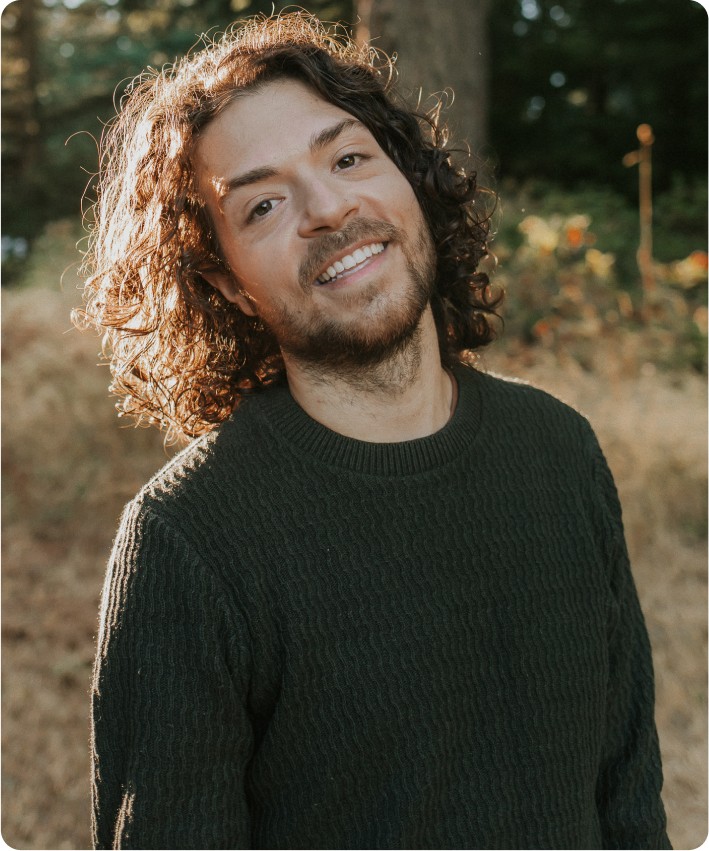

We recently connected with Cody Hays and have shared our conversation below.
Cody, thanks for taking the time to share your stories with us today We’d love to start by getting your thoughts on what you are seeing as some the biggest trends emerging in your industry.
I still don’t know how it happened. I was always the person who could stay calm under pressure. But something about that day sent me over the edge. Maybe it was the combination of all the things I was juggling, or maybe it was the anxiety and pressure I’d been feeling for weeks leading up to it. All I know is that one minute I was fine, and the next I was having a full-blown panic attack.
I remember being in person at our largest event of the season — over 4,000 students attending a leadership conference. On top of designing the event theme, decorating the conference hall (which looked like an empty Costco by the way), marketing the entire event, I was there on the day of capturing footage for NEXT year’s campaign.
I had so much swimming around in my head and felt so much pressure to “get it right.”
Have you ever felt like this? Especially in the past three years…
There’s a lot of pressure on nonprofits to do more with less. We’re asked to be creative, strategic, and efficient with our time, energy, and resources. And we have to stay ahead of the curve while also being responsive to the ever-changing needs of our communities.
Society for Human Resource Management reports that the voluntary turnover rate for nonprofit organizations is 19 percent.
60% of nonprofit leaders report feeling “used up” at the end of the workday.
When asked if they had experienced burnout in the past 3 years, 100% of respondents said yes. (Source: https://givebutter.com/blog/nonprofit-burnout-statistics)
Honestly, probably better to ask who hasn’t.
One thing I wish I’d known then, but boy, I know now – It is ONLY when we take better care of ourselves that we can take better care of the world.
When I was in the middle of that panic attack, I felt the pressure of the world on my chest. I needed that reprieve.
How do you bounce back from burnout as a nonprofit professional? You realize your greatest impact needs to be in YOUR life. It’s the oxygen mask we’ve been needing.

Great, appreciate you sharing that with us. Before we ask you to share more of your insights, can you take a moment to introduce yourself and how you got to where you are today to our readers
Here’s a quick, handy recap of what I do (and who for!)
I work in nonprofit marketing.
I’m most known for maximizing nonprofits’ marketing and streamlining their time.
The folks I can help the most are nonprofit fundraisers, founders, and executive directors.
They typically struggle with being overworked and overwhelmed by marketing.
My most valuable solution for that is the Maximized Marketing Intensive – an experience where in just 2 days, we create your valuable Nonprofit Marketing Toolkit – the powerful assets you need to streamline your marketing and free you to increase impact and funding without losing your mind.
Let’s talk about resilience next – do you have a story you can share with us?
I’ve been freelancing and working from home for over 7 years now.
I was so proud of myself when I finally wasn’t bound to any location to do my job.
“I can work from anywhere in the world!” I’m saying for the 5th time today, as I pulled up my location on Google Maps.
My friends and family were all very impressed (the first time), but little did they know that my relationship with work was about to take a turn for the worse.
My boss loved that I could be available at any time, day or night.
In 2019 I took a trip to Guatemala, proudly showing the world that I COULD work anywhere because I had a remote job.
What naive me didn’t realize is that I had a super unhealthy relationship with work and my employer loved every second of it. 🥴
I was in Guatemala. I had no business working. I should have been exploring But I did it because I could and because I thought it made me look good. (It didn’t)
I was so caught up in proving myself that I didn’t even realize how much I was sacrificing my mental and physical health. It wasn’t until COVID hit that I realized how toxic my relationship with work had become.
What if my boss had modeled the change and actually said, woah woah – Cody’s actually not available? We need to respect his time and energy because if we burn him out, he’s going to leave.
That would have been a really hard conversation for me to have as an employee, but it would have been worth it. Maybe
I wouldn’t have had that panic attack I told you about earlier.
I’m sharing this to show you that we’ve all been taught to value work over our health and well-being. And it’s time for that to change.
The way we work has changed. And it’s time for us to catch up and change with it.
We need to start valuing our time, energy, and health over work. We need to start setting boundaries and saying “no” more often.

We often hear about learning lessons – but just as important is unlearning lessons. Have you ever had to unlearn a lesson?
In 2020, I learned about Parkinson’s law — which states that work expands to fill the available time. And your work will grow in complexity and “importance” based on the time allowed for completion. The simple version: if we have more time, we tend to fill it with busy work.
For example, if we have an entire day to complete a task, we’ll likely find ways to procrastinate and fill that time with other activities. But if we only have an hour, we’ll focus solely on the task at hand and get it done efficiently.
As someone with ADHD, I’ve learned that time blocking is a really beneficial tools to help me focus. But this year, I decided to take it a step further by tracking my time. I started using a tool called Toggl to see where my time was going and how I was using it. And it was eye-opening.
I realized that I was working more than I thought I was and that a lot of my time was spent on unimportant tasks.
From that day forward, I made a conscious effort to be more mindful of how I spent my time.
I started setting boundaries around work and taking regular breaks throughout the day. I scheduled time for self-care, and I communicated my needs to my team. I realized that I needed to make time for my friends, family, and hobbies.
It wasn’t always easy, but it was worth it. Because in the end, I realized that the most important thing is to take care of myself. And when I do that, I can take better care of the world.
You can’t change your time-management habits if you’re not aware of them in the first place. Track where you spend your time at work, and then look for ways to improve your efficiency.
Once you have a general idea of how you spend your time, you can start setting some limits.
For example, if you know that you spend a lot of time checking email, set a limit to only checking it a few times per day. Or, if you find that you’re constantly getting distracted by your phone, make it a rule to put it away during certain periods of the day.
The goal is to be more mindful of how you’re spending your time and to make deliberate choices about where you focus your attention.
About a year into building Marketing Mission, I was feeling burnt out. I was working long hours, had little money, and thought that the only way to achieve better results was to try harder. When I brought this to my mentor, she quickly set me straight.
“You’re not working hard enough?! You’re working too hard,” she said.
I didn’t understand what she meant at first, but I soon realized that she was right. I was so focused on my work that I was neglecting my health, my relationships, and myself.
But, by applying Parkinson’s Law to the way I worked, I was able to change my perspective and take a step back. Instead of trying to do more, I started focusing on doing less and working smarter.
For example, instead of planning campaign strategies for an hour or two each day over the course of 2 weeks, I started doing it in 2 days.
It sounds simple, but it made a big difference.
My brain wasn’t as taxed.
I didn’t feel like I was being pulled in a million different directions.
And I had more time to focus on other areas of my life.
It’s not about working harder, it’s about working smarter. And that starts with understanding how you spend your time. Track it, analyze it, and make changes accordingly.
Contact Info:
- Website: www.marketingmission.org
- Instagram: marketingmissionorg
- Linkedin: https://www.linkedin.com/in/codyhays/