

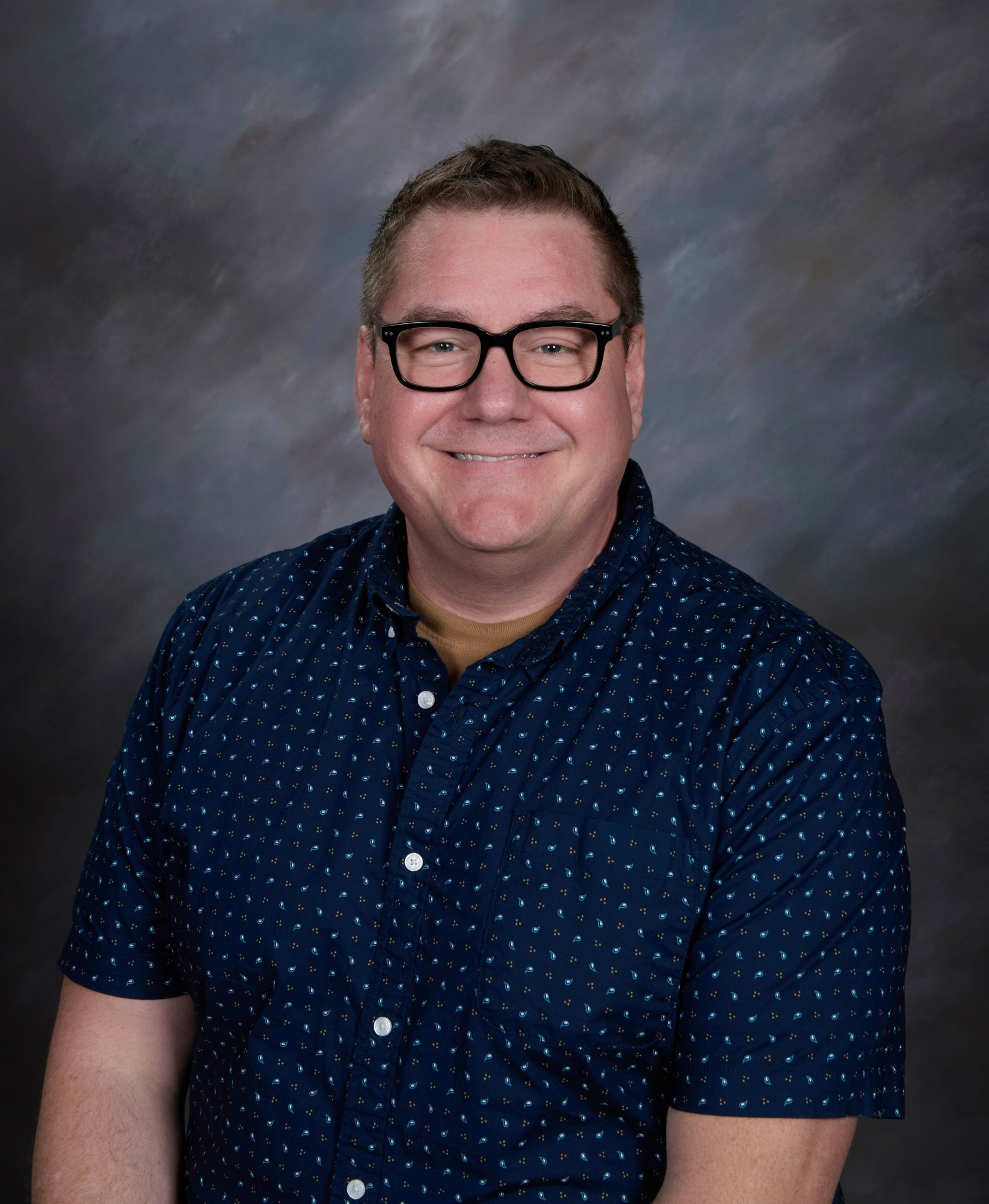

Alright – so today we’ve got the honor of introducing you to Clinton Bosler. We think you’ll enjoy our conversation, we’ve shared it below.
Alright, Clinton thanks for taking the time to share your stories and insights with us today. The first dollar you earn is always exciting – it’s like the start of a new chapter and so we’d love to hear about the first time you sold or generated revenue from your creative work?
Like many posts on various subreddits, I have to say this was not technically my first dollar I ever made, but it was the first time I made “real artist” money in a “real artist” way. Please note that I use those terms in that way because anyone who makes art is a real artist, but let’s face it…there is definitely a large faction of the art world that still puts full stock in the idea of galleries being the most ideal thoroughfare for artists to sell their work.
By the fall of 2008, I was a young aspiring art educator at the University of Southern Indiana. I had taken way too many classes and should have come out the other side a doctor, but that is another story. At this point, I was a few years into an artistic style that I had fallen in love with. I had found a large metal sheet with holes throughout the entire piece – essentially a Roy Lichtenstein background stencil. I was creating acrylic hard-edge paintings in a very pop-art style with those dots prominently spray painted into the background. I was painting everyday objects – those things that sit on a shelf or are tucked into a corner that we all cherish, but that had lost some of the luster. They were the items we begin to overlook except when we need to dust them off. I was cranking out work and loving life.
My painting professor and mentor, Katie Waters, suggest that all of us in the painting class consider submitting work to the upcoming 54th Annual Mid-States Art Exhibition held at the Evansville Museum of Arts, History, and Science. Soaking up all the advice I could from her, I submitted a piece. It was a medium-sized painting of a brown Samsonite train case. As is the case with most artists, I loved the piece, felt it represented some of the best work I’d created up to that point, and knew it would never be accepted. We are our own worst critics, after all.
The juror was Rutger J.B. Brandt who ran the Galerie Mokum in Amsterdam. The focus of that particular gallery was Dutch Realism. Anyone who has anxiously submitted work to a show knows that you do everything you can to predict how the juror will rate the work. With a juror who focused his own business on works that show everyday scenes and people done in beautifully realistic styles, I was certain I wouldn’t get far even if I got in. The joke was on me because it was accepted, it won a a purchase award, and it provided me with an opportunity I would have never expected college-level me to have.
At the opening, Rutger himself came up to me to express how much he loved my piece. As we chatted, he mentioned that the museum was currently in possession of a large number of works from his gallery that would be sent back to Amsterdam at the closing of the show. He suggested that I should drop a dozen of my works in the crate and ship them over. He wanted to display my work in his gallery. To say I was floored was an understatement. As someone from southern Indiana, I was too midwestern to think my work was that good. So, I left the conversation with his card and a feeling someone was just being polite.
That next Monday, I told Katie about the conversation with Rutger and told her how nice it was for him to just be polite. She was just as shocked at my flippant response as I was at the conversation with Rutger. She told me people in that business are never “just nice” and that he meant every word. So, I suddenly became an artist on a mission. I contacted the museum to let them know what had been discussed. They had also been informed of the arrangement, though they were not terribly pleased with the unorthodox nature of putting my works in with the works that originally arrived in the crate, but they also weren’t going to tell the juror they wouldn’t do it. I chose twelve of what I considered my best works, wrapped them like a professional, created a pricing list, and delivered them to the museum. It was an unusual experience – leaving my works at the museum knowing they were about to be shipped more than four-thousand miles away. Would I ever see them again? Would people like them? I just kept picturing my pieces hanging alongside works on par with “The Girl with the Pearl Earring” and it all felt absurd enough to chuckle.
A few months into my artwork being in Amsterdam, I received an email from Rutger than two of my pieces had sold. I was Blanche Devereaux levels of stunned (iykyk) and could not believe that someone or more than one person had purchased my little 11” x 14” hard-edge paintings for $800 each. At most, I had priced much larger work for half that price and could not wrap my little student artist brain around it. For the first time, I felt like a true artist. I was out there selling my work, but beyond that, I was selling work in Amsterdam. Somehow, I had become, by definition, an international-selling artist!
Those were the only two pieces that sold, and the ten remaining works were eventually shipped back in May of 2011, but those first dollars have stuck with me. It provided me with more confidence than I could have imagined and allowed me to take more risks when entering shows. As an art educator, that little story in my mind gives me immense motivation to push my students to go beyond their comfort levels even when they feel certain their art won’t be accepted or won’t win an award.
One never knows when a random gallery owner from another country will see your work and want to briefly represent you. Those dollars were worth so much then, worth so much less now, but important beyond all possible value.

Great, appreciate you sharing that with us. Before we ask you to share more of your insights, can you take a moment to introduce yourself and how you got to where you are today to our readers.
I was just like every other kindergarten student who loved art. What child isn’t going to love playing with all those colorful art materials? But, I think I was different from my classmates because I didn’t just love art at that age. I started telling everyone I met that I wanted to be an art teacher when I grew up. That kept up throughout the middle school years and was solidified beyond reason in high school. I spent so much time with my art teacher, Jane Spencer-Pierce, and whether she knew it or not, she taught me so much about being a teacher, and artist, and an all-around good person. She was the type of teacher I wanted to be when I grew up.
I continued creating art into college. I loved the art classes significantly more than the education classes, and took every opportunity to take any class I could. I believe they had to invent levels of painting classes so that my transcripts would accurately reflect the number I had taken. Eventually, I graduated (twice) and got my first job teaching. It was glorious. I got to explore materials and media alongside students who were also excited by what they learned. I built relationships with the students in the way my former art teachers had done with me. I tried to be there when they were going through frustrations, celebrate with them when things were amazing, and grieve with them when things were horrible. Those connections continue to drive me in my educational career even more than my passion for my subject.
As an artist, I tend to work in those Pop Art, hard-edge styles. We are talking flat hues, color-blocked gradients in value, and those crisp outlines. I joke that my work lives in a hyphenated realm of art-speak. I draw inspiration from former professors as well as artists such as Roy Lichtenstein and Piet Mondrian. My work primarily focuses on a singular, simple subject against a spray painted or hand-painted background of Ben-Day dots. While my newest work focuses on watercolor mid-century houses, the work I was doing in college, and that I sometimes go back to centers around those objects we collect, love, and are precious to us that often end up on a knick-knack shelf and eventually become part of the background of our lives. They are the things we pick up when we are decluttering our space, but can’t quite bring ourselves to drop them into the donation box. I strive for viewer engagement through conversations that begin with “I remember my grandma had one of those in her kitchen…”
As an educator, I am still trying to mould the minds of the youth through exposure to the arts. I follow in the footsteps of my mentors and fight through the groans of the students as they work on their tedious stippling projects. I get excited with them when they learn how painting each blade of grass (so to speak) as opposed to creating a wash of green watercolor results in much better results. When their pieces come out of the kiln and we did not have any casualties, we are all equally pumped about it. Students come to me for advice and guidance about more than art exactly how I sought the same from Spence in high school. I often get frustrated with the direction education is going, the focus on tests and a drive to create something like automatons out of curious and creative young people, but I love what I do and often think about how I’ve reached a point where I feel like I’m doing what I wanted to do when I was a little kindergarten Clinton, playing with markers and talking about being an art teacher one day.

How can we best help foster a strong, supportive environment for artists and creatives?
To use some lingo from my students, society needs to let them cook! The government needs to fully fund the arts, not just the ones they agree with from a political standpoint, but all of the arts. Most artists are out here trying to yank ideas from an overflowing brain and having a government that supports those endeavors are signs of a society that is thriving. We know from history that cultures create the most wonderful things when they aren’t worried about how to pay for a roof over their heads or food for their families. Take care of the people, fund the artist, and marvel and the incredible things that can be created.
On a more local societal level, my message is the same. Let the artists create. Let murals go up, provide spaces for graffiti artists to do their thing. Support local artists by purchasing artwork that isn’t going look like every piece at T.J. Maxx or Target. There are often artists who are not consistently represented by big galleries who sell their work at much more affordable prices and they would absolutely beam at the knowledge their work is being prominently displayed with love in someone’s home. As a society, we will not always agree with what makes art “art” and we certainly won’t agree on what is considered good or bad. But, people, we as a society need to get past trying to shut down the creativity of others because we do not agree with the message or the art itself. As long as a piece is not promoting hatred or animosity towards a group or groups of people in a way that makes it questionable as a hate crime, let the artists do their thing. If I don’t like a restaurant’s food, I do not go there for dinner. I don’t forced the restaurant to change or attempt to cancel them because I do not agree with the way they make their spaghetti. I just don’t order the spaghetti.
We as a society need to allow for those differences and celebrate them in a healthy way. Let. Them. Cook.

Can you share a story from your journey that illustrates your resilience?
Without going into a full educational background, just know that teaching can be a wonderful and terrible thing all at once. We want to be there for the kids, but we also have our own lives to tend to. Creatives often have jobs that take them away from the true form of their passion. Graphic designers can love a commission piece and photographers can enjoy taking senior pictures for people, but those are also the things that often pay our bills. Creatives often have to balance consistent money-making jobs with the work they do to decompress and let out their full creative notions. Somewhere in there has to be the logistics of living – grocery store runs, car tune-ups, various appointments, and just the downtime we all need to get through our day.
I have spent my time as an art educator/artist on a rollercoaster of motivation. When things are going well, I find that my brain allows me the time and space to create work for myself. When things are not going as well, my small studio becomes more of a storage space. I can always judge my own mental health and my desire to create by how much of the surface of my massive desk invisible.
Right now, there are boxes, moulds for candy, past projects, works in progress, a small box of my mom’s Fiestaware, and some random stacks of paperwork. I can see some desk, but work isn’t happening. When I’ve been like that in the past, I had to really dig deep to figure out what was causing that block and what I could feasibly do about it. One of my big hurdles was a job at a school that was no longer serving me or the students in the way it was when I first started. Leaving a job is never easy, but I had to and despite the stresses that caused, my creative side started to kick and paddle a bit more to get to the surface. I am not so naive to think that everyone is able to just leave a job that no longer suits them, so sometimes we have to see what we can actually change. If you are stressed and it is preventing you from being as creative as you like or need, start looking into mindfulness exercises. I have a very close colleague and friend who teaches the art of mindfulness and while the suggestions aren’t always things that help, the fact that any of it can is a big win. I sometimes have to figure out extraneous things I can cut out. I used to spend time on the weekend just wandering Target and other shops, and while I still do that from time to time because it is a nice escape, I’m trying to balance my time a bit more to allow for creation.
I’ve learned I can’t treat art-making as a way to blow off steam, because sometimes the pressure is too great and it surpasses the “let off some steam” stage to a full-on bleeding of the valves. I have to give time to it. It can’t be an afterthought. These days, many people are exhausted and just want to exist after doing all the things they need to do. I get that. And I am right there with you. But, choosing to redirect a small portion of that existence time to producing something, anything creative, helps immediately and can allow for a more consistent and less bombastic flow.
Contact Info:
- Instagram: docthaddeus
- Other: I have so little social media presence. Even my IG is mostly my baking with artwork sprinkled in, so feel free to use it if you’d like.
I do primarily use [email protected] for commissions and inquiries.
