

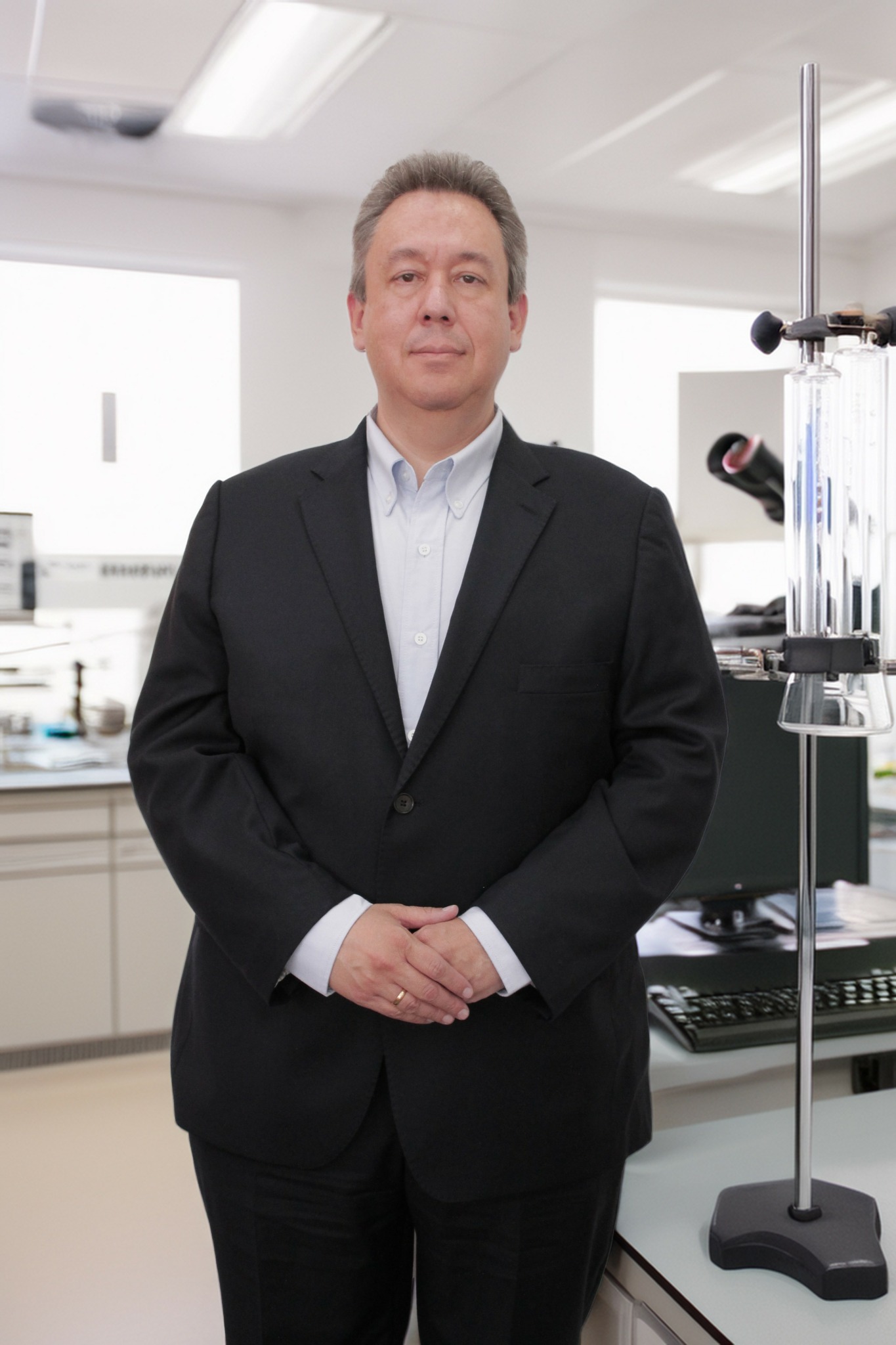

We were lucky to catch up with Claudio De La Rosa recently and have shared our conversation below.
Claudio, thanks for joining us, excited to have you contributing your stories and insights. How did you come up with the idea for your business?
Our business story is a little bit long to tell. There are a lot of pages and a lot of juice to squeeze. Starting at a small desk some 22 years ago, and now running one of the most important businesses in the life science research equipment distribution industry in the region, serving Latin America, the Caribbean, and the USA, is quite a long journey to explore, still a small business.
Back in 2003, I had a deep concern. I could see life science in the region trying to expand, but without the required research tools. Communicating with manufacturers, dealing with imports, and accessing the most up-to-date technology were challenges for most researchers in the region. I took careful notice of the situation, and there I also found an opportunity.
This is one of those cases where we apply a long-known saying: to put your money where your mouth is. Not as a challenge, but as a true philosophical view: to trust your instincts.
Fast forward, we are now pioneering the incorporation of AI technology into cognitive neuroscience and cognitive evaluation, introducing new concepts and always giving back to the community that we came from: the academic one.

As always, we appreciate you sharing your insights and we’ve got a few more questions for you, but before we get to all of that can you take a minute to introduce yourself and give our readers some of your background and context?
Very well. I am Claudio de la Rosa Munar. I am a psychologist, a psychology professor, a neuroscientist, and an entrepreneur.
I started my professional life working in cognitive rehabilitation with children, evaluating and providing cognitive training for kids with learning disabilities and school-related issues. That experience was very important for me because it allowed me to understand, very early in my career, that psychology is not only about theory or diagnosis. It is also about tools, methods, measurement, intervention, and the ability to create practical solutions that can improve someone’s life.
Working with children and families also gave me a very direct view of the real-world challenges faced by clinicians, educators, and researchers. Many times, the need was clear, the talent was there, and the intention to help was strong, but the available tools were limited. That idea stayed with me.
Soon thereafter, I returned to one of the things I liked the most: academic life, teaching and doing research at the university level. The university environment has always been very important to me because it brings together curiosity, critical thinking, experimentation, and the possibility of forming new generations of professionals. As a professor and researcher, I had the opportunity to work with students, colleagues, laboratories, and research projects, and that reinforced my interest in the connection between psychological science, neuroscience, and technology.
Right there, when teaching psychology, I returned to one of my earliest career paths: psychology labs. From there, I rediscovered the challenges and problems researchers have. Some of those challenges are conceptual, methodological, or theoretical, but many are also very practical. One of the most important and concrete problems was a simple one: obtaining the best tools available for research to take place.
In many countries in Latin America, researchers, universities, hospitals, and laboratories often have excellent ideas and highly capable professionals, but they do not always have easy access to specialized scientific equipment, cognitive testing systems, neuroscience tools, behavioral research technologies, or reliable technical support. Communicating with international manufacturers, importing equipment, understanding specifications, implementing systems, training users, and maintaining technology over time can become a major obstacle.
That is where I saw both a problem and an opportunity.
I realized that our region needed more than a supplier. It needed a bridge between the scientific community and the technologies that could help it grow. Researchers did not simply need someone to sell them equipment; they needed someone who understood their language, their experimental needs, their institutional limitations, and their long-term goals. They needed someone who could help them choose the right tools, implement them correctly, train their teams, and provide support after the sale.
That realization became the foundation of our business.
Through De la Rosa Research S.A.S. in Colombia and De la Rosa Research and Design LLC in the United States, we provide specialized scientific equipment, software, consulting, training, and development services for institutions working in psychology, neuroscience, life sciences, cognitive assessment, cognitive rehabilitation, behavioral research, aviation psychology, human factors, education, and healthcare-related research.
Our work includes the distribution and support of advanced technologies from international manufacturers, but also the development of our own products and solutions. We work with research laboratories, universities, hospitals, rehabilitation centers, aviation organizations, government institutions, and private companies that need reliable tools to measure, evaluate, train, or study human behavior and biological processes.
In practical terms, we help our clients transform projects or ideas into solutions. A university may want to create a new psychology laboratory. A rehabilitation center may want to implement cognitive training. A researcher may need to design an experiment in perception, attention, memory, or motor behavior. An aviation organization may need to evaluate cognitive performance. A healthcare institution may need tools for cognitive screening or rehabilitation. In each case, our role is to understand the need, identify the right technology, support the implementation, and help the institution use that technology effectively.
What I feel sets us apart is that I come from the scientific and academic world myself. We are not only a commercial organization. We understand research questions, experimental design, cognitive assessment, neuropsychology, and the practical demands of laboratories and clinical environments. At the same time, we understand logistics, distribution, technical support, training, and product development. That combination allows us to serve as a true partner for our clients.
I am very proud that our work has grown from a small desk more than two decades ago into a company that now serves Latin America, the Caribbean, and the United States. But I am even more proud that we have maintained our original purpose: helping science move forward by making technology more accessible, understandable, and useful.
I am also proud of the fact that we continue to give back to the academic community that shaped us. Since 2007, I have been a member of the Institute of Neurosciences at Universidad El Bosque, in Colombia, and since 2021 I have served formally as an Ad Honorem Professor there. That strong connection reflects a very important part of who I am. I believe that entrepreneurship in science should remain connected to education, research, and social impact.
Today, our work is also moving strongly toward the incorporation of artificial intelligence into cognitive neuroscience, cognitive evaluation, and psychological testing. This is one of the areas that excites me the most because I believe AI can help us create more accessible, culturally sensitive, and flexible tools for evaluating cognition and supporting human development. We are interested in technologies that can serve diverse populations, reduce barriers, and help institutions make better decisions based on objective data.
What I want potential clients, collaborators, and readers to know is that our brand is built on scientific curiosity, trust, persistence, and service. We are interested in long-term relationships, not just transactions. We want to help institutions build capacity, improve their processes, and access tools that can genuinely support their work.
My professional journey has moved through cognitive rehabilitation, teaching, research, laboratory work, business development, and technology innovation. But all of those stages are connected by the same idea: science needs tools, and tools need people who understand how to use them meaningfully.
That is the essence of our work. We build bridges between scientific needs and technological possibilities.

Okay – so how did you figure out the manufacturing part? Did you have prior experience?
This is an interesting question because our journey into manufacturing was not something that happened all at once. It was a process that grew from experience, necessity, curiosity, and a very strong sense that some things could be done better.
A long time ago, I attended an SBA meeting that was open to the public. One of the main speakers said something that stayed with me. He said that if you have an idea, but it does not really move you, maybe it is just that: an idea. But if that idea wakes you up in the middle of the night with an urgency, the kind that says, “I have to do this. I have to go into this business, or to solve this practical problem with a new product or developmet ” then you should probably pay attention to it.
That thought has accompanied me for many years.
Our journey into manufacturing started with a combination of knowledge, ingenuity, and determination. As I have mentioned before, our company originally started with the distribution of scientific and research tools. We represented and distributed technologies developed by other manufacturers, and our role was to connect those products with researchers, universities, laboratories, and institutions in our region.
But over time, something important happened. We began to notice that some tools were not available anymore, some were insufficient for the needs of our clients, and others could clearly be improved. That opened a small window for us.
Back in 2010, our company was still completely focused on distribution. Around that time, one of our vendors discontinued some of the products we were successfully selling in our market. For many people, that could have been seen only as a problem. For us, it became an opportunity. With their “blessing,” we started developing new tools inspired by those needs, updating the technology, modernizing the systems, and transforming discontinued products into improved, top-of-the-line versions.
Starting production was not easy. We did not simply wake up one day as manufacturers. We had to learn, organize, test, fail, correct, and improve. We moved into a model where many processes were outsourced to expert companies. That was a key decision. Instead of trying to do everything ourselves, we focused on what we knew we could do best: design, integration, assembly, testing, quality control, creativity, and scientific functionality. For the production of many components, we relied on specialized vendors and expert manufacturers who could deliver high-quality results.
That model allowed us to combine the best of both worlds. We could remain close to the scientific and functional design of the products, while also benefiting from the technical precision of companies specialized in manufacturing components. In other words, we focused on quality, ingenuity, creativity, and design, while building a network of suppliers and collaborators capable of helping us turn ideas into real products.
One story that represents this journey very well happened after some of our first products were finished and ready to deliver. I looked at our team of engineers and designers and said, “The next one will be even better.”
I am aware that those words initially had a strong impact on them. After all, they had just put a lot of work, effort, and pride into finishing those products. But with time, that sentence became part of our philosophy. It did not mean that the current product was not an amazing one. It meant that every product is part of an evolution. Anything can be done in a better way. Every version teaches you something. Every design can be refined. Every solution can become more elegant, more reliable, more useful, or more meaningful.
I can honestly say that every single product we have made carries that philosophy inside it. Each one represents our best effort at that moment, but never a final destination. The next one can always be better.
That has been one of the most important lessons we have learned about manufacturing: making a product is not only about producing an object. It is about creating a process of continuous improvement. It is about listening to users, observing how the product behaves in the real world, identifying small weaknesses, and having the humility to improve them. Manufacturing requires discipline, but it also requires imagination and a lot of persistence.
Today, we apply that same philosophy to our new developments. Our path toward the development of artificial intelligence tools for cognitive and psychological evaluation also comes from that same place. Even before starting my company, I was already pointing out the importance of artificial intelligence in psychology and the role it could eventually play in assessment, research, and cognitive science. But again, putting our efforts where our mind is, it’s not an easy endeavor.
Now, many years later, that early intuition continues to guide us. We are applying the same mindset we developed in manufacturing: detect a real need, understand the limitations of existing tools, design something better, test it, improve it, and continue moving forward.
For us, manufacturing has never been only about machines, parts, or assembly. It is about problem-solving. It is about transforming a scientific need into a practical tool. It is about having an idea that wakes you up in the middle of the night and then having the discipline to turn that idea into something that others can use.
That is how we started, and that is how we continue to work: reinventing ourselves, finding better ways to do things, and moving forward whenever an idea is exciting enough or a need is clear enough to demand a solution

Any advice for growing your clientele? What’s been most effective for you?
The most effective strategy for growing our clientele has been very simple, but also very demanding: being honest, ethical, and sincere in everything we do.
In our field, we feel that clients are not only looking for a product. They are looking for guidance, trust, technical knowledge, and long-term support. Many times, they are making important decisions for a laboratory, a university, a hospital, a research project, or a clinical program. Those decisions can affect budgets, timelines, publications, services, and sometimes even the future direction of an institution. Because of that, we believe our responsibility goes far beyond selling.
Our clients know that when they come to us, they will receive an honest answer. Sometimes that means recommending one of our own products or one of the technologies we represent. But sometimes it also means telling them that another tool, even one we do not provide, may be better suited for their needs. That ethical view is part of our foundation. We would rather lose a sale than lose the trust of a client.
The market we serve is specialized and relatively small. People know each other. Researchers talk to other researchers. Universities share references. Clinicians exchange experiences. Laboratories ask one another where they purchased equipment, who provided support, and who can be trusted. In that kind of environment, reputation is not something abstract. It is one of the most valuable assets a company can have.
For that reason, honesty and ethics have been the best tools not only to attract new clients, but above all to maintain those clients over time. I do not see our clients as one-time sales. I see them as long-term relationships. Many of them return to us because they know we will give them a sincere answer, even when the answer is not necessarily the most profitable one for us in the short term.
That approach has created something very valuable: trust that travels by itself. Clients return, and they also share our name whenever they can. They recommend us to colleagues, institutions, students, researchers, and decision-makers. In many cases, a new opportunity begins because someone says, “Talk to them. They will give you an honest answer.”
Maintaining a good reputation is hard. It requires consistency, patience, and discipline. You cannot be ethical only when it is convenient. You cannot be sincere only when the sale is easy. You have to protect that reputation every day, in every conversation, in every quotation, in every technical recommendation, and in every problem that needs to be solved.
In the end, the best growth strategy has been the simplest and most traditional one: word of mouth. Or as I like to think of it, the “Words about you.” When customers trust you, they bring new customers. When they feel respected, they return. And when they know your advice is honest, your name becomes part of the conversation.
That has been, without question, our most effective way of growing.
Contact Info:
- Website: https://www.delarosaresearch.com
- Facebook: https://www.facebook.com/designdlr
- Linkedin: https://www.linkedin.com/company/de-la-rosa-research/


Image Credits
Alejandra Cruz @ DE LA ROSA RESEARCH