

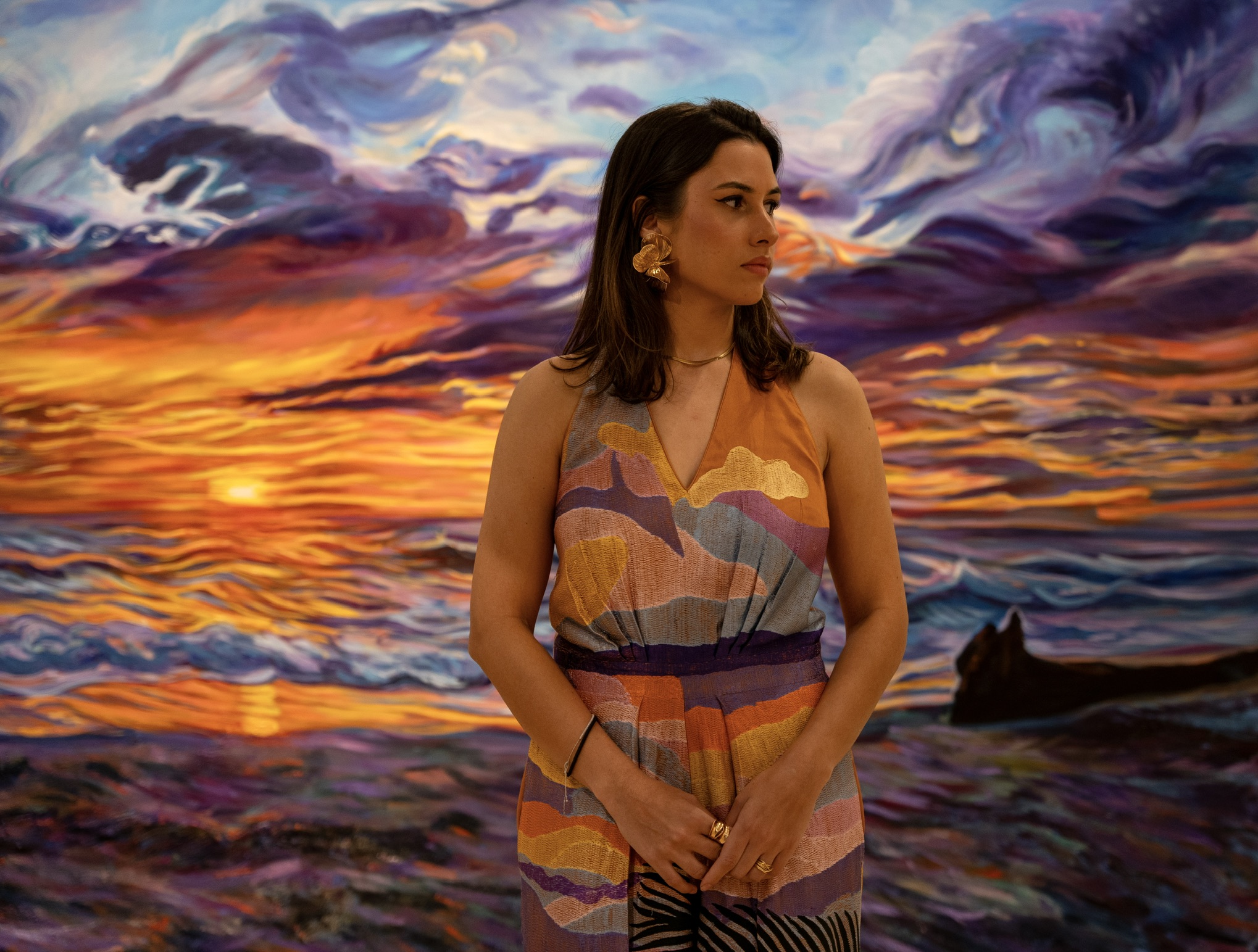

We were lucky to catch up with Claudia Robles-Gil recently and have shared our conversation below.
Claudia, thanks for joining us, excited to have you contributing your stories and insights. How did you learn to do what you do? Knowing what you know now, what could you have done to speed up your learning process? What skills do you think were most essential? What obstacles stood in the way of learning more?
Most people think of “learning the craft” as just technique: mastering oils, brushwork, and color. I’ve studied those things, but beyond early training, I’ve been largely self-taught – painting obsessively and letting each canvas be a teacher.
What I’ve discovered is that craft is as much about mystery and surrender as it is about technique. In fact, technique can only take you so far. When I start a painting, I always think I know where it’s going – but sooner or later, it takes a life of its own.
I’ve learned that my job is not to force, but to listen: to trust when a painting wants to veer off-course, to surrender when it asks me to take a risk I would not have taken on my own.
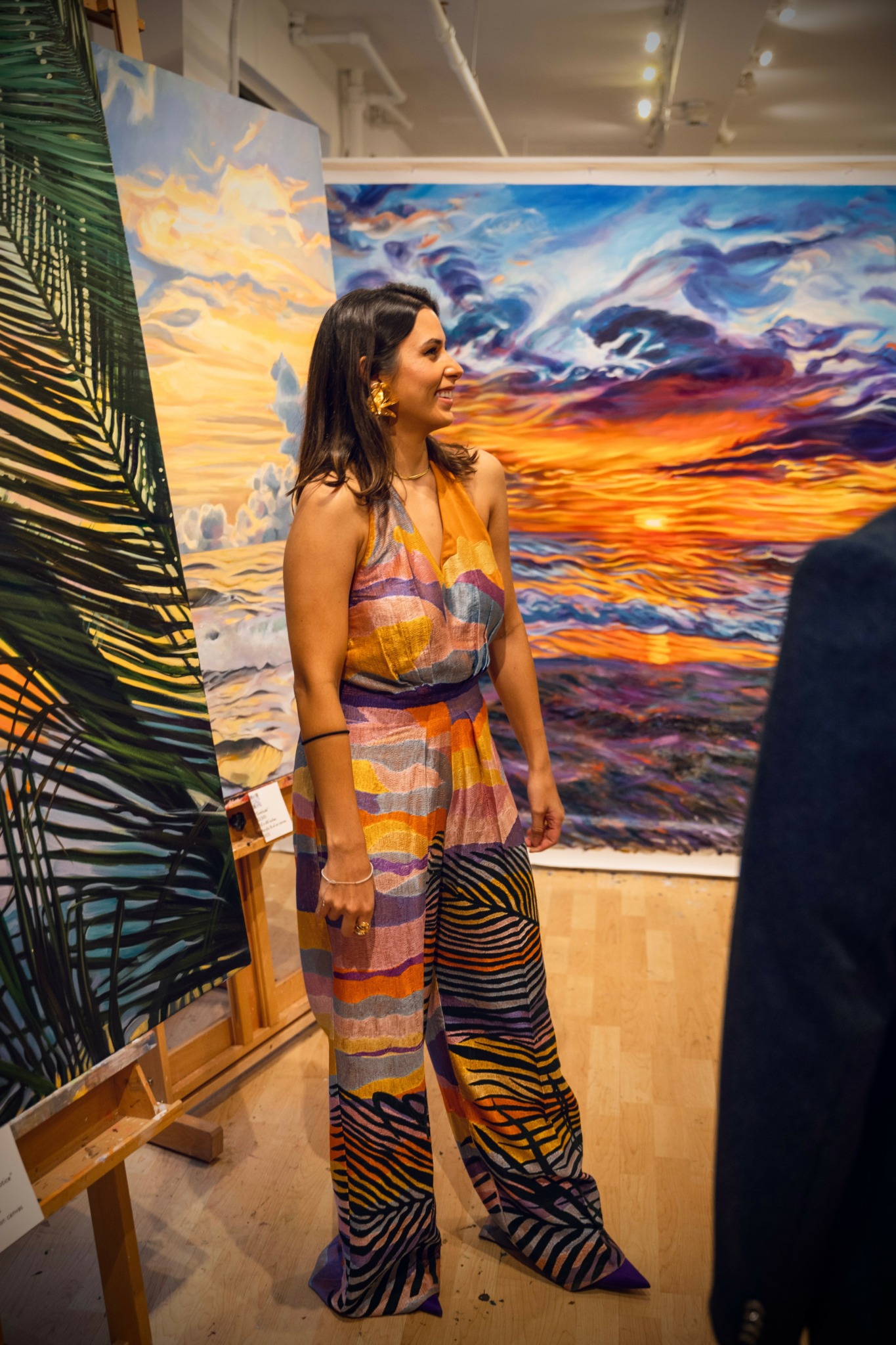
This summer I experienced this more clearly than ever while working on an ocean scene I started from a photo reference. For the first time, I tried painting purely intuitively, when I realized the photo could only take me so far in reaching the depth I was seeking. That’s when I realized, I had to begin listening.
It may sound strange to think you can ‘listen’ to a painting, but when I tuned in closely, I realized my intuition was telling me exactly what I needed to do: where to glaze a specific magenta, where the sky needed more fire, where to deepen a shadow, where something was tugging at me just enough that I knew a truth wanted to be expressed.
And through this I realized, my paintings are alive – and honoring their creation means being in constant dialogue, listening deeply and trusting what wants to emerge at each stage.
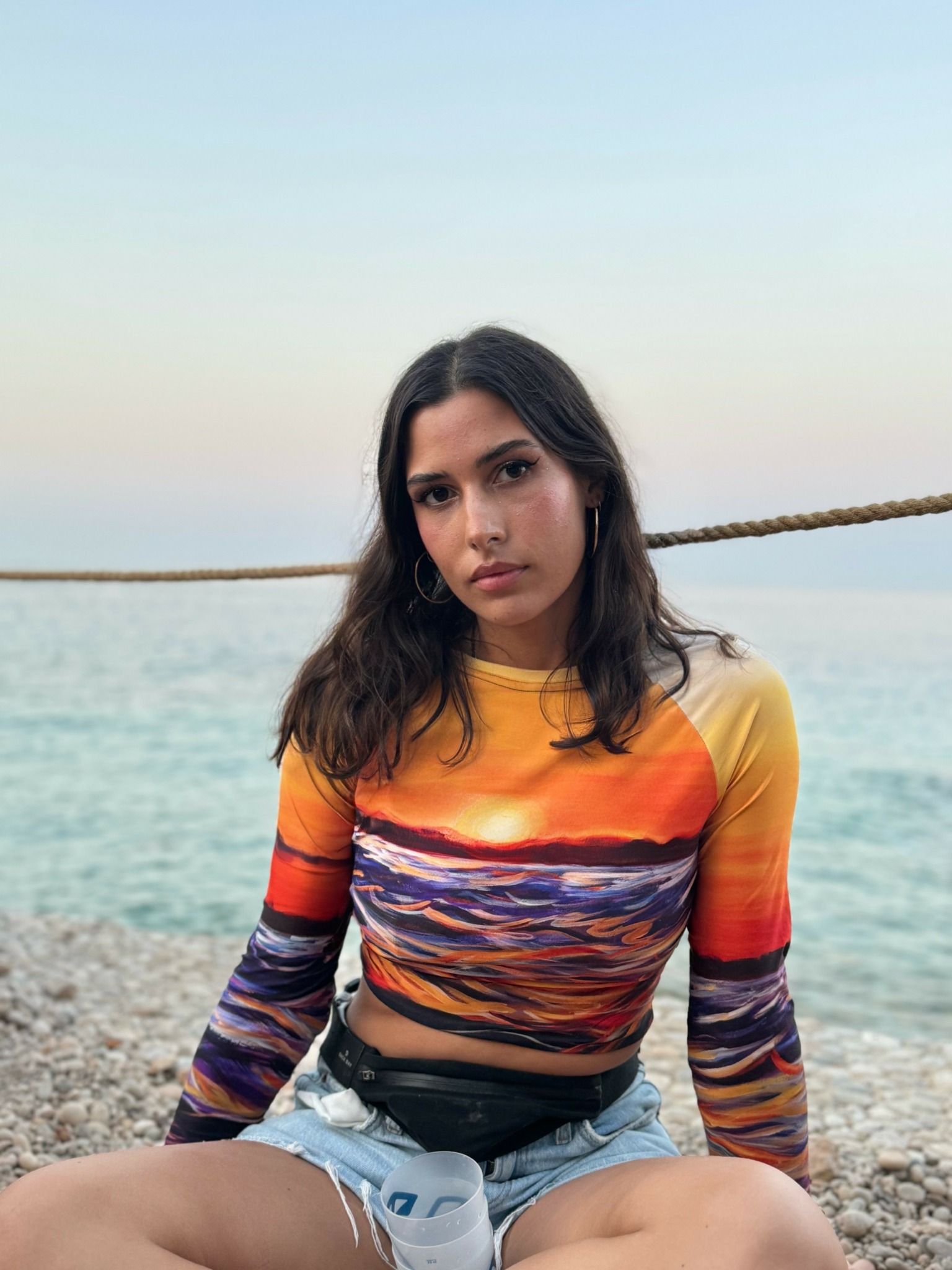
Of course, there’s also times when I lead learning through experiments. What can I learn about creating translucency through gel mediums? What deeper dimensions can I touch through textile elements? I’ve even learned by letting my art stretch into other forms like fashion, and turning them into wearables with my friend’s brand, Morni. Each experiment teaches me new ways to integrate emotion, reveal depth and communicate truth.
So yes – craft is about technique, but it’s about so much more. It’s really about co-creation between myself and forces much larger than me.
Ultimately, my art is to keep learning how to let both those truths – the truths of my heart and the voice of mystery – express through me as one.

Claudia, love having you share your insights with us. Before we ask you more questions, maybe you can take a moment to introduce yourself to our readers who might have missed our earlier conversations?
I am a Mexican-born artist whose work is a bridge between cultures, emotions, and the unseen worlds that exist around and within us. My paintings are radiant, visceral invitations to feel more deeply, to see beyond what’s obvious, and to remember the incredible complexity, intensity, and beauty of being alive.
My mind has always held a duality – between the tactile world of creating art and the intellectual world of psychology and philosophy. I studied psychology at Tufts University, fascinated by understanding the human condition and why we behave as we do. For years afterward, I lived in the corporate space, conducting research to help brands understand their customers more deeply. This chapter gave me something rare for an artist – a foundation in how businesses operate, which now supports me as I build my art career on my own terms.
For a while, I was balancing my art alongside my full-time job. Eventually, my soul began asking for more than the corporate world could offer me. Earlier this year, I was laid off – an ending that felt in many ways like a beginning, giving me the opening to devote myself completely to my art.
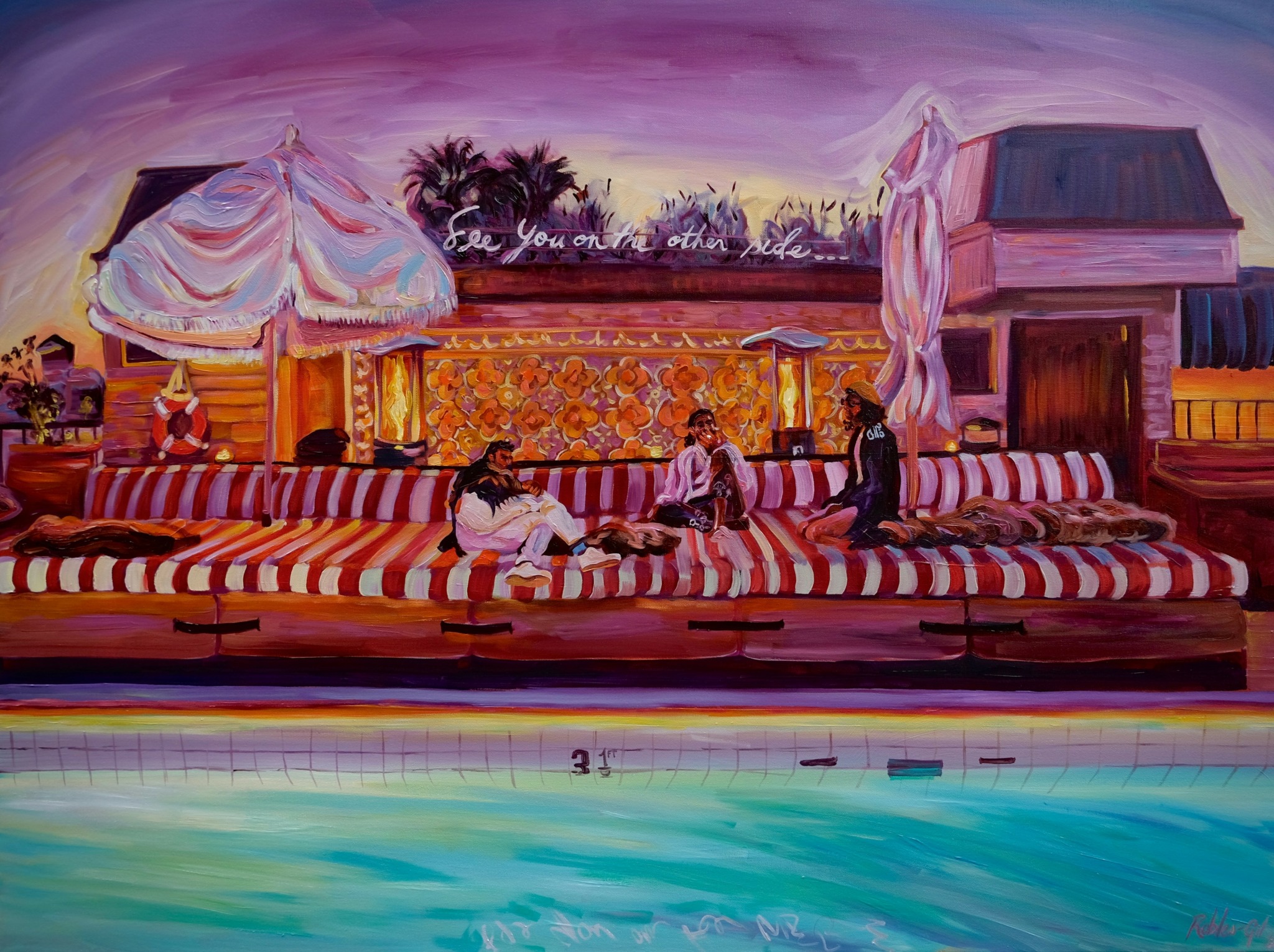
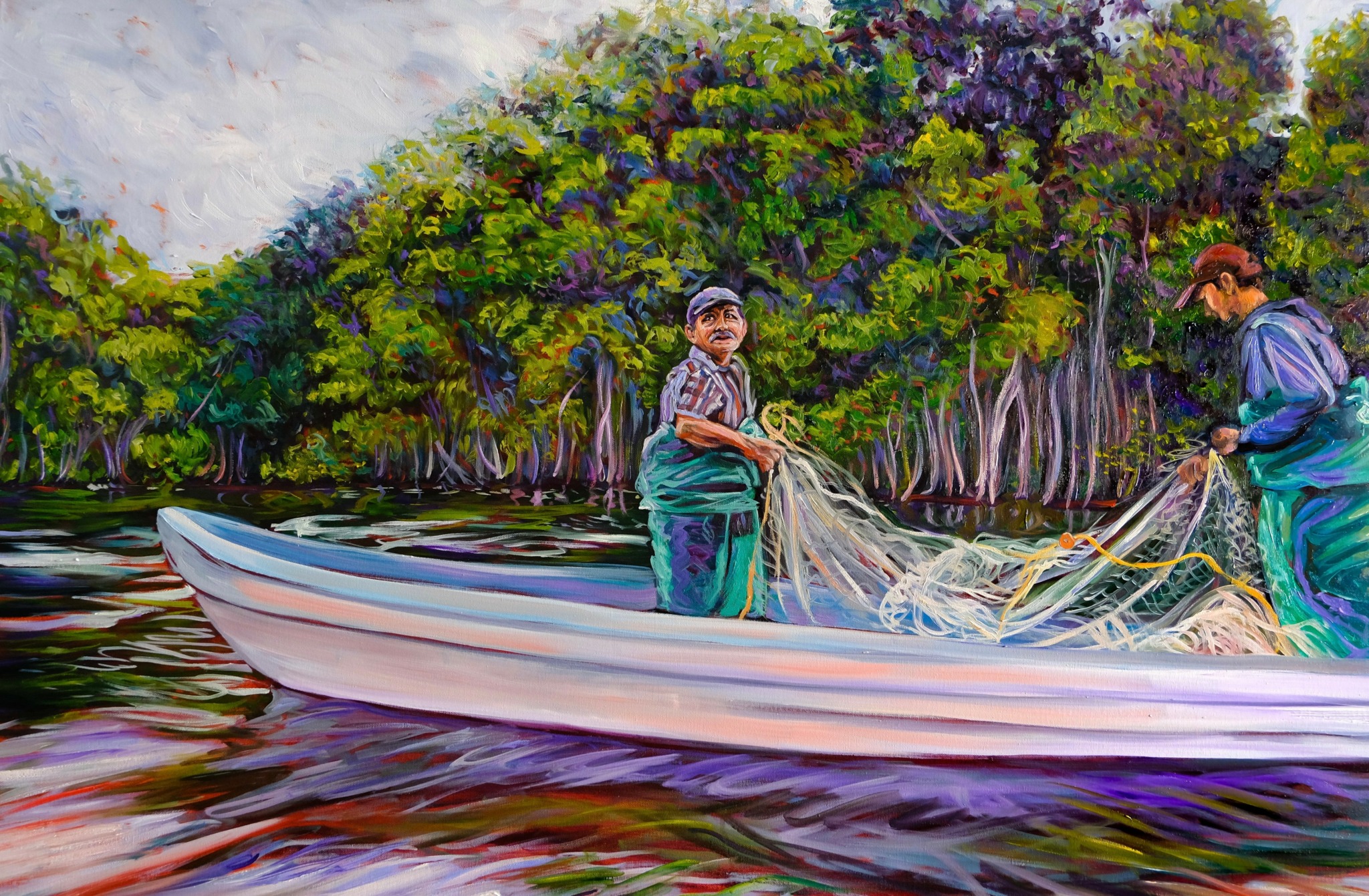
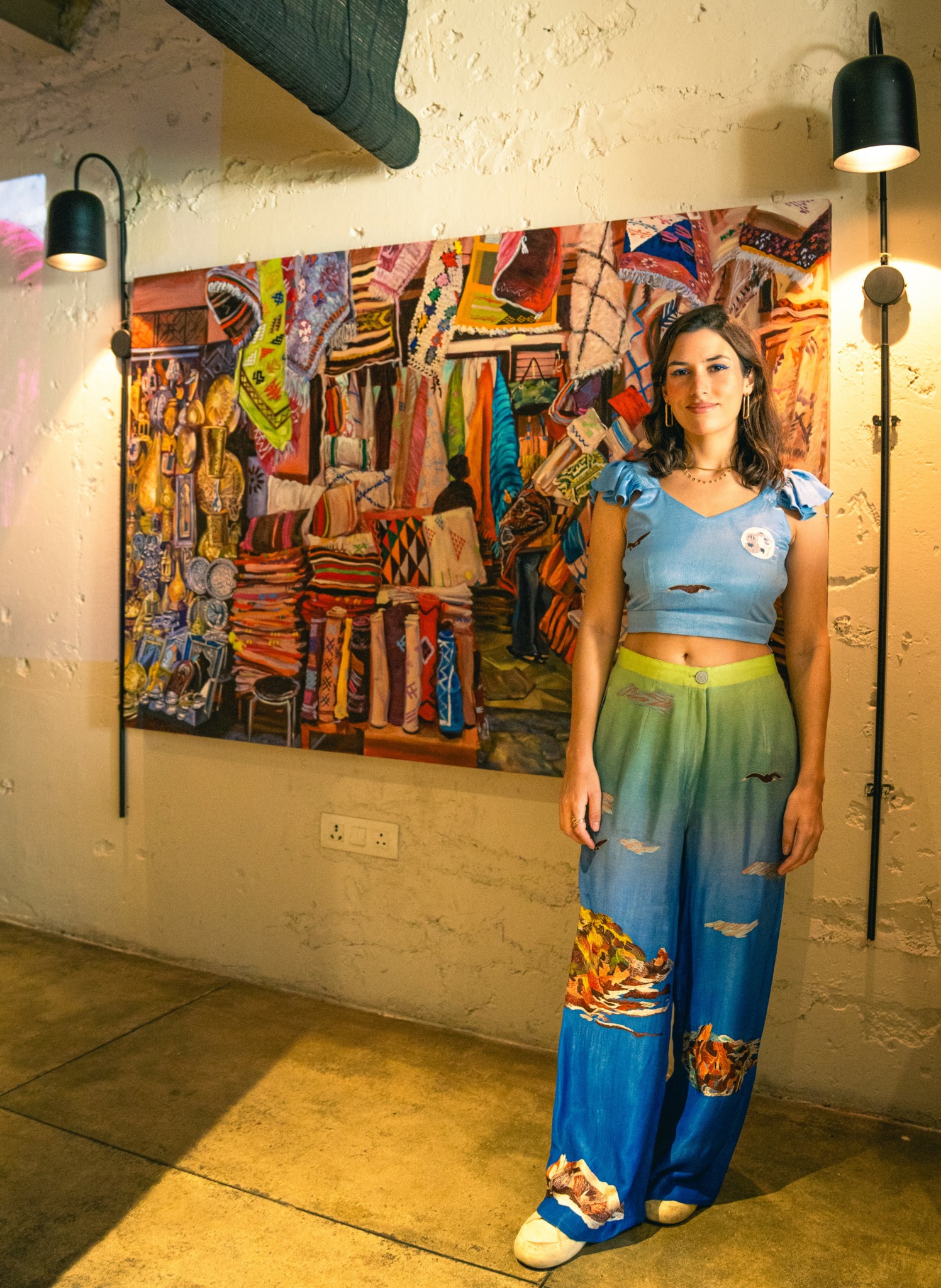
My work is deeply shaped by the places I’ve lived and loved: Mexico, New York, and now, India and the East. I’m drawn to moments where raw life and beauty intersect: fishermen in Mexico pulling in their nets, the energy at a techno music concert, children running at the beach, or women gathering in the glow of a Moroccan dinner. I paint scenes I’ve personally lived, infusing them with memory, symbolism, and the colors that carry their frequency. The result? Works that capture both the intimate and the collective: the joys, pains, and emotions we’ve all experienced.
What sets my work apart is the unique visual and emotional language it carries. Friends often tell me: “No one paints like Clau.” I think it’s my authentic blend of bold brushwork and vibrant, soulful colors that creates a unique kind of emotional honesty. And my boldness contrasts against soft, tender details, mirroring how life feels to me: sharp and vivid, yet deeply intimate all at once.
What I’m most proud of is that my work has remained fully self-sourced. While I’ve been deeply inspired by people, places, and experiences, I’ve held awareness to avoid letting what’s trendy or ‘marketable’ guide my art, instead choosing to trust my inner compass. Even when no one is watching, I keep painting from the heart – trusting that this devotion is what will lead my work to the right people and the right impact, even if results aren’t immediate.
My mission is to create art that moves people into deeper seeing — of themselves, of each other, of the world. To show that light and shadow, beauty and pain are not opposites, but companions, and that tremendous beauty often lives at the edge of that threshold. And finally, to embody this message through the way I live my life – vibrantly, intensely, and as living proof that following the voice of your soul will always lead you to where you’re meant to be, even if the path is full of spirals.
We’d love to hear a story of resilience from your journey.
You know, when I first read this question, my first reaction was – nah, this isn’t mine. This question is reserved for heroes, who’ve survived intense hardship and have come out on the other side.
But then I caught myself and realized – if I think that way, I erase the Clau who has actually endured so much – as we all do – even if my challenges have felt invisible to others or I’ve never had a reason to put them on display.
In truth, my story of resilience has often been an invisible kind of resilience: the courage to be a woman of different worlds all at once.
Most of my life has been in motion: moving between countries, working from the corner of bedrooms or shared studios, constantly uprooting and beginning again. It’s a blessing to live across different cultures, but this has also meant that for much of my life, I’ve felt untethered – almost too Mexican for the US, too American for Mexico, and belonging to a kind of in-between that didn’t feel safe to claim – or even real – until very recently.
At times I felt I was starting over, again and again.
But what this journey has taught me is that resilience doesn’t lie in your ability to stay unshakeable when life rattles you. Rather, it’s about letting yourself be rattled – and still finding ways to return to your creative center wherever you are. I’ve learned too, that this center shifts as I move, yet it also never leaves me – I carry it with me wherever I go. My work is simply to keep returning to it, in the same way the ocean tide always finds its way to the shore – again, and again, and again.
This theme is at the heart of my upcoming first solo exhibition in Mexico City, ‘Homecoming’, at Picci Fine Arts. It’s not just about my return to Mexico, but about realizing that ‘home’ was never a place at all. It was always traveling with me, revealing itself in whatever corners of the world I found myself in.
That is my resilience – the resilience to continue creating home wherever I go.
Are there any resources you wish you knew about earlier in your creative journey?
Can I talk about writing as a resource?
I’ve always been a writer, but when I was younger my private work was read without my consent. It took me a while to heal from that, but now that I’ve returned to writing, I see how deeply it has enriched my painting journey.
Writing helped me realize something I wish I’d known sooner: that the mind is not the enemy of intuition. In fact, when used in service to the heart, the mind does not fight intuition – it becomes a bridge to it.
One example is my artist statement for my first solo show in New York City (“Learning How To See”, September 2024). While my paintings would always have stood their ground on their own, without writing I would have never understood how the very things I was creating and expressing were a mirror for the stage of my life and inner work I was in. Writing allowed me to crystallize this, for myself and for those I shared my work with.
For the same reason, I see ChatGPT as an incredible tool for artists — not to bypass their ability to write about their own work, but to open a dialogue with the creative process itself.
For example, by journaling with it, I’ve become aware of the meanings I attach to symbols I return to (birds, umbrellas, oceans), and the deeper archetypes that live underneath them.
Recently, while working on a painting of the Moon (a feminine archetype), I realized I was also in a feminine arc of my life – entering a season of flow, trust and receptivity as I walk towards my wedding later this year. Something even compelled me to experiment with painting using my left (non-dominant) hand, the feminine/receptive side of my body. Writing helped me weave the threads together and see that the painting wasn’t only about the Moon — it was life itself inviting me to flow, release control, and surrender more fully into love.
And so, writing – alone or in dialogue with ChatGPT – is how I use my mind to deepen the bridge to my intuition. It helps me see myself and my work more clearly, which in turn allows me to create that bridge for others to invite them deeper into the mystery.
I see a lot of artists simply using ChatGPT to write captions for their art on IG, but I invite them to consider:
What would happen to our work once you start using ChatGPT as a mirror to your own creative consciousness?
That’s where it really starts to get interesting.
Contact Info:
- Website: https://Claudiaroblesgil.com
- Instagram: @clauroblesgil.art
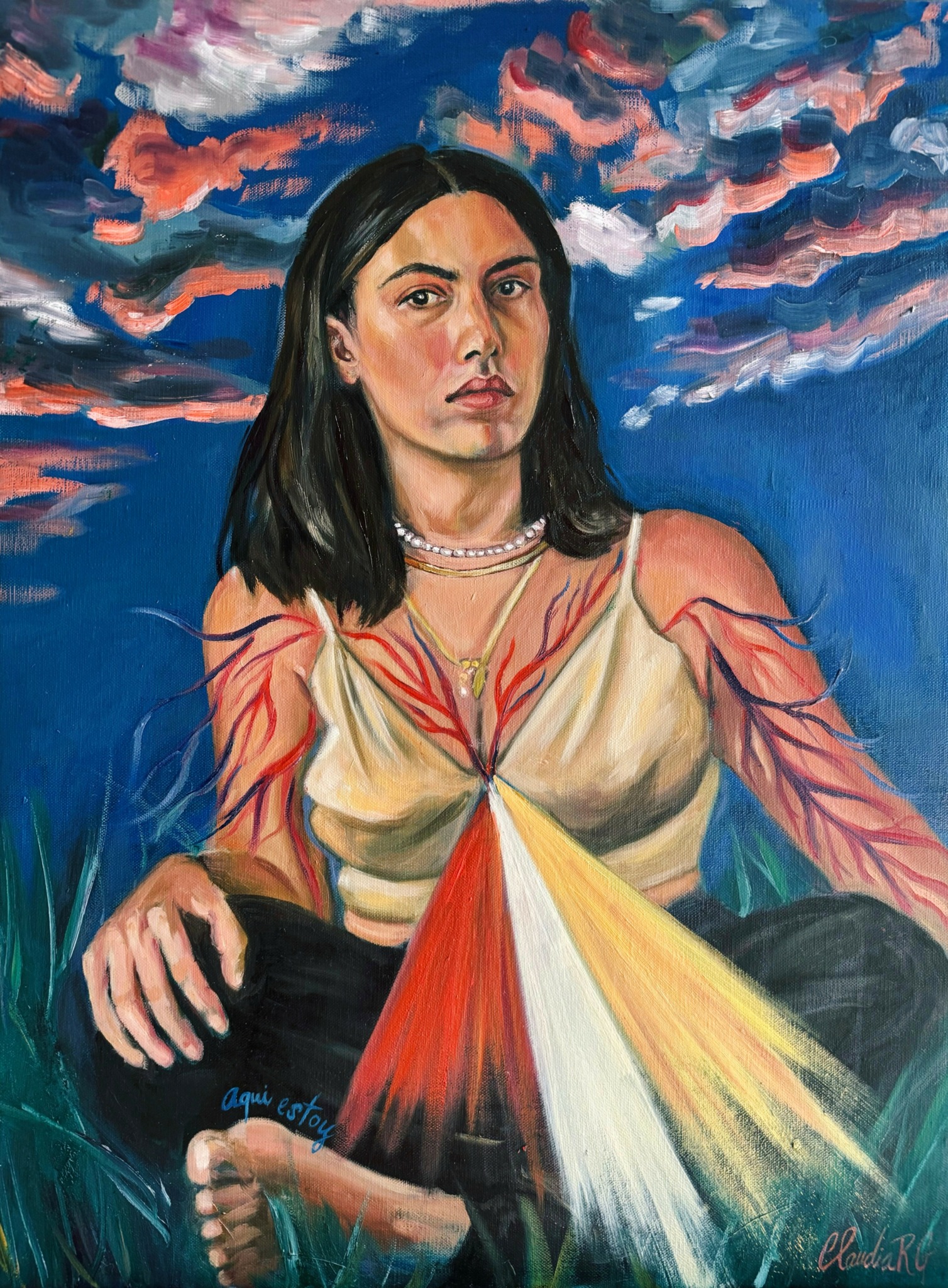
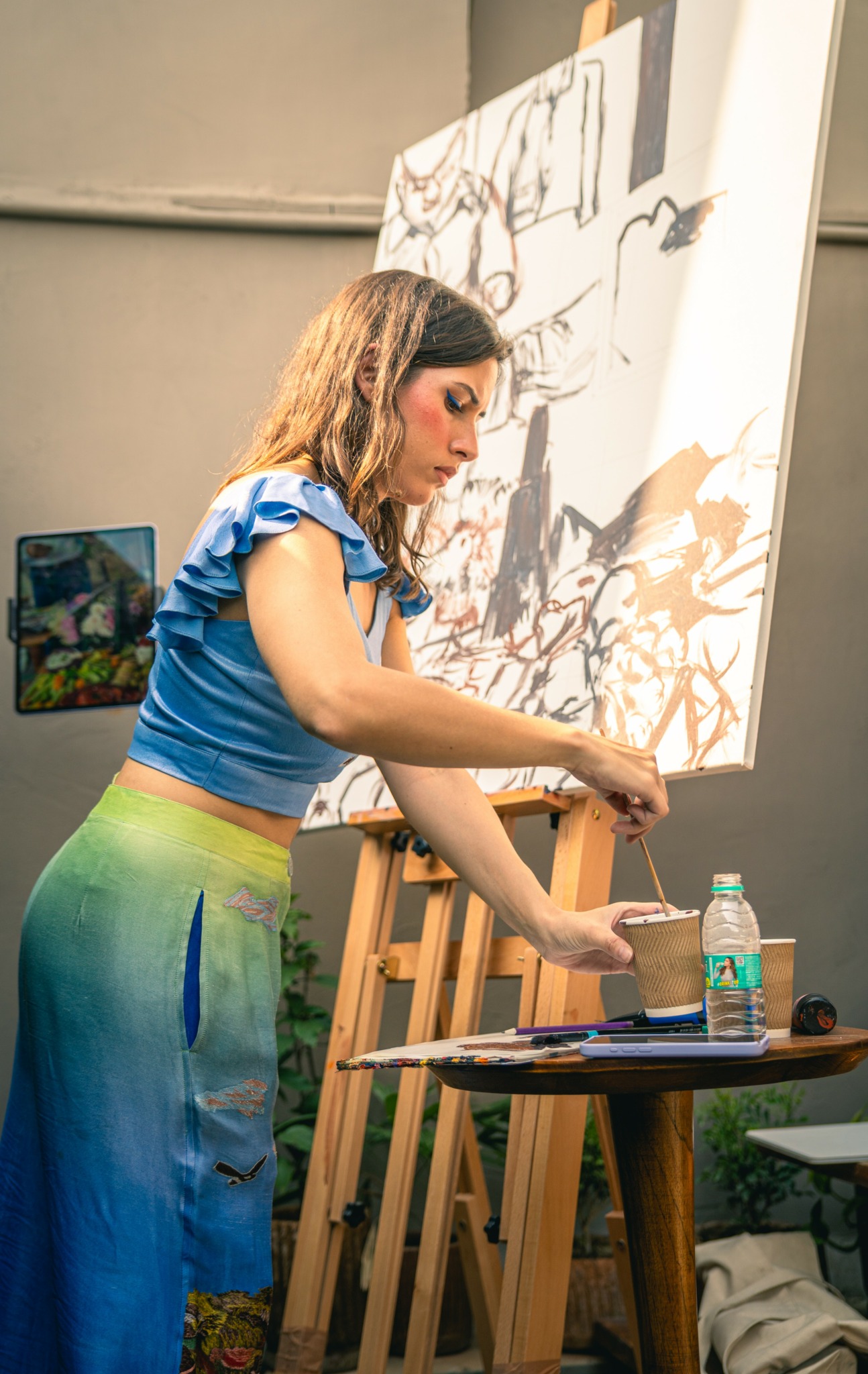
Image Credits
Advait Gharat
Hallie Geller – HBGPhotography
Manjot Singh