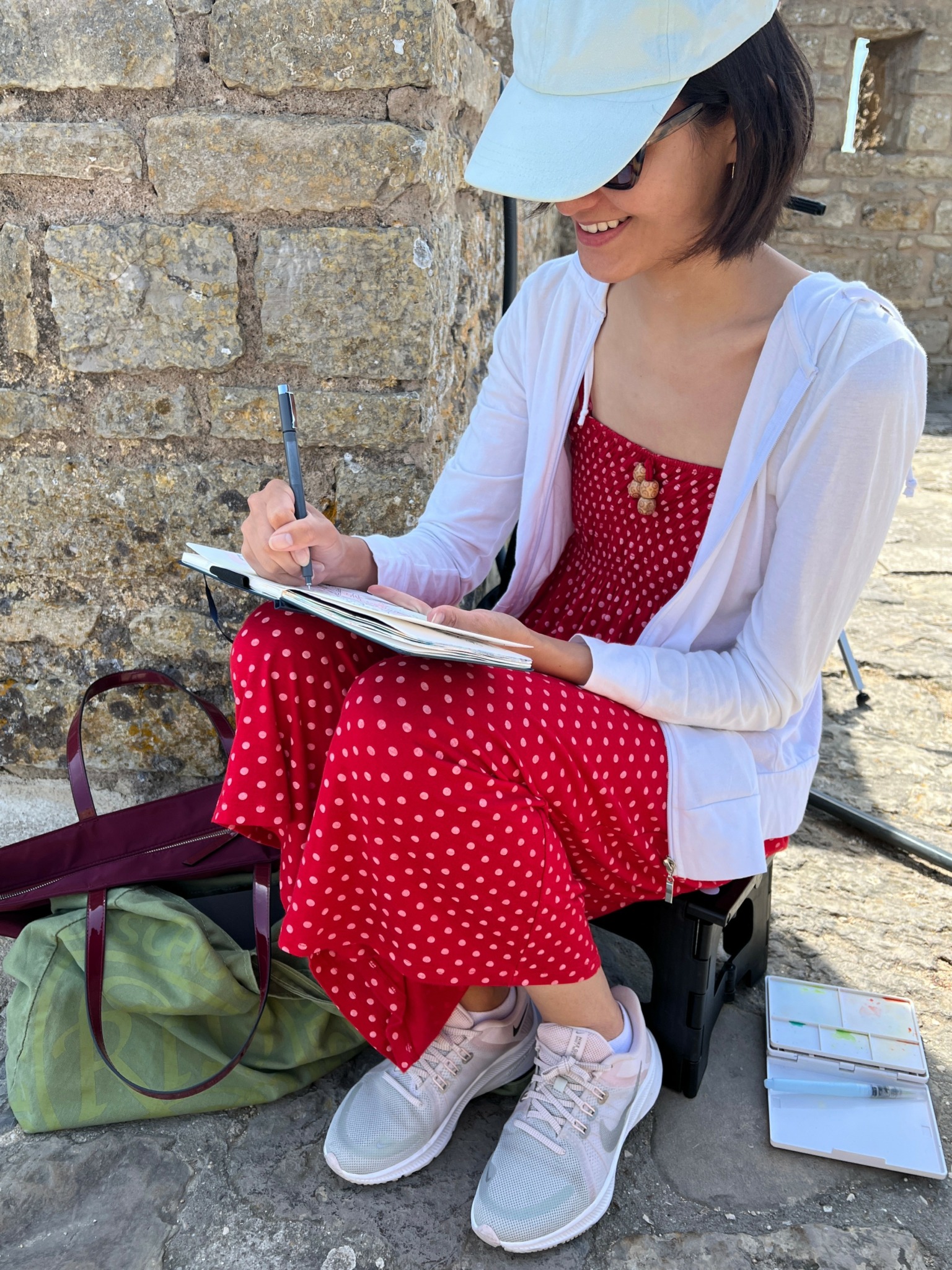
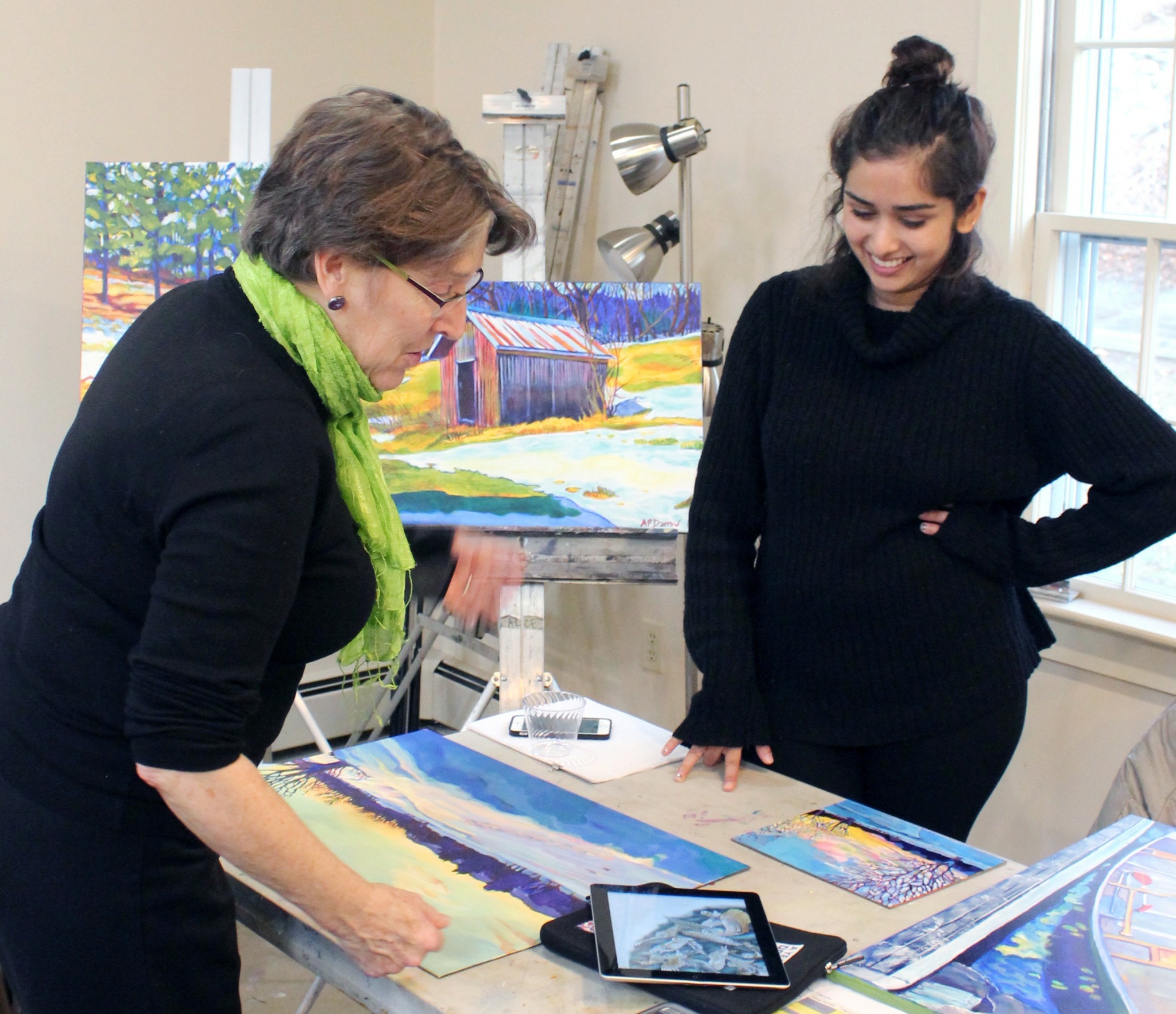
We recently connected with Clara Lieu and have shared our conversation below.
Hi Clara, thanks for joining us today. It’s always helpful to hear about times when someone’s had to take a risk – how did they think through the decision, why did they take the risk, and what ended up happening. We’d love to hear about a risk you’ve taken.
I spent 16 years in academia, teaching studio art at several art schools and colleges. My dream was to be a tenured college professor, which was the perfect balance of my passion for teaching and maintaining a lively studio practice as an artist. The hustle and bustle of campus immersed me into a creative culture that was stimulating and exciting.
I worked really intense schedules to get the teaching experience I needed to apply to full time, tenure track positions. I had days where I would teach a 3 hour class in the morning at one school, then spent my lunch break driving to another school and stuffing myself with lunch along the way. I would teach another 3 hour class in the afternoon, it was exhausting!
However, after several years of teaching, I started to notice changes and hurdles that only seemed to get higher. The vast majority of tenure track positions I applied for went to white males who had less experience than me. Later, I saw people straight out of graduate school get positions over me. I cannot count the number of people who got jobs because their partner or best friend was on the search committee.
On top of that, so many interactions I had in academia were humiliating and destroyed my confidence. I once sat through a 1 hour meeting where 3 tenured faculty told me everything that they thought I had been doing wrong for the past 3 years. I bawled my eyes out afterwards to my spouse on the phone.
I was dropped by a department that I taught in for 9 years, and emails I sent asking why were not answered.
I found myself starting all over again at the same school; begging on my hands and knees to teach classes in other departments at the school. Every time, I had to develop relationships with department heads so I would stay on their radar for classes to teach. Despite over a decade of teaching experience, I saw that I was actually less desirable than when I had just gotten out of graduate school.
I was determined to stick it out, hoping every year, that this would be the year I got a tenure track position. However, after 16 years, I could see the writing on the wall. Academia didn’t want me and had become this awful cycle of me saying I couldn’t deal with the anxiety and frustration, and only to come crawling back.
In 2020, I left academia for good to devote all of my time to Art Prof, my online educational platform for learning visual arts which I had started in 2014. I was terrified, my entire identity was wrapped up in academia and leaving felt like concrete evidence of my failure.
Today, Art Prof is a thriving, vital global community of artists which has completely transformed me as a person and artist. I have gotten emails from people who tell me that after watching our videos, they picked up a pencil to draw for the first time in twenty years.
The constant flow of changes in education online keeps me on my toes, I thrive on the way teaching online has challenged me creatively and in my own studio practice. Everyday is so incredibly different!
I confess that I still mourn my life in academia, and that there is still a thought lingering in my head telling me that “if only you were a better artist and educator, you would have been able to get a tenure track position.” Most of the time I can ignore it, but not always.
The fundamental excitement of teaching online is that it’s just so new. I’ve developed a lust for understanding and trying out new online innovations. Today, I’m grateful that I left the tiny bubble of academia. Now, I get to teach art to the world!
Great, appreciate you sharing that with us. Before we ask you to share more of your insights, can you take a moment to introduce yourself and how you got to where you are today to our readers.
I didn’t set out to create Art Prof, rather I saw that there was a giant hole in education that I knew I could fill.
It was the end of the semester, and I was really bored one evening, but didn’t want to go to sleep. I had a blog at the time and I started writing a post about my reflections at the end of the semester. I wrote a post titled “How to be a good art student.” The article had tips for what concrete actions students could take to absorb their experiences in the classroom.
That article led more on various topics related to visual artist. I was invited to be a blogger for Huff Post, where I continued posting articles. (back when it was called “The Huffington Post.”) Soon, I was getting flooded with emails from artists all of the world, asking me for advice on anything from what oil pastel brand would be best to buy, to how to deal with the constant struggle of fighting their inner critic.
Eventually, I saw the vast limitations of a written article to provide answers people were asking me for. I envisioned creating a platform for videos that addressed all of the topics people were asking me about. When I mentioned this idea to someone at the time, their response was “why don’t you just teach a class on Skillshare?” I’m so glad I didn’t listen to them!
What I’ve learned about the Art Prof community over the years, is that we work with just about the most diverse population of people out there. I’ve had parents tell me that their 7 year old loves our videos and people who are in their 80’s who finally have time to paint. Our community has self-taught artists, art school students, beginners, hobbyists, professionals, and more.
Our platform is unusual in that all of our video content and our website are free. Although I can confirm this is a terrible business plan, the free access has been very important to us from the beginning. Art Prof provides an opportunity to learn art for people who might otherwise not have the opportunity.
Our Discord server is the heart of our community, it’s where I interact with people on a daily basis and get to know what people want to learn. At this point, there are people who have been learning with us for many years now, an experience I never had in academia.
A big distinction between us and other online platforms to learn art is that we approach art making holistically. Often there is a lot of emphasis on techniques and materials, but one of the biggest challenges artists face are the mental struggles that come with being a creative person. Art is truly a reflection of all of humanity, so woven into each person’s studio practice is the landscape of art history, contemporary art, and more. What happens to the artwork after it’s made, as well as professional development and career opportunities.
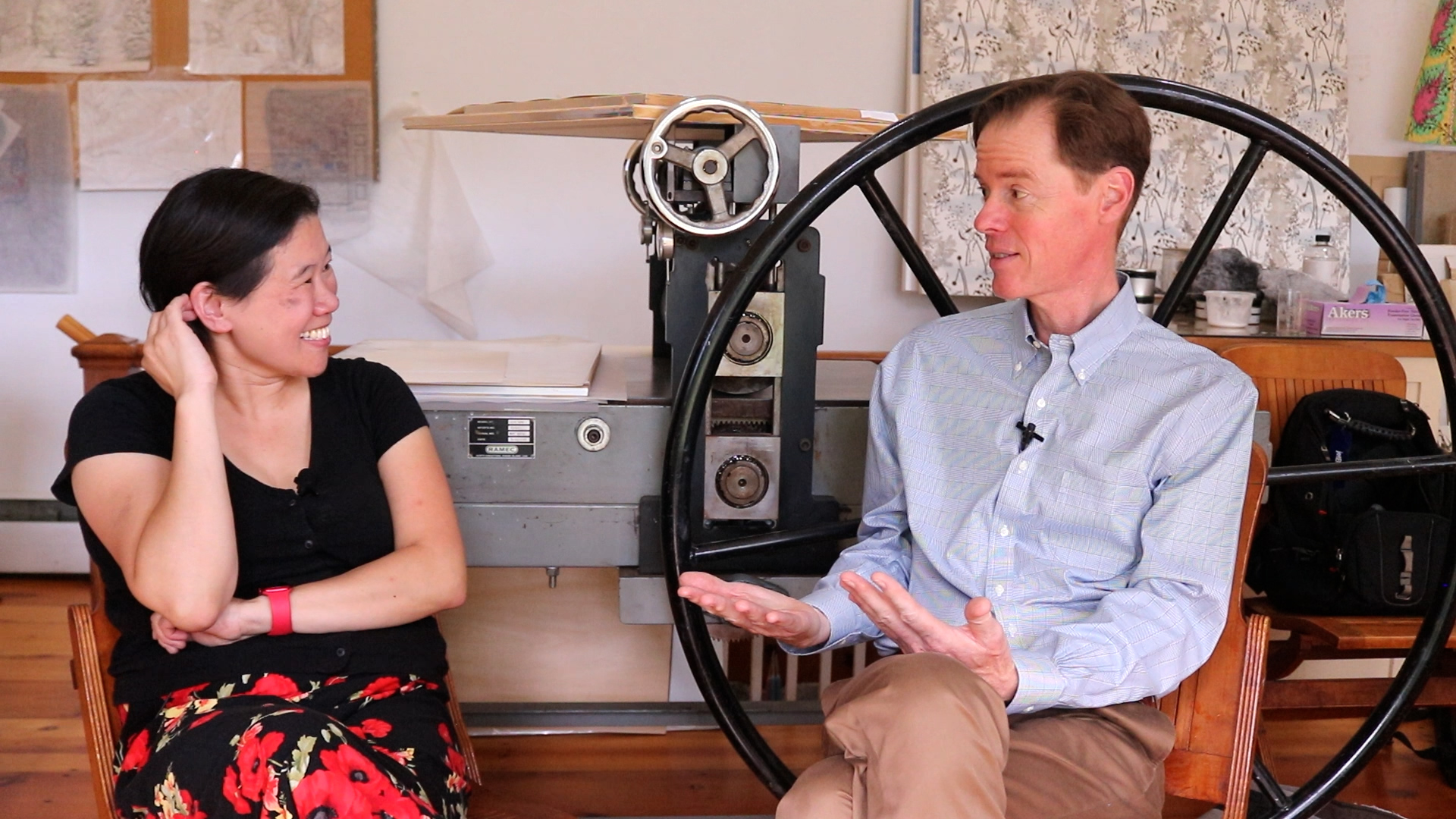
What I didn’t anticipate when we started was just how big my world would become. We’ve recently expanded to shooting a lot of content on site, visiting everything from museums, art supply stores, to a printmaking conference. I’m so grateful to speak to so many people all over the world, hearing their stories and creative struggles and thinking about what I can do to help.
Any insights you can share with us about how you built up your social media presence?
As a Gen Xer, I confess that social media totally baffled me for many years. I felt like someone had dropped me in a foreign country where I didn’t speak the language! It took me a really long time to understand the mindset of how people absorb content on social media. I credit my staff of Millenials and Gen Z artists who are constantly explaining to me why things work (or don’t) and to be ruthless in terms of judging the content we create.
To me the two most important things to do on social media are to 1) tell stories and 2) be authentic. There are plenty of artists out there who can explain the technical properties of why you would want to use matte medium with acrylic paint. I can too, but I’ll tell you it’s because I used acrylic in high school and had no idea matte medium even existed. As a result I hated acrylic for many decades and only came back to it because I finally knew about these materials.
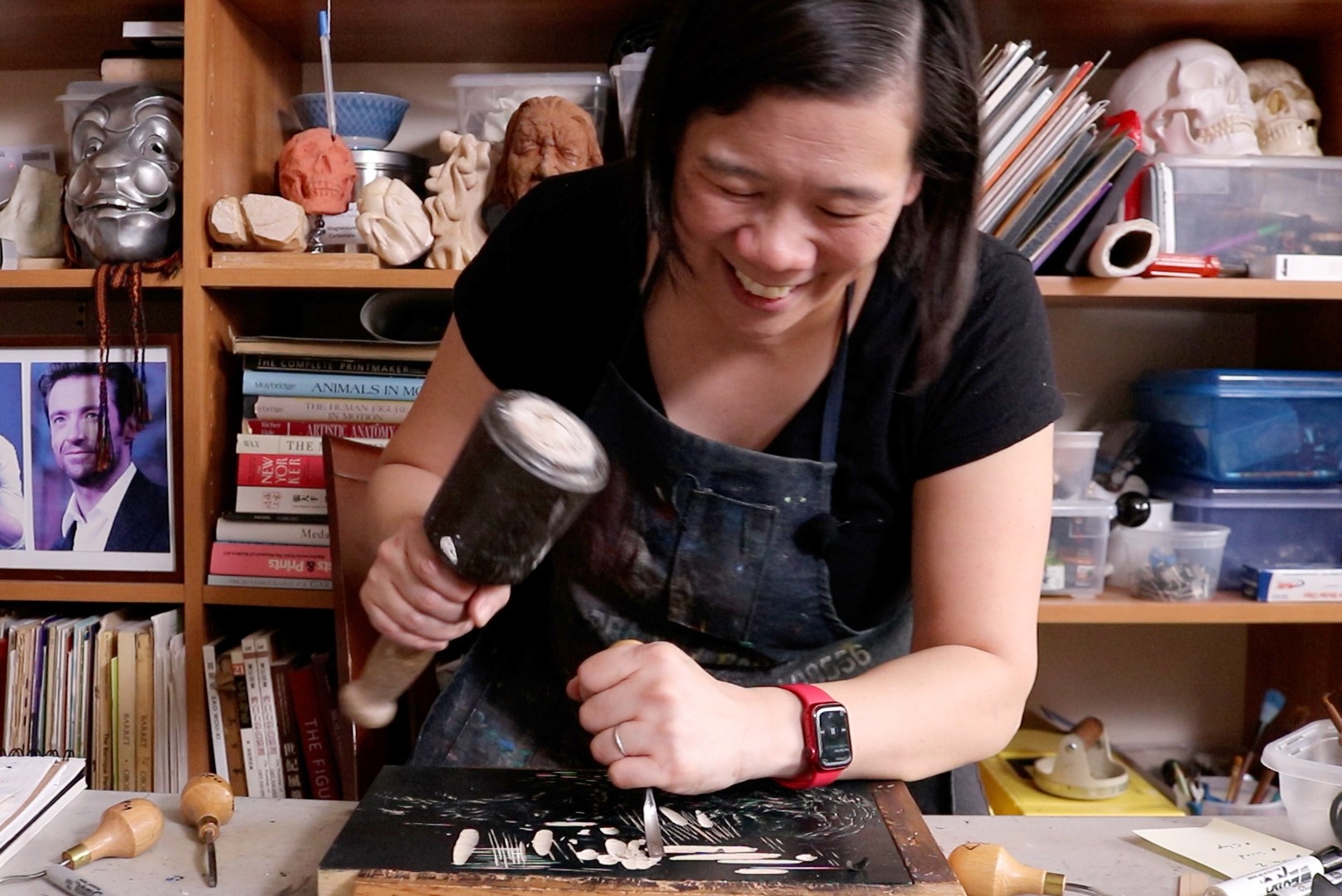
The authenticity part of social media is tough to explain as it’s so broad and completely different for every person. I couldn’t figure out for the longest time why a video of me messing up a print because I forgot to set the press pressure was popular. What I learned is that those mistakes are inevitable no matter how much experience you have, and that most importantly, it’s relatable. Mistakes are authentic, and when you leave them out in a video, that’s hiding the genuine experience.
Let’s talk about resilience next – do you have a story you can share with us?
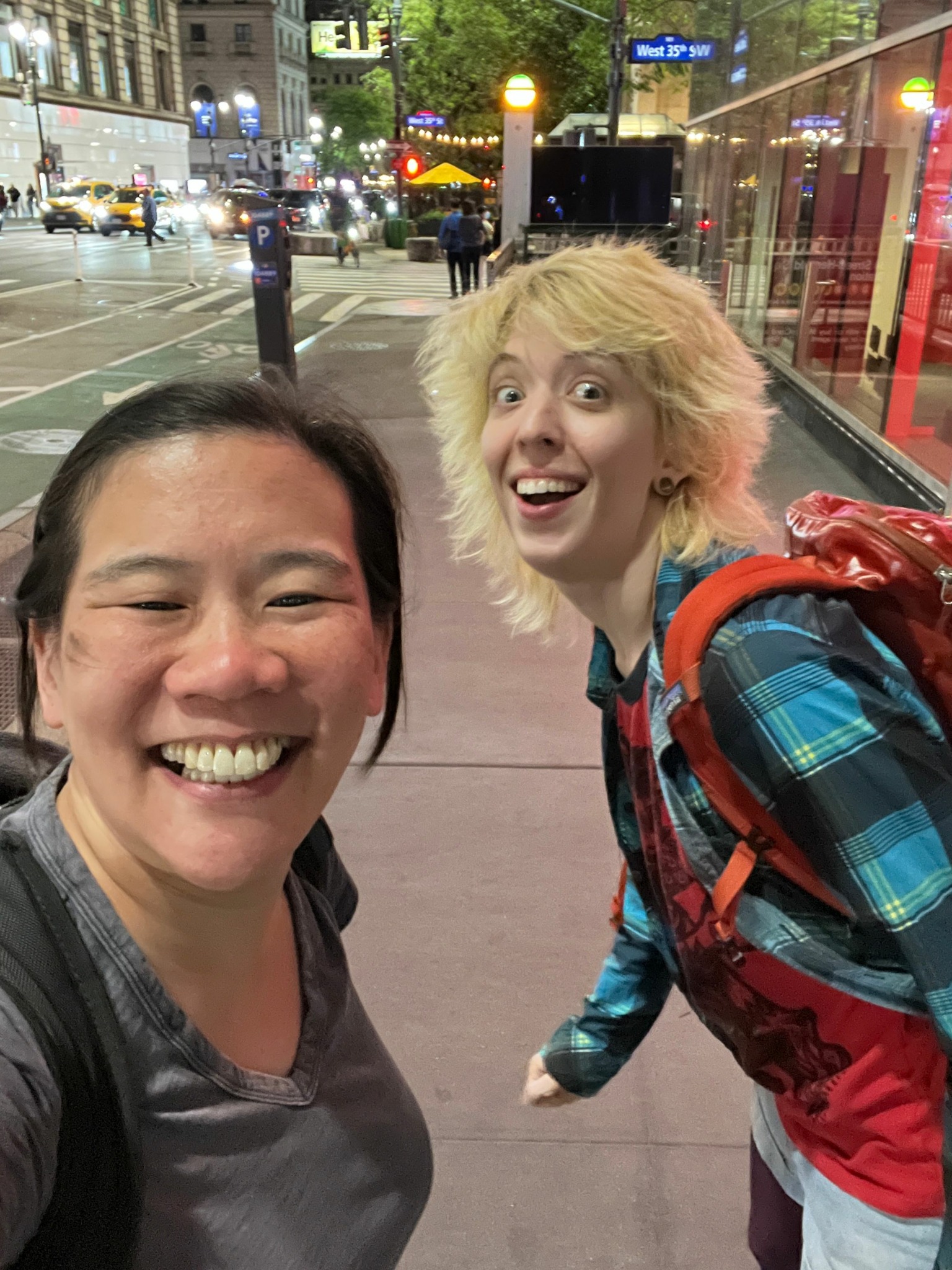
Early on, when no one cared about anything we were doing, I got really excited because a local Blick Art Materials store agreed to let us set up a table at the retail store. The idea was that we could talk to artists in person and let them know about our platform. We were there for 4 hours, and I imagined that we would get to talk to all sorts of artists.
Nope, the three of us we sat there for 4 hours and talked to literally 2 artists. I was crushed, and felt incredibly discouraged from that experience. Later, I realized that actually, we had shot some nice photos of us hanging out at the store, and photos of the 2 artists we spoke to.
I posted these photos to share that we had been at the store, and everyone was impressed with our “event.” No one had to know that those 2 artists in the photos were the only ones we talked to. Guess what, that “fake it till you make it” thing really is true.
Contact Info:
- Website: https://artprof.org/
- Instagram: https://www.instagram.com/art.prof/
- Facebook: https://www.facebook.com/claralieu/
- Youtube: https://www.youtube.com/@artprof/featured