



We’re excited to introduce you to the always interesting and insightful Christopher Mooney.. We hope you’ll enjoy our conversation with Christopher below.
Hi Christopher, thanks for joining us today. Can you share an important lesson you learned in a prior job that’s helped you in your career afterwards?
For ten years worked a full-time Security Guard at the Portland Art Museum, Portland, OR and part-time assistant preparator as well. After that I was a picture framer for Aarron Brother’s Art and Framing in Lake Oswego, OR. Surrounded in the world of art and artists I became familiar with the professionalism, the public and the artists with their needs. What I’ve learn the most was to be able to understand how to be successful in any field means a job well done in a timely manner. Patience, execution and methodical work are essential but also it is necessary take personal joy in what you do. It helped me to refine my paintings to be exquisite, and detailed. If it’s worth all the details, it’s worth it.
Christopher, before we move on to more of these sorts of questions, can you take some time to bring our readers up to speed on you and what you do?
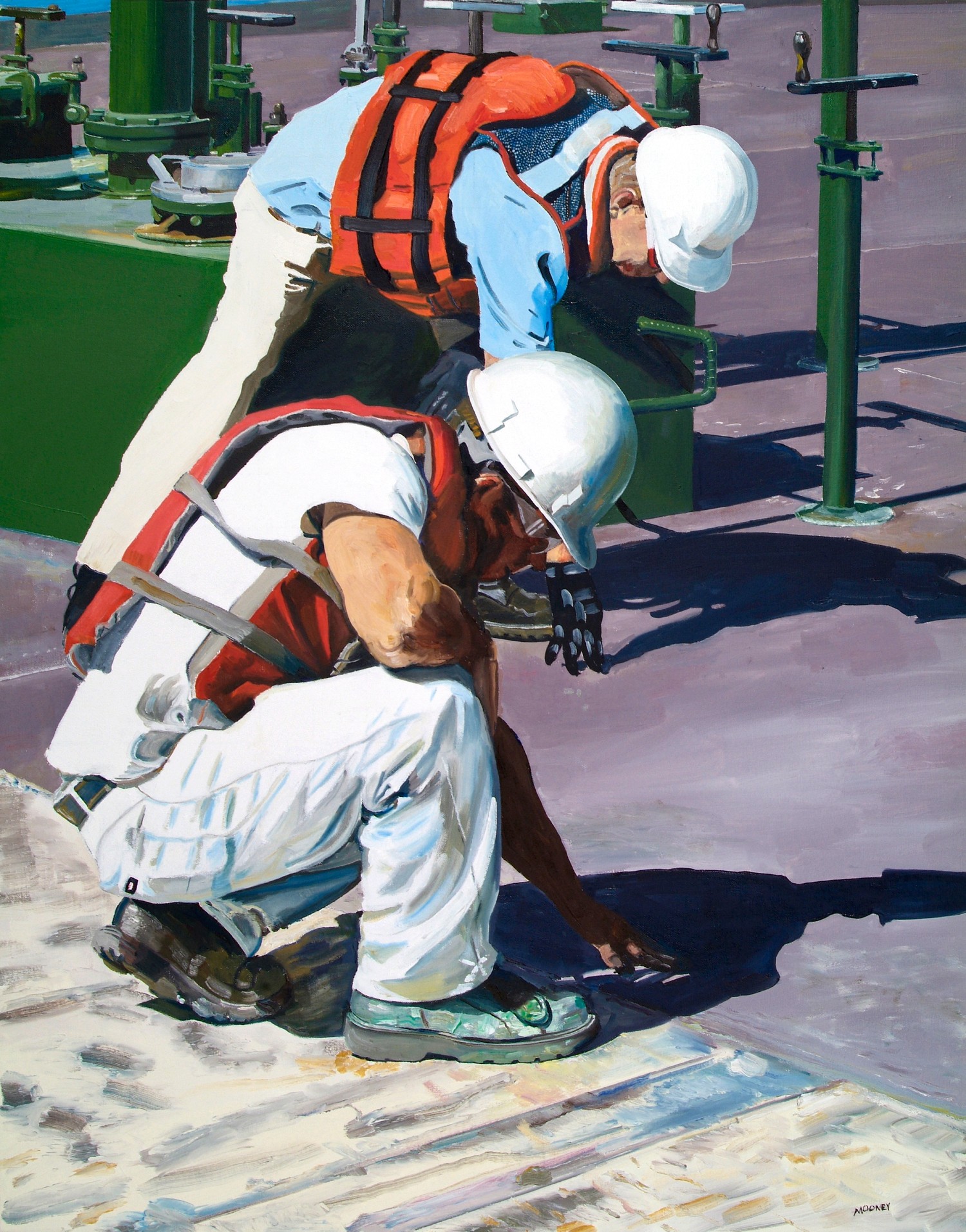
A graduate of Parson’s School of Design in New York City, I am known as a professional artist in the Pacific NW for my paintings of urban landmarks, primarily bridges. My influences have been Edward Hopper’s urban landscape paintings of New England, Charles Sheeler, who is known for his Precisionist paintings, and Antonio Masi for his depictions of New York City bridges. 15 years ago, I moved from painting urban landscapes into the world of figurative art and contemporary realism.
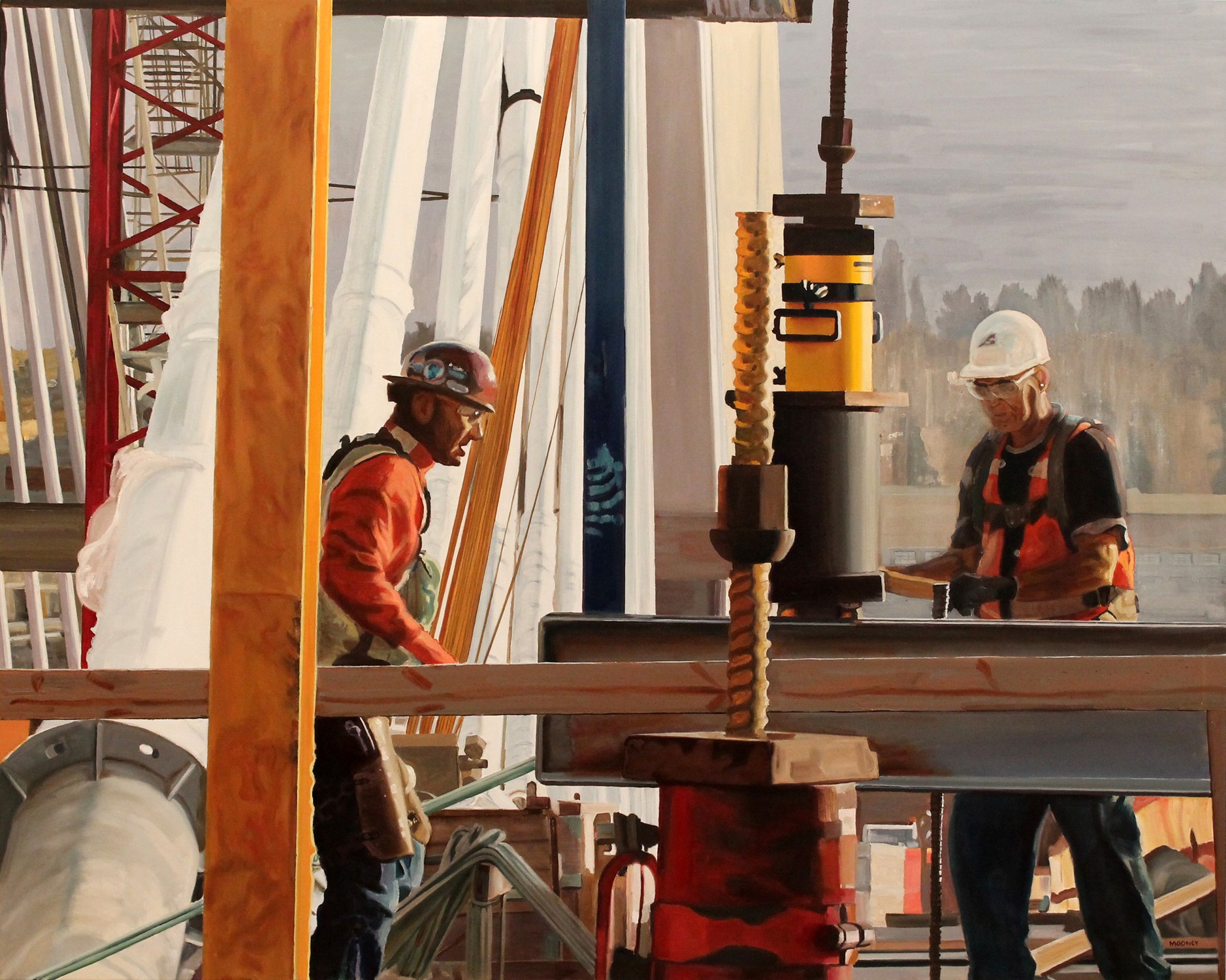
I create large scale figurative works using the old masters’ techniques with a contemporary ambience that focus on color. The subjects in each of the paintings were occasionally posed lit with red and blue flood lights, or natural lighting giving the unusual dynamics of the way light is reflected on the figure.
After spending many years as a distant observer of man-made forms I am now drawn to depicting the human form, portraits range from faces to full figures, to couples in tender moments. Although industrial steel bridges and the playful embrace of a lover may seem on the surface two disparate topics, they are both at their core about connection.
Studying the human form, my inspiration comes from Daniel Greene’s lonely women in subway stations, Nelson Shanks’ Salome, Steve Hanks’ emotional and thoughtful figurative works, and Michael Parks’ fantasy art and magic realism.
Can you share a story from your journey that illustrates your resilience?
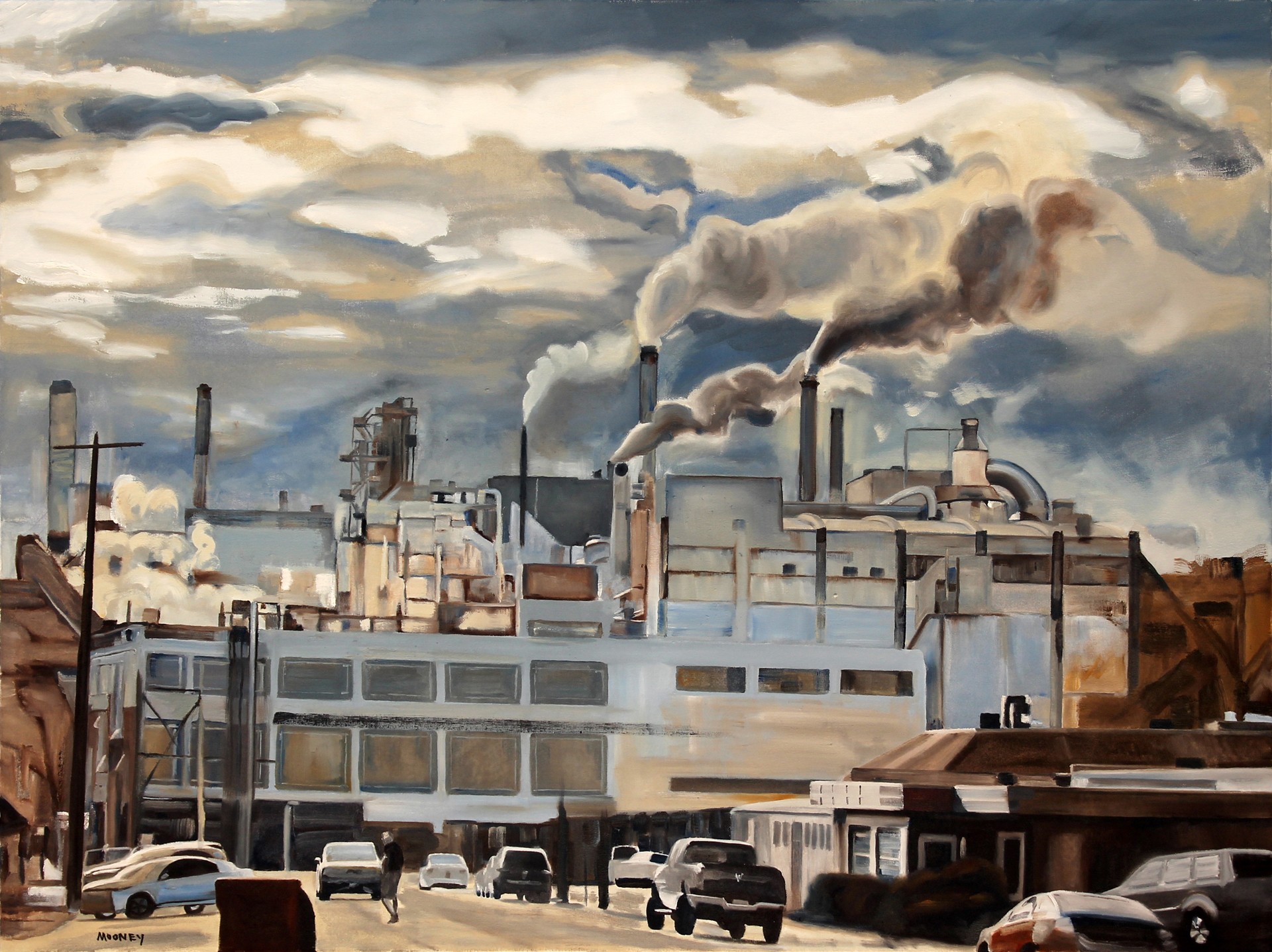
“Do a large piece of smokestacks, Chris,” said David Passalacqua, one of my favorite teachers during my senior year at Parson’s School of Design. What? I thought. I just looked at him feeling a bit awkward. I didn’t really like the feeling, and I wasn’t sure why he said that. I looked at my work in progress. I had a decent, albeit slightly boring, illustration going. I wasn’t ready to give up on my illustration. I looked at David. He was an excellent teacher – so extroverted. David’s friendly eyes had an uncanny ability to bore a hole into your soul just by looking at you with the surety he had for the mastery of his craft and literally yank the guts of your creative instincts to the fore. That is what happened to me when I looked at him. He simply kicked my ass – as he was known to do with students – using a mischievous smile and an electric energy spilling from his deep knowledge of illustrative art. He made it his mission to challenge students to higher levels. “OK,” I said to him calmly while my energy surged through my body. Something central changed that day for me. My journey as a painter became a passionate adventure — a mission to capture the unimaginable.
It was then, my first Charles Sheeler or Edward Hopper like subject matter I completed was the Con Edison Powerhouse on East 14th Street not too far from Parson’s suggested by Dave Passalaqua and I did three more viewpoints completed to be displayed for the senior year show.
Any insights you can share with us about how you built up your social media presence?
I first built my audience on Facebook and later expanded to include X (formerly Twitter), Instagram, and LinkedIn. I share images of my paintings along with meaningful descriptions. Each time I complete a new piece; I post it with a detailed title. When relevant, I also include a short story about its artistic theme, inspiration, or aesthetic elements.
I don’t just post about my new artwork—I also share when my pieces are accepted into gallery exhibitions and juried art shows. This includes both local and national events. I actively seek opportunities to showcase my work through prestigious art organizations such as Oil Painters of America, the National Oil & Acrylic Painters’ Society, and the Society of Washington Artists in Vancouver, Washington. I have also been represented in the Portland Art Museum’s Rental Sales Gallery for 35 years. This gallery creates valuable connections with the community, as collectors can rent or purchase artwork during public receptions, where I can engage in person with art enthusiasts and potential buyers. I then share about all these events across my social media accounts.
Another key aspect of growing my audience has been small business mentorship. The Small Business Development Centers network (SBDC) offers training for small businesses throughout the United States. I connected with my local branch in Clackamas, Oregon, and received marketing guidance from my SBDC mentor Kathleen Lansing. She encouraged me to expand beyond the studio by attending events, meeting potential buyers, collecting their contact information, and following their social media accounts. Networking is essential for connecting with collectors and art lovers. Every interaction—whether through business cards or social media—helps expand your reach.
If you’re just starting to build your social media presence, I recommend you begin by refining your skills. Seek constructive feedback and attend art classes. Then post your new work regularly (daily or weekly) on all platforms and share when your art is accepted into art shows. Respond to comments and connect with other artists and collectors online. Also build an online and in-person presence beyond social media: establish a website, develop a strong portfolio, and have professional business cards made. Seek a business mentor through the SBDC, SCORE, or an industry-specific association.
Above all, be patient and consistent. It takes time to build an audience online and in person. Success comes when preparation meets opportunity.
Contact Info:
- Website: https://www.chrismooneyart.com
- Instagram: https://www.instagram.com/christopherbmoone/
- Facebook: https://www.facebook.com/christopher.b.mooney
- Linkedin: https://www.linkedin.com/in/christopher-b-mooney-72a51834/
- Twitter: https://x.com/Walk2bridge
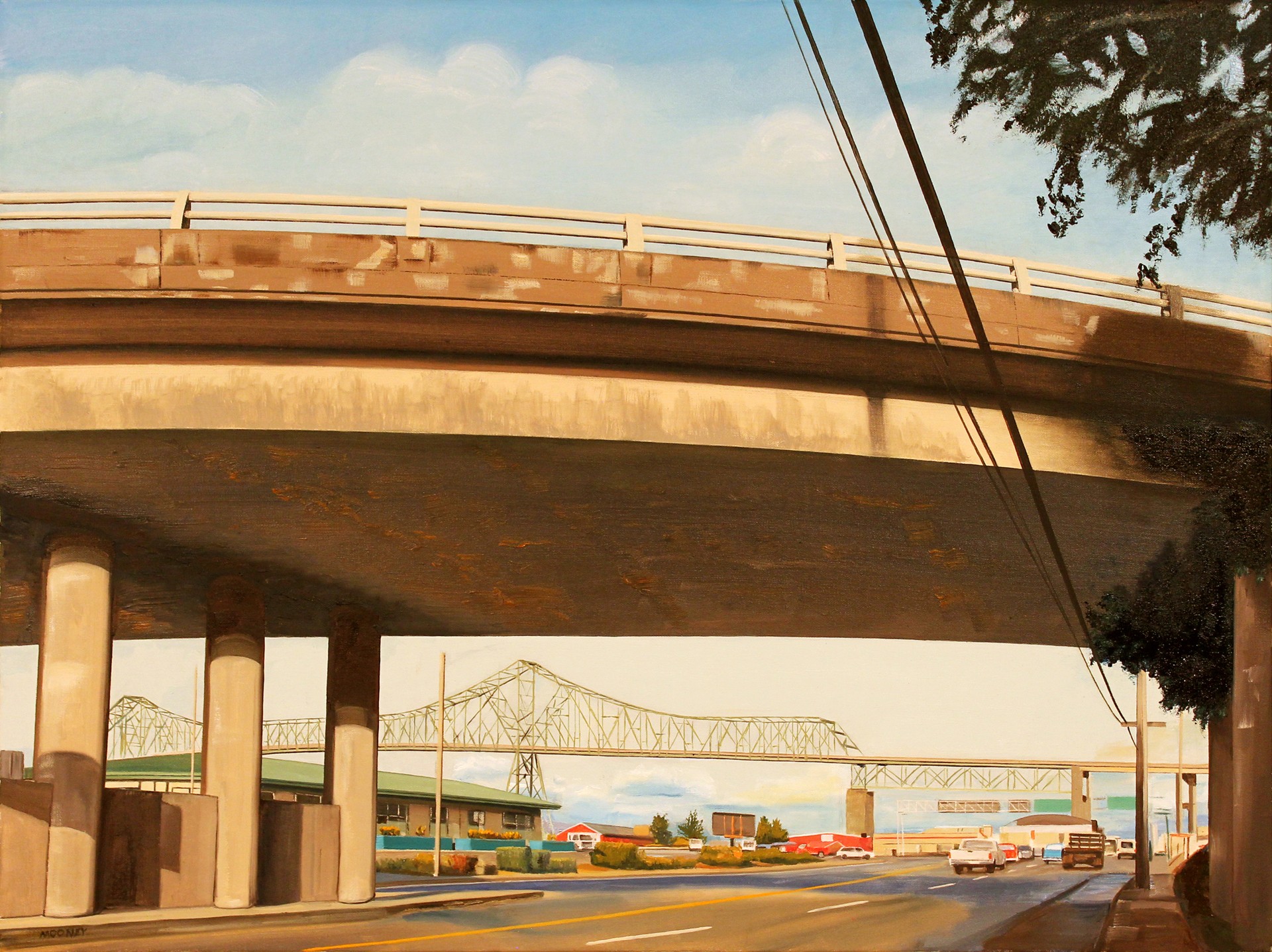
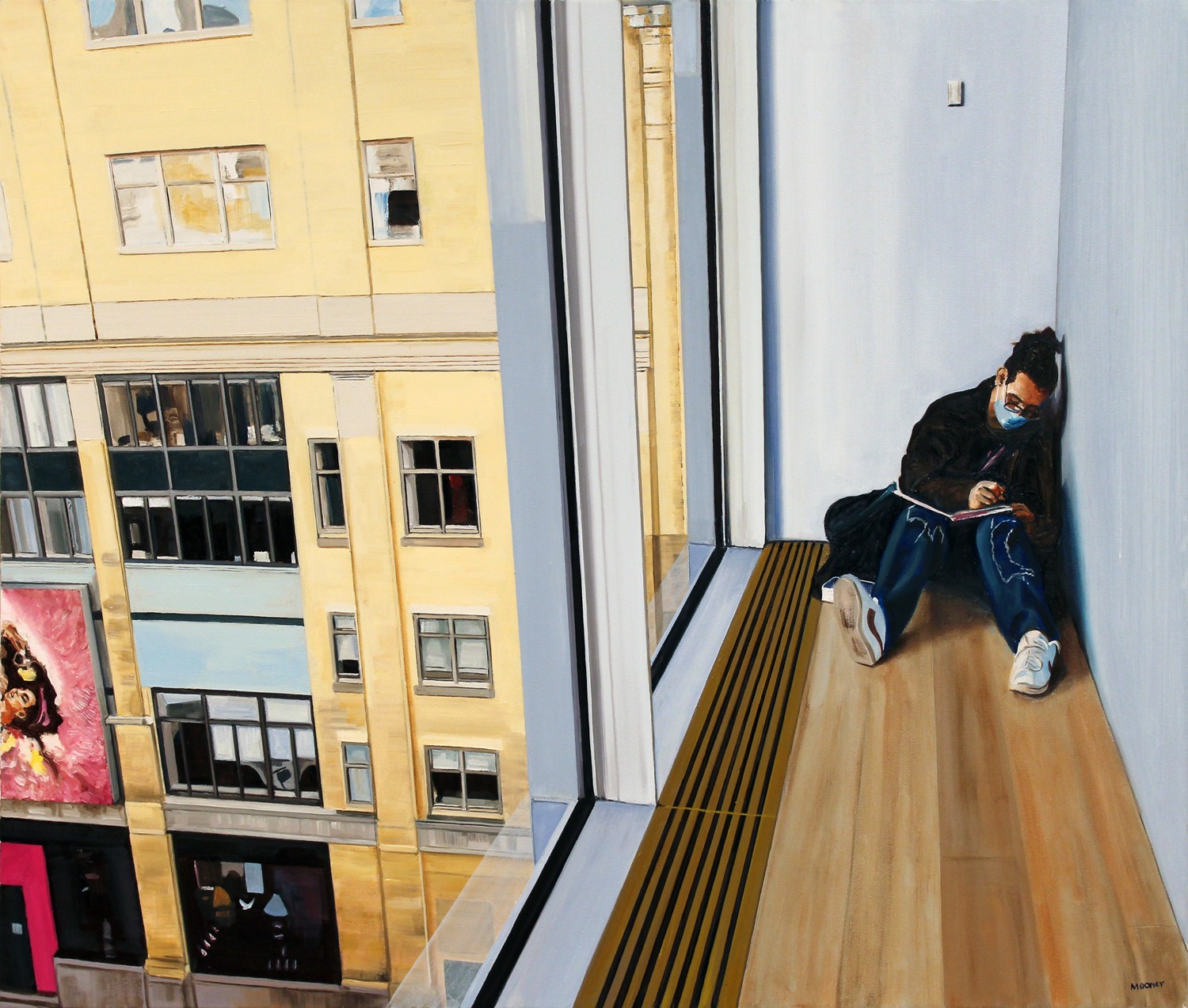
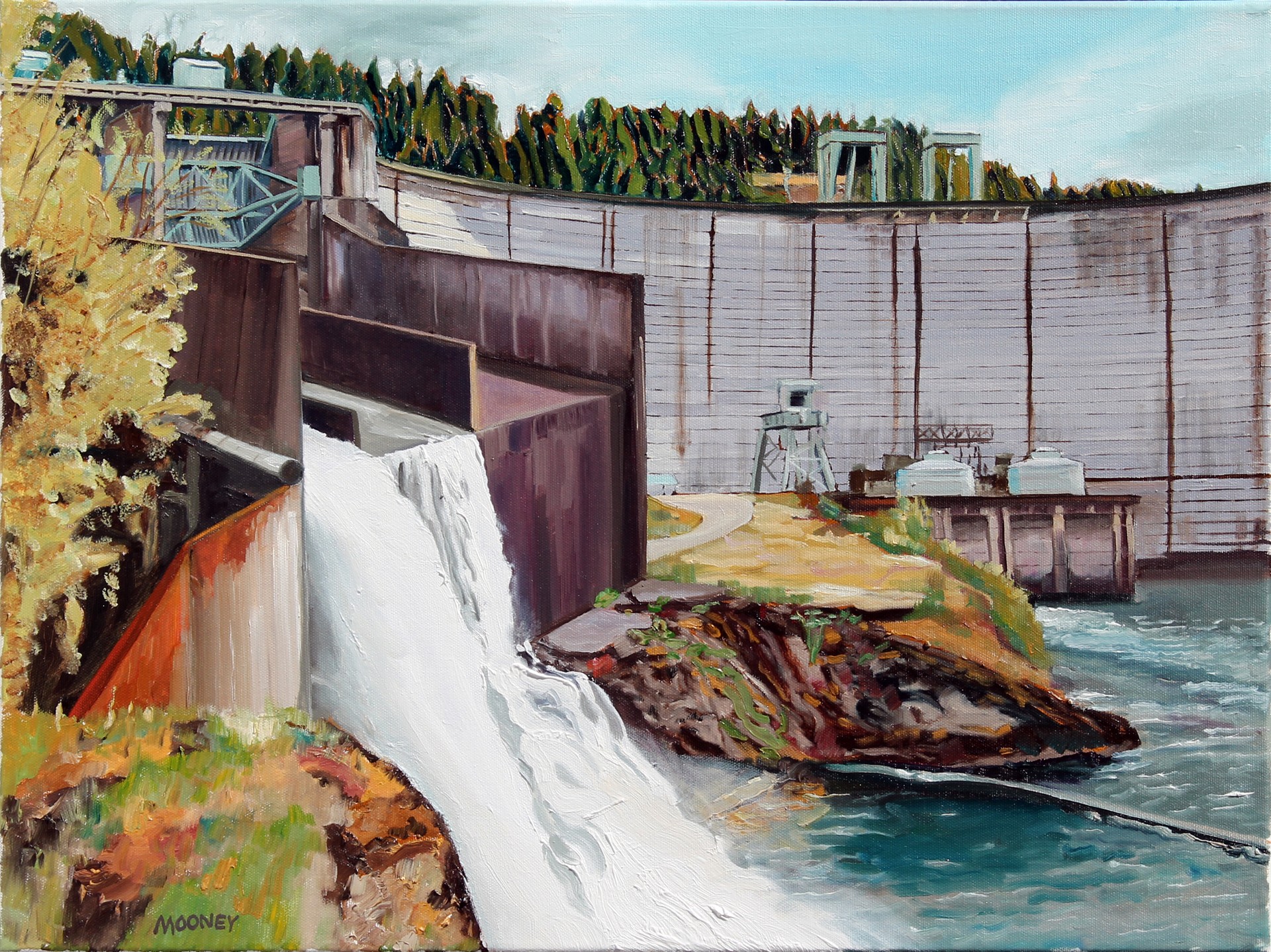
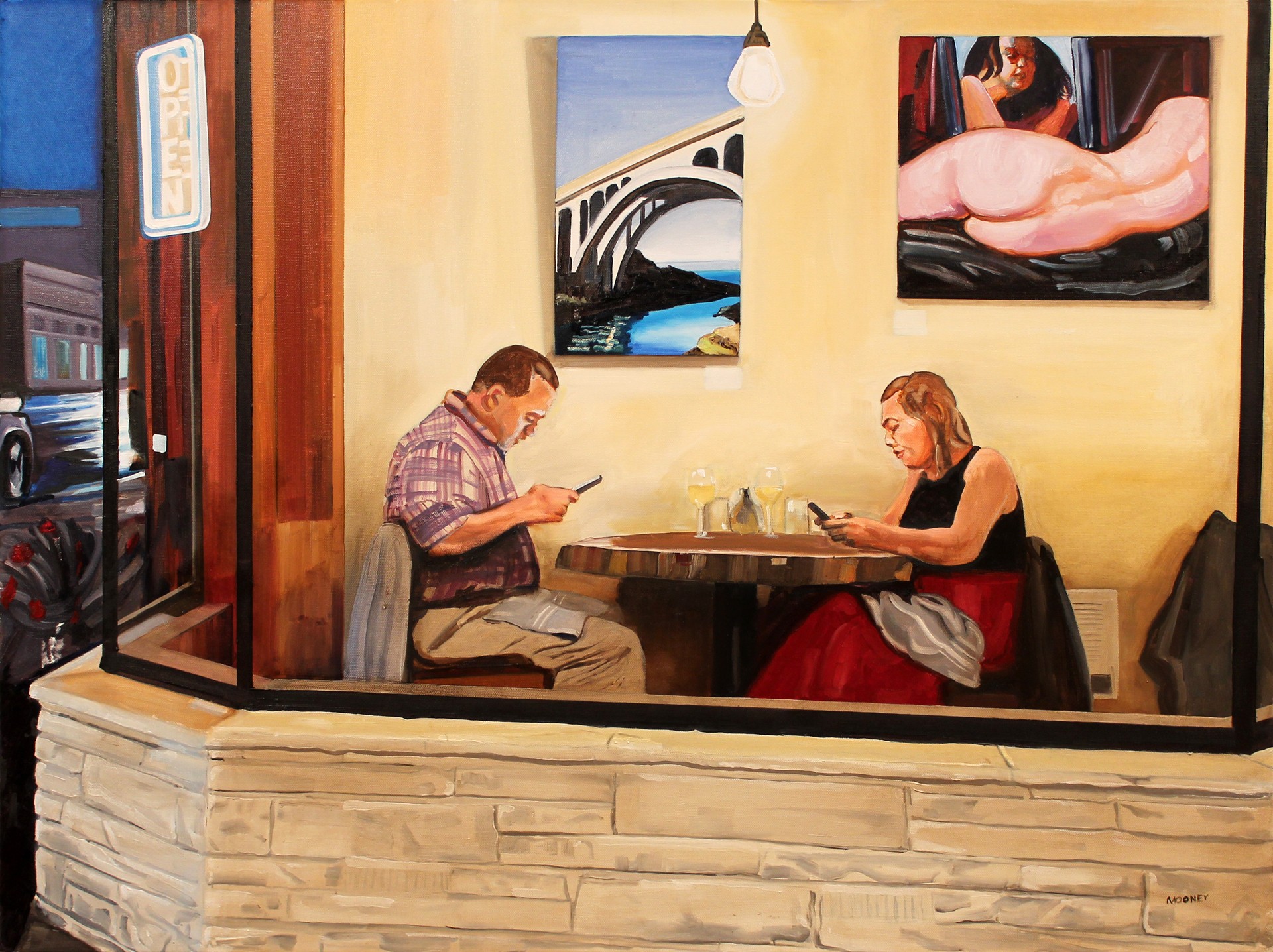
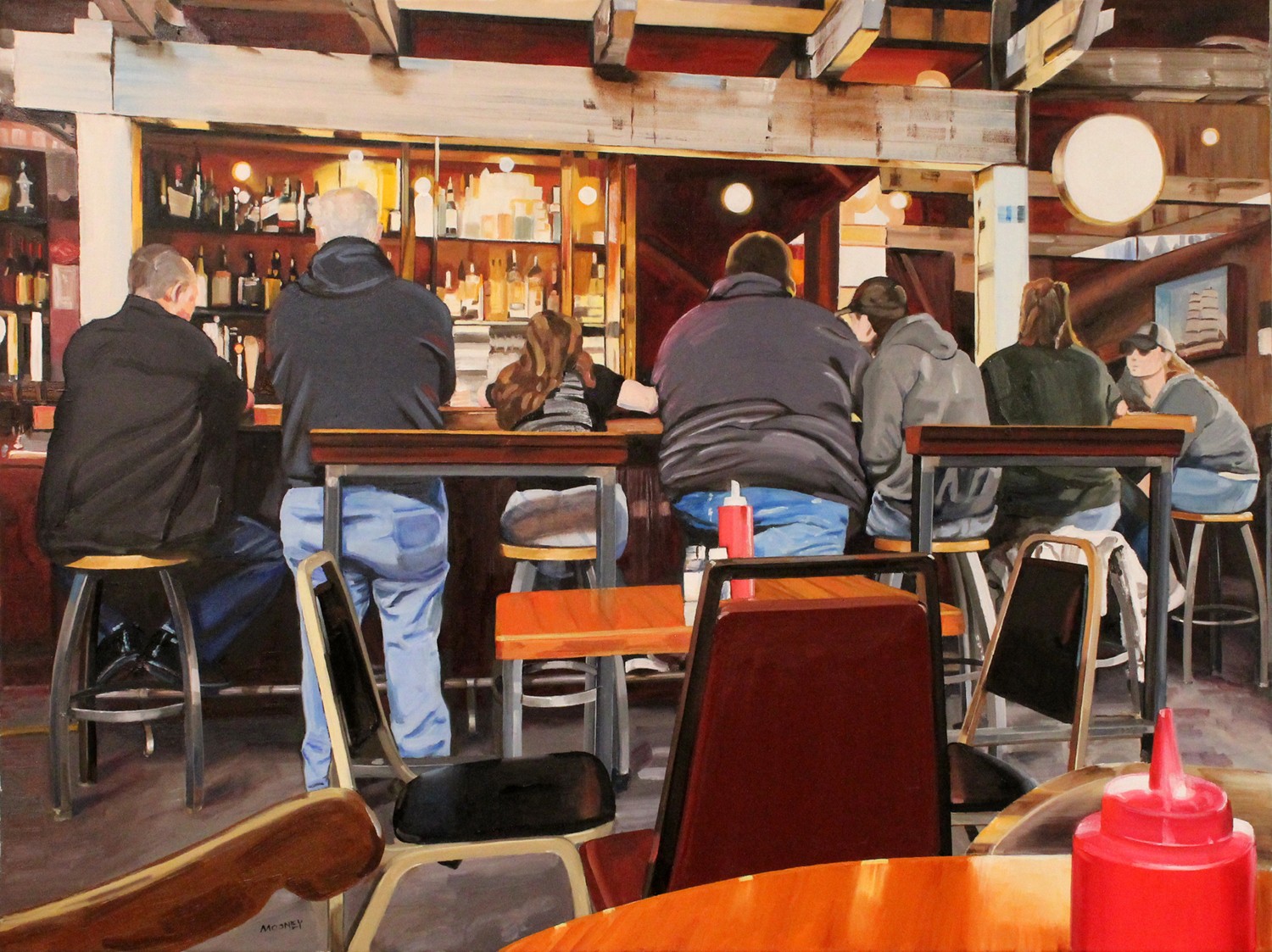
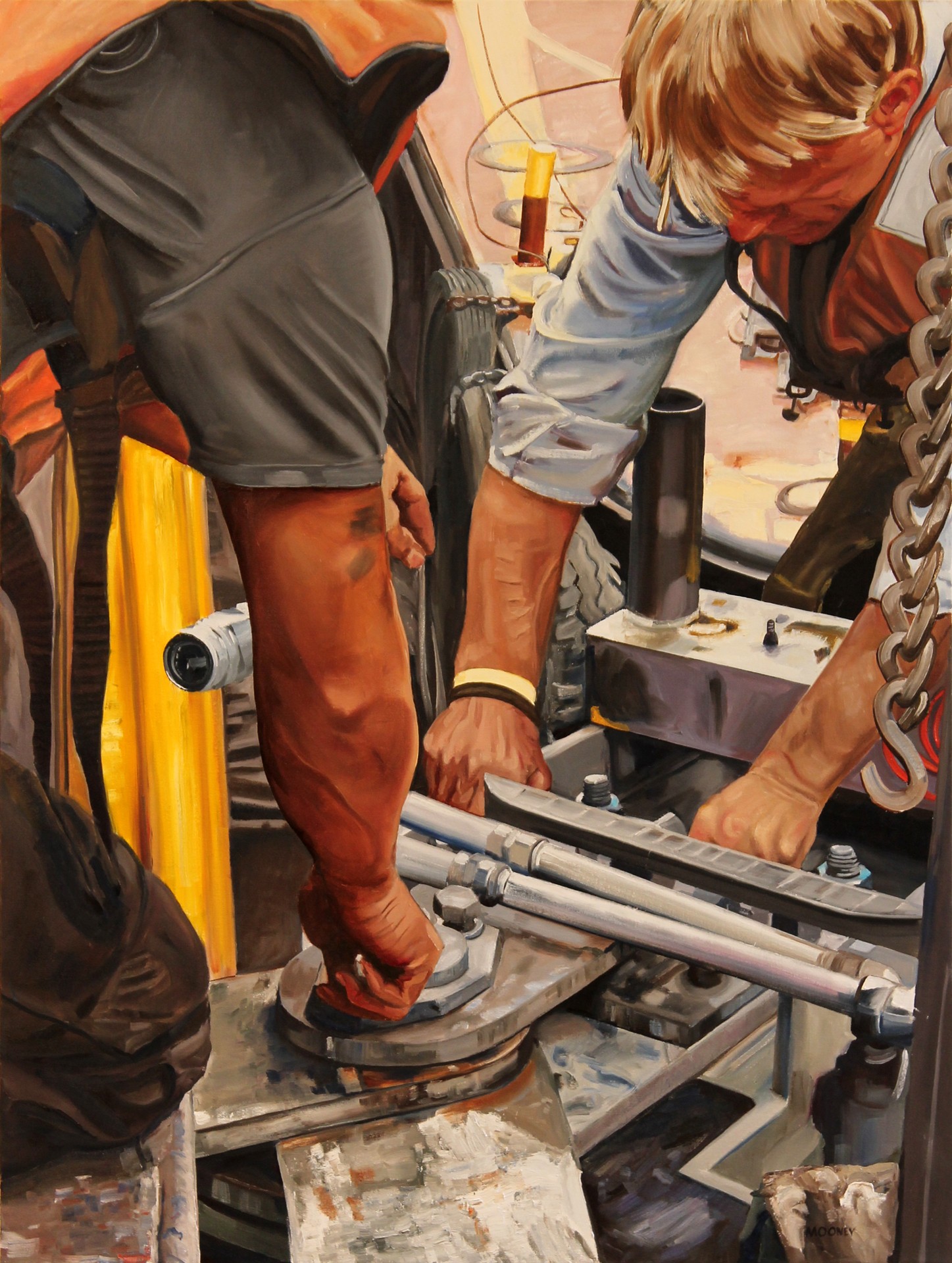
Image Credits
Christopher B. Mooney