



We’re excited to introduce you to the always interesting and insightful CHRISTOPHER KELLY. We hope you’ll enjoy our conversation with CHRISTOPHER below.
CHRISTOPHER, appreciate you joining us today. We’d love to hear your thoughts about making remote work effective.
Many of our talented staff members live in different cities, states, and even countries. We have managed to create an efficient workflow by using Chrome Remote Desktop, which grants permitted users access to a designated computer from anywhere Google Chrome account.
For our work we use large, powerful computers for efficient rendering, and the ability for our visual artists to access them remotely means that they don’t have to spend excessively to upgrade their own computer and all of the logistical problems that come with the enlarged set-up. This also allows for more than one user to access the same computer, which makes collaborating a step-less process.
Our delving into VR has also turned us onto Horizon Workrooms, a virtual conference room where we can all converge and exchange ideas in a way that brings the strengths of a physical business meetings to a remote communication environment.

Awesome – so before we get into the rest of our questions, can you briefly introduce yourself to our readers.
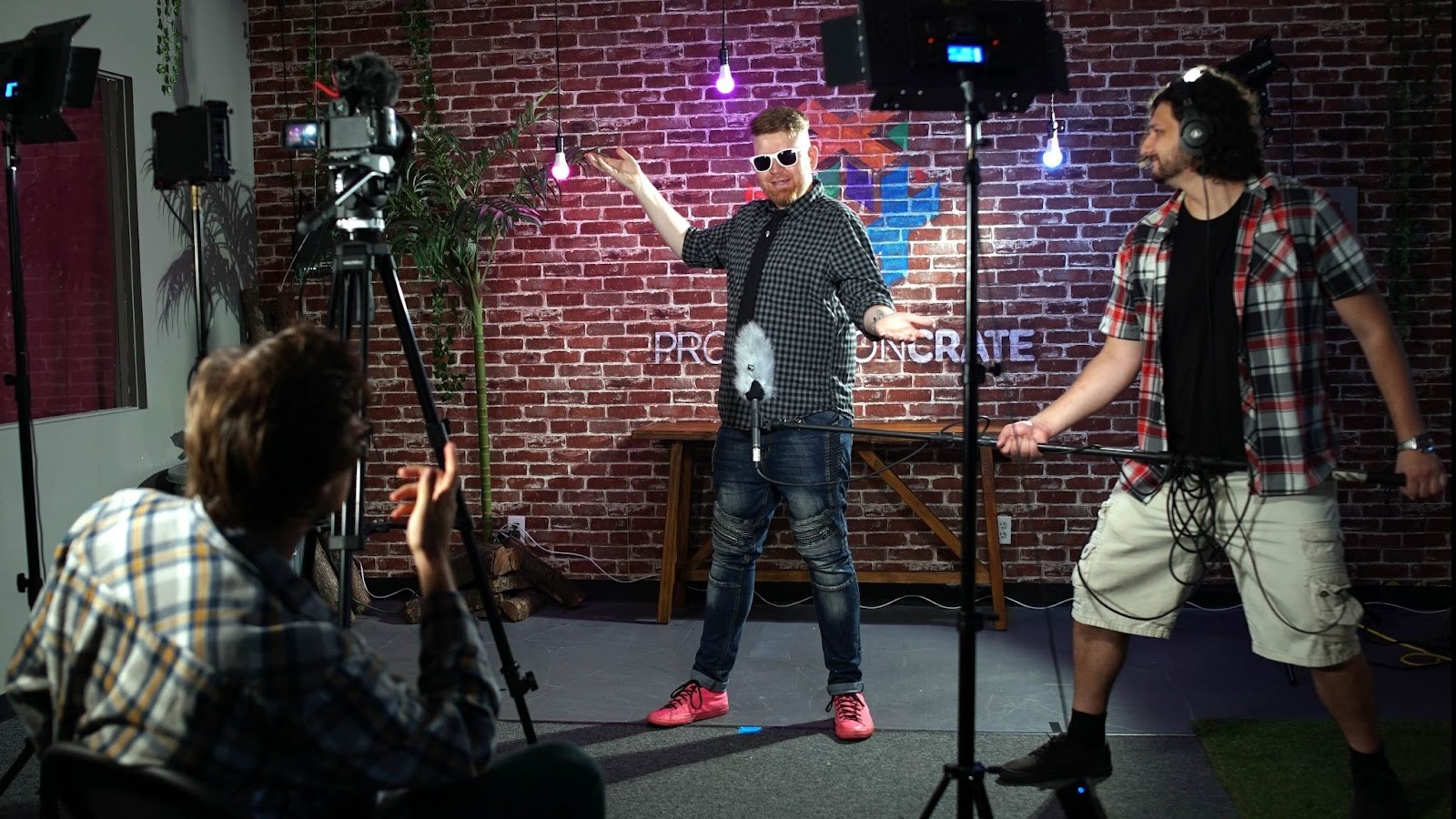
I work with a group of artists and developers who are making tools for other artists. If you need royalty-free music, video effects, graphics, or sound assets, we’ve got you covered.
ProductionCrate got its reputation from our VFX library, FootageCrate. That’s our flagship product, and where most of our million-plus users first found us. Filmmakers don’t just need one asset, though. As soon as our users realize we have all kinds of production resources, they’re downloading everything they need to make their project awesome.
I spent a lot of time in college making videos with my roommates. This was 2007, only 2 years after YouTube was first launched. We would post videos of poorly choreographed fight scenes, super-hero short films, VFX tests, and spoof videos. Two years later, I was building my special effects for our films, usually instead of going to class. I would build them on my home computer but needed a way to access them at school. I decided to make a website. There, I could store my assets and download them from anywhere.
The YouTube community was pretty supportive of the work I’d been doing, so I shared the link with them. That way, anyone could download HD effects for free! I thought it would be a dozen or so visitors, but I guess I underestimated them. After a few weeks, I added some sidebar ads. They generated a little pocket change, and that’s when I first realized this could be a business.
Can you tell us about what’s worked well for you in terms of growing your clientele?
We use YouTube to teach our user-base how to use our content. It’s a great free platform, we get a lot of new users directly through there. Since we maintain a free membership option, a lot of them are grateful to be able to not just learn, but use our content. That being said, we’re users of the site ourselves! We don’t want to just teach, we want to make exciting content ourselves. We largely fall in the same demographic as we are aiming for, fans and enthusiasts who want to make professional-grade films and shorts, and YouTube’s analytics tools help us reach those potential users. Currently our channel has over 160K subscribers and over 13M views, which continue to go up each month.
We have a pretty massive email list as well, something like 200k people, who like to be updated on our latest content. Every subscriber to our Email list came through ProductionCrate.com, one of the most common questions we hear is “How do I know when you’ve added more content for me to download?” The email list is a great way, but we’re also extremely active on social media, but primarily YouTube.

How did you put together the initial capital you needed to start your business?
Our first website cost me around $15/year for hosting and some extremely basic web-building tools. I don’t think I ever had to go out of pocket, we just put every dollar back in for the first few years.
Everything is 100% bootstrapped. We don’t have any investors to answer to, which is probably a good thing, at least at the moment. We’re focused on R&D, there are too many ideas and projects not to pursue, even if they ultimately don’t work. The ones that do can change the entire industry.
Since we’re entirely bootstrapped, with no investments or loans, we’re profitable. Both owners maintain a healthy salary, as well as our employees, and our customer retention rate is around 80% year over year. YoY growth is around 120%, and have over 10 million downloads and one million users on the platform. We don’t sell outside of our store, every sale goes through us directly.
Contact Info:
- Website: ProductionCrate.com
- Instagram: https://www.instagram.com/productioncrate/
- Facebook: https://www.facebook.com/ProductionCrate/
- Linkedin: https://www.linkedin.com/company/productioncrate
- Twitter: https://twitter.com/productioncrate
- Youtube: https://www.youtube.com/c/ProductionCrate/featured