



We’re excited to introduce you to the always interesting and insightful Cheryl Kraus. We hope you’ll enjoy our conversation with Cheryl below.
Cheryl, looking forward to hearing all of your stories today. What were some of the most unexpected problems you’ve faced in your business and how did you resolve those issues?
Some of the most unexpected challenges I’ve faced have had nothing to do with food and everything to do with the realities of running a business—managing facilities, handling refrigeration and equipment failures, navigating growth at different stages, and even adjusting to how often people want to hear my personal story which I struggle to open up and share. Each of these surprises required a different strategy, and together they shaped my approach to leadership and resilience as a restaurant owner in a small town over the past 14 years. I’ve had a lot to learn…. and I’m grateful for all the feedback I’ve received along the way, solicited or not.
I come from two very different worlds. My father was an extreme introvert—quiet, observant, and intensely disciplined. After his service in the Marine Corps, he spent his civilian career in government security, where silence and skepticism were almost requirements. In the 1990s he permanently lost his voice, and after a few medical consultations, decided the effort to restore it simply wasn’t worth the trouble. For the rest of his life, he spoke only in a low whisper—and regarded anyone who questioned it with that same Marine-trained “no-nonsense” demeanor. When people asked if the Marine Corps was difficult to adjust to, he would wrinkle his face and respond, “No. I went into the Marines because of my personality.” He was Gung-Ho for faithfulness long before he ever shouted “Oorah.” It suited him perfectly.
My mother, on the other hand, was his opposite in every way—an extrovert who could turn strangers into best friends before I even realized what was happening. I grew up watching her make unforgettable first impressions, opening doors everywhere she went. Keeping those doors open, however, was not her specialty. That part I had to learn myself, slowly and deliberately, by studying people, building relationships, and filling in the gray areas that neither of my parents had been able to teach me.
But those contrasting influences shaped me into the entrepreneur I am today, leading three businesses—Upcountry Provisions, The Grove Outdoor Center, and Greenthumb Training Center. The roots of that entrepreneurial spirit stretch back to when I was eleven years old. I started my first business as a fifth grader simply because I wanted to earn enough money to walk to the local grocery store and buy my favorite after-school treat: blue Jell-O. It was a business born out of necessity—and the spark that ignited everything that followed.
Not long after, I was placed in a children’s home, where I lived until after I turned eighteen. Even there, I found ways to identify needs and close gaps. I launched a small business within the facility and helped open a younger girls’ division of the home. I prayed for materials, and churches across the country began sending donations—unprovoked, unexpected, and perfectly timed. Within months, the center was fully equipped. Our first group consisted of two sisters and a pre-teen who needed stability. Helping them, and others, gave me a sense of purpose that has never left me.
That desire to meet needs carried me into my early adult life, where I studied at a small liberal arts university and worked in the tech world for a small, locally owned business. Customer service came naturally, but I was determined to understand the products, repair them, improve them, and eventually succeed in both sales and sales management. Those years taught me the importance of being a technician first—of knowing the work inside and out.
My love for food and baking led me to train at the French Culinary Institute, and eventually to open a restaurant built on fresh ingredients, warm hospitality, and the belief that spreadsheets and thresholds matter just as much as recipes. What surprised me most was how the transition from technician to manager deepened my love for people. Human capital—real people with real stories—is the lifeblood of every small business. Leading teens and adults well means modeling the behavior you want to see, and that responsibility changed me in ways I never expected.
For someone who didn’t have her first real conversation until her twenties, communication has been one of my greatest personal transformations. I had to pursue it intentionally: studying, listening, practicing, and learning in real time every day at work and in my personal life. Over the years, that effort reshaped me from a quiet observer into a gentle conversationalist.
That journey—of growth, resilience, curiosity, and service—is the heart of my entrepreneurial story. It’s what drives my businesses and keeps me committed to helping people grow—closing the gap between words and actions, shaping behavior through intentional training, and ensuring that our sandwiches, cookies, and the lifestyle surrounding Upcountry Provisions genuinely live up to our slogan: “All you need is Lunch.”
Awesome – so before we get into the rest of our questions, can you briefly introduce yourself to our readers.
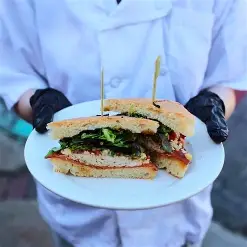
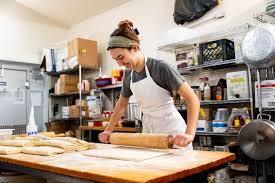
Getting into the food and hospitality industry is not for the faint of heart. We had to build a brand out of true grit, not just sell sandwiches, though the sandwiches on fresh focaccia or house-made lavash stand on their own. You’ve probably heard all of that before, and I have to agree. If I knew what I was getting into, I may have reconsidered, but I was so romantically in love with all things bread and pastry and community that I was blinded by love and didn’t see the entire scope of the project until its near launch. I piece-mealed for a while by buying a commercial oven on an online auction that had to be stored in my garage for what seemed like ages, and then at a later point, putting up a billboard saying “Opening in March,” though we didn’t open until the end of May that year. The best of intentions…. But what really shifted this concept from a hobby to a business was the most surprising of all: I became pregnant six weeks after opening the restaurant, and then had two children within 15 months of each other. Yes, I know where babies come from, but I had had a surgery where the doctor informed me that childbearing was not possible, so becoming pregnant was a shocker. And that’s when it got real. Customers said it first, “We are here because we see you have a baby on the way, and we want to help send them to college one day.” They melted my anxious heart, and I found the fortitude to press on and build a business that was intentionally bigger than me by design… the baby accelerated that transition process. I had to take everything inside my head and heart and fully train a staff to replace me within nine months. So I daily left the restaurant and went home to put my feet up and watch as many episodes of Hell’s Kitchen as I could muster, until I learned a few gems to return to work with the following day, inspired to make it better for all of us. Process improvement is the name of the game when you are launching a new brand. Stay as nimble as you can! One of the greatest takeaways from the show was to appeal to the locals. We had all this fancy bread with unusual names, but in our town, people bought cookies and brownies by the bucket-load, so the entire bottom of our bakery case started filling up with desserts and sandwich cookies with fresh butter cream. And every day that case would sell out!
During my undergrad, I studied Business with a concentration on Social Entrepreneurship and was inspired by the triple bottom line. The motto “Aim for More” was calling my name. I didn’t want to deliver. I wanted to REALLY deliver to people who felt connected to making a difference with their dollars. Although now I wish I had studied more finance than management, I’m playing catch-up in recent to ensure profitability. The errors were small when the company was smaller but now that it’s grown, an error of three percent adds up.
We started with five different breads a day, pastries, muffins, danishes and desserts and the entire menu was bakery-focused, and then we made sandwiches on our fresh bread. What we were quickly known for was our BISTRO, which broke my heart but the numbers didn’t lie, and since I was not independently wealthy and had to respond to buying trends, we expanded our menu to include breakfast and dinner. We offer a menu of fresh sandwiches, salads, soups, and wraps, along with a few sides. Customers often take a bakery item home with them after a meal, but the scale of the bakery had to adjust to customer interest. It took nearly eight years for the bakery to gain enough revenue to stand alone and start building out the menu again. The bistro won by a landslide. One of the best things that could have happened to my business is that I get taken out of it for a while. Had I not been pregnant in the first year of business, I would have been there all the time and continued on my plan to focus on the bakery prep. However, since I was there for only one shift a day, the afternoon prep prioritized replenishing the out-of-stock items, which in turn, focused on what was selling the most, i.e., the bistro fare.
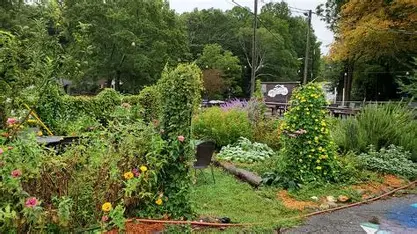
We enjoy providing fresh food in a casual setting surrounded by indoor and outdoor seating and a garden. We love co-hosting events with local groups and clubs, and even opened an event space on the property next door to host private events, community events, cooking and gardening classes, and a kids summer camp. The community has consistently blown me away with its support over the years, and we enjoy growing in ways that allow us to develop as an economy of scale rather than a franchise model, which would have burned me out personally, given that I have young children and would have required frequent travel to multiple locations. At the time of opening, much of our small town’s downtown area was boarded up over the windows. However, the same year Upcountry Provisions opened, a rails-to-trails project connected a biking and walking path from our small town to a larger downtown around 12 miles away. This opened up our town for tourism, and that has continued to grow over the past fifteen years. Now the town talk is that you don’t have to go downtown for a reason… you can just go downtown and find something that will meet everyone in your group’s need for a good time. I’m glad to have been part of that movement and to have gotten in at the beginning of what I have witnessed to be a full revitalization of our downtown and community, and I’m happy that our sandwiches, brownies, and legendary peanut butter diablo cookies have played a part in providing jobs and drawing people in.
This is our story of how we opened a business in a small town on the cusp of revitalization and provided another commercial heartbeat in a boarded-up downtown, which many other restaurants joined in the following years. Around a year after we opened, our city administrator told me that seven businesses submitted their applications to open based on our success. Every time another restaurant or successful business opens, we all get busier. I’m proud to be part of a community that supported our concept from its origin, before it even fully made sense to me, and endured all of our updates and changes to position ourselves in a place of longevity. Many people are afraid to make the necessary changes to stay in business or become successful, but I experienced that the changes that were necessary, kept us in business as the seasons changed, and I’m happy to still be here in this town that I love. I served the town because I love to serve and produce, and now I love the town because I have served here and become a more full expression of what I am through the businesses of Upcountry Provisions, The Grove Outdoor Center and Greenthumb Training Center.
What’s a lesson you had to unlearn and what’s the backstory?
I had to unlearn the principle that the customer is always right. On many occasions, a customer would provide their seemingly sound opinion, which may have been right in the context they were presenting; however, what they wanted just wouldn’t work for us as a business because it was misapplied to our environment or resources. However, on the two occasions when our early morning bakers grabbed the freshly made hummus and scooped hummus instead of icing it into our sandwich cookies, we definitely made it right and then some! But when a customer wants more gluten-free items, we are very limited in the offering of the gf since we are small and constantly have wheat flour in the air. We will honor the grilled cheese, no cheese request though… which is just toasted bread and mayo.
Conversations about M&A are often focused on multibillion dollar transactions – but M&A can be an important part of a small or medium business owner’s journey. We’d love to hear about your experience with selling businesses.
I had the good fortune to help my previous boss sell his business, which taught me how wealth is measured in the end and from a different person’s perspective. The process took more than three months, and then, as his regional manager, I was negotiated as part of the deal to stay on with the new owner during and after the transition for support and management assistance. The new owner was not the person who started the business and didn’t have any personal attachments to the products, people, and processes, so he was able to restructure in ways that made the business more structured and potentially more profitable over time. I quickly realized that I was working myself out of a job by selling the business so I returned to my previous boss, pitched a new concept, and went through the process to open another type of retail store for him once my transition time concluded.
Contact Info:
- Website: https://www.upcountryprovisions.com
- Instagram: @upcountrybread
- Facebook: Upcountry Provisions
- Yelp: Upcountry Provisions
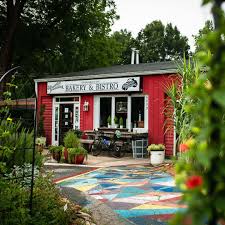
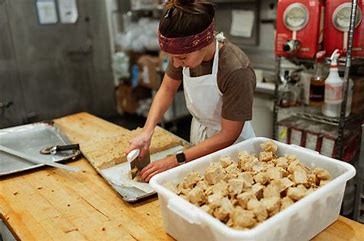
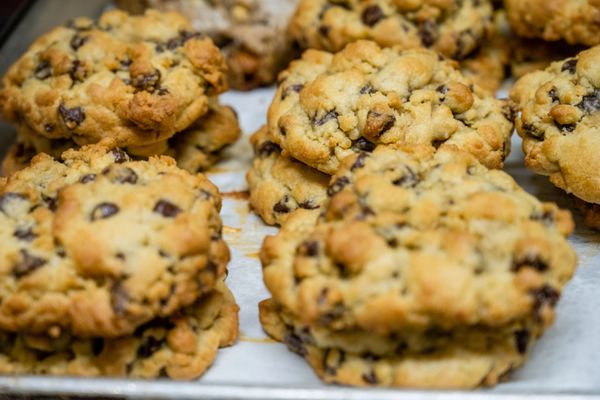
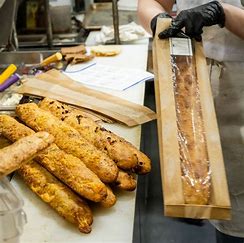
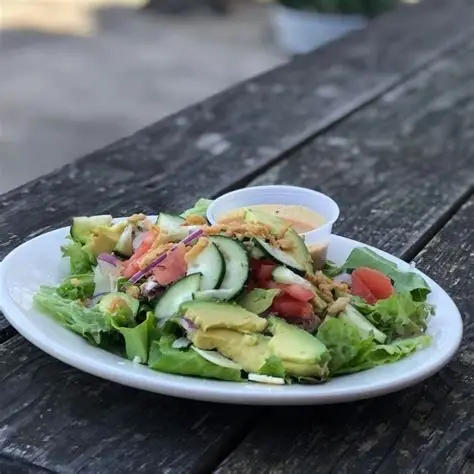
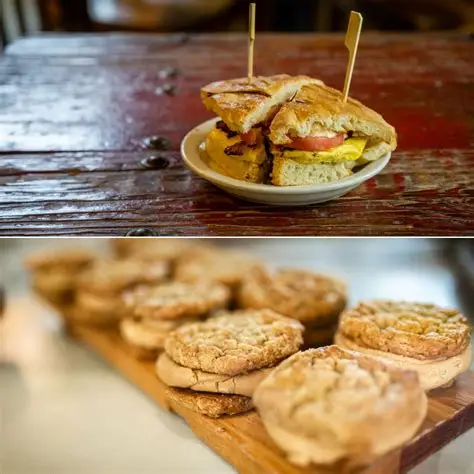
Image Credits
These were all taken in house