



We were lucky to catch up with Cheri Joseph recently and have shared our conversation below.
Cheri, looking forward to hearing all of your stories today. What’s the backstory behind how you came up with the idea for your business?
The idea for Sociél Muet Atelier Payroll is rooted in a very personal beginning.
More than thirty years ago, I was one semester away from finishing college, studying computer programming with a focus on graphics and a minor in video production. My dream at the time was to build a Pixar-style production company owned by a person of color. But life shifted unexpectedly when my brother was deployed just as he welcomed his first child. My mother called it an “all hands on deck” moment for our family. I made the decision to leave school and return home to St. Thomas to help raise my nephew.
That decision placed me into the workforce sooner than expected, and I began working in payroll at the entry level. What I discovered very quickly was that the work suited how my mind operates. Payroll requires precision, strong numerical reasoning, and the ability to investigate when something doesn’t reconcile. Over time I advanced from Payroll Specialist to Payroll Supervisor, eventually becoming an Assistant Comptroller and later specializing in payroll tax and general ledger alignment. That entire progression happened without a formal degree or certification—through experience and performance alone.
Years later, during the pandemic, I explored social media as a creative outlet. After experimenting with platforms like YouTube and Pinterest, I eventually discovered user-generated content in 2023. At first, I followed the typical advice circulating in the creator space, but eventually I stepped back and approached it the way I approach payroll: as a business problem to solve.
Once I shifted my perspective, things moved quickly. Within three months of taking UGC seriously, I worked with brands like OSEA, Kopari, and Summer Fridays, while creating content across multiple platforms and participating in the Amazon Influencer Program. Other creators began asking how I approached the work, which led me to build a small course and community. That experience also allowed me to beta test what operating a social media agency might look like.
In 2025, I was laid off from my corporate payroll role while preparing to relocate to Texas. I paused launching the agency during the move, but the time gave me perspective.
What I realized was that the same creative and ad-tech industries I had been working around on the front end were often operating with extremely complex payroll structures behind the scenes—multi-state employees, contractor networks, and PEO environments that can easily create tax and system exposure if they are not properly overseen.
That realization became the foundation for Sociél Muet Atelier Payroll.
Today, the firm focuses specifically on high-stakes payroll tax reconciliation and oversight of PEO-to-PEO payroll system transitions. These are moments where errors can surface during audits, acquisitions, or periods of rapid growth. My role is to step in quietly, analyze the structure of the payroll environment, and restore alignment so the organization can move forward without disruption.
What excites me most about this work is its clarity of purpose. It combines three decades of payroll experience with a modern understanding of the industries I serve. The result is a practice designed to solve problems that many companies don’t even realize exist—until they do.


Great, appreciate you sharing that with us. Before we ask you to share more of your insights, can you take a moment to introduce yourself and how you got to where you are today to our readers.
I built my career in payroll the traditional way—starting at the ground level and advancing through increasingly complex roles over more than three decades. My early work began as a Payroll Specialist, but as organizations grew and payroll environments became more complex, I naturally moved into positions that required deeper financial and systems oversight. Over time, I served as a Payroll Supervisor, later becoming an Assistant Comptroller, and ultimately specializing in payroll tax and general ledger alignment.
During that time, I managed payroll operations at significant scale, including environments supporting more than 26,000 employees and portfolios exceeding one hundred client accounts simultaneously. Experiences like that shape how you think about payroll. You begin to see it not just as a function of processing wages, but as a system that sits at the intersection of tax regulation, accounting infrastructure, software architecture, and operational risk.
That perspective is what ultimately led me to establish Sociél Muet Atelier Payroll.
The firm operates as a specialized advisory practice focused on the back-end structure of payroll environments—particularly in high-growth companies where complexity increases faster than internal systems can keep up. I work primarily with creative agencies, ad-tech firms, and private-equity backed organizations that rely heavily on multi-state teams, contractor networks, and rapid operational expansion.
My work centers on two very specific areas.
The first is prior-period PEO-to-PEO payroll system implementation oversight. Companies often change Professional Employer Organizations as they grow or restructure. Those transitions are frequently treated as administrative vendor swaps, but in reality they are complex system migrations involving tax IDs, wage histories, benefit integrations, reporting frameworks, and regulatory obligations across multiple jurisdictions. My role is to oversee that transition from a systems and tax integrity perspective, ensuring the new environment launches without hidden liabilities.
The second area is prior-period payroll tax reconciliation and resolution. These are situations where historical filings, deposits, or jurisdictional allocations have become misaligned over time. Left unresolved, those discrepancies can surface during audits, acquisitions, or investor diligence. My role is to quietly identify the source of the issue, reconstruct the correct tax positions, and guide the organization back to alignment.
In simple terms, I operate as the back-end strategist and insurance policy for agencies that cannot afford payroll disruption.
What tends to set my work apart is the lens through which I approach payroll. Many professionals in this field focus on processing or departmental management. My work sits several layers deeper. I analyze payroll environments the way a systems architect or forensic accountant would—mapping how payroll data flows between tax filings, financial statements, HR platforms, and reporting structures. When something goes wrong, I focus on identifying the structural cause rather than treating the visible symptom.
Another aspect that influences my work is an unusual crossover perspective. Before founding this consultancy, I spent time inside the social media and creator economy, building a user-generated content agency and working directly within the digital marketing ecosystem. That experience gave me a front-end view of how modern agencies operate—their revenue cycles, contractor structures, campaign timelines, and growth pressures.
Because of that background, I understand both sides of the business environment my clients operate within: the creative, fast-moving front end, and the highly regulated payroll infrastructure behind it. Bridging those two worlds allows me to anticipate operational friction that many traditional payroll consultants miss.
What I am most proud of in my career is the consistency of the environments I have supported. Payroll is one of the few business functions where mistakes carry immediate consequences for employees, leadership teams, and regulatory standing. Maintaining accuracy and stability at scale—especially in complex, multi-state environments—is a responsibility I have taken seriously throughout my entire career.
The work I do today reflects that same philosophy. My practice is intentionally structured to remain small and highly focused. I typically work with only one or two deep-dive clients at a time so that the analysis and oversight each engagement requires can be handled with the level of precision it deserves.
For potential clients, the most important thing to understand is that Sociél Muet Atelier Payroll is not a payroll processing service and it is not a traditional consulting firm. It is a specialized advisory practice designed for moments when payroll environments become complex, fragile, or exposed to risk.
When companies need quiet expertise behind the scenes—someone who understands the structural mechanics of payroll systems, tax reporting, and financial alignment—that is where my work lives.


Have you ever had to pivot?
One of the most significant pivots in my life happened in August 2025 when I was laid off from my corporate payroll role. It was the fourth layoff I had experienced in nine years. That moment forced me to step back and seriously reevaluate the path I had been on. After decades of helping stabilize and support other organizations, I realized I needed to redirect that energy toward building something of my own.
Around the same time, I made another major life decision—I relocated from Florida to Texas, a place I had never even visited before. Fortunately, the transition was eased by the fact that my nephew, whom I helped raise, and my best friend both live here. Their presence gave me the grounding I needed while navigating a period of change.
Initially, my plan was to reopen my social media agency, Sociél Muse, and focus entirely on that side of the industry. At first, I started doing payroll consultancy for the corporate world, where I started reaching out to traditional companies and networks I had worked with over the years. However, something about that approach didn’t feel fully aligned.
The turning point came when I realized I didn’t have to choose between the two worlds I understood so well. My decades of payroll experience and my love for the social media and UGC creator economy could actually complement one another.
That insight led me to pivot the direction of my payroll consultancy and build Sociél Muet Atelier Payroll specifically to serve creative social media agencies, ad-tech firms, and PE-backed firms. Instead of returning to a traditional corporate environment, I repositioned my expertise to support the very industry I had grown to love working in.
The pivot also required a full repositioning of the brand—new name, new visual identity, and a refined focus on high-level payroll strategy rather than traditional payroll roles. What emerged from that process was a much clearer and more intentional business model.
Looking back, the layoffs that once felt discouraging ultimately became the catalyst for building something more aligned with both my experience and my interests. Instead of continuing to help build someone else’s organization, I used that moment as the opportunity to create a practice designed around the type of work I do best.
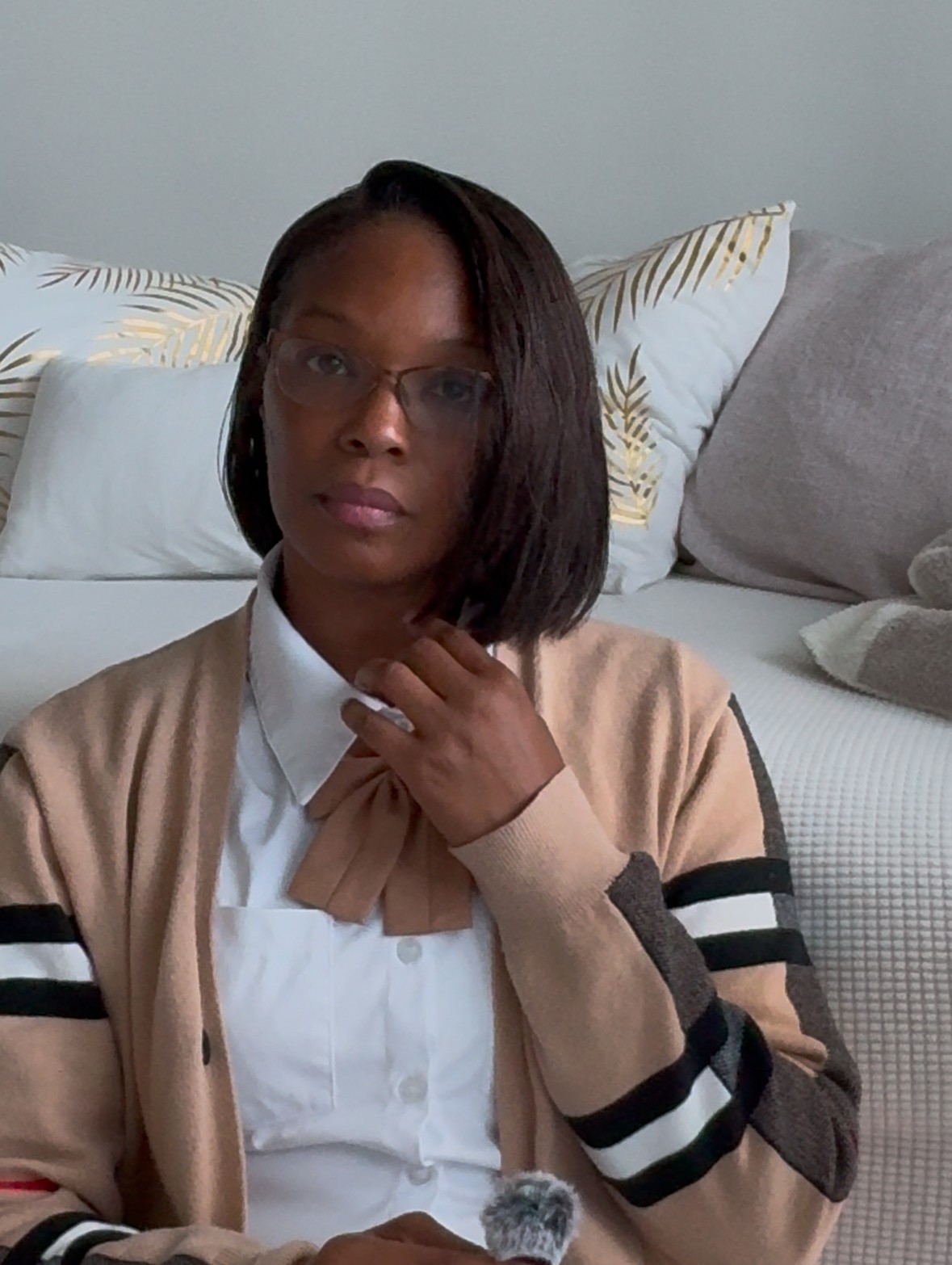

We’d love to hear the story of how you built up your social media audience?
Building my audience on social media was never about chasing trends or trying to perform for the algorithm. My approach has always been rooted in authenticity and clarity.
When I entered the UGC creator space, I treated it the same way I approach any professional discipline: I focused on the problem that needed to be solved. Instead of creating content for visibility alone, I spoke directly to the challenges brands and creators were experiencing and explained how those problems could be resolved.
My communication style is also very simple and direct. I avoid performative pressure and overly sales-driven messaging. My approach is usually straightforward: I understand the problem you’re facing, here is what I will do to resolve it, and here is the outcome you can expect once the work is complete. That level of clarity builds trust very quickly.
Interestingly, my voice and delivery style are naturally soft and calm. In many social media spaces that might seem like a disadvantage, but it has actually become a strength. People often tell me they feel like I am speaking directly to them and to their specific situation. When communication is genuine and focused on the audience’s needs, people recognize that immediately.
For anyone just beginning to build a presence on social media, my advice is to resist the pressure to imitate what everyone else is doing. Focus on understanding the problem your audience is trying to solve. When you communicate clearly, honestly, and consistently about that problem—and the results you can deliver—your audience will naturally begin to trust your voice.
In the long run, authenticity and clarity are far more sustainable than performance.
Contact Info:
- Website: https://socielmuetatelier.com
- Instagram: @socielmuetatelier
- Linkedin: https://www.linkedin.com/in/cheri-joseph-payroll-tax-compliance-consultant/


Image Credits
Myself