

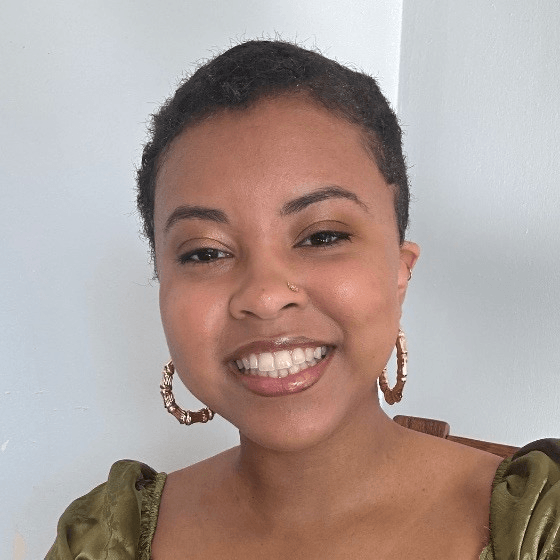

We’re excited to introduce you to the always interesting and insightful Chenoa Baker. We hope you’ll enjoy our conversation with Chenoa below.
Chenoa, appreciate you joining us today. Have you ever had an amazing boss, mentor or leader leading you? Can you us a story or anecdote that helps illustrate why this person was such a great leader and the impact they had on you or their team?
Michelle Fisher, the Ronald C. And Anita Wornick Curator of Decorative Arts at Museum of Fine Arts Boston, is the best boss I ever had. From my first interview with her, I felt like I could be my authentic self — quoting the animated movie Robots (2005) to illustrate my work ethic — “see a need, fill a need.” Not only did she show me multiple pathways in the arts industry, but also revealed the more human side of working as an adult. She told me how much she makes, what city she lives in and why, cortisol levels rising making her journey towards fertility hard, unionizing, and how she had odd jobs as a nanny, chef, and many other things as long as she’s been a full-time curator. Also, she opened up infinite universes through vocational training: I wrote acquisition rationales (a persuasive form arguing why a museum should add something into their collection), shadowed her on jurying design MFA students at Columbia, participated in department meetings, helped to write labels, and she gave me credit. I felt empowered under her care and leadership. While this may almost sound like a love note to a boss, it really stands as a testament to the impact of what The Lorax says, ‘unless someone like you cares a whole awful lot, things aren’t going to get better there not.” She really embodied the change she wanted and instilled hope, care, tenderness, empathy, and hard work. She was the supervisor of an internship that I had. Still to this day, no boss has topped her impact and leadership. I still seek her wise counsel when I can after all these years. Years later, she’s shown her project Designing Motherhood internationally, incubates a little one, and continues to bless the field with how she treats people. Now, as an entrepreneur working with multiple stakeholders, I am reminded to even be that type of boss to myself.


As always, we appreciate you sharing your insights and we’ve got a few more questions for you, but before we get to all of that can you take a minute to introduce yourself and give our readers some of your back background and context?
How’d I get into the industry: Taking an art history survey course as an elective in undergrad by happenstance changed the trajectory of my life. It was an 8:30 am class that I was enthused to wake up for and soak up human stories and questions through art. At the time, I studied political science because I wanted to produce research to affect policymaking because I love an informed decision. I thought that I’d work at a think tank and that would be my path. I changed my major, took curating classes, absorbed critical theory, and saw art and writing as a tool for understanding, sociological research, self actualization, ancestral connection, and dialogue. I also interned a ton to learn about the various facets within my industry.
Random get-to-know-me facts: I met Angela Davis my first year of college, I love pies more than cake, I have Boarders and Blockbuster nostalgia, I know American Sign Language, I played KidPix a lot as a child
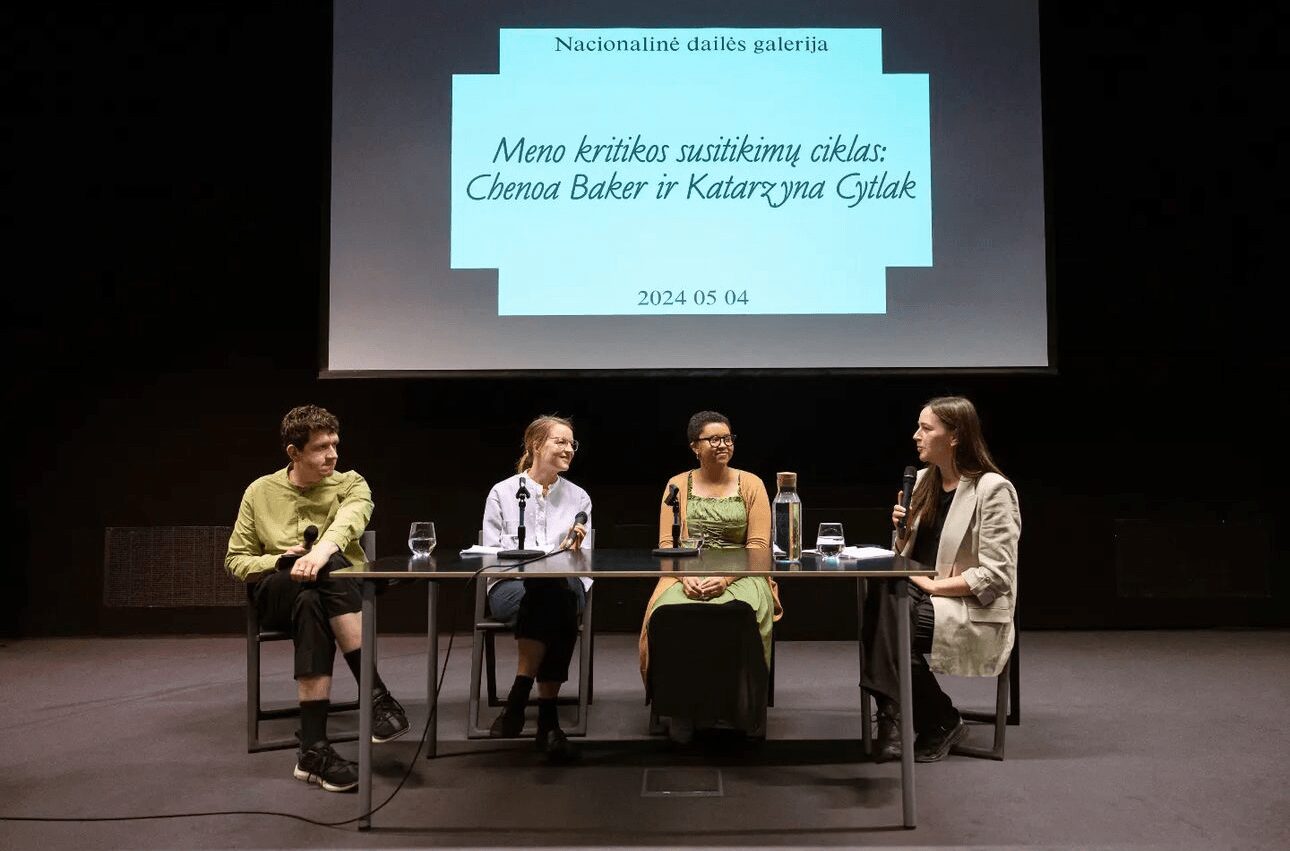
Professional Bio: Chenoa Baker (she/her) is a curator, wordsmith, and descendant of self-emancipators. She was the Associate Curator at ShowUp, an adjunct at Massachusetts College of Art and Design, and a consultant on Gio Swaby: Fresh Up at PEM and Touching Roots: Black Ancestral Legacies in the Americas at MFA/Boston. In 2023, she received the Association Internationale des Critiques d’Art (AICA) Young Art Critics Prize. Her AICA winning paper opened up the opportunity to present her paper at the National Gallery of Art, Vilnius, Lithuania.
Currently, she teaches African American Craft History at the James Renwick Alliance, edits with Sixty Inches From Center, Pigment Magazine, The National Gallery of Art, Boston Public Art Triennial, and The Corning Museum of Glass, and writes for Hyperallergic, The Brooklyn Rail, Public Parking, Material Intelligence, and Studio Potter.
In essence, I am an art doula and cultural care worker who nurtures connections through wordsmithing, creative copyediting, curating, and mentoring.
Personal Bio: Chenoa is the Black Velma. She loves provocative t-shirts, communal laughing, nostalgia, reality TV, zines and comics, and the bits of zaniness in the world. Beyond work, she is a meet-cute collector, dreamer, speculator, interdisciplinarian, and a word fanatic (e.g. reciprocal and ruderal). Forever chasing the luster of the extraordinary in the ordinary…
Services: exhibition-making, writing (art criticism, labels, experimental/hybrid, creative nonfiction), gallery/museum consulting, copyediting, nonprofit and editorial strategy, teaching, speaking, institution-building and disrupting, researching, one-on-one art industry coaching
What makes me different: a relational approach, my interest in African diasporic craft histories, exhortation, care, advocacy, collaboration, and desire for mastery in the work I do.

Is there something you think non-creatives will struggle to understand about your journey as a creative?
My job has never been a dinner party flex because unlike lawyer, doctor, or electrician, defining a nebulous term like creative, curator, or writer is quite tricky. I once told a colleague that I wish people allowed me to answer a question with a question. For example, if they were to say, “what do you do?” I would respond, “what do you need?” Finding synergistic, creative solutions through community arts can take many forms. There’s many ways that I constantly reinvent myself as a creative which is nonlinear, mission-motivated, and out-of-the-box.
For these reasons, I think less about time as a clock in and out way, quality over quantity is the goal, to overcome creative blockages, thinking, resting, breaking, toggling, and living feeds into my practice. Some work to have their creative practice and I make my creative practice my life’s work.

Learning and unlearning are both critical parts of growth – can you share a story of a time when you had to unlearn a lesson?
Structure and conformity. Those are two things that I’ve had to unlearn from academia. When writing, you learn the thesis, body paragraphs (3-4 sentences), and a conclusion, for example. Life is never that cut and dry. While it’s important you know various avenues to do creative work, improvisation and authenticity are paramount. There’s an Audre Lorde quote about not being able to dismantle the master’s house with their tools and that’s absolutely true creatively.
Contact Info:
- Instagram: @Chenoa.e.baker
- Linkedin: https://www.linkedin.com/in/chenoabaker
- Other: Installations: https://drive.google.com/file/d/1XcNFdKUFS1gpBJO4-Z-ycg6SdLz4hOJm/view?usp=drivesdk
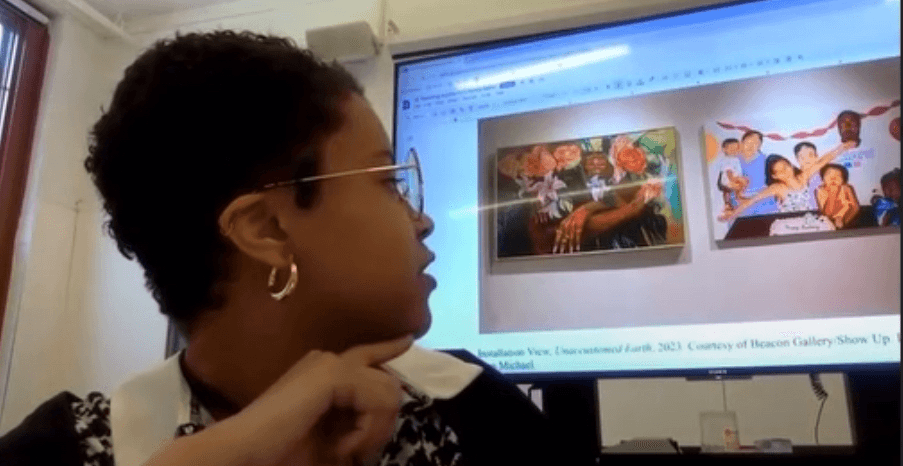
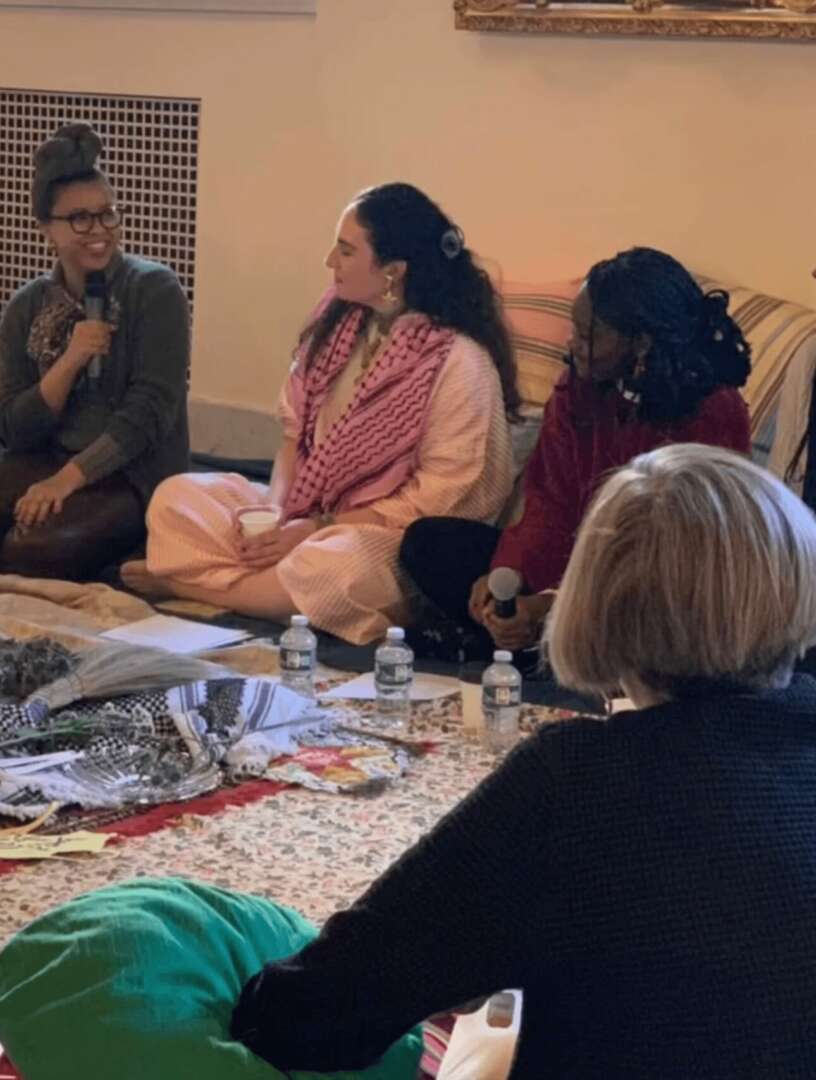
Image Credits
1. Szu-Chieh Yun and I taking a picture in front of her work while showcasing an article I wrote about her in ArtScope
2. Courtesy MFA/Boston in Touching Roots: Black Ancestral Legacies in the Americas, 2022
3. Courtesy of CAC Vilnius and the National Gallery of Art, Vilnius, Lithuania
4. ArtCloud panel discussion promotional flyer
5. Studio Visit with Wavy Wednesday in West Virginia
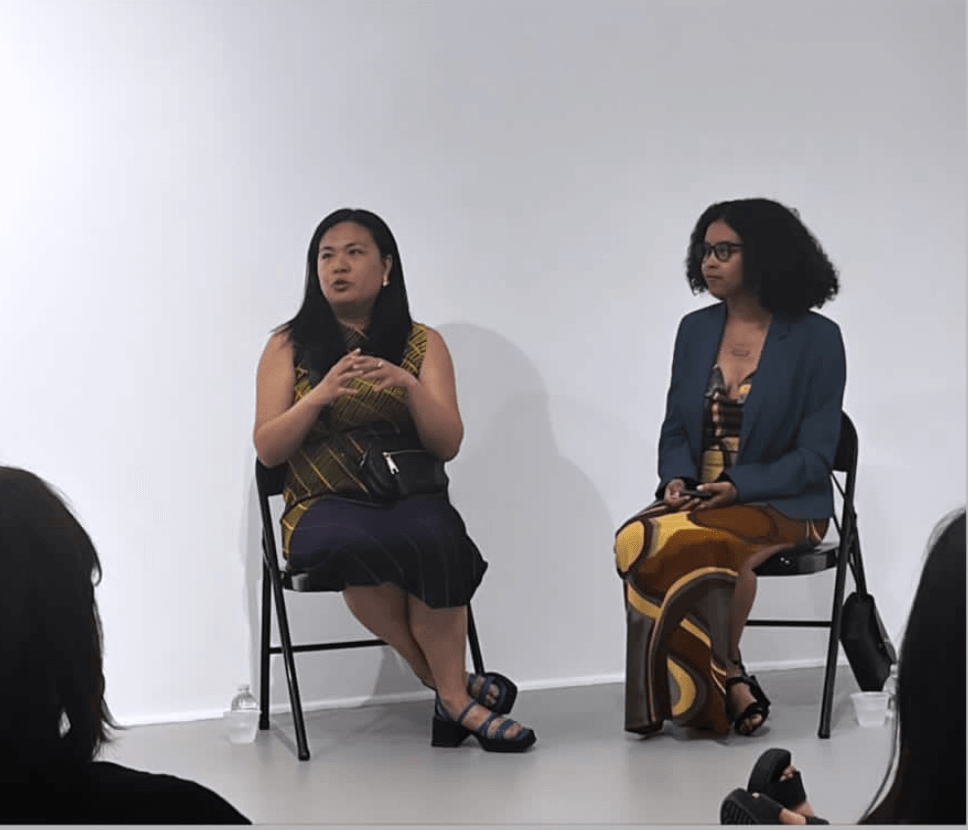
6. Szu and I talking at the Boston Center For the Arts about her Rage and Ecstasy series
7. Work by Beatriz Whitehill and Emily Rose in my show Unaccustomed Earth (2023) that I’m teaching to students at Massachusetts College of Art and Design in my exhibitions course
8. Made in USA series by Feda Eid talk with the teens from and the talk was sponsored by The Elliot School for Craft and Fine Art? Boston