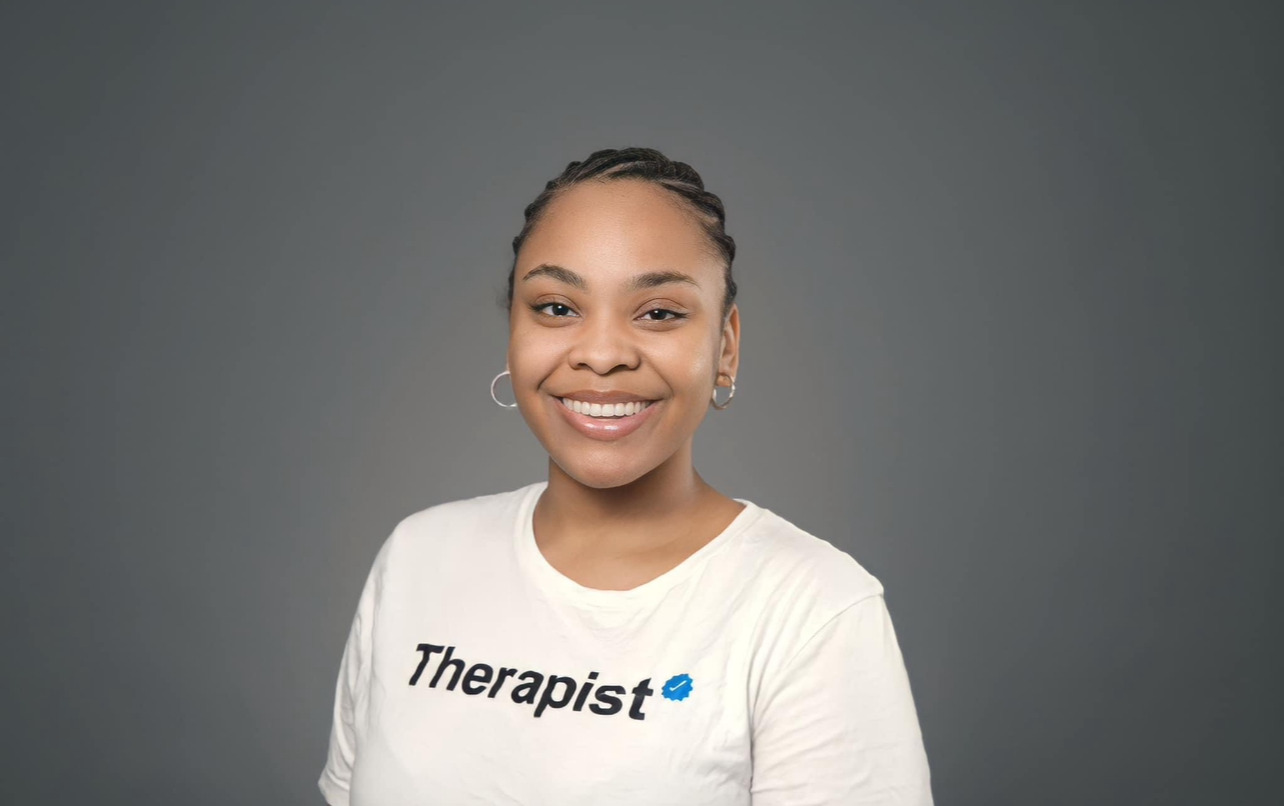

We were lucky to catch up with Charde Walker recently and have shared our conversation below.
Alright, Charde thanks for taking the time to share your stories and insights with us today. Do you have a hero? What have you learned from them?
Each and every client who stepped foot into my office or met with me virtually are the true hero’s. Not because they chose me as their therapist but because they chose themselves. Healing is not linear and it takes a lot of courage to seek professional help. Their resilience and willingness to overcome life’s struggles is a true testament that it can and it will get better. Whenever I’m experiencing a personal struggle or a bump in the road, I remember the stories of those hero’s , who are trying to heal.
Charde, before we move on to more of these sorts of questions, can you take some time to bring our readers up to speed on you and what you do?
I’m a psychotherapist in private practice with a deep passion for supporting individuals, particularly from minority communities, as they navigate the complexities of trauma and healing. My journey into this field stems from a profound awareness of how systemic inequities, cultural stigma, and generational trauma can uniquely impact underrepresented populations. Growing up in a community where mental health was often overlooked, I was driven to create a space where marginalized voices could feel heard, understood, and supported.
What I Offer
In my practice, I specialize in trauma-focused therapy, integrating evidence-based approaches like TFCBT (Trauma-Focused), Cognitive Behavioral Therapy (CBT), and Somatic Experiencing with a culturally sensitive lens. I work with individuals and families impacted by complex trauma, racial and cultural discrimination, intergenerational wounds, and systemic oppression.
What sets my work apart is my emphasis on creating a safe, inclusive space where clients can unpack not only their personal experiences but also the broader sociocultural factors that shape their mental health. I often incorporate narrative therapy, helping clients rewrite their stories of resilience and empowerment, and mindfulness-based practices to address the mind-body connection.
Problems I Solve
For many of my clients, trauma manifests in feelings of disconnection, hypervigilance, self-doubt, and an inability to trust others. I help clients:
• Process and heal trauma: Whether from systemic racism, childhood adversity, or interpersonal harm.
• Build self-compassion: Especially for those who’ve internalized cultural narratives of shame or inadequacy.
• Navigate cultural identity struggles: Balancing familial or societal expectations while pursuing authentic self-expression.
What Sets Me Apart
My practice is deeply informed by an understanding of intersectionality. I recognize how the overlap of race, gender, sexual orientation, and other identities can compound the effects of trauma. Clients often tell me that they feel truly seen for the first time in therapy—validated not only as individuals but also within the broader context of their lived experiences. I also focus on education and advocacy, striving to destigmatize therapy in minority communities.
What I’m Most Proud Of
I’m most proud of the courage my clients display in showing up for themselves and doing the hard work of healing. Being part of their journey as they reclaim their voices and rebuild their lives is incredibly humbling. On a broader level, I’m proud to contribute to the growing movement of mental health professionals actively working to make therapy more accessible and equitable.
What I Want Clients to Know
To potential clients, I want you to know that healing is possible and that you don’t have to navigate it alone. Therapy is not about “fixing” you; it’s about creating a space where your story matters, your pain is honored, and your resilience is celebrated. My goal is to walk alongside you, providing tools and support to help you reclaim your narrative and find a sense of safety and peace.

Can you tell us about a time you’ve had to pivot?
Growing up poor and raised by a single mother taught me resilience and adaptability, but there was a defining moment in my life when I had to pivot that shaped both my career and my approach as a psychotherapist.
I had always envisioned working in community mental health, believing it was the best way to reach marginalized populations. After completing my education, I joined a clinic that served underprivileged communities. However, over time, I realized that the constraints of the system—limited time with clients, excessive caseloads, and a focus on short-term results—made it nearly impossible to provide the depth of care that trauma survivors, particularly those from minority backgrounds, truly needed.
At first, leaving felt impossible. As someone who had grown up with limited resources, taking the risk of starting my own private practice felt like stepping into uncharted territory. I worried about financial instability and whether I could attract the very clients I wanted to help. But I kept returning to the idea that my clients deserved more. They deserved time, safety, and an approach that honored not just their individual stories but also the systemic barriers they faced.
The pivot came when I reframed the risk: I wasn’t just starting a business—I was creating a space that didn’t exist for people like me when I needed it most. I thought about my mother, who worked multiple jobs but never had the resources to seek mental health support. I thought about the younger version of myself who felt unseen and unheard. Those thoughts fueled my courage to step into private practice.
Once I made the leap, I shaped my practice around everything I had wished for as a child: affordable options for clients in need, flexible scheduling for working parents, and a focus on culturally responsive, trauma-informed care. I also leaned heavily into my own story. Sharing where I came from with my clients helped me connect with them on a deeper level and show them that healing and thriving were possible, even in the face of systemic challenges.
That pivot wasn’t just about changing my career path—it was about aligning my work with my values and finding the freedom to show up for my clients the way I had always envisioned. It was one of the most difficult decisions I’ve ever made, but it taught me that sometimes, stepping out of your comfort zone is the only way to make a meaningful impact.

Any stories or insights that might help us understand how you’ve built such a strong reputation?
Building my reputation as a psychotherapist specializing in trauma for minority clients came from a combination of authenticity, advocacy, and consistently centering my work around the needs of my community. Growing up from acres homes to greenspoint and raised by a determined mother and two protective brothers, it instilled in me a deep understanding of resilience and systemic barriers. This lived experience helped me connect with my clients on a personal level, creating a foundation of trust and relatability that resonates with those I serve.
Key Factors in Building My Reputation
1. Authenticity and Shared Lived Experience
Clients often tell me they feel truly seen and understood in our sessions. Being open about my own background—growing up in a low-income, single-parent household—allows me to approach therapy with empathy and cultural humility. Many clients share that they’ve never felt safe discussing how issues like poverty, racism, or family struggles impact their mental health until working with me.
2. Culturally Responsive Care
I’ve built a practice that explicitly centers the experiences of minority clients. This means integrating culturally relevant perspectives into therapy and acknowledging how systemic oppression and intergenerational trauma shape mental health. Clients appreciate this approach because it validates their experiences rather than pathologizing them.
3. Word-of-Mouth Referrals
Minority communities often rely on word-of-mouth when seeking services, especially in mental health, where trust can be a barrier. Many of my clients come to me because someone in their network—another client, a community leader, or even another therapist—has recommended my practice as a safe and affirming space.
4. Advocacy and Community Engagement
I’ve worked to increase mental health awareness in underserved communities through workshops, speaking engagements, and partnerships with local organizations. These efforts have not only provided education but also demonstrated my commitment to the community, which helps build trust and visibility.
5. Consistency and Results
Reputation grows when clients see tangible progress. By offering a trauma-informed, client-centered approach, I help clients achieve goals like reduced anxiety, improved relationships, and greater self-compassion. This consistency in outcomes has led to long-term trust and credibility in my field.
6. Representation Matters
As a minority therapist, my presence alone in the mental health field is meaningful to many of my clients. Seeing someone who shares their cultural background and lived experiences helps them feel more comfortable seeking help in the first place.
What Sets Me Apart
What makes my reputation stand out is my ability to combine professional expertise with personal authenticity. My background isn’t just part of my story—it shapes how I practice, advocate, and connect. I’m not just a therapist; I’m someone who understands the challenges of breaking cycles of trauma and inequality because I’ve lived them.
By staying true to my values and keeping the needs of my clients at the forefront, I’ve been able to build a reputation rooted in trust, compassion, and meaningful impact.
Contact Info:
- Website: https://Www.chardecounselingcenter.com
- Instagram: https://www.instagram.com/hoodholisticx/profilecard/?igsh=Y3kwcW4yZDl6MnUx
- Facebook: https://www.facebook.com/share/1LbV8jk4Wm/?mibextid=LQQJ4d