

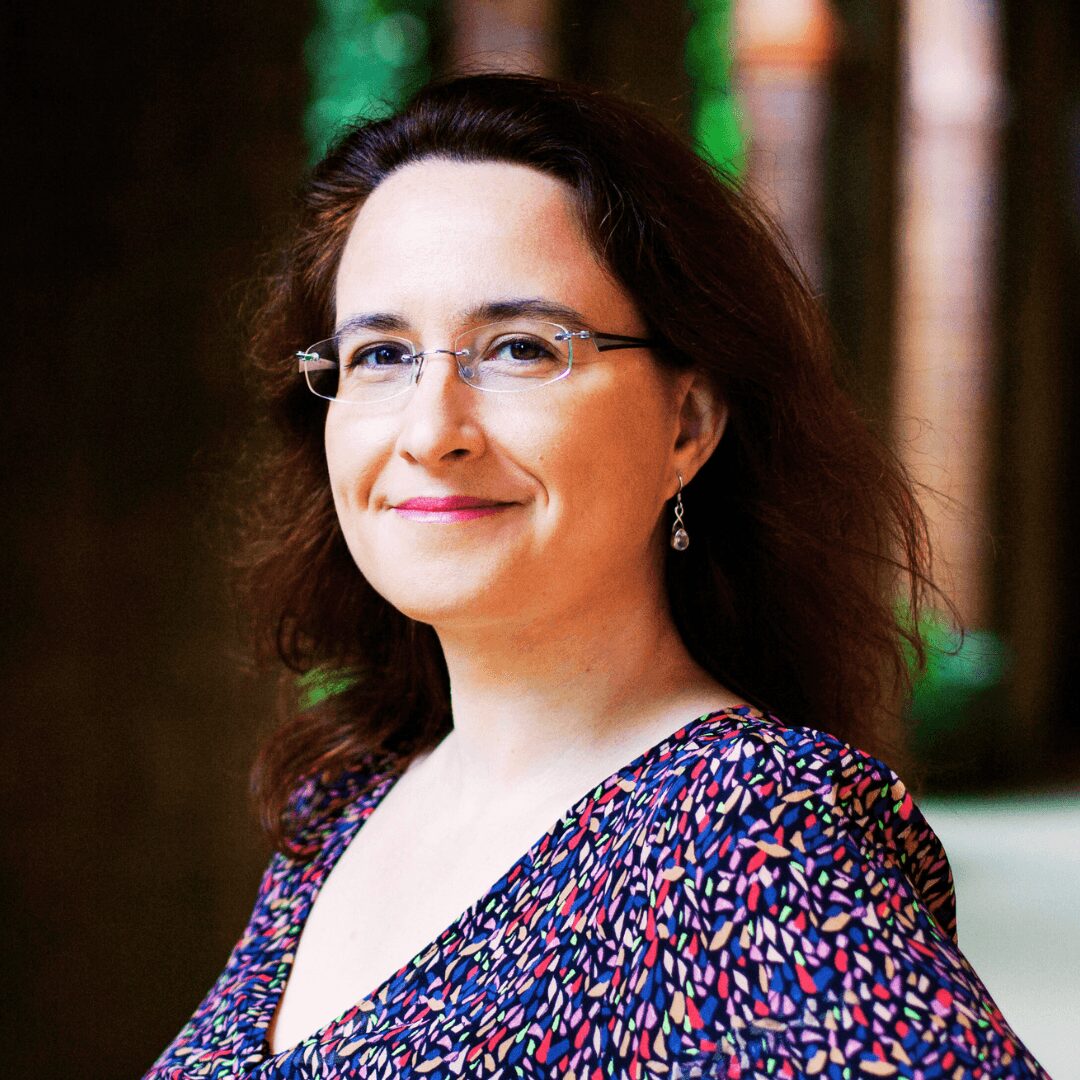

We were lucky to catch up with Cecile Hemery recently and have shared our conversation below.
Hi Cecile, thanks for joining us today. Was there a moment in your career that meaningfully altered your trajectory? If so, we’d love to hear the backstory.
I’ve always been quiet. As a child, I loved reading books, and playing in my room on my own.
I wasn’t antisocial and I had a couple of “best friends”. Never many, but friends I felt a deep connection with.
I have always thought though, that there was something wrong with me and I never really managed to be quite the person I felt the society wanted me to be.
Going through my old school records, I always had good grades, not necessarily top of the class, but good. Most comments from teachers referred to me as a “serious student”, “works well” and would flag as an issue that I was “quiet” and needed to “participate more in class”.
I believe I never quite understood what they wanted me to do here. I had friends, I behaved, I answered questions when asked. I was there and in my mind, I was active. It isn’t until years and years after that I realised that they had no idea how active I was – because it was all inside my head.
But back then, I just assumed I was somehow wrong. Never able to “be” what was expected of a child.
As I grew up, and entered the workforce, that belief was only reinforced.
During a summer, as a young teenager, I went on a language exchange trip in Dublin to learn English (I’m originally French). As I would normally do, I did spend a lot of time reading. The family I was in called my parents to say something was wrong because I read alone in my room, and to them, it meant something wasn’t right. Their own daughter was the life of the party and our interests couldn’t have been more different. She was normal and I was odd.
As an adult, having made a good career for myself, I once found myself at a meeting where we were discussing hiring needs. Someone said that our recruit would need to be outspoken, because someone quiet would “get eaten in meetings”. To them, only the loudest voice in the room could “get things done”.
I believe that our world has somehow decided that personality traits associated with good leaders or with people you want to hang out with are extroverted personality traits.
You must want to be out partying on a saturday night and staying in is shameful and means you have no life.
You must want to interacting with lots of people and have fun at large events, and feel energised by it.
And introverted personality traits are considered as flaws. You’re the odd one out, the loner, the one who’s not making an effort.
I never knew much about introversion. I only believe that my behaviour was somehow wrong and that I was “failing” at life.
One that though, the leadership team I was in organised a training day and we all took the MBTI test. I score extremely highly on the introversion trait. Out of a dozen people in the team, only 2 of us were introverted. Reading the definition of my profile, and about introverted personality traits blew my mind, because I could recognise myself so clearly in those descriptors.
My interest was peaked and I continued reading more about introversion. I came across the wonderful Ted talk from Susan Cain “The Power of Introverts” and hope started to spark. Maybe I wasn’t all wrong. My experiences were very similar to those of Susan Cain, and here she was on stage talking about him as if it was OK to be this way and being recognised and celebrated for it. If she was OK, then maybe I was OK too.
The company I worked for held a large annual event where they would gather all of the employees in one location. The celebrations would last 4 days, with parties, talks, team activities. It was a ver lavish event and they spared no expense to make it great. And it was.
Spared no expense? Well, not exactly. The trade-off was that we had to share hotel rooms. And that first few years, that is what I did. But that one year, after all the realisations I had come to about myself, starting to recognise my own needs and realising how exhausted I was trying to keep up with an extroverted way of life, I didn’t want to do it. I’d been having a tough time, drained by medical procedures. The thought of spending four days surrounded by 2000 people without a private space to recharge was overwhelming. But I still wanted to attend.
It turned out there was a way to get a private room: give a talk. So I applied, not because I had something to say, but because I wanted my own room. Feeling that my work in Marketing and CRM wouldn’t interest anyone (a significant realisation in itself), I decided to talk about why I was giving a talk despite not really wanting to.
I shared my experience as an introvert in the workplace, validating my own experience and asserting that it was okay to be this way. I shared that I was introvert, and that I was on stage today because I didn’t want to share my room. Not because I was antisocial, or ungrateful or unwilling to make an effort. But because this was a big ask of me physically and emotionally to not have any private moment in 4 days.
I had hoped that very few people would turn up to my talk, I had requested the smallest possible room. But around 100 people attended. I was scared beyond measures but walking on that stage giving that talk has been one of the defining moments of my life. Once I started to talk, I became confortable and just shared my story. My message was that it’s OK to be introverted and we have a right to be able to be ourselves and belong just as we are.
The overwhelmingly positive response made me realise I’d touched on something significant – something that was both part of who I am and resonated with others. Many people came to me after the talk to thank me for saying these things out loud. Hilariously, while the whole point was to able to have a moment alone, people were coming to me everywhere – in the corridors of the venue, in the bathroom, even on the dance floor – just as an act of recognition, as if saying “thank you for seeing the real me”.
I ended up leaving this company and changing careers a few months after that event. I had touched on something, I had become aware of something and I couldn’t unknow it. I uncovered the power of words, of authenticity and of vulnerability.
While my path towards becoming a coach wasn’t exactly straightforward (I started retraining as a hypnotherapist before becoming a coach), my motivation was always the same. I wanted to be able to help those people with words, those people who, like me, navigated their lives and careers dimming themselves or being dimmed by others. I have learned since then so many things that I want to share with them. I want to know that I see them, as quiet people, the real them, and I’m there to support them.
This is the trail of seed, with that event as the crowning moment, that eventually led me to retrain and become the blooming flower that is now my business. And I am grateful for it.
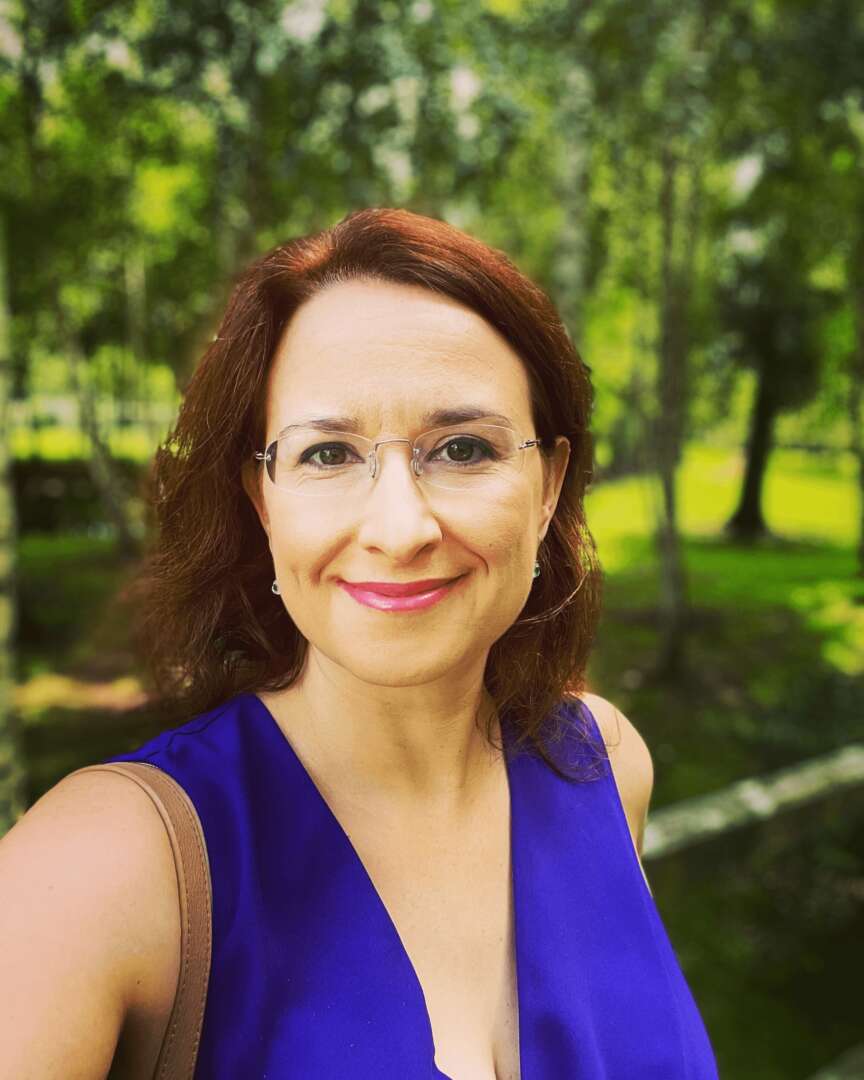
Awesome – so before we get into the rest of our questions, can you briefly introduce yourself to our readers.
As a certified Career and Leadership Coach, I empower quiet leaders to find their voice and make a significant impact in their careers and organizations. My journey to this role has been deeply influenced by my own experiences in the corporate world, which I’ve shared above.
Throughout my 15-year career in the tech and gaming industry, I often felt at odds with the traditional expectation of what a leader should be. This personal struggle has given me a unique perspective and drive to help others who might be facing similar challenges.
Within the spectrum of quiet leadership, I encompass 3 main aspects:
– Introversion: Those who thrive in peace and quiet, preferring deep one-on-one connections.
– Sensitivity: Individuals who deeply feel the emotions of the world and others around them.
– Hardworking from the shadows: Reliable team players who often prioritize others’ needs over their own.
In 2019, inspired by my own experiences and the realization that many professionals struggle with similar issues, I decided to pivot my career. I retrained as a cognitive behavioral hypnotherapist and then as a professional coach. Today, I’m an ICF-accredited Professional Certified Coach (PCC), a Certified Energy Leadership™ Index Master Practitioner, a certified Cognitive Behavioural Hypnotherapist, and a licensed HeartMath coach. I’m also working toward a qualitifaction in anthropological psychoanalysis.
I work with quiet leaders and help them navigate professional crossroads, find meaning and impact in their work, and leverage their unique strengths to advance their careers. I help them feel seen and show up as the inspirational and authentic leaders they are and want to be.
I also work with companies and organisations. We help professionals and leaders develop Emotional Intelligence, Leadership and strategic skills so that the company can foster a lasting environment of high performance, agility toward change, professional growth and employee well-being. I am partnering with other coaches to offer solutions for better work ecosystems: the ecosystem that allows the company to function and be profitable, the ecosystem within a team and how people work and interact with each other, and how the individuals themselves fit and behave within these ecosystems. I believe that emotional intelligence and self-awareness are essential skills and that a culture of trust is built on cultivating empathy, logic and authenticity working together.
As more and more awareness is put on the importance of wellbeing at work, and research that supports that well-being feeds into productivity, I believe that coaching will take a much more important role within a company to help the create better work environments, make better decisions and have greater impact.
What sets me apart is my combination of personal experience and professional training. I don’t just understand the challenges my clients face theoretically – I’ve lived them. My approach emphasizes self-awareness, alignment, conscious leadership, emotional regulation and strategic thinking.
When I’m not coaching or studying towards my psychoanalysis qualification, you can find me enjoying my favorite TV shows, running locally, or being ruled over by my cat. Originally from France, I’ve lived in several countries over the world and I now reside in the UK, where I run my online bilingual coaching practice.
Do you think you’d choose a different profession or specialty if you were starting now?
As many coaches do, being a coach is my second career.
People often are surprised at the shift I made going from working in Product and Marketing on Mobile Games to becoming a coach focusing on Quiet Leaders, Emotional Intelligence and Resilience.
But it all makes sense to me.
When I was young and still at school, I had no idea what I wanted to do in my life. For some reason, my family always thought I had a “commercial” profile and prophesied that I would either sell bread or cats. Considering how much I love both, it is unlikely I am ever able to part from them. But as a result I studies business.
I always felt more drawn to literature and philosophy than science, but my family firmly believed that this path would not allow me to get a good job and be able to support myself. So I focused on science and ended up in a Business School. I worked for 15 years in Mobile download products and games, a lot of date being looking at data, extracting strategic insights, testing them out in the real world, and repeat.
What I find interesting is that in my career change, I went back to exactly what I wanted to do as a young person: the psychoanalysis training that I am undergoing is part psychoanalysis, part philosophy, part mythology, part anthropology. Maybe I did know what I wanted after all.
And even though I ended up working in analytical and commercial roles, the focus of my work was always optimisation from a user behavior perspective: what makes people tick, why do they do what they do and what do they want.
I actually see a lot of similarities between what I did then and what I do now. Not from the perspective of technical knowledge or actual tasks. But from the perspective of intention and connecting things together.
Now that I changed career and that I did eventually found myself going down the path I initially wanted, would I do things differently?
It is a hard question to answer. I have truly found myself in my career as coach. This is the most me I have ever been. But I am aware that the experience and knowledge I gained in my previous career is a valuable asset. It allows me a better understanding of what my clients experience and it gave me the financial stability to take time to grow my business. I very much doubt that I would have have the opportunity to live abroad and create a life for myself in a different country and in a different language. Having had all of these experiences is a gift. I am probably able to fully appreciate where I am today because I have had many different lives.
I don’t think I would change a thing because all of the experiences I have lived through have made me who I am. And they were needed to create the me that I am today. And I like that person. I’m happy to be her. And that’s enough.

Learning and unlearning are both critical parts of growth – can you share a story of a time when you had to unlearn a lesson?
A Lesson to Unlearn: The Myth of Keeping All Doors Open
When I was young, the mantra I heard constantly was “do well at school” and “don’t close any doors.” The path seemed clear: go to a good university, get a good job with a good salary, and achieve independence. That was what mattered, nothing else.
I followed this advice diligently. I studied business, not because I had a passion for it, but because it seemed to keep the most opportunities open. I accepted the first job that came my way after graduation. I was on my generic path to independence.
For years, I focused on this goal until I reached a point where I felt I had achieved it. I had proved whatever I needed to prove to myself (and possibly others). But once I no longer had this driving need, everything changed.
And that change was not comfortable. I felt a deep void. By always trying to keep doors open – a philosophy I had continued in my career – I had never purposefully walked through any of them. I never chose, I never said no, I never created opportunities for myself. I was passive in my own life. I had no idea who I was, where I was, or why I was.
I started to want something different but had no idea what, nor how to make those decisions. The logical path no longer made sense. I craved meaning, purpose, a sense of inner accomplishment. But I found none of that around me because this wasn’t how I had built my life.
As I faced personal decisions in my late 30s, my eyes opened even more. By not choosing, by simply going along, I realized that not everything remained as open as I thought. I was left with more questions than opportunities.
The lesson I had to unlearn was that keeping all doors open is not always the best strategy. In fact, not choosing is a choice in itself – a choice to let things happen to you instead of making them happen. It’s a choice to not fully live your life.
Figuring out your path is not smooth or easy. It’s an emotionally charged roller-coaster. When you hit a low point, everything becomes amplified and intense. The gaps become harder to ignore or explain away. The constructs of what society had intended for me broke down, and it felt overwhelming.
But through this process, I learned the importance of making conscious choices. I realized that you can’t keep all doors open indefinitely, nor can you walk through all of them. The key is to choose the doors that align with your values and aspirations.
I chose what felt right, but not blindly or irrevocably. I chose what I wanted to try, accepting that it might or might not work. If it didn’t, I knew there would be other doors to choose from.
Now I understand the importance of making choices, of knowing why I choose what I do. I’ve learned that it’s better to choose a path with conviction than to drift aimlessly, keeping all options theoretically open but never truly exploring any of them.
This realization was transformative. From an aimless drifter, I became someone who actively shapes her path. Now, I help my clients navigate their own versions of this change, guiding them to find their way and make meaningful choices in their lives.
The lesson? Don’t be afraid to close some doors. By making conscious choices, you open the possibility of walking through the doors that truly matter to you.
Contact Info:
- Website: https://www.walayance.com/
- Instagram: https://www.instagram.com/walayance/
- Linkedin: https://www.linkedin.com/in/chemery/
- Other: https://calendly.com/walayance/letschat

Image Credits
Cecile Hemery
Shutterstock