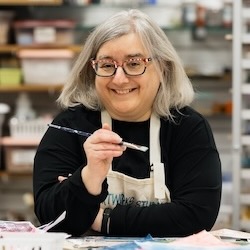

We recently connected with Cecelia Comito and have shared our conversation below.
Alright, Cecelia thanks for taking the time to share your stories and insights with us today. How did you learn to do what you do? Knowing what you know now, what could you have done to speed up your learning process? What skills do you think were most essential? What obstacles stood in the way of learning more?
For much of my adult life, I practiced law, navigating the high-pressure and often contentious world of the legal profession. Over time, I felt the need for a creative outlet to bring balance to my life. At 38, following the unexpected loss of my mother, I realized I couldn’t keep putting off my desire to embrace creativity. True to my methodical nature, I devised a plan: start with the basics. I enrolled in a beginner’s drawing class through the Chicago Art Institute’s adult education program.
Over the next several years, I immersed myself in workshops and classes, learning to carve out time for art amid a demanding career. My early efforts weren’t polished—my perspective was skewed, my drawing passable, my painting serviceable—but I loved every second of it. Then I discovered mixed media, and everything changed. Mixed media gave me freedom: if something didn’t work, I could collage over it; if the colors clashed, I could scrape them away. It was art without rules—just endless opportunities to explore.
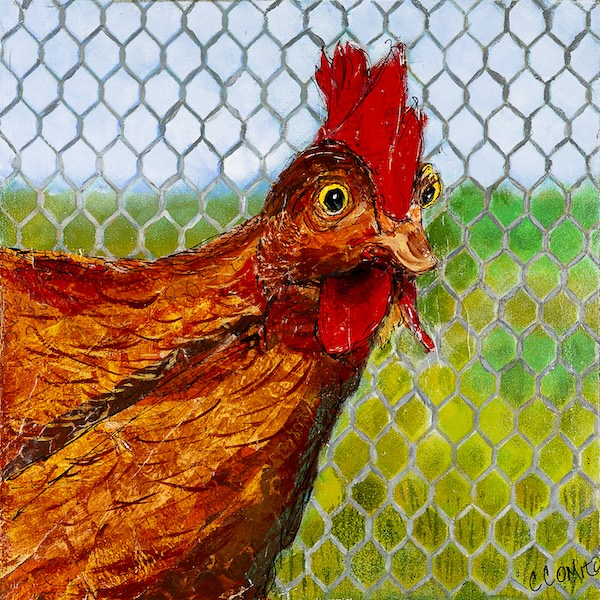
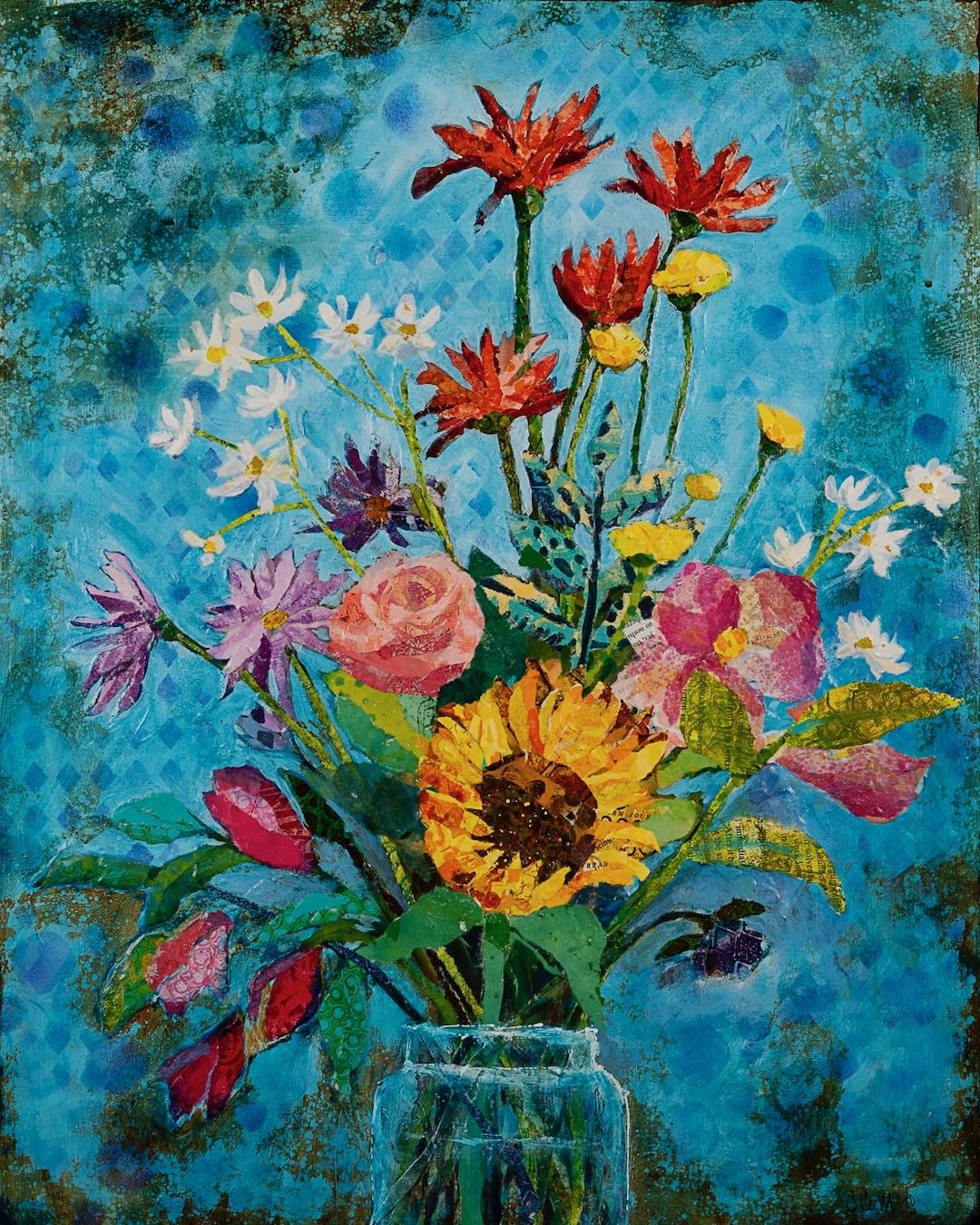
Today, I work primarily on cradle boards, which can withstand the layers of paint, paper, and ephemera that define my process. I continue to seek out workshops and classes to refine my techniques and feed my curiosity, learning from incredible artists along the way.
After retiring from law, I became a full-time artist—a statement that still feels surreal to write. The transition from attorney to artist has been a long and, at times, challenging journey, but I wouldn’t change a thing. Every step has brought me closer to the creative life I always dreamed of living.
Great, appreciate you sharing that with us. Before we ask you to share more of your insights, can you take a moment to introduce yourself and how you got to where you are today to our readers.
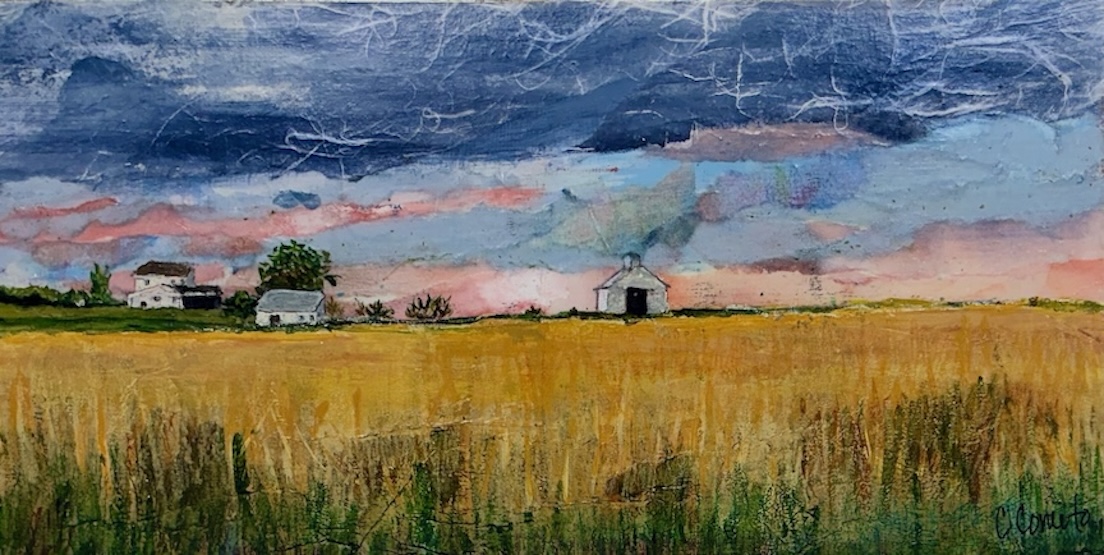
After spending my entire adult professional life in bustling urban centers—Philadelphia, Chicago, and Washington, D.C.—I found my way back to my roots: a small town in western Iowa. What started as an interim stop during retirement has blossomed into a vibrant new chapter in my artistic career, one marked by creative exploration and unexpected success.
My artistic journey began in Chicago under the guidance of watercolorist Ed Hinkley. In his diverse studio, where beginners and advanced artists worked side by side, I discovered both my love for painting and my limitations with traditional techniques. I realized early on that I didn’t have the patience to master painstaking glazing techniques that define some of the great watercolorists.
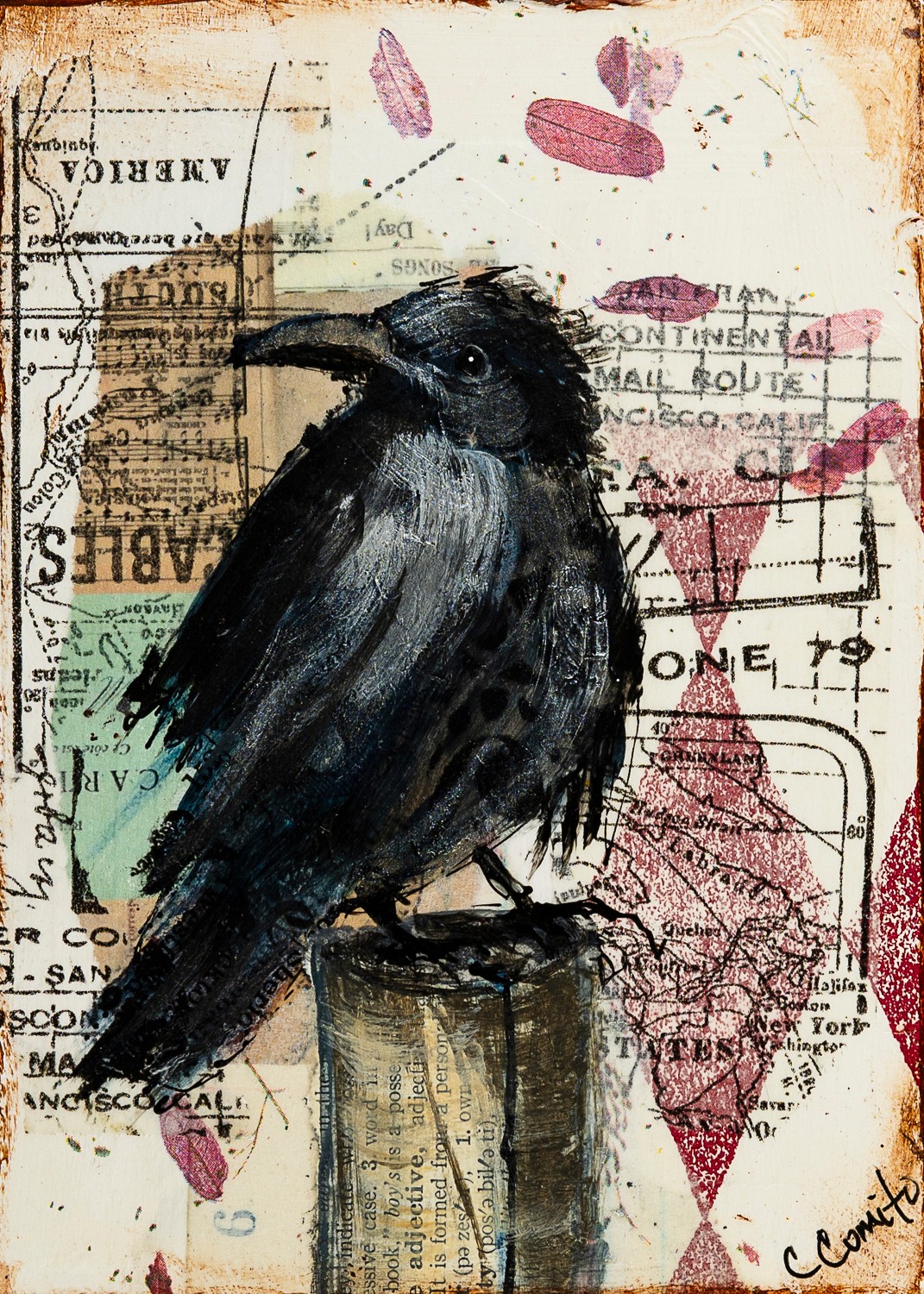
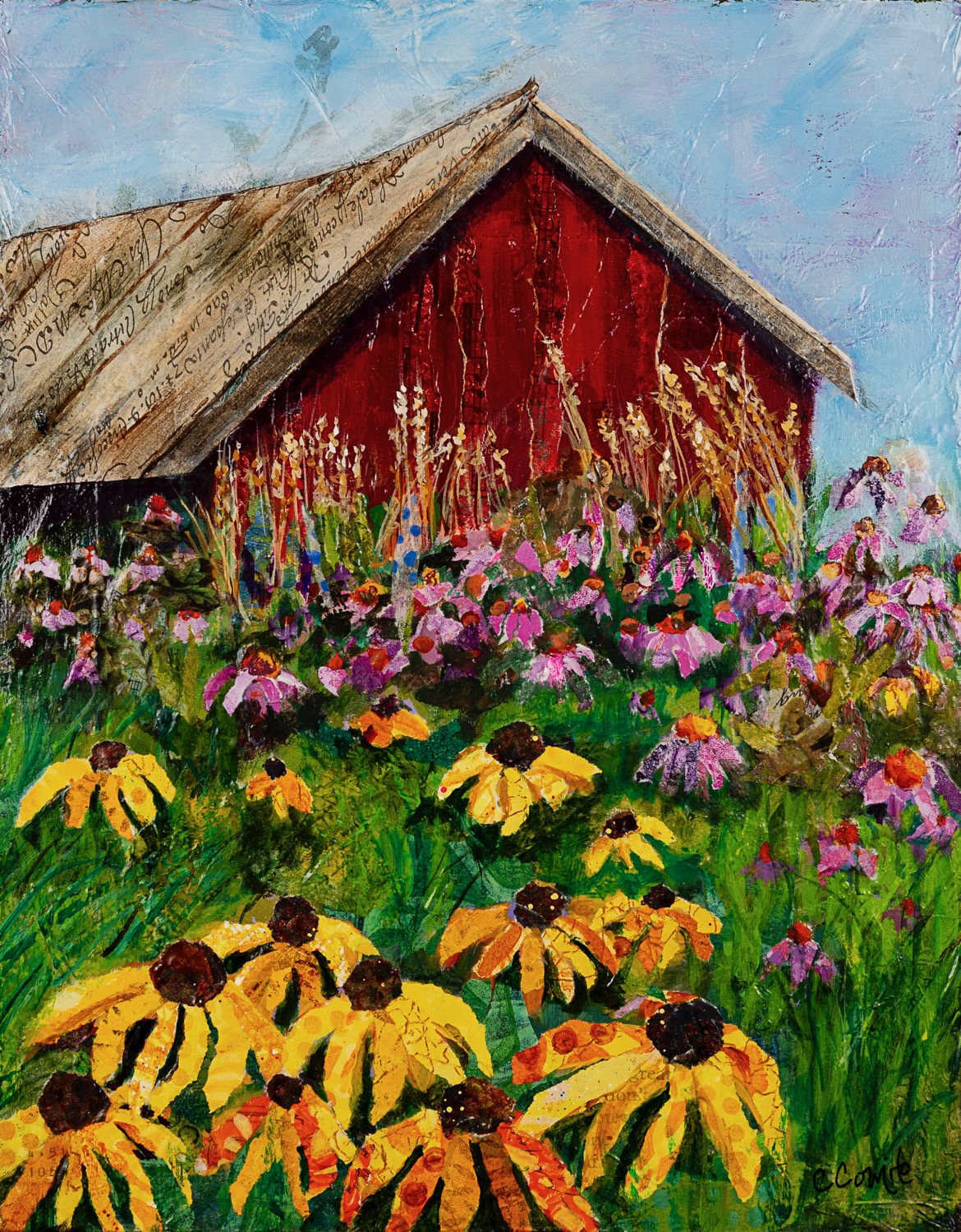
The breakthrough came through my sister Laura, a fulltime artist and jewelry designer. Looking at a watercolor I was struggling with, she suggested adding collage elements. This simple suggestion opened up an entirely new world of artistic possibilities. Soon, I was developing my own distinctive style, creating watercolor-stained rice papers and incorporating them into abstracted landscapes. My repertoire expanded to include gel plate printing, vintage book pages, sheet music, and transferred images from old photographs.
There were no mistakes in mixed media—just layers that created more texture to the final painting. This liberating approach led to representation in Chicago’s River North gallery district and numerous group shows. My work even caught the attention of Iowa State University, which commissioned me to create art for their educational trailers—my paintings blown up to wrap 40-foot mobile exhibitions.
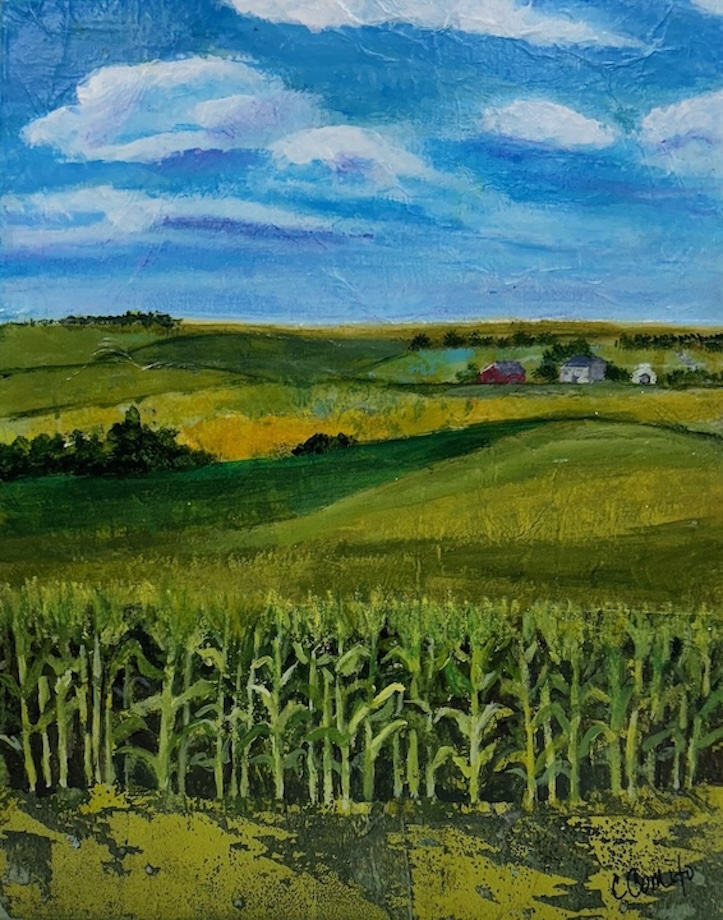
A job promotion took me to Washington, D.C., temporarily interrupting my artistic momentum. But retirement brought me full circle, back to Iowa, where I now share studio space with my sister at Artworks Studio. The homecoming has proved remarkably productive: Iowa Learning Farm has commissioned multiple projects, including a series about Iowa’s wetlands that resulted in a stunning 4×6-foot painting now permanently displayed in Elings Hall at Iowa State University.
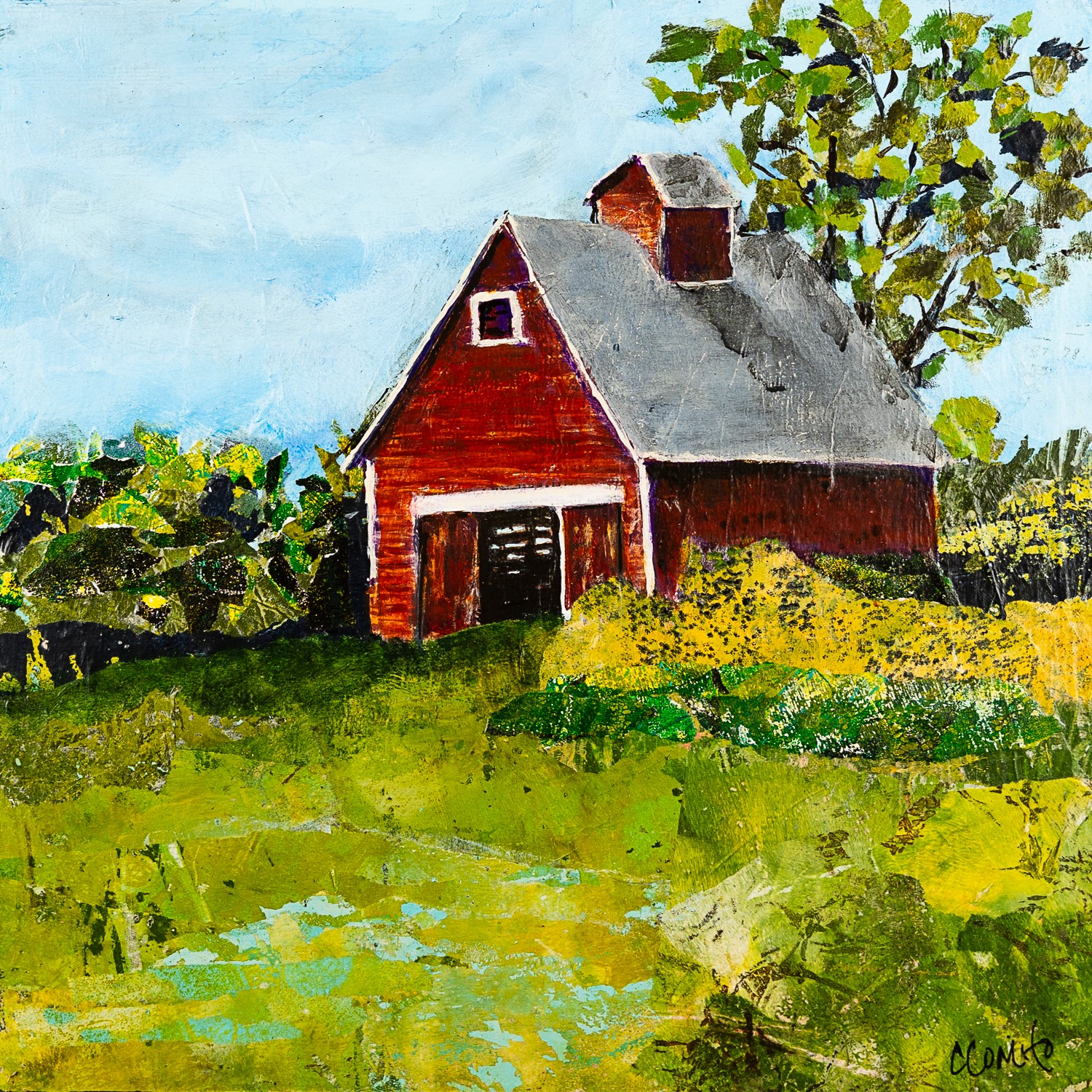
Recent years have seen my work gaining increasing recognition. My solo exhibitions—”Taking the Scenic Route” (2022), showcasing the nostalgia of 1970s rural Iowa; my inaugural show at Bakery on Broadway in Audubon (2023); and “Barns & Blooms: The Colors of Rural Iowa” at Arts on Grand in Spencer—have cemented my reputation as a distinctive voice in regional art. My work has been selected for juried shows across the Midwest, from Kansas City to Galena, establishing my presence in the broader art community.
Today, I create in what I cheerfully call my “messy studio,” producing works that blend technical skill with emotional resonance. My mixed-media pieces, available through galleries and my website (ceceliacomitoart.com), capture the essence of rural Iowa while pushing the boundaries of traditional landscape art. It’s a creative journey that has taught me that sometimes the most inspiring path forward is the one that leads back home.
What can society do to ensure an environment that’s helpful to artists and creatives?
I’m going to take a little issue with the wording of this question. When you ask what can “society” do to support artists, it sounds like you’re asking what “they” can do which results in platitudes and generalizations. We need to ask what each of us as individuals can do to support artists, creatives and a thriving creative ecosystem. In three words: Buy Original Art. It’s that simple. You deserve beautiful things that serve no other purpose than to make you happy or give you comfort or make you wonder. If you like the piece and can afford it, pay the asking price. Don’t start a negotiation to see how desperate the artist is for a sale. It’s insulting and disrespectful. As an artist, I have to factor in my materials, overhead, time, and experience in setting a fair price. My price is not some arbitrary number plucked out of the air.
Support your local artists by using them to create art for corporate greeting cards or gifts. If you plan to send holiday cards to your customers, commission a local artist to provide the artwork rather than order a generic card online. Using a local artist’s work is not that expensive. Decorate your business with prints of local artists or original paintings. It breaks my heart to walk into a local business and see generic, mass produced art on the walls that they ordered from Amazon or bought at Target. My guess is that prints of my paintings would look better, cost either the same or less, and say something about you and how you support your community.
Doing this is not easy and it may cost you more out of pocked in the short term. Recently, my sister, who works in conservation and understands the issues surrounding climate change and sustainability, balked at buying a 6 quart Dutch oven from an independent cookware store in her hometown. She told me she could get the same item for $100 less on Amazon. She wanted me to say it was ok because she’d save $100. I told her she needed to balance the importance of having small businesses in her community and the direct benefits to her community by spending her money locally against the negative environmental impact of ordering from Amazon and sending money to a big conglomerate. Is her purchase from Amazon going to cause that kitchen store to go out of business? Probably not today. But will that extra $100 have a direct impact on her community? Absolutely.
If having a thriving creative ecosystem is important, you need to support it with your actions.
Is there something you think non-creatives will struggle to understand about your journey as a creative? Maybe you can provide some insight – you never know who might benefit from the enlightenment.
There’s a common misconception that artists are born with “natural talent”—that creativity is an innate gift rather than a learned skill. I’m here to tell you that’s simply not true. When I decided to pursue art, I didn’t rely on talent; I relied on effort. I took classes, devoured books, studied with other artists, and spent countless hours practicing drawing and painting. It was hard work, and it wasn’t always fun.
In many ways, practicing art is no different from practicing law, which I did for 30 years. I wasn’t born with a natural talent for being a lawyer any more than I was for being an artist. Success in law came from studying hard, learning from others, and applying myself every single day. The same is true for art: it’s about showing up, putting in the work, and embracing the process, even when it’s challenging. Creativity isn’t magic—it’s persistence.
Contact Info:
- Website: https://www.ceceliacomitoart.com
- Instagram: https://www.instagram.com/ceceliacomito/
- Facebook: https://www.facebook.com/profile.php?id=61551737753609
- Linkedin: https://www.linkedin.com/in/cecelia-comito-b81b63305/