

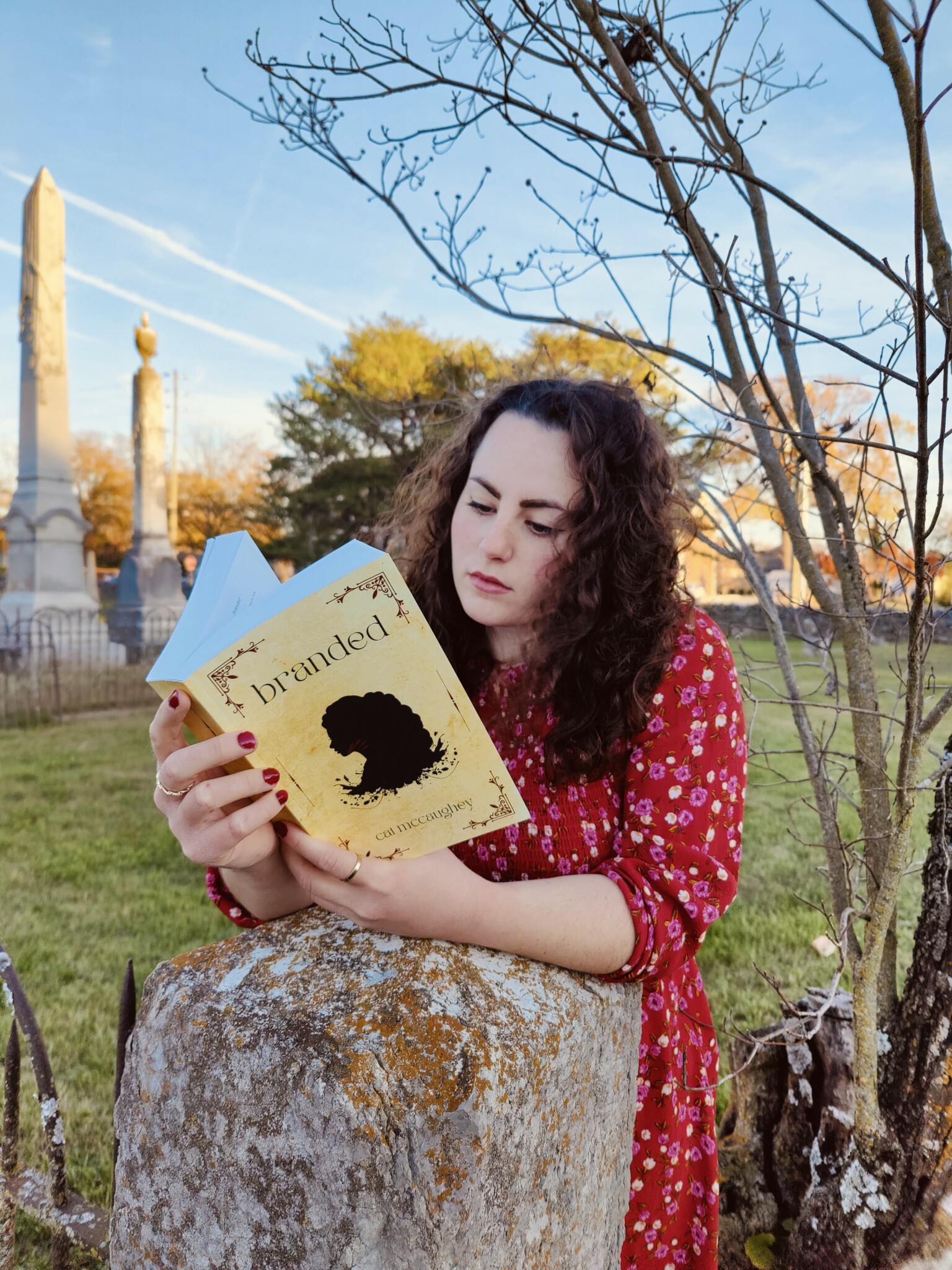

We’re excited to introduce you to the always interesting and insightful Cat Mccaughey. We hope you’ll enjoy our conversation with Cat below.
Cat, looking forward to hearing all of your stories today. Learning the craft is often a unique journey from every creative – we’d love to hear about your journey and if knowing what you know now, you would have done anything differently to speed up the learning process.
The more I work in the writing industry, the more I realize that to write well, you have to read well. That was never a problem for me, since I love reading! It’s a joy to read good writing and getting to see new ideas and new perspectives. If I’m reading different authors from different generations in different genres, then I get a much wider scope of “story” than I would if I only stuck with one author or one genre. After this many years of reading, I tend to find what I like and gravitate toward that, but one of my favorite things to do is research some of the more popular books from past decades and the present day and try to pinpoint what makes them popular, either by reading them or by surfing reviews and online opinions. What makes these books so loved? Is it a universal experience? Is it a personal connection? Is it an incredible plot or complex worldbuilding? Perhaps it’s as simple as really good marketing – the “hype” surrounding current popular books definitely has something to do with the current fiction market and marketing strategies! Regardless, I love reading and I love learning more about why people read (and love) what they read.
Knowing what I know now, I would have gone to the library a lot more frequently! I used to go all the time with my family when I was a kid, but as I progressed through high school and college, there was less time for leisure reading. After graduating and beginning my own freelance business, I finally had more time to pursue leisure reading, so I renewed my library card and started checking out many of the books I’d heard about but had never read yet! As a writer, I definitely gravitate toward fantasy, but I view every genre as a different way of bringing a story to its readers, and there is something to be learned from nearly every genre, so I don’t limit myself to fantasy when reading.
One of the skills I believe is most essential to my success as a writer and editor is knowing how I “read,” in the sense of understanding why I care so much about a particular story. What about that story is memorable to me? Why would I read it again? The answer isn’t just in the plot or character development – it’s also in the words themselves, the way the author has constructed each sentence or chosen each word intentionally. Knowing that every word serves a purpose in a story has impacted me as a reader, writer, and editor. That is the “craft” of words: being able to construct a story, from the smallest details like spelling to the largest bird’s-eye view, in a way that every word builds up the story.
Another skill is being willing to talk with other people: readers, writers, editors; even people who lean more toward movies or TV shows! All of those mediums tell stories in a different way, and because my talent centers on the written word in certain genres, I can’t see every perspective on my own. Talking to other people about the stories they love – whether they’re experts or casual enthusiasts – is a truly eye-opening way of learning more about my own craft.
The biggest obstacle that stood in the way of me learning more was my own procrastination! I hate to admit it, but there were many times I had the opportunity to tackle a goal intentionally, whether that was finishing a new book in a week or looking up a helpful resource, and decided, “No, I’m too tired,” or “I can do that some other time.” It took a lot of self-reflection for me to understand my highs and lows, what motivates or demotivates me, and how to build those productive times into my already busy schedule. For example, when I was looking for ways to motivate myself to finish my first manuscript, I found out that I really love stickers. Most of us leave those fun star stickers behind as kids, but I realized that I was much more motivated to write every day when I could put a sticker on the calendar to mark the days I fulfilled my daily writing goal! It sounds like a small, silly thing, but you wouldn’t believe how much more motivated I was to earn that little sticker every day. The biggest obstacle I’ve ever faced in my work – and, as I’ve discovered, in many areas in life – is internal. If you love what you do that much, then external obstacles don’t stop you – you keep working to solve the problem or find another open door. It’s the internal battle that is the biggest and most important battle to fight.
As always, we appreciate you sharing your insights and we’ve got a few more questions for you, but before we get to all of that can you take a minute to introduce yourself and give our readers some of your back background and context?
My name is Cat, and I’ve loved books since I was two months old, when my dad would sit me on his lap and read board books to me! My love of all things reading, writing, and related to words has been lifelong. I’ve always been a voracious reader, and I wrote my first story at about eight years old, when I thought that “publishing” a book meant writing it in pen instead of pencil. Needless to say, I’ve learned a lot more about writing and publishing since then, and it’s a journey I’m still on as I find new ways to hone my craft and understand it better.
I always knew I wanted to write novels, but in the experience of many artists, I felt more drawn to the art itself than the profits. But I knew I wanted to work with words, no matter what I did. By my senior year of college, I knew I wanted to work as an editor in the publishing industry, and I’d had enough experience at that point with both fiction and non-fiction to know that I was skilled at editing either. However, the traditional publishing industry is highly competitive and fairly rigid, and I wanted a lifestyle that was more flexible and enabled me to collaborate with authors and writers who might not get a chance from a big publishing industry.
So, after graduation, I began advertising my services as a freelance editor. I started out part-time, building up my clientele and working other jobs on the side, and I’m thrilled to say that it took less than two years for me to shift to full-time editorial work! I’m a fiction and non-fiction book editor contracting with indie authors and small publishing companies to edit their manuscripts, provide constructive feedback, and enable them to succeed. I divide my editorial skills into three levels: developmental editing, line or copy editing (for fiction or non-fiction, respectively), and proofreading. I help authors work through plot or structural holes, character or argument development, word choice, narrative flow, and even the smallest details like spelling and punctuation.
What sets me apart from other editors is that I love getting to the “why” behind the corrections. I want my clients to be on the same page about why I’ve made certain adjustments or suggestions, and I love to offer multiple solutions or ideas that help them overcome any hurdles they might be experiencing. I’m extremely grateful that every one of my clients has been very happy with my work. I definitely invest a lot of time and care into every manuscript I read, but that’s an easy thing to do when a client comes to me to share that I’ve helped them improve as a writer. There’s nothing I love more, and I can honestly say that I’d do this work for free. It’s exactly what I’m meant to do.
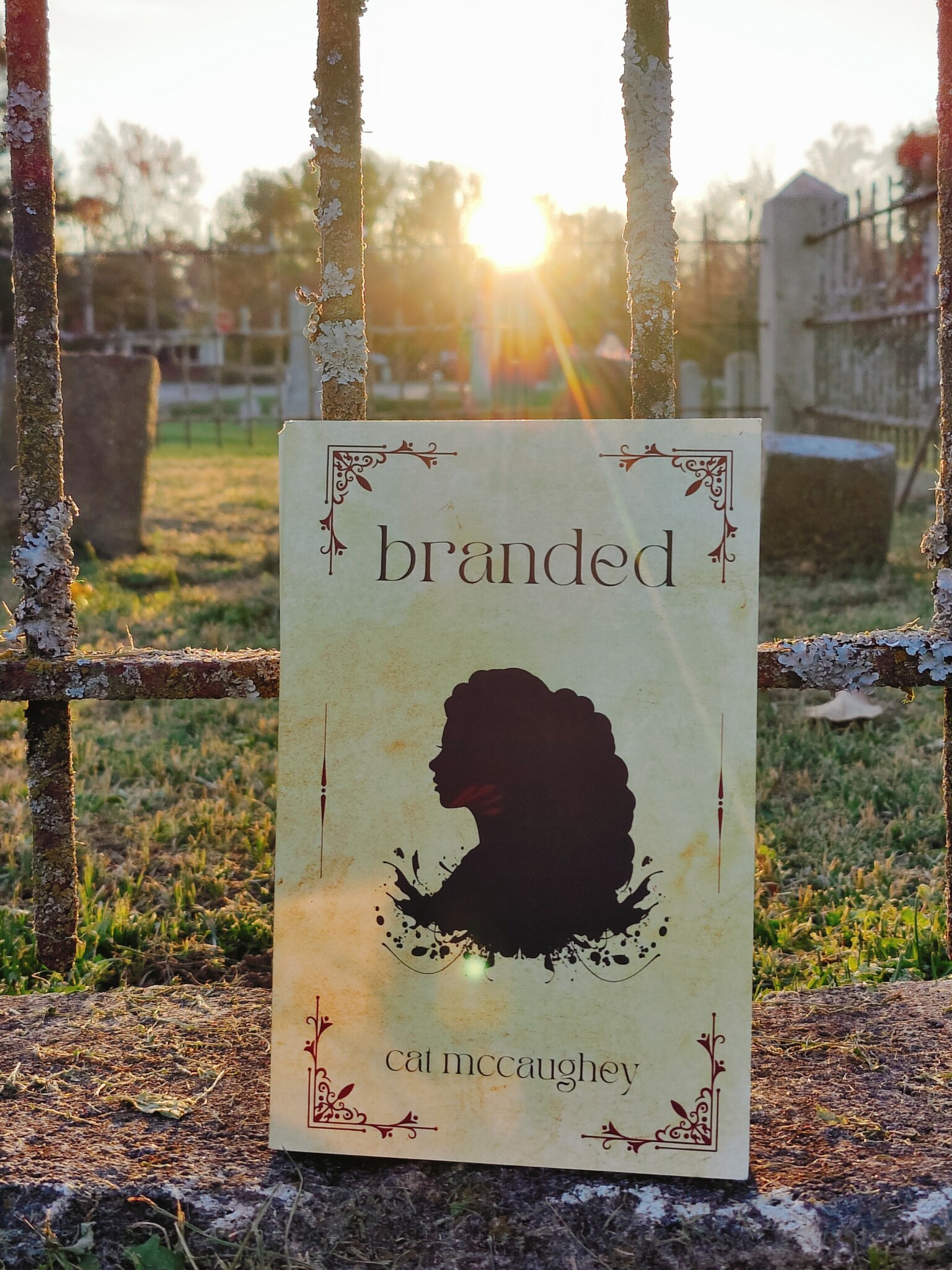
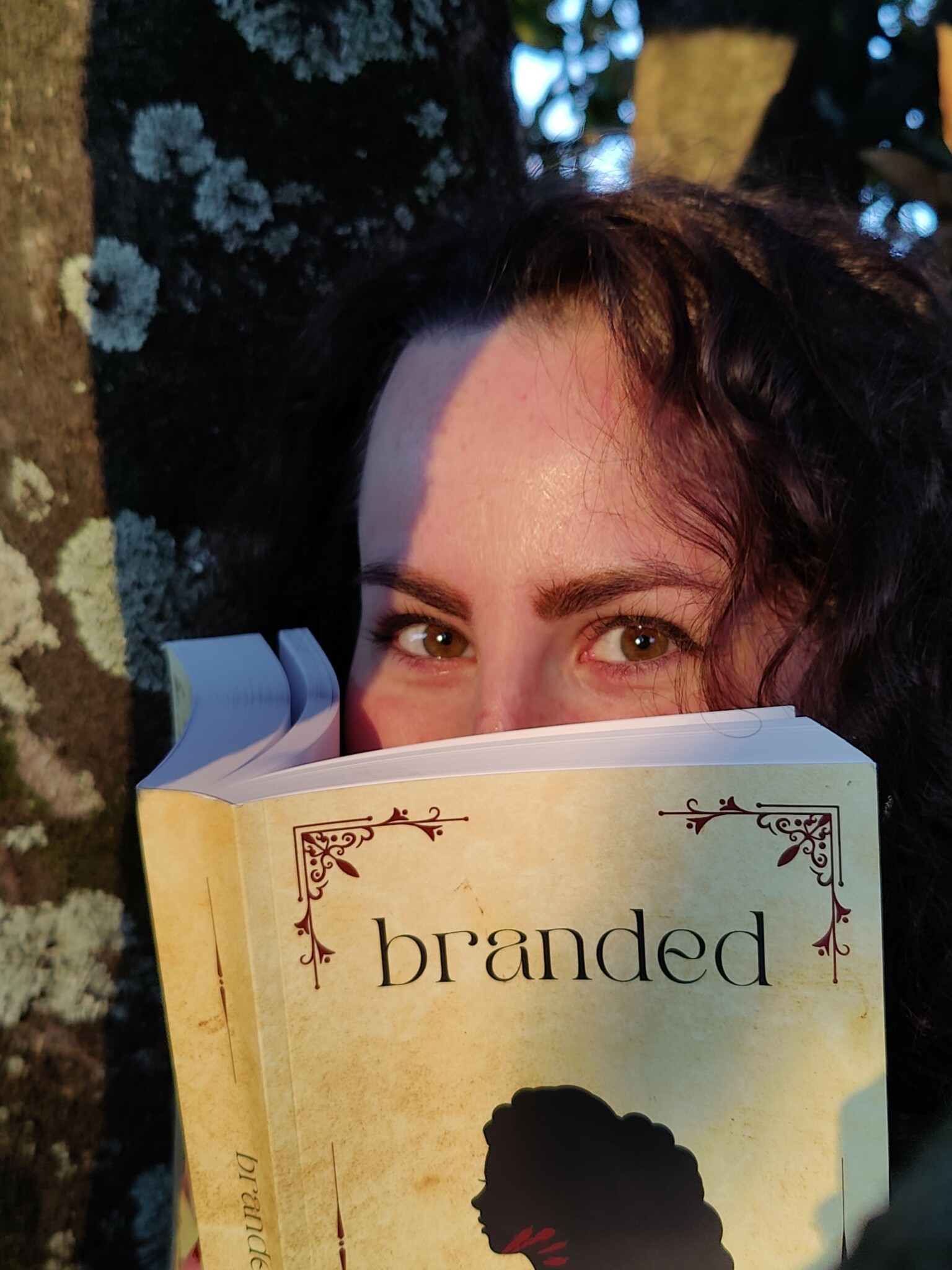
I also finally decided to take the plunge and publish my debut novel, “branded” (intentional lowercase), the first in a fantasy adventure series that has been in the works for many years now. I’m extremely grateful that the flexibility of my schedule as an editor enabled me to finally bring my own story to life! Book 2 is now in progress, and I’ve received so much incredible feedback from my readers, more than I ever could have imagined! It gives me a lot of faith in my story and my characters, and a lot of motivation to keep pushing through.
As an editor, I am most proud of the projects in which clients make it a point to reach out and let me know that my feedback has changed the way they approach writing. It’s incredible to know that the gift I have is helping other writers become the best versions of themselves, and I want nothing more than to keep doing that for the rest of my life. As an author, I am most proud when I receive messages from readers telling me they couldn’t put my story down! I always knew I wanted to tell it, but I wasn’t as confident about who would want to read it – and it’s been absolutely unbelievable to see how much my readers care about it. I’m so grateful for their love and support, and I can’t wait to bring them the second book!
I’m excited to say that I’ve had enough success that I’m making a shift from networking and short-term projects to building my own personal editorial brand, “Wordcraft Editorial,” where potential clients can find me easily, view my services, and find reviews from past clients. Many freelance editors find it best to work with only a handful of companies, but I’ve found that I want to reach out to more indie authors and give them a voice in a market where traditional publishing can be ruthless and self-publishing has a bad rap for being “the amateur route.” I believe the best way to help indie authors find success and bring truly exceptional stories to life is to build my own brand and put a face to the comments in the manuscript! Stay tuned for Wordcraft Editorial, coming sometime soon in 2025!
Learning and unlearning are both critical parts of growth – can you share a story of a time when you had to unlearn a lesson?
One lesson I had to unlearn was “It has to look perfect.” This is particularly in regard to my writing. I’ve always been a perfectionist, and I’m dedicated to giving the very best of my talent to every project I work on. That’s fairly simple for editing: correct mistakes; offer detailed feedback; collaborate with the author to know their vision and then work toward that. However, my own writing was an entirely different story. There are countless good principles of writing out there that tell you how to write well, but they can’t tell you how to write what’s yours. In order to be a writer, you have to (gasp) actually write.
And I was terrified of that! Not the writing itself – once I got in a groove, I absolutely loved it. But I was terrified to realize that whatever glorious vision I had in my head might not actually look so rosy once I put it on paper. I struggled with that fear for a very long time, especially after I’d made the decision to publish my novel instead of leaving it a Word document hidden away in some computer file. Publishing means other people see it. Publishing means it’s real in a way it wasn’t before – a new dimension; a very physical, tangible reality.
That is terrifying. All the characters and stories and plotlines in my head… all laid bare for so many people to see. What if they didn’t like it? What if (and for me, this is worse) – what if I didn’t like it? What would I do if I had to see the story I’d poured so much of myself into and realized that it wasn’t at all what I wanted?
But I had to do it. If the story matters that much, it’s worth bringing to life, flaws and all. And the fact of the matter is that nothing I write will ever be “absolutely perfect.” Honestly, I’m glad of that. If I wrote the perfect book, I don’t think I’d ever write again. What is there to work toward if you’re already perfect? What would I do with the rest of my life?
So I had to flip the script. Instead of saying, “This has to be perfect,” I started telling myself, “This has to be real.” It took a lot of trust in myself – that I had the heart, the know-how, the talent, to tell a story that really mattered, and to tell it well. Most days, it was a leap of faith, simply concentrating on the next sentence or the next paragraph, reminding myself “Don’t look down” so I wouldn’t see the “heights” I’d already climbed.
Flip the script. It doesn’t have to be perfect. If you care about it enough, it should be real – and you have the ability to do that. Fast-forward to September 2024, and I held my debut novel “branded” in my hands for the first time. (And I’ll admit it – yes, I did cry! But they were happy tears.) It was real. That was the goal.
Was it perfect? Of course not. I bet I could pick it up and read through it right now and still find things I’d like to tweak, things I want to explore. Ten years from now, I might have written an entirely different, “better” book! But I gave the best I had, and all things considered, it turned out better than I thought. While I certainly plan to keep improving as a writer and keep writing better books, I am never going to look at my first book and think it isn’t good enough. It’s more than good enough. It’s real.
Do you think there is something that non-creatives might struggle to understand about your journey as a creative? Maybe you can shed some light?
I think everyone has some aspect of creativity, although it certainly looks different in different people. For the more “right-brained” types, the artists or musicians or writers, that creativity comes to life in some pretty tangible, colorful ways! Perhaps one struggle that “non-artists” might have in understanding the more artistic types is: Why? Why do what you do? It isn’t always rewarding, after all. The standard measure of success doesn’t necessarily apply to the art itself. There are certainly countless talented creatives who have been fortunate enough to become popular, influential, successful people (and that’s a blessing!). But the work itself – the pursuit of inspiration, the desire to make real what starts out as just an idea – is something I believe is inherent to the human person. If we care enough about something, we want it to be real and lasting: our goals, our dreams, our relationships. The same thing goes for art, but there is a bit of a paradox here!
My dad always says, “Great art is never completed – only abandoned.” I never understood him so well as when I was finishing my first book. There’s always “something” that could be better: some little detail we could nit-pick, some small thing we could polish off or adjust. But part of the beauty of art is that it is never completely perfect. We artists can keep pursuing our art, our craft of creativity, for the rest of our lives: still learning, still being inspired, still loving what we do, because there is room to grow. No small part of the beauty of art is the pursuit of perfection, and we don’t need to achieve perfection to love what we do. That’s the paradox – always striving for perfection, never quite achieving it, yet never loving it less for its imperfections. And who knows? Perhaps our works of art will stand the test of time, like so many creatives before us. Our art may very well outlive us, and for me, that gives a deeper meaning to my work. I don’t know how else to say it except that I think we approach the eternal when we pursue art, either in creating it or understanding it, and that doesn’t happen with just anything. Whatever I create, I want it to mean something – not just to me, but to the people who come in contact with it.
Contact Info:
- Instagram: @wordcraft_novels; @wordcraft_editorial
- Linkedin: https://www.linkedin.com/in/catherine-mccaughey-christendom-college
- Other: Personal brand websites (Wordcraft Editorial and Wordcraft Novels) coming soon in 2025!

Image Credits
Photos – Cat McCaughey
Brand designs – Cat McCaughey