


We caught up with the brilliant and insightful Casey Gunschel a few weeks ago and have shared our conversation below.
Casey, thanks for joining us, excited to have you contributing your stories and insights. We’d love to hear about the best boss, mentor, or leader you’ve ever worked with.
In my twenties I worked for a high end decorative painter in Chicago. Mary Lois had a fabulous southern drawl and a great eye for style, and I painted dining rooms, murals and fancy furniture pieces ups and down the coast of Lake Michigan for her for about ten years.
Mary Lois was a wonderful boss because she trusted her employees and treated us (there were generally two to three of us) like talented, smart people capable of the job at hand – and we were great employees for it. We were doing artwork in her name, we knew it, and we painted as if it were our own.
She was very friendly but no non-sense. She was at a job site to get the work done. We only did the finish work – none of the prep work, and we expected to roll into the job ready to go.
But often enough, a contractor, the homeowner or the painter before us would have dropped the ball and left things incomplete or otherwise unpaintable. When I first started working for her I remember showing up to a job site that was unprepared for us and calling her and staying “we can’t do the job – you’ve got to call the contractor and have him come and fix this.”
She quickly taught me that unless something was absolutely unfixable – you didn’t waste time and bellyache about it, you just fixed it and went on your way. You save more time, money and mental stress by just doing sometime and solving the problem then you do by making it a big deal.
There is a quote I attribute to Mary Lois -a thing she would say under stress when jobs were not running smoothly or when late. It sticks with me, because its ring true and helps me pull back and gain a bit of perspective from whatever sky -is-falling problem problem I’m facing.
I hear Mary Lois’s voice saying ” Casey, there is no such thing as a furniture emergency”.
This must be true. A career in decorative painting did not kill her. She is happily retired and enjoying her garden and her grandchildren as of this writing.
As always, we appreciate you sharing your insights and we’ve got a few more questions for you, but before we get to all of that can you take a minute to introduce yourself and give our readers some of your back background and context?
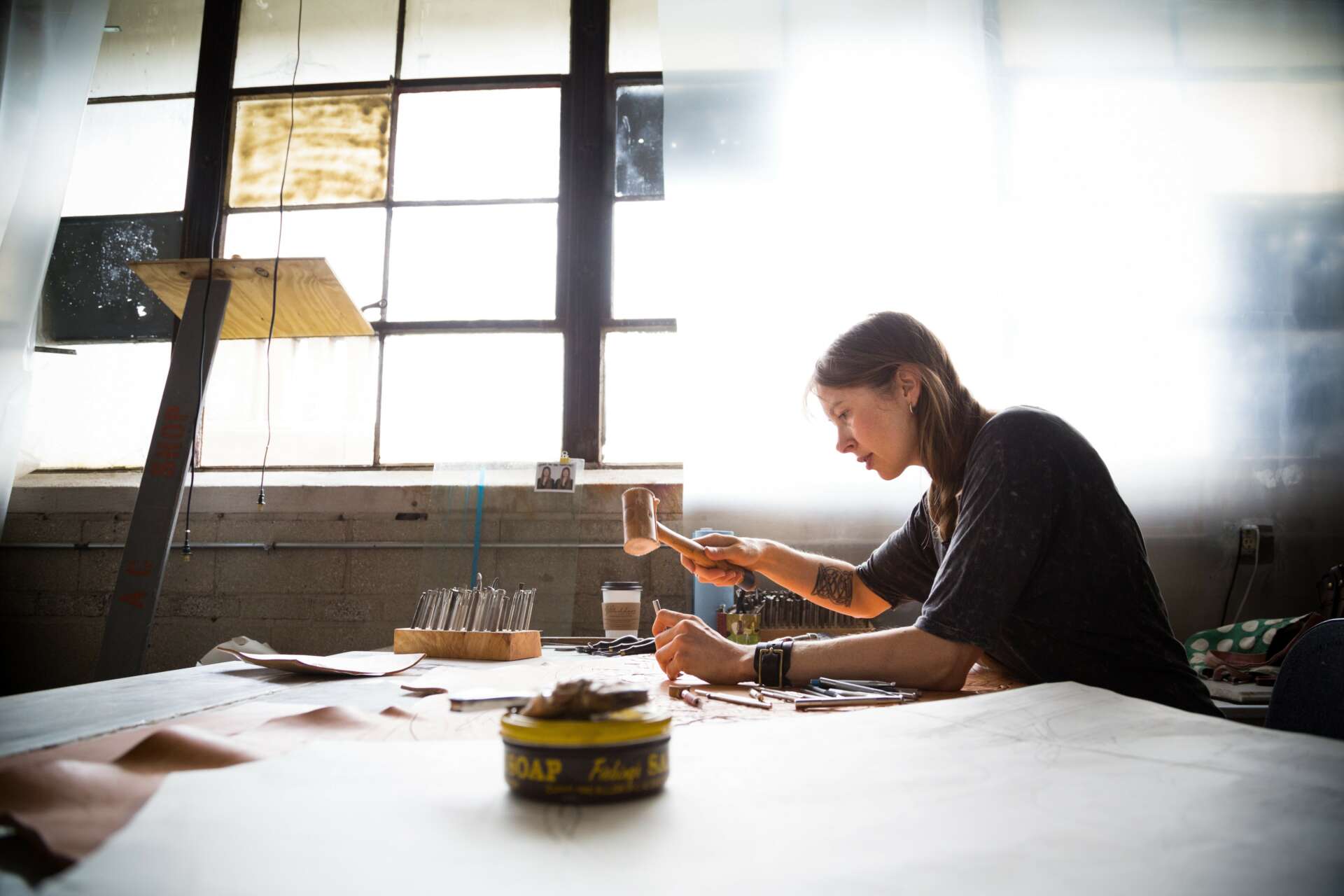
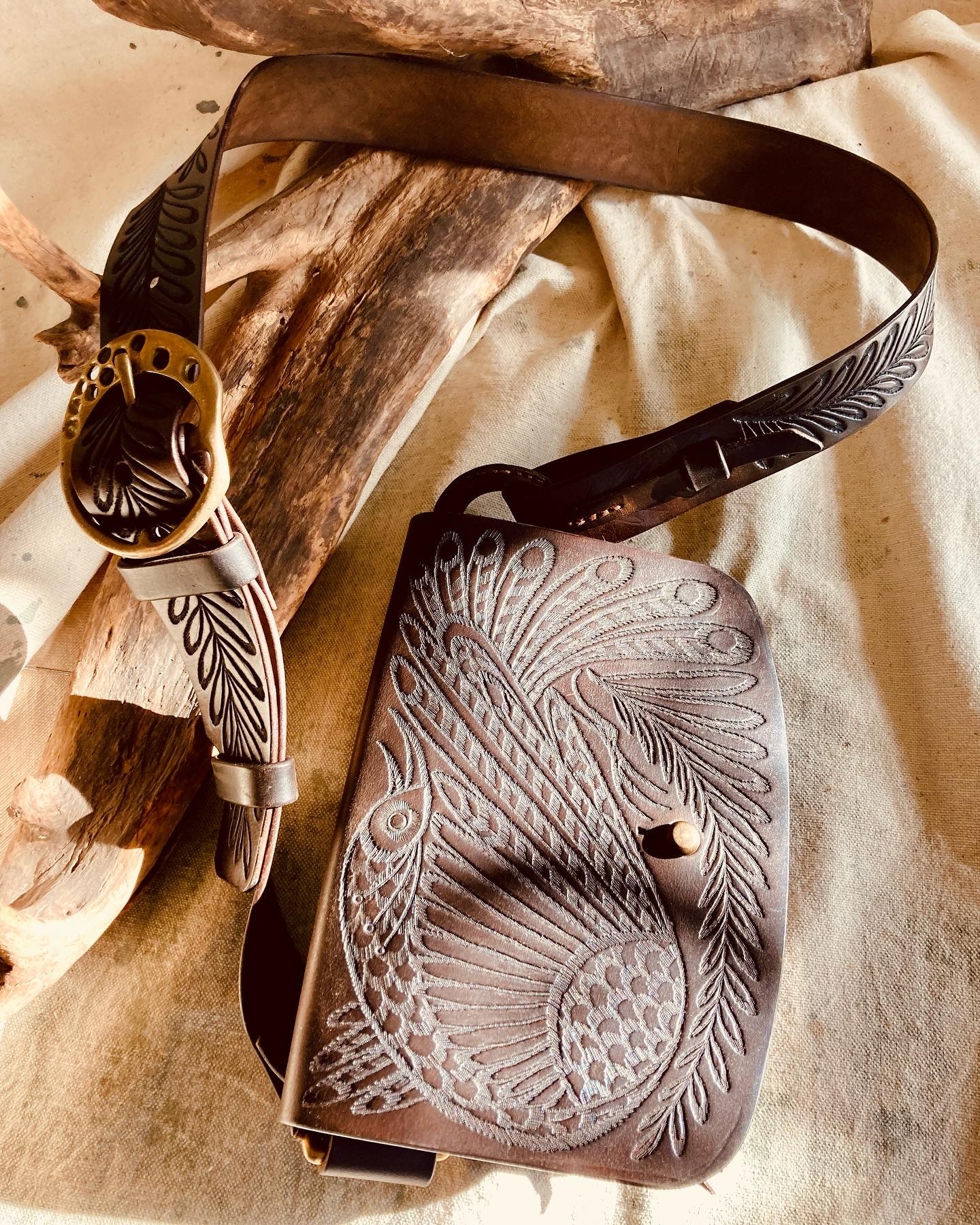
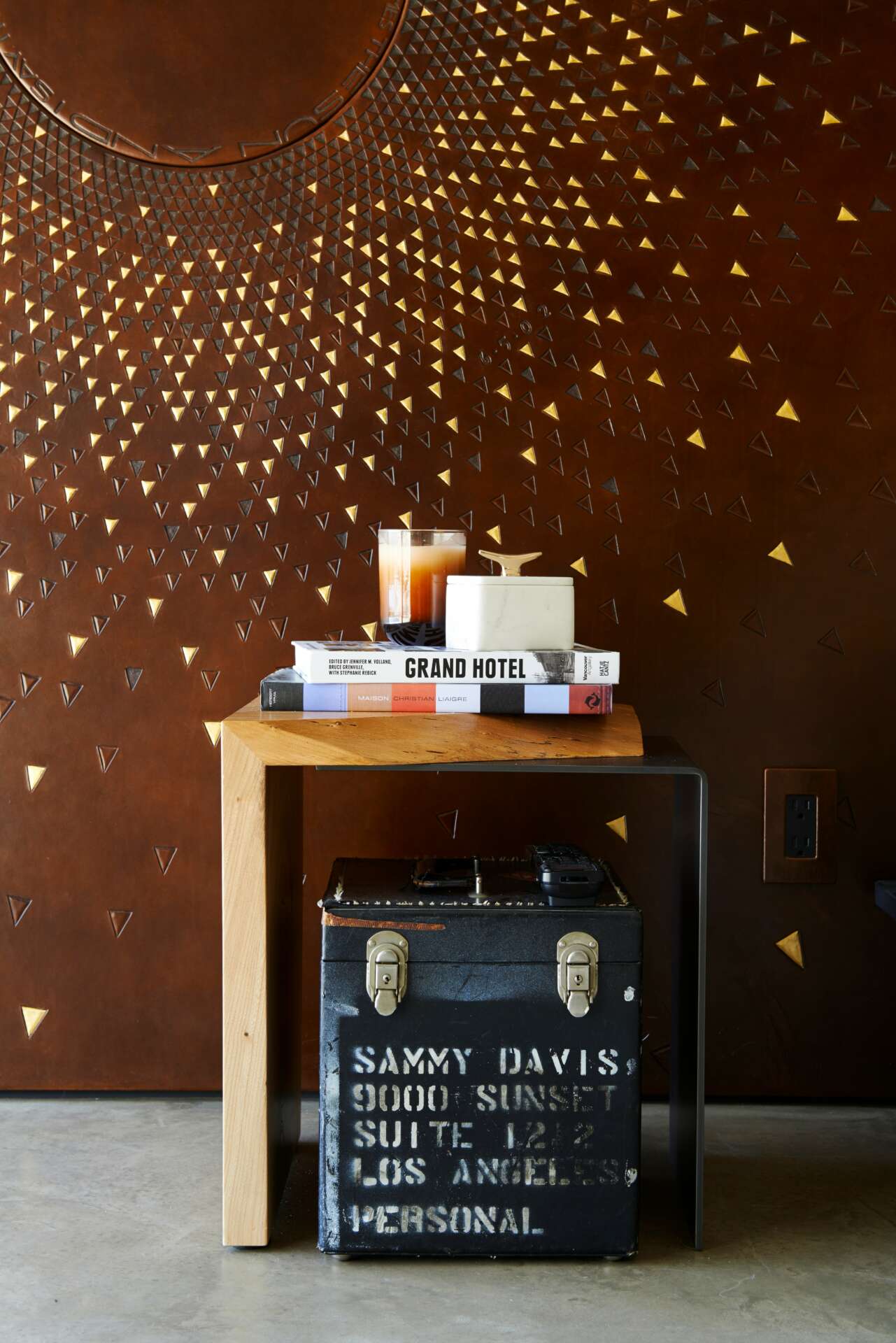
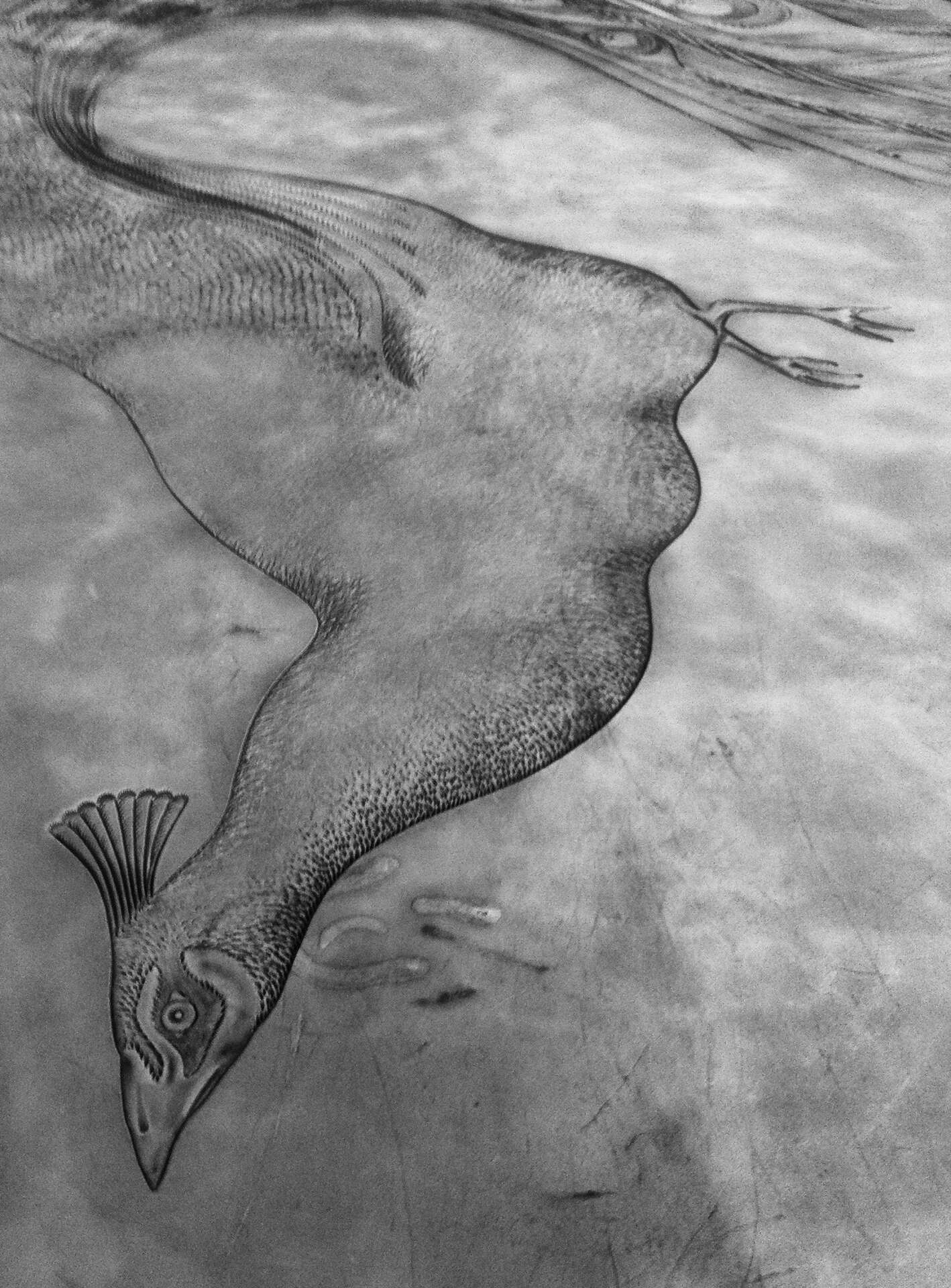
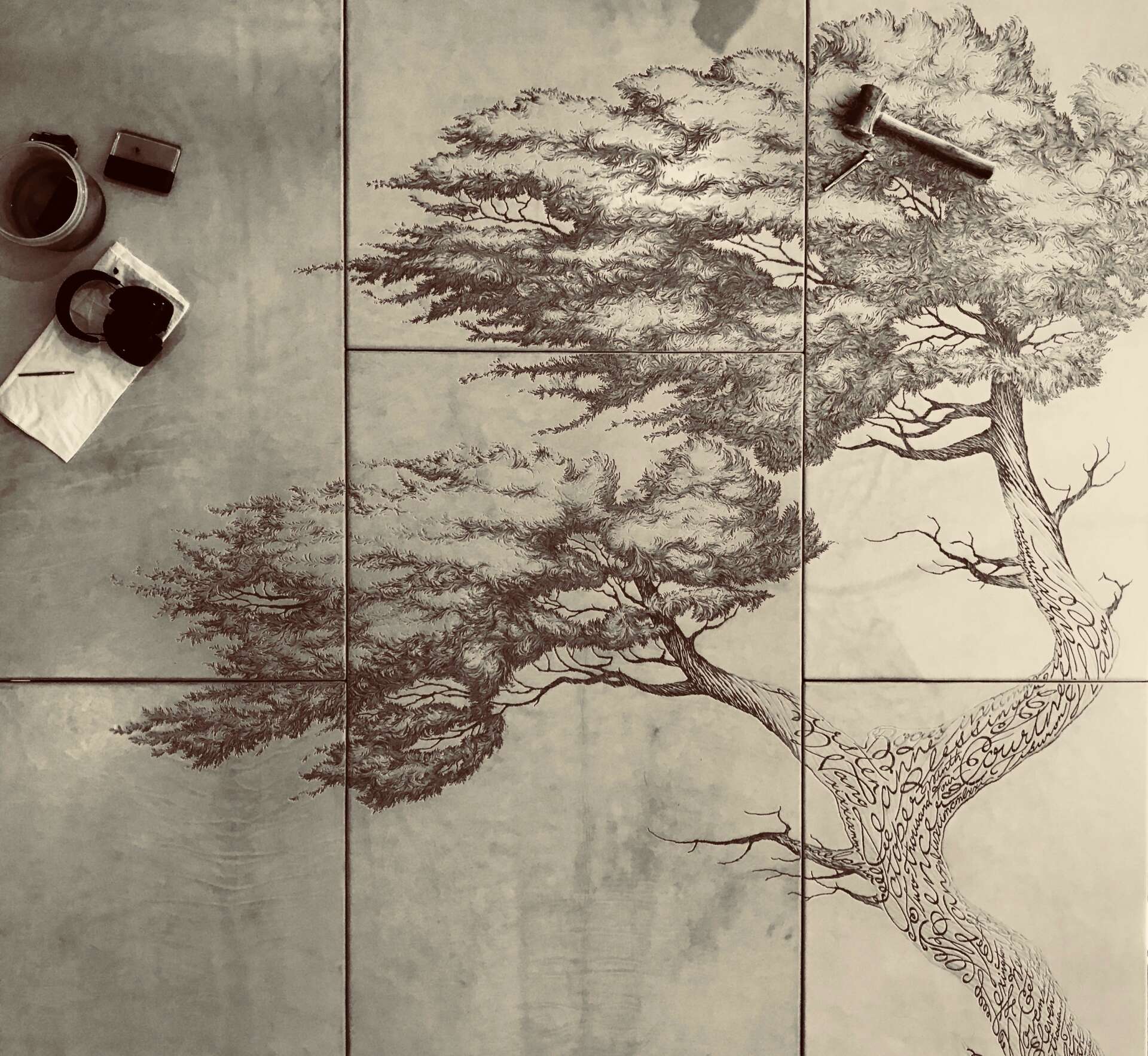
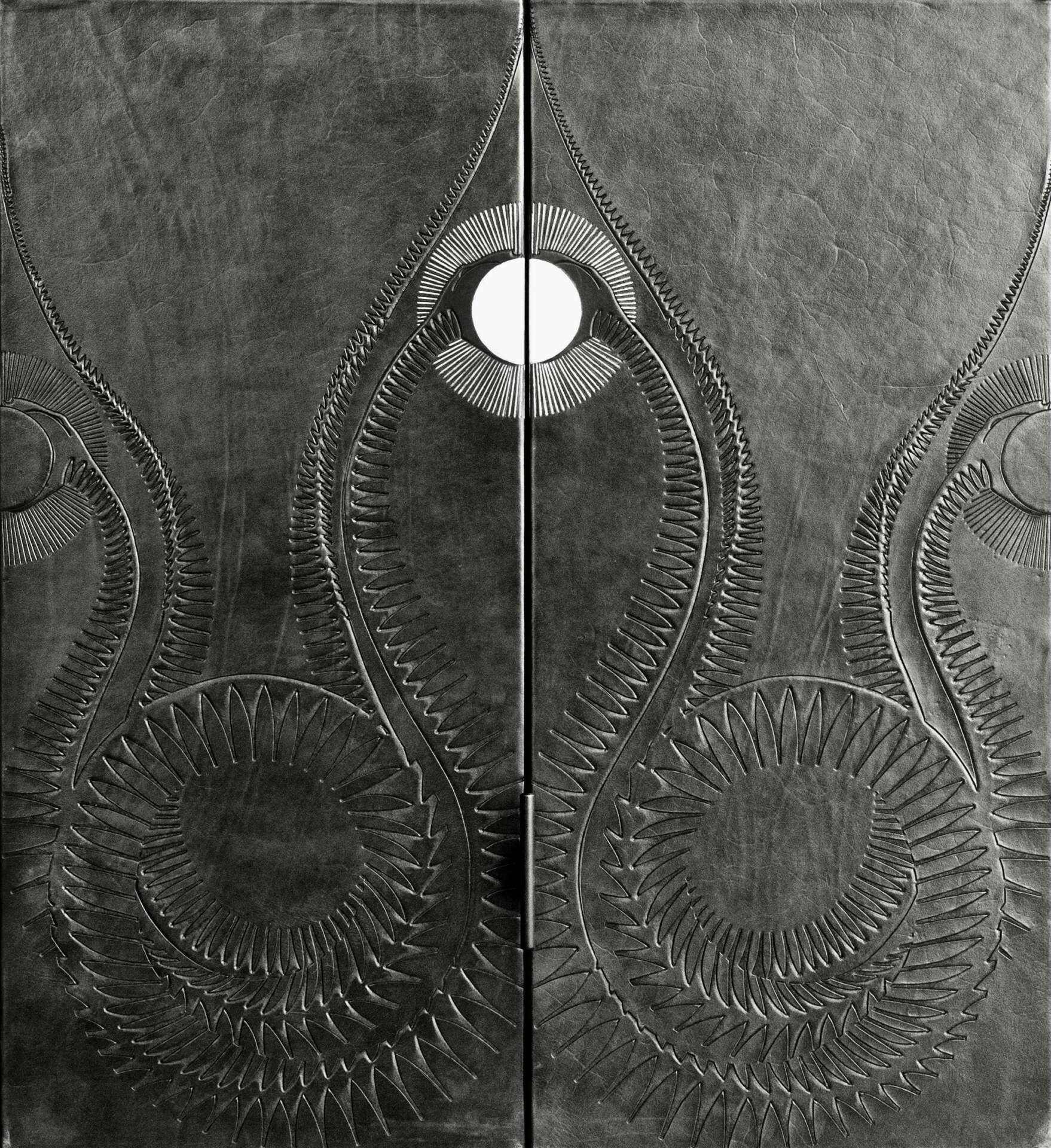
My name is Casey Gunschel and I am an artist whose medium is leather. I’ve been doing this as an art form for 14 years. My professional work mainly consists of large scale architectural and interior design leatherwork pieces ( think tooled leather walls and furniture) commissioned by designers. I generally do between 4-6 of these custom pieces a year, depending on the scale.
I sort of fell into this medium. Life circumstances took me to a very small town in eastern Oregon for awhile, where I had no idea how to utilize my art background. I had always loved and ridden horses – and I found a saddle maker there who I bothered enough times that he finally took me on and introduced me to tooled leather.
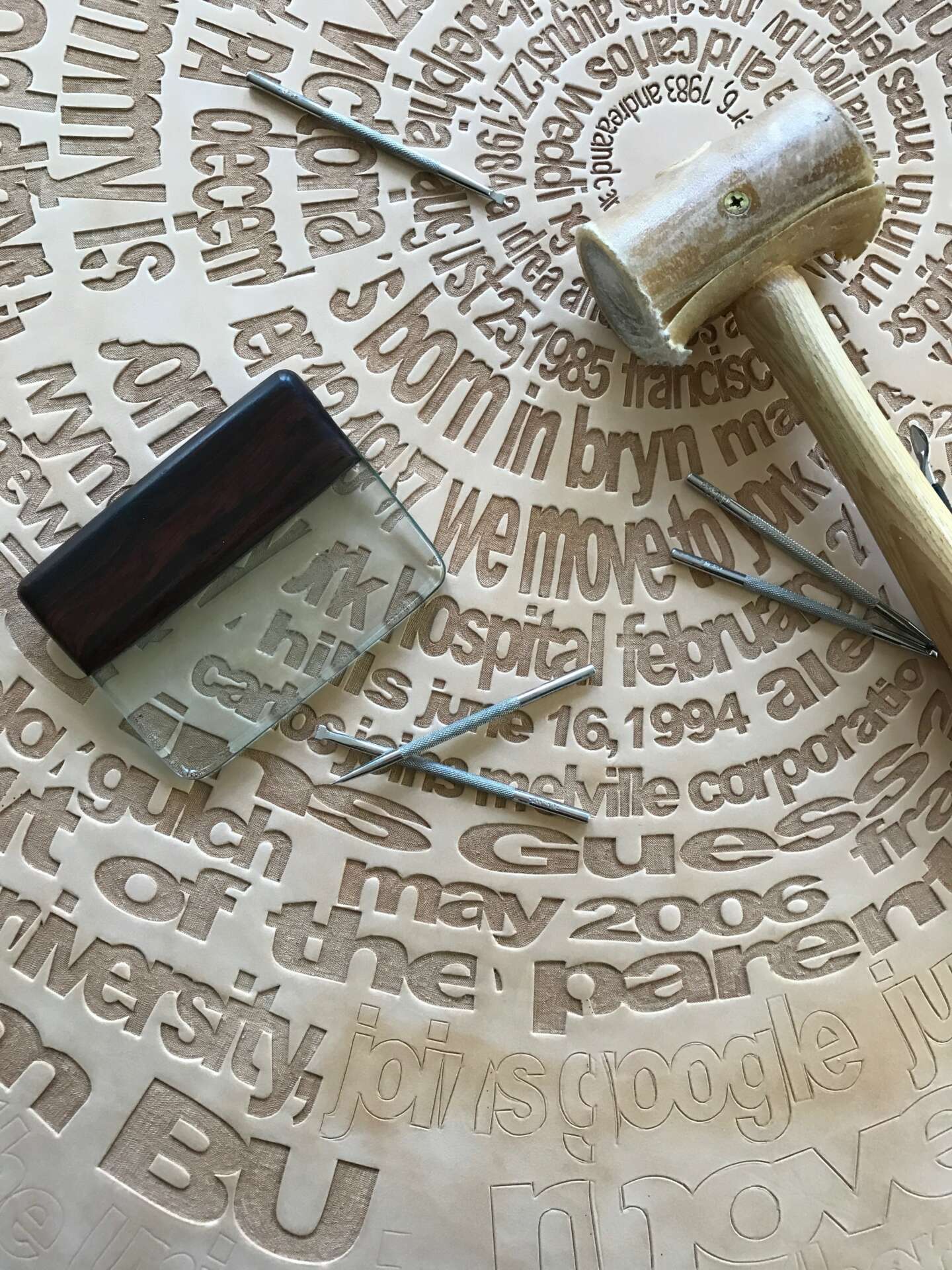
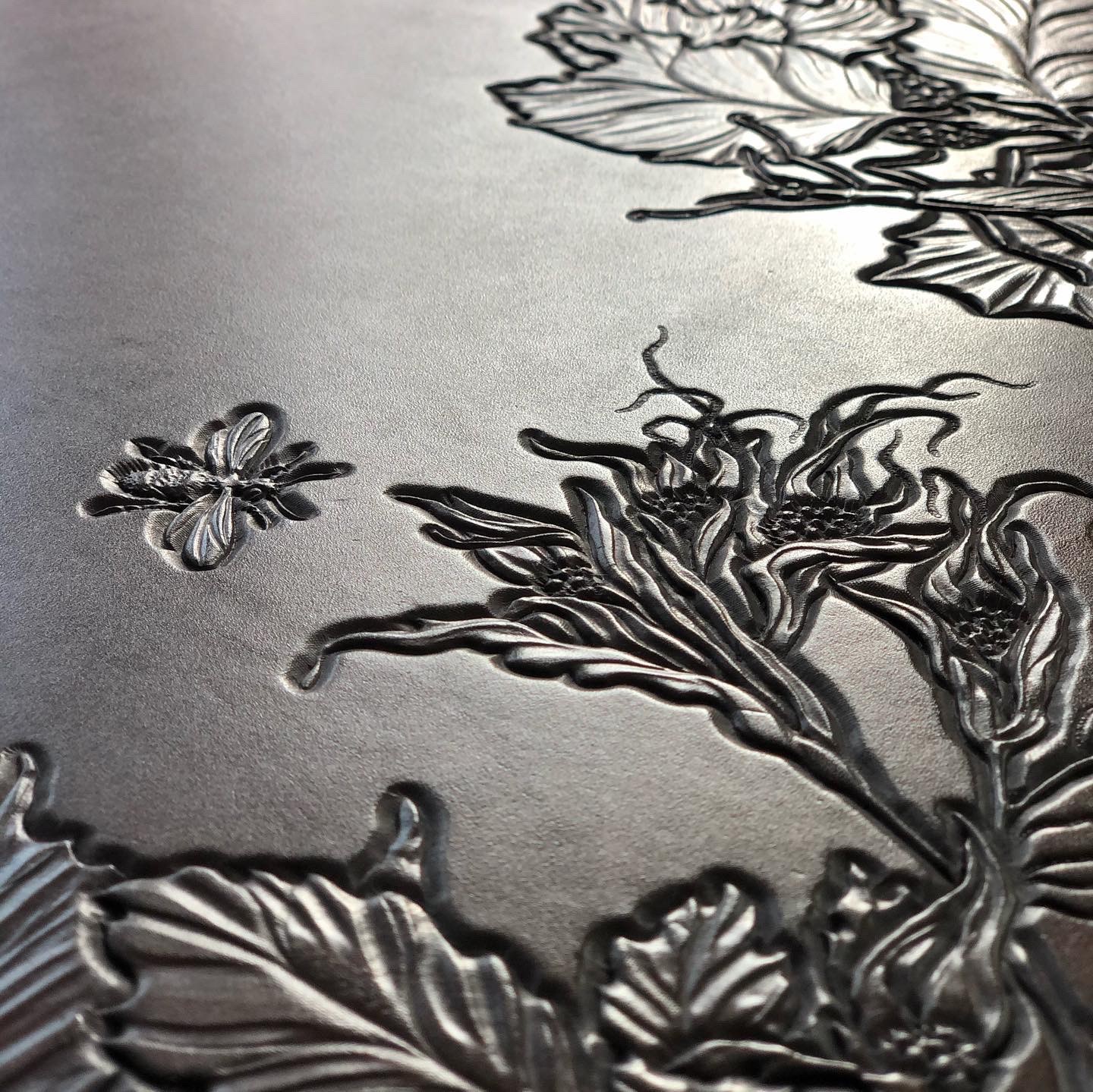
That was like being struck by lightning. I think I had always seen tooled leather – like on belts or old bags – and thought it was a giant stamp. But learning that it was carved and stamped into wet leather – its essentially low relief sculpture – was very intriguing and I ran with it.
I started making some tooled belt straps that, fortunately for me, made their way in front of a prominent interior designer – who then asked if I could do this on furniture. To which I said yes, and crossed my fingers that I could figure it out. I figured it out.
I don’t do any advertising. My website is outdated and social media presence is meager and novice level. My designer clients are repeat customers or by word of mouth. Sometimes a designer (but not alway, sometimes it’s a homeowner) will contact me with a concept, and we’ll spend months going back and forth fleshing out ideas before we have a drawing ready for the leather. Other times a client will have something as rigid as a CAD drawing, just ready for me to translate.
The challenge comes from taking a two dimensional drawing and turning it into a three dimensional tactical art piece, using metal stamp tools that were created for an entirely different application. Most of the tools used in traditional tooling were created to tool florals and geometric patterns for saddles – they had very specific applications – and I use them in totally different ways to get completely different results.
Since I have started doing leatherwork I have watched the industry explode. It seems if you throw a rock you’ll hit ten kids who all make leather wallets. Which makes me feel fortunate that I have found a real niche. It can be a bit feast or famine – but if I’m honest with myself I think its not that the work isn’t out there – it’s that I don’t do a good job of putting myself out there….Which is sort of constant inner struggle I have with myself I guess.
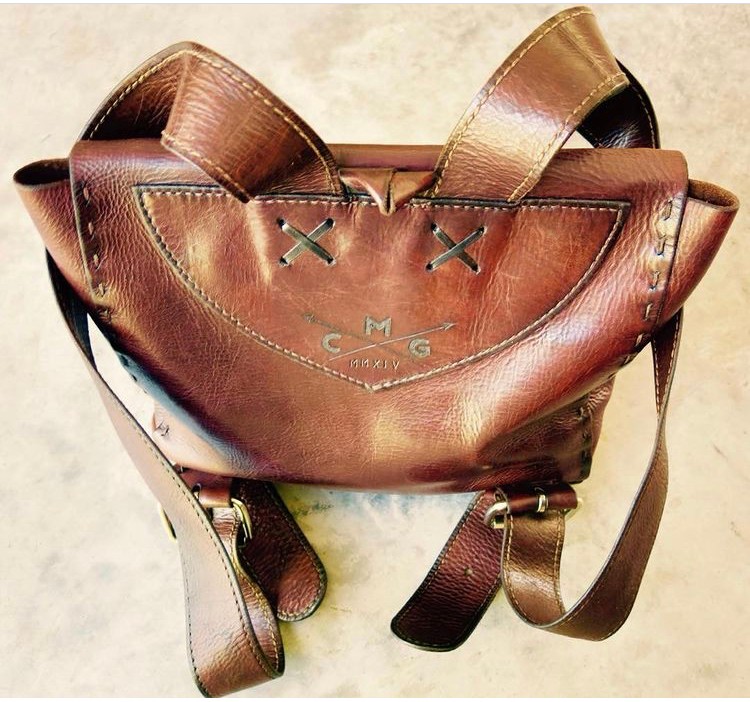
I do make some smaller work too. Its hard to stay on a consistent schedule with that because the bigger projects can be all consuming – but the smaller work ( beautifully tooled functional objects) allows me a little bit more room to play because the stakes aren’t so high. If I crash and burn on a belt it’s not the same as a wall. The smaller stuff also provides a parallel income stream, when I’m on the ball. My father always says I should someone for this, to make the smaller stuff, but I’ve gone that route before, and it becomes too much of a hustle to keep someone busy, and I’ve never felt comfortable there. It takes all of the joy out of it for me.
Can you tell us about a time you’ve had to pivot?
I have been a self employed person since 2003. In 2016 I got a bad case of tendonitis in my elbow that really affected my ability to work – and I had to stop doing leatherwork. Unfortunately my bills did not stop coming in, and I had to get a JOB.
Looking for employment and then getting up and going to a job – that wasn’t of my own making – every day, felt really foreign. And it gave me a bit of an identity crisis for a few months. I had no idea if my arm was going to get better, when it was going to get better, and if I was ever going to be able to do what I loved again. I started to question who I was.
The job that I took was working at a sail loft. It was a good fit for me and had a steep learning curve, but I was starting at the bottom. Initially I felt like taking this job erased my identity, my entire artist skill set that came before. I had no idea how to answer people when they asked me what I did or about myself. I felt really lost.
But rather quickly I learned a few things. First – that all of the years of self employment and problem solving are super valuable EVERYWHERE. Also, that a paycheck that is dumped into ones’s checking account every week is a wonderful thing. I had the first paid holiday of my entire life and it felt amazing. And I met people that I never would have otherwise met.
But most of all, I learned the valuable lesson that you are not just what you “do”. I was no less an artist because I was working a job. I think I had wrapped myself up in my “working artist” identity for so long I didn’t know who I’d be without it. Since I’ve let go of that there has been a real sense of freedom. To be honest there are days I consider going back to a JOB again. I appreciated to paycheck. I appreciated the structure of time, the bookends of the day. I felt more free to play on my time off.
I healed and went back to my leatherwork gig, but that pivot to a job, and what it taught me, has stayed with me. I’d be lying if I said there weren’t some days I wanted my job back.

We often hear about learning lessons – but just as important is unlearning lessons. Have you ever had to unlearn a lesson?
Ahhhh…Trying to outgrow the starving artist’s survival mentality when it comes to pricing work seems to be a lesson I’m continuing to learn. That combined with a touch of Imposter Syndrome makes for some cheap art.
For decades I made very little money and lived hand to mouth. I priced my work very low – always in fear that if I priced it too high I would price myself out of a job. I’m certain that I always left a wad of cash on the table.
I have gotten better at this for sure, but it’s slow going. I can now afford (usually) to turn down a project I don’t want, so I feel a bit more confident asking for higher prices. But because I’m such a niche and – I don’t really have anyone else to compare against for pricing.
In reading what I just wrote here, the lesson I’m trying to learn might not be how to successfully up my pricing but more how to put a value on my work.
I mean, who else is going to tool you a giant leather wall?
Contact Info:
- Website: www.caseygunschel.com
- Instagram: casey.gunschel
- Facebook: Casey Gunschel
Image Credits
Tyler Mallory, Chicago