

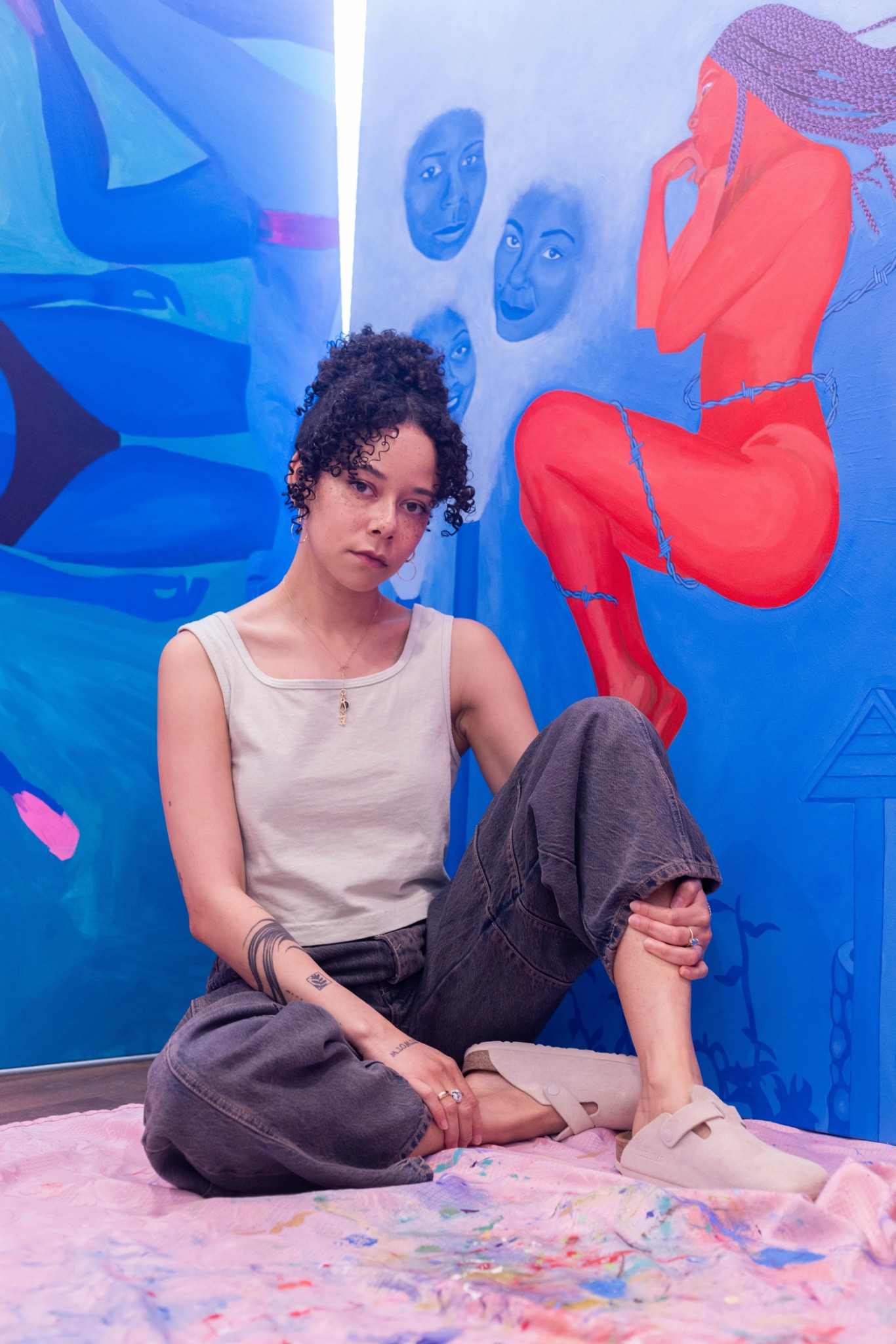

We recently connected with Carter Wynne and have shared our conversation below.
Alright, Carter thanks for taking the time to share your stories and insights with us today. One of our favorite things to brainstorm about with friends who’ve built something entrepreneurial is what they would do differently if they were to start over today. Surely, there are things you’ve learned that would allow you to do it over faster, more efficiently. We’d love to hear how you would go about setting things up if you were starting over today, knowing everything that you already know.
I don’t regret my journey because it allowed me to accumulate invaluable skills and build strong networks. Before pivoting to art full time, I worked as a civil rights paralegal and was preparing for law school. That experience honed my writing and research skills. It also helped me save money to fund my graduate degree in the arts.
For a while, I wished I’d found my way to art earlier and bypassed my time working in the legal field. It’s easy to compare yourself to others who’ve been doing art full-time for longer and feel behind. But the truth is, my experiences working in civil rights advocacy shaped the version of myself that I am today. They strengthened my professionalism and self-advocacy skills, which support my creative practice.
If I were to do anything differently, it would be to dedicate more consistent hours to painting earlier on. For my first year of painting seriously, I practiced sporadically, which limited technical growth. Now, I aim for at least 2 hours a day, four times a week, and I’ve noticed significant improvement and fluency in my brushwork. That increase in time commitment has made a huge difference in both my confidence and the quality of my work.
Great, appreciate you sharing that with us. Before we ask you to share more of your insights, can you take a moment to introduce yourself and how you got to where you are today to our readers.
I’m a self-taught painter and curator raised in Washington, D.C. and currently based in New York City. I’ve been doing social justice work for over a decade and I consider myself an advocate and organizer. I’m a fourth-generation Washingtonian, 27 years old, and I use she/her pronouns. I’ve always gravitated towards creating and consuming art, but my consistent painting practice didn’t begin until 2023. I started painting rather obsessively when I was on medical leave from my job at the time, and I haven’t stopped since. A year later, I completed a curatorial apprenticeship at the DC Arts Center, where I developed and installed my first full-scale gallery exhibition. My curatorial work informs the conceptual aspects of my painting practice, and my identity as a painter shapes how I move as a curator.
I explore the emotional weight of entrenched inequity, tracing how personal and collective experiences are politicized, obscured, or transformed into sites of resistance. I use painting as visual rhetoric: a means of bearing witness, challenging hegemonic systems, and insisting on relational clarity in an age of desensitization. My curatorial work investigates the potential of play as an insurgent force. I use my creativity as a tool to affirm that art and justice are not separate pursuits but entangled partners. Creating political art is challenging and often carries personal risk. Work that critiques systems of power invites a wide range of reactions…not all of them are positive. Additionally, political artwork does not typically have a strong commercial market, so you can’t expect to have any financial return. I’m privileged to be able to create work rooted in the causes I’m passionate about without compromising my integrity. I believe political artwork is more important than ever at this moment. If nothing else, for the sake of the archive.
For you, what’s the most rewarding aspect of being a creative?
This may sound obvious, but the most rewarding part of being an artist for me is simply the act of creating. When I paint, I enter a flow state and often lose track of time for hours. I’m so focused on what I’m making that everything else in my head disappears. As a chronic overthinker, painting is when I feel most at peace. My practice is just as much purposeful as it is meditative. I feel more myself after I paint, and when I don’t, it feels like I’ve skipped an essential meal or vitamin. At this point in my life, painting is essential to my wellbeing, so the act itself is deeply rewarding. Sometimes I feel like I’m in a duel with a painting, usually when I’m about 3/4 of the way done. I get so frustrated when it doesn’t feel quite right, yet I’m totally enthralled by the challenge of completing it. That tension can feel almost obsessive. When the work finally feels complete, the sense of euphoria can last for days.
What do you think is the goal or mission that drives your creative journey?
For the next 10-12 months, my creative journey will be about 2 things: progressing with my master’s degree in contemporary art that I just started and completing an ongoing series of paintings that I’ve been working on since last spring.
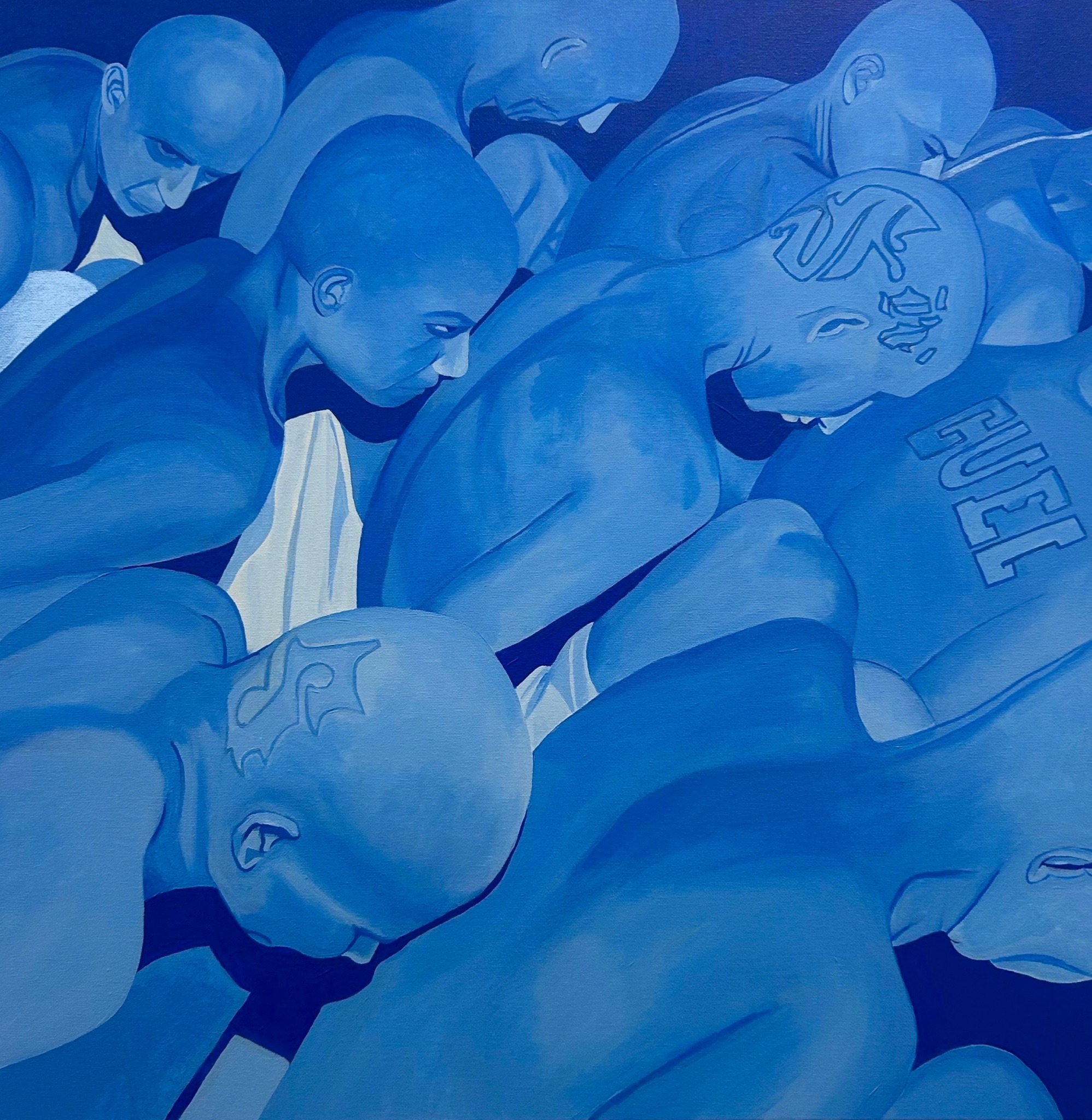
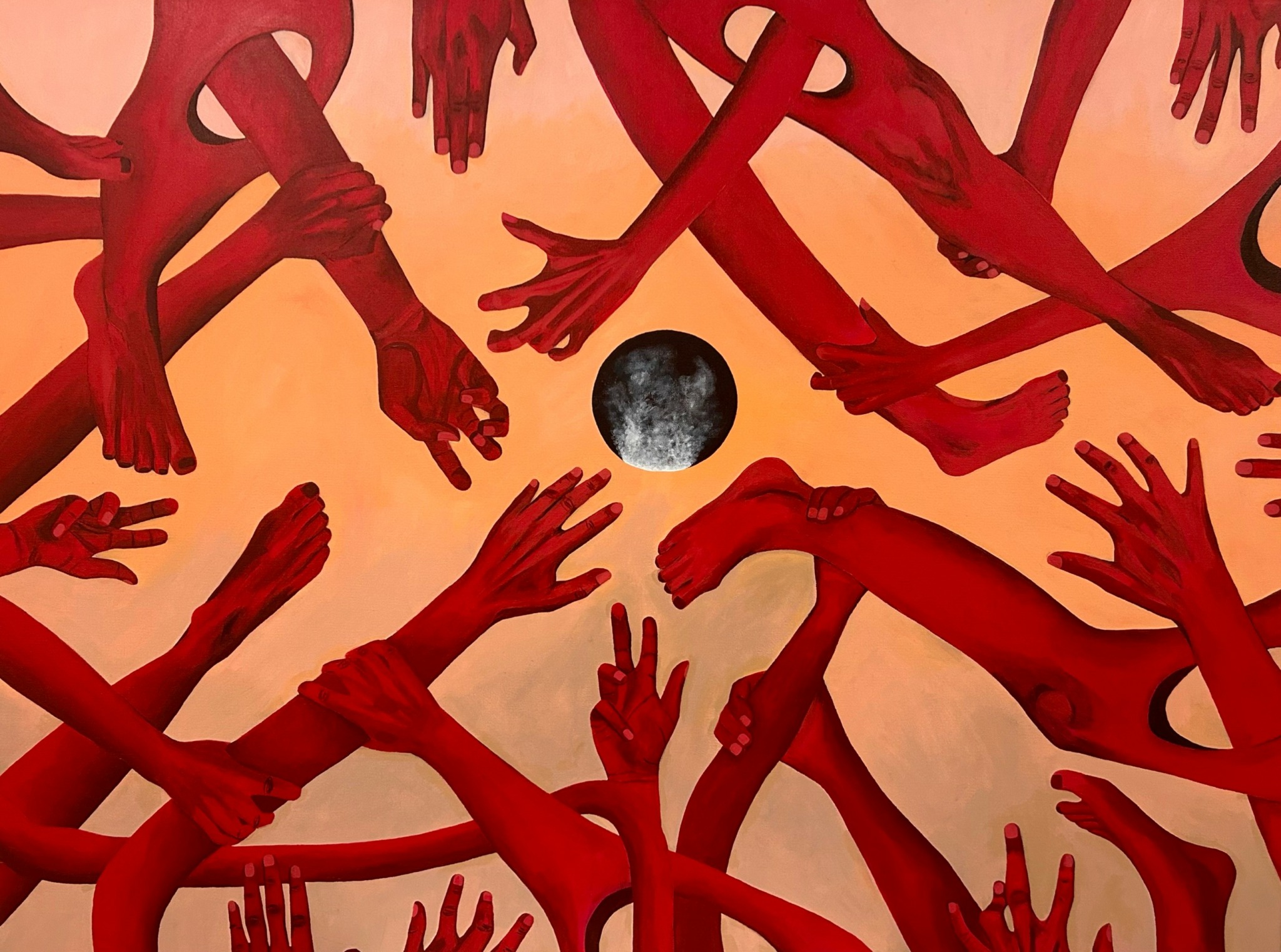
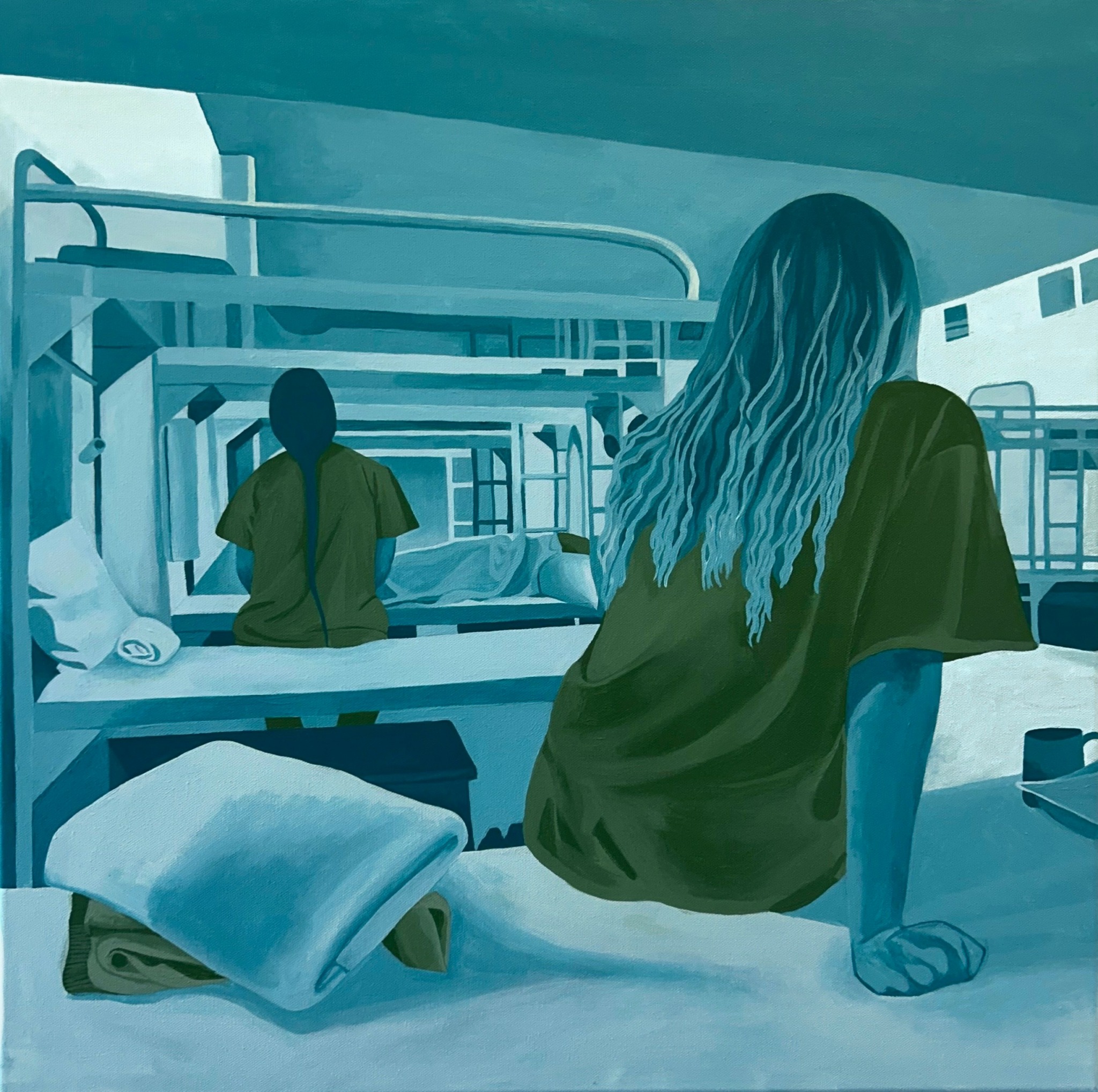
The series serves as a visual archive of a country, and a world, in crisis. Created in real time amid escalating global instability, each vignette engages a different front of that crisis. The work is grounded in the understanding that these are not isolated injustices, but parts of a deeply entangled system. What binds them is structural. Each still is fueled by the same extractive logic, marked by the same patterns of disposability, and obscured by the illusion that these crises are separate. Global solidarity is not an idealistic add-on; it is a necessary lens.The paintings are not made to simplify or resolve. They are made to interrupt apathy. They ask the viewer to sit with what is being allowed to unfold in plain sight. If the image pulls you in, it’s not to comfort you…it’s to disarm you, so you stay long enough to feel the weight of what’s happening. The most effective movements aren’t only politically clear, they are emotionally resonant. These paintings are part of that necessary front: not propaganda, but counter-narrative. Not an aestheticized crisis, but felt truth. They don’t simplify the fight; they make its stakes legible, urgent, and hard to ignore.
I’m currently working on the third painting in this series, with a (rather ambitious for me personally) goal of completing 10 by next summer. Ultimately, I hope to present them together in a solo exhibition, offering viewers a sustained, immersive encounter with the work and the crises it reflects.
Contact Info:
- Website: https://carterwynne.com/
- Instagram: @freckled_blue_
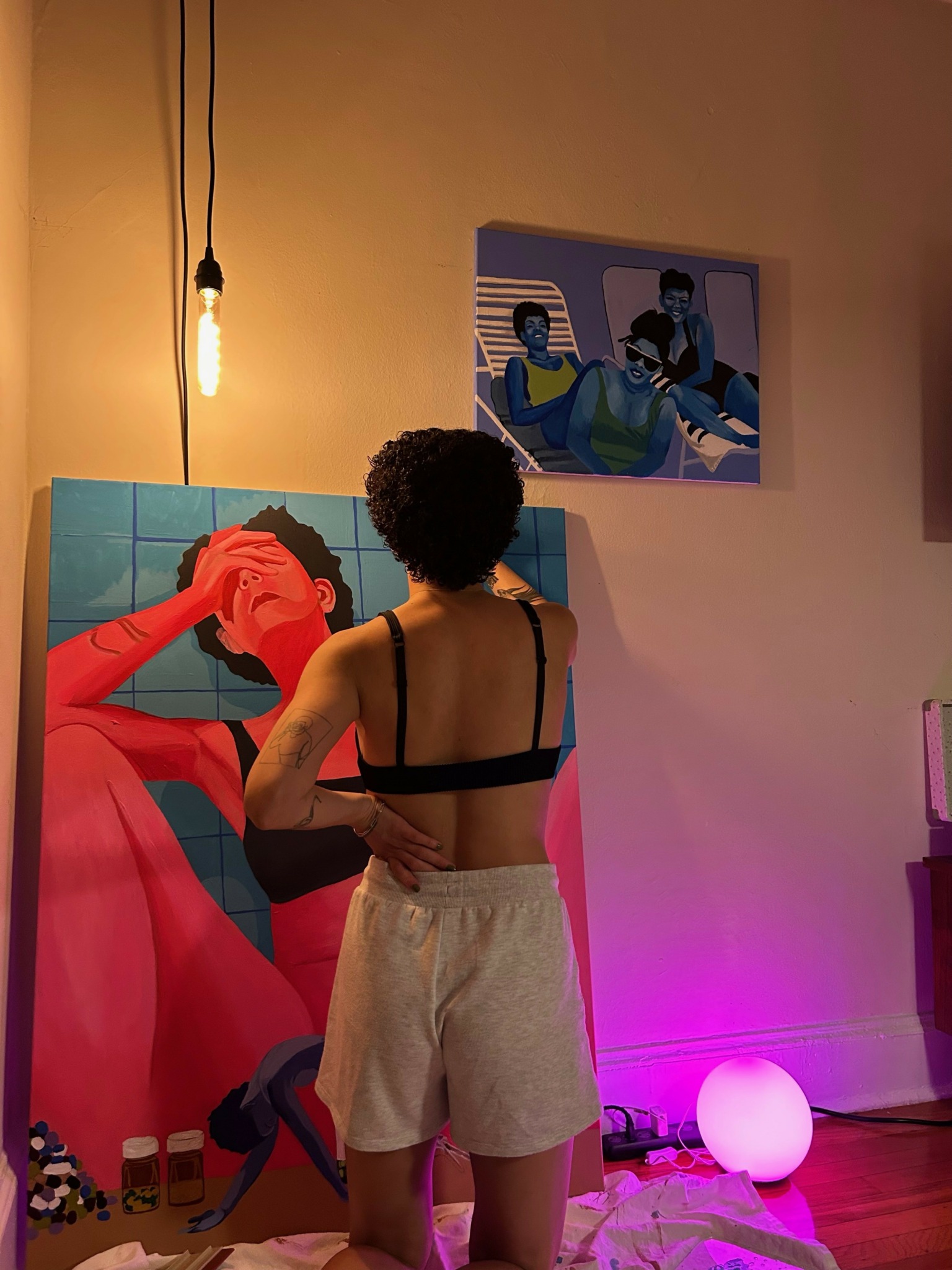
Image Credits
for the main photo image credits go to Manal Murangi. The rest I took.