

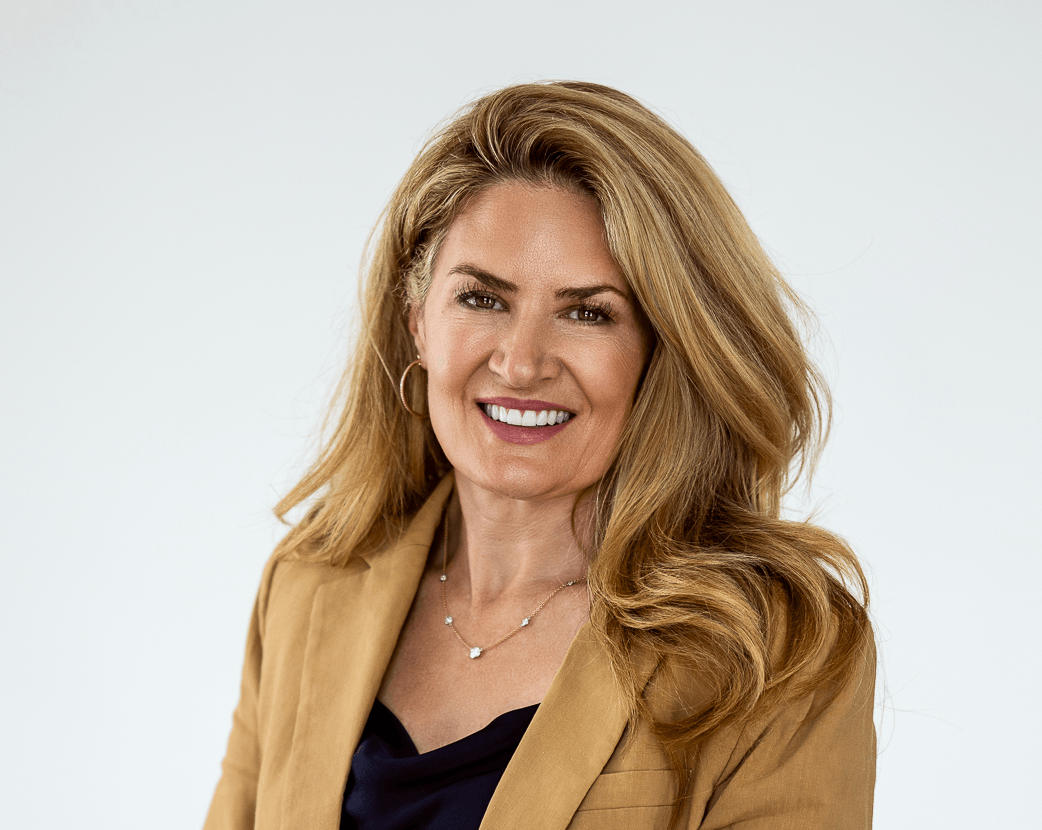

We recently connected with Carrie Freeman and have shared our conversation below.
Hi Carrie , thanks for joining us today. Can you tell us a story about a time you failed?
Mission and Market: What We Learned from Trying to Do Both
When you’re a mission-driven services company, it’s easy for others to mistake you for a non-profit. At SecondMuse, founded as a for-profit LLC, we always believed business can and should address the world’s toughest challenges. This conviction led us to become B Corp certified in 2015—a recognition that aligned our operations with our values of accountability and stakeholder-driven impact.
Yet, the tension between mission and market persisted. Much of our work—supporting entrepreneurs, fostering ecosystems, and driving social innovation—is not always, but often seen as the domain of nonprofits. In 2018, we decided to formalize this dual identity by creating the SecondMuse Foundation, a non-profit sister entity to advance thought leadership, act as a fiscal sponsor, and explore long-term opportunities like raising an endowment.
Running both organizations taught us hard but valuable lessons about operating in the grey space between profit and philanthropy. After years of effort, we made the difficult decision to wind down operations in the Foundation in 2025, a decision rooted in clarity about where we could have the most impact.

Carrie , before we move on to more of these sorts of questions, can you take some time to bring our readers up to speed on you and what you do?
I am a CEO who runs profitable companies, in a way that everyone is proud of how those profits are made.
I have grown a global services company with a 20 fold increase in revenues, by supporting ~200 entrepreneurs annually. Over the last decade our work has enabled $800M in investments and generated an estimated $10B in social and environmental impact. I am a sought out global thought leader and speaker for running purpose driven companies and have won awards to that effect.
I am fascinated by what remains constant and what is possible with growth and innovation. These constants may be called individual truths, leadership fundamentals, market forces, science as we know it, universal principles. Yet we know that things continue to evolve, some with ever increasing speed.
As a kindergartner, my teacher said I had strong leadership skills. In third grade, I interviewed the city manager as that was my profession of choice because of the complexity of managing lots of things that impact lots of lives, hopefully for the better. In highschool I loved my business classes and knew I wanted to study business. While getting my MBA I went back and forth between concentrating in technology and innovation, organizational development and environmental policy. Adventure, growth, wellness have always been core to who I am. I love business. Learning new things and excelling drive me. This was true 30 years ago and is still.
I honed my leadership and business skills, increasing my management responsibilities at Intel for 15 years, leading global teams. At the age of 21 I started at Intel as a manufacturing manager, managing technicians in the clean room. I went on to manage $B equipment sets, identified a $B new market, designed an impact investing fund, represented the company in critical deals and on global stages. Then I joined an early stage startup and grew it 20x, with offices and staff on four continents and programming in over 150 countries. Each year we support ~200 entrepreneurs in the following sectors climate tech, circular design, materials, food/agriculture, responsible data and technology solutions. Some of the largest corporations, governments, investors and philanthropies trust us to identify new innovations and scale them in the market. I personally evaluate, approve investment in and advise the highest potential companies.
Markets evolve, technologies and science accelerate, budgets vary, geopolitics create instability, new generations of workers are different, yet the fundamentals of running highly successful businesses remain the same. As an executive of exiting my company and also coaching entrepreneurs my understanding of legal complexities and deal negotiations has increased exponentially while my knowledge of human psychology and relationships continues to deepen.
To be a high impact leader we must know how to consistently demonstrate the fundamentals, while continuing to expand our knowledge and expertise in our industry and the world around us.
Can you share a story from your journey that illustrates your resilience?
Calm under pressure, strong but warm, firm and kind. These are all compliments people have given me on my leadership style. Contract negotiations, employee disputes, cultural clashes are all situations that a leader has to deal with. One particular story that I’m reminded of was a time when I had made a quick trip to our Singapore office to deal with an escalating issue and an ex employee concern was rising on our north american team. While I don’t remember the specific details, I do remember my director of finance talking me through the issue at hand. After I went through a series of questions about what had or hadn’t been done to resolve the issue, I simple said, “we’ve done everything we can do, the cards will fall where they do”. The response I got was one of relief and in a calm tone ” that’s a very zen approach”. I thought out-loud, what is the other option? When every one does their best all along the way, given the circumstances and things still don’t go as we’d like, we can accept it, support it and move on… or the alternative is what?
Has your business ever had a near-death moment? Would you mind sharing the story?
During my time at SecondMuse there were many months when cash flow was a concern. There were the months when we knew we were confident we would get paid, but there was not enough money in the bank, and then there were the times that month over month our financial outlook wasn’t good and a reduction in expenses and layoffs were likely. In both scenarios, having a clear financial decision making framework done proactively helped the thinking and decision making when the situation was upon us. Creating a financial action scale to guide necessary actions was key. If we were truly in a cash crunch that would be resolved in a few months, after reducing expenses the first step was to reduce owner/executive pay. That happened several times in the first many years. Sometimes we would communicate that more broadly and sometimes we would not.
Contact Info: