

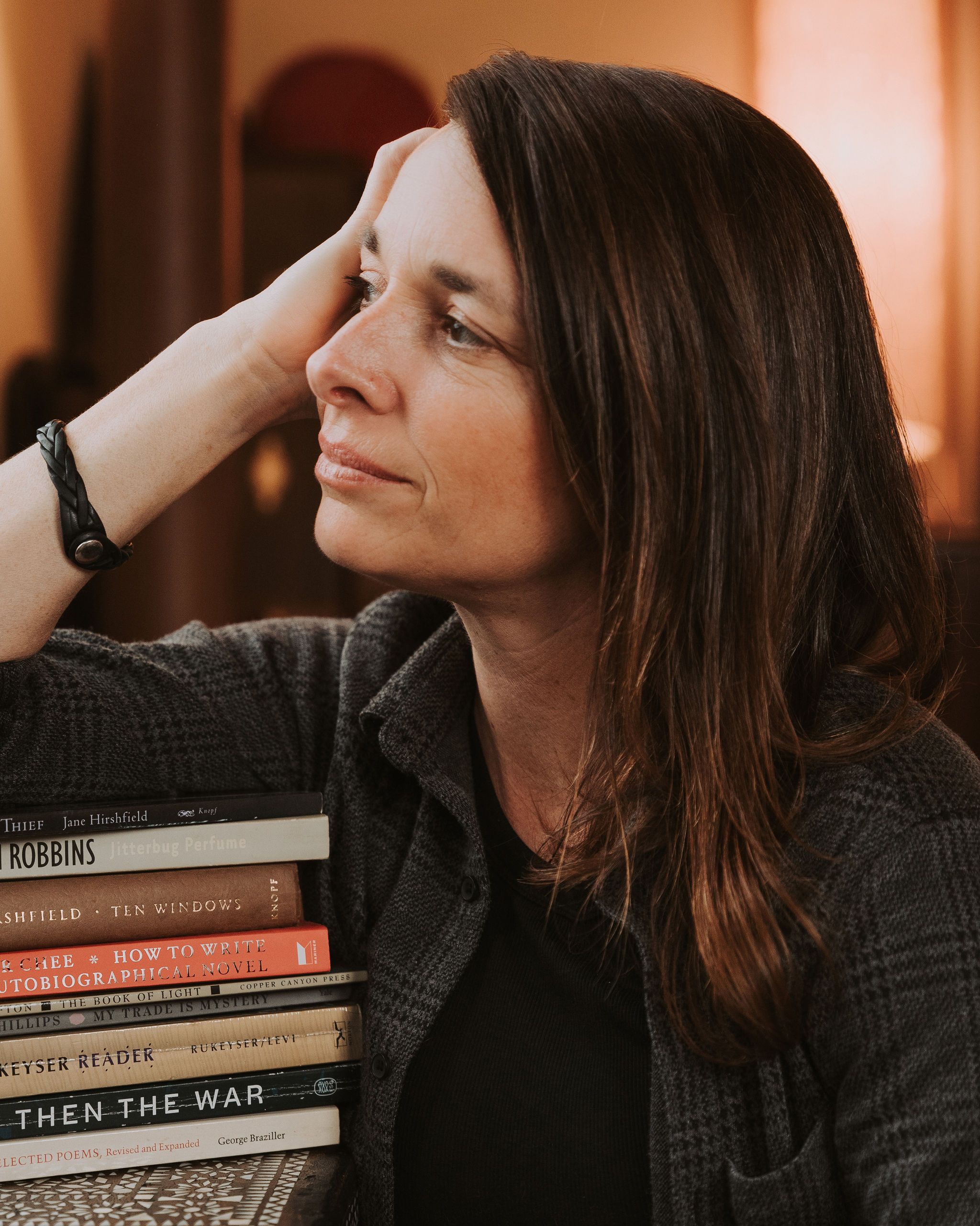

We recently connected with Carly Marie DeMento and have shared our conversation below.
Carly Marie, thanks for taking the time to share your stories with us today We’d love to hear about when you first realized that you wanted to pursue a creative path professionally.
I should have known I was a writer sooner. As soon as I could pick up a pencil, I was writing stories and running around with empty reams of paper pretending they were my book. I wrote a lot of poetry between the ages of 13 and 23. I also read a fair amount—fiction, philosophy, poetry—not only for entertainment and education, but to look for answers about life. I didn’t grow up with religion. In my teen years, I had an acute longing to understand life and death and my place in it all. For me, the dogma of Christianity and most organized religions didn’t work. But when I broke religions down to their most essential components, they seemed to be about people being together in their shared humanity—their love, their joy, their grief. Religions gather ways to live and ways relate to the divine and the unknown into books. I craved that human knowledge. Poetry provided that but without the dogma.
When I was 15, I was having a tough moment after my first love broke my heart, and reading a lot about existentialism and nihilism. Reading poetry lit my way out of the dark. It offered me communion with other humans across time and allowed me a place to explore my own experience of living. Poetry formed my brain. It became a spirituality for me in a lot of ways.
All of this should have cued me into the fact that poetry was extremely important to me. And yet, after I finished college, I gave up writing poetry seriously and didn’t come back to it until I was 40. I thought poetry wasn’t practical. Spoiler alert: it’s not! I minimized it. Mainly, I was scared to fail. So I worked on other artistic pursuits and moved toward tech and climate copywriting as my career. But in my late 30s, I was trying to do it all (married to a wonderful human, working at a tech company, trying to buy a house, and doing IVF—all at the same time) and a number of catastrophes happened. I became anxious and depressed. At the lowest point, I reached for Hafez. I reached for Rumi. I read the same few poems over and over to comfort myself. I began to write my own poetry as a way to write what I was going through into the world. Poetry literally saved my life. Finally, the fear of going for it evaporated. I didn’t care if I failed. My love for it and belief in its importance outweighed my fear of failure. At 40, I finally submitted my first poem and, amazingly, it was accepted. I was a poet.
Carly Marie, love having you share your insights with us. Before we ask you more questions, maybe you can take a moment to introduce yourself to our readers who might have missed our earlier conversations?
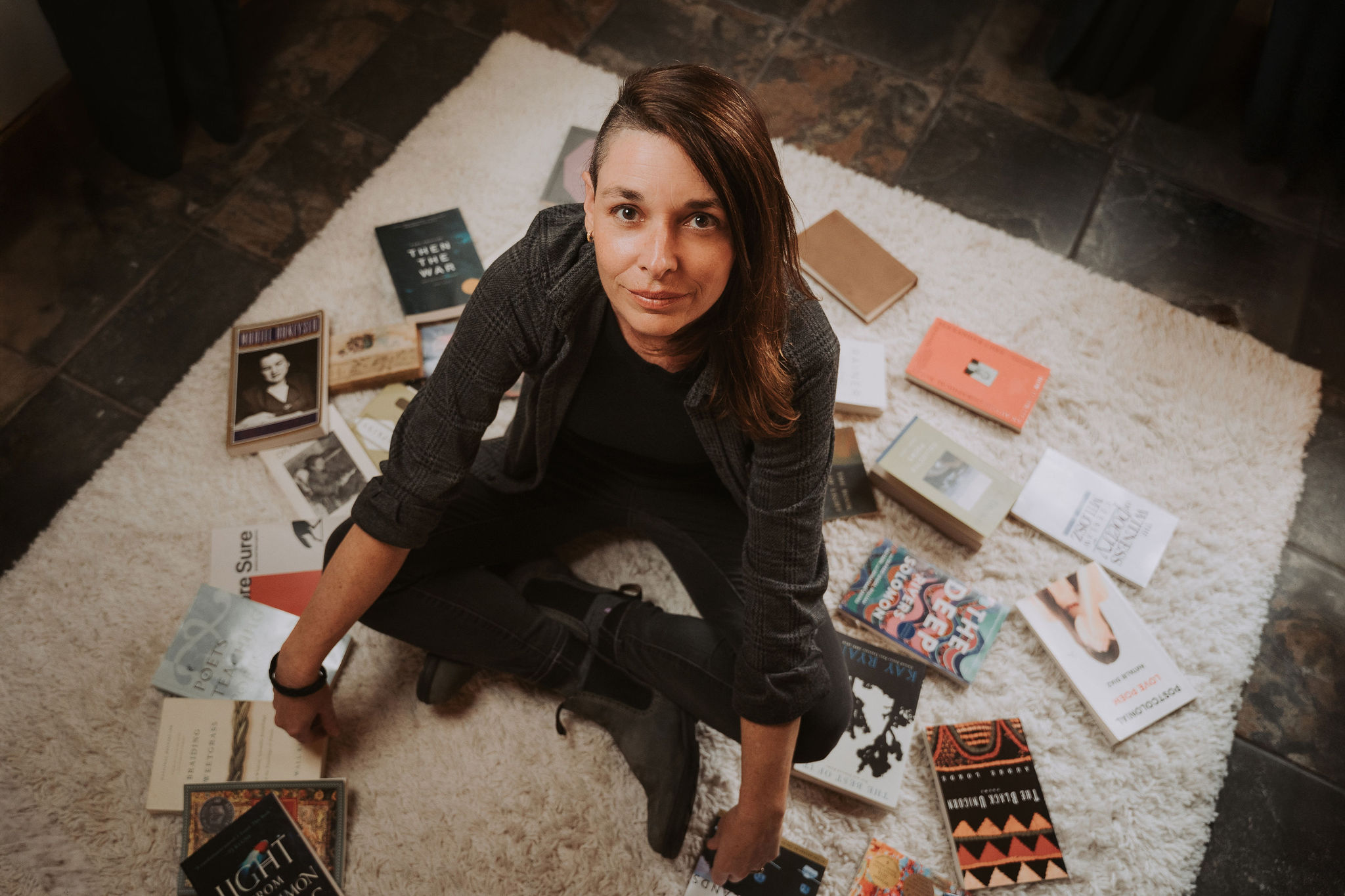
As a poet, I write about what it’s like to be alive in my body at this time in history and to reach people who struggle or feel alone. I’ve been published in the North American Review and other local and national journals, been nominated for Best New Poets in 2025, and have poems hanging in my friends’ kitchens, which feels like the best publication of all. Excited to teach budding writers, I’ve created and taught poetry workshops for teenagers and visual artists, and can’t wait to teach more.
As an event organizer, I’m grateful to be part of the San Diego poetry community. San Diego is experiencing a poetry renaissance, with a synergy between events and a culture of writers lifting each other up. I co-create “Desire, Calling,” a queer reading series with a dance party and a fundraiser, with non-fiction writer Sara Z. Phelps at Verbatim Books. And, I’m the number one fan of Poet Tree Productions, a reading series to reset your default, hosted by poet Melissa McKinstry and artist Doug Kipperman. Kudos as well to poets Jane Muschenetz, Michael Klam, and Bill Harding at the San Diego Poetry Annual, who are celebrating 20 years of bringing the community together. And to poet and professor Katie Manning at Point Loma Nazarene University, editor of Whale Road Review, a true force of nature when it comes to building literary community. In a tough time like this, it brings me solace and joy to see so many good-hearted people creating welcoming spaces where we can share stories and be human together.
Like most poets, I need work other than poetry. I’m grateful to be Senior Content-Strategist and Copywriter at Four Fin Creative and part of the incredible team at this women-led branding agency, founded by Jen Derks and dedicated to supporting climate-positive companies. On weekdays, you can find me talking to climate-tech scientists and founders about cool technologies or processes they’ve invented to save the planet, and then translating those into a website or deck so they can raise money and reach their audiences. I love our team’s approach: it’s creative, collaborative, and transparent.
On a daily basis, my work is varied. My mornings start early. I guard them for poetry and then do paid work. Sometimes, after a poetry event is over, I look around and see people smiling and talking with each other, or tearing up from something they heard, and I know I’m right where I should be.
Have you ever had to pivot?
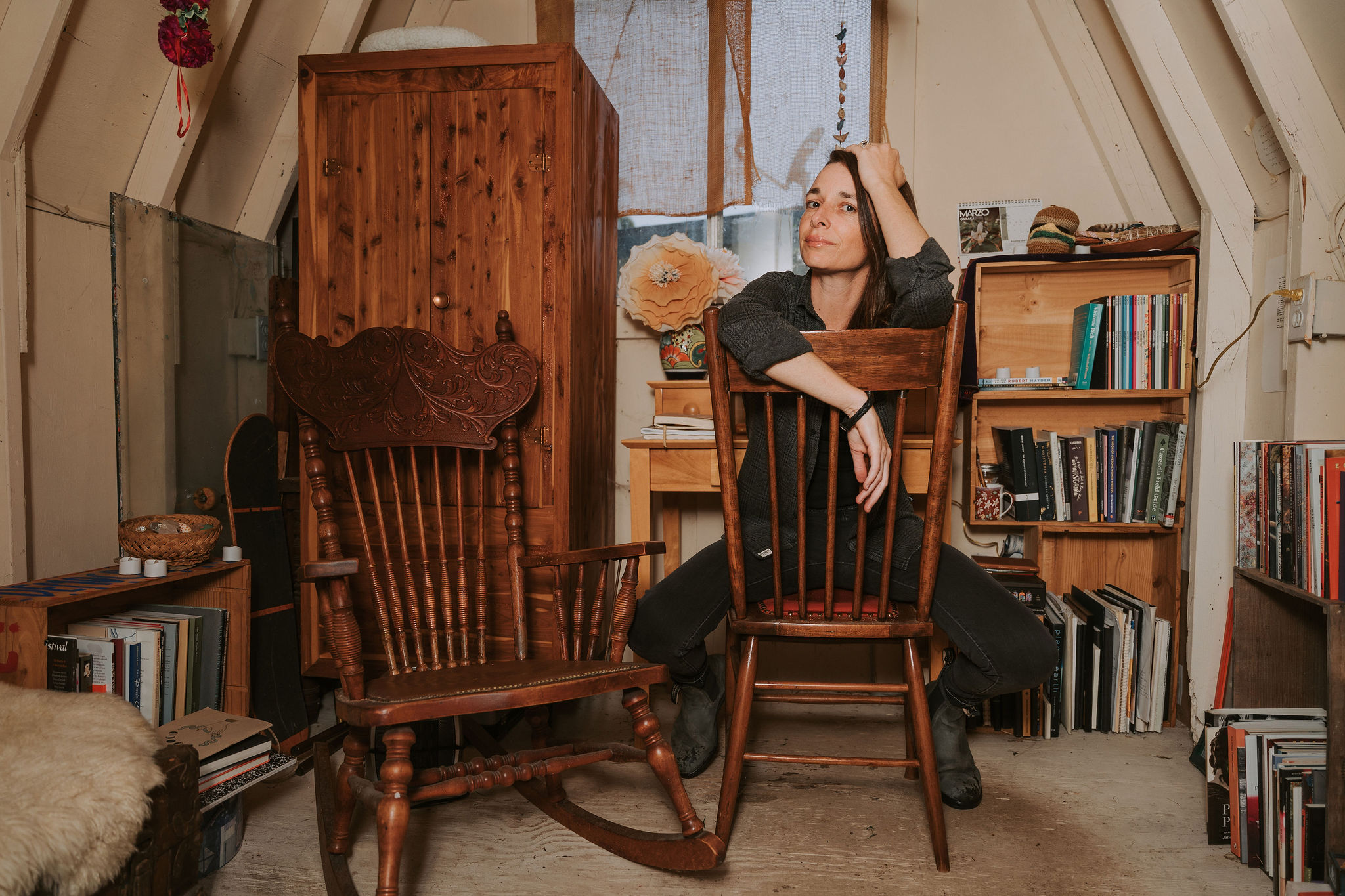
I had a lot of jobs when I was younger. I was a high-end restaurant server, an art model, a water conversation blogger. I helped San Franciscans sign up for low-flow toilets, was a writer for museum tour apps, and could share even more stories over a cocktail. I was all over the place. I was on my way to corporate life when I pivoted to poetry. Pivoting sounds like going away from something, but actually, I pivoted back into my path—my calling. I stopped minimizing the art form that had mattered to me for so long and finally said: I don’t care if I fail. It might not be important to other people, but it’s important to me. I don’t care if I get rejected hundreds of times (which I have, as everyone does). Poetry is what I want to do. It’s my way of seeing the world. A poem may seem small, but poems are vast. Through a single poem, you can see the entirety of life or at least a concentrated shard of it. Life comes in like light through a prism and a trembling rainbow appears on the wall.
In embracing poetry, I realized that jumping from topic to topic is simply how my mind works. In poetry, you can do that, and you can even learn to turn a poem on purpose. Poems have leaps and voltas that create surprise and mimic the movement of our minds. Pivoting is a skill in poetry. I look out for closet writers and artists because many of them share a story like mine. They’ve tried many things, they love writing, and they worry that being “all over the place” means something is wrong. If this resonates, you are likely a writer or an artist of some sort. We want to learn about everything, and we can pour that curiosity into our work. Keep writing, keep going, don’t stop.

What do you think is the goal or mission that drives your creative journey?
To me, practicing art is synonymous with practicing life and attempting to get better at the parts that matter—because who you are in your life is who you are in your art. My mission in poetry is to create a place where human hearts gather, to make people feel less alone, and to continue cultivating empathy by talking to different people from every walk of life. I want to embrace my imperfection and be honest about it in my work. To develop a community-minded way of living that is not just about being an individual, but takes into account the truth that we live on this planet alongside each other and alongside other beings, plants, and animals. I want to be more myself every day. I don’t want to apologize for sniffing every neighborhood rose, or being a heart-on-her-sleeve romantic who wants to write love letters to the world and to the occasional true friend she meets along the way. I want to continue bumbling forward, putting a pen to blank paper, not knowing what will come up—to have faith in this mystery and in the act of making art.
Contact Info:
- Instagram: @carlymariedemento
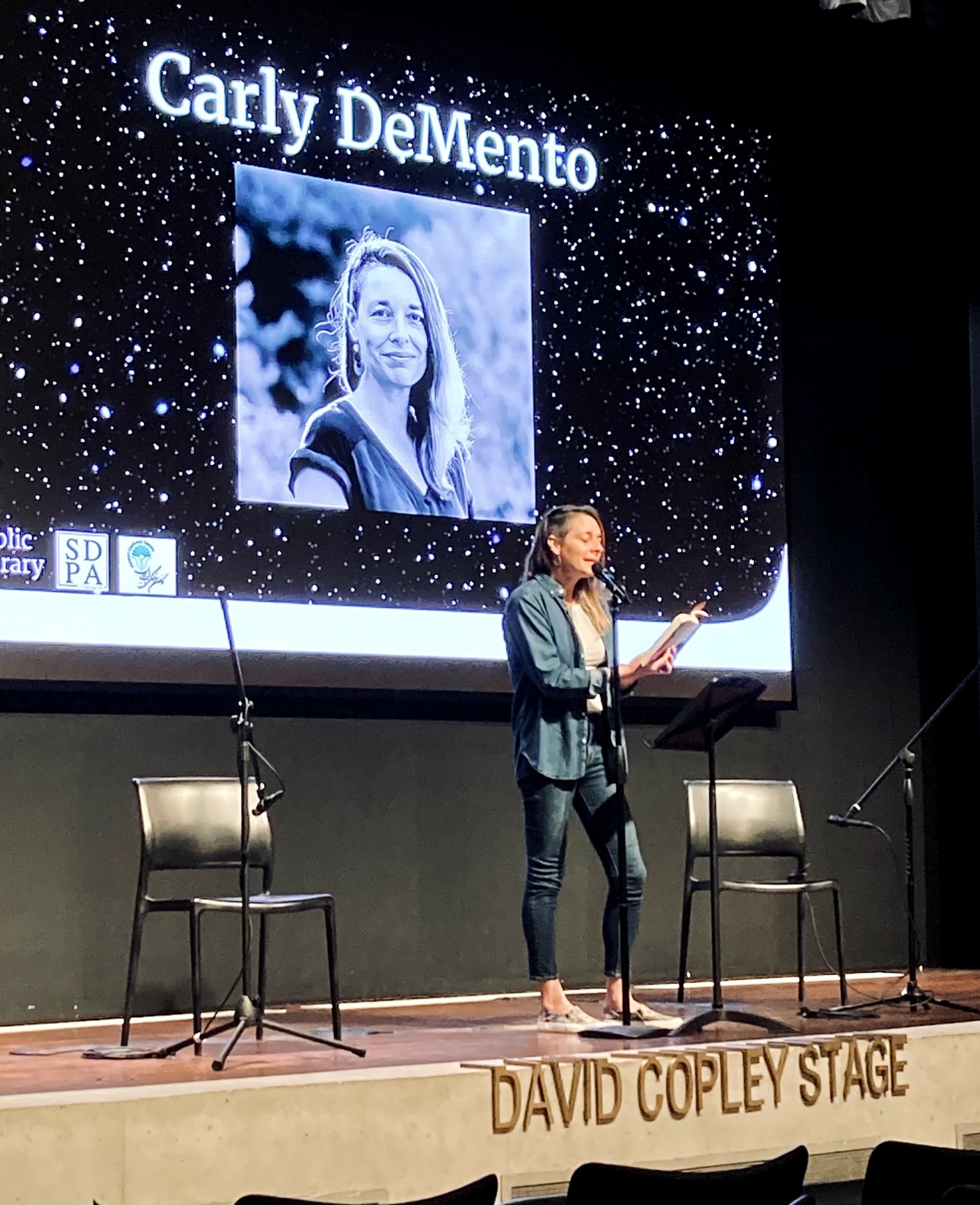
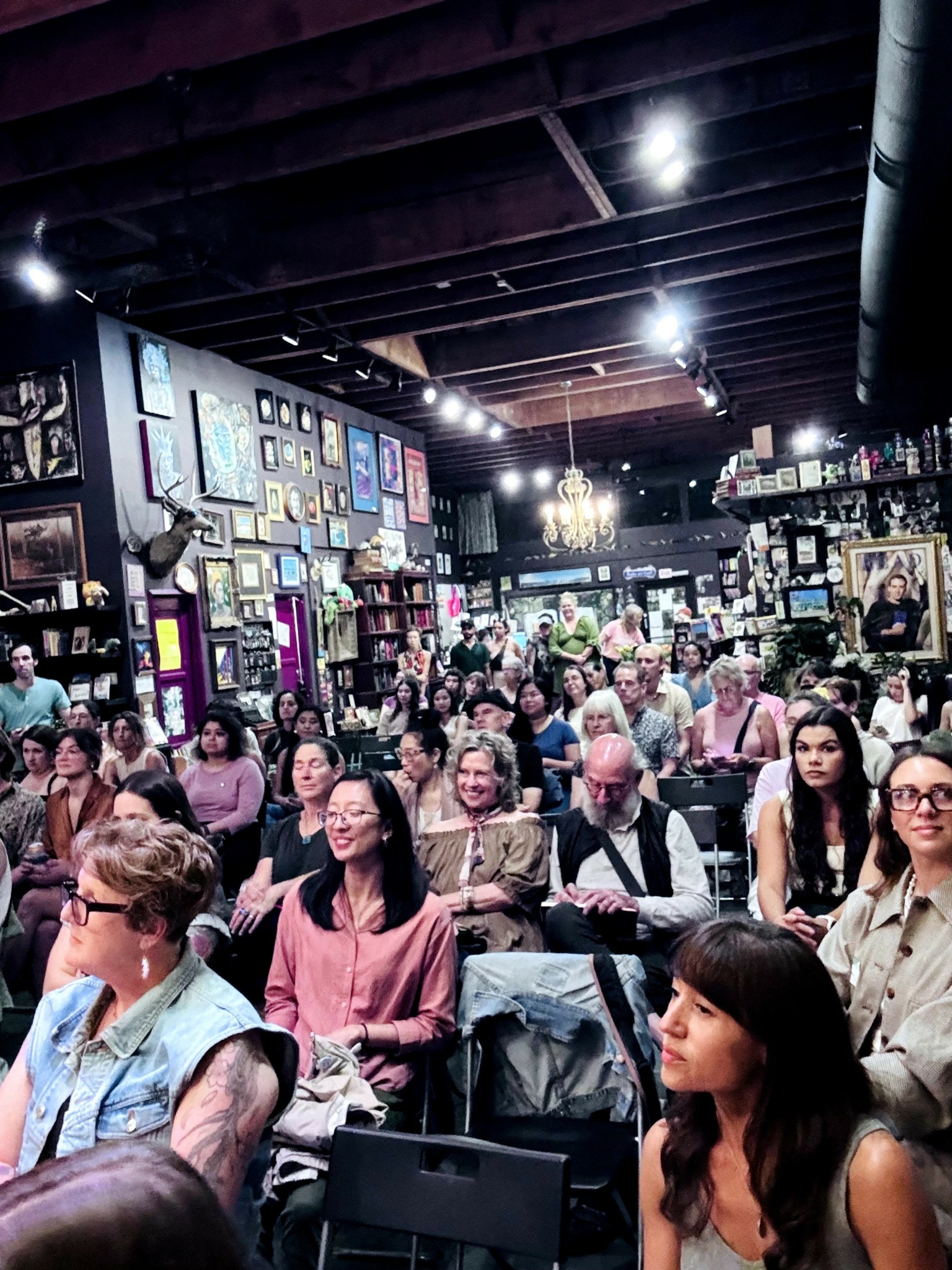

Image Credits
Mallory Kessel and Verbatim Books