


Alright – so today we’ve got the honor of introducing you to Carly Glovinski. We think you’ll enjoy our conversation, we’ve shared it below.
Carly, looking forward to hearing all of your stories today. We’d love to hear about a project that you’ve worked on that’s meant a lot to you.
Opelske, Almanac, and the Wild Knoll Foundation Garden are three deeply intertwined projects that merge my roles as both artist and gardener. Together, they reflect years of inquiry into the materiality of flowers—what they mean as living things, symbols, specimens, and objects of care.
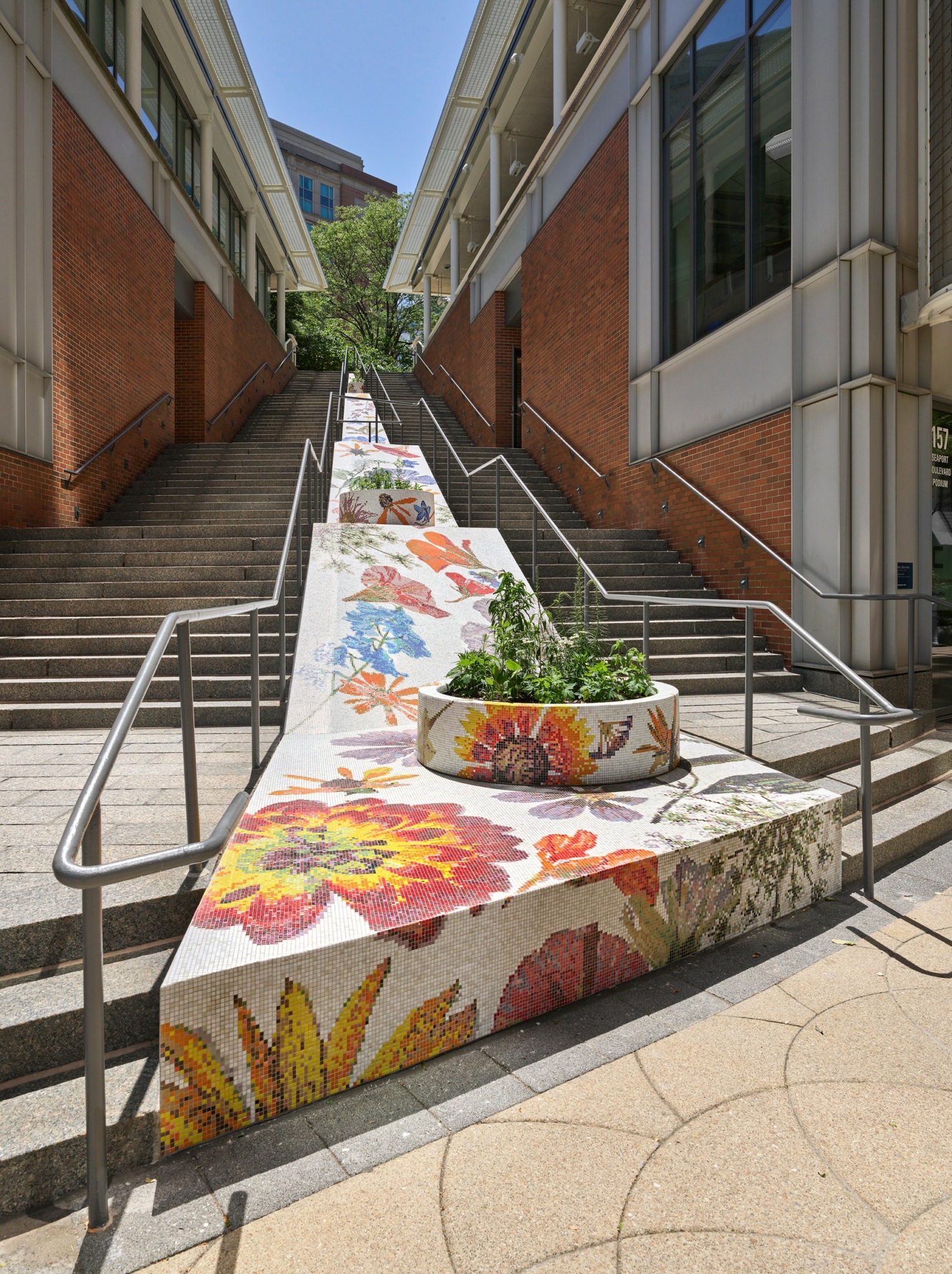
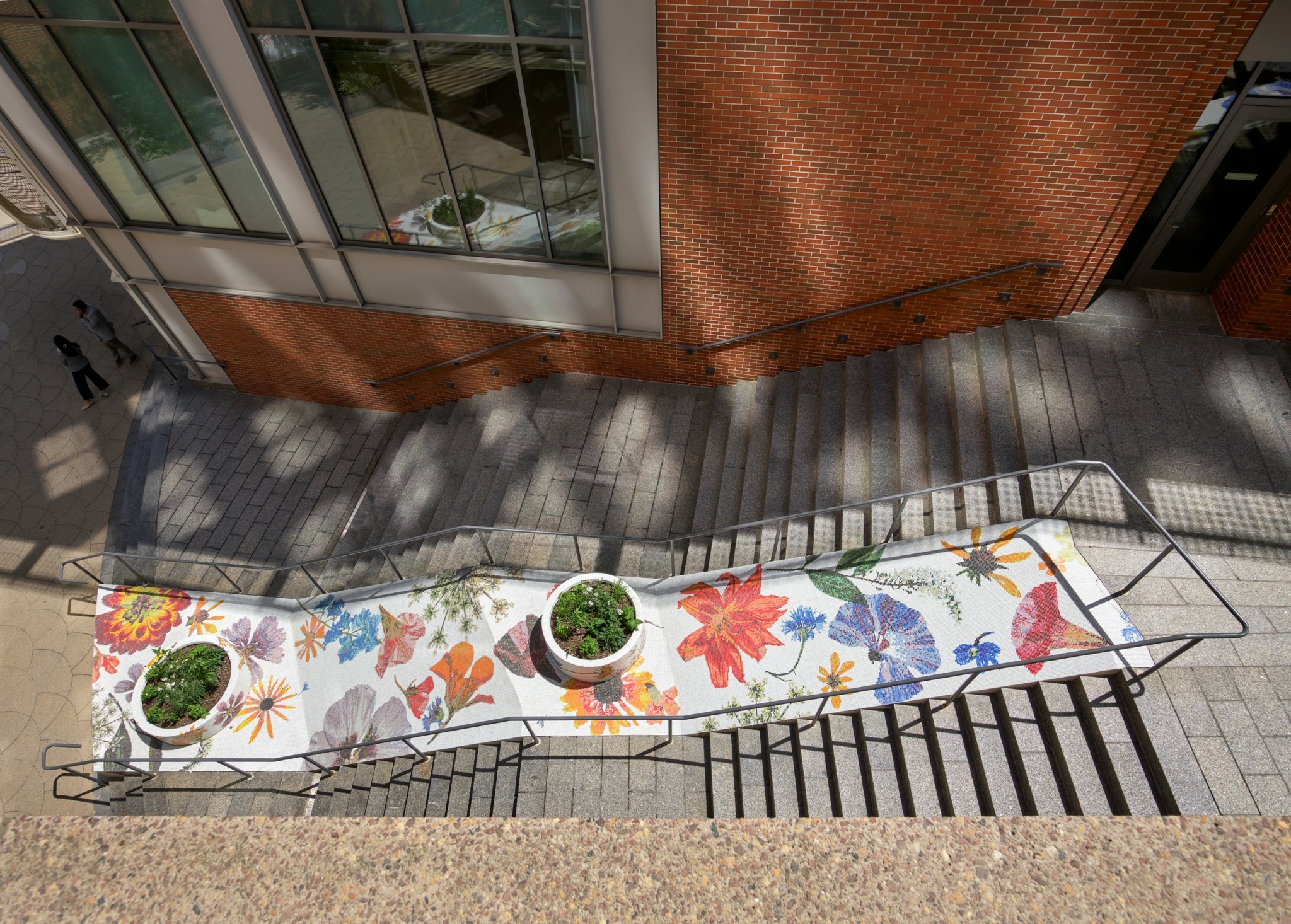
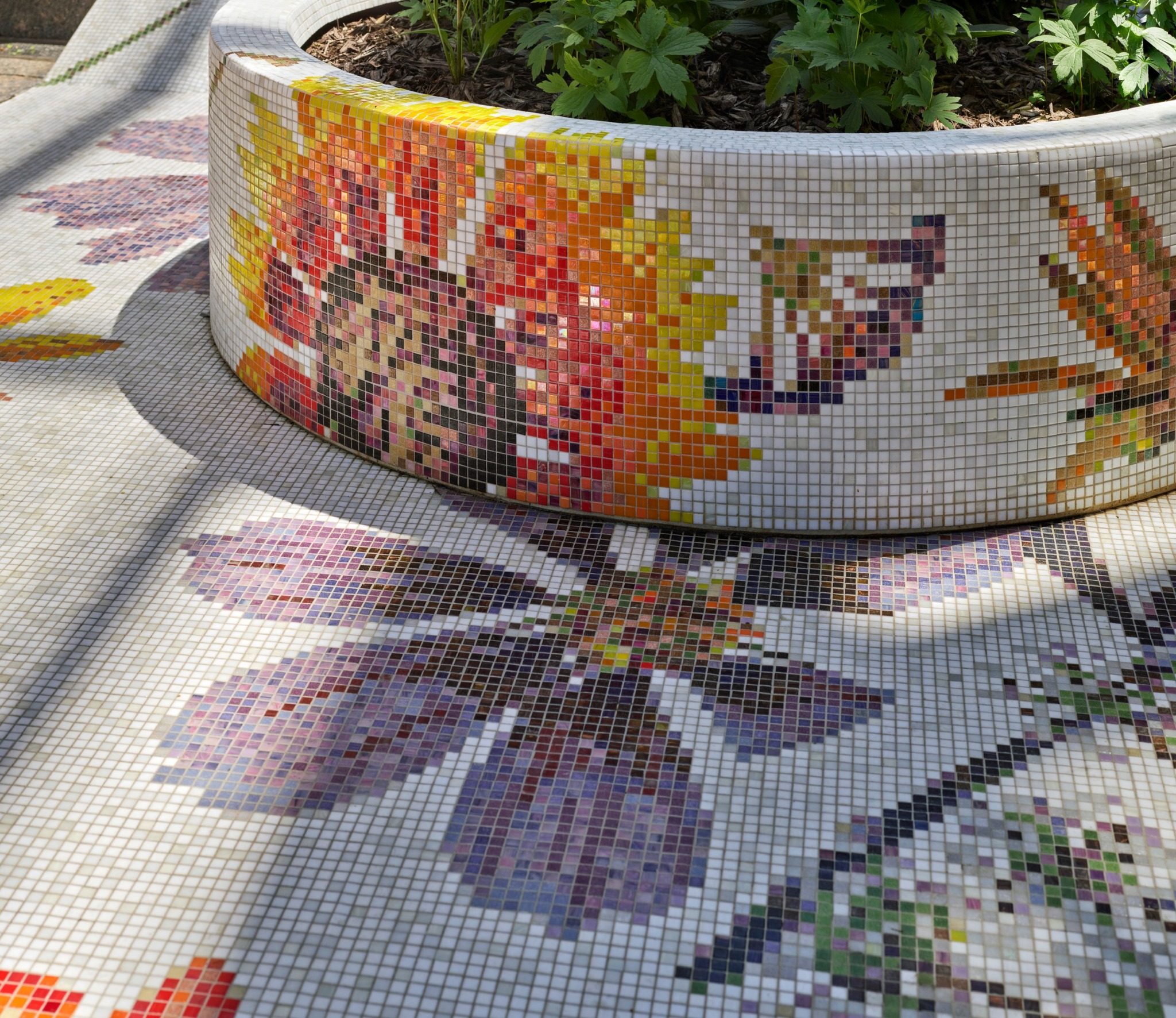
Opelske, my first public artwork now on view at Boston’s Commonwealth Pier, is a three-story pressed flower mosaic and pollinator garden. It bridges land and sea while bringing together glass, native plants, and themes rooted in my lifelong exploration of material and process. This is the first work where I fully embraced both of my practices—studio and garden—simultaneously. The pressed flower imagery began with real blooms grown and harvested from the Wild Knoll Foundation Garden at Surf Point, a site I developed in response to discovering the overgrown foundation of writer May Sarton’s former home. Inspired by her journals and the rhythms of her gardening life, I rebuilt the garden according to her house’s footprint. It’s now both a literal and symbolic foundation for much of my work.
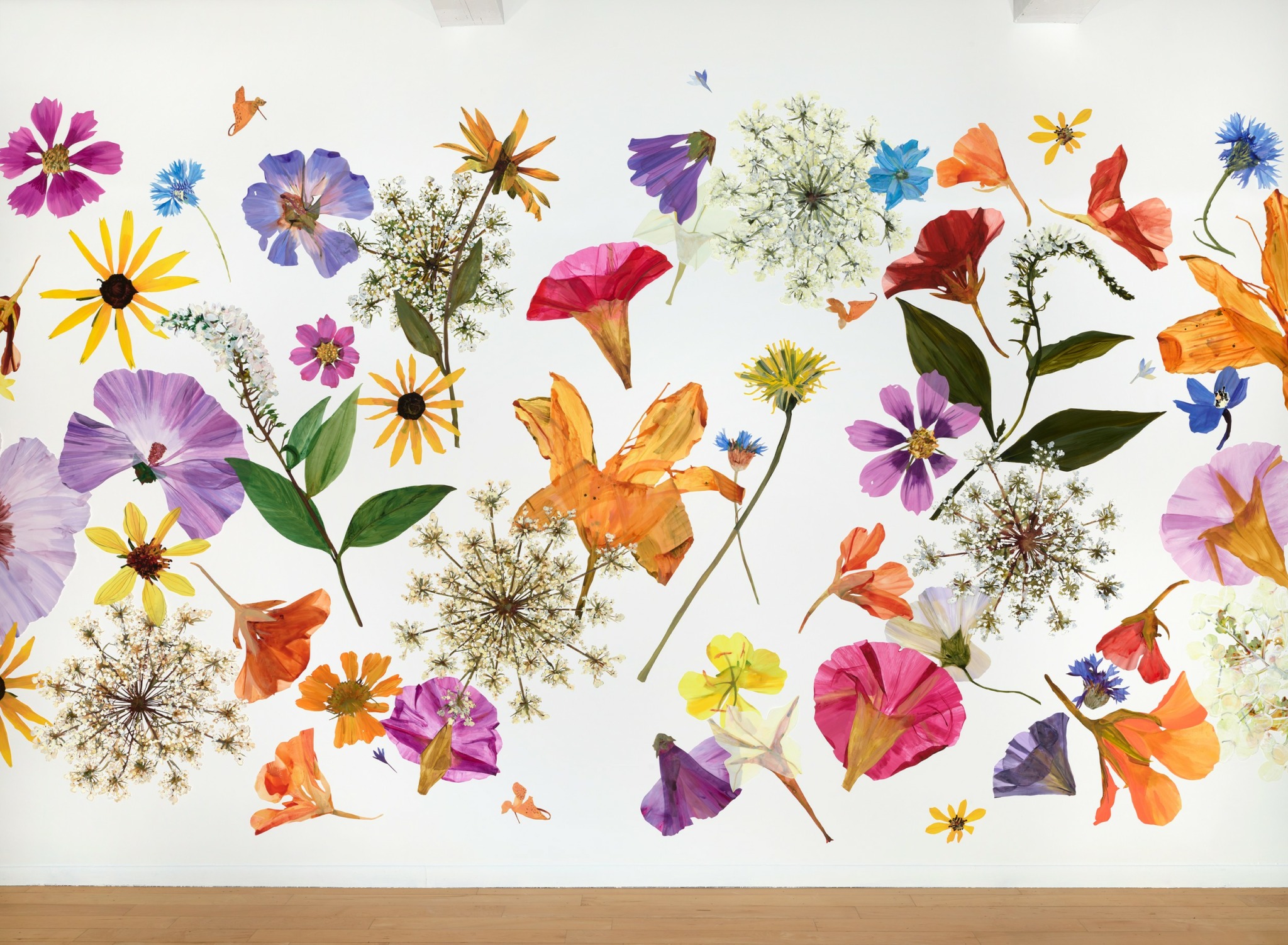
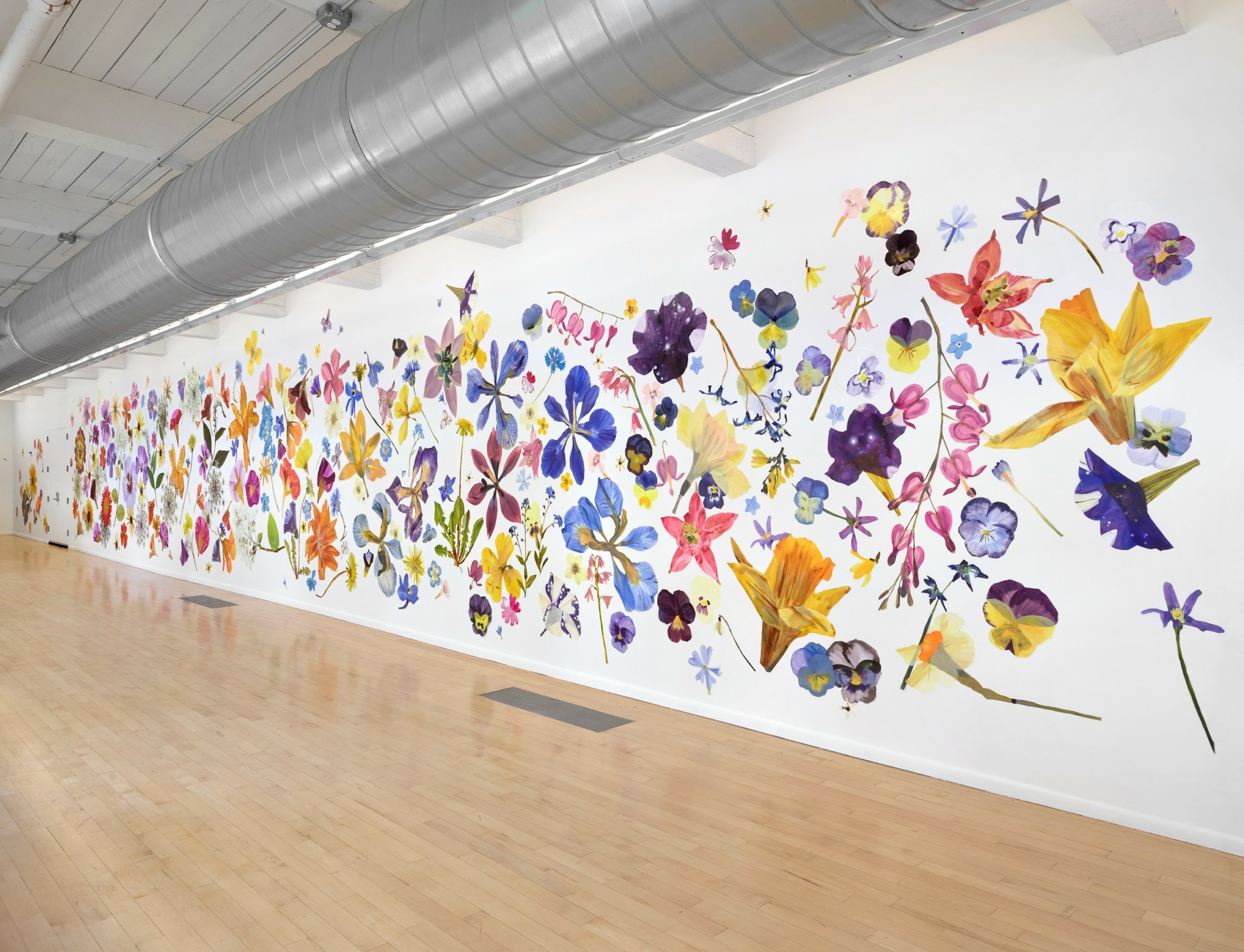
The pressed flowers grown and tended there became source material for Almanac, my largest painted pressed flower work to date—spanning 100 feet at MASS MoCA. Organized chronologically by bloom time, Almanac is both a botanical calendar and a visual record of the New England growing season. It explores flowers not only as delicate symbols of memory—gifts given in moments of joy and grief—but also as crucial ecological agents supporting pollinators and plant lifecycles. To press a flower, I’ve come to realize, is to hold space for both.
While these projects each live in their own places—gallery, city stairwell, garden bed—they are intimately connected. One could not have happened without the others. They share not only material lineage (flower to press to paint to tile) but also a unified practice of observation, care, and attention.
As always, we appreciate you sharing your insights and we’ve got a few more questions for you, but before we get to all of that can you take a minute to introduce yourself and give our readers some of your back background and context?
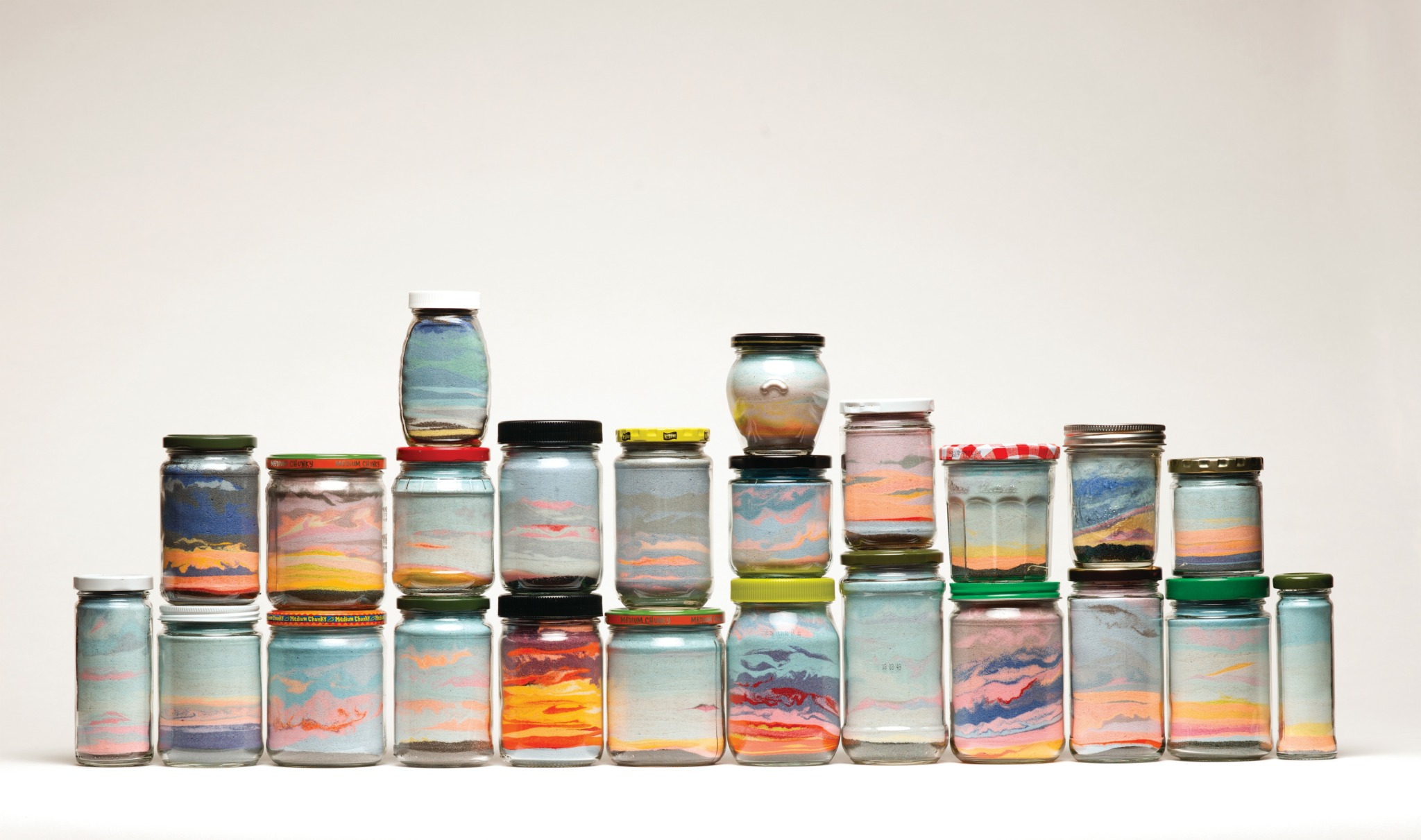
I’m Carly Glovinski, an artist based in southern Maine working across painting, sculpture, and installation. My work explores everyday objects, organizing systems, and the overlooked beauty of the familiar—driven by a deep curiosity about handmade processes, patterns, and the natural world. I’m especially drawn to the quiet histories embedded in objects and places—their wear, their stories, their silent witness to time. I often say I mine the stuff of my everyday life for inspiration: worn-down chairs, dog-eared books, jars, puzzles, and pressed flowers—all found by chance or rooted in sentiment.
Originally trained as a painter, I’ve developed a multidisciplinary approach that bridges traditional fine art with craft, design, and gardening. My process is rooted in close observation, slow making, and deep material inquiry. Whether I’m drawing a woven textile line by line or pressing flowers to later reinterpret as paintings, I’m always asking how materials can carry meaning. I’m drawn to repetition—how small parts build into a whole, like threads in a weave or flowers across a growing season—and the natural rhythms that shape both.
I grew up in a DIY, resourceful household. My parents built the home I was raised in using timber cleared from our land, and that experience left a lasting imprint. My appreciation for the “make-do” ethos shows up in everything from my methods to my materials. It also sparked a lifelong respect for the “labor of care” and a desire to make things that hold meaning.
In recent years, my work has expanded into environmental and site-specific projects, such as the three projects I mentioned before Opelske, Wild Knoll Foundation Garden, and Almanac.. These projects reflect a confluence in my work—where studio meets soil, where painting becomes ecological record, and where time, place, and care become materials in their own right.
From that same source came Almanac, a 100-foot-long pressed flower installation now on view at MASS MoCA, which charts the northeastern New England growing season through hundreds of painted and cut-out blooms. These projects reflect a confluence in my work—where studio meets soil, where painting becomes ecological record, and where time, place, and care become materials in their own right.
What sets my work apart is this integration: observation and craft, curiosity and care, reverence for the handmade and for nature, and the embrace of a wide range of materials. I hope my work invites others to trust the process, look a little closer, notice the overlooked, and find wonder in the quiet, persistent rhythms of the everyday.
In addition to my residency at Surf Point Foundation in 2021, I was a resident at Canterbury Shaker Village in 2020. My work has been exhibited at Farnsworth Art Museum in Maine; The Global Center for Circular Economy and Culture in Delphi, Greece; the Colby Museum of Art in Maine; Morgan Lehman Gallery in New York; Richard Heller Gallery in Los Angeles. I have an upcoming exhibition at Morgan Lehman, the gallery that represents me, in Spring 2026. My work has appeared in publications such as New American Paintings, ArtMaze Magazine, Hyperallergic, Colossal, and Vice, and is held in public collections including the Colby Museum of Art, Farnsworth Art Museum, Fidelity Investments, Cleveland Clinic, and Bank of America.
What’s the most rewarding aspect of being a creative in your experience?
The Process and the People!
The process is where the wonder unfolds. For me, the process is rarely linear, but living, looking, and discovery come together through an alchemy of materials and connections that I can’t always put my finger on at first. There is an openness and freedom that comes with surrendering to that. Also, being able to play on a field of rules that you invent for yourself inside your work. Making rules to guide and to break out of. It is such a wonderful contradiction to become comfortable with. The discipline of a sustained practice, where you show up and labor with care over something that relies heavily on a specific material or process. To find a rhythm and let go of preconceptions of what something is supposed to do/act/function as. That rhythm happens literally in a particular work, and also over time- one project leading itself to the next in a way you never could have foreseen for it. It takes on its own life.
The business of being an artist is hard, but on the other side of persistence and showing up over and over for it, there is a comfort and trust in the risk. A resourcefulness that permeates the rest of life that feels like you can’t be limited, and all you need is right in front of you at all times.
People. Being an artist means being a part of an incredible community of makers and thinkers with big ideas and wide ranging passions. I love how particular interests and projects can lead you to meeting people in other fields and you get to run alongside them for a moment, and learn so much. There is a kind of shape shifting that you are granted. As an artist, I have had the tremendous privilege of travelling in and out of the worlds of conservationists, physicists, librarians, gardeners, historians, and extremely talented craftsman.
I have also had the privilege of being among a community of artists who are some of the most generous and hardworking people I know. All of these connections bring so much learning and passion. Of course, it is also work. But it’s a great feeling to be around people who are alive and engrossed with their work. Being an artist means being a perpetual creator as a way of life, always engaged in doing and learning. You face uncertainty and failure on the daily…and you persist. It’s very personal and exposed, but an amazing way to move about the world, and my artist community is great company.
In your view, what can society to do to best support artists, creatives and a thriving creative ecosystem?
Society can best support artists and a thriving creative ecosystem by recognizing the essential role artists play in shaping the identity, culture, and vitality of place. Artists are visionaries with incredible grit, often working against the odds. Through their work, artists activate underutilized spaces, preserve histories, ask hard questions, think outside the box, inspire wonder, and strengthen the social fabric of communities. The conditions that allow artists to live and work should be prioritized and cared for.
Non-profit arts organizations and museums are often the ones to create space for artists to bring this important work into view, and now more than ever, just like the artists, they need more resources and protection.
Art should not just be viewed as a luxury. By nurturing an ecosystem where artists can thrive, creativity can thrive. And that kind of energy can help to imagine alternative futures, drive innovation, cultivate belonging, create meaningful dialogue, and collective well-being.
Contact Info:
- Website: https://www.carlyglovinski.com/
- Instagram: @cglovinski
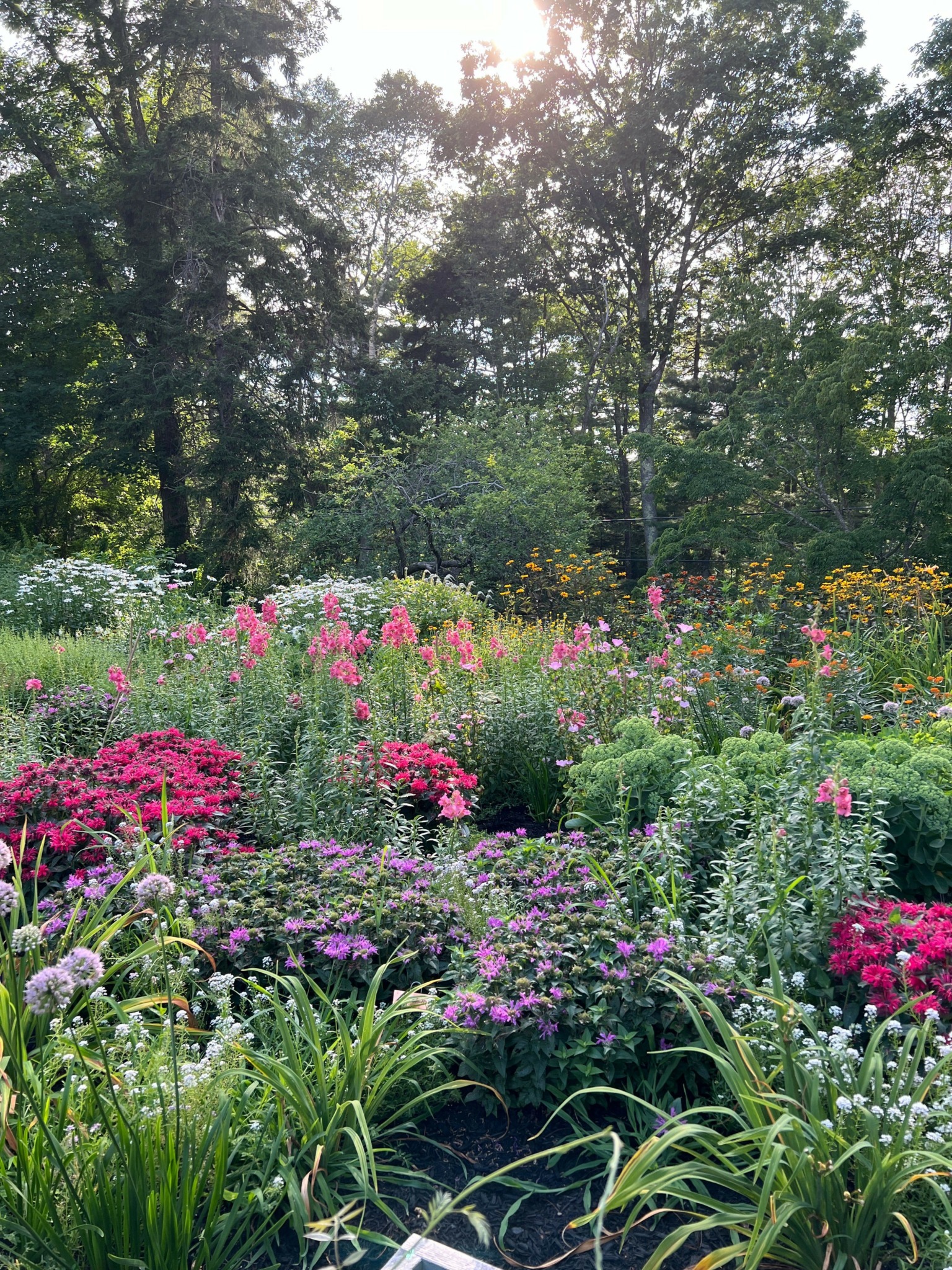
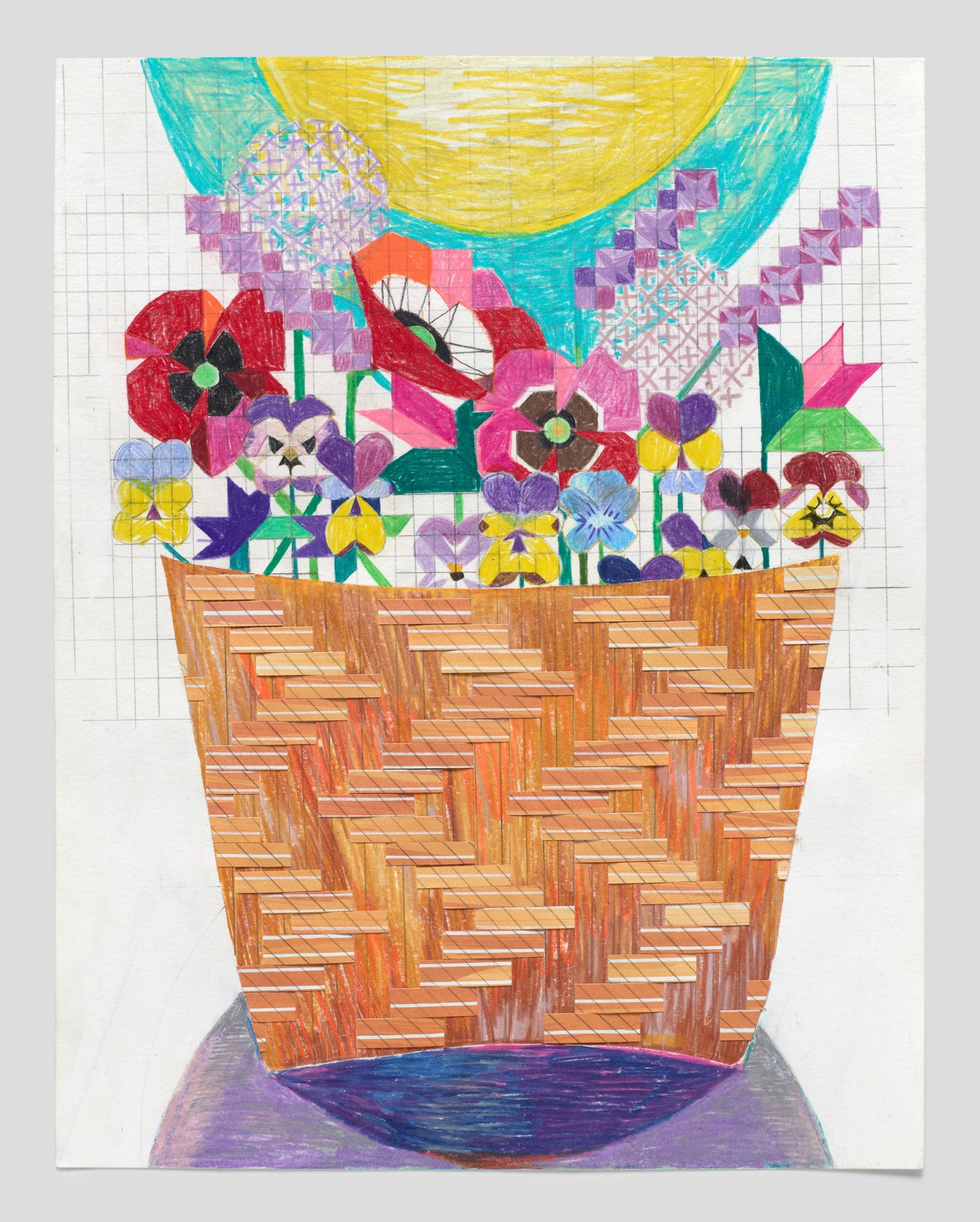
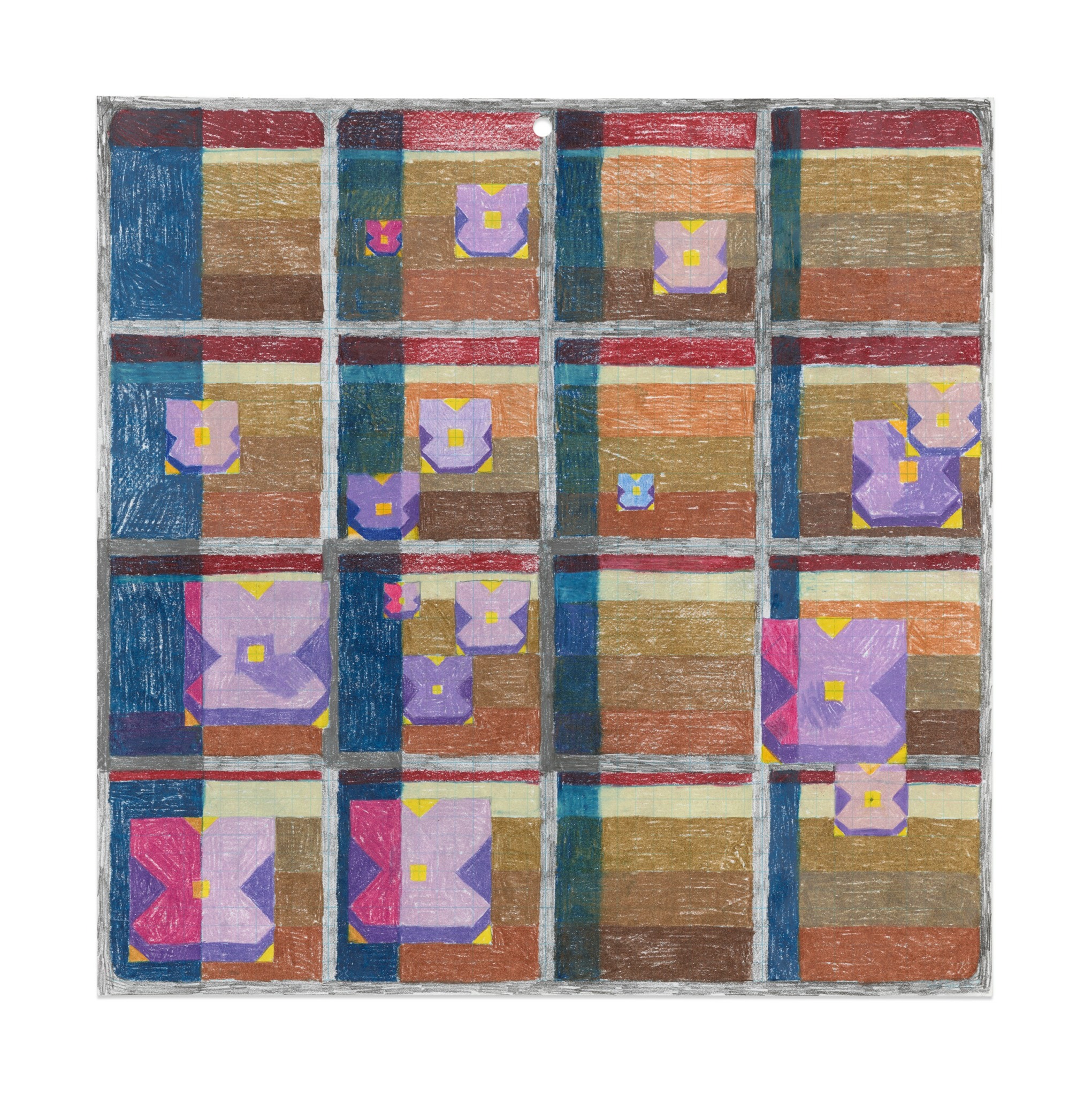
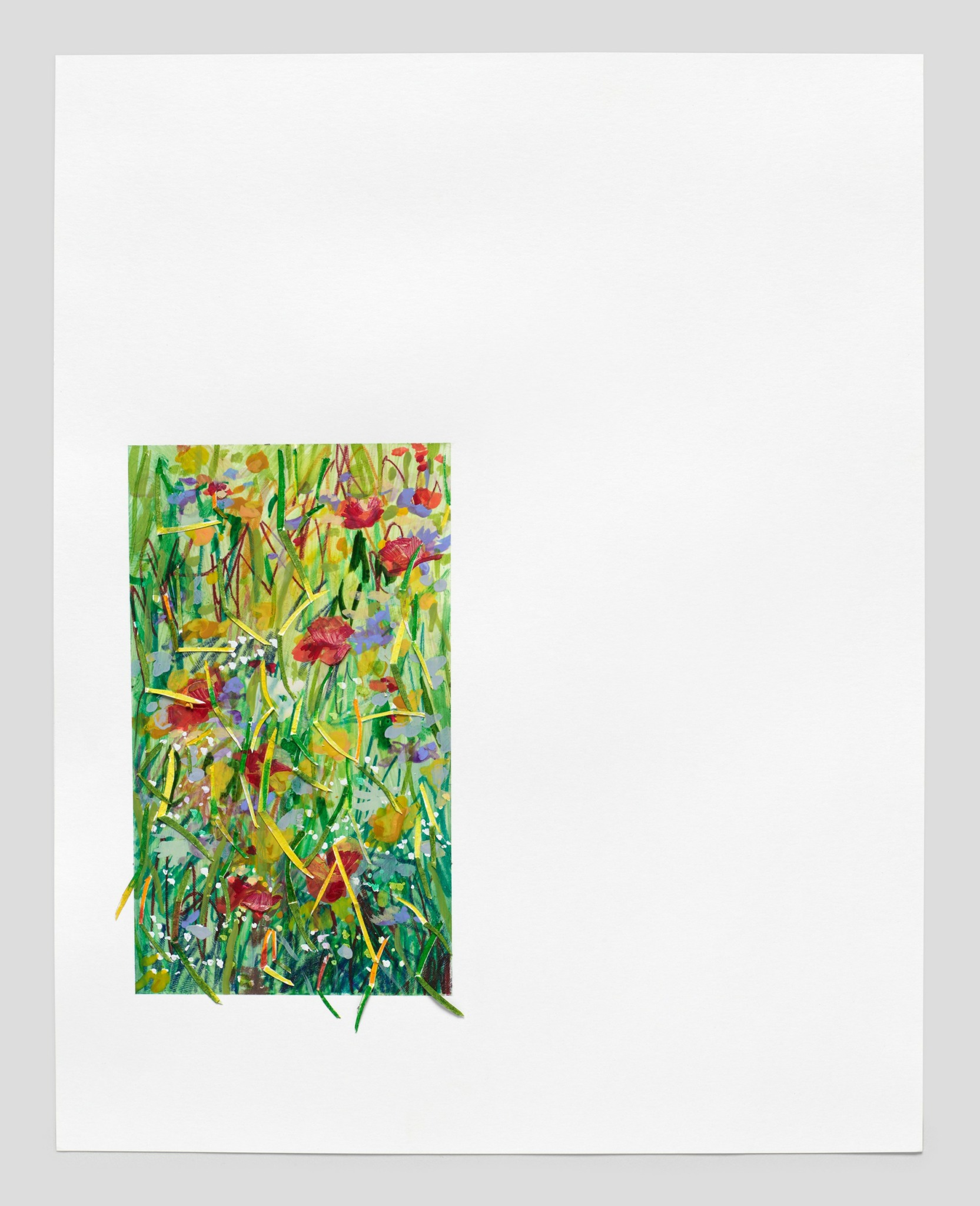
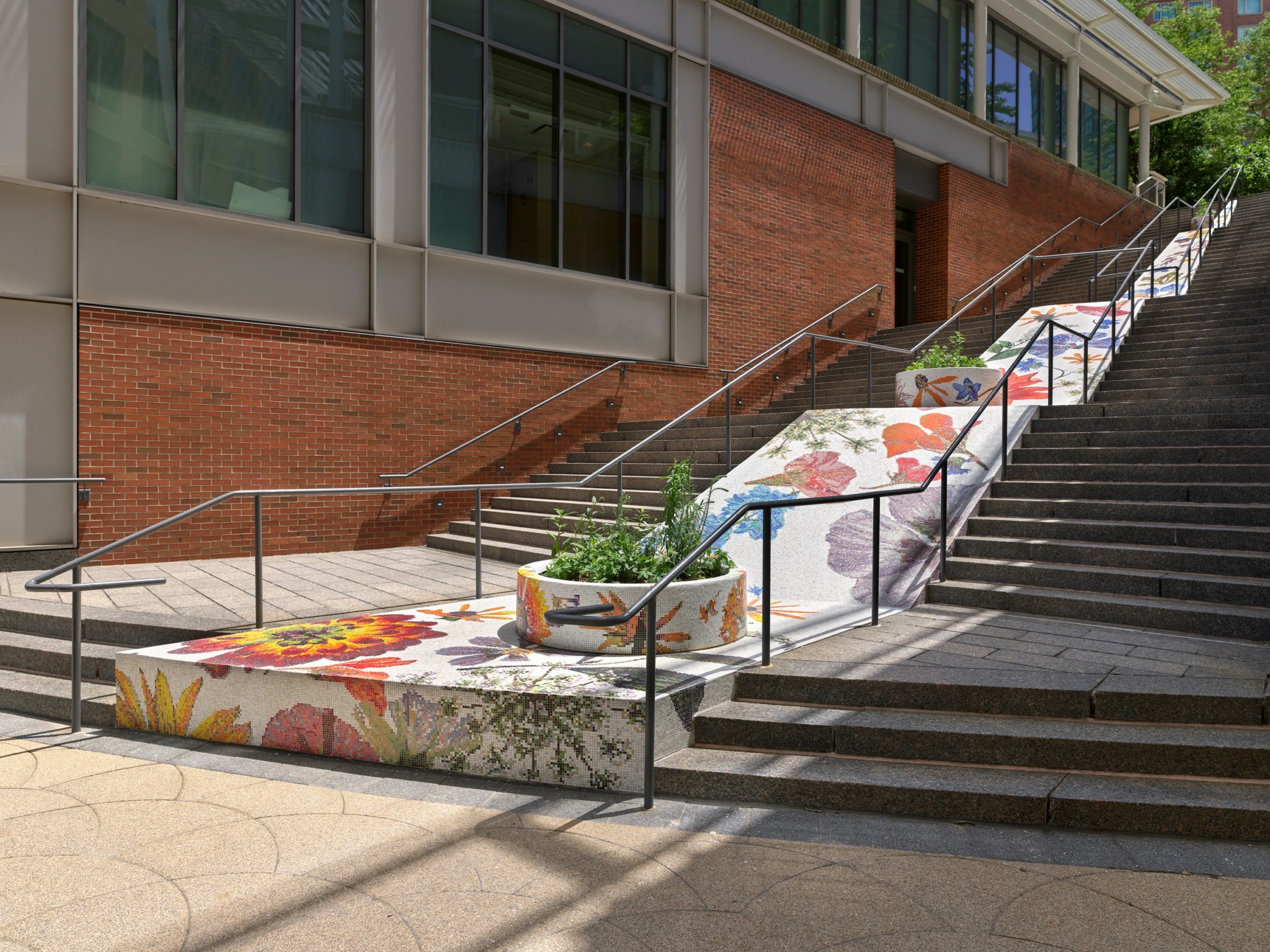
Image Credits
Personal Photo: Michael Winters
Additional images 1-3, 5, 8-11: Julia Featheringill
Additional image 4: Michael Winters