



Alright – so today we’ve got the honor of introducing you to Calla Lily Rainwater. We think you’ll enjoy our conversation, we’ve shared it below.
Calla Lily, thanks for taking the time to share your stories with us today So, let’s start with a hypothetical – what would you change about the educational system?
I believe one of the biggest shifts we need in the education system is moving away from viewing a four-year college degree as the ‘only’ pathway to success. While higher education can be valuable in many fields, there are plenty of career paths where hands-on, direct experience and training are far more effective at building relevant skills. By reinvigorating trade programs, apprenticeships, and real-world internships, we’d give students the chance to learn by doing, rather than spending years in a classroom without practical application.
I’ve seen this firsthand throughout my own career. In my early years, I found that the most valuable lessons often came when I was actually “on the job”—solving real problems, working with others, and seeing the immediate impact of my actions. There’s no substitute for learning in a setting where you’re responsible for tangible outcomes. In contrast, some of the theoretical knowledge from traditional coursework simply didn’t stick until I had the chance to apply it in a practical setting. That’s why I’m passionate about giving young people more opportunities to gain real experience early on, whether that’s through apprenticeships, trades, specialized programs, or even entrepreneurial ventures.
Ultimately, if we can make college optional—rather than a hard requirement—and open up more direct, skill-focused pathways, I think students will discover careers they’re passionate about sooner and be better prepared to excel in them. We need to acknowledge that everyone learns differently, and one size definitely does not fit all when it comes to education. By broadening our approach and placing more emphasis on active participation, we can help more students find fulfilling work and see a direct connection between what they’re learning and how it’s used in the real world.

Calla Lily, love having you share your insights with us. Before we ask you more questions, maybe you can take a moment to introduce yourself to our readers who might have missed our earlier conversations?
For those who may not be familiar with me, I’m a graphic designer and photographer specializing in branding, print media, web design, and illustration, alongside event and portrait photography—including intimate and performance-based imagery like boudoir and burlesque. At my core, I’m a visual storyteller, using design and imagery to shape perception, evoke emotion, and leave a lasting impact.
How I Got Into Design & Multimedia
My journey started with a deep love for technology. I studied computer science at Washington State University, originally drawn to the logic and structure of programming. But along the way, I realized my passion wasn’t in directing technology—it was in creating with it. I became more intrigued by the expressive potential of digital tools than by the mechanics of coding itself. That realization led me into graphic design, where I found a creative home. During the COVID-19 pandemic, I took the leap to register my passion as a business, and I haven’t looked back since.
What I Offer
My work spans branding, visual identity, print and web design, as well as photography. Whether it’s magazines, signage, data visualization, or full-scale brand systems, I approach every project with both strategy and artistry. In photography, I capture everything from corporate and event work to more intimate, personality-driven styles. My approach is fluid, adapting to the unique needs of each client while maintaining my personal artistic voice.
Problems I Solve
One of my biggest strengths is helping brands find their true visual voice. Through guided exercises and deep collaboration, I help clients build branding that reflects their essence and speaks to their audience.
I also specialize in building color confidence. Many brands hesitate to embrace color, opting for muted, neutral palettes out of fear rather than intention. But color is an incredibly powerful tool—it affects mood, perception, and brand recognition. I work closely with my clients to instill the confidence needed to embrace bolder, more dynamic color choices, ensuring their visual identity stands out and resonates.
In web design, I not only build functional digital experiences but also empower clients to manage their own platforms. Instead of keeping them dependent on me for every small update, I provide systems and training that give them independence and control over their digital presence.
What Sets Me Apart
I create from a deeply personal place. Every project—whether it directly aligns with my own passions or not—receives my full attention and immersion. I believe in breathing life into design, making sure that everything I create isn’t just visually appealing but also strategic, versatile, and meaningful. My work isn’t about simply making things “look good”—it’s about solving problems in ways that create real, lasting impact.
What I’m Most Proud Of
I’m most proud of my ability to adapt and continue creating, even as the industry and world around me evolve. I’ve worked across multiple styles and genres, allowing my art and design to grow naturally over time. Everything I create—whether photography, branding, or illustration—feels interconnected, part of a larger montage that tells a story. That interconnectedness in my work is something that brings me deep fulfillment.
What I Want People to Know
More than anything, I want people to know that I put my entire soul into my work. I aim to spread color—both literally and figuratively—in a world that often leans toward the muted and the expected. But beyond just creating something visually striking, I care about the impact of my work.
My measure of success has never been about money or fame—it’s about visibility and influence. The biggest question I ask myself in every project is:
Who will see this, and what will it make them think or feel?
That guiding principle is what drives my design, my storytelling, and ultimately, my career.

We’d love to hear the story of how you turned a side-hustle into a something much bigger.
My journey into design started as a spatial fix—I loved seeing things come together in beautiful, unique ways. Over time, as I learned more about design, it became second nature to notice small improvements in the world around me. I wasn’t just looking at design; I was analyzing it, refining it in my head, and thinking about how it could be better.
In 2017, I took on my first client—a local DJ from my college town. I designed their logo in Microsoft Paint on Windows Vista, and while it was a humble beginning, it solidified one thing for me: there was so much more to learn, and I wanted to create at a higher level. That drive led me to start reaching out to potential clients directly, and in 2019, I landed my first full branding client: OTK Operations, a Seattle-based tax accounting firm. This project was a game-changer for me—it was my first experience building a brand from scratch, beyond just a logo. I helped shape their visual identity, defined their color palette, created layout templates, and even developed a brand voice for social media, along with a modernized take on the classic RSS feed for industry news.
That experience fueled my excitement for design, and from there, I started gathering more clients—each project adding another layer to my skills and confidence. One of my most successful years followed, allowing me to work with clients like Redhook (formerly under AB-InBev) and take on personal projects, like designing a test site for Olympian CJ Allen.
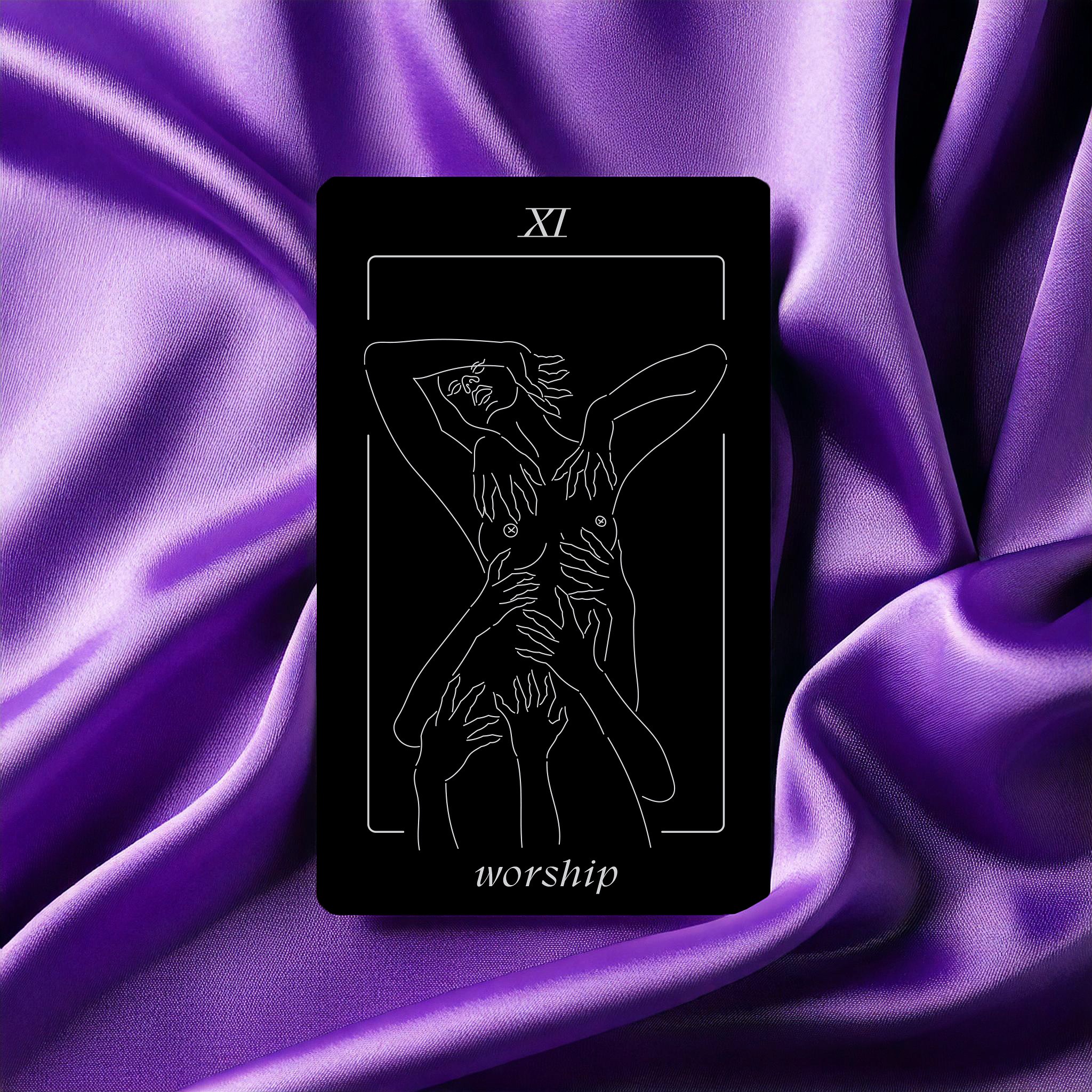
Now, I balance my professional work with passion projects, such as Tarotica, my erotic tarot deck, and other ventures that allow me to explore the full range of my creative abilities. Despite everything I’ve accomplished so far, I truly feel like my career is just getting started. There’s always something new to discover, a new challenge to take on, and a new way to push the boundaries of what I can create. Every day reminds me why I signed up for this career in the first place, and I wouldn’t trade that feeling for anything.

Can you tell us about a time you’ve had to pivot?
One of the biggest pivots in my life was moving away from computer science and software engineering to pursue graphic design—a shift that wasn’t just about changing careers, but about recognizing how I process and engage with the world.
I’ve always been drawn to technology, and when I first started studying computer science, it seemed like a natural fit. But as I progressed, I struggled to connect with the way information was presented. Programming is deeply text-based, requiring a kind of abstract thinking that didn’t resonate with me. I found myself constantly searching for visual cues, patterns, and spatial relationships to make sense of the logic, because that’s how I learn best.
This disconnect made me question whether I was on the right path. I wasn’t drawn to code itself, but to how things fit together visually—how structures could be organized, how patterns emerged, how design shaped understanding. I realized I was spending more time analyzing the composition of what I was working on rather than the syntax driving it. That was the first sign that my brain was wired for something different.
I didn’t immediately jump into graphic design; rather, I started recognizing the design choices in the world around me. I became hyper-aware of typography, layouts, colors, branding, and how those elements communicated meaning. It wasn’t just an appreciation—it was an instinct to refine and improve. Without realizing it, I was already thinking like a designer.
Once I started experimenting with my own designs, everything clicked. Design was problem-solving in a way that felt natural to me. Instead of wrestling with abstract code, I was working with something tangible, something I could see and manipulate in real-time. The frustration I felt in programming was replaced with excitement—I could experiment, iterate, and immediately see the impact of my choices.
That shift wasn’t just about career direction; it was about understanding how I interact with information and the world itself. Embracing design meant embracing the way my brain works, and once I did, everything felt more aligned. It wasn’t about abandoning technology—it was about finding a creative way to engage with it.
Contact Info:
- Website: HTTPS://www.rainwater.graphics
- Instagram: https://www.instagram.com/liccmypaint/
- Linkedin: https://www.linkedin.com/in/clrainh2o


Image Credits
All images created by, photographed by or features Calla Lily Rainwater, also known by “LiccMyPaint” or “Rainwater Graphics”