



Alright – so today we’ve got the honor of introducing you to C.J. Baumann. We think you’ll enjoy our conversation, we’ve shared it below.
C.J., thanks for joining us, excited to have you contributing your stories and insights. Learning the craft is often a unique journey from every creative – we’d love to hear about your journey and if knowing what you know now, you would have done anything differently to speed up the learning process.
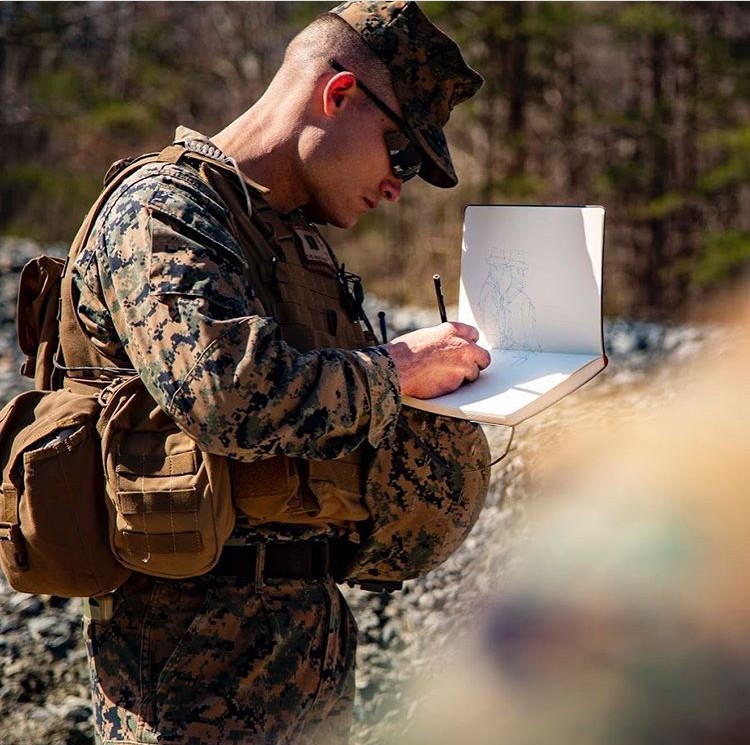
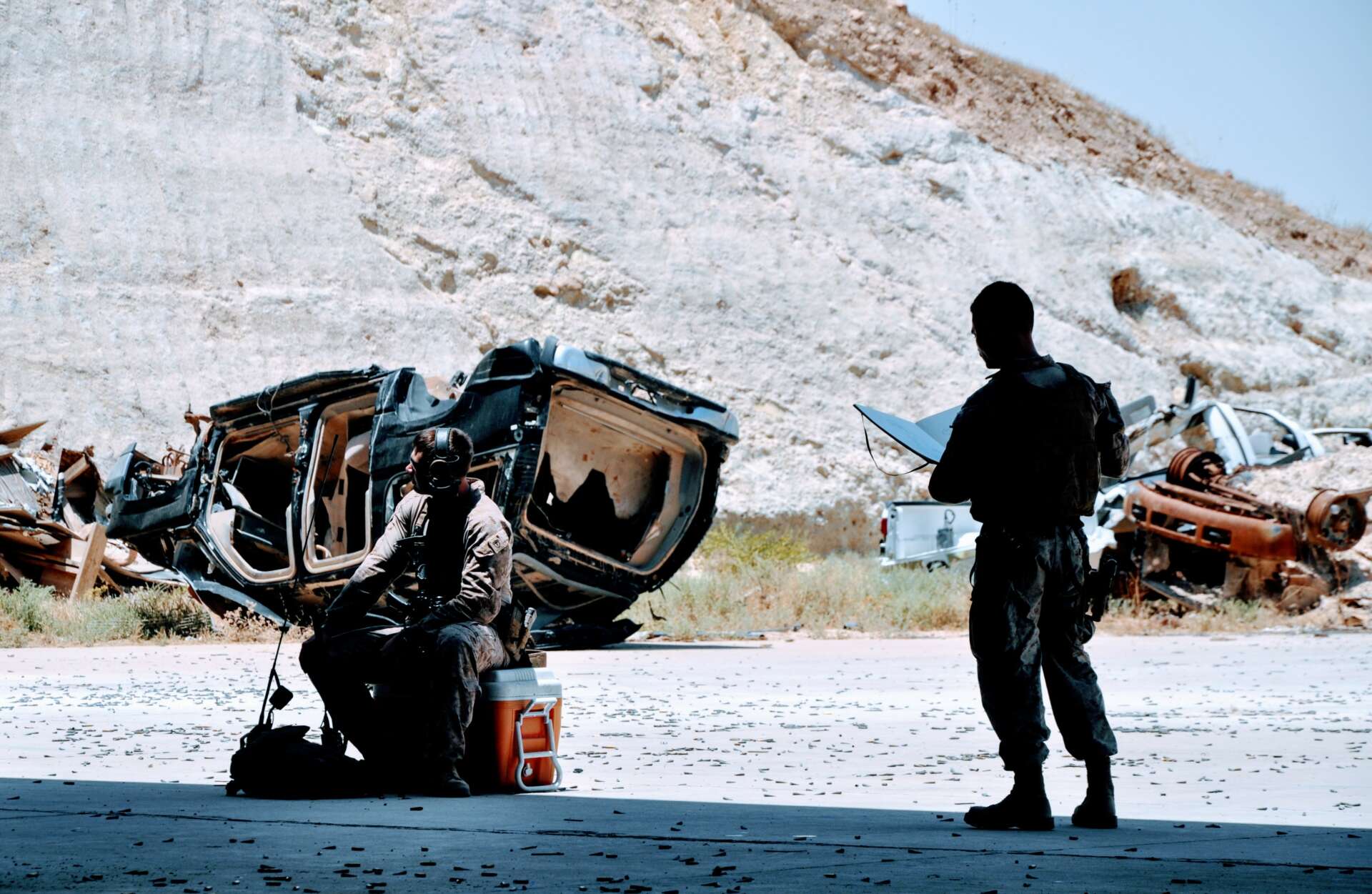
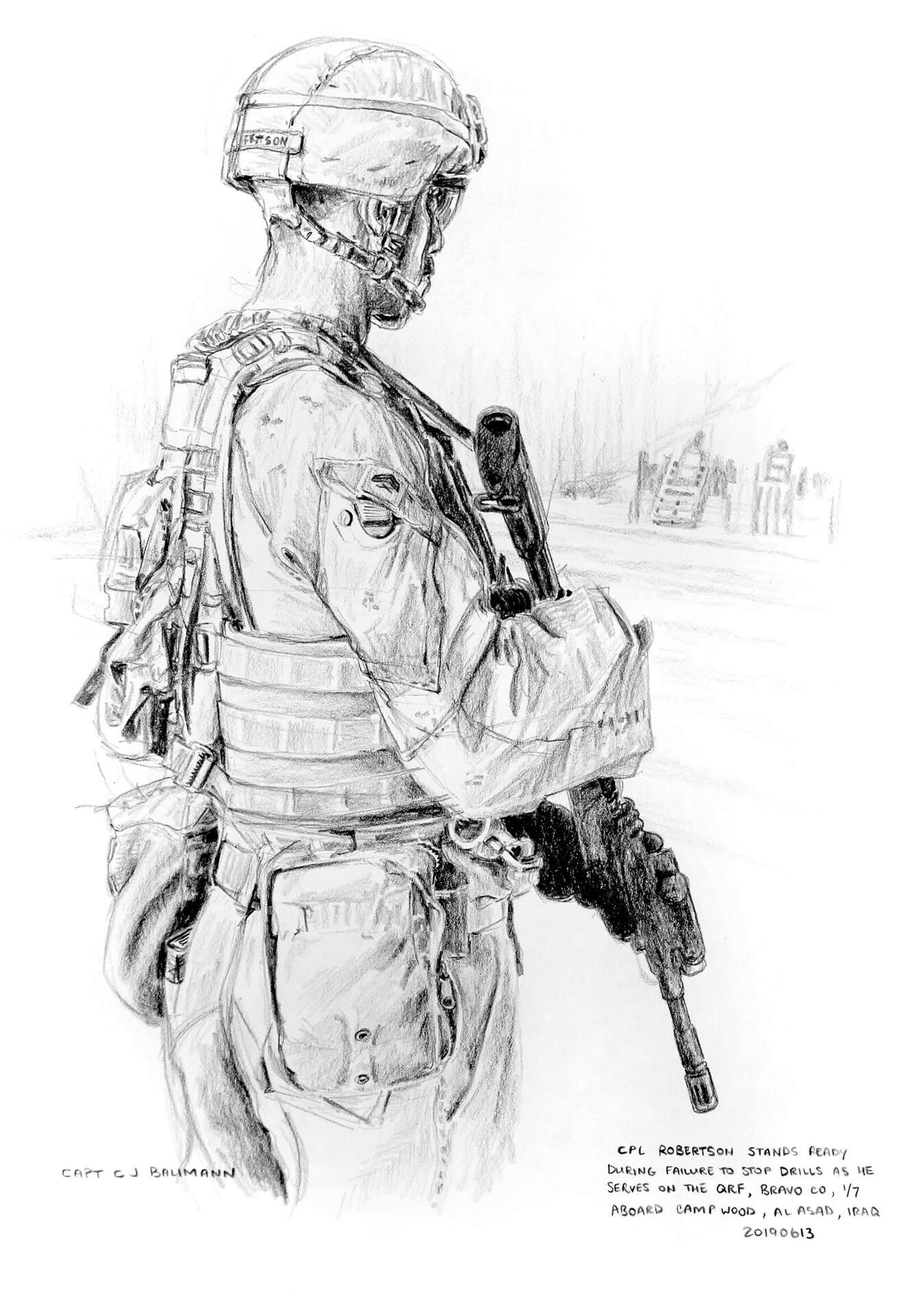
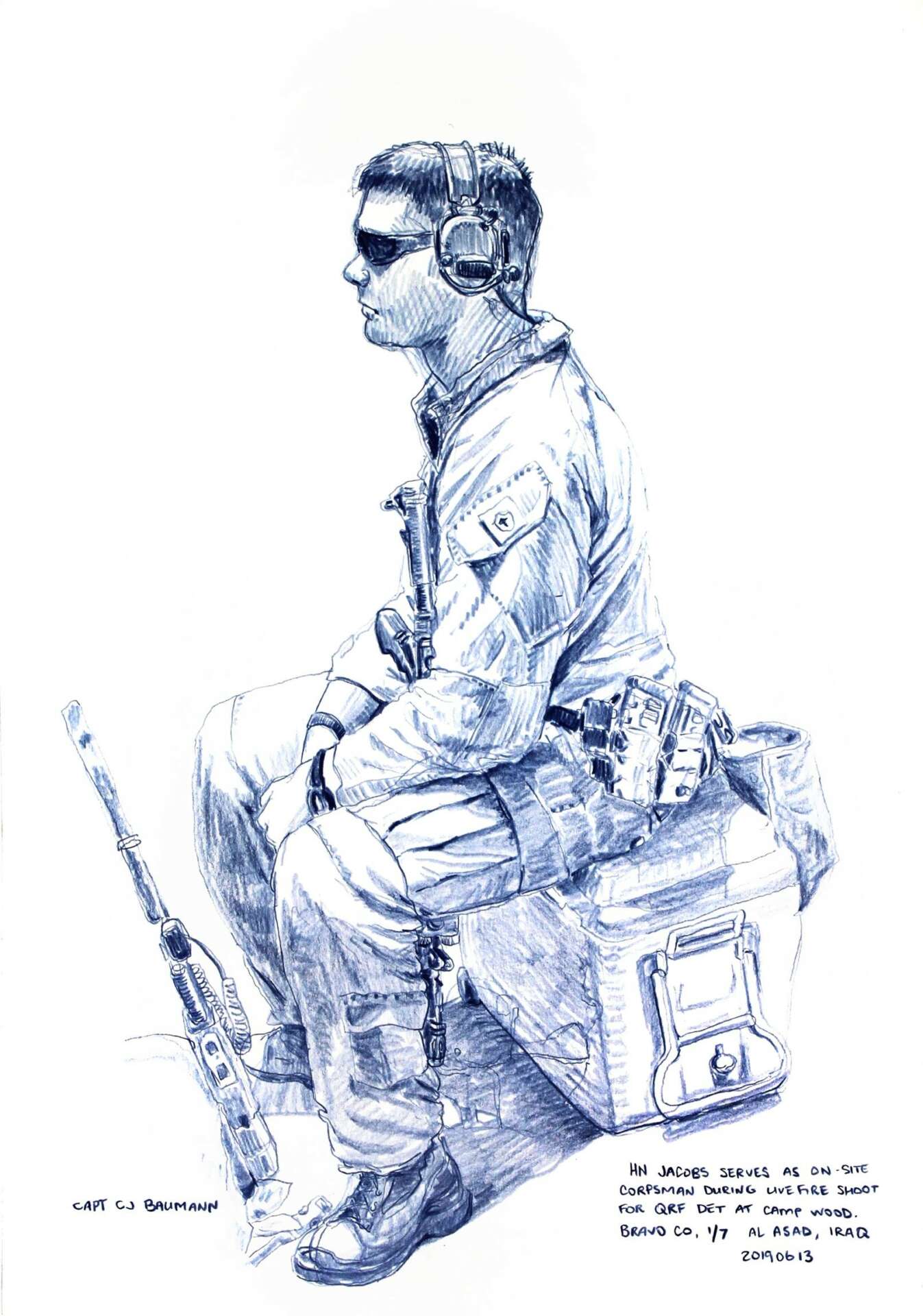
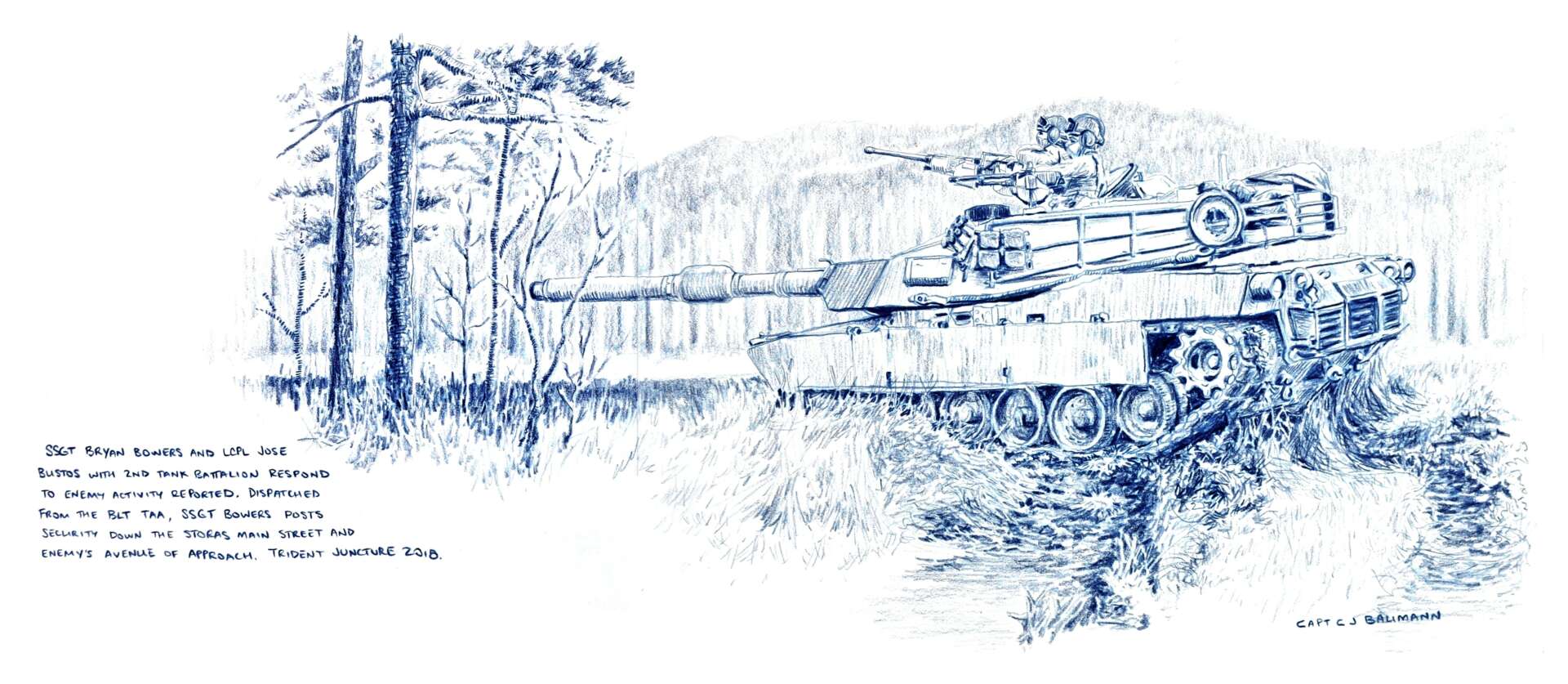
My skillset is primarily based on learning how to see – training to convert my three-dimensional world into a two dimensional drawing. This forces a heavy hand on the fundamentals of angles, proportions, and perspective. I draw from life from within my service as a United States Marine and often in dynamic environments. Training, operations, and deployments all serve as subject matter and my goal is to capture those events through observational illustration for the purpose of historical documentation. I have learned over the years that practice, practice and more practice are the keys to success. There is no shortcut to drawing from life, it’s all about training the eye and hand to work quickly and unconsciously. I also learned and came to appreciate the authentic value of sketches capture on location – even if they weren’t very detailed.
Like any other skill development, there are fears of failure and the subconscious doubt in yourself that forces you to wrestle with each opportunity. Even as someone who has artwork in the National Museum of the Marine Corps (and several other official locations) and now over five years of experience – I still can struggle to work in a confident process. I believe this is normal for all creative arts and I often have to remind myself it is just part of the artist journey in production and growth.
Awesome – so before we get into the rest of our questions, can you briefly introduce yourself to our readers.
Like most kids, I doodled and sketched a list of my favorite things – animals, dinosaurs, cartoon characters. I always strove for realism, and this came with critiquing my own work through the years. My approach to drawing became more serious as I advanced from high school to college, and though I didn’t formally educate in the arts, I kept developing my skills that I assumed would always be a side-hobby. It was during college that I sold my first commission and was where I realized my skillset was developed enough that people were willing to pay for it. This introduced a new and deep desire to become a student of my talent and embark on the lifelong pursuit of studying my craft. Combat Illustrators have a history stretching back to 1942 but they have never been a sustainable military occupational specialty (MOS) – being called upon during time of war and in the early 2000’s the MOS was officially removed from the active-duty listing. The National Museum of the Marine Corps (NMMC) officially adopted the program in order to keep the traditional means of historical collection alive, but mostly relied on past works to sustain the program.
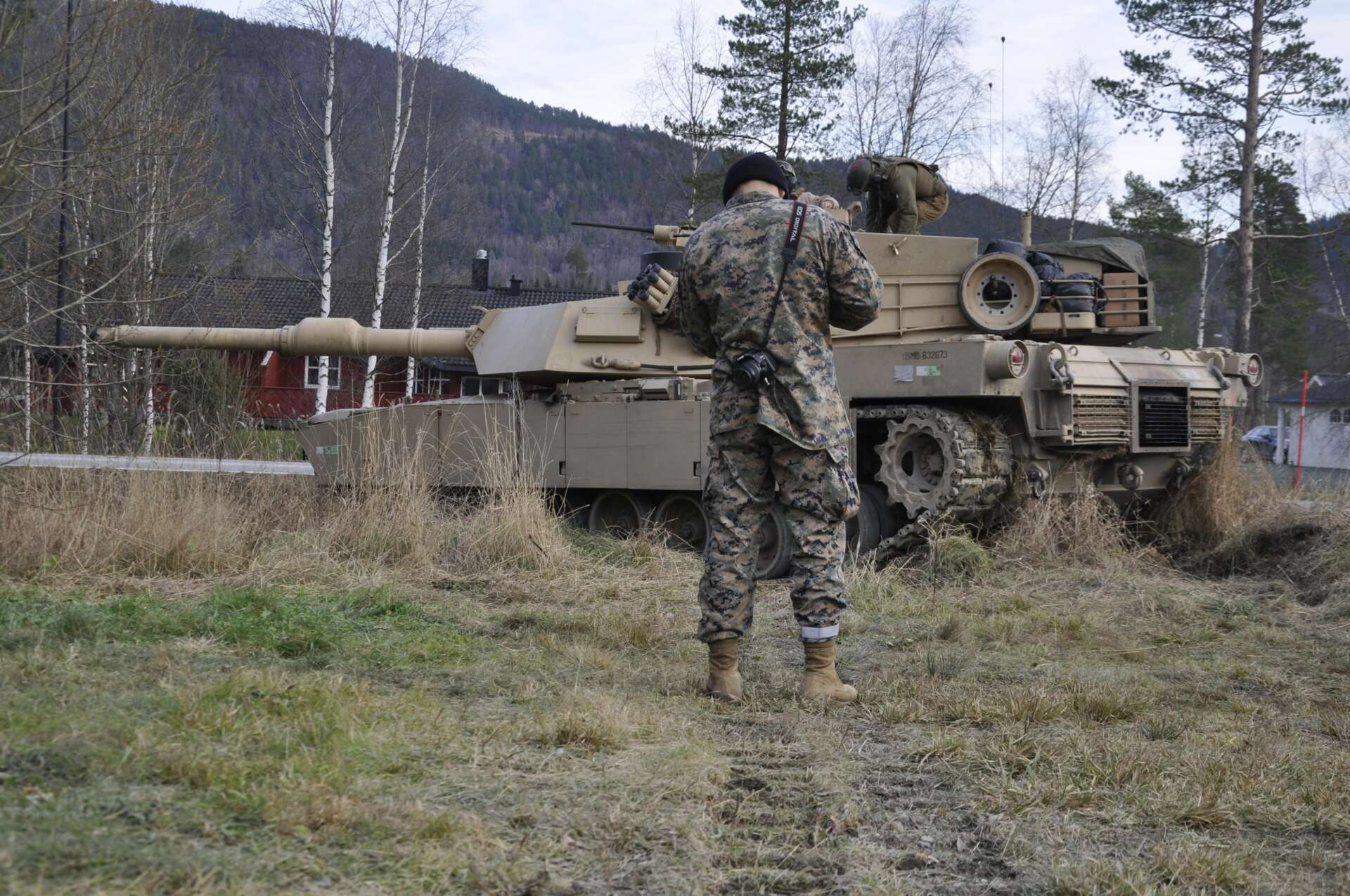
In 2014 I discovered the program by accident and realized my skillset could possibly find a home within the efforts of the MCCAP. I contacted the program director, presented a portfolio, and was officially designated as one of the two active-duty Combat Artists in the Marine Corps. This stirred in me again a new passion for developing my skill and allowed me to exercise my additional MOS in between my primary duties as an active-duty Marine. Since then, I have been able to illustrate Marines in Africa, Iraq, Norway, aboard a C-130, in training environments, and within the Marine Special Operations Command.
As my artist career (particularly within the military) has unfolded, my work has become familiar to others which has lead to some really cool opportunities outside the MCCAP. I’ve created several customized pieces for veteran programs, helped fundraise thousands of dollars for the Tragedy Assistance Program for Survivors (TAPS), painted murals, and created memorial pieces for fallen service members and their families. These opportunities have been joyful enhancements to the passion and God-given skillset I consider myself blessed to have.
I don’t think I’m anyone special – and in fact I’ve have developed the opinion that anyone can learn to draw from life if they are taught how to see and translate their perspective. I practice this skill both in and out of uniform. I have been incredibly blessed to not only have a passion for drawing and art, but to be mentored by some of the finest illustrators in the country. Victor Juhasz, Richard Johnson, Mike D. Fay, and Kris J. Battles have all be key coaches in my development over the years as they have also contributed to the MCCAP as civilian artists.
As I’ve developed over the years, I have found my favorite mediums. Right now, my work is primarily in pencil and charcoal. I finally stepped out in managing a home studio and creating commission artwork as a side business – offering customized, patriotic and military themed artwork to the market (www.cjbaumannstudios.com). I enjoy painting, but it is a less refined skill at the moment. I hope to put more effort in the studio to these mediums.
I think it is important to close in saying that it is never too late to start at something you enjoy and the discipline of making regular time to practice (even if a little) is the key. The great thing about drawing is that the tools are minimal, and opportunities are everywhere. I am married and a father to three children, and I often have to use evening hours to create artwork in my upstairs studio. Finding the life balance between work/life obligations and skill development has been the tried-and-true way to grow over time.
What’s a lesson you had to unlearn and what’s the backstory?
I early on worked entirely from photographs. There’s nothing inherently wrong with this, but it is a completely different skillset than working from life. I was told the cold hard truth early on by one of my mentors when he said, “you’re nothing but a copy machine, you have no style”. This hurt, but it was exactly what i needed to hear to break into the next chapter of development as an artist. I still use photographs to reference during my larger studio projects, but I have an appreciation for artwork that is created from life, observation, and personal experience. As I began to exercise working from direct observation, I (and my mentors) began to see my personal interpretation, choice of focus, and unique renderings begin to define my “style” as an artist. This has even branched out into attempting to paint on location, known by the French as Plein Air painting – the master’s way of learning values, chroma, and accurate rendering from observation. Now, I’m a believer in the necessity to work from life, encourage everyone I meet to do the same, and can’t imagine creating true and authentic work any other way.

What’s the most rewarding aspect of being a creative in your experience?
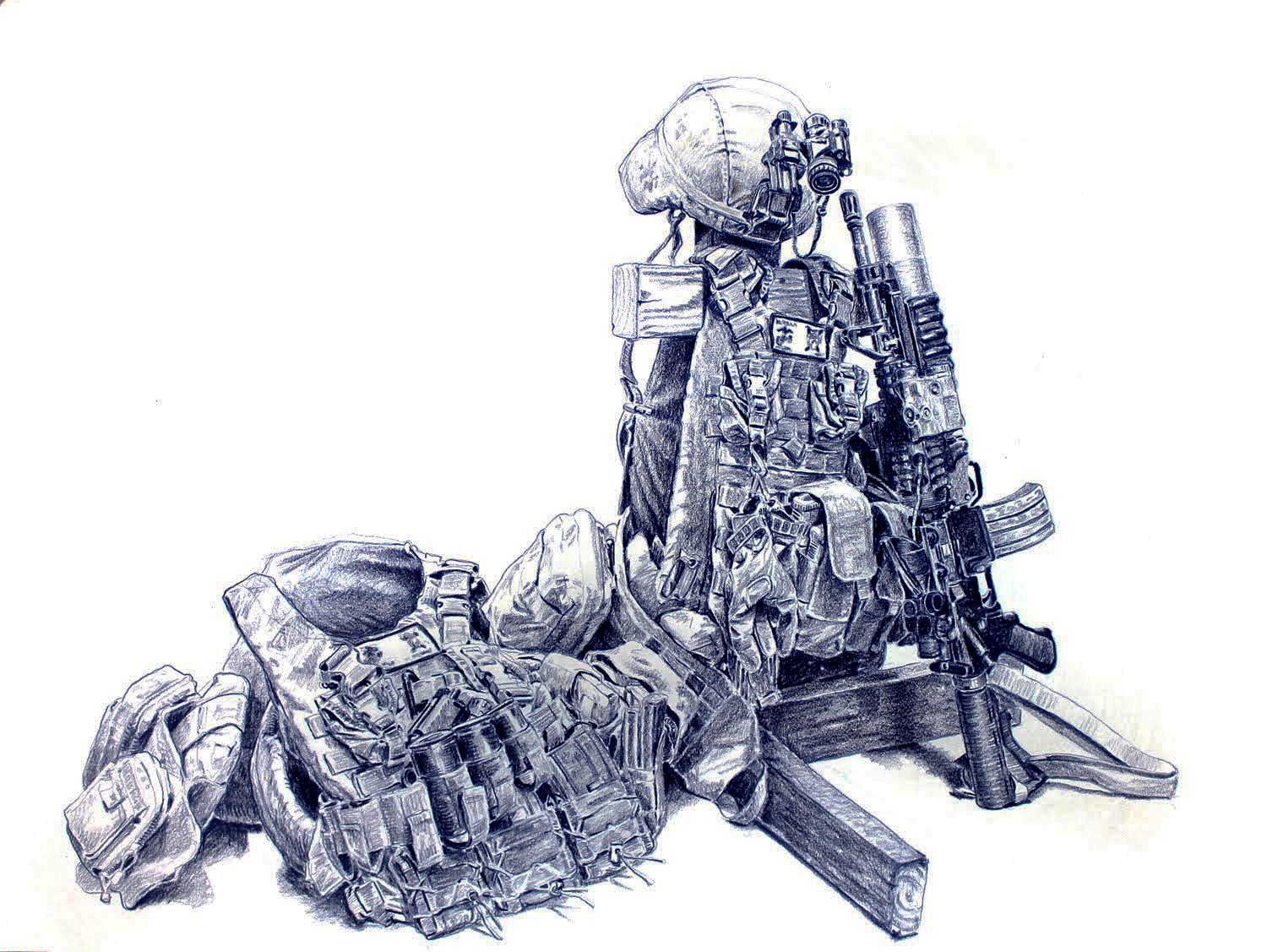
The artist journey is a satisfying one. I enjoy the personal time and pursuit of honing my craft – often marveling when experiments or long studio hours pay off in the finished product. With this fundamental truth, the most rewarding aspect of my work is the fact that my art is of a quality that it blesses other people. I often say, “money is nice, but the customer’s genuine appreciation is better”. I have been blessed with numerous opportunities to bless others with my work. Some of my artwork hangs in the training institutions of the Marine Corps, and it’s a wonderful thing when people can connect with my work and comment on it. Other works of mine have been created to honor fallen service members, and these works take on a sentimental and somber character. I become invested in them as I study the background story, spend hours pouring into creating it, and compassionately handing it over the recipient. Very often the work is received with tears, gratitude and personal connection I will forever cherish. Each of these are humbling experiences in their own way – and I strive to remember that I have a gift to not only enjoy but use for purposes greater than myself and it’s in that lane I find the most satisfaction.
Contact Info:
- Website: www.cjbaumannstudios.com
- Instagram: cjbaumann_art
- Facebook: CJ Baumann Art
- Youtube: CJ Baumann Art
Image Credits
All art photography is my own. Photography of me as the artist is accredited to Richard Johnson, my mentor and fellow civilian combat artist.